If you have ever wondered how to start career in digital marketing, you are not alone. Every year, thousands of students, graduates, and even working professionals from other fields decide to switch into this industry because it offers fast growth, flexible work options, and roles for almost every kind of skill set, whether you like writing, design, data, or strategy.
The good news is that digital marketing does not require a specific degree or years of prior experience to begin. What it does require is a clear roadmap, the right skills, and consistent practice. This guide walks you through exactly how to start a career in digital marketing, from understanding what the field actually involves to landing your first job and growing beyond it.
What is Digital Marketing?
Digital marketing is the practice of promoting products, services, or brands using online channels such as search engines, social media, email, websites, and mobile apps. Instead of relying only on traditional methods like TV ads, newspaper ads, or billboards, digital marketing uses the internet to reach people exactly where they spend their time.
Key Areas of Digital Marketing
Digital marketing covers a wide range of activities, including:
- Search Engine Optimization (SEO): improving a website's visibility on search engines
- Pay-Per-Click Advertising (PPC): running paid ads on platforms like Google and Meta
- Social Media Marketing: building an audience and engagement on platforms like Instagram and LinkedIn
- Content Marketing: creating blogs, videos, and guides that attract and educate an audience
- Email Marketing: nurturing leads and customers through targeted email campaigns
- Analytics: tracking and interpreting data to measure what's working
Each of these areas works differently, but they all share one goal: helping a business get discovered, build trust, and convert interested visitors into paying customers.
Why This Industry Is Growing So Fast
The scale of this industry shows why it has become such an attractive career path. The global digital advertising and marketing market is projected to reach around $786.2 billion in 2026, growing at a rate of nearly 14% every year. This growth is not slowing down either.
Businesses of every size, from local shops to global brands, now depend on digital channels to stay visible, which means the demand for skilled marketers keeps expanding alongside the industry itself. If you want a deeper look at why this shift matters for businesses, our post on digital marketing importance breaks it down further.
Why It's a Smart Career Choice
Unlike many traditional careers, digital marketing rewards curiosity and hands-on learning over formal qualifications. This is exactly why so many beginners are able to build a strong career here within a short span of time, as long as they follow a structured approach.
Another reason this field attracts so many career switchers is flexibility. You can work at a full-service digital marketing agency, join the in-house marketing team of a company, freelance for multiple clients, or even start your own venture once you gain enough experience.
Very few careers offer this many entry points into the same industry, which is part of why the question of how to start a career in digital marketing keeps coming up among students, working professionals, and homemakers alike who are looking for a flexible yet high-growth path.
Recommended Professional Certificates
AI-Powered Digital Marketing Course
Performance Marketing Bootcamp
SEO Specialist Bootcamp
Is a Digital Marketing Career Right for You? Self-Assessment
Before you commit time and effort to this field, it helps to pause and ask yourself a few honest questions. Digital marketing suits people with certain traits and working styles and knowing where you stand can save you months of confusion later.
1. Do you enjoy learning new tools and platforms regularly?
Digital marketing changes constantly. Algorithms update, new platforms emerge, and old tactics stop working. If you get excited about learning new things rather than frustrated by change, this field will feel natural to you.
2. Are you comfortable with numbers and basic data?
You do not need to be a mathematician, but you should be comfortable looking at numbers like click-through rates, conversion rates, and engagement percentages to understand what is working and what is not.
3. Can you write clearly and communicate ideas simply?
Whether it is a blog post, an ad headline, or a social media caption, clear communication is at the heart of almost every digital marketing role.
4. Are you patient enough to see results build over time?
Some channels, like paid ads, show quick results. Others, like SEO and content marketing, take weeks or months to show their full impact. A mix of patience and consistency matters a lot here.
5. Do you like working across different tasks rather than one repetitive job?
On any given day, a digital marketer might write content, check analytics, plan a social post, and review an ad campaign. If variety keeps you engaged rather than overwhelmed, this career fits well.
If most of these points sound like you, digital marketing is likely a good career choice. Even if you're unsure, these skills can be learned over time. Choose a path that matches your interests, content marketing if you enjoy writing, or performance marketing if you like working with data and campaigns. There’s no single personality type for success in digital marketing, making it a great career for many beginners.
Upcoming Masterclass
Attend our live classes led by experienced and desiccated instructors of Wscube Tech.


Roadmap to Start a Career in Digital Marketing
This is the part most beginners search for directly: a clear, step-by-step path. Whether you are asking how do I start my career in digital marketing or looking for how to start a career in digital marketing in India specifically, the core roadmap remains largely the same, with a few local considerations worth keeping in mind.
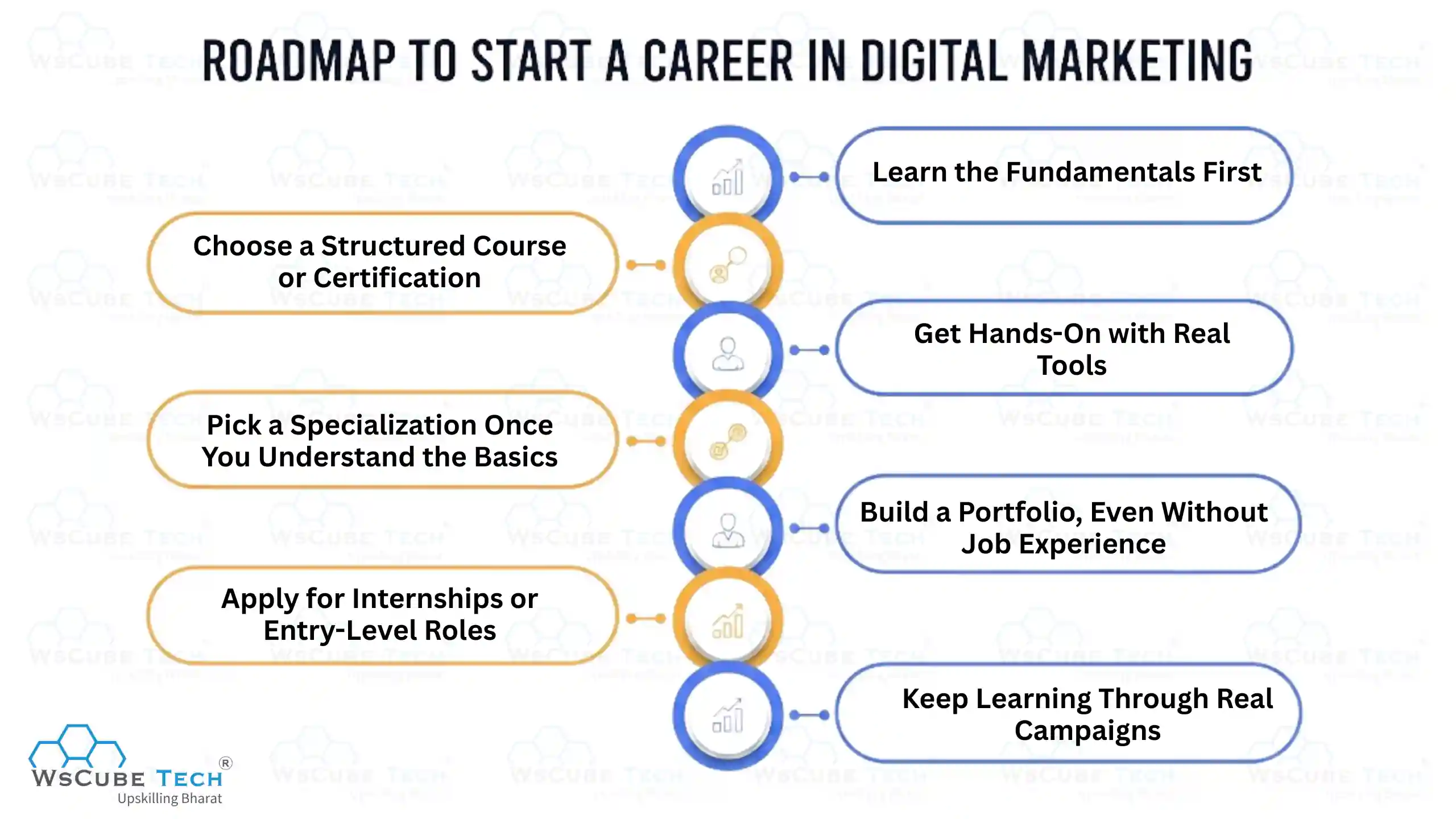
Step 1: Learn the Fundamentals First
Before jumping into any single specialization, get a solid grasp of the basics. Understand what SEO, PPC, social media marketing, email marketing, and content marketing actually mean and how they connect with each other. Free resources, YouTube channels, and structured online courses can all help here. Building this foundation is also the fastest way to pick up practical digital marketing skills that employers actually look for.
Step 2: Choose a Structured Course or Certification
While self-study works, a structured course saves time by organizing your learning in the right order and often includes practical assignments. Look for programs that combine theory with hands-on projects, live campaigns, and tool training rather than just video lectures. Moreover, digital marketing certifications from recognized platforms like WsCube Tech, Google, HubSpot, and Meta also add credibility to your resume when you are applying for your first role.
Step 3: Get Hands-On with Real Tools
Reading about SEO or Google Ads is not the same as actually using them. Create a free Google Analytics account, set up a sample Google Ads campaign, run a small social media page, or start a blog. Practical exposure to tools like Google Search Console, Meta Business Suite, and email marketing platforms will teach you far more than theory alone.
Step 4: Pick a Specialization Once You Understand the Basics
Once you know the fundamentals, decide which area excites you the most. Some people enjoy the creative side of content and social media, while others prefer the analytical, numbers-driven world of SEO and performance marketing. Specializing does not mean ignoring everything else. It means becoming genuinely strong in one area while staying aware of how the other pieces work together as part of your overall digital marketing strategy.
Step 5: Build a Portfolio, Even Without Job Experience
This is one of the most overlooked steps for anyone figuring out how to start career in digital marketing with no experience. You do not need a job to build proof of your skills. Start a personal blog and rank it for a few keywords, manage a small business's Instagram page for free or at a low cost, or run a mock ad campaign and document your process and results. A portfolio like this shows recruiters exactly what you can do, which often matters more than a resume alone.
Step 6: Apply for Internships or Entry-Level Roles
Once you have some practical exposure and a basic portfolio, start applying for internships, trainee positions, or entry-level roles such as Digital Marketing Executive, SEO Executive, or Social Media Executive. Internships, even unpaid or low-paid ones in the beginning, give you real campaign experience that is hard to replicate on your own.
Step 7: Keep Learning Through Real Campaigns
Your first job is where real learning accelerates. Pay close attention to how experienced marketers plan campaigns, interpret data, and adjust strategy based on results. Ask questions, take on new tasks whenever possible, and stay updated with the latest digital marketing tips shared by industry experts through blogs, webinars, and communities.
Note: Digital marketing offers strong career opportunities across India, with demand growing in both metro and Tier 2/3 cities. Freshers typically earn between ₹2.5 LPA and ₹5 LPA, depending on their skills, certifications, and location. As businesses continue increasing their digital marketing budgets, job opportunities are expanding. Choosing a course with practical projects and India-specific case studies can help you become job-ready faster.
Career Opportunities After Learning Digital Marketing
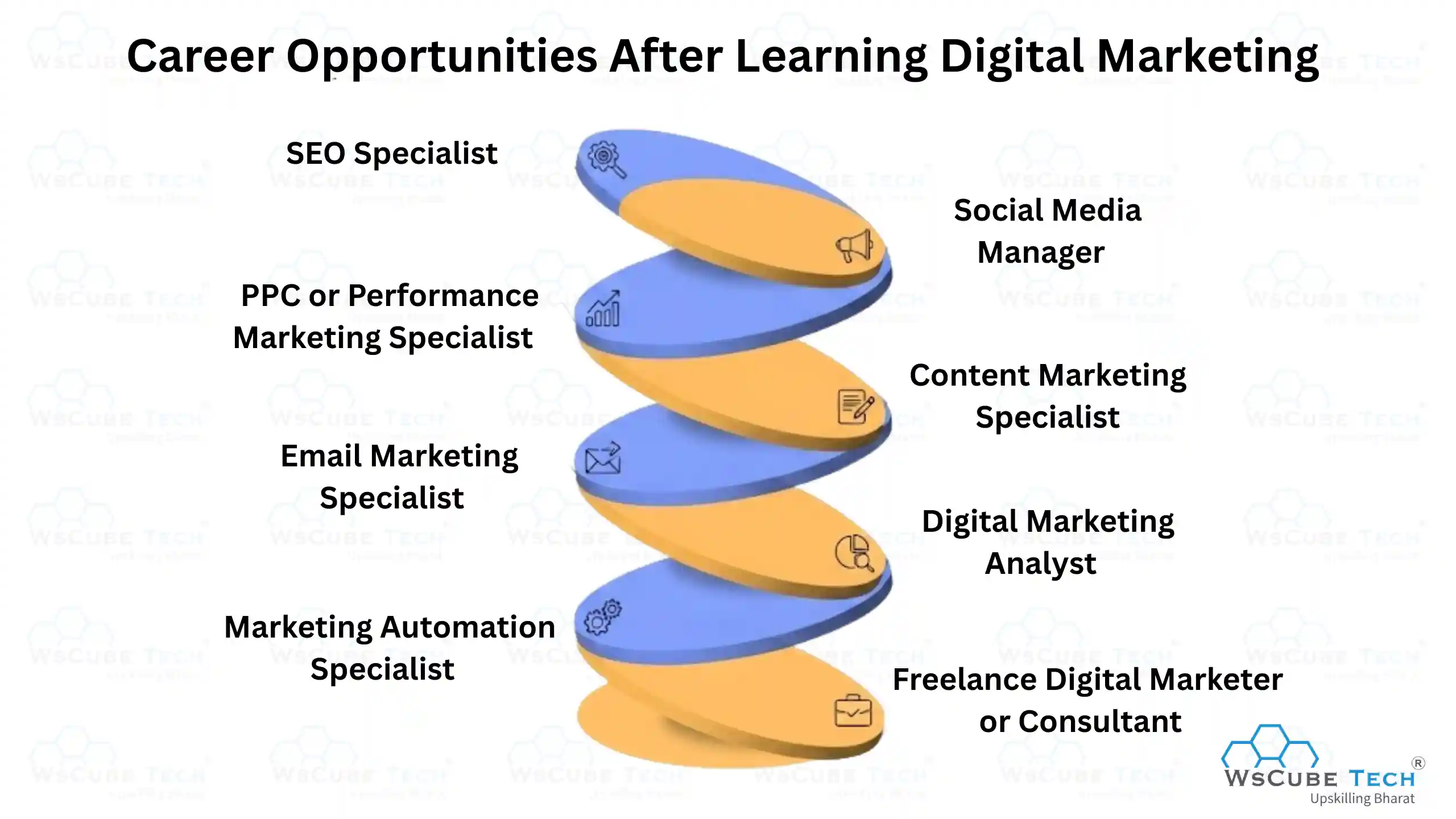
One of the biggest reasons people choose this field is the sheer variety of roles available once you build the right skills. Here are some of the most common career paths.
1. SEO Specialist
SEO specialists work on improving a website's visibility on search engines through keyword research, on-page optimization, technical fixes, and link building. This role suits people who enjoy analytical thinking combined with a bit of writing and strategy.
2. Social Media Manager
This role involves planning content calendars, creating posts, engaging with followers, and analyzing performance across platforms like Instagram, Facebook, and LinkedIn. It is a strong fit for creative individuals who understand current trends and audience behavior.
3. PPC or Performance Marketing Specialist
Performance marketers manage paid campaigns on platforms like Google Ads and Meta Ads, focusing on budgets, targeting, and conversions. This is one of the highest-paying entry paths because it has a direct, measurable impact on business revenue.
4. Content Marketing Specialist
Content marketers plan and create blogs, videos, guides, and other resources that attract and educate an audience. Strong writing skills combined with basic keyword research knowledge make this role a great starting point for many beginners.
5. Email Marketing Specialist
This role focuses on building email lists, writing campaigns, and analyzing open and click-through rates. Email remains one of the highest-return channels in digital marketing, making this specialization valuable even though it gets less attention than social media.
6. Digital Marketing Analyst
Analysts dig into data from Google Analytics, ad platforms, and other tools to understand what is working and recommend improvements. This role appeals to people who enjoy numbers and problem-solving more than content creation.
7. Marketing Automation Specialist
As businesses scale, they rely on tools to automate repetitive tasks like email sequences and lead nurturing. Specialists in this area combine technical tool knowledge with an understanding of the customer journey.
8. Freelance Digital Marketer or Consultant
Once you gain enough experience, freelancing becomes a realistic option. Many marketers work independently with multiple small businesses, offering services like SEO audits, social media management, or ad campaign setup on a project basis.
Beyond these individual roles, experienced professionals often move into leadership positions such as Digital Marketing Manager or Head of Growth, overseeing entire teams and strategies. The overall scope in digital marketing continues to widen each year as new platforms and technologies like AI-driven marketing tools reshape how brands connect with their audiences, which means the career ladder here keeps growing taller rather than plateauing.
Must-Know Concepts in Digital Marketing
Mistakes to Avoid When Starting Your Digital Marketing Career
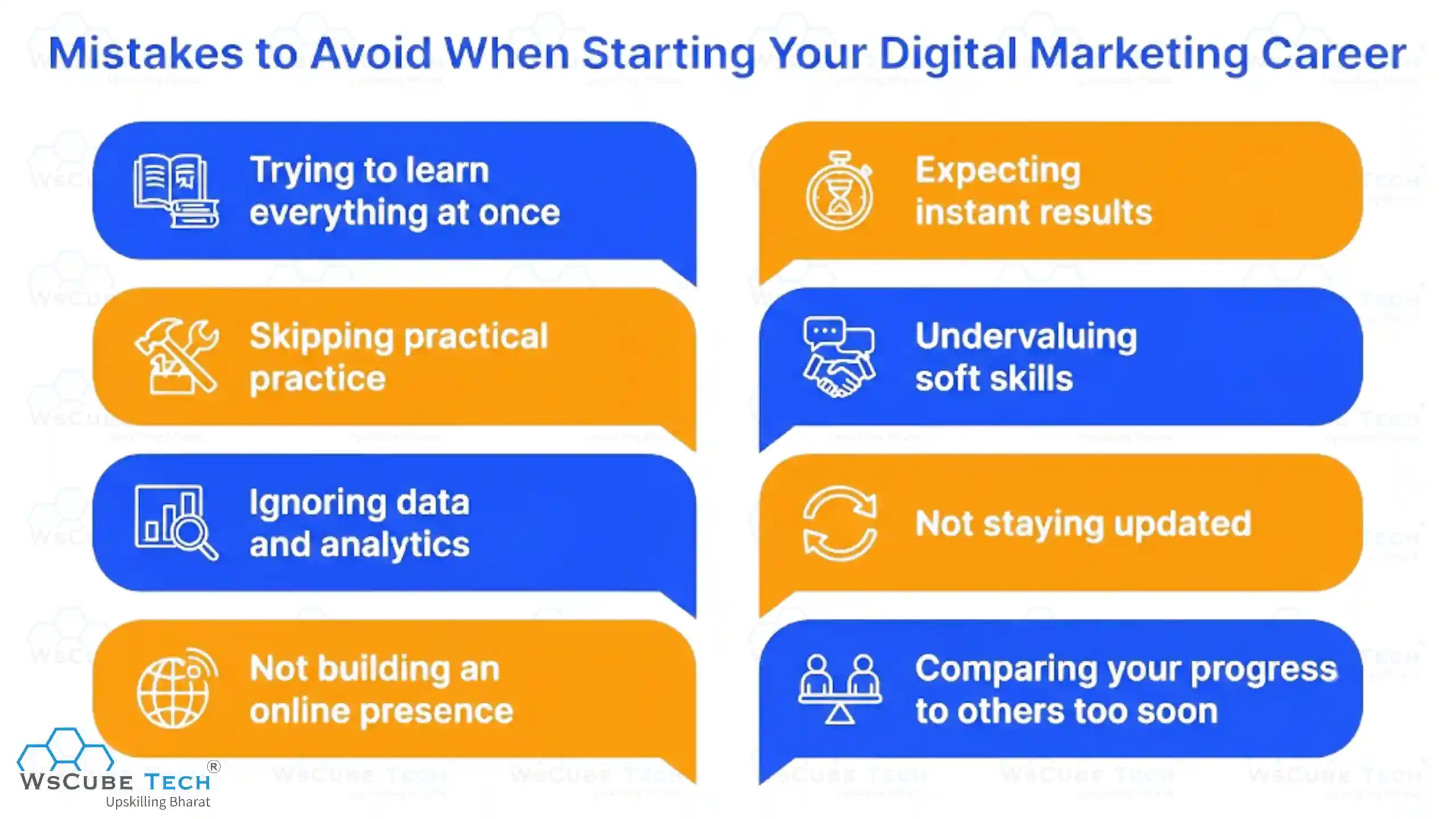
Many beginners slow down their own progress without realizing it. Being aware of these common mistakes can help you avoid unnecessary setbacks.
1. Trying to learn everything at once
Digital marketing has many sub-fields, and trying to master SEO, PPC, social media, email, and analytics all at the same time often leads to shallow knowledge across the board. Build a solid foundation first, then specialize.
2. Skipping practical practice
Watching tutorials without applying what you learn is one of the biggest reasons beginners struggle to get hired. Recruiters want to see that you can actually run a campaign or optimize a page, not just explain the theory behind it.
3. Ignoring data and analytics
Some beginners focus only on the creative side, like writing captions or designing posts, while ignoring performance data. In reality, understanding what the numbers mean is what separates a good marketer from a great one.
4. Not building an online presence
It may sound ironic, but many aspiring digital marketers do not apply basic marketing principles to themselves. Having a simple personal blog, an active LinkedIn profile, or a small portfolio website instantly makes you stand out from other candidates.
5. Expecting instant results
Certain channels, especially SEO and content marketing, take time to show measurable results. Beginners who give up too early on a strategy often miss out on the gains that show up after a few consistent months of effort.
6. Undervaluing soft skills
Communication, collaboration, and the ability to explain your strategy clearly to clients or managers matter just as much as technical skills. Many beginners focus entirely on tools and forget that marketing is, at its core, about understanding people.
7. Not staying updated
Platforms and algorithms change frequently. What worked last year on Instagram or Google might not work today. Following credible industry blogs and staying curious about new updates keeps your skills relevant.
8. Comparing your progress to others too soon
Every beginner learns at a different pace, and some people land their first role faster simply because of prior exposure or networking advantages. Constantly comparing your timeline to someone else's can lead to unnecessary discouragement. Focus on your own consistent progress instead of matching someone else's speed.
Explore Our Most Popular Marketing Courses
FAQs About Starting a Career in Digital Marketing
No, a specific degree is not mandatory. Many successful digital marketers come from completely unrelated academic backgrounds. What matters more is practical skill, a strong portfolio, and the ability to show real results.
Start by learning the fundamentals through free or paid courses, then build your own small projects, such as a blog, a social media page, or a mock ad campaign. This hands-on work becomes your experience even before your first job.
Most beginners can become job-ready within three to six months if they follow a structured course, practice consistently, and build a small portfolio alongside their learning.
SEO and content marketing are often recommended as starting points because they build a strong foundation in how search engines and audiences think, which makes it easier to understand other channels like PPC and social media later.
Freshers in India typically earn between ₹2.5 LPA and ₹5 LPA depending on their role, skills, certifications, and city, with performance marketing and analytics roles often starting higher due to strong demand and limited talent supply.
It is possible, but it is usually easier to gain some real campaign experience through an internship or entry-level job first. This experience helps you handle client expectations and real budgets more confidently before going independent.
Yes, digital marketing continues to grow as more businesses shift their budgets online. With continuous learning, professionals can move from entry-level roles into strategic and leadership positions over several years.
Conclusion
Learning how to start a career in digital marketing does not require a perfect plan from day one. It requires a willingness to learn the fundamentals, practice with real tools, and keep improving through actual campaigns rather than theory alone.
Start small, choose a specialization that genuinely interests you, and build proof of your skills through personal projects if you do not have job experience yet. The digital marketing industry rewards consistency and curiosity far more than credentials, which means anyone willing to put in focused effort can build a rewarding, long-term career in this space.
Join Our On-Campus Digital Marketing Program
Explore Our Free Courses



Leave a comment
Your email address will not be published. Required fields are marked *Comments (0)
No comments yet.