Every business wants to reach the right people at the right time. But with so many channels available today, social media, ads, blogs, press coverage, it can feel overwhelming to figure out where to focus your energy.
That is exactly where the POEM framework in digital marketing comes in.
POEM gives you a clear way to look at all your marketing channels and understand how each one works. Instead of jumping from one tactic to another, you can plan your efforts more strategically and make every rupee or dollar count.
In this blog, we will break down everything you need to know about the POEM model marketing approach, from what it means to how you can use it to grow your brand online.
What is the POEM Framework? (With Full Form)
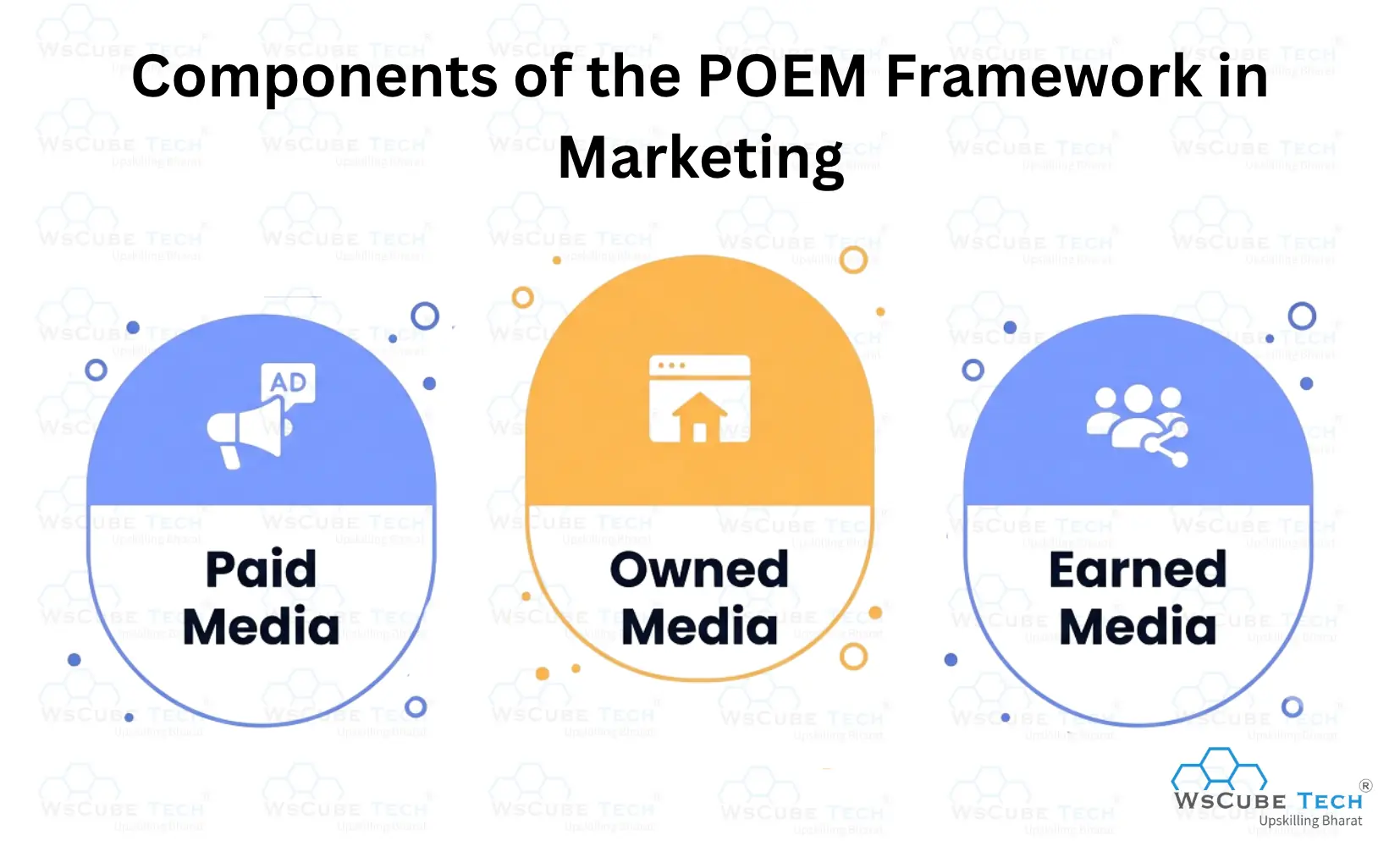
POEM stands for Paid Media, Owned Media, and Earned Media.
It is a marketing framework that helps businesses categorize their digital channels into three simple groups. Each group works differently, costs differently, and delivers different results.
The idea behind POEM marketing is simple: no single type of media is enough on its own. The real magic happens when all three work together in a coordinated way.
Here is a quick overview before we go deeper:
- Paid Media = Content or visibility you pay for (ads, sponsored posts)
- Owned Media = Channels you control (your website, blog, email list)
- Earned Media = Exposure you earn through others (reviews, shares, press mentions)
The POEM framework in digital marketing was popularized as digital channels multiplied, and marketers needed a smarter way to manage their budgets and strategies. It is now widely used by marketers across industries worldwide.
According to HubSpot's marketing research, companies that use an integrated media strategy across multiple channels see up to 3x better results than those relying on a single channel. That is the power of thinking in terms of POEM.
Recommended Professional Certificates
AI-Powered Digital Marketing Course
Performance Marketing Bootcamp
SEO Specialist Bootcamp
Components of the POEM Framework in Marketing: Explained in Detail
Let us look at each component of the POEM framework one by one.
1. Paid Media
Paid media is exactly what it sounds like: any form of media or content you pay to place in front of your audience. Think of it as renting space on someone else's platform to get your message out.
Common examples of Paid Media:
- Google Ads (Search and Display)
- Facebook and Instagram Ads
- YouTube pre-roll ads
- Sponsored content on news websites
- Influencer marketing (paid partnerships)
- LinkedIn Ads
- Pay-Per-Click (PPC) campaigns
Why Paid Media matters:
The biggest advantage of paid media is speed. You can launch a campaign today and start getting traffic or leads tomorrow. It gives you immediate visibility, especially when you are just starting out or launching a new product.
Paid media also offers precise targeting. You can reach people based on their age, location, interests, online behavior, and more. This makes it highly efficient when done right.
According to Statista, global digital ad spending crossed $600 billion in 2023 and continues to grow. This shows just how central paid media has become modern marketing.
Limitations of Paid Media:
The moment you stop spending, the traffic stops. Paid media does not build long-term assets for your brand. It also requires ongoing investment and expertise to manage well, especially as ad costs rise over time.
That said, paid media is a critical part of the POEM framework in digital marketing because it gives you control overreach and timing.
2. Owned Media
Owned media refers to any digital channel or content that your brand controls directly. You do not pay for a platform to use it (beyond hosting costs), and it belongs to you.
Common examples of Owned Media:
- Your website
- Company blog
- Email newsletters
- Mobile app
- Social media profiles (the content you post organically)
- Product pages and landing pages
- YouTube channel (your own videos)
Why Owned Media matters:
Owned media is the foundation of your long-term digital presence. A well-maintained blog or website can generate traffic for years without any additional spending. Every piece of content you create becomes a permanent asset.
From an SEO perspective, owned media is crucial. When you consistently publish quality content targeting the right keywords, your website gains authority and ranks higher on Google. This brings in organic traffic that does not cost you per click.
Email marketing, one of the strongest forms of owned media, still delivers one of the best returns in digital marketing. According to Litmus, email marketing has an average ROI of $36 for every $1 spent.
Limitations of Owned Media:
Owned media takes time to build. You will not see results overnight. It requires consistent effort in creating quality content, growing your email list, and investing in SEO. But the long-term payoff is very much worth it.
If you are looking for the Best digital marketing tools to manage your owned media channels, there are many powerful platforms available today for email, SEO, and content management.
3. Earned Media
Earned media is the most credible form of media because it comes from others, not from you. It is the exposure your brand receives organically through word-of-mouth, shares, reviews, press coverage, and community engagement.
Common examples of Earned Media:
- Customer reviews on Google, Amazon, or Yelp
- Social media shares and mentions of your brand
- Press coverage and news articles about your business
- Blog posts or videos where others talk about your product
- User-generated content (UGC)
- Podcast appearances
- Viral content
Why Earned Media matters:
People trust recommendations from other people far more than they trust brand-created content. A five-star review from a real customer or a mention in a credible publication carries enormous weight.
Nielsen's Global Trust in Advertising report found that 88% of consumers trust online reviews from other consumers as much as personal recommendations. That is why earned media can be a gamechanger for brand credibility.
Earned media also works like a multiplier. When your content gets shared or covered, you reach new audiences without spending anything extra. It amplifies everything else you are doing.
Limitations of Earned Media:
You cannot fully control earned media. A bad review or a negative news article can hurt your brand. It also takes time and effort to build the kind of reputation that consistently generates positive earned media.
However, the good news is that earned media can be influenced. By consistently delivering great products, creating shareable content, and building genuine relationships with your audience, you can significantly increase the amount of earned media your brand receives.
Difference Between Paid, Owned, and Earned Media
Here is a simple comparison to help you understand how the three types differ from each other:
| Feature | Paid Media | Owned Media | Earned Media |
| Control | High | Full | Low |
| Cost | Ongoing spend | Low (after setup) | Mostly free |
| Speed of Results | Fast | Slow (long-term) | Varies |
| Trust Level | Low to Medium | Medium | High |
| Examples | Google Ads, PPC, Social Ads | Blog, Website, Email | Reviews, Shares, PR |
| Sustainability | Stops when you stop paying | Builds over time | Grows with brand reputation |
| Risk | Ad fatigue, rising costs | Algorithm changes | Negative reviews |
| Best For | Quick reach, launches | SEO, long-term traffic | Brand trust, credibility |
This table makes it clear why the POEM model marketing approach recommends using all three together rather than depending on just one.
Upcoming Masterclass
Attend our live classes led by experienced and desiccated instructors of Wscube Tech.

How the POEM Framework Works Together
Understanding each component is important. But the real value of the POEM framework in digital marketing comes from seeing how all three media types support each other.
Think of it like a three-legged stool. Remove one leg and the whole thing becomes unstable.
Here is how the three work together in practice:
1. Paid media drives traffic to your own media
When you run ads, you send people to your website, landing pages, or blog. That is your own media doing the heavy lifting of converting visitors into leads or customers.
2. Owned media creates the foundation for earned media
When you consistently produce high-quality content on your blog or social profiles, people are more likely to share it, link to it, or talk about it. Great, owned media earns attention organically.
3. Earned media enhances your paid media results
When people already know your brand through positive reviews or word-of-mouth, your paid ads perform better. A user who has heard good things about you is far more likely to click your ad and convert.
Example of POEM working together:
Imagine you are launching a new skincare product in India.
- Paid: You run targeted Instagram ads to reach women aged 20 to 35 in metro cities. The ads drive traffic to your website.
- Owned: On your website, you have detailed product pages, a blog post on skincare routines, and an email opt-in to receive a free skincare guide.
- Earned: Happy customers leave reviews on your website and tag you on Instagram. A popular beauty blogger discovers your product and writes about it. You get featured in a digital magazine.
Now your paid ads are performing better because people are already hearing about you. Your website ranks on Google because of your blog content. And new customers find you through the blogger's review without you spending anything extra.
That is the POEM framework in digital marketing in action.
Essential Topics Related to Digital Marketing
How to Implement the POEM Framework in Digital Marketing?
Knowing the theory is one thing. Putting it into practice is where real work begins. Here is a step-by-step approach to implementing the poem framework in digital marketing with example thinking built in.
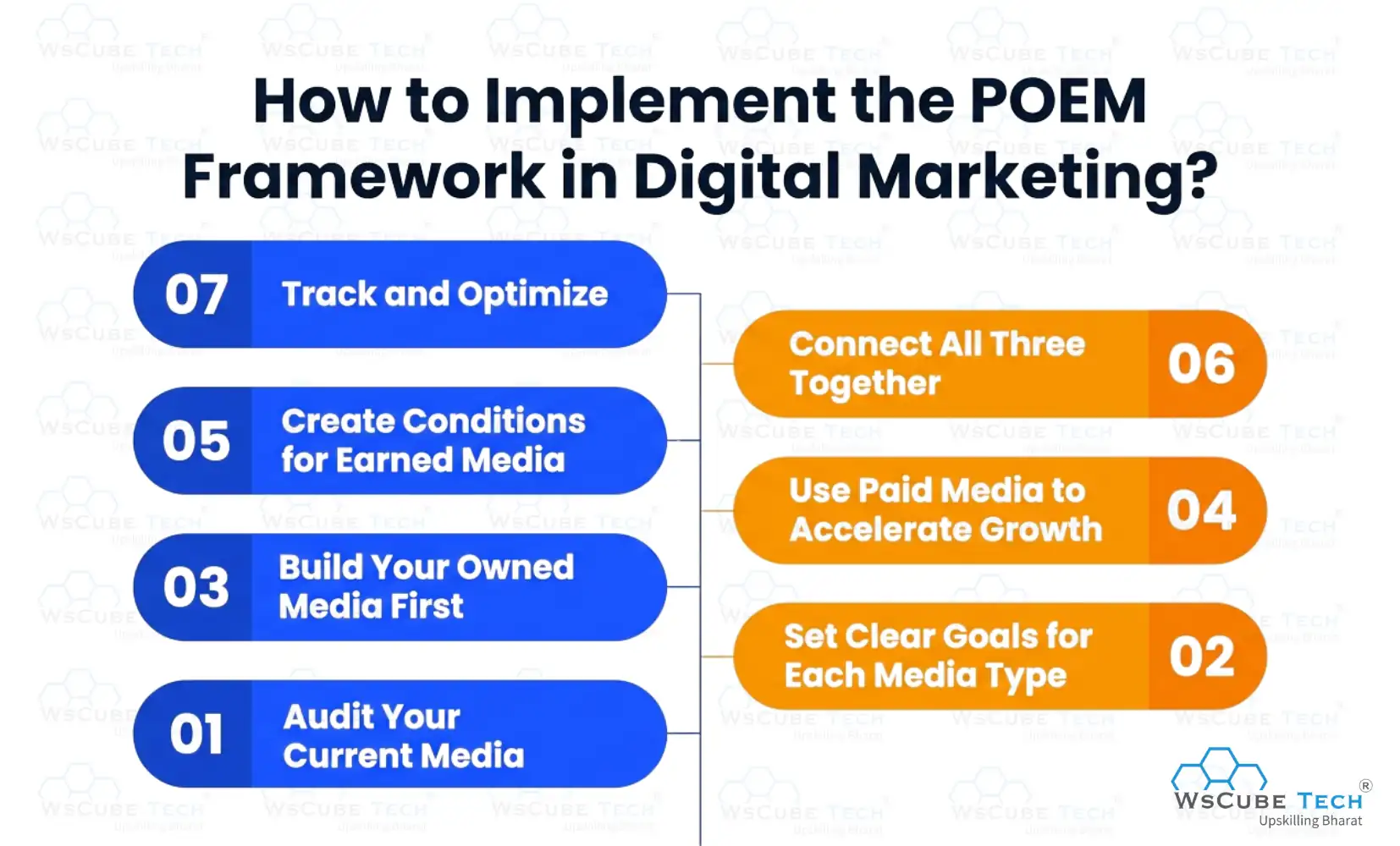
Step 1: Audit Your Current Media
Start by taking stock of what you already have. List out all your paid campaigns, owned channels, and any earned media mentions. This gives you a baseline to work from.
Step 2: Set Clear Goals for Each Media Type
- What do you want from paid media? (Traffic, leads, sales)
- What do you want from owned media? (SEO rankings, email subscribers, brand authority)
- What do you want from earned media? (Reviews, shares, press coverage)
Step 3: Build Your Owned Media First
Before spending heavily on ads, make sure your owned media is in good shape. Your website should load fast, be mobile-friendly, and have strong landing pages. Your blog should start targeting relevant keywords. Your email list should have a clear opt-in strategy.
Think of owned media as the home base. All your marketing efforts should bring people back here.
Step 4: Use Paid Media to Accelerate Growth
Once your owned media is ready, use paid media to drive targeted traffic to it. Start with a small budget, test different ad creatives, and track your results. Platforms like best digital marketing platforms can help you manage and compare your options.
Step 5: Create Conditions for Earned Media
You cannot buy earned media (well, not authentically). But you can create the right conditions for it:
- Ask happy customers to leave reviews
- Create content that is genuinely worth sharing
- Engage with your audience on social media
- Build relationships with bloggers, journalists, and influencers in your space
- Run campaigns that invite user-generated content
Step 6: Connect All Three Together
Use your paid ads to promote your best owned media content. Use your earned media (like reviews or press coverage) as social proof in your paid ads. Share earned media stories on your owned channels.
This integration is what makes the POEM framework so powerful.
Step 7: Track and Optimize
Track key metrics for each media type:
- Paid Media: Cost per click (CPC), conversion rate, return on ad spend (ROAS)
- Owned Media: Organic traffic, bounce rate, email open rates, rankings
- Earned Media: Brand mentions, share of voice, review ratings, inbound links
Review your data monthly and adjust your strategy based on what is working.
Advantages of the POEM Framework in Digital Marketing
There are several strong reasons why the POEM framework in digital marketing has become a go-to model for marketers.
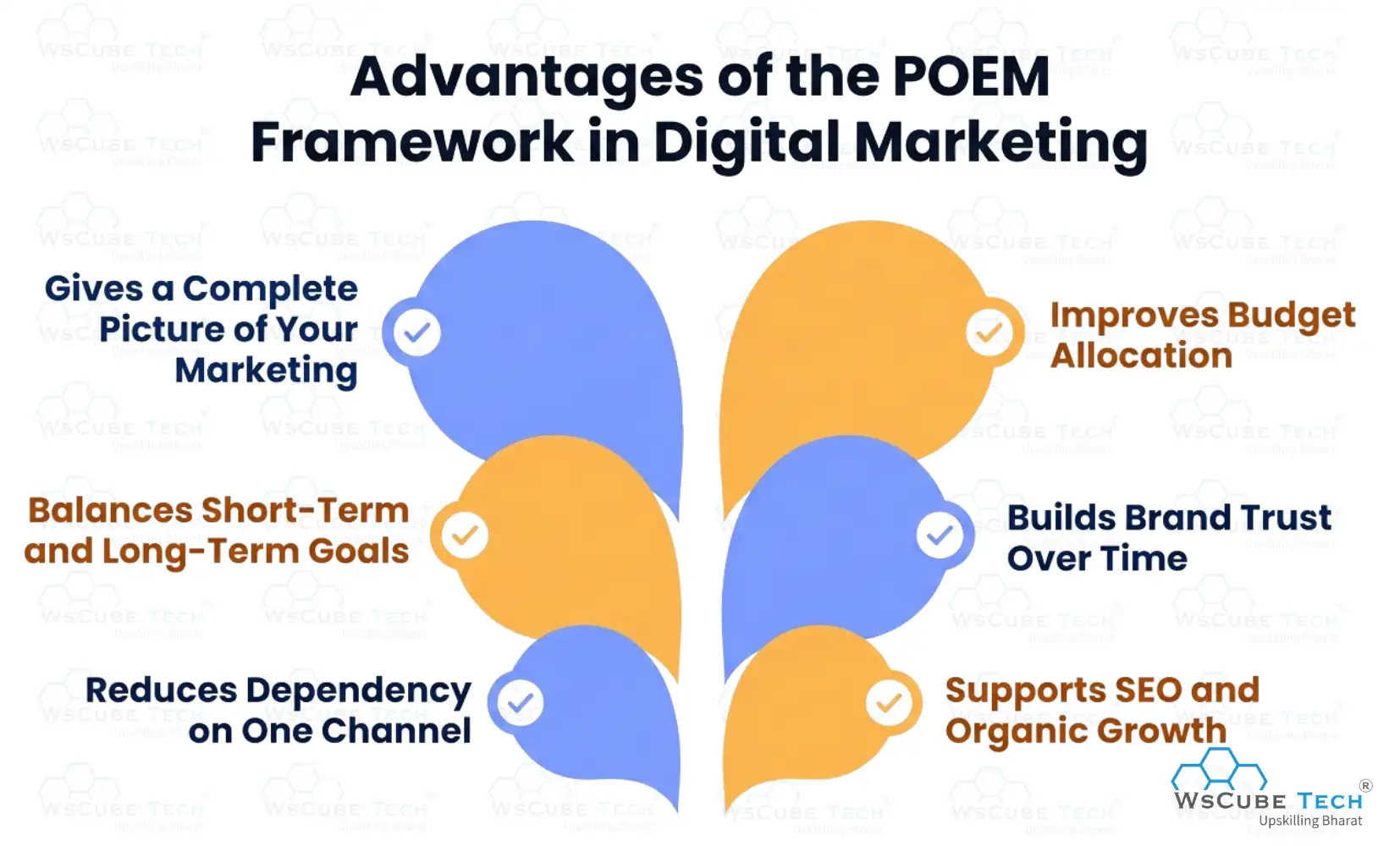
1. Gives a complete picture of your marketing
Instead of looking at each channel in isolation, POEM helps you see how everything fits together. You can identify gaps and opportunities across all three media types.
2. Balances short-term and long-term goals
Paid media delivers quick results. Owned media builds long-term value. Earned media creates lasting credibility. Together, they give you both speed and sustainability.
3. Reduces dependency on one channel
If you rely only on paid ads, you are vulnerable to rising costs or platform changes. POEM encourages diversification, which makes your marketing more resilient.
4. Improves budget allocation
When you understand which type of media gives you what kind of result, you can allocate your budget more wisely. You know when to spend on ads and when to invest in content or community building.
5. Builds brand trust over time
Earned media in particular builds trust in ways that paid advertising simply cannot. The POEM model encourages you to invest in trust-building activities alongside direct promotion.
6. Supports SEO and organic growth
A strong owned media strategy, backed by earned backlinks and shares, is one of the most effective ways to rank on search engines. Understanding the advantages and disadvantages of digital marketing becomes easier when you can see which media type contributes to which outcome.
Explore Our Most Popular Marketing Courses
Challenges in Using the POEM Framework
Like any framework, POEM comes with its own set of challenges.
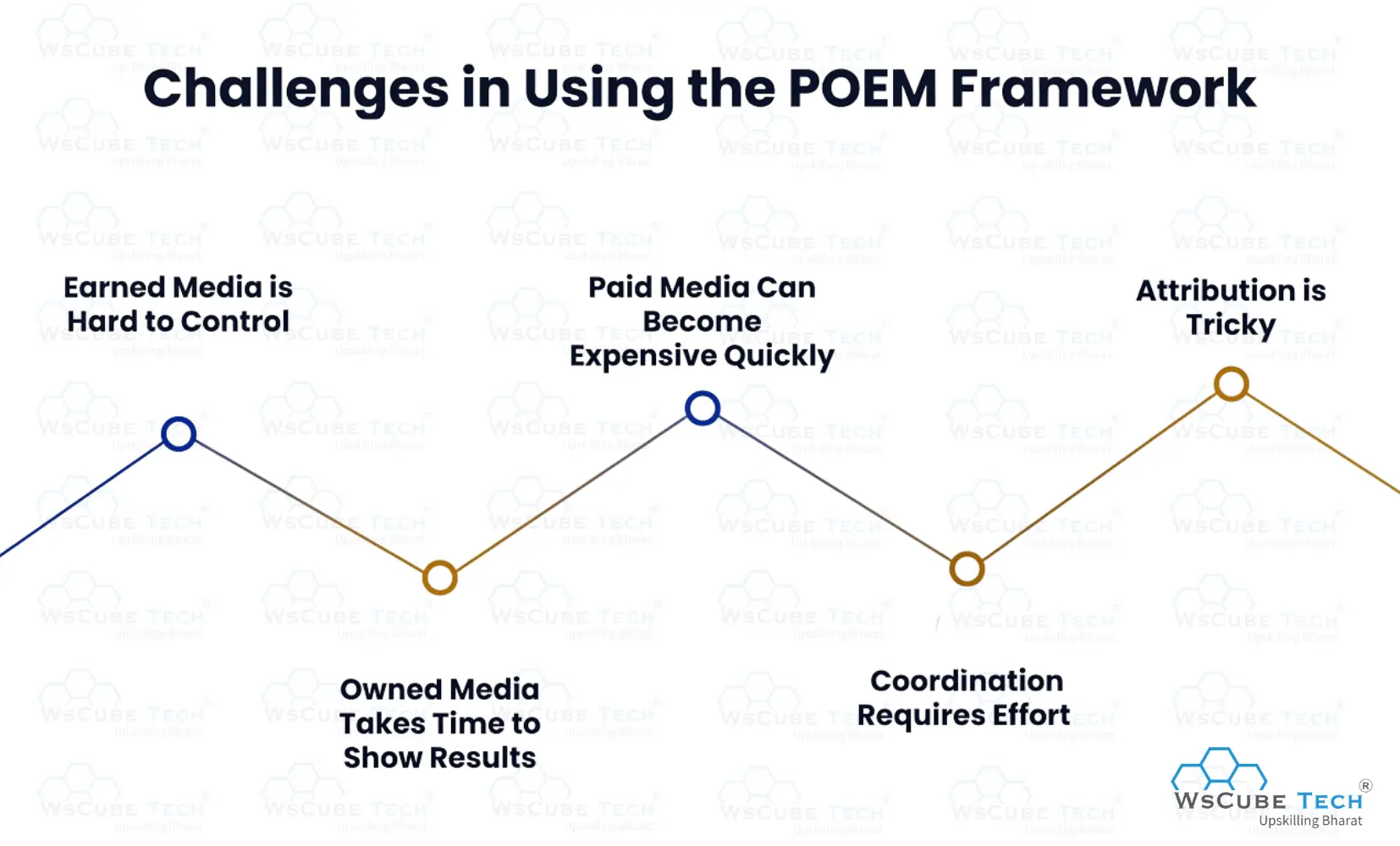
1. Earned media is hard to control
You can encourage it, but you cannot force it. Negative reviews or bad press are also a form of earned media, and those can be damaging.
2. Owned media takes time to show results
Building a blog audience or an email list does not happen overnight. Many businesses get impatient and abandon owned media efforts too soon.
3. Paid media can become expensive quickly
Without proper targeting and optimization, paid media budgets can drain fast with little to show for it.
4. Coordination requires effort
Making all three media types to work together requires planning, consistent messaging, and sometimes multiple teams working in sync. This is more complex than running a single-channel campaign.
5. Attribution is tricky
Understanding which media type actually drove a sale can be difficult, especially when a customer has interacted with your ads, read your blog, and seen a review before buying. Tools like Google Analytics 4 help, but multi-touch attribution remains a challenge.
Tips for Success with the POEM Framework in Digital Marketing
Here are some practical tips to help you get the most out of the POEM model marketing approach:
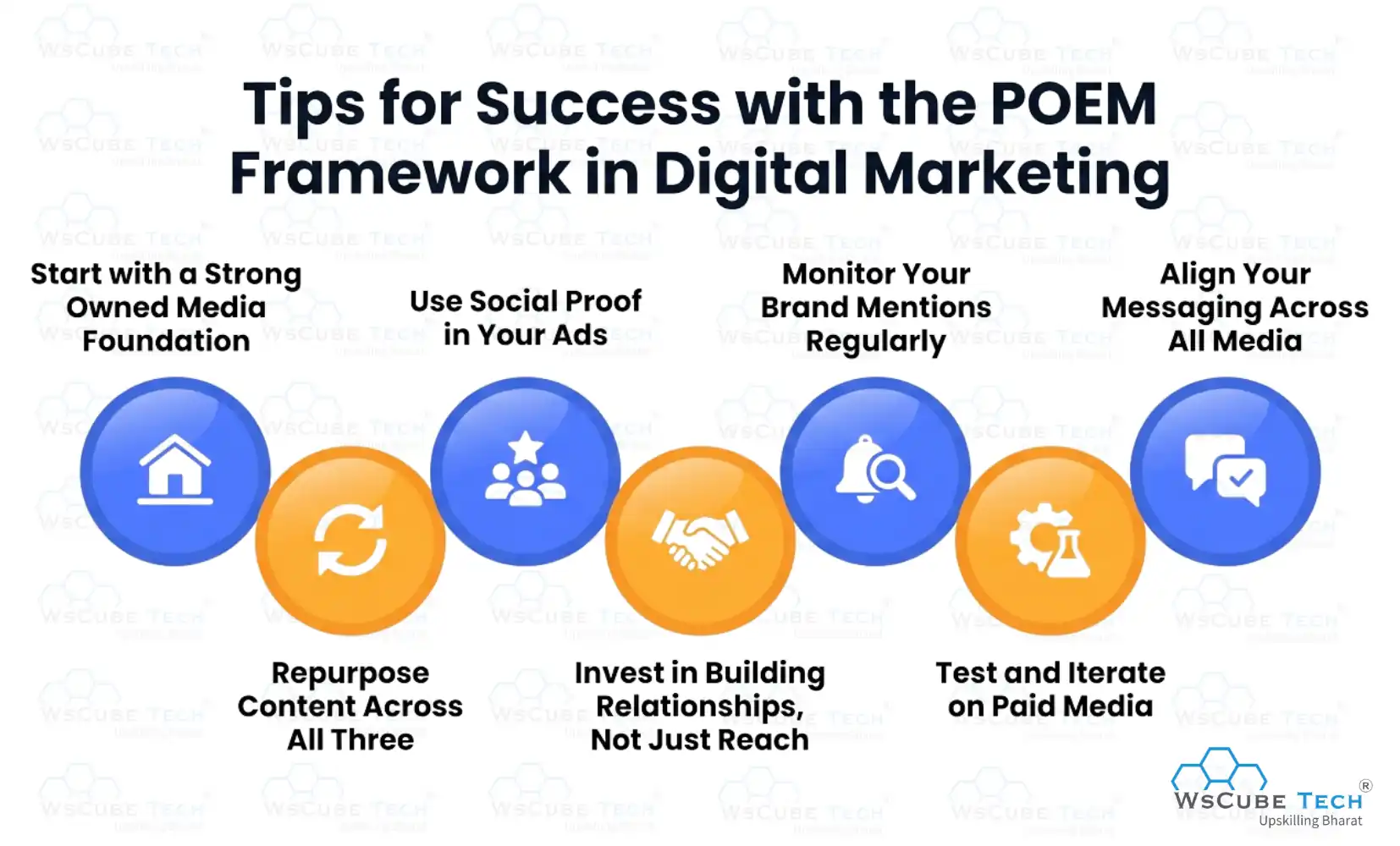
1. Start with a strong owned media foundation
Do not pour money into ads if your website is slow, your landing pages are weak, or your content is thin. Fix your foundation first.
2. Repurpose content across all three
A blog post (owned) can be promoted via ads (paid) and might get picked up by a journalist (earned). Think of each piece of content as a seed that can grow in multiple directions.
3. Use social proof in your ads
Turn your best reviews or earned media mentions into ad creatives. Real customer voices perform better than polished marketing copy.
4. Invest in building relationships, not just reach
The brands that earn the most media attention are the ones that genuinely connect with their community. Respond to comments, engage with creators in your space, and show up consistently.
5. Monitor your brand mentions regularly
Set up Google Alerts or use tools like Mention or Brand24 to track when people talk about your brand online. This helps you respond quickly and stay on top of your earned media.
6. Test and iterate on paid media
Never run a single ad version and leave it. Test different headlines, images, audiences, and offers. The data will tell you what works.
7. Align your messaging across all media
Your paid ads, website copy, and the way customers describe you should all tell a consistent brand story. Inconsistency creates confusion and reduces trust.
FAQs about POEM in Digital Marketing
POEM stands for Paid Media, Owned Media, and Earned Media. It is a framework used in digital marketing to categorize and coordinate different types of marketing channels.
A simple example: A brand runs Facebook ads (paid) that drive traffic to their blog (owned). The blog post goes viral and gets shared by influencers (earned). This is the poem framework in digital marketing with example thinking applied in real life.
It helps marketers think holistically about their channels, balance short and long-term efforts, and create a more resilient and effective marketing strategy.
Earned media is generally considered the most trustworthy because it comes from independent sources like customers, journalists, and influencers, rather than the brand itself.
Absolutely. Even with a small budget, a business can build owned media (blog and website), invest modestly in paid ads, and focus on getting reviews and word-of-mouth. The framework scales to any size.
Owned media is what you create and control directly (your website, blog, emails). Earned media is what others say about you (reviews, press, social shares) that you did not pay for directly.
The POEM framework strengthens SEO through owned media (website and blog content), earned media (backlinks and brand mentions), and paid media that drives additional visibility. Together, they help improve search rankings and organic traffic over time.
It can be both. Sponsored influencer collaborations are paid media, while organic mentions from influencers without compensation are earned media. Many brands use paid partnerships to generate additional earned exposure.
Review paid media weekly to track performance and adjust campaigns. Owned and earned media can typically be reviewed monthly to measure content, SEO, brand mentions, and overall results.
Popular tools include Google Ads and Meta Ads Manager for paid media, WordPress and Google Search Console for owned media, and Brand24 or Mention for tracking earned media and brand mentions.
Yes. The framework applies to both digital and traditional marketing. For example, TV ads are paid media, brochures are owned media, and newspaper coverage is earned media. The same principles work across all marketing channels.
Conclusion
The POEM framework in digital marketing helps businesses create a balanced strategy by combining the reach of paid media, the control of owned media, and the trust of earned media.
By using the POEM model marketing approach, brands can attract audiences, build credibility, and achieve sustainable long-term growth. Focus on strengthening all three media types to create a more effective and results-driven marketing strategy.
Join Our On-Campus Digital Marketing Program
Explore Our Free Courses



Leave a comment
Your email address will not be published. Required fields are marked *Comments (0)
No comments yet.