The demand for digital marketing professionals is growing rapidly as businesses are moving online and focusing more on digital platforms to reach customers. Before joining any training program, understanding the Digital Marketing Course Syllabus is very important because it gives a clear idea of what you will learn during the course.
A complete syllabus usually includes SEO, social media marketing, Google Ads, content marketing, email marketing, analytics, affiliate marketing, and other important digital skills. In this blog, we will explain the latest digital marketing syllabus, with average fees and duration.
What is a Digital Marketing Course?
A digital marketing course is a structured training program that teaches how brands promote products and services online using websites, social media, search engines, email, and paid ads. It helps beginners and professionals understand modern marketing tools, strategies, and analytics so they can drive traffic, generate leads, and grow sales in the digital world.
It also covers practical skills like SEO, social media marketing, content creation, Google Ads, and performance tracking, helping learners build successful careers or grow businesses online.
Why Understanding the Syllabus is Important Before Joining a Course?
Before joining any program, understanding the syllabus helps students know what they will learn, which skills they will gain, and whether the course matches their career goals and interests perfectly.
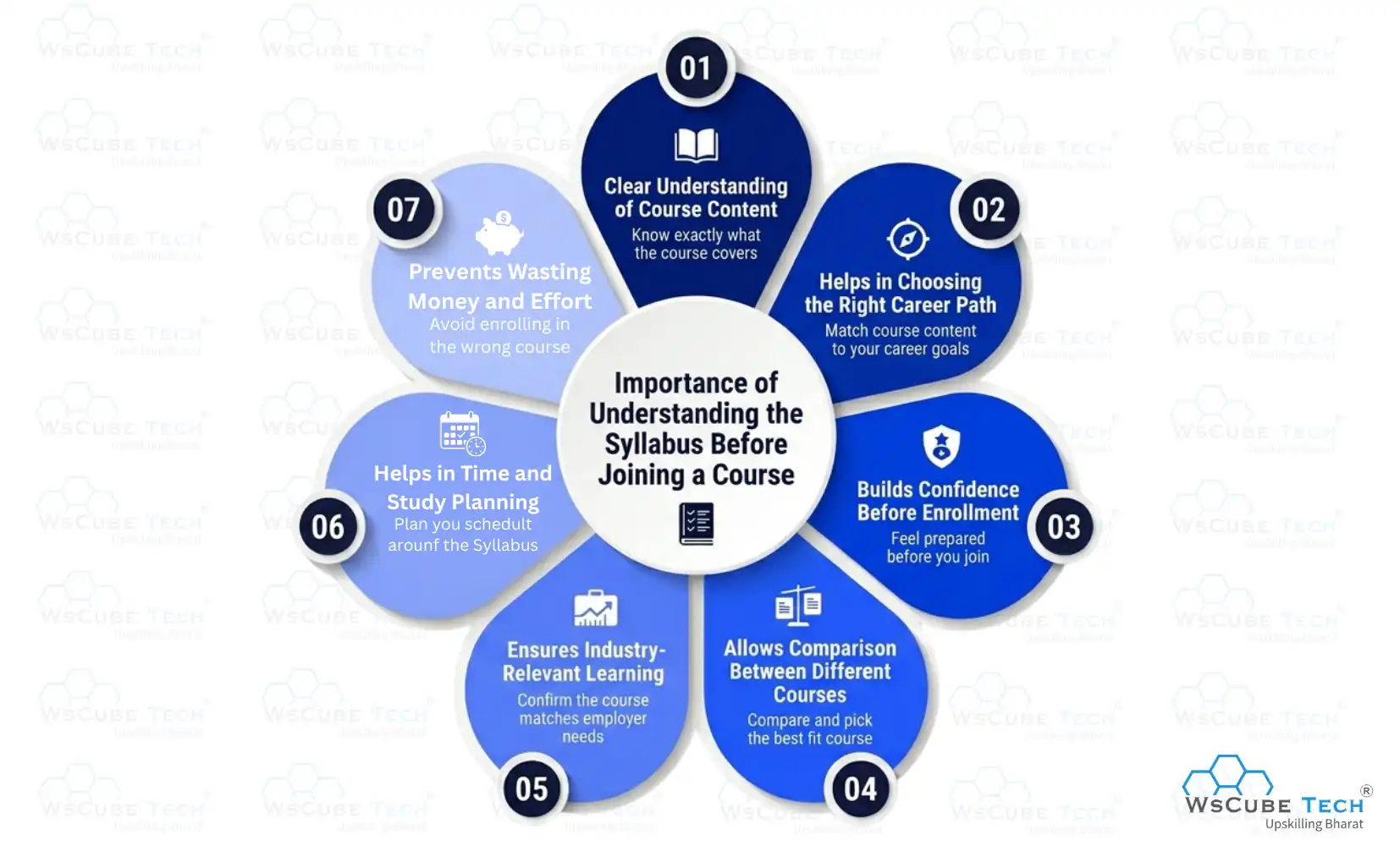
1. Clear Understanding of Course Content: A syllabus gives complete details about subjects, modules, and topics covered in the course. It helps students avoid confusion and understand what they will study throughout the program.
2. Helps in Choosing the Right Career Path: By reviewing the syllabus, students can decide whether the course supports their future career plans, interests, and industry requirements before investing time and money.
3. Builds Confidence Before Enrollment: Knowing the learning structure, assignments, and practical training helps students feel prepared and confident about joining the course without uncertainty or hesitation.
4. Allows Comparison Between Different Courses: Students can compare syllabuses of multiple institutes or programs to identify which course offers better modules, updated topics, certifications, and practical exposure.
5. Ensures Industry-Relevant Learning: A well-designed syllabus includes modern tools, technologies, and trending concepts that match current industry demands and improve job opportunities after course completion.
6. Helps in Time and Study Planning: Understanding the syllabus in advance allows students to manage their study schedule, learning pace, and preparation strategy more effectively during the course duration.
7. Prevents Wasting Money and Effort: Checking out the syllabus before admission helps students avoid enrolling in outdated or irrelevant courses that may not provide useful skills or career growth opportunities.
Recommended Professional Certificates
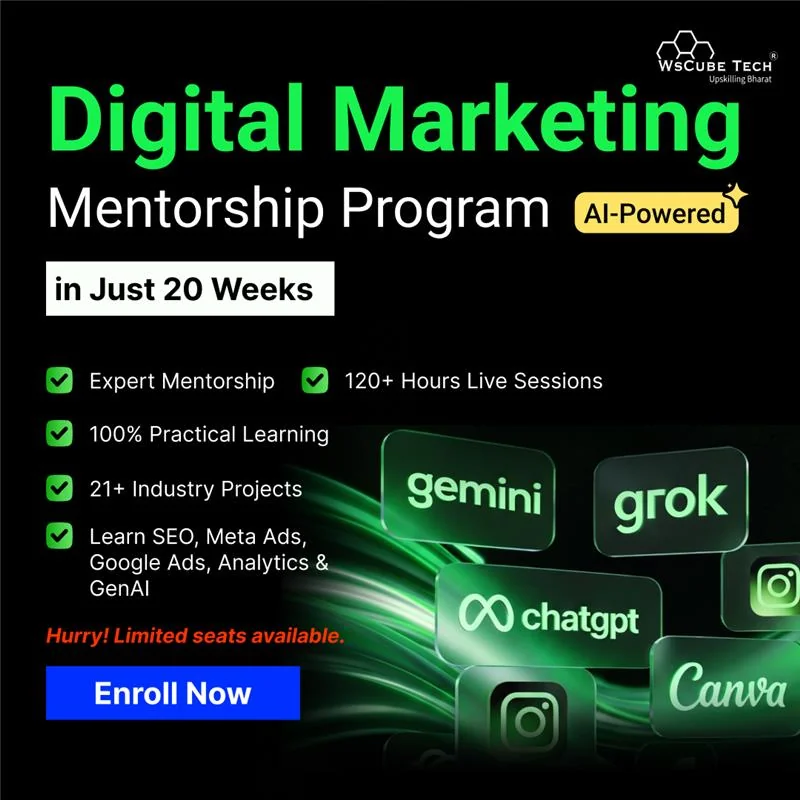
AI-Powered Digital Marketing Course
Performance Marketing Bootcamp
SEO Specialist Bootcamp
Digital Marketing Course Syllabus 2026
Professional diplomas, free online digital marketing courses with certificates, and short-term digital marketing programs are all popular choices today. No matter which digital marketing course you choose, every digital marketing course syllabus will cover the same core topics, just in more detail for longer courses and in brief for shorter ones, depending on the duration and learning goals.
WsCube Tech’s Digital Marketing Course Syllabus
| Chapters | Topics |
| Digital Marketing Foundation & AI Mindset | - Digital marketing ecosystem & growth levers - Brand, performance & growth marketing models - Business models - D2C, B2B, EdTech, Local, SaaS, etc - Customer journey & funnel frameworks (TOFU–MOFU–BOFU) - Consumer behavior & buying triggers - ICPs, personas & audience research with AI - Market & competitor analysis using AI tools - Brand positioning, channels & KPI frameworks |
| Websites & Landing Pages | - Website fundamentals & digital marketing role - Business websites vs marketing websites - WordPress basics & dashboard navigation - Domain, hosting & website environment setup - Website structure & page hierarchy - WordPress configuration & theme customization - Pages, posts, menus & content management - Conversion-focused landing pages - User intent, buyer psychology & messaging - Headlines, CTAs, forms & trust elements - AI-assisted landing page ideation - No-code landing page design |
| Introduction to SEO | - SEO fundamentals & types - Search engines & ranking basics - SERP structure & evolving features - Zero-click searches & AI-driven SERPs - AEO, SGE & modern search behavior - Keywords, intent & SXO mapping - Voice search & entity-based SEO (GEO) - AI-driven keyword research - Keyword analysis, long-tails & mapping |
| On-Page SEO | - On-page SEO fundamentals & importance - AI-assisted on-page optimization checklist - Title tags, meta descriptions & heading structure - Meta robots tags & image SEO (alt attributes) - SEO-friendly website & URL structure - Internal linking & anchor text optimization - Content quality, keyword usage & plagiarism control - SEO-friendly blogs & long-form content - Keyword-to-content mapping & EEAT framework |
| Technical SEO | - Technical SEO fundamentals & importance - XML & HTML sitemap creation - Robots.txt & crawl control - Canonicalization & duplicate content handling - HTTPS, website security & custom 404 pages - Broken links & redirection strategies - Site speed, Core Web Vitals & mobile SEO - Schema markup & structured data types - AEO, rich results & schema validation |
| Web Analytics & Monitoring | - Introduction to Google Search Console (GSC) - GSC setup, sitemap submission & URL inspection - Indexing, coverage & performance reports - GA4 overview & SEO-focused metrics - GA4 setup via Google Tag Manager (GTM) - Traffic, engagement & conversion analysis - SEO performance reporting & insights - Off-page SEO & backlink fundamentals - Website & technical SEO audit process |
| SEO Live Brand Projects | - SEO audit fundamentals & prioritization - Complete technical SEO audit process - Keyword & page mapping strategy - Content optimization using AI - Backlink strategy & off-page planning - Google Search Console–based audits - SEO issue identification & fixing roadmap - Local SEO project for MSME businesses - Scalable SEO strategy for D2C / SaaS / EdTech brands |
| Social, Content & Influencers Marketing | - Social media marketing fundamentals - Platform algorithms, reach & engagement - Organic vs paid social media strategy - Platform selection for different business models - Awareness, engagement & conversion funnels - Facebook & Meta ecosystem overview - Instagram algorithm & content formats - Organic lead generation on social media - AI-assisted social media strategy & content planning |
| Platform-Led Growth & Social Media Management | - Platform-led growth fundamentals - YouTube ecosystem, algorithm & channel optimization - YouTube SEO, thumbnails, CTR & retention - Short-form video strategy (YouTube Shorts) - Twitter (X) content formats & engagement strategy - Pinterest marketing & Pinterest SEO - LinkedIn company pages & B2B content strategy - Social media calendars & account management - Platform-wise analytics & AI-driven performance insights |
| Content Marketing | - Content marketing fundamentals & growth models - Content types, formats & platform-wise strategy - Video-first content & short-form formats - Content pillars, brand voice & content funnels - Content calendars & distribution strategy - Copywriting frameworks (AIDA, PAS) & hooks - Ad copy, page copy & product copywriting - Scripting for reels, shorts & YouTube videos - AI-powered content ideation, optimization & scaling |
| Influencer & Creator Marketing | - Influencer & creator marketing ecosystem - Types of influencers & brand–creator fit - Influencer funnels & content formats - Influencer KPIs, metrics & performance tracking - AI-assisted influencer research & discovery - Influencer outreach & collaboration models - UGC, whitelisting & campaign execution - Community-led marketing & engagement loops - Founder-led branding, authority & trust building |
| Introduction to Meta Ads | - Performance marketing fundamentals - Meta Ads ecosystem overview - Facebook Business Manager & Ads Manager - Ad objectives & campaign goals - Campaign, ad set & ad structure basics - Budgeting & ad scheduling - Audience targeting fundamentals - AI-assisted targeting ideas & interests - Facebook boosting & basic promotions |
| Meta Ads Conversion Tracking | - Custom audiences & audience types - Lookalike audience creation & usage - Audience strategy for scaling campaigns - Product catalogue setup & management - Collection ads & catalogue-based campaigns - End-to-end Meta campaign execution - Campaign performance analysis - Optimization & budget reallocation - Conversion tracking & reporting insights |
| Google Search Ads | - Google Ads ecosystem & benefits - Search ad formats & placements - Campaign objectives & bid strategies - Keyword research for search campaigns - Match types & negative keyword strategy - AI Max search campaign setup - Search ad copywriting with generative AI - Ad extensions & enhanced visibility - Search campaign optimization & reporting |
| Google Display & Video Ads | - Google Display Network fundamentals - Display ad formats & targeting options - Audience, placement & topic targeting - Visual ad strategy for awareness & consideration - YouTube Ads ecosystem & integration - Video campaign goals & ad subtypes - Video ad sequencing & storytelling ads - Bid strategies, frequency capping & scheduling - Display & video campaign optimization |
| Conversion Tracking | - Conversion tracking fundamentals - Creating & configuring conversion actions - Google Tag Manager (GTM) integration - Conversion linker & tracking accuracy - GA4 and Google Ads linking - Remarketing fundamentals & benefits - Remarketing audience creation & usage - Performance Max campaign overview - Demand campaign setup & optimization |
| Ecommerce Ads | - Advanced Amazon marketing fundamentals - Amazon Sponsored Ads & campaign structure - Amazon keyword research & optimization - Amazon reports & performance analysis - D2C growth strategy & brand scaling - High-converting video ads & catalogue strategy - Meta + Google Ads engine for ecommerce sales - Service business ad strategies - Smart audience targeting & multi-platform execution |
| Email Marketing, WhatsApp Marketing & Freelancing | - Email marketing fundamentals & use cases - Email list building & audience segmentation - Email content creation & automation flows - Email analytics, optimization & retention - WhatsApp marketing strategy & campaign planning - WhatsApp Business API tools & broadcast messaging - Lead nurturing & lifecycle communication - Freelancing platforms & profile optimization - Service packaging, pricing & client acquisition |
| AI Agents & Automation Workflow | - Marketing automation fundamentals - AI agents & no-code automation concepts - n8n workflow interface & core components - Triggers, actions & data flow mapping - Multi-step automation with conditional logic - Connecting marketing tools & platforms - AI-powered workflow execution - Workflow testing, debugging & monitoring - Scalable automation systems for marketing operations |
Other Institutes’ Digital Marketing Course Syllabus
| Milestone / Module | Topics Covered | Key Skills You Learn |
| Milestone 1: Digital Marketing Foundations | - Introduction to Digital Marketing - Marketing Funnel - Customer Journey - Consumer Psychology - Branding Basics - Market Research | Marketing fundamentals, audience understanding, brand strategy |
| AI Mindset & Growth Marketing | - AI in Digital Marketing - Growth Frameworks - Audience Research with AI Tools - Competitor Analysis | AI-powered marketing strategies |
| Website Development | - Website Fundamentals - WordPress Setup - Website Structure - Hosting & Domain Management | Website creation and management |
| Landing Page Design | - Landing Page Optimization - CTA Placement Lead Generation Pages - Conversion Optimization | Conversion-focused web design |
| Milestone 2: SEO & AEO | - Search Engine Optimization Basics - Search Engine Algorithms - Keyword Research | Organic traffic generation |
| On-Page SEO | - Meta Tags - URL Optimization - Content SEO - Internal Linking - Image Optimization | Website ranking optimization |
| Off-Page SEO | - Link Building - Guest Posting - Social Bookmarking - Directory Submission | Authority building techniques |
| Technical SEO | - Crawling & Indexing - Sitemap - Robots.txt - Page Speed Optimization | Technical website optimization |
| Local SEO | - Google Business Profile Optimization - Local Citations - Reviews Strategy | Local business visibility |
| Answer Engine Optimization (AEO) | - Featured Snippets - Voice Search Optimization - AI Search Optimization - Zero-Click Searches | AI-first SEO strategies |
| SEO Tools Training | - Google Search Console - Google Analytics - Ahrefs - SEMrush - Screaming Frog | Professional SEO tool handling |
| Milestone 3: Social Media Marketing | - Facebook Marketing - Instagram Marketing - LinkedIn Marketing - Twitter/X Marketing | Social media brand building |
| Content Marketing | - Content Planning - Blogging - Storytelling - Copywriting - Content Funnel | Content strategy development |
| Influencer Marketing | - Influencer Outreach - Brand Collaborations - Campaign Planning | Influencer campaign management |
| Video Marketing | - YouTube Marketing - Reels Strategy - Shorts Optimization | Video content promotion |
| Graphic Design Basics | - Canva Design - Social Media Creatives - Ad Creatives | Creative marketing skills |
Upcoming Masterclass
Attend our live classes led by experienced and desiccated instructors of Wscube Tech.


MBA Digital Marketing Syllabus
An MBA in Digital Marketing is a postgraduate program that combines general management skills with specialized digital marketing knowledge. It covers core business subjects in the first year—like marketing management, finance, and analytics—and then shifts to advanced digital topics such as SEO, SEM, social media, email marketing, and performance marketing strategy.
Typical MBA in Digital Marketing Syllabus (2‑Year Structure)
| Year / Semester | Type of Subjects | Example Topics |
| Year 1 – Semester 1 | Core Management | Marketing Management, Managerial Economics, Business Analytics, Organizational Behaviour |
| Year 1 – Semester 2 | Foundation & Digital Intro | Digital Business Models, Consumer Behaviour (Online), Basics of SEO & Social Media |
| Year 2 – Semester 3 | Core Digital Marketing | SEO, SEM / PPC, Social Media Marketing, Email Marketing, Content Strategy |
| Year 2 – Semester 4 | Advanced & Strategy | Advanced Analytics, Marketing Automation, Digital Campaign Planning, Capstone Project / Internship |
Digital Marketing Course Eligibility 2026
The digital marketing course eligibility is:
- Candidates with a marketing, advertising, and content creation degree can quickly sign up for a digital marketing course.
- For a basic digital marketing certification course, an individual must complete 10+2 with 50% in any stream.
- If an individual wants to pursue a diploma in digital marketing, they must have an aggregate of 50% in class 12.
- If an individual aims to pursue a postgraduate diploma in digital marketing, they must have 50% marks in graduation from any discipline.
- To get a BBA degree in digital marketing, the candidate must get 50% in 12th standard in any stream from a recognized board.
- Suppose a person wants an MSc or MBA in digital marketing; in such case, they need to have 50% marks overall in graduation from any discipline from a recognized college or university.
Read More Important Digital Marketing Guides
Digital Marketing Course Duration
A digital marketing course duration can range from a few weeks to over a year, depending on the level, depth, and format. Short-term certificates are ideal for quick job ready skills, while diploma and advanced programs take more time for in‑depth learning and live projects.
Digital Marketing Course Duration (Typical Ranges)
| Type of Course | Usual Duration |
| Short online certificate course | 4–8 weeks |
| Self‑paced foundation course | 1–3 months |
| Specialized courses (SEO, PPC, SMM, etc.) | 1–3 months |
| Comprehensive digital marketing certification | 3–6 months |
| Diploma in digital marketing | 6–12 months |
| Advanced / executive digital marketing program | 6–12 months |
| MBA / PG in digital marketing | 1–2 years |
Digital Marketing Course Fees
Digital marketing course fees differ from one institute to another. In India, various institutes offer digital marketing courses after the 12th. The estimated digital marketing course fee is approximately ₹65,000.
If an individual is taking a digital marketing course as an academic program, some fees might vary from one institute to another. Institutes set up the course fees depending on the following factors:
- Type of Institute (Government, Private, Aided, etc.)
- College location
- Status and rating of the college
Digital Marketing Jobs After Course
It may be a startup, mid-level, or top MNC; no matter the company's size, everyone opts for digital marketing techniques to attract customers. So, companies are starting online or internet marketing methodologies to enhance their branding.
As there are various job opportunities for DMCA-certified candidates, below is a list of job designations that candidates can fit into after taking digital marketing courses.
Opportunities for Digital Marketing Certified Candidates
- Content Marketing
- Search Engine Marketing (SEM)
- Search Engine Optimization (SEO)
- Social Media Marketing (SMM)
- Web Analytics
- Email Marketing
Job Designations for DMCA Certificate Holder
- SEO Executives
- Search Engine Marketers
- Social Media Marketing Experts/Specialists
- Content Writers
- Content Marketing Manager
- Digital Marketing Manager
- Inbound Marketing Manager
- Conversion Rate Optimizer
Explore Our Most Popular Marketing Courses
Digital Marketing Salary After Course
The following table lists the various job opportunities in the Digital Marketing field and the Digital Marketing salary for these job roles.
| Job Profile | Job Role | Salary (per annum) |
| Digital Marketing Manager | Digital Marketing Managers establish a brand’s online presence to generate cost-effective sales | ₹11LPA to ₹12.1LPA |
| Search Engine Optimization Specialist (SEO Specialist) | SEO specialist generates traffic on a website or webpage and makes it rank on Google's first page by using relevant keywords | ₹5.2LPA to ₹5.8LPA |
| Pay-Per-Click Analyst (PPC Analyst) | PPC analyst manages paid ad campaigns and generates revenue greater than the investment | ₹4.9LPA to ₹5.4LPA |
| Social Media Marketing Specialist | Social Media Marketing Specialist ensures positive brand engagement and paid or organic quality content across all social media platforms | ₹4.2LPA to ₹4.6LPA |
| Search Engine Marketing Specialist | Search Engine Marketing Specialist is responsible for paid advertisements on all types of search engines for revenue generation | ₹5.3LPA to ₹5.8LPA |
| Content Marketing Manager | The Content Marketing Manager is responsible for handling content on the entire website | ₹13.9LPA to ₹15.3LPA |
Source: AmbitionBox, based on the latest 2026 salary data for digital marketing roles in India.

FAQs About Digital Marketing Course Syllabus
A digital marketing course syllabus usually covers SEO, PPC, social media marketing, email marketing, content marketing, web analytics, and campaign planning. The exact modules depend on the course level and institute, as shown in the digital marketing course syllabus pdf and digital marketing course information.
Most institutes provide a digital marketing course syllabus pdf on their official website or course page. You can download it directly or request it via email to check topics, tools, and project details before enrolling.
No, the digital marketing course syllabus varies by level, duration, and institute. Short courses focus on basics, while advanced programs include AI‑driven strategies and live projects, as mentioned in the digital marketing course information.
A basic syllabus covers SEO, social media ads, and Google Analytics, while an advanced digital marketing course syllabus adds AI tools, automation, and complex analytics. Both aim to prepare you for real-world campaigns.
The learning time depends on the program: short certificates run 4–8 weeks, while diploma and advanced courses span 3–12 months. The digital marketing course syllabus and digital marketing course information usually mention a clear weekly breakdown.
Yes; most modern syllabi include live projects like SEO optimizing a website, running Google Ads, or creating a social media plan. These projects help you apply the digital marketing course syllabus directly to real campaigns.
Reputable institutes link digital marketing course fees and the full syllabus on the same page or brochure. Comparing these helps you judge whether the content and price match your learning and career goals.
Top institutes regularly update the digital marketing course syllabus to include AI tools, automation, and current platforms. Always review the latest digital marketing course information to confirm that the syllabus stays industry relevant.
Many institutes allow batch transfers or plan revisions if the syllabus does not suit your learning pace. Check their digital marketing course information page for policies on changes, fees, and support.
Reviewing the digital marketing course syllabus helps you confirm topics, duration, tools, and projects that match your goals. This avoids surprise skill gaps and ensures you enroll in a program whose digital marketing course fees and outcomes fit your budget and career path.
Conclusion
Choosing the right digital marketing course starts with understanding the syllabus, topics, and learning outcomes. A clear syllabus ensures you gain practical skills in SEO, social media, ads, and analytics that match your career goals.
When selecting a program, always check the digital marketing course duration and fees to find the right balance between quality training and affordability. This helps you enroll in a course that fits your schedule, budget, and long-term growth in the digital world.
Join Our On-Campus Digital Marketing Program
Explore Our Free Courses





Leave a comment
Your email address will not be published. Required fields are marked *Comments (0)
No comments yet.