
Did You Know? More than 6 billion people use the internet today, making digital platforms an essential part of our daily lives. As traditional advertising takes a back seat, businesses are increasingly turning to digital marketing to reach their target audience, build brand awareness, and drive sales.
However, while the benefits of digital marketing are hard to ignore, it also comes with certain challenges. Understanding the advantages and disadvantages of digital marketing can help businesses make informed decisions and create more effective marketing strategies. In this article, we'll explore the key digital marketing pros and cons every business should know.
What is Digital Marketing?
Digital marketing, also known as online marketing, is the practice of promoting products, services, or brands through digital channels such as search engines, social media platforms, websites, email, and mobile applications. It helps businesses connect with their target audience, increase brand awareness, generate leads, and drive sales.
Unlike traditional marketing, digital marketing allows businesses to track performance in real time, personalize customer experiences, and reach audiences across the globe. As technology continues to evolve, digital marketing has become an essential strategy for businesses of all sizes looking to grow in an increasingly digital world.
Types of Digital Marketing
Here are the different types of digital marketing
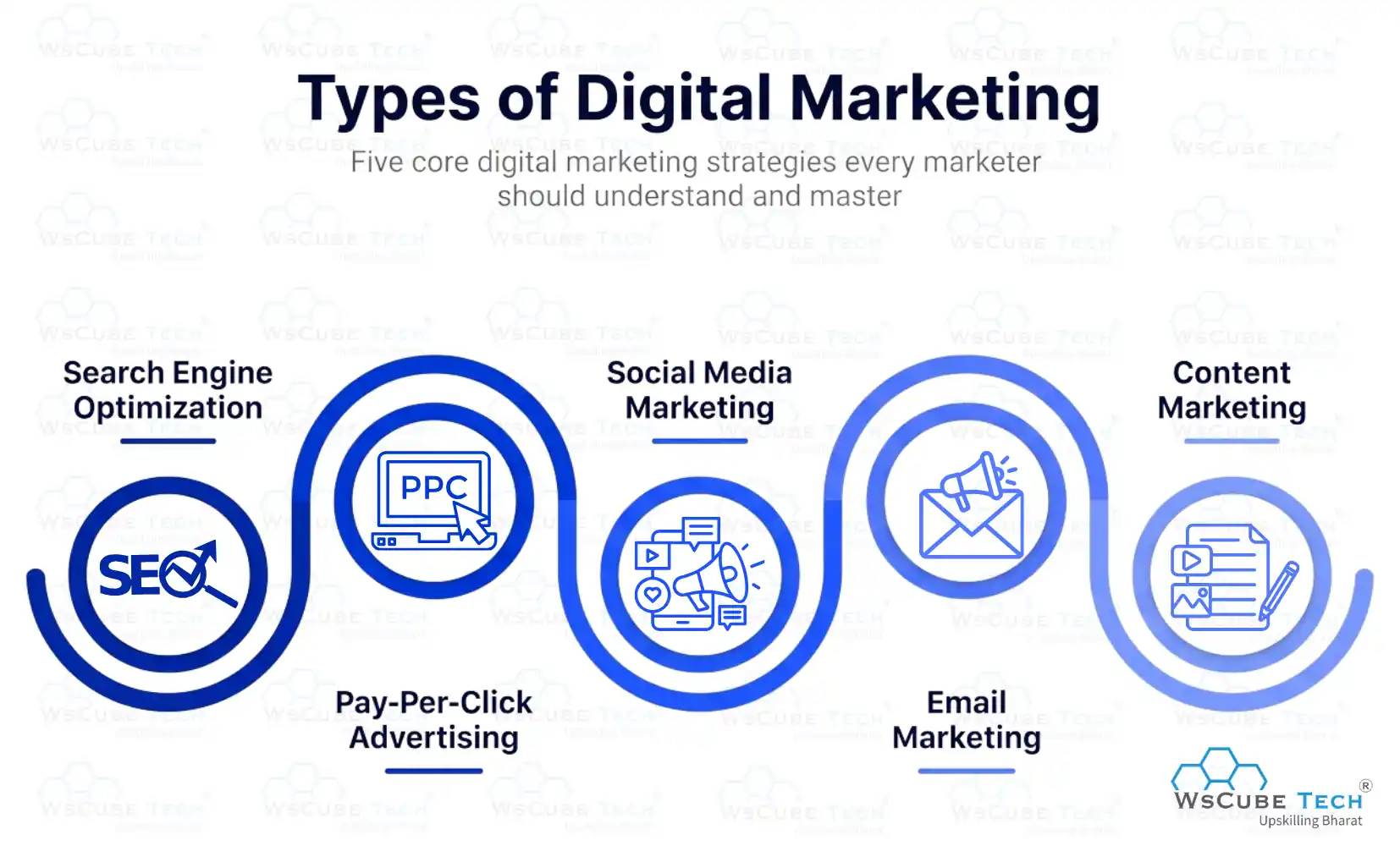
1. Search Engine Optimization (SEO)
SEO involves optimizing a website's content and structure to upgrade its visibility and ranking in search engine results pages.
2. Pay-Per-Click (PPC) Advertising
PPC involves placing advertisements on social media platforms or search engines and paying a fee each time someone clicks on the ad.
3. Social Media Marketing
This involves the usage of Twitter, Facebook, Instagram, the social media platforms to promote products or services and engage with customers.
4. Email Marketing
Email Marketing involves sending marketing messages or promotional offers to a list of email subscribers.
5. Content Marketing
This involves creating and sharing relevant, valuable, consistent content, such as videos, blog posts, and articles, to captivate and retain a clearly defined audience.
These are some examples of digital marketing, but businesses can use many other tactics and strategies to reach and engage with customers online.
Why is Digital Marketing Important?
With digital marketing, brands reach their target audience and promote their product or service. This highlights the growing importance of digital marketing for businesses of all sizes. Although that's the goal of a traditional marketing campaign, digital marketing helps brands target a more specific or niche audience.
Connecting with customers digitally helps build a larger audience that trusts your brand. It is advantageous for small businesses, which can easily leverage digital marketing tactics without the help of a marketing department or agency.
Expert Tip: Many businesses fail with digital marketing not because the channels don't work, but because they try to be everywhere at once. Start with one or two channels where your audience is most active, measure results, and scale gradually.
Recommended Professional Certificates
AI-Powered Digital Marketing Course
Performance Marketing Bootcamp
SEO Specialist Bootcamp
Advantages of Digital Marketing
Digital marketing is thriving over traditional marketing nowadays. Whether a new business owner or a veteran is trying to establish his branding ideas, understanding the advantages of digital marketing goes all the way. Here are some merits of digital marketing advantages and disadvantages you should know:
1. Cost-Effective
Digital advertising mediums, such as PPC, SEO, etc., are relatively cheaper than conventional ones. Digital marketing is the most reasonable and fastest way to market brand products.
2. Effective Global and Local Reach
Reaches the target audience locally and globally, unlike traditional methods that can be restrictive. Helps with local visibility, especially when the market depends on the local reputation.
3. Quick Branding on a Larger Scale
Directing personalized campaigns on websites that the audience visits most helps build a worldwide brand. Provides several approaches for a brand to become more trustable, reliable, and favorable.
4. Best Way to Present Brand's Expertise
Enables multiple strategies to convey the same message, i.e., making a brand stand out. Allows digital marketers to represent a brand's expertise via images, videos, texts, and anything in the line of content.
5. Establishes Sales Funnel
Sets up an online sales funnel that traces the target audience's journey from online visitors to regular customers. Helps suitably modify users' sales experience and individual branding campaigns for better probability and favorable outcomes.
6. Enables Personalization and Accurate Targeting
Pays more attention to individual user experience. For instance, the latest AI helps immediately resolve basic to advanced queries. Helps a business set clear consumer targets depending on gender, age, occupation, hobbies, interests, or other criteria.
7. Trackable Results
Firms can analyze the efficacy of marketing strategies and voluntarily work on necessary changes. Also, they use digital marketing reports, the official documentation of marketing channel results after a specific duration.
8. Greater Benefits For The Company
As the Internet is the most preferential place for turning leads into customers, companies benefit greatly by implementing such strategies to fetch a better return on investment than traditional methods. This is one of the major benefits of digital marketing over conventional approaches.
9. Increased Engagement
Digital marketing encourages 2-way communication. You can engage with the users through social media, comments, and direct messages, building relationships and fostering customer loyalty.
10. Targeted Advertising
Digital marketing enables precise targeting. You can tailor the campaigns to reach specific demographics, interests, or behaviors, ensuring your message reaches the right people at the right time.
11. Measurable Results
Unlike traditional marketing, digital marketing provides detailed analytics and metrics. You can track the campaigns' performance in real-time, allowing you to make data-driven decisions and optimize your strategies for better results.
12. Improved Conversion Rates
With targeted marketing and personalized content, digital marketing often leads to higher conversion rates. You increase the chances of turning leads into clients by reaching the appropriate audience with the right message.
13. 24/7 Accessibility
Your online presence is available 24/7. Potential customers can access your website, social media, or other digital platforms anytime, providing a consistent and accessible point of contact.
14. Versatility in Platforms and Strategies
Instagram, Facebook, email, podcasts – it's like a buffet of options. Every business, no matter what niche, can find its place. Selling handmade crafts? There's Etsy. Got a thing for videos? There's YouTube. There's a fit for everyone and multiple strategies to play around with.
15. Environmental Friendly
Think of all the paper saved! A significant digital marketing advantage is its eco-friendly nature. No print materials, no physical waste. It's marketing that's kind to your wallet and the planet.
Upcoming Masterclass
Attend our live classes led by experienced and desiccated instructors of Wscube Tech.



Disadvantages of Digital Marketing
Here come the drawbacks. We have listed some disadvantages of digital marketing before you think about shifting from the traditional one. Understanding these limitations of digital marketing is just as important as knowing its benefits:
1. Cyber Security and Privacy Issues
Cybercrime is one of the major setbacks to advancement in technology. Businesses must implement safe marketing operations independent of hacking. The most basic way of hacking is through email, mostly emails void of encrypting to avoid breaches.
2. Accessibility Challenge
Though digital marketing methods provide global and local reach, some still lack Internet access. Roughly some percentage of the world's population uses the Internet, so the rest of the world can be targeted through traditional marketing.
3. Reliance on the Latest Technology
Utilizing the current devices and software can be a huge investment and not feasible for small businesses. Companies using the latest features can miss an unaware customer base or must be better versed in the latest technologies. For instance, businesses that use mobile applications cannot reach people with no smartphones.
4. Minor Issues; Major Setback
The audience will likely go to the competitors if a company's site experiences slow page loading, poor user interface, and other technical setbacks. Therefore, brand choice shifts rapidly among consumers and on a large scale.
5. Global Competition
Availing global reach via digital marketing brings challenges, like international competition. Companies failing to stand out or attract substantial attention disappear from the competition. As a result, they must consistently apply relevant strategies.
6. Confronting Negative Feedback
The accessibility to feedback on marketing brings brands to the end of brutally honest criticism. It can come from the poor reputation and reach of the brand. Hence, it can sometimes tamper with employee mental health and productivity.
7. Anti-Brand Activities
As the brand upgrades, it is open to malicious intentions that lower its reputation. For example, individuals or groups may post false, poor reviews of the products on several platforms.
8. Likelihood of Strategies Theft
As the global public uses the Internet, competitors can copy their innovative marketing strategies, too. It can help them acquire similar results. So, firms must continually push themselves for new ideas to stay in the lead.
9. Constant Algorithm Changes
Google and social media networks frequently update their algorithms. These changes can impact your digital marketing efforts, affecting your organic reach and ad performance.
10. Ad Blocking
Many users employ ad-blockers to remove digital ads from their browsing experience. This can result in lower ad visibility and reduced reach for businesses relying on display advertising.
11. Technical Challenges
Managing digital marketing campaigns often requires technical expertise. For small businesses with limited resources, navigating complex tools and platforms can be overwhelming.
12. High Initial Investment
While digital marketing can be cost-effective in the long run, setting up campaigns and creating quality content often requires a significant initial investment.
13. Fluctuating ROI
Digital marketing results can be unpredictable. ROI can vary due to changing consumer behavior, economic conditions, and evolving industry trends.
14. Missing Human Touch
Though digital marketing casts a wide net, it needs to include the intimacy of in-person interactions. The absence of direct dialogues with customers can breed misinformation and mistrust. It underscores the importance of blending digital with traditional means for richer customer rapport.
15. A Time-intensive Venture
Digital marketing, while potent, demands time. The endeavor can be exhaustive, from strategy formulation to content creation and performance analysis, especially with limited resources.
Explore More Guides Related to Digital Marketing
Digital Marketing Advantages and Disadvantages (Overview)
Here is a recap of the digital marketing advantages and disadvantages:
| Advantages of Digital Marketing | Disadvantages of Digital Marketing |
| Proper social media content management strategies may aid in developing customer loyalty through tailored and compelling messages. | Reaching a global audience raises the stakes for multinational corporations. |
| Digital marketing offers a higher conversion rate from promotion to purchase because it provides better access with greater temporal and geographic flexibility. | Online access makes any negative reviews or complaints visible to potential customers, harming the brand's reputation. |
| The availability of digital tools and online procedures assists in the identification of new markets throughout the world, resulting in a broad consumer base. | The knowledge and abilities to use digital tools and approaches are essential for effective marketing campaigns and sales. |
| Traditional marketing approaches cost more than digital marketing endeavors. | Because of the effort required to build suitable techniques and tactics, digital marketing campaigns can be time-consuming. |
| Establishes sales funnel to track user behavior, enabling personalization for better customer experience. | Cyber-security and privacy issues deteriorate the potency of marketing campaigns. |
| Digital marketing strategies outreach the target audience more precisely than conventional means. | Successful digital marketing strategies need to resolve the minutest setbacks to reach the target audience. |
| Trackable results for feedback and speedy resolution of marketing problems. | Feedback exposes negative reviews, which become apparent from poor brand reputation. |
| It brings significant profits to the company than using traditional marketing methods. | Digital marketing strategies are open to competitors' use and copied to reap the same proportion of profits. |
| Quick Branding on a Bigger Scale. | Invites anti-brand activities to downgrade your brand name the second you get bigger. |
| Better local reach in proximity. | Accessibility challenge due to internet non-users. |
| Effectual global reach boosting target audience. | Global reach attracts global competition that levels up more rapidly than expected. |
| Cost-effective concerning advertising and other campaigns. | Requires investment to keep up with the current software and devices to operate successfully. |
Marketing Expert's Recommendation: Instead of choosing between traditional and digital marketing, combine both whenever possible. A balanced strategy can help you maximize reach, strengthen brand credibility, and create a more seamless customer experience.
Explore Our Most Popular Marketing Courses
FAQs about Advantages and Disadvantages of Digital Marketing
The main advantages of digital marketing include cost-effectiveness, global reach, precise audience targeting, measurable results, and 24/7 accessibility. It helps businesses of all sizes grow faster and engage customers more meaningfully than traditional marketing methods.
Key disadvantages include cybersecurity threats, constant algorithm changes, ad-blocking, heavy reliance on technology, and intense global competition. Negative reviews are also publicly visible, which can quickly damage a brand's reputation online.
Digital marketing is generally more cost-effective, targeted, and measurable than traditional marketing. However, traditional methods still reach audiences with limited internet access. The best strategy often blends both approaches for maximum impact.
Small businesses benefit greatly from digital marketing as it levels the playing field. Low-cost tools like SEO, social media, and email marketing allow them to compete with larger brands and reach targeted audiences without needing a big marketing budget.
The main limitations of digital marketing include the need for technical expertise, high initial setup costs, dependence on internet access, fluctuating ROI, and the time-intensive nature of content creation, analysis, and strategy refinement.
Digital marketing removes geographical barriers, allowing businesses to target international audiences through SEO, social media, PPC, and content marketing, all at a fraction of the cost of traditional global advertising campaigns.
Cybersecurity threats like data breaches, phishing emails, and hacking are major risks. Businesses must use encrypted communication, secure platforms, and strong data privacy practices to protect customer information and maintain brand credibility.
Yes, digital marketing offers real-time analytics through tools like Google Analytics. Businesses can track clicks, conversions, engagement, and ROI instantly, allowing them to make data-driven decisions and continuously optimize their campaigns.
Keeping up with constantly changing algorithms on Google and social media platforms is one of the biggest challenges. It requires ongoing learning, strategy updates, and adaptability to maintain visibility and performance.
Absolutely. With precise targeting, personalized content, and optimized sales funnels, digital marketing significantly improves conversion rates. It guides potential customers through every stage of the buying journey, turning visitors into loyal paying customers.

Conclusion
While the drawbacks will always be there, the advantages of digital marketing outweigh the disadvantages of digital marketing. That is the reason brands must not avoid digital marketing. It may help businesses reach a bigger audience, raise brand awareness, and create leads and sales. That is why many companies are willing to make the required investments to launch and sustain a successful digital marketing strategy.
Consider these advantages and disadvantages of digital marketing, and create a digital marketing strategy that fits your unique business goals. With the right approach, digital marketing can help you reach new heights and connect with your audience meaningfully.
Join Our On-Campus Digital Marketing Program
Explore Our Free Courses





Leave a comment
Your email address will not be published. Required fields are marked *Comments (0)
No comments yet.