If you're wondering how to learn digital marketing, you're not alone. With so many courses, videos, blogs, and resources available online, getting started can feel overwhelming. Whether your goal is to land a high-paying job, grow a business, build a personal brand, or start freelancing, learning digital marketing can open up countless opportunities.
The key is to follow a structured learning path instead of trying to learn everything at once. Joining a digital marketing mentorship program can help you learn from industry experts, gain practical exposure, and avoid common beginner mistakes. As you develop skills in digital marketing, you'll gain the confidence to work on SEO, social media marketing, content marketing, and paid advertising campaigns.
In this guide, we'll walk you through the most effective ways to learn digital marketing from scratch in 2026.
What Is Digital Marketing?
As the name suggests, digital marketing means promoting products and services via digital channels. Marketers use social media, search engines, websites, blogs, and emails to promote brands. They zero in on the appropriate digital marketing strategy and approach to help businesses reach a wider audience and engage with them to drive more website traffic, sales, and leads. The aim of digital marketing is to increase customer engagement, build brand awareness, establish customer loyalty, and drive revenue growth.
Using different digital marketing platforms, brands can reach the right people at the right time, interact with them, and convert them into buyers.
Why Learn Digital Marketing in 2026? (The Future is Now)
Digital marketing is no longer limited to marketing professionals. Therefore, understanding the future of digital marketing is important. From students and job seekers to entrepreneurs and freelancers, everyone can benefit from digital marketing skills. As businesses continue to prioritize online growth, why learn digital marketing becomes an important question, and learning digital marketing in 2026 can help you stay relevant and unlock new opportunities.
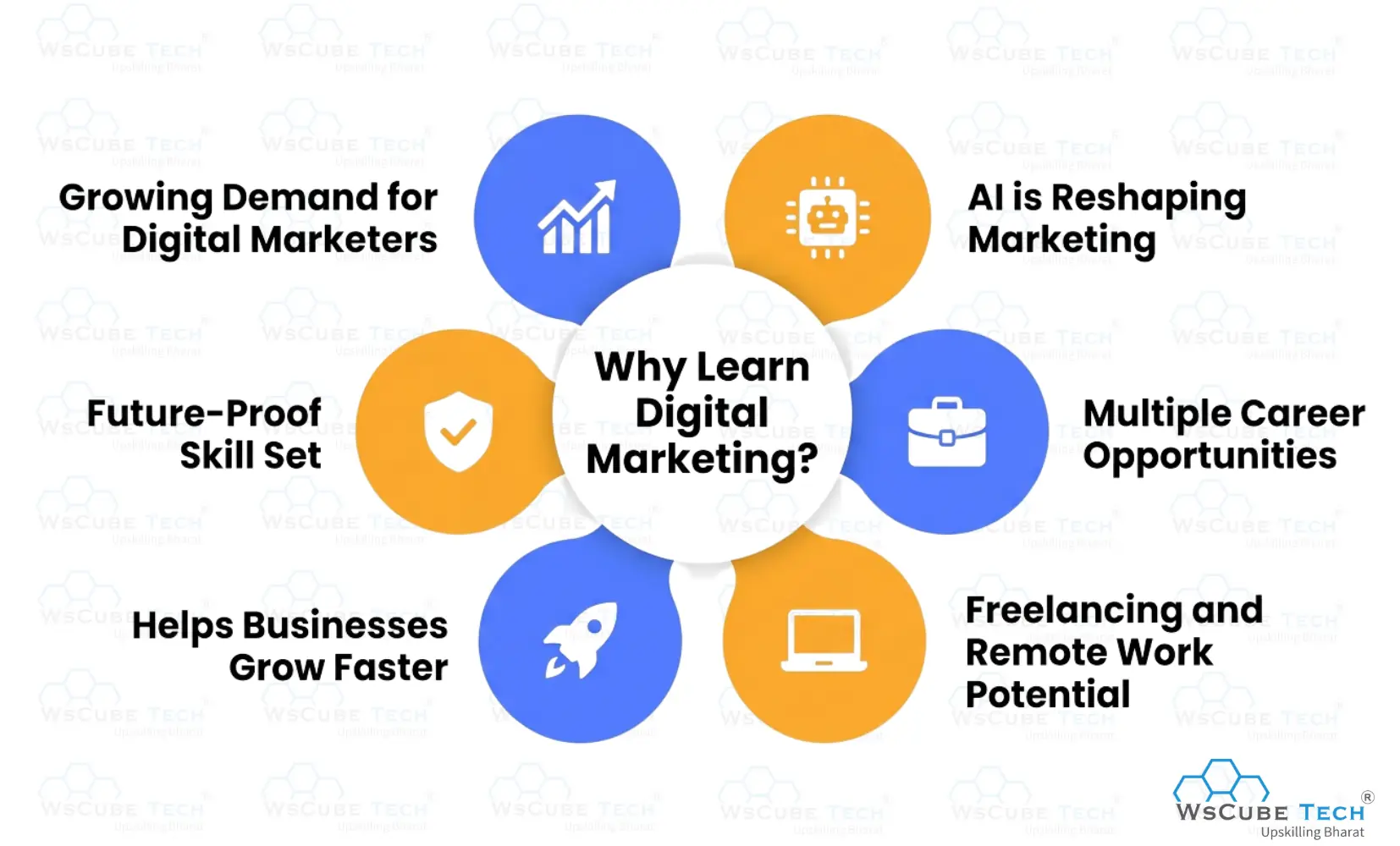
- Growing Demand for Digital Marketers: Companies across industries are actively hiring professionals who can manage their online presence, generate leads, and drive sales.
- AI is Reshaping Marketing: Artificial intelligence is changing the way marketers create content, analyze data, and automate campaigns, making digital marketing more powerful than ever.
- Multiple Career Opportunities: From SEO and content marketing to social media marketing and PPC, digital marketing offers several specialized career paths.
- Freelancing and Remote Work Potential: Digital marketers can work with clients worldwide, making it easier to build a flexible and location-independent career.
- Helps Businesses Grow Faster: Whether you're a startup founder or a small business owner, digital marketing helps you attract customers and increase revenue online.
- Future-Proof Skill Set: As more businesses move online, digital marketing skills will continue to be valuable and relevant in the years ahead.
Recommended Professional Certificates
AI-Powered Digital Marketing Course
Performance Marketing Bootcamp
SEO Specialist Bootcamp
How to Learn Digital Marketing?
Digital marketing as a career is rewarding, as it offers endless opportunities to beginners and experienced professionals. Wondering how to learn digital marketing at home? Then here is a complete guide to help you get started.
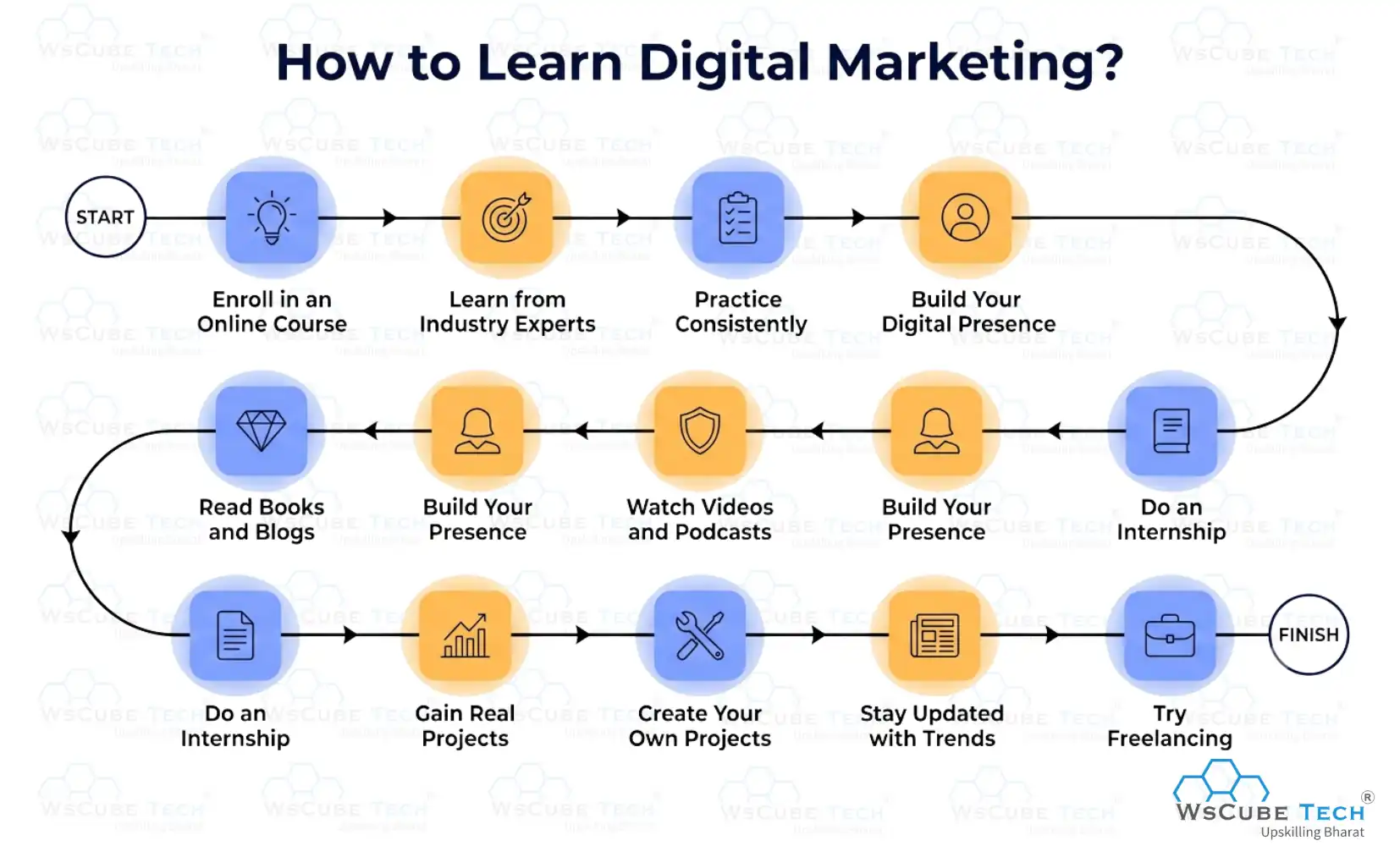
Step 1: Enroll in an Online Course (Fastest Path)
This is the most common and effective way to start learning digital marketing. Sign up for an online digital marketing course from a top institute like WsCube Tech and learn from experienced mentors and experts.
You can find a myriad of courses online; choose the one that meets your learning goals. Begin by taking a free course, and once you build interest, enroll in a paid course. You will attend live interactive classes where you can discuss topics, raise doubts, and ask questions in real-time.
Go for institutes that offer a comprehensive syllabus and cover every topic, from basic to advanced. Also, make sure that the institute offers multiple hands-on projects and placement assistance.
Make sure that these courses reward you with an industry-recognized certificate in the end to validate your capabilities as a skilled digital marketer.
Step 2: Learn from Industry Experts (LinkedIn & Webinars)
If you want to gain detailed insights into the industry and know it better, then learn from the top leaders who have already established themselves in the field and witnessed the industry evolve.
Expand your network through LinkedIn, webinars, conferences, events, and workshops, and connect with experts. You can also get in touch with a few online tutors and mentors who offer digital marketing courses and seek their guidance.
Observe these professionals and their work. Analyze the strategies they use to connect with the target audience, promote a brand, increase brand awareness, drive website traffic, and create engaging content. Follow their blogs, social media profiles, and websites for better learning.
Step 3: Practice Consistently (Mock Campaigns)
Many students and aspirants who often ask how to learn digital marketing online forget to focus on one key ingredient - consistent practice.
No matter how many courses you take, how many books or blogs you read, or how much you stay updated with the trends, if you are not practicing regularly, you are not improving your skills.
Create mock campaigns, monitor results, identify your mistakes, optimize campaigns and content, and assess your performance. This is an effective way to hone your skills without any risk or investment.
Step 4: Build Your Digital Presence (Personal Branding)
A strong online presence not only advances your career but also establishes you as a marketing expert. You learn how to enhance brand visibility and brand awareness using different digital platforms, such as social media, websites, and blogs. To mark a powerful presence online, you can start your social media page or blog. This will allow you to learn from your experience and build proficiency in different aspects of online marketing, such as content, social media, email, SEO, PPC, etc.
Every element of your blog or profile must showcase your brand image, be it bio, images, or posts. Yes, things can be challenging in the beginning, but with extra effort and hard work, you’ll make progress and learn better. You will understand different strategies and how to run successful campaigns.
Step 5: Read Books & Blogs (Theory Foundation)
For people who do not want to spend too much on a paid digital marketing course, digital marketing books are a more affordable and convenient option. Although knowledge is restricted to theory, it’s a great way to start your learning journey and get familiar with digital marketing. You can download PDF files from the internet, which are budget-friendly, or go for full-stack books that cover A-Z of digital marketing. If you want to focus on a specific field, such as SEO, social media, or content, you can buy books on a particular topic.
Another recommended way to learn digital marketing is by reading free blogs on the internet. With the digital world at its peak, there is no shortage of digital marketing blogs. You can find hundreds of options to choose from. Hone your skills by reading these blogs and staying updated with the latest industry happenings. Bookmark the top blogs and read them at least 2-3 times a week.
Step 6: Watch Videos & Podcasts (Free Learning)
There are millions of YouTube users and hundreds of YouTube channels. You can easily find trusted channels that offer digital marketing tutorials and videos for beginners. Leverage the power of these videos to learn and develop digital marketing skills. In fact, it is the perfect place to get started, as videos are free yet useful.
There are many dedicated channels for digital marketing courses that answer common questions. Watch their videos for 4-6 weeks regularly, and rest assured there is no looking back. Some videos are even better than books and blogs you will find online. You simply have to visit YouTube and search how to learn digital marketing or how I learn digital marketing, and you will get plenty of results within seconds.
Another effective way to learn digital marketing is through podcasts. They are one of the most powerful and popular resources these days when it comes to learning, self-motivation, and self-development. You can listen to reliable podcasts on marketing. The best part about podcasts is that they are engaging, provide updated information, and are created by industry leaders who have years of experience. Also, you can listen to them anytime, anywhere, at your convenience. You can discover new techniques, gain experiences, and explore ideas.
Step 7: Do an Internship (Hands-On Experience)
Before you kickstart your career and look for a job, we would recommend doing a digital marketing internship with a reputed and award-winning company. You can find ample internship opportunities on job portals such as LinkedIn, Indeed, and Monster. Select the one that aligns with your goals and requirements.
You can even opt for a non-paid internship in the beginning. You will get to work with industry professionals and experts who will assist you throughout and help you understand the nuances of digital marketing. You would get insights into the online marketing ecosystem and gain hands-on experience. Once you complete the internship, you can start applying for jobs in other companies or even continue working in the same company as a full-time employee.
Step 8: Gain Real Projects (Not Just Theory)
Theoretical knowledge is a stepping stone, but practical exposure and experience strengthen your foundation and build confidence. Create blogs, content, and social media profiles and experiment with different digital marketing tools, techniques, strategies, and tactics. Run social media campaigns, implement SEO strategies, and create email marketing templates.
You don’t need to wait for projects or a job; start working on your skills on your own. Take risks, try innovative campaigns, learn from your mistakes, and track results. Address various business problems and come up with appropriate solutions to establish yourself as a professional.
Furthermore, connect with an industry expert or your mentor for feedback. This will let you identify your strengths and weaknesses, which is a valuable learning lesson. If you want to attain success and make a promising career, work hard consistently to become better and grow.
Step 9: Create Your Own Projects (Portfolio Building)
Whenever someone asks how how can i learn digital marketing by myself, the first suggestion by experts is to work on multiple digital marketing projects. Digital marketing allows aspirants to enhance their skills and acquire knowledge without assistance. They can watch a few useful and reliable videos and start creating projects for exposure. However, it's important to determine the marketing specialization so you can focus on specific skills.
Create blogs, social media pages, and engaging content. You can also collaborate with non-profit organizations and small businesses to work on real-life projects. Also, working on several projects is a great way to build an impressive portfolio, which will come in handy during your job hunt. You can show off your skills and expertise to recruiters and employers and land your dream job in no time.
Step 10: Stay Updated with recent Trends (2026 News)
Technology is constantly evolving, and so is the digital space. Therefore, it is important for digital marketers to keep up with the industry trends and understand what’s happening, including consumer preferences, current demand, and social media trends. It will help you run successful marketing campaigns and achieve your goals efficiently.
Observe all the emerging trends in the advertising and digital sector, including news, sales strategy, user experience, etc. Moreover, get familiar with the latest technologies, such as artificial intelligence, machine learning, and microservices, as they can play crucial roles in decision-making. Listening to blogs and following social media can tell you how to apply different tools and technologies in real life and make the best of them.
Step 11: Try Freelancing
As you have worked on your skills and built a strong foundation, you can start working as a freelancer. It’s a great opportunity to take up multiple projects from different domains and try your hands on them. You can work for an agency in the beginning to understand how the industry works and how to handle clients.
Once you learn to provide value to clients, you can earn a handsome amount every month. Also, it will boost your confidence, communication skills, and knowledge. You can start by creating your profile and uploading your portfolio on various freelancing websites and then bid for projects. Gradually, focus on international clients as they offer better compensation.
Upcoming Masterclass
Attend our live classes led by experienced and desiccated instructors of Wscube Tech.
How Long Does It Take to Learn Digital Marketing?
The time required to learn digital marketing depends on your goals, learning approach, and the amount of time you dedicate each week. Since digital marketing covers multiple areas, such as SEO, social media marketing, content marketing, email marketing, and PPC, learning is an ongoing process. To get a clearer timeline, check out our guide on how long it takes to learn digital marketing.
- 1-2 Months: Learn the fundamentals of digital marketing and understand its key channels and concepts.
- 3-6 Months: Build practical skills by working on projects, creating campaigns, and exploring different specializations.
- 6-12 Months: Gain hands-on experience, build a portfolio, and become job-ready for entry-level digital marketing roles.
- 12+ Months: Develop advanced expertise, work on real-world projects, and specialize in areas like SEO, PPC, or content marketing.
The fastest way to learn digital marketing is by combining structured learning with practical implementation and real-world experience.
Digital Marketing Course Eligibility
One of the biggest advantages of digital marketing is that it is open to learners from all educational and professional backgrounds. Unlike many specialized fields, there are no strict eligibility criteria for most digital marketing courses, making them accessible to students, graduates, working professionals, and business owners alike.
- Students: School and college students can start learning digital marketing to build job-ready skills early.
- Graduates: Graduates from any stream, including Arts, Commerce, Science, or Engineering, can pursue a digital marketing course.
- Working Professionals: Professionals looking to switch careers or upgrade their skills can easily learn digital marketing.
- Business Owners and Entrepreneurs: Digital marketing helps entrepreneurs promote their products and services effectively online.
- No Technical Background Required: Most beginner-level courses do not require coding knowledge or prior marketing experience.
However, basic computer skills, internet knowledge, and a willingness to learn can help you progress faster in your digital marketing journey.
Must Know Concepts in Digital Marketing
Digital Marketing Specializations
Before you learn digital marketing, it’s important to decide on your specialization. Digital marketing comprises different fields and niches. Based on your interest and preference, you can opt for one or more of the following:
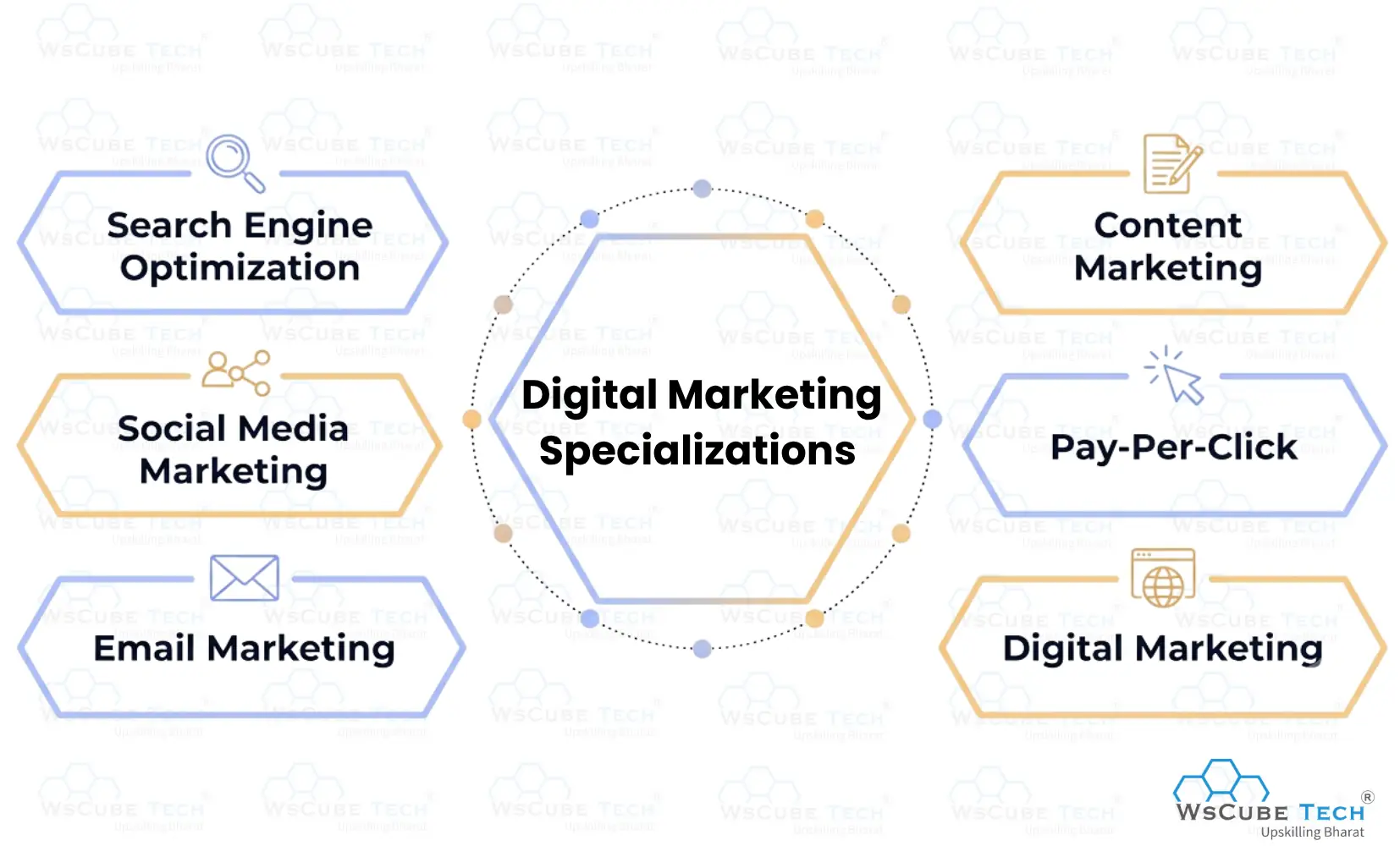
1. Search Engine Optimization
It involves optimizing a website, its structure, content, and other elements to boost its search engine ranking, increase brand visibility, and increase traffic.
2. Social Media Marketing
Marketers use different social media platforms to promote a brand. They create engaging and unique social media campaigns to build brand awareness and connect with users.
3. Email Marketing
It refers to building and maintaining strong customer relationships through email campaigns, which include promotional emails, newsletters, personalized messages, deals, etc.
4. Content Marketing
Innovative writers, bloggers, vloggers, and photographers compose valuable content, such as blog posts, videos, images, etc., to target a specific audience and boost a brand’s credibility.
5. Pay-per-click
PPC analysts focus on paid ad marketing to get more traffic. These ads appear on search engines, social media, and other platforms.
6. Digital Marketing
It comprises all other marketing tactics, making it a comprehensive field. You need to possess knowledge of all other digital marketing strategies to be a full-fledged digital marketer.
Common Digital Marketing Learning Mistakes to Avoid
Learning digital marketing can be exciting, but many beginners make mistakes that slow down their progress. Being aware of these common pitfalls can help you learn faster, build practical skills, and stay on the right track.
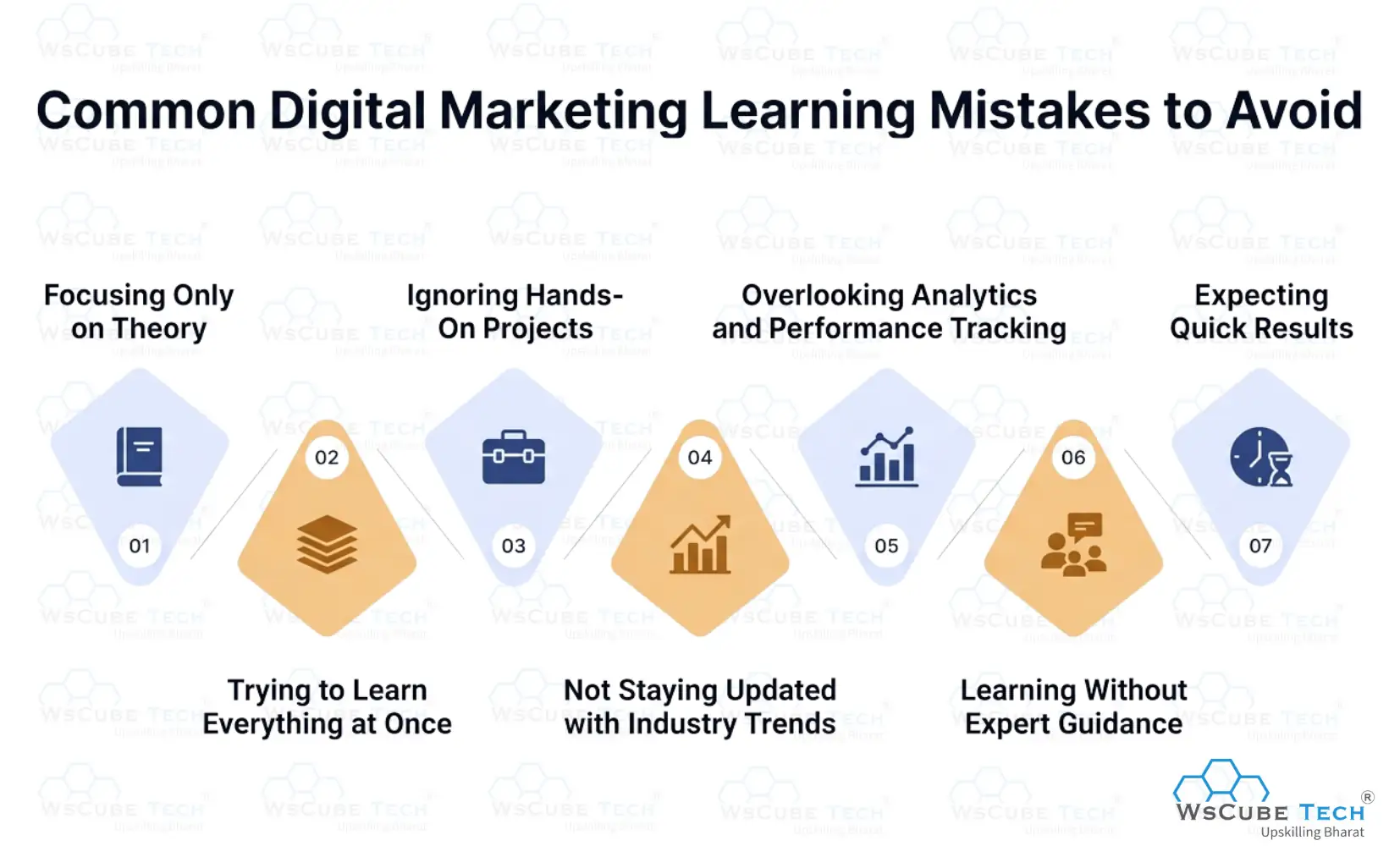
1. Focusing Only on Theory
Reading blogs, watching tutorials, and taking courses can build your knowledge, but practical implementation is what truly develops digital marketing skills. Apply what you learn through real projects and campaigns.
2. Trying to Learn Everything at Once
Digital marketing is a broad field that includes SEO, content marketing, social media marketing, email marketing, and PPC. Instead of learning everything simultaneously, focus on one area at a time and gradually expand your expertise.
3. Ignoring Hands-On Projects
Practical experience is essential for growth. Create a blog, manage a social media page, or run mock campaigns to gain real-world exposure and strengthen your skills.
4. Not Staying Updated with Industry Trends
Search engine algorithms, social media platforms, and marketing tools evolve constantly. Following industry blogs and experts can help you stay ahead of the latest trends and updates.
5. Overlooking Analytics and Performance Tracking
Many beginners focus only on content creation and campaign execution. However, analyzing data and tracking performance are equally important for improving marketing results.
6. Learning Without Expert Guidance
Trying to figure everything out alone can slow your progress. Learning from mentors or industry professionals can help you avoid common mistakes and accelerate your learning journey.
7. Expecting Quick Results
Digital marketing is a skill that takes time to master. Stay consistent, keep practicing, and focus on continuous improvement rather than expecting instant success.
Explore Our Most Popular Marketing Courses
How to Get Your First Digital Marketing Job in India
Getting your first digital marketing job can feel challenging, especially when most companies ask for experience. However, the good news is that employers today value practical skills, projects, and problem-solving abilities more than just certificates. By following the right approach, you can significantly improve your chances of landing an entry-level role.
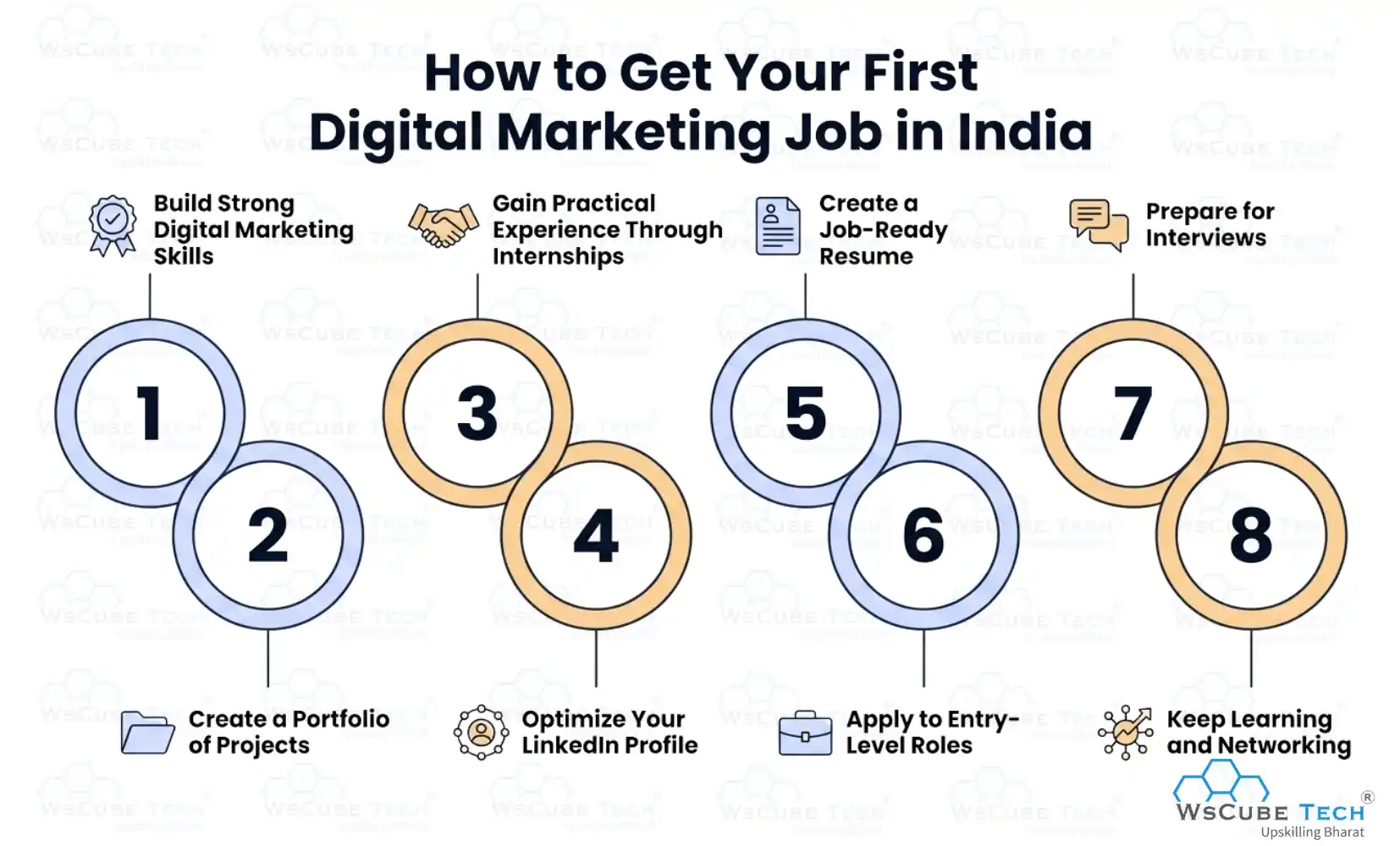
1. Build Strong Digital Marketing Skills
Before applying for jobs, make sure you understand the fundamentals of SEO, social media marketing, content marketing, email marketing, PPC, and analytics. Focus on developing practical skills rather than just completing courses.
2. Create a Portfolio of Projects
A portfolio helps recruiters evaluate your capabilities. Include blogs, SEO audits, social media campaigns, content samples, or any other projects that demonstrate your skills and learning.
3. Gain Practical Experience Through Internships
Internships provide valuable hands-on experience and exposure to real marketing campaigns. Even a short internship can strengthen your resume and help you understand how the industry works.
4. Optimize Your LinkedIn Profile
LinkedIn is one of the most effective platforms for finding digital marketing opportunities. Keep your profile updated, showcase your projects, earn certifications, and actively engage with industry professionals.
5. Create a Job-Ready Resume
Highlight your skills, certifications, projects, internships, and achievements. Instead of simply listing courses, focus on showcasing the results you achieved through practical work.
6. Apply to Entry-Level Roles
Start with roles such as SEO Executive, Social Media Executive, Content Writer, Digital Marketing Associate, or PPC Executive. These positions provide excellent learning opportunities and help you build industry experience.
7. Prepare for Interviews
Recruiters often ask about digital marketing concepts, tools, campaigns, and projects. Be ready to explain your work, discuss your learning journey, and demonstrate your problem-solving skills.
8. Keep Learning and Networking
The digital marketing industry evolves rapidly. Continue learning new tools, following industry trends, and connecting with professionals to discover new opportunities and accelerate your career growth.
FAQs About Learning Digital Marketing
Start with the basics like understand what digital marketing is, then pick one channel like SEO or social media and go deep before expanding to others. Follow a structured course, practice consistently, and build real projects alongside your learning.
You can learn the basics in 1-2 months, become job-ready in 6-12 months, and develop advanced expertise in 12+ months. The timeline depends on how much time you dedicate each week and how consistently you practice.
Begin by learning the fundamentals through free resources like YouTube, Google's free courses, or HubSpot Academy. Then pick a specialization, practice on mock campaigns, and gradually build a portfolio.
Yes, you can learn digital marketing on your own using YouTube tutorials, free blogs, podcasts, and online courses. However, without a structured path or mentor, progress can be slower and you may miss important updates.
Enroll in a structured online course, follow industry blogs, watch tutorials on YouTube, and practice by running your own campaigns. Platforms like Google, HubSpot, and Meta also offer free certifications to build credibility.
Digital marketing is not technically hard, but it is broad. The real challenge is not getting overwhelmed. Start with one area, master it, and expand. That approach makes learning manageable and effective.
No, digital marketing does not require a formal degree. Anyone from any educational background can learn it. What matters more is your skill set, portfolio, and practical experience.
The best free resources include Google Digital Garage, HubSpot Academy, YouTube tutorials, and industry blogs. Combine these with hands-on practice on your own social media pages or blog for the best results.
SEO is often recommended as the first skill because it builds a strong foundation for all other channels. Understanding how search engines work helps you create better content, run smarter campaigns, and measure results effectively.
Start your own blog, social media page, or a mock brand. Run small campaigns with minimal or no budget, track results, and treat every project like a real client. This builds both skills and a portfolio at the same time.
Conclusion
Learning digital marketing opens a world of opportunities in the ever-evolving digital landscape. The key is to start with a strong foundation in the basic principles, continuously experiment and apply what you learn, and stay updated with the latest trends and tools. For a more structured and interactive learning experience, consider enrolling in an online digital marketing course.
Join Our On-Campus Digital Marketing Program
Explore Our Free Courses


Leave a comment
Your email address will not be published. Required fields are marked *Comments (0)
No comments yet.