India's advertising landscape is becoming increasingly digital. In fact, digital channels are expected to account for nearly 64% of the country's total ad spend in 2026, as businesses continue shifting their budgets online. With customers discovering brands through search engines, social media, email, and paid advertising like Google Ads, having the right digital marketing platform is no longer optional.
But with dozens of tools available, choosing the right platform can be challenging. Some excel at search engine optimization and analytics, while others are built for advertising, automation, or social media management.
To help you make the right choice, here is a curated list of top online marketing platforms in India for 2026, along with their key features, pricing, pros, and ideal use cases.
What Are Digital Marketing Platforms?
Digital marketing platforms are applications that are created to support how you promote products and services online to your targeted audience. They manage campaign analytics, social media publishing, email automation, keyword tracking, and customer segmentation. All of this can be done from a single platform or linked stack.
By using real-time data to adjust campaigns, these digital platforms for marketing assist marketers in minimizing manual labor. Additionally, a lot of platforms link to your CRM, allowing your sales and marketing data are to be combined into a single view. This alignment facilitates performance monitoring, interest follow-up, and more accurate outcome measurement.
Benefits of Using Digital Marketing Platforms
Digital marketing platforms help businesses streamline their marketing activities, reach the right audience, and measure results more effectively. Whether you're running a startup or an established business, using the right marketing platform can improve efficiency and support long-term growth.
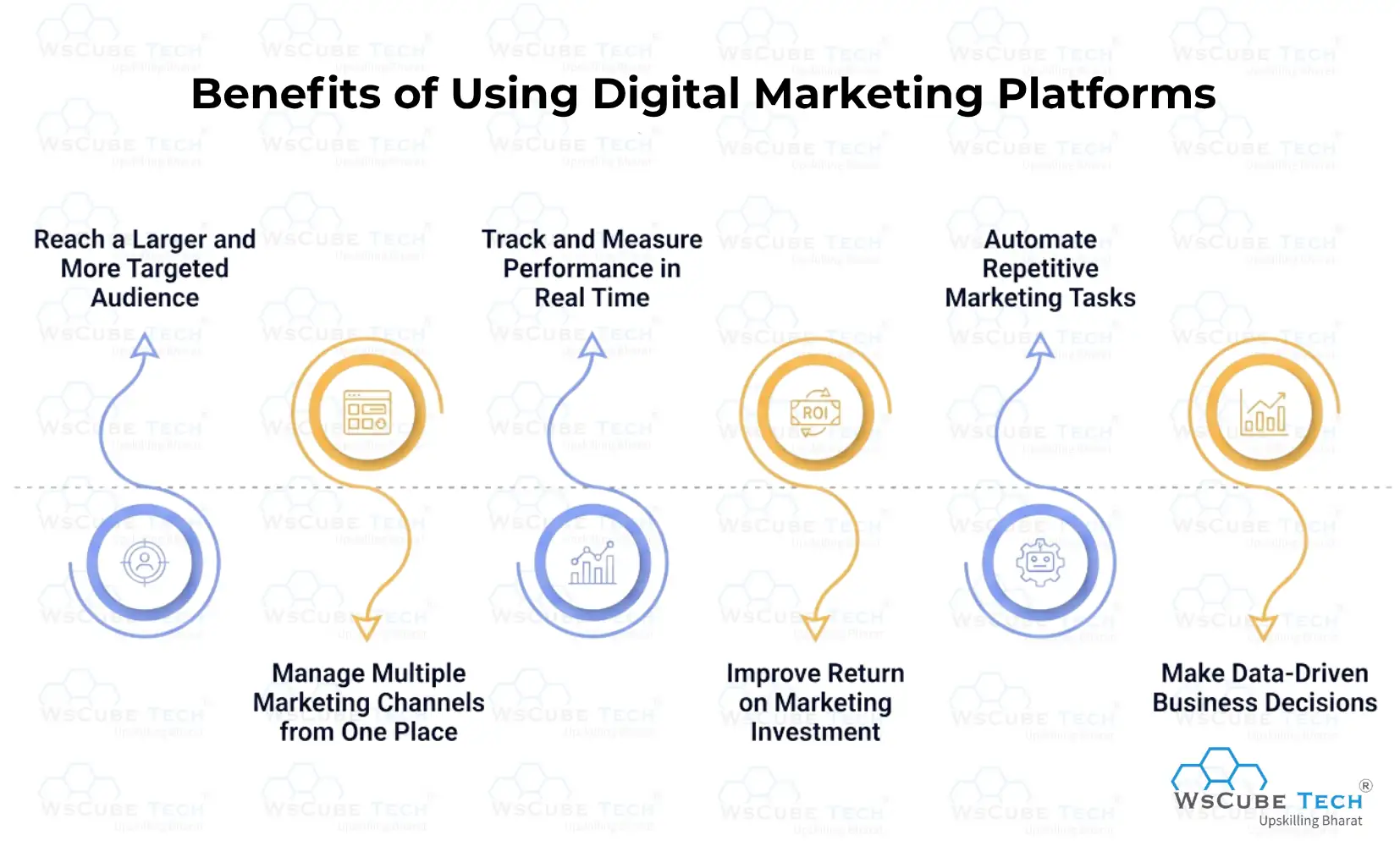
1. Reach a Larger and More Targeted Audience
One of the biggest advantages of digital marketing platforms is their ability to connect businesses with the right audience. Most platforms offer advanced targeting options based on demographics, interests, online behavior, and location, helping businesses attract qualified leads and potential customers.
2. Manage Multiple Marketing Channels from One Place
Many online marketing platforms allow businesses to manage SEO, social media, email marketing, content marketing, and paid advertising through a single dashboard. This centralized approach saves time and makes campaign management more efficient.
3. Track and Measure Performance in Real Time
A key benefit of using a digital marketing platform is access to real-time analytics and reporting. Businesses can monitor traffic, engagement, conversions, and campaign performance, making it easier to identify what's working and where improvements are needed.
4. Improve Return on Marketing Investment (ROI)
Digital advertising platforms provide detailed insights into campaign costs and results. By analyzing performance data, businesses can optimize their marketing strategies, reduce wasted spending, and achieve better returns on their marketing investment.
5. Automate Repetitive Marketing Tasks
Most top digital marketing platforms include automation features for email campaigns, social media scheduling, lead nurturing, and customer follow-ups. Automation helps businesses save time, improve consistency, and focus on higher-value activities.
6. Make Data-Driven Business Decisions
The best digital marketing platform collects valuable customer and campaign data in one place. These insights help businesses understand customer behavior, refine their marketing strategies, and make informed decisions that support business growth.
Recommended Professional Certificates
AI-Powered Digital Marketing Course
Performance Marketing Bootcamp
SEO Specialist Bootcamp
Top 10 Digital Marketing Platforms
Marketers and businesses use numerous digital marketing strategies to promote their products and services. Below is a digital marketing platform list, exploring media channels where you can run paid and unpaid campaigns and capture the attention of potential buyers.
1. Google Ads
When we talk about paid advertising or pay-per-click, Google Ads is one of the most essential digital platforms for marketing. It allows marketers to display their ads at the top of search engine results and grab user attention instantly. It targets audiences based on search history, location, device, and more.
Use Google Ads to bid on relevant keywords and decide where you want your ad to appear. With an effective bid strategy and high Quality Score, you can ensure your ad reaches the right people to drive conversions. You pay only when users click on your ad, making it a cost-effective platform.
Pros:
- You pay only when a user clicks the ad
- Easy to track and manage activities
- 40% more chances of clicks
- Wider reach
- Quick and easy to create campaigns
Cons:
- Users often ignore paid ads
- Excessive competition
2. Facebook (Meta Ads)
Facebook is one of the most commonly used online marketing platforms with around 2.9 billion active monthly users. Companies using Facebook can witness a significant increase in revenue and brand popularity.
Facebook lets you select the audience based on behavior patterns, interests, demographics, and locations. It adds value to brand image, name, and popularity. Advertisers can run customized ads based on the target audience, resulting in higher sales and returns than many other marketing platforms in India.
Pros:
- Different types of ads
- Highly targeted marketing
- Manageable budgets
- Cost-effective marketing
Cons:
- Lower conversion rates
- Users often skip ads
- Frequent ads can appear spammy and hamper user experience
3. Instagram

Instagram has become one of the best digital marketing platforms for visual brands, lifestyle businesses, and D2C companies in India. With 480.55 million users in India, it is the go-to platform for reaching younger, mobile-first audiences.
Instagram Reels, Stories, and Shopping features make it a complete platform for digital marketing from brand discovery to purchase. Influencer marketing on Instagram is particularly powerful in the Indian market, where creator-led content drives massive engagement.
Pros:
- Strong visual storytelling capabilities
- Reels drive 2 to 4x more engagement than static content
- Seamless integration with Facebook Ads Manager
- Ideal for fashion, food, beauty, and lifestyle brands
Cons:
- Requires consistent, high-quality visual content
- Organic reach has declined; paid promotion often necessary
- Not ideal for B2B or technical industries
Pro Tip: You don't need a big production budget for Instagram Reels. A smartphone, good lighting, and a clear message work better than over-produced content. Authenticity wins with Indian audiences in 2026.
4. Twitter (X)

Twitter is a social media platform that marketers and businesses use to promote their products and boost sales. It is among the top 10 most visited websites globally, with a recorded 2.4 billion sessions in 2021. Twitter is known as one of the most liberal platforms and represents high-income audiences.
Twitter (now rebranded as X) ads are comparatively more budget-friendly among different types of digital marketing platforms. It helps businesses drive higher organic traffic to websites and achieve marketing goals more effectively.
Pros:
- Economical marketing method
- Engaging platform
- Information reaches users faster
Cons:
- Demands unique ways to update information
- Requires effort, time, and expertise to manage ads
- Risk of spreading negative impressions
5. LinkedIn
With around 150 million users in India, LinkedIn is certainly among the most valuable digital advertising platforms for connecting with professionals, industry leaders, clients, and business partners.
It is among the top digital marketing platforms that let users create business communities. LinkedIn ads are economical and accessible to new businesses and small companies. Although customizing LinkedIn ads can be tricky, it allows highly targeted marketing campaigns. It is especially powerful for B2B marketing in India.
Pros:
- Great place to reach high-value B2B buyers
- Responsive, professional audience
- Precise and efficient targeting
- Can target a specific market, business, or industry
Cons:
- Interface can be tricky
- Cost-per-click is higher than other platforms
- Data roadblocks can reduce reach
Upcoming Masterclass
Attend our live classes led by experienced and desiccated instructors of Wscube Tech.


6. YouTube
Businesses have realized the importance of unique and innovative video content in influencing buying decisions. YouTube gets over 14 billion visits every month and is considered the most effective ad format among various digital marketing platforms. Since Google owns YouTube, you can promote your videos through Google Search as well.
With 518 million active users in India, YouTube is the single largest video content discovery platform in the country. Short-form content via YouTube Shorts is also rapidly growing among Indian audiences in 2026.
Pros:
- Engaging marketing
- Huge scope for influencer marketing
- Easy to track effectiveness of ads and video parameters
- Easy to target audience using various options
Cons:
- Users often skip ads
- Not always easy to reach the target audience
7. WhatsApp Business

WhatsApp Business has evolved from a communication tool into one of the most powerful online marketing platforms in India. With millions of users in India, WhatsApp is where Indian consumers are most active and responsive.
In 2026, WhatsApp's integration with payments, product catalogs, and Click-to-WhatsApp ads has made it a complete commerce channel for Indian businesses. D2C brands with properly built WhatsApp automation report that the platform contributes 20 to35% of their total digital revenue.
Pros:
- Direct, personal communication with customers
- High open rates compared to email
- Free to use for businesses (WhatsApp Business App)
- Supports product catalogs, automated replies, and payments
Cons:
- Requires an opted-in contact list to avoid spam
- Broadcast lists have limitations
- Scaling requires WhatsApp Business API (paid)
8. Amazon Ads
Amazon needs no introduction. It is the biggest online shopping website in the world, with over 2.2 billion monthly visitors. Its exceptional reach and popularity have made it one of the top digital marketing platforms for e-commerce businesses globally and in India.
Companies use Amazon Ads to earn revenue and establish their brand names. Any registered vendor can run ads on Amazon and witness a rapid increase in sales.
Pros:
- Real-time optimization
- Several advertising options
- Real-time performance tracking
- Easy to edit ads
- Reach the right people at the right time
Cons:
- Reporting is less effective compared to other platforms
- Demands more time than other platforms
9. Google Business Profile
Google Business Profile (formerly Google My Business) is one of the most powerful free digital marketing platforms available to Indian businesses today. It is especially critical for local and regional businesses looking to improve visibility in Google Search and Google Maps.
When someone searches for "digital marketing agency near me" or "restaurant in Jaipur," businesses with an optimized Google Business Profile appear in the local results often before paid ads. It costs nothing to set up and maintain.
Pros:
- Free to use
- Boosts local search visibility significantly
- Drives calls, directions, and website visits
- Customer reviews build trust and credibility
Cons:
- Limited to local/regional marketing
- Requires consistent management of reviews and updates
- Not effective for purely online or national businesses
10. Pinterest

Pinterest is among the newer digital marketing platforms that started as a small channel but has grown over time. It is famously used to pin innovative ideas, but companies also use it to showcase their products and brands. It even recorded higher sales than many other well-known e-commerce sites for specific categories like home décor, fashion, and food.
Pros:
- Best platform for showcasing product images
- Enhanced user experience
- Easy to highlight different aspects of business using boards
Cons:
- Limited audience compared to Facebook and Instagram
- Needs high-quality pictures to rank well
- Closed system (users require an account to access it)
Read More Guides Related to Digital Marketing
Top Digital Marketing Platforms: Quick Comparison
Use this quick comparison table to evaluate the best digital marketing platform based on your goals, budget, and target audience.
| Platform | Best For | Audience Type | Difficulty |
| Google Ads | High-intent lead generation | All businesses | Medium |
| Facebook (Meta Ads) | Brand awareness & conversions | B2C, D2C | Easy |
| Visual branding & Reels | Youth, lifestyle | Easy | |
| Twitter (X) | Real-time engagement | News, tech, finance | Medium |
| B2B lead generation | Professionals, B2B | Medium | |
| YouTube | Video marketing & brand building | All audiences | Medium |
| WhatsApp Business | Customer retention & D2C sales | Existing customers | Easy |
| Amazon Ads | Product discovery & e-commerce | Online shoppers | Medium |
| Google Business Profile | Local visibility | Local customers | Easy |
| Product discovery (visual) | Women, lifestyle | Easy |
WsCube Expert’s Advice: If you're a local business, go with Google Business Profile + Meta Ads. If you're D2C, add WhatsApp Business. If you're B2B, swap Meta for LinkedIn. Match the platform to your buyer and not the trend.
Explore Our Most Popular Marketing Courses
Common Mistakes When Using Digital Marketing Platforms
Even the best digital marketing platforms can fail to deliver results if they're not used strategically. Here are some common mistakes businesses should avoid.
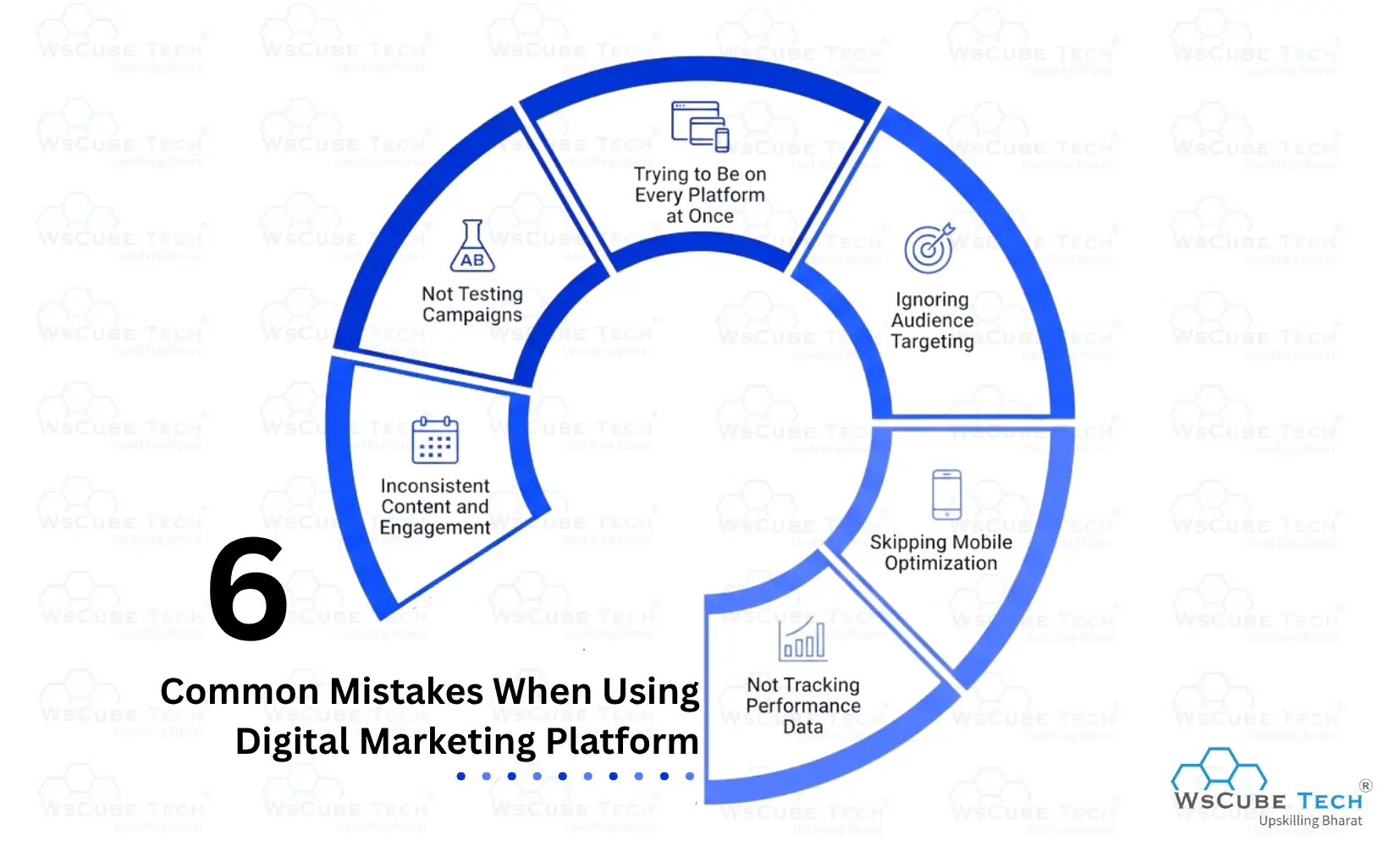
1. Trying to Be on Every Platform at Once
Many businesses create accounts on multiple online marketing platforms without a clear strategy. Instead of spreading resources thin, focus on the platforms where your target audience is most active.
2. Ignoring Audience Targeting
One of the biggest advantages of digital advertising platforms is precise audience targeting. Running broad campaigns without using targeting options can lead to wasted budget and lower conversions.
3. Skipping Mobile Optimization
Most users access content on mobile devices. If your ads, website, or landing pages aren't mobile-friendly, your digital marketing platform efforts may not generate the desired results.
4. Not Tracking Performance Data
The real value of digital platforms for marketing comes from analytics. Regularly reviewing key metrics helps identify what's working and where improvements are needed.
5. Inconsistent Content and Engagement
Posting irregularly and failing to engage with your audience can reduce visibility and engagement. Consistency is essential for building a strong presence across digital marketing platforms.
6. Not Testing Campaigns
Many top digital marketing platforms offer A/B testing features, but businesses often overlook them. Testing different creatives, headlines, and CTAs can significantly improve campaign performance.
Recommendation: Set a fixed "review day" every week; even 30 minutes is enough. Check what's working, pause what isn't, and shift budget to your best-performing ad. Small weekly tweaks beat one big monthly overhaul every time.
FAQs About Digital Marketing Platforms
A digital marketing platform is an online channel or tool that automates, analyzes, and enhances marketing efforts and helps businesses reach their target audiences.
The top online marketing platforms that businesses rely on to promote their products or services are Google Ads, Meta Ads (Facebook & Instagram), YouTube, WhatsApp Business, LinkedIn, and Amazon Ads. Each platform has its pros, user base, targeting options, features, and drawbacks. Choose the platform that meets your requirements and goals.
Yes. A website is a crucial marketing platform, serving as a central hub for businesses to mark online presence, share information with the target audience, offer deals and discounts, display products, and connect with customers.
Google Ads offers an array of marketing options, including display videos, app ads, and search ads. Businesses use it for more targeted campaigns and wider reach due to its extensive user base. Although there are multiple other platforms with similar ad options, Google Ads remains the trusted tool for driving improved results.
Social media platforms such as Twitter, Facebook, and Instagram are known for offering affordable marketing solutions for cost-per-click and cost-per-impression campaigns. Google Business Profile is free and highly effective for local businesses. WhatsApp Business is also free for basic use, making it ideal for small Indian businesses and MSMEs.
Small businesses can make the most of digital marketing platforms by setting clear marketing goals, choosing the right platform to reach the target audience, implementing effective campaigns, measuring ROI, and optimizing strategies. They must maintain a set budget, constantly monitor results, and adjust their approach for better performance.
Each online advertising platform has its pros and cons. Choose the right platform after considering these key factors: target audience, business and marketing goals, marketing budget, audience reach, engagement rate, type of products or services, and industry trends.
Google Business Profile and Facebook Ads are beginner-friendly digital marketing platforms. Google Business Profile is free, while Facebook Ads offers simple campaign setup and audience targeting features.
Yes, using multiple digital marketing platforms can improve results. Many businesses combine Google Ads, social media, and WhatsApp Business to reach, engage, and convert customers effectively.
Costs vary by platform. Some online marketing platforms, such as Google Business Profile and WhatsApp Business, are free, while paid advertising platforms can fit both small and large marketing budgets.
Conclusion
It's important to have the right mix of digital marketing platforms to reach potential customers and establish your brand. Choosing the best platform depends on various factors like primarily your business type, the products or services you offer, and your target audience.
Once you define these aspects, analyze which platform works best for you and offers the most benefits. Whether you're a startup in Bengaluru or an MSME in Jaipur, the right combination of online marketing platforms in India such as Google Ads for intent-based reach, Instagram for brand building, and WhatsApp Business for conversions can transform your digital marketing results in 2026.
Join Our On-Campus Digital Marketing Program
Explore Our Free Courses




Leave a comment
Your email address will not be published. Required fields are marked *Comments (0)
No comments yet.