
Lead generation in digital marketing is how businesses turn online attention into real sales opportunities. Instead of waiting for customers to show up, you attract the right targeted audience, capture their details, and guide them toward a purchase through a structured system.
This guide covers everything you need to know, from what lead generation is and how it works to the strategies, tools, and techniques that actually drive results. Whether you are a business owner, marketer, or someone who has completed a digital marketing course and wants to apply concepts practically, this guide gives you a clear and actionable foundation.
By the end, you will know how to build a lead generation system that fills your pipeline, improves conversions, and supports steady business growth.
What is Lead Generation?
Lead generation means attracting people who show interest in your product or service and capturing their contact details so you can talk to them later. The purpose is simple: turn interest into potential customers. A lead can come from a website form, a phone call, a WhatsApp message, a newsletter signup, or a demo request.
For example, when someone downloads a free guide from your website and shares their email, that person becomes a lead. Businesses use lead generation to build relationships, follow up at the right time, and convert interest into sales instead of waiting passively for customers.
What Are Leads?
Leads are people or businesses that have shown interest in what you offer. They are not random visitors; they have taken a small action that signals intent, such as filling a form, clicking an ad, or asking for more information.
In marketing and sales, leads represent future opportunities. Some leads are just exploring, while others are close to buying. The goal is to identify, nurture, and convert the right leads into paying customers.
Different Types of Leads
- Cold Leads: People who have shown minimal interest and need education
- Warm Leads: People who know your brand and are considering options
- Hot Leads: People ready to take action or buy soon
- Marketing Qualified Leads (MQLs): Leads engaged with marketing content
- Sales Qualified Leads (SQLs): Leads ready for direct sales follow-up
- Inbound Leads: Leads who come to you through content or ads
- Outbound Leads: Leads contacted through outreach or prospecting
Recommended Professional Certificates
AI-Powered Digital Marketing Course
Performance Marketing Bootcamp
SEO Specialist Bootcamp
Benefits of Lead Generation for Any Business
These are the top lead generation benefits:
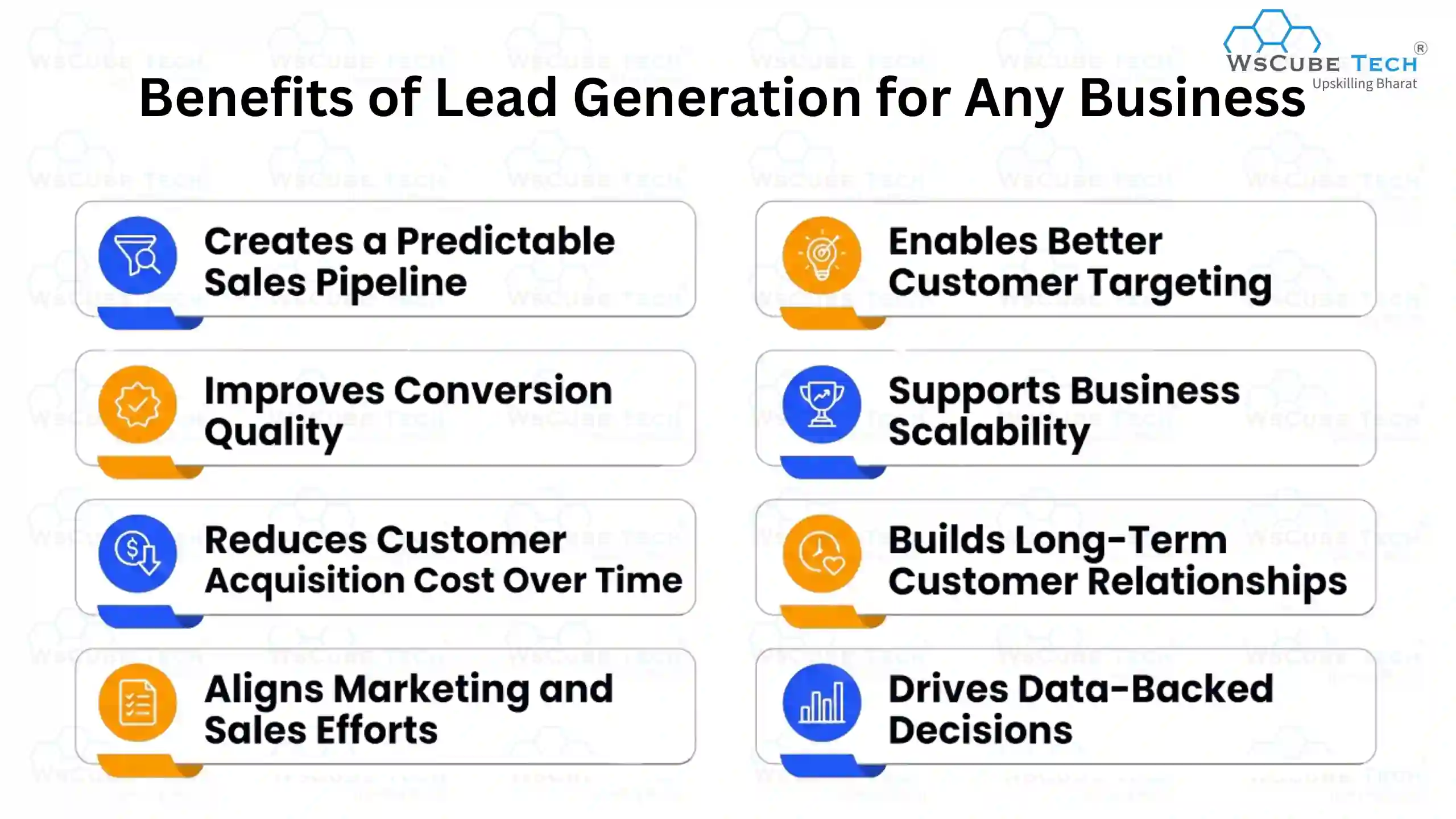
1. Creates a Predictable Sales Pipeline
Lead generation gives you a steady flow of potential customers instead of relying on luck. When leads are generated consistently, sales teams can plan follow-ups, forecast revenue, and focus on closing deals rather than searching for prospects every day.
2. Improves Conversion Quality
When leads are captured through targeted efforts, they are more relevant. This means sales conversations start with interest already present, increasing conversion rates and reducing wasted effort on unqualified prospects.
3. Reduces Customer Acquisition Cost Over Time
A strong lead generation system lowers dependency on expensive ads and cold outreach. Content, SEO, and referrals keep generating leads long after the initial effort, reducing long-term costs.
4. Aligns Marketing and Sales Efforts
Lead generation connects marketing activities directly to sales outcomes. Marketing attracts and nurtures leads, while sales focuses on closing the most qualified ones, creating a smoother and more efficient workflow.
5. Enables Better Customer Targeting
With lead data, you understand who your ideal customers are, what they want, and how they behave. This insight helps refine offers, messaging, and campaigns for better results.
6. Supports Business Scalability
As your lead generation system grows, your business can scale without chaos. More leads mean more opportunities, and systems ensure growth remains controlled and measurable.
7. Builds Long-Term Customer Relationships
Lead generation is not just about selling once. By nurturing leads over time with value and communication, businesses build trust that leads to repeat purchases and referrals.
8. Drives Data-Backed Decisions
Every lead provides data - source, behavior, and intent. This data helps you improve campaigns, identify winning channels, and double down on what actually works for growth.
How Lead Generation Works in Digital Marketing?
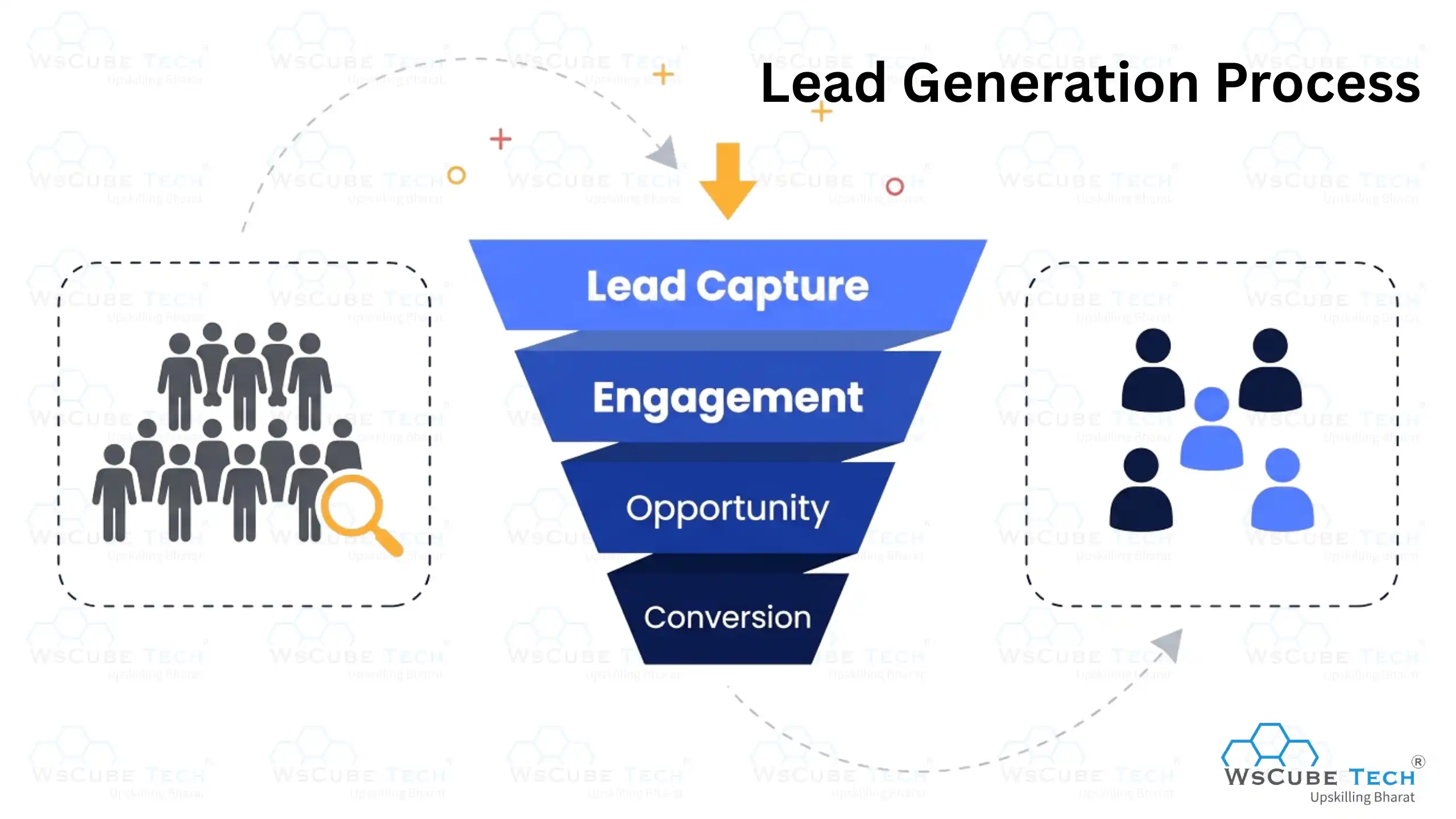
1) You Attract the Right People (Not Everyone)
Lead generation starts when you bring the right audience to your offer. This can happen through SEO blogs, social media content, YouTube, ads, partnerships, or cold outreach. The key is targeting.
If you attract the wrong people, you will get clicks but no conversions. So you must align your message with the problem your ideal customer is trying to solve.
Example: If you sell "gym personal training," a blog on "best fat loss plan for beginners" attracts the right intent, while a generic "benefits of fitness" blog may attract low-intent readers. Your first goal is simple: get attention from people who are most likely to need what you offer.
2) You Offer Something Worth Their Contact Details
People don't give their phone number or email without a reason. So you need a strong "offer" that feels valuable and specific. This offer can be a free consultation, a demo, a price quote, a free trial, a checklist, a guide, a webinar, or a limited-time discount.
The offer should match the stage of the audience. Beginners prefer guides and checklists; buyers prefer demos, quotes, and consultations.
Example: If you run an IELTS coaching center, "Free 15-minute speaking evaluation" will convert better than "Download our brochure." The better your offer, the easier it becomes to turn a visitor into a lead.
3) You Capture Their Details Using a Simple System
Once someone is interested, you must capture their details smoothly—without friction. This is done using a landing page, website form, WhatsApp click button, phone call, chatbot, or lead form ads. Your job is to reduce effort: fewer fields, clear benefit, strong CTA, and mobile-friendly design.
Example: A real estate company can use a landing page that says, "Get today's updated price list + site visit schedule," and collect name + phone number. If your form asks for 10 details, people drop. Lead generation works best when the next step feels easy and the value is obvious.
4) You Qualify the Lead (So You Don't Waste Time)
Not every lead is worth equal time. Some are ready to buy, some are just browsing, and some are irrelevant. Qualification means identifying where they stand and how serious they are. You can qualify using simple questions on the form (budget, city, requirement), a quick call, or automated tags in your CRM.
Example: If you sell web design, a lead who says "need website this week" is higher intent than someone who says "just exploring." Qualification helps you prioritize follow-ups, improve conversion rates, and stop the business from drowning in low-quality leads.
5) You Follow Up Fast (Speed Wins Leads)
Most leads go cold because of delay. The faster you follow up, the higher the chance of conversion. Ideally, reply within minutes, especially for paid leads. Use WhatsApp, calls, email, or automation to respond quickly.
Example: If someone fills a demo form for your course at 2 PM and you call at 2:10 PM, you are likely to convert. If you call next day, they may have already talked to a competitor. Lead generation is not only about getting leads—it's about reacting faster than the market.
6) You Nurture Leads Until They Are Ready
Many leads are not ready to buy immediately. Nurturing means building trust and keeping them engaged through useful content and reminders. You can nurture through email sequences, WhatsApp broadcasts, retargeting ads, case studies, testimonials, and follow-up calls.
Example: A person who downloads "Beginner's SEO checklist" may not hire you today, but after receiving 5 helpful emails and seeing your case studies, they trust you and reach out. Nurturing turns "maybe later" leads into "ready now" customers.
7) You Convert the Lead Into a Customer (And Track What Worked)
Conversion happens when the lead takes the final action: purchase, booking, payment, sign-up, or contract. At this stage, clarity and confidence matter—pricing, proof, guarantee, and smooth onboarding. But your job doesn't end here. Track which channel brought the lead, which offer converted, and what follow-up worked.
Example: If WhatsApp leads convert 2x better than email leads, you invest more there. Lead generation becomes powerful when you treat it as a measurable system, not a random activity.
Upcoming Masterclass
Attend our live classes led by experienced and desiccated instructors of Wscube Tech.





How to Generate Leads for Your Business?
Here are some few steps you can follow to generate leads for your business:
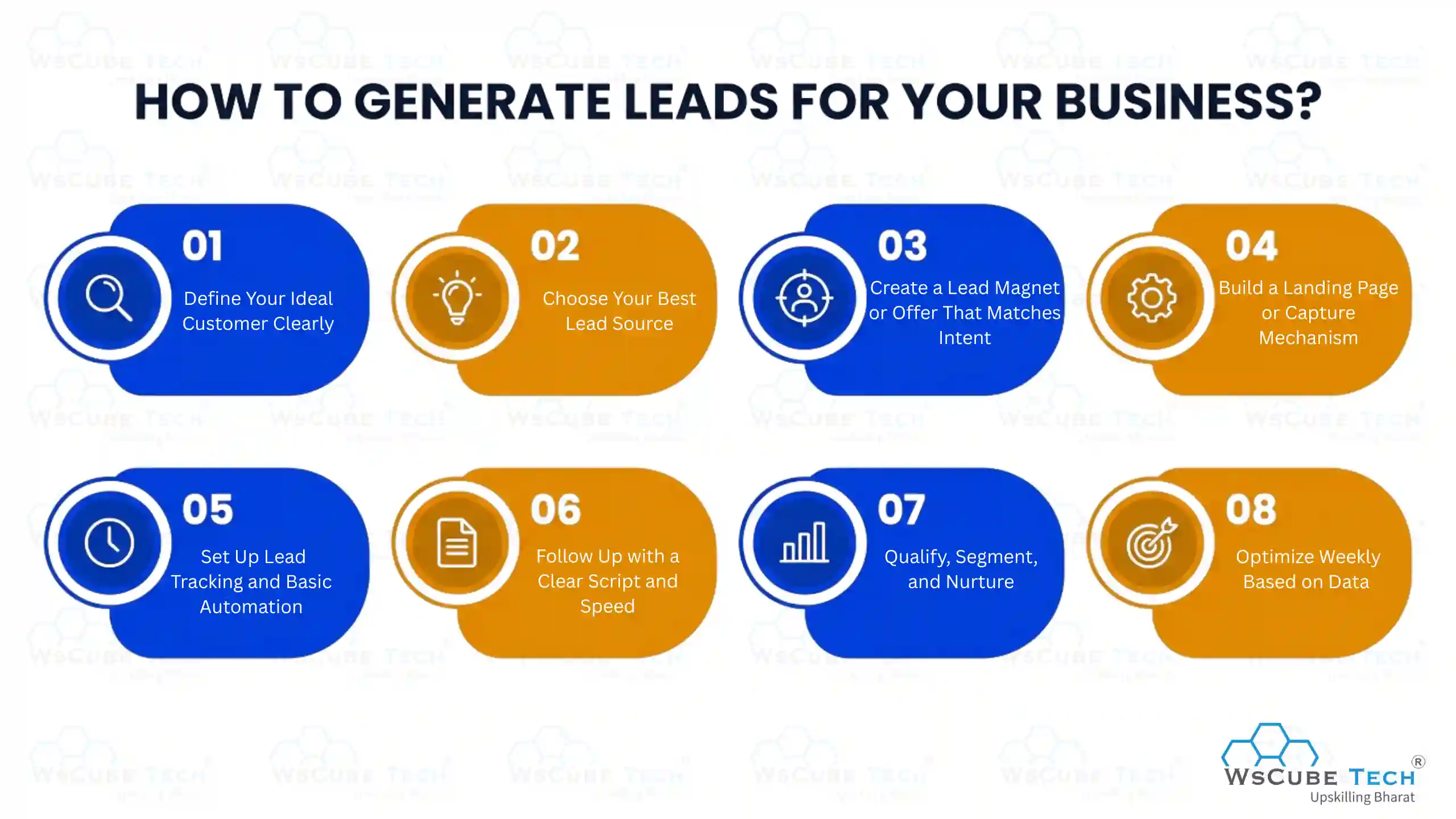
1) Define Your Ideal Customer Clearly
Before you start, decide who you want as a lead. Define their location, age group, industry, budget, and the exact problem they want solved. This makes your marketing sharper and your sales easier. If you try to target everyone, your message becomes generic and conversions drop.
Example: Instead of "I provide marketing services," define "I help local coaching institutes generate admissions through SEO and landing pages." When you define your ideal customer, you also define the content topics, ad targeting, and lead qualification questions. This one step improves the quality of everything that follows.
2) Choose Your Best Lead Source (One First)
Pick one main channel first, then scale. Your lead source can be SEO, Google Ads, Meta Ads, LinkedIn, cold outreach, referrals, webinars, or partnerships. Choose based on your audience behavior and your strengths.
If you can write well, SEO is a strong long-term channel. If you need leads fast, ads and outreach work better.
Example: For B2B services, LinkedIn outreach + landing page can work well. For local services, Google search traffic and Google Ads can perform better. Start with one channel, learn it deeply, then expand.
3) Create a Lead Magnet or Offer That Matches Intent
Your offer is what converts attention into action. Create one core offer that solves a specific pain point. Keep it simple and benefit-driven.
Example offers: "Free audit," "Free consultation," "Get pricing," "Book demo," "Download checklist," "Get quotation in 10 minutes." The offer should feel valuable enough that the reader thinks, "Yes, this is worth my email/phone number."
Also align the offer with your sales cycle. If your product is high-ticket, consultation works well. If it's low-ticket, a discount or trial can convert faster.
4) Build a Landing Page or Capture Mechanism
Now you need a place to capture leads. Create a landing page or form that clearly shows the offer, benefit, proof, and CTA. Keep the form short. Add trust elements like testimonials, logos, ratings, results, or case studies.
Example: A coaching institute landing page can show "Get Free Counselling + Study Plan," include top results, and add a simple form with name and phone number. If you do not have a landing page, use WhatsApp click-to-chat or lead form ads—but still keep the message and offer crystal clear.
5) Set Up Lead Tracking and Basic Automation
If you can't track leads, you can't improve results. Use a CRM or even a spreadsheet initially to log: lead source, date, contact, status, and next follow-up. Set simple automation like instant confirmation email/WhatsApp message: "We received your request, we'll contact you within X minutes."
Example: When someone submits a form, they get an auto message and you get notified instantly. This improves trust and reduces lead drop. Tracking also shows which channel is producing qualified leads, not just numbers.
6) Follow Up with a Clear Script and Speed
Create a basic follow-up script so your message stays consistent. Ask the right questions to qualify: requirement, timeline, budget, and decision maker. Keep it helpful, not pushy.
Example: "What are you looking to achieve?" "When do you want to start?" "Have you tried this before?"
Follow up quickly and repeatedly—most conversions happen after multiple touches. If you stop at one call, you lose. The goal is to guide, not chase, but speed + consistency is non-negotiable.
7) Qualify, Segment, and Nurture
As leads come in, segment them into hot, warm, and cold. Hot leads get immediate calls and direct offers. Warm leads get nurturing: testimonials, case studies, webinars, FAQs, and reminders. Cold leads get light touch content until they engage again.
Example: If you run a SaaS tool, warm leads can get a 5-day email series showing use cases and results. Qualification and segmentation protect your time and increase conversion rates, because you stop treating every lead the same.
8) Optimize Weekly Based on Data (Improve, Don't Guess)
Every week, check: how many leads came, how many were qualified, how many converted, and which channel performed best. Improve one thing at a time—headline, offer, form length, follow-up speed, or ad targeting.
Example: If your landing page conversion is low, simplify the CTA and strengthen proof. If leads are low quality, tighten targeting and add qualification questions. Lead generation grows when you treat it like a system you improve every week, not a one-time campaign.
Lead Generation Funnels
The lead generation funnel shows how strangers turn into paying customers in stages.
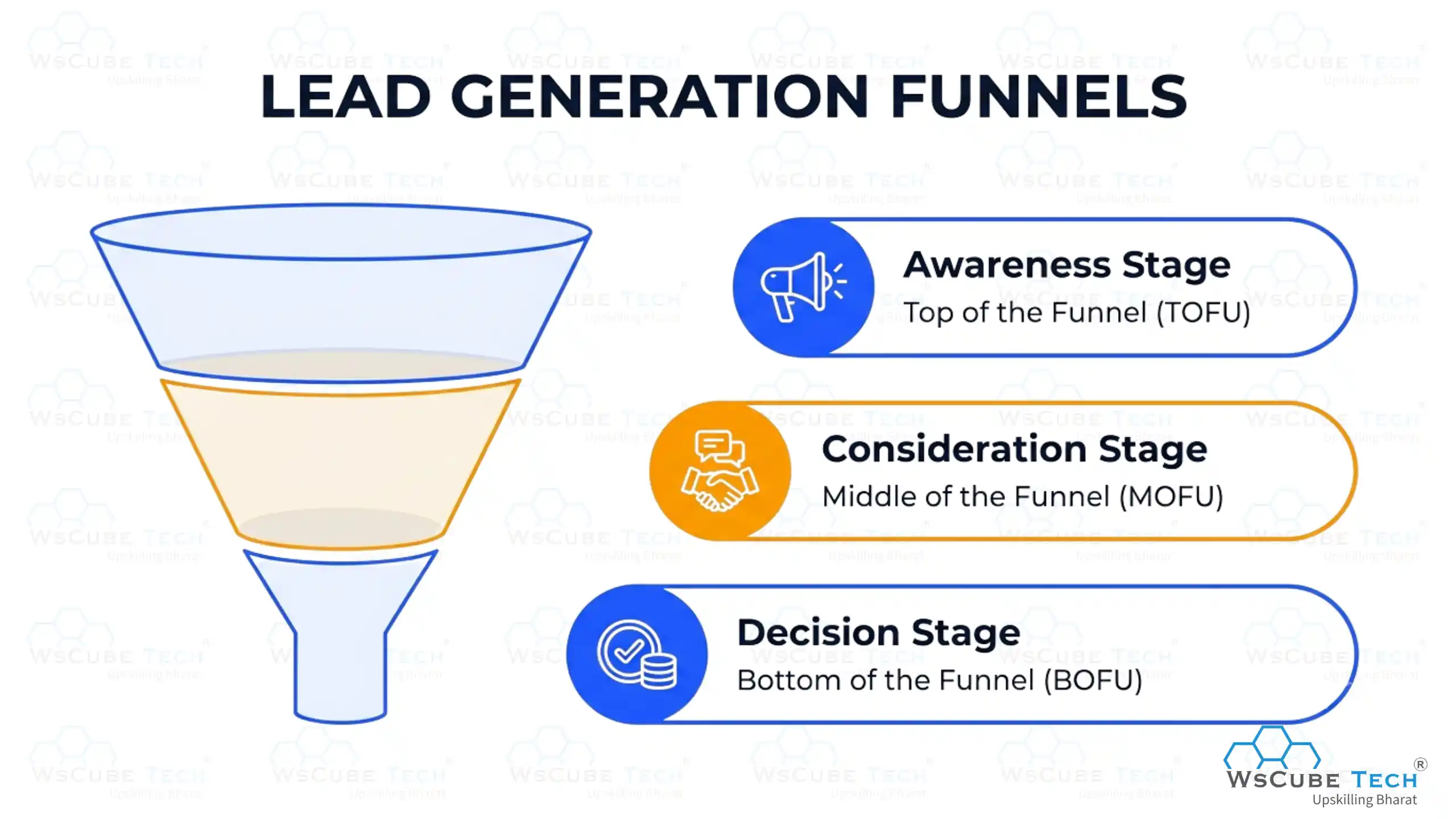
Top of the Funnel (TOFU)
At the top of the funnel, people first discover you through content, ads, search, or referrals. At this stage, they are only aware of a problem, not ready to buy.
Middle of the Funnel (MOFU)
In the middle of the funnel, interested users become leads by taking an action like filling a form, booking a call, or downloading a resource. Here, trust-building matters—case studies, emails, and follow-ups move them closer to a decision.
Bottom of the Funnel (BOFU)
At the bottom of the funnel, qualified leads interact with sales, ask pricing questions, and convert. A strong funnel removes confusion at each stage and guides the lead step by step toward action instead of pushing for an early sale.
Must-Know Concepts in Digital Marketing
Lead Generation Strategies for Digital Marketing
Use these top strategies for digital marketing lead generation:
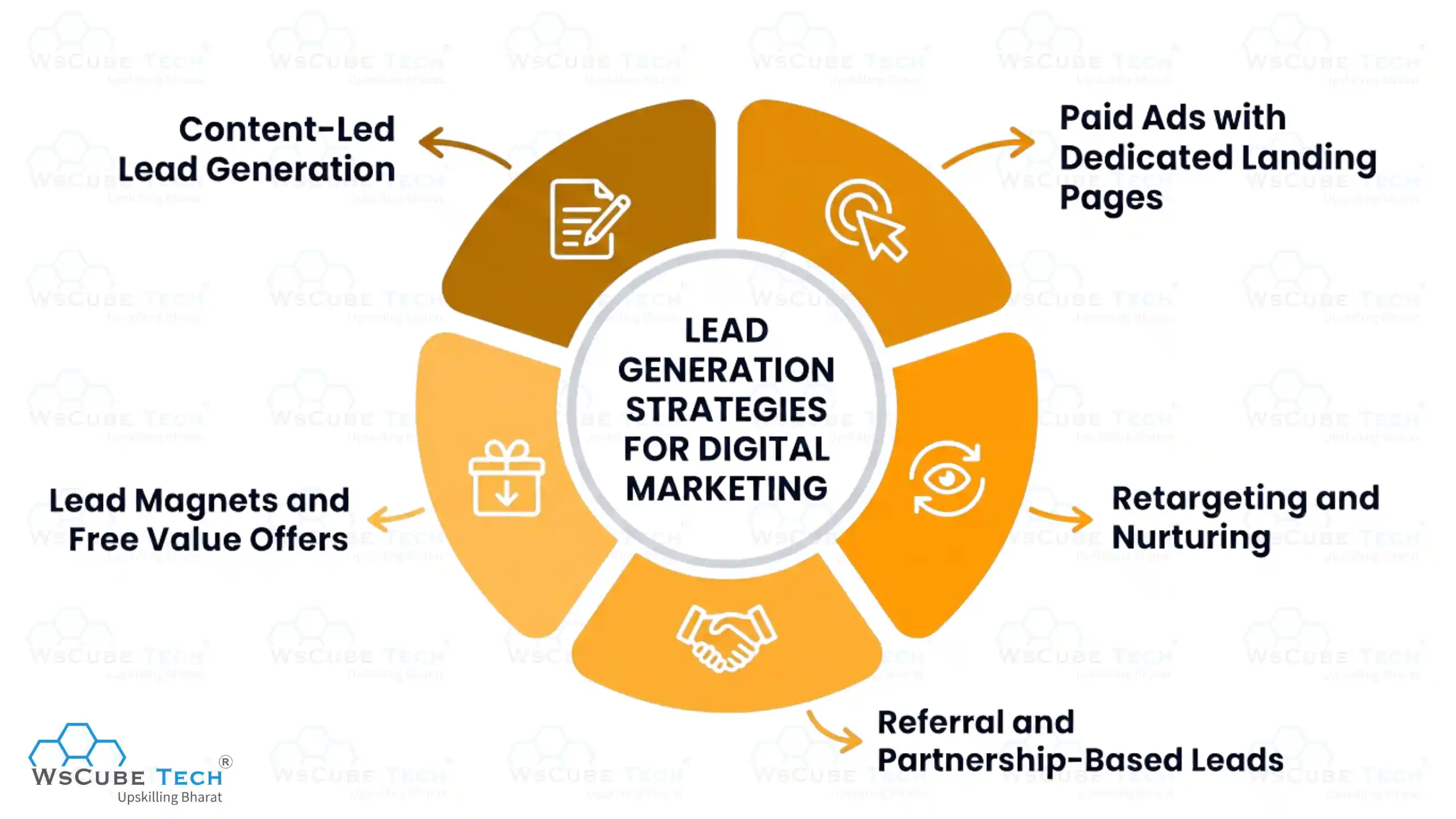
1. Content-Led Lead Generation
High-quality blogs, guides, videos, and tools attract users searching for solutions. When paired with strong CTAs and lead magnets, content generates consistent inbound leads over time without heavy ad spend.
2. Paid Ads with Dedicated Landing Pages
Search and social ads work best when traffic is sent to focused landing pages, not homepages. Clear offers and simple forms increase conversion speed and lead quality.
3. Lead Magnets and Free Value Offers
Checklists, audits, demos, free trials, and consultations give users a reason to share contact details. The more specific the value, the higher the conversion.
4. Retargeting and Nurturing
Most users don't convert on first visit. Retargeting ads, emails, and WhatsApp follow-ups bring them back when they are ready, improving overall conversion rates.
5. Referral and Partnership-Based Leads
Existing customers, affiliates, and partners bring high-intent leads. These leads convert faster because trust already exists.
Common Lead Generation Techniques
- SEO blogs with CTAs
- Google Search Ads
- Social media ads
- WhatsApp click-to-chat
- Email marketing
- Cold email outreach
- Cold calling
- Webinars and workshops
- Free tools and calculators
- Landing page forms
- Newsletter signups
- Chatbots
- Influencer collaborations
- Referral programs
Explore Our Most Popular Marketing Courses
Lead Generation Tools and Software: Quick Overview
Hare is a list of top lead generation tools:
| Tool / Software | Primary Use | Best For |
| HubSpot | CRM + lead management | End-to-end lead tracking |
| Zoho CRM | CRM and automation | Small to mid-size businesses |
| Salesforce | Advanced CRM | Large sales teams |
| Google Forms | Simple lead capture | Beginners and quick setups |
| WPForms | Website lead forms | WordPress websites |
| Mailchimp | Email automation | Lead nurturing |
| ActiveCampaign | Automation + CRM | Advanced follow-ups |
| Calendly | Appointment booking | Consultations and demos |
| Meta Lead Ads | In-app lead capture | Social media leads |
| Google Analytics | Lead tracking insights | Performance analysis |
Lead Generation in Digital Marketing: Example
Imagine you run a digital marketing agency. You publish a blog titled "How Local Businesses Can Get More Enquiries Online." Inside the blog, you offer a free website audit.
A visitor reads the blog, clicks the CTA, fills a form with name and phone number, and receives an instant WhatsApp confirmation. You call them within 10 minutes, understand their requirement, and schedule a detailed consultation.
Over the next few days, you share case studies and pricing. The lead converts into a client. This is digital marketing lead generation working end to end—from content to conversion.
Lead Generation in Digital Marketing: Video Guide
FAQs About Lead Generation in Digital Marketing
Leads are people who show interest by taking an action like filling a form, calling, or signing up.
It is the process of identifying and converting interested prospects into customers through follow-ups and closing.
Lead generation in digital marketing is the process of attracting potential customers through online channels like SEO, social media, paid ads, and email and capturing their contact details to convert them into paying customers.
Traffic is visitors; leads are visitors who share their contact details and signal intent to buy.
Digital marketing helps in lead generation by giving you targeted channels like SEO, paid ads, email, and social media to reach the right audience, capture their details, and move them through the sales funnel efficiently.
Use SEO blogs, referrals, partnerships, and social media content. Organic digital marketing lead generation is cost-effective and builds a long-term pipeline without ad spend.
An MQL (Marketing Qualified Lead) has engaged with your content but is not yet sales-ready. An SQL (Sales Qualified Lead) has shown clear buying intent and is ready for a direct sales conversation.
A landing page is where visitors convert into leads. It presents a single offer with a clear CTA and a short form, removing distractions so the visitor takes one focused action.
Track metrics like number of leads generated, lead-to-conversion rate, cost per lead, and lead source performance. These tell you what is working and where to improve.
Inbound lead generation attracts customers through content, SEO, and social media. Outbound involves proactive outreach like cold calls, cold emails, and paid ads to reach prospects directly.
B2B lead generation focuses on attracting leads from other businesses, typically using LinkedIn, email outreach, webinars, and content marketing rather than mass consumer channels.

Join Our On-Campus Digital Marketing Program
Explore Our Free Courses



Leave a comment
Your email address will not be published. Required fields are marked *Comments (0)
No comments yet.