

YouTube is no longer just a platform for entertainment. It has turned into a full-time career option for millions of people around the world. Students, homemakers, teachers, gamers, and even working professionals are learning how to earn money from YouTube and building a steady income from it.
But here is the truth. Most beginners jump into YouTube without understanding how the money actually works. They upload a few videos, wait for the "Monetize" button to appear, and get confused when nothing happens. If you have ever searched how to make money from YouTube and felt overwhelmed by mixed information, this guide is for you.
In this blog, we will break down everything in simple language. You will learn how YouTube monetization works, what the eligibility rules are in 2026, and more than 10 real ways to turn your channel into an income source. We will also look at how much Indian creators actually earn, how to start making money in YouTube without 1,000 subscribers, and the common mistakes that block or delay monetization.
Is YouTube Still Profitable in 2026?
Yes, YouTube is still one of the best platforms for creators to earn online in 2026. With multiple income streams like ad revenue, Shorts monetization, memberships, YouTube Shopping, and fan funding, creators are no longer limited to a single earning source. Competition has increased, but creators who focus on a specific niche and stay consistent can still grow quickly.
Since monetization features now unlock earlier for eligible channels, learning how to earn money on YouTube has become more accessible than ever. With billions of active viewers and growing demand for regional and short-form content, there is still plenty of opportunity for new creators.
How Does YouTube Monetization Actually Work?
Before jumping into strategies, it helps to understand the basic mechanics behind YouTube monetization.
When someone watches your video, YouTube may show an ad before, during, or after it. Advertisers pay YouTube for these ad placements. This payment is measured using two terms every creator should know:
- CPM (Cost Per Mille): This is the amount an advertiser pays YouTube for every 1,000 ad impressions. It is the raw number from the advertiser's side.
- RPM (Revenue Per Mille): This is what you, the creator, actually earn per 1,000 views, after YouTube takes its cut and after accounting for other revenue sources like memberships and Super Chats.
YouTube keeps 45% of the ad revenue and gives creators the remaining 55%. This split applies to both long-form videos and Shorts.
Your RPM depends on several factors:
- Niche: Finance, technology, and education content usually earns a higher RPM than entertainment or comedy content, because advertisers in these categories pay more to reach audiences with buying intent.
- Audience location: Views from the United States, United Kingdom, or Canada pay significantly more than views from India or other developing markets, simply because advertiser budgets are higher in those regions.
- Video length: Videos longer than 8 minutes can include mid-roll ads, which means more ad slots and higher potential earnings.
- Season: Ad rates usually rise during October to December because brands increase spending during the festive and holiday season, and drop again in January.
Once your channel becomes eligible for monetization, YouTube pays creators through Google AdSense after they reach the minimum payment threshold (typically USD 100 or the local equivalent).
Understanding how to get paid using YouTube is essential, as your earnings can come from multiple sources, including ads, Shorts, memberships, Super Chat, and Super Thanks. Tracking all of these revenue streams gives a better picture of your overall income and helps you grow your earnings over time.
Recommended Professional Certificates
AI-Powered Digital Marketing Course
Performance Marketing Bootcamp
SEO Specialist Bootcamp
YouTube Partner Program (YPP) Eligibility Requirements in 2026
To unlock most of YouTube's monetization features, you need to join the YouTube Partner Program, commonly known as YPP. In 2026, YouTube offers two tiers of access, which makes it easier for smaller creators to start earning sooner.
Tier 1: Early Access (Fan Funding and Shopping)
To qualify for this tier, your channel needs:
- 500 subscribers
- 3 public uploads in the last 90 days
- Either 3,000 valid public watch hours on long-form videos in the past 12 months, or 3 million valid public Shorts views in the past 90 days
This tier does not give you ad revenue, but it unlocks channel memberships, Super Chat, Super Stickers, Super Thanks, and YouTube Shopping features.
Tier 2: Full Monetization (Including Ad Revenue)
For full monetization, including ad revenue sharing, you need:
- 1,000 subscribers
- Either 4,000 valid public watch hours in the past 12 months, or 10 million valid public Shorts views in the past 90 days
Along with these numbers, there are a few additional conditions you must meet:
- You must live in a country or region where YPP is available
- You should have no active Community Guidelines strikes on your channel
- Two-step verification must be turned on for your Google account
- You need to link a Google AdSense account to receive payments
- Your content must follow YouTube's advertiser-friendly content guidelines
Once you meet these thresholds, you can apply through the "Earn" tab in YouTube Studio. YouTube then reviews your entire channel, not just your numbers, to check whether your content follows its monetization policies. This review usually takes anywhere from a few days to about a month.
It is worth noting that reaching the subscriber and watch-hour numbers does not guarantee approval. YouTube also checks originality, copyright compliance, and whether your content is safe for advertisers. Keep this in mind if you are learning how to make money on YouTube for beginners, since building a clean, original channel from day one saves you from rejection later.
10+ Ways to Make Money on YouTube
Ad revenue is only one part of the picture. Once you understand the full range of income streams available, you will see that there are far more ways to earn than most beginners realize. Here are the main methods, explained one by one.
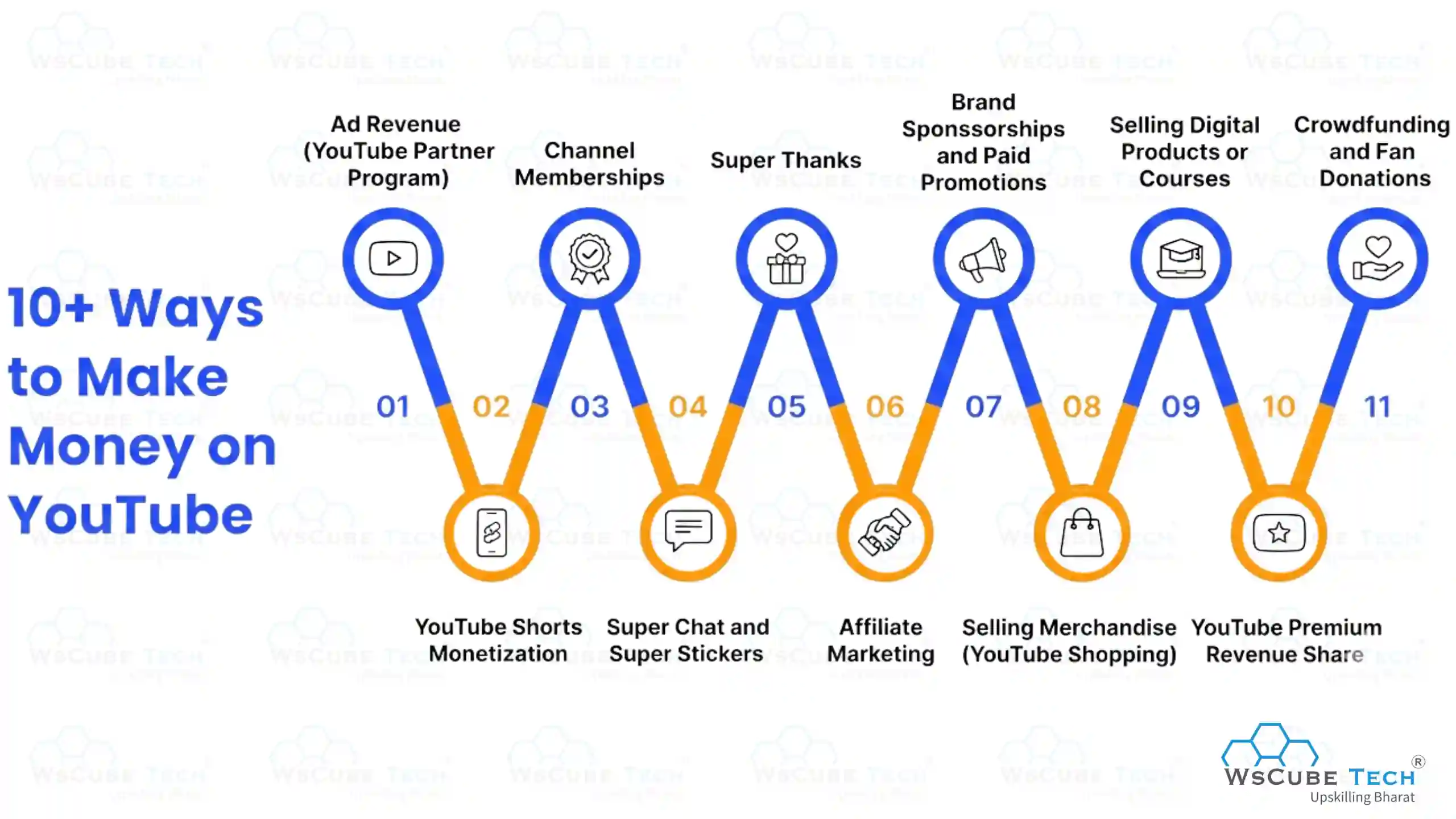
1. Ad Revenue (YouTube Partner Program)
This is the most well-known method and usually the first one people think of when they search how to make money from YouTube videos. Once you are accepted into YPP, YouTube automatically places ads on your long-form videos, and you earn a share of the revenue generated.
As discussed earlier, your earnings depend on RPM, which varies by niche, audience location, and video length. A finance or tech channel targeting a US audience can earn far more per 1,000 views than an entertainment channel targeting a local audience. This is why choosing your niche carefully matters more than most beginners expect.
2. YouTube Shorts Monetization
Shorts work differently from long-form videos. Instead of ads being tied to a specific video, YouTube pools all the ad revenue generated from ads shown between Shorts in the Shorts Feed. This pooled amount is called the Creator Pool.
Here is how it works. Each month, YouTube calculates the total ad revenue from the Shorts feed. If your Short uses music, a portion of the revenue tied to it goes to music rights holders before the rest enters the Creator Pool.
The remaining pool is then split among monetizing creators based on their share of total engaged Shorts views. You keep 45% of whatever is allocated to you, the same split as long-form content.
Because this is a shared pool rather than direct per-video ad placement, Shorts RPM is much lower than long-form RPM, often just a few cents per 1,000 views. This makes Shorts a weaker option if you are only focused on how to make money from views on YouTube directly through Shorts.
However, Shorts remains one of the best tools for growing your subscriber base quickly, which then feeds your long-form video earnings.
3. Channel Memberships
Once you have 500 subscribers and meet the Tier 1 requirements, you can offer channel memberships. Viewers pay a monthly fee, usually starting from a small amount, to get perks like custom badges, members-only emojis, exclusive posts, and early access to your videos.
This is a strong option for creators with a loyal, engaged audience rather than just high view counts. Even a small percentage of your subscribers converting to paying members can create a steady, predictable monthly income, unlike ad revenue which fluctuates with views and seasons.
4. Super Chat and Super Stickers
During live streams, viewers can pay to have their message highlighted in the chat or send an animated sticker for extra visibility. This works especially well for creators who do live Q&A sessions, gaming streams, or real-time reactions, where the audience feels a direct connection with the creator.
5. Super Thanks
Super Thanks lets viewers send a one-time tip on any regular video, not just live streams. It appears as a colorful animation in the comments section along with the viewer's message. This is a simple way to earn extra income from viewers who genuinely appreciate your content, even if your channel is still small.
6. Affiliate Marketing
Affiliate marketing is one of the fastest ways to start earning from YouTube, and you do not need any subscriber count or watch hour requirement to begin. You simply promote a product or service using a unique tracking link and earn a commission whenever someone makes a purchase through that link.
This works particularly well for tech reviews, beauty and fashion content, book recommendations, and software tutorials. Many creators mention products naturally within their videos and place affiliate links in the description box.
7. Brand Sponsorships and Paid Promotions
As your channel grows, brands may pay you directly to feature their product or service in your video. This can be a dedicated sponsored video, a short mention, or an integration within your regular content.
Sponsorships often pay significantly more than ad revenue for the same number of views, especially once you cross the 10,000 to 50,000 subscriber range. Building a clear niche and a genuine connection with your audience makes you more attractive to brands looking for the right creator to partner with.
In fact, learning how to make money from a YouTube video through sponsorships often becomes far more profitable than ad revenue alone, since a single well-negotiated brand deal can sometimes earn more than an entire month of ads.
8. Selling Merchandise (YouTube Shopping)
YouTube Shopping lets you tag your own merchandise or products directly within your videos and channel page, so viewers can purchase them without leaving YouTube. This works well for creators who already have a personal brand, such as comedians, educators, or influencers with a distinct identity that fans want to represent.
9. Selling Digital Products or Courses
If you have expertise in a specific field, whether it is digital marketing, coding, cooking, or fitness, you can create and sell digital products like eBooks, templates, or full-length courses to your audience. This method often generates higher profit margins compared to ad revenue, since there is no revenue split with YouTube once the sale happens outside the platform.
This is one of the smartest long-term strategies if you are serious about how to make money through youtube, because it turns your audience trust into a scalable income source that does not depend on YouTube's algorithm alone.
Many creators who ask how to make money from YouTube channel growth eventually realize that a well-built audience, not just view counts, is what makes digital products sell consistently month after month.
10. YouTube Premium Revenue Share
When a YouTube Premium subscriber (someone who pays for an ad-free experience) watches your video, you still earn money. YouTube tracks how much of your content Premium members watch and pays you a share of their subscription revenue based on that watch time. You do not need to do anything extra to activate this; it works automatically once you are part of YPP.
11. Crowdfunding and Fan Donations
Beyond YouTube's built-in tools, many creators also use external platforms like Patreon to offer exclusive content, behind-the-scenes access, or early releases in exchange for monthly support. While YouTube does not directly manage this revenue, it is a common and effective way for creators to build a more predictable income alongside their YouTube earnings.
Upcoming Masterclass
Attend our live classes led by experienced and desiccated instructors of Wscube Tech.



How Much Money Can You Make on YouTube in India? (2026 Data)
This is probably the question every Indian creator wants answered. The honest answer is that it depends heavily on your niche, your audience's location, and your content format.
As of 2026, Indian YouTubers typically earn between ₹50 and ₹200 per 1,000 views, though this can range from as low as ₹30 to as high as ₹300 depending on the content category, according to data from upGrowth's 2026 YouTube CPM report. This means a video that crosses 1 million views could realistically earn anywhere between ₹50,000 and ₹2,00,000.
Niche makes a massive difference here. Finance, technology, and education channels generally see the highest RPM in India, sometimes reaching ₹100 to ₹150 per 1,000 views, while entertainment and vlog content usually earns on the lower end, around ₹40 to ₹80 per 1,000 views.
Audience location matters just as much as niche. If your content attracts international viewers, especially from the US, UK, or Canada, your earnings can jump significantly. English content targeting US viewers can earn ₹650 to ₹3,300 per 1,000 views, compared to ₹50 to ₹200 for a purely Indian audience, which is a 5 to 10 times difference according to the same upGrowth report.
Here is a quick comparison of average RPM by niche for Indian creators, based on 2026 industry data:
| Niche | Approximate RPM (per 1,000 views) |
| Finance and Investing | ₹100 to ₹150 |
| Technology and Gadgets | ₹80 to ₹120 |
| Education | ₹80 to ₹150 |
| Entertainment and Vlogs | ₹40 to ₹80 |
| YouTube Shorts (any niche) | ₹5 to ₹30 |
YouTube Shorts, as covered earlier, pay much less. Indian creators typically see Shorts RPM between ₹5 and ₹30, a fraction of what long-form videos earn.
For context, most new channels earning around 10,000 monthly views make somewhere between ₹500 and ₹1,000 a month, and reaching a sustainable ₹20,000 to ₹50,000 monthly income usually takes 1 to 2 years of consistent content creation and niche optimization, based on estimates from upGrowth. It is a slow build in the beginning, but it accelerates once you diversify beyond ad revenue into sponsorships and digital products.
How to Make Money on YouTube Without 1,000 Subscribers
You do not need to wait until you hit 1,000 subscribers to start earning. As covered in the eligibility section, YouTube's Tier 1 access opens up at just 500 subscribers, giving you access to memberships, Super Chat, Super Stickers, Super Thanks, and YouTube Shopping.
But even before you hit 500 subscribers, there are ways to earn:
- Affiliate marketing has no subscriber requirement at all. You can start placing affiliate links in your video descriptions from your very first upload.
- Brand collaborations for micro-influencers are increasingly common. Some small brands are happy to work with creators who have just a few hundred highly engaged subscribers in a specific niche.
- Selling your own digital products or services, such as consulting, freelancing, or coaching, can be promoted through your channel even if it is small, since the sale happens outside YouTube's monetization system entirely.
This path is especially useful for anyone researching how can you make money from YouTube while still building up their subscriber base. The key is not to wait passively for YPP eligibility, but to actively build multiple income streams from day one.
Read More on YouTube Related Guides
| Best YouTube Hashtags | YouTube SEO |
| YouTube Channel Ideas | YouTube Income Per 1000 Views |
| Best Time to Post on YouTube | YouTube Brand Account |
How to Start Making Money on YouTube? Step-by-Step
If you are starting from zero, here is a simple roadmap to follow.
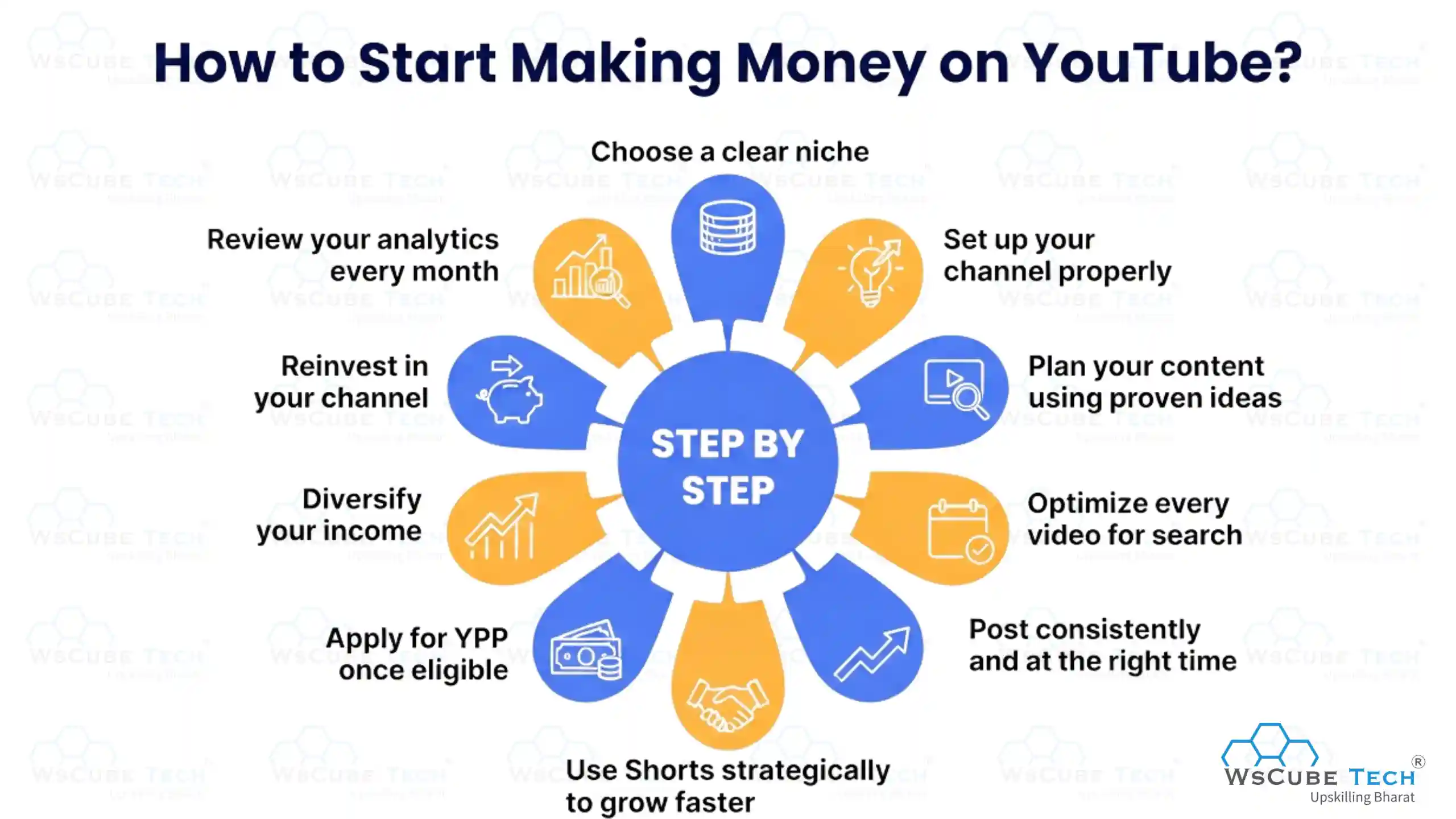
Step 1: Choose a clear niche
Pick a topic you can consistently create content around, ideally something with commercial value like finance, tech, education, or lifestyle. A focused niche helps YouTube's algorithm understand and recommend your content faster.
Step 2: Set up your channel properly
Create a professional YouTube brand account instead of a personal one, since it allows multiple team members to manage the channel and looks more credible to brands and viewers alike.
Step 3: Plan your content using proven ideas
If you are unsure what to create, browsing a list of YouTube Channel Ideas can help you find a direction that fits your skills and interests.
Step 4: Optimize every video for search
Learning the basics of YouTube SEO will help your videos get discovered through search and suggested videos, rather than relying purely on luck or virality.
Step 5: Post consistently and at the right time
Uploading regularly signals to YouTube that your channel is active. Understanding the best time to post on YouTube for your specific audience can meaningfully improve your early view counts.
Step 6: Use Shorts strategically to grow faster
Short, high-retention videos using best YouTube hashtags can help new viewers discover your channel, even before you have a large subscriber base.
Step 7: Apply for YPP once eligible
Track your subscriber count and watch hours in YouTube Studio, and apply as soon as you cross the Tier 1 or Tier 2 thresholds.
Step 8: Diversify your income
Do not depend on ad revenue alone. Add affiliate links, pursue sponsorships once you have an audience, and consider building a digital product once you understand what your viewers need.
Step 9: Reinvest in your channel
Once you start earning, put some of it back into better equipment, editing software, or paid promotion for your best-performing videos. Small improvements in production quality often lead to better retention, which directly improves your RPM over time.
Step 10: Review your analytics every month
Set aside time to look at which videos are driving the most watch time and revenue, then plan your next month of content around those patterns instead of guessing what might work.
How to Make Money on YouTube Fast (Realistic Expectations)
Many beginners search for how to make money on YouTube fast, hoping for a shortcut. It is important to set realistic expectations here, because most successful channels are not built overnight.
That said, there are ways to speed up your early growth:
- Focus on Shorts for rapid subscriber growth: While Shorts pay very little directly, they are the fastest way to reach new viewers and grow your subscriber count, which then feeds into your long-form video views.
- Target a high-CPM niche from the start: Choosing finance, technology, or education over general entertainment means your early views will be worth more once you do reach monetization.
- Start affiliate marketing immediately: Since there is no subscriber requirement, this can generate income from your very first few videos if you choose relevant, useful products to recommend.
- Collaborate with other small creators: Cross-promotion can expose your channel to a new audience much faster than growing alone.
Building a profitable YouTube channel takes time. Most creators need several months of consistent uploads to meet monetization requirements and grow their audience. Focus on a clear niche, stay consistent, and be patient.
It also helps to analyze successful channels in your niche to understand what type of content, thumbnails, and upload strategies resonate with viewers.
Explore Our Most Popular Marketing Courses
Common Mistakes That Delay or Block YouTube Monetization
Many creators unknowingly slow down their own monetization journey. Here are the most common mistakes to avoid.
- Using unoriginal or reused content: YouTube's policies require your content to be your own work. Reposting other people's videos, even with minor edits, can block you from monetization entirely.
- Ignoring copyright rule: Using copyrighted music or clips without permission can lead to claims that redirect your ad revenue to the rights holder, or even strikes on your channel.
- Inconsistent uploads: Long gaps between videos slow down your growth and can even affect your standing in the Partner Program, since inactive channels risk losing monetization after six months without uploads.
- Skipping SEO and keyword research: Videos without proper titles, descriptions, and tags struggle to get discovered, no matter how good the content is.
- Not linking an AdSense account correctly: Some creators meet all the subscriber and watch hour requirements but delay their approval simply because they have not properly set up or linked their AdSense account.
- Chasing subscriber count over engagement: A channel with fewer but highly engaged subscribers often earns more than one with a large but passive audience, since engagement directly affects watch time and ad performance.
- Relying on a single income source: Depending only on ad revenue makes your income unpredictable. Diversifying early protects you from seasonal dips in CPM.
- Publishing without a thumbnail or title strategy: Even great content can underperform if the thumbnail and title do not encourage a click. A/B testing different thumbnail styles is one of the simplest ways to improve view counts without changing your content at all.
- Not reviewing analytics regularly: Some creators upload consistently but never check which videos perform best, which means they keep repeating the same low-performing formats instead of doubling down on what actually works for their audience.
Real Examples: What Indian YouTubers Actually Earn
To make this more concrete, here is what real-world earnings can look like at different stages, based on typical Indian creator experiences.
A small gaming channel with around 100,000 subscribers can earn between ₹15,000 and ₹30,000 per month purely from ad revenue, with additional income from occasional sponsorships for product reviews or promotions, according to earnings data shared by Haulpack.
Channels in high-paying niches like finance and education often earn more per view because advertisers pay higher rates. As creators grow, especially beyond 500,000 subscribers, income shifts from ad revenue to brand sponsorships, digital products, and merchandise.
The highest earnings usually come from diversifying income sources, not ads alone. Treating your YouTube channel like a business—by choosing the right niche, uploading consistently, and working with brands, can lead to faster and more sustainable growth.
Read More Guides Related to Social Media
Tools to Help You Earn More on YouTube
A few tools can make the process of growing and monetizing your channel much smoother:
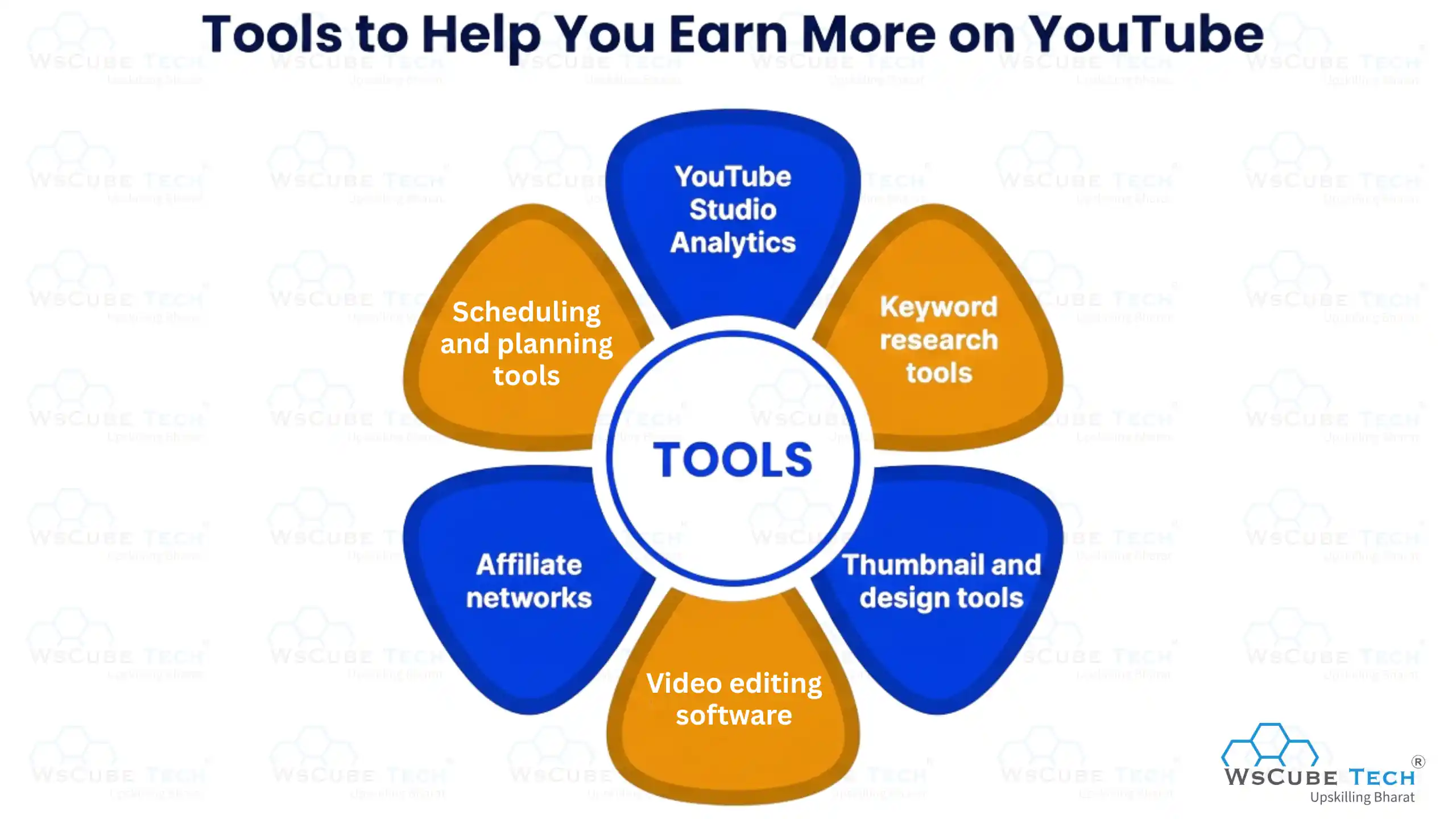
- YouTube Studio Analytics: Your primary source for tracking RPM, CPM, watch time, and audience demographics. Understanding these numbers helps you make informed decisions about content direction.
- Keyword research tools: Tools like TubeBuddy or vidIQ help you find search terms your audience is actually looking for, which directly supports your YouTube SEO efforts.
- Thumbnail and design tools: Simple design platforms like Canva help you create clickable thumbnails without needing professional design skills.
- Video editing software: Tools like CapCut or Adobe Premiere Rush make it easier to produce polished videos, even on a beginner budget.
- Affiliate networks: Platforms like Amazon Associates or niche-specific affiliate programs give you access to trackable links and commission reports.
- Scheduling and planning tools: Platforms like Notion or Trello help you plan your content calendar in advance, so you never miss a consistent upload schedule, which is one of the most important factors in long-term channel growth.
Using even a few of these tools consistently can meaningfully speed up both your growth and your earnings over time. The goal is not to use every tool available, but to pick a few that fit your workflow and stick with them long enough to see real results.
How to Make Money on YouTube: Video Guide
FAQs about Making Money on YouTube
You need 500 subscribers for fan-funding features like memberships and Super Thanks, and 1,000 subscribers along with either 4,000 watch hours or 10 million Shorts views for full ad revenue monetization.
Indian creators typically earn between ₹50 and ₹200 per 1,000 views, though this varies by niche and audience location.
Yes, some creators build faceless channels using stock footage, animations, or voiceovers, and still monetize successfully through ad revenue and affiliate marketing.
Shorts pay much less than long-form videos, usually just a few cents per 1,000 views, since the revenue comes from a shared pool rather than direct ad placement.
This varies widely, but most creators need several months of consistent uploads to meet YPP eligibility requirements and start seeing meaningful ad revenue.
Affiliate marketing has no subscriber requirement, which makes it a good starting point, but most successful creators eventually combine both ad revenue and affiliate income for a more stable earning mix.
No, a smartphone with a decent camera and clear audio is enough to start. Many successful channels grew with basic equipment and only upgraded once they started earning consistently.

Conclusion
Learning how to earn money from YouTube is not about finding one secret trick. It is about understanding how the platform's monetization system works, choosing the right niche, and building multiple income streams instead of depending on ad revenue alone. Choose a clear niche, create valuable content consistently, and optimize every video for search and engagement.
Apply for the YouTube Partner Program as soon as you're eligible, and explore additional income sources like affiliate marketing and brand partnerships. Long-term success on YouTube comes from consistency, analyzing your performance, and adapting your content as the platform evolves.
Join Our On-Campus Digital Marketing Program
Explore Our Free Courses






Leave a comment
Your email address will not be published. Required fields are marked *Comments (0)
No comments yet.