
Digital marketing is everywhere. Every ad you scroll past, every email that lands in your inbox, every blog post that shows up in your search results, someone planned and executed all of that. That someone is a digital marketer.
But what does a digital marketer do from 9 to 5? What digital marketing skills do they use, what tools do they rely on, and how do the different roles within digital marketing differ from each other?
This guide breaks it all down, whether you are a student exploring career options, a business owner trying to understand the people you hire, or someone looking to switch into digital marketing.
A Day in the Life of a Digital Marketer
There is no such thing as a "typical" day in digital marketing. The work shifts depending on campaigns, deadlines, platform algorithm changes, and business goals. That said, most digital marketers move through a predictable rhythm of tasks.
A morning usually starts with checking analytics dashboards. Traffic numbers, email open rates, ad spend versus conversions. These numbers tell the story of what happened overnight and set priorities for the day.
From there, the work branches depending on the role. A content-focused marketer might spend the morning writing and editing, then shift to scheduling posts and reviewing performance data in the afternoon. A paid media specialist might be adjusting bids, reviewing ad creative, and preparing a performance report for a client.
Meetings, collaboration with designers and developers, and a fair amount of platform monitoring fill the gaps. If you're wondering what does a marketer do, here is how the tasks typically move up from junior to senior roles, including consultants.
What Does a Digital Marketing Specialist Do?
A digital marketing specialist focuses on one or two specific channels, such as SEO, paid ads, or email. They are the execution layer of a marketing team.
Key responsibilities:
- Creating Content: Design social media graphics, writing blog entries, and creating advertising copy.
- Running Campaigns: Putting up Google or Instagram ads and keeping track of daily spending.
- Reporting: Tracking campaign performance with online tools such as Google Analytics.
- Optimizing: Tweaking landing pages or A/B testing headlines to increase conversion rates.
In small companies, a specialist might handle multiple channels. In larger organizations, they go deep on one area and report to a manager.
What Does a Digital Marketing Manager Do?
A digital marketing manager oversees the bigger picture. They coordinate across channels, manage a team, allocate budgets, and align marketing with business goals.
Key responsibilities:
- Content Approval: Reviewing content calendars, maintaining the brand voice, and providing final approval for campaigns and creative assets before publication.
- Budgeting & Strategy: Allocating budgets across marketing channels, approving digital marketing plans, and ensuring they support long-term business goals.
- Performance Analysis: Monitoring campaign performance, interpreting key metrics, and making strategic adjustments to improve results.
- Team Leadership: Mentoring junior team members, supporting employee training, and leading cross-functional projects to encourage innovation and growth.
If a specialist asks "how do we do this," a manager asks "why are we doing this and what should it achieve."
What Does a Digital Marketing Consultant Do?
A digital marketing consultant works independently or through an agency to advise businesses on strategy. They are brought in when a company needs outside expertise or a fresh perspective.
Key responsibilities:
- Auditing & Diagnosis: Reviewing existing marketing efforts to identify technical issues, wasted budget, performance gaps, and opportunities for improvement.
- High-Level Strategy: Creating a clear digital marketing roadmap that aligns campaigns, channels, and business goals.
- Specialized Implementation: Setting up advanced marketing systems, such as CRM automation, analytics tracking, and lead management workflows.
- Training & Advisory: Guiding internal teams through training, workshops, and strategic advice to improve skills and stay updated with industry trends.
Recommended Professional Certificates
AI-Powered Digital Marketing Course
Performance Marketing Bootcamp
SEO Specialist Bootcamp
What Does Digital Marketing Mean?
Digital marketing is any form of marketing that happens through digital channels including search engines, websites, social media platforms, email, mobile apps, and more. It is how brands reach people where they already spend their time: online.
Traditional marketing relied on TV spots, radio, print ads, and billboards. Digital marketing does not replace those entirely, but it offers something traditional channels cannot: precise targeting, real-time measurement, and the ability to reach a global audience without a massive broadcast budget.
Digital marketing differs from traditional marketing in three core ways:
| Traditional Marketing | Digital Marketing |
| TV, radio, print, billboards | Search, social, email, content |
| Broad audience targeting | Precise, behavioral targeting |
| Slow, hard to measure | Real-time tracking and reporting |
| High minimum budget | Scalable from any budget |
What Do Digital Marketers Do? Roles and Responsibilities
Digital marketers are responsible for promoting brands, products, and services through online channels. Their responsibilities vary depending on their role, but most digital marketers work across multiple areas to attract, engage, convert, and retain customers.
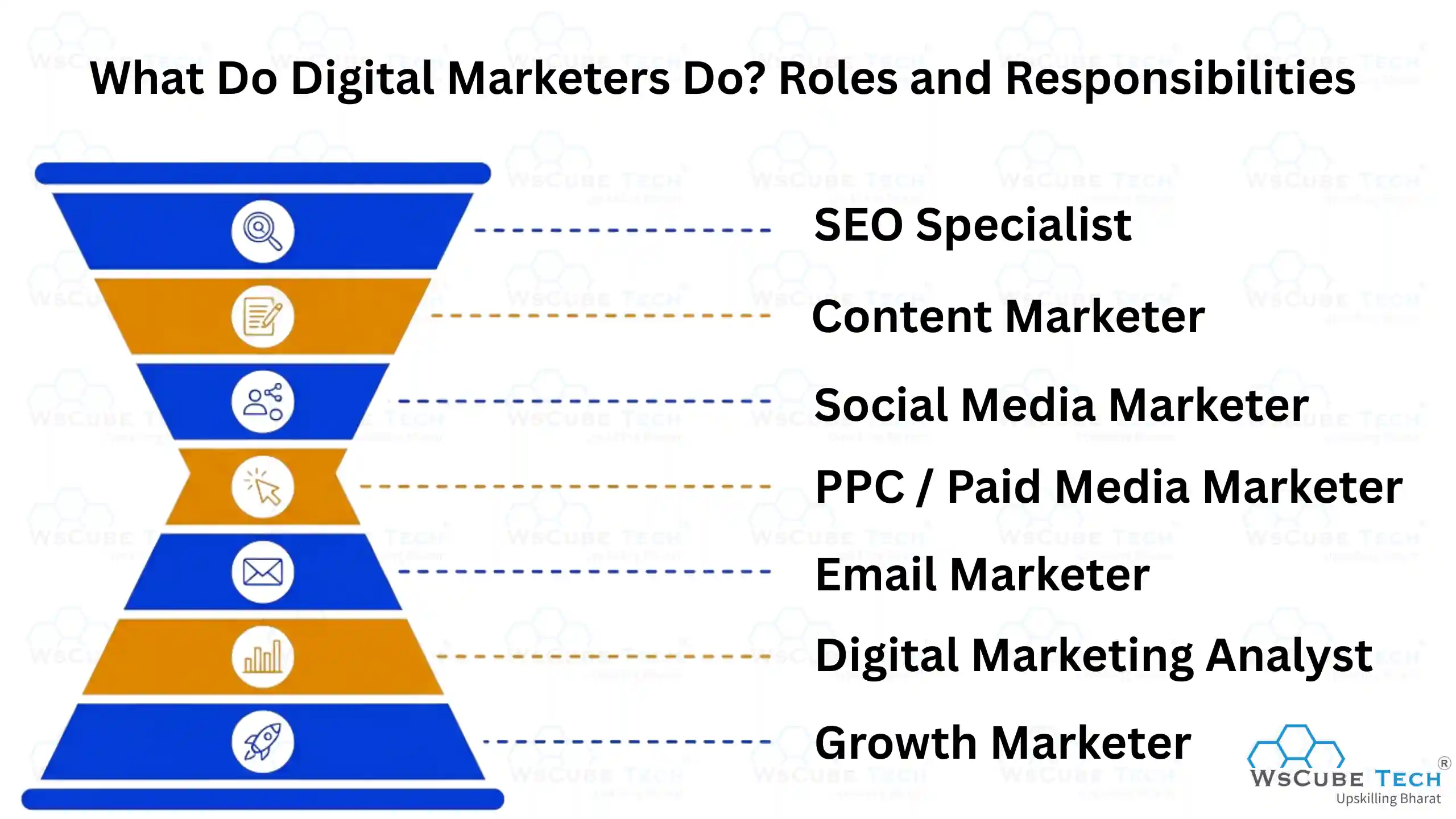
1. SEO Specialist
An SEO Specialist improves a website's visibility on search engines like Google to increase organic traffic. They help businesses rank higher for relevant keywords, attract qualified visitors, and generate leads without relying on paid ads.
Role: Optimize websites to attract visitors from search engines.
Responsibilities:
- Conduct keyword research
- Optimize on-page SEO elements
- Perform technical SEO audits
- Build and manage backlinks
- Monitor search performance and rankings
Tools Used: Ahrefs, SEMrush, Google Search Console, Screaming Frog
2. Content Marketer
A Content Marketer creates and manages valuable content that attracts, informs, and engages a target audience. Their goal is to build brand authority, generate leads, and support customer conversions through strategic content.
Role: Develop content that supports brand awareness, lead generation, and customer engagement.
Responsibilities:
- Plan content strategies and calendars
- Write and optimize blogs, guides, and landing pages
- Coordinate with SEO and design teams
- Measure content performance
- Repurpose content across channels
Tools Used: WordPress, Notion, Grammarly, Google Docs
3. Social Media Marketer
A Social Media Marketer manages a brand's presence across platforms like Instagram, Facebook, LinkedIn, and X. They create engaging content, grow online communities, and help businesses connect with their audience.
Role: Create and distribute content while growing online communities.
Responsibilities:
- Develop social media campaigns
- Schedule and publish content
- Engage with followers and customers
- Monitor trends and competitor activity
- Track social media performance
Tools Used: Hootsuite, Buffer, Canva, Meta Business Suite
4. PPC / Paid Media Marketer
A PPC Marketer runs paid advertising campaigns on search engines and social media platforms. They focus on driving targeted traffic, generating leads, and maximizing return on ad spend through continuous campaign optimization.
Role: Manage advertising budgets and optimize paid campaigns for maximum ROI.
Responsibilities:
- Create and launch ad campaigns
- Conduct keyword and audience research
- Monitor bids and budgets
- Optimize ad creatives and landing pages
- Analyze campaign performance
Tools Used: Google Ads, Microsoft Advertising, Meta Ads Manager, SpyFu
5. Email Marketer
An Email Marketer creates targeted email campaigns to engage subscribers and nurture customer relationships. They use personalized communication and automation to improve conversions, customer retention, and sales.
Role: Deliver personalized communication throughout the customer journey.
Responsibilities:
- Build and segment email lists
- Create newsletters and promotional emails
- Set up automated workflows
- Conduct A/B testing
- Analyze email engagement metrics
Tools Used: Mailchimp, Klaviyo, HubSpot, Brevo
6. Digital Marketing Analyst
A Digital Marketing Analyst tracks and evaluates marketing performance across various digital channels. They analyze data, identify trends, and provide insights that help businesses make informed marketing decisions.
Role: Measure results and support data-driven decision-making.
Responsibilities:
- Track website and campaign metrics
- Create reports and dashboards
- Analyze customer behavior
- Measure ROI and conversions
- Identify growth opportunities
Tools Used: Google Analytics 4, Looker Studio, Microsoft Excel, Tableau
7. Growth Marketer
A Growth Marketer focuses on accelerating customer acquisition, engagement, and retention through experimentation and data analysis. They continuously test strategies and optimize marketing funnels to drive sustainable business growth.
Role: Accelerate business growth by improving every stage of the customer journey.
Responsibilities:
- Run A/B tests and experiments
- Optimize conversion funnels
- Improve customer retention
- Analyze growth metrics
- Collaborate with product and marketing teams
Tools Used: Google Analytics 4, Mixpanel, HubSpot, Optimizely
Upcoming Masterclass
Attend our live classes led by experienced and desiccated instructors of Wscube Tech.



What Digital Marketers Do: Quick Overview
Here is a quick overview for better understanding:
| Digital Marketing Role | Role | Key Responsibilities | Tools Used |
| SEO Specialist | Improves organic search visibility. | Keyword research, on-page SEO, technical audits, link building. | Ahrefs, SEMrush, Google Search Console |
| Content Marketer | Creates content to attract and engage audiences. | Content planning, blog writing, SEO optimization, content promotion. | WordPress, Notion, Grammarly |
| Social Media Marketer | Manages brand presence on social media. | Content creation, community engagement, campaign management, analytics. | Hootsuite, Buffer, Canva |
| PPC / Paid Media Marketer | Runs paid advertising campaigns. | Ad creation, audience targeting, budget management, optimization. | Google Ads, Meta Ads Manager, SpyFu |
| Email Marketer | Engages and nurtures customers through email. | Email campaigns, list segmentation, automation, A/B testing. | Mailchimp, Klaviyo, HubSpot |
| Digital Marketing Analyst | Measures and improves marketing performance. | Data analysis, reporting, ROI tracking, performance insights. | Google Analytics 4, Looker Studio, Excel |
| Growth Marketer | Focuses on customer and revenue growth. | A/B testing, funnel optimization, retention, growth analysis. | Mixpanel, Optimizely, HubSpot |
What is a Digital Marketing Job?
A digital marketing job involves promoting brands, products, or services through online channels to attract customers, generate leads, and increase sales.
Common responsibilities in a digital marketing role include:
- Campaign Management: Planning and executing campaigns across channels such as SEO, PPC, email marketing, content marketing, and social media.
- Social Media Management: Managing brand presence on social platforms, creating content, and engaging with target audiences.
- Performance Tracking: Monitoring key metrics such as website traffic, leads, conversions, and ROI to measure campaign success.
- Lead Generation: Identifying opportunities to attract potential customers and improve conversion rates through digital channels.
- Cross-Functional Collaboration: Working with content creators, designers, developers, and sales teams to execute effective marketing campaigns.
The exact responsibilities of a digital marketer depend on the organization’s goals, industry, and team structure. Some roles require specialization in a specific area, while others involve managing multiple digital marketing channels.
Popular Digital Marketing Roles with Key Responsibilities
Digital marketing offers diverse career opportunities, ranging from content creation and social media management to SEO, paid advertising, and analytics. Each role contributes to helping businesses attract, engage, and convert customers online.
Generalist and Strategy Roles
These roles focus on planning, managing, and optimizing digital marketing strategies across multiple channels to achieve business goals.
| Job Title | Core Focus | Key Responsibilities |
| Digital Marketing Manager | Overseeing all channels | Strategy, team management, budgets, reporting |
| Digital Marketing Specialist | Channel execution | Campaign management, content, analytics |
| Digital Marketing Consultant | Strategic advisory | Audits, strategy, implementation guidance |
| Digital Marketing Executive | Entry-level support | Assisting campaigns, scheduling, reporting |
| Growth Marketing Manager | Full-funnel experimentation | A/B testing, retention, cross-channel work |
Content Marketing and Creative Roles
These roles focus on creating, optimizing, and distributing content that attracts audiences, builds brand awareness, and drives engagement.
| Job Title | Core Focus | Key Responsibilities |
| Content Marketing Manager | Content strategy and production | Editorial planning, writing, SEO alignment |
| SEO Specialist | Organic search visibility | Keyword research, on-page, link building, technical |
| Copywriter | Writing for conversion | Ad copy, landing pages, email, web content |
| Social Media Manager | Platform presence | Content creation, community management, paid social |
Performance and Retention Roles
These roles focus on improving campaign performance, increasing conversions, and retaining customers through data-driven marketing strategies.
| Job Title | Core Focus | Key Responsibilities |
| PPC Specialist / Paid Media Manager | Paid advertising | Google Ads, Meta Ads, bid management, reporting |
| Email Marketing Specialist | Email channel | Campaigns, automation, segmentation, deliverability |
| CRO Specialist | Website performance | A/B testing, UX analysis, funnel optimization |
| Marketing Analyst | Data and insights | Dashboards, attribution modeling, reporting |
Operations and Relationships Roles
These roles focus on managing marketing processes, technology, and partnerships to improve efficiency, collaboration, and business growth.
| Job Title | Core Focus | Key Responsibilities |
| Marketing Operations Manager | Martech and processes | CRM, tool integration, workflow |
| Affiliate Marketing Manager | Partner programs | Recruitment, commission structures, tracking |
| Influencer Marketing Manager | Creator partnerships | Outreach, campaign coordination, ROI |
Expand Your Marketing Skills
AI in Digital Marketing: The New Standard
Artificial intelligence has moved from a novelty to a core component of how digital marketing gets done. The question is no longer whether AI belongs in marketing, but how to use it effectively.
Automation in Digital Marketing
Automation has been part of digital marketing for years. Email sequences triggered by user behavior, bid adjustments based on performance data, and social scheduling tools are all examples of marketing automation that predate the current wave of AI.
Platforms like HubSpot, Mailchimp, and Marketo built their businesses on helping marketers automate repetitive tasks so they could focus on strategy and creativity. That foundation is still in place.
The Next Step: Artificial Intelligence
Today's AI goes further. Machine learning models now power audience targeting in ad platforms, personalizing which ads each person sees based on behavioral patterns that no human analyst could process at scale. Predictive analytics tools forecast which leads are most likely to convert. Dynamic content systems adjust what a website shows each visitor in real time.
Generative AI tools like ChatGPT, Claude, Jasper, and others have added a new dimension, helping marketers produce content drafts, brainstorm campaign ideas, write ad variations at scale, and summarize research. This does not replace the marketer, but it does change what a single marketer can produce in a day.
How Digital Marketers Use AI Tools
AI helps digital marketers save time, improve productivity, and make smarter decisions. Here are some common ways AI is used in digital marketing:
1. Copywriting & Content Creation
The Old Way: Writing blogs, ad copy, emails, and social media posts manually from scratch.
The AI Way: Using AI to generate content ideas, outlines, first drafts, and copy variations that can be refined and optimized by marketers.
Tools: ChatGPT, Jasper, Copy.ai
2. Data Analysis & Reporting
The Old Way: Manually reviewing reports and spreadsheets to identify trends and performance insights.
The AI Way: Leveraging AI to analyze large datasets, uncover patterns, and generate actionable insights within minutes.
Tools: Looker Studio, Tableau AI, Polymer
3. Campaign Optimization
The Old Way: Adjusting ad targeting, bids, and budgets manually based on campaign performance.
The AI Way: Allowing AI algorithms to optimize campaigns in real time by analyzing user behavior and performance signals.
Tools: Google Ads Smart Bidding, Albert.ai
4. Customer Support
The Old Way: Responding to customer queries manually through emails, chats, and social media messages.
The AI Way: Using AI-powered chatbots and virtual assistants to provide instant responses and support around the clock.
Tools: Intercom AI, Drift, Zendesk AI
Note: Digital marketers who learn to work with AI tools will be more productive and more valuable. The skill is knowing when to use them, how to prompt them, and how to evaluate the output.
Explore Our Most Popular Marketing Courses
How to Become a Digital Marketer?
You do not need a specific degree to enter digital marketing. What matters is skill, hands-on experience, and knowing where to start.
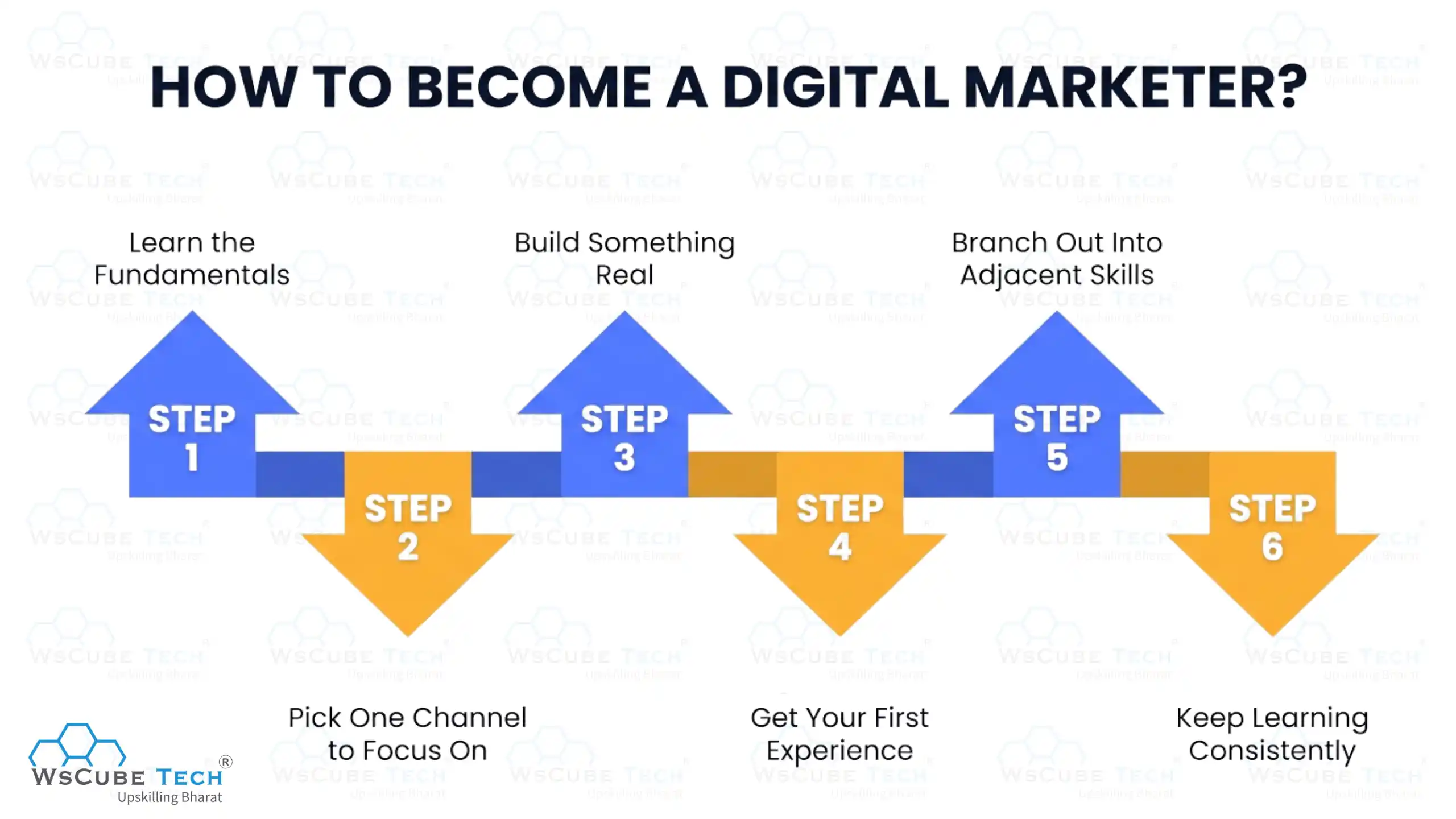
Step 1: Learn the Fundamentals
Start with free resources or any professional online digital marketing course. Google Digital Marketing courses, HubSpot Academy, Meta Blueprint, and Semrush Academy all offer beginner-friendly certifications. These cover core concepts across SEO, paid ads, email, content, and analytics.
Step 2: Pick One Channel to Focus On
Do not try to learn everything at once. Choose one channel like SEO, paid search, social media, or email and go deep on it. Becoming genuinely good at one thing is more valuable than being average at five.
Step 3: Build Something Real
Start a blog and try to rank it. Run a small Google Ads campaign. Build and send an email sequence. Real projects teach you things no course will. Employers and clients care about what you have actually done, not just what you have studied.
Step 4: Get Your First Experience
Apply for internships or entry-level roles at agencies, or take on small freelance projects. Even unpaid or low-paid work early on builds your portfolio and gives you live campaigns to learn from.
Step 5: Branch Out Into Adjacent Skills
Once you are solid in one area, start adding related skills. SEO pairs well with content writing. Paid search connects naturally with analytics. The more channels you understand, the more valuable you become to any team or client.
Step 6: Keep Learning Consistently
Digital marketing changes fast. Algorithm updates, new platforms, and AI tools shift the landscape regularly. Follow industry blogs, join communities, and set aside time each week to stay current.

Frequently Asked Questions
A digital marketer is a professional who promotes products, services, or brands through online channels such as search engines, social media, email, websites, and paid advertising to attract and convert customers.
A digital marketer typically manages campaigns, creates content, analyzes performance data, monitors website traffic, and optimizes marketing activities across various digital channels.
Yes, digital marketing is a growing career in India due to increasing internet adoption and business demand for professionals skilled in SEO, social media, content, and paid advertising.
Yes, many digital marketers build successful careers through certifications, online courses, internships, and hands-on projects without having a formal marketing degree.
Digital marketing covers all online marketing channels, including SEO, email, PPC, and social media, whereas social media marketing focuses only on promoting brands through social platforms.
Most people can learn the basics of digital marketing within 3–6 months, while developing professional-level skills typically requires ongoing practice and real-world experience.
Digital marketers need skills in SEO, content marketing, analytics, social media management, paid advertising, AI tools, communication, and data-driven decision-making.
SEO, content marketing, social media marketing, and email marketing are popular entry-level roles because they provide strong foundational marketing skills.
Yes, digital marketers use AI tools for content creation, campaign optimization, customer support, data analysis, and marketing automation.
Common digital marketing tools include Google Analytics, Google Ads, Search Console, Ahrefs, SEMrush, HubSpot, Mailchimp, and Canva.
Digital marketers need a mix of technical and soft skills, including SEO, content marketing, social media management, analytics, communication, and problem-solving.
No, coding is not mandatory for most digital marketing roles. However, basic knowledge of HTML, CSS, and website management can be beneficial.
A digital marketer may work across multiple channels, while a digital marketing specialist typically focuses on a specific area such as SEO, PPC, email marketing, or social media.
Digital marketer salaries vary based on experience, location, skills, and specialization, with higher earnings typically available in performance marketing, analytics, and leadership roles.
SEO, content marketing, social media marketing, and email marketing are often considered beginner-friendly specializations because they have lower entry barriers and abundant learning resources.
Digital marketers commonly use tools such as Google Analytics, Google Ads, Search Console, Ahrefs, SEMrush, HubSpot, Mailchimp, and Canva.
Yes, many digital marketers enter the field through certifications, online courses, internships, freelance projects, and hands-on experience rather than a formal degree.
SEO focuses on improving organic search rankings, while SEM uses paid advertising to gain visibility in search engine results.
Join Our On-Campus Digital Marketing Program
Explore Our Free Courses





Leave a comment
Your email address will not be published. Required fields are marked *Comments (0)
No comments yet.