
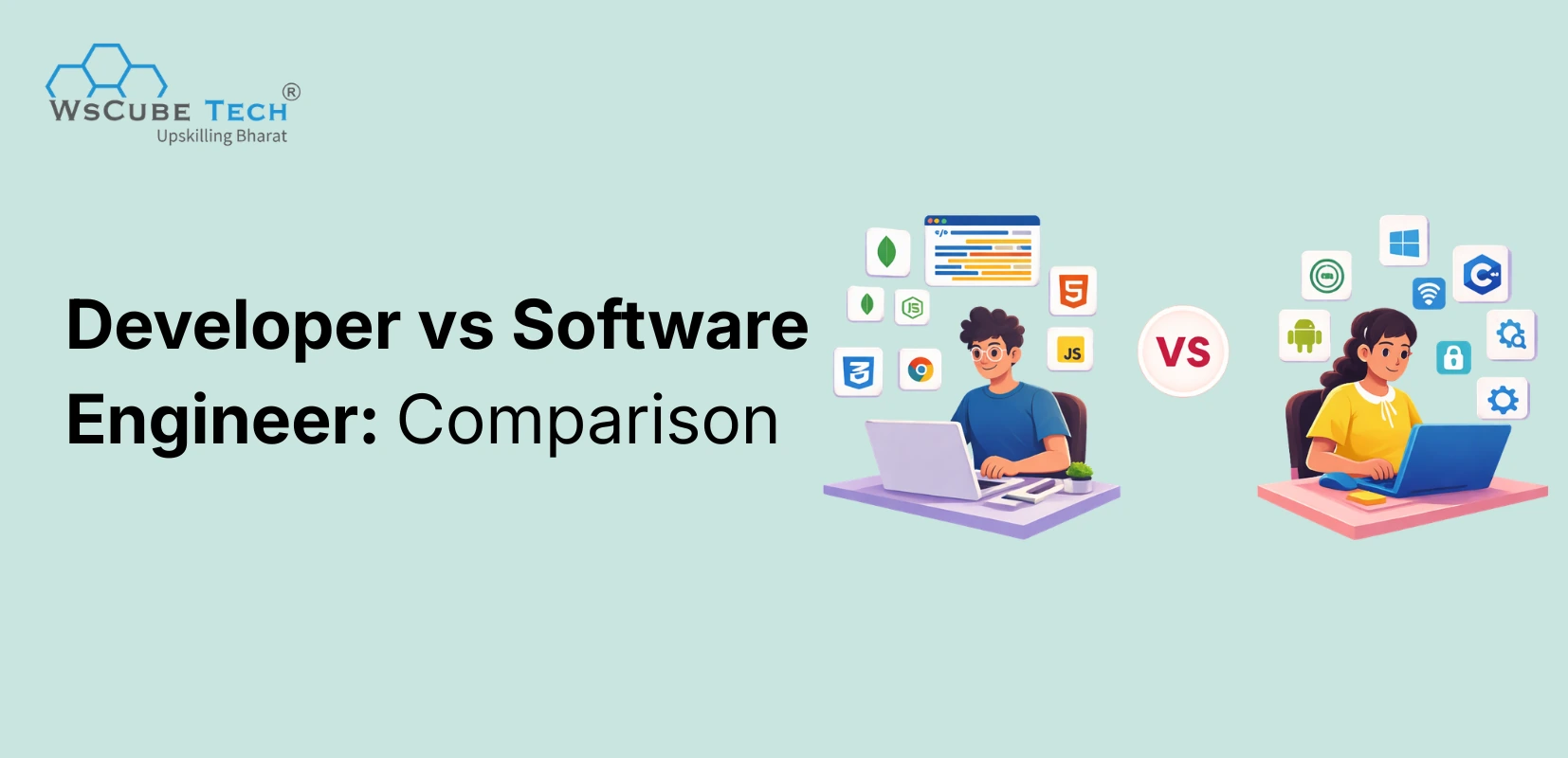
In the software industry, roles like Full Stack Developer and Software Engineer may look similar at first, but the career paths they offer can be different. Before choosing between them, it is important to understand how each role shapes your daily work, skill development, and future growth opportunities.
Who Is a Full Stack Developer?
A full-stack developer is a professional who works on both the front end and the back end of a web application. In simple terms, this role is responsible for building the complete structure of a web-based system, from what users see on the screen to how data is processed on the server.
On the front end, a full-stack developer designs and develops user interfaces using technologies such as HTML, CSS, and JavaScript. This layer controls layout, design, and user interaction.
On the back end, the same developer handles server-side logic, database operations, and application functionality. This includes writing APIs, managing data storage, and ensuring smooth communication between the user interface and the server.
Because of this dual responsibility, a full-stack developer commonly understands:
- Front-end development tools and frameworks
- Back-end programming languages
- Database management systems
- Basic server and deployment concepts
- Version control systems like Git
Who Is a Software Engineer?
A Software Engineer is a professional who designs, develops, tests, and maintains software systems using structured engineering principles. Unlike roles that focus mainly on web applications, a software engineer can work on a wide range of systems, including mobile apps, enterprise platforms, operating systems, and cloud-based services.
The role is not limited to writing code. A software engineer is responsible for planning system architecture, selecting suitable technologies, ensuring good performance, and maintaining long-term reliability. This also includes understanding requirements, designing system components, and testing software before deployment.
In daily work, a software engineer commonly focuses on:
- Writing clean and maintainable code
- Applying data structures and algorithms
- Designing a scalable system architecture
- Performing testing and debugging
- Ensuring security and performance standards
Recommended Professional Certificates
Full Stack Development Mentorship Program
WordPress Bootcamp
Full Stack Developer vs Software Engineer: Differences & Comparison
Now that you understand who a Full Stack Developer and a Software Engineer are, the next step is to compare their responsibilities, focus areas, and career direction side by side.
The table below highlights the key differences in a clear and structured format:
| Basis of Comparison | Full Stack Developer | Software Engineer |
| Primary Focus | Works on both front end and back-end of web applications | Designs and builds software systems using engineering principles |
| Scope of Work | Mainly web-based applications | Web, mobile, desktop, cloud, enterprise systems |
| Technical Approach | Covers multiple layers of a single application | Focuses on system design, architecture, and long-term stability |
| Skill Depth | Broad knowledge across many technologies | Deep understanding of algorithms, system design, and performance |
| Front-End Work | Yes, handles UI and client-side logic | May or may not work on front end |
| Back-End Work | Yes, manages servers and databases | Commonly works on backend or core system components |
| Engineering Principles | Practical implementation focused | Strong focus on structured design and software lifecycle |
| Career Growth | Web lead, product engineer, startup roles | Senior engineer, architect, engineering manager |
Also Read: How to Learn Coding & Programming? Best Ways
Core Responsibilities of a Full Stack Developer and Software Engineer
After comparing both roles, it is important to understand what each professional is responsible for in day-to-day work. While both contribute to building software products, their core responsibilities differ in scope and depth.
Core Responsibilities of a Full Stack Developer
A Full Stack Developer is responsible for building and connecting all layers of a web application. Their work commonly covers both user-facing features and server-side functionality.
Key responsibilities include:
- Developing responsive user interfaces using front-end technologies.
- Writing server-side logic to handle business processes.
- Designing and managing databases.
- Creating and integrating APIs.
- Fixing bugs across the front end and back end.
- Deploying applications to hosting environments.
- Maintaining code using version control systems.
The main responsibility of a full-stack developer is to ensure that all parts of a web application work together smoothly.
Core Responsibilities of a Software Engineer
A Software Engineer focuses on designing, building, and maintaining reliable software systems using structured development methods. Their responsibilities extend beyond coding and include system-level thinking.
Key responsibilities include:
- Analyzing software requirements and planning system structure.
- Designing scalable and maintainable architecture.
- Writing efficient and clean code.
- Applying data structures and algorithms.
- Conducting testing and code reviews.
- Improving system performance and security.
- Maintaining documentation and long-term system stability.
The primary responsibility of a software engineer is to ensure that software systems remain stable, scalable, and efficient over time.
Upcoming Masterclass
Attend our live classes led by experienced and desiccated instructors of Wscube Tech.

Tools and Technologies Used for Full Stack Developer vs Software Engineer
Understanding the tools and technologies used in each role helps clarify how their work is structured in real projects. Although there can be overlap, the purpose and depth of usage may differ.
Tools and Technologies Used by Full Stack Developers
Full-stack development depends on tools that support both client-side and server-side development. These tools help in building complete and functional web applications.
The table below highlights commonly used tools and their main purpose:
| Tools and Technologies | Purpose |
| HTML, CSS, JavaScript | Used to design and structure web pages, control layout, styling, and user interaction on the browser. |
| React, Angular, Vue | Help build dynamic and responsive user interfaces by managing components and handling real-time updates. |
| Node.js, Django, Spring Boot | Used to create server-side logic, manage requests, handle APIs, and connect applications to databases. |
| MySQL, MongoDB | Store, retrieve, and manage application data securely and efficiently. |
| Git, GitHub | Track code changes, manage versions, and support team collaboration during development. |
| Docker | Package applications with their dependencies to ensure smooth deployment across different environments. |
Tools and Technologies Used by Software Engineers
Software engineers use tools that help in designing, developing, testing, and maintaining reliable software systems across different platforms.
The table below outlines commonly used tools and their main purpose:
| Tools and Technologies | Purpose |
| Java, C++, Python, C# | Used to develop software applications, system components, and backend services with strong performance support. |
| IntelliJ IDEA, Visual Studio | Provide an environment to write, test, debug, and manage code efficiently. |
| Git | Manage source code versions and maintain project history for long-term stability. |
| JUnit, Selenium | Support software testing to identify errors and ensure system reliability before release. |
| AWS, Azure, Google Cloud | Host applications, manage infrastructure, and support scalable cloud-based systems. |
| Docker, Kubernetes | Manage containerized applications and help scale systems based on workload demand. |
Also Read: Best Web Development Tools (Web Dev Tools List)
Full Stack Developer vs Software Engineer (Career Opportunities)
Both Full Stack Developers and Software Engineers have strong career opportunities across industries. However, the type of roles and growth paths may differ based on their area of focus and technical depth.
Career Opportunities for Full Stack Developers
Full Stack Developers are in demand in companies that build web applications, SaaS products, and digital platforms. Since they can handle both front-end and back-end development, they are valuable in startups and mid-sized companies.
Common career roles include:
- Full Stack Developer: Build and maintain complete web applications.
- Web Application Developer: Focus on developing and improving web-based systems.
- Front-End or Back-End Developer: Specialize in one layer after gaining experience.
- Technical Lead (Web Projects): Manage web development teams and oversee project execution.
- Startup CTO (Early Stage): Handle product development and technical decisions in small companies.
Career Opportunities for Software Engineers
Software Engineers have broader opportunities because their skills apply to multiple types of systems beyond web applications.
Common career roles include:
- Software Engineer: Design, develop, and maintain software systems.
- Backend Engineer: Build server-side systems and core application logic.
- System Engineer: Work on large-scale system architecture and infrastructure.
- DevOps Engineer: Manage deployment, automation, and cloud infrastructure.
- Solutions Architect: Design scalable and secure enterprise systems.
- Engineering Manager: Lead technical teams and manage development processes.
Explore More Blog Topics
Full Stack Developer vs Software Engineer: Salary Comparison
Salary levels for Full Stack Developers and Software Engineers differ based on technical depth, system design knowledge, and responsibility level.
Software Engineer roles generally offer higher average salaries in many cases because they involve broader system architecture, backend logic, scalability, and performance optimization.
Full Stack Developer salaries grow gradually with experience, especially when the developer is skilled in both frontend and backend technologies. Compensation depends on experience, location, company type, and technical expertise.
Salary Comparison in India
The following table presents the salary comparison for Full Stack Developer and Software Engineer roles in India:
| Experience | Avg Salary/Annual – Full Stack Developer (India) | (India)Avg Salary/Annual – Software Engineer (India) |
| Entry-Level (0–1 yrs) | ₹3 – 6 LPA | ₹4 – 10 LPA |
| Early Career (1–3 yrs) | ₹4 – 7 LPA | ₹4 – 12.7 LPA |
| Mid-Level (4–6 yrs) | ₹6 – 10 LPA | ₹7 – 16.9 LPA |
Salary Comparison in the United States
The following table presents the salary comparison for Full Stack Developer and Software Engineer roles in the United States:
| Experience | Avg Salary/Annual – Full Stack Developer (USA) | Avg Salary/Annual – Software Engineer (USA) |
| Entry-Level (0–1 yrs) | $61K – $100K | $70K – $110K |
| Early Career (1–3 yrs) | $67K – $100K | $77K – $100K |
| Mid-Level (4–6 yrs) | $72K – $100K | $87K – $100K |
Also Read: Types of Web Development: Full Guide
Full Stack Developer vs Software Engineer: Educational Background
The educational background for both Full Stack Developers and Software Engineers is built on computer science fundamentals. However, the depth of theoretical knowledge and specialization may differ depending on the role.
Educational Background of a Full Stack Developer
A Full Stack Developer commonly holds a bachelor’s degree in:
- Computer Science
- Information Technology
- Software Engineering
- Or a related technical field
However, a formal degree is not always required. Many full-stack developers enter the field through:
- Coding bootcamps
- Online web development programs
- Self-learning combined with project-based practice
You can also join WsCube Tech’s full stack developer course, available in both online and offline modes. Learn front-end and back-end development through practical projects, guided training, and real-world application support.
Educational Background of a Software Engineer
A Software Engineer commonly holds a bachelor’s degree in:
- Computer Science
- Software Engineering
- Computer Engineering
- Information Technology
In many organizations, a strong academic understanding of core subjects is expected, such as:
- Data structures and algorithms
- Operating systems
- Database management systems
- Computer networks
Some professionals also pursue a master’s degree to specialize in system design, artificial intelligence, or large-scale software systems.

Full Stack Developer and Software Engineer: Future Scope
The future scope of both Full Stack Developers and Software Engineers remains strong as businesses continue to rely on digital products, cloud platforms, and scalable software systems. However, the type of growth opportunities may differ based on industry demand and technological trends.
Future Scope for Full Stack Developers
The demand for full-stack developers continues to grow as companies build web applications, SaaS platforms, and digital services. Organizations prefer professionals who can handle both client-side and server-side development, especially in startups and product-based companies.
The future scope includes:
| Area | Description |
| Web Application Development | Increasing demand for developers who can build complete web platforms from front end to back end. |
| Startup Ecosystem | Startups commonly hire full stack developers to manage multiple parts of product development. |
| SaaS Platforms | Growing number of software-as-a-service products requires developers who understand full application workflows. |
| Freelancing and Remote Work | Full stack skills allow developers to work independently on web projects for global clients. |
| Cloud-Based Development | Many web applications now run on cloud infrastructure, creating demand for developers with deployment knowledge. |
Future Scope for Software Engineers
Software engineers have long-term opportunities across a wide range of technology sectors. As software systems become more complex, companies require professionals who can design scalable and reliable systems.
The future scope includes:
| Area | Description |
| Cloud Computing | Increasing need for engineers who can build and manage cloud-based systems. |
| Artificial Intelligence and Machine Learning | Growing demand for engineers who develop intelligent software solutions. |
| Enterprise Software Systems | Large organizations require engineers to maintain complex internal platforms. |
| Cybersecurity and System Reliability | Strong demand for engineers who ensure software security and stability. |
| Large-Scale System Architecture | Companies require experts who can design systems that handle millions of users and large data volumes. |
Full Stack Developer or Software Engineer: Which Career Should You Choose?
Choosing between a Full Stack Developer and a Software Engineer depends on your interests, strengths, and long-term goals.
If you enjoy building complete web applications and working on both design and server logic, full stack development may be a suitable path. This role is ideal if you prefer practical, hands-on work across multiple technologies.
If you are interested in system design, problem-solving, and building stable and scalable software systems, software engineering may be the better choice. This path suits those who enjoy deeper technical concepts and structured development practices.
Start Learning With Our Free Tutorials
| Python Tutorial | Java Tutorial | JavaScript Tutorial |
| C Tutorial | C++ Tutorial | HTML Tutorial |
| CSS Tutorial | SQL Tutorial | DSA Tutorial |
Full Stack Developer and Software Engineer: Advantages and Disadvantages
It is important to evaluate the benefits and limitations of both roles in a structured manner. The following tables provide a clear comparison of the advantages and disadvantages of each career path.
Full Stack Developer: Advantages and Disadvantages
The advantages and disadvantages of a full stack developer are summarized in the table below:
| Category | Points |
| Advantages | -High demand in startups and product-based companies that build web applications. -Ability to work on both front end and back end, offering versatile technical exposure. -Strong freelance and remote work opportunities. -Faster project execution due to understanding of the complete web stack. -Good career growth in web-focused roles and product development. |
| Disadvantages | -May lack deep specialization in one technical area. -Continuous learning required due to frequent updates in web technologies. -Managing multiple layers of development can increase workload. -Performance expectations may be high in small teams or startups. |
Software Engineer: Advantages and Disadvantages
The advantages and disadvantages of a software engineer are summarized in the table below:
| Category | Points |
| Advantages | -Wide career scope across web, mobile, cloud, enterprise, and system-level roles. -Strong focus on system design, scalability, and long-term stability. -Higher salary potential in product-based and large organizations. -Clear growth path toward senior engineer, architect, or engineering manager roles. -Strong foundation in problem-solving and logical thinking. |
| Disadvantages | -Requires strong understanding of data structures, algorithms, and system design concepts. -Longer learning curve compared to web-focused roles. -High responsibility for system performance and reliability. -Some roles may involve less creative or user-facing work. |

FAQs About Full Stack Developer vs Software Engineer
The better career depends on interests and goals. A full stack developer focuses on building complete web applications, while a software engineer works on designing and developing software systems using structured programming and engineering principles.
A computer science degree can be helpful for both full stack developer and software engineer roles. However, many professionals enter full stack development through online courses, certifications, and practical project experience.
A full stack developer mainly builds web applications and works on both the front end and back end. A software engineer focuses on designing, developing, and maintaining software systems using structured development and engineering practices.
A full stack developer needs skills in HTML, CSS, JavaScript, backend programming, databases, and APIs. A software engineer focuses more on programming languages, data structures, algorithms, and system design for building reliable software systems.
Salary depends on experience, company, and location. In many cases, software engineers may earn slightly higher salaries because their roles involve deeper technical work such as system architecture and large-scale software development.
Yes, a full stack developer can become a software engineer by strengthening knowledge in computer science fundamentals such as algorithms, system design, and software architecture while continuing to improve programming skills.
Full stack developers are commonly hired in startups, e-commerce companies, and SaaS platforms that build web applications. Software engineers are hired across industries such as technology, finance, healthcare, cloud services, and enterprise software.
A full stack developer is part of the broader software development field. However, the role mainly focuses on web technologies, while a software engineer may work on different types of systems beyond web applications.
A full stack developer builds and manages both the front end and back end of web applications. A software engineer focuses on designing systems, writing efficient code, testing software, and ensuring long-term stability.
For beginners, full stack development may be easier to start because many learning resources focus on web technologies and practical projects. Software engineering usually requires deeper understanding of programming concepts and system design.
Practice Coding With Our Free Compilers




Leave a comment
Your email address will not be published. Required fields are marked *Comments (0)
No comments yet.