Every app you open, every website you scroll, and every online store you buy from was built by someone. That someone is a web developer. As India moves online faster than ever, the need for these builders keeps rising.
Web development is no longer only about making pages look nice. It now runs payments, classrooms, hospitals, gaming platforms, and AI tools. That is why so many students ask the same question today. Is this field still worth learning?
The short answer is yes. The future of web development looks strong, and it is changing quickly. This guide breaks down the trends, salaries, career paths, and skills that will matter next. Read it fully, and you will know exactly where to begin.
What Is Web Development?
Web development is the process of building and maintaining websites and web applications. It includes everything from creating the parts users see and interact with to developing the backend systems that manage data and functionality.
Web developers use programming languages, frameworks, and other tools to turn ideas and designs into fast, functional, and user-friendly digital experiences.
Future of Web Development: Quick Answer
The future of web development looks strong, but the way developers work is changing. AI can now help with repetitive coding tasks, testing, and debugging. This allows developers to spend more time on problem-solving, security, performance, and user experience.
Businesses are also moving more of their work online. From small businesses and schools to startups and large companies, there is a growing need for websites and web applications. This keeps the scope of web development broad, even as new tools and technologies emerge.
Here is the quick version:
- AI will support developers: It will handle repetitive tasks, but developers will still need to plan, build, and review applications.
- Web apps will become more important: Businesses need interactive platforms, dashboards, e-commerce stores, and SaaS products, not just basic websites.
- Full-stack skills will be valuable: Knowing both frontend and backend development can open up more career opportunities.
- Speed and mobile experience will matter more: Websites will need to load quickly and work smoothly across different devices.
Recommended Professional Certificates
Full Stack Development Course with AI Engineering
WordPress Bootcamp
Does Web Development Have a Future?
Yes, web development has a strong future. Businesses are becoming more dependent on websites and web applications to reach customers, sell products, provide services, and manage their daily operations. As long as people use the internet and browsers, there will be a need for developers to build, improve, and maintain these digital experiences.
The scope of web development is also expanding with new technologies. Developers are no longer limited to building simple websites. They can work on AI-powered tools, e-commerce platforms, cloud-based applications, dashboards, and other digital products.
Here is why the field continues to grow:
- Businesses need a strong online presence: Companies of all sizes use websites to attract customers, sell products, and build their brands.
- New technologies need web developers: AI, AR, IoT, and other technologies often rely on web applications to reach and serve users.
- Websites need regular updates: Existing websites require new features, security updates, performance improvements, and maintenance.
- More businesses are moving online: Startups, small businesses, and established companies are investing in digital platforms to reach a wider audience.
- Web skills open different career paths: Developers can move into full-stack development, cloud, software development, product development, or other technology roles.
Expert Tip: The tools will keep changing. The logic behind them changes far more slowly, so learn the logic first.
Scope of Web Development in the Future
The scope of web development in the future goes far beyond building basic websites. Developers are now creating web applications, dashboards, booking platforms, e-commerce stores, learning portals, and AI-powered tools. Businesses need digital products that are fast, secure, mobile-friendly, and easy to use, creating opportunities for web developers across different industries.
As more businesses move their services online, the web development future is expected to grow in areas such as:
- E-commerce and quick commerce: Online stores need websites and web apps for product listings, payments, orders, and customer accounts.
- EdTech and online learning: Schools, training companies, and education platforms use web applications for courses, assessments, and live learning.
- HealthTech: Healthcare platforms need websites and applications for appointments, patient records, consultations, and other digital services.
- Fintech: Banks and financial companies rely on web applications for payments, account management, dashboards, and financial services.
- SaaS products: Businesses use web-based software for tasks such as project management, communication, marketing, and analytics.
- Government services: Public service portals make it easier for people to access applications, information, and other government services online.
Therefore, it is not limited to one industry or job role. As businesses adopt new technologies and create more digital products, developers with strong technical skills can explore opportunities across multiple sectors.
Before choosing a career path, it helps to understand the types of web development and the different areas you can specialize in.
Is Web Development a Good Career for the Future?
Yes, web development is a good career for the future if you keep upgrading your skills. It offers strong pay, remote work options, and freelance income from an early stage. It also gives you a clear path into product, cloud, and AI roles later.
Reasons students choose it:
- Easy to get started: You can begin with basic technologies such as HTML and CSS, even without a technical background.
- Build a strong portfolio: Real projects give you something practical to showcase when applying for jobs or freelance work.
- Flexible career options: Web developers can work in companies, agencies, startups, or take up freelance projects.
- Remote work opportunities: Web development skills can open doors to remote jobs and projects with companies around the world.
- Room for career growth: You can move from frontend development into full stack, cloud, DevOps, or product-focused roles as you gain experience.
Many students get confused between design and coding. A guide on web design and web development clears that up in simple terms.
Upcoming Masterclass
Attend our live classes led by experienced and desiccated instructors of Wscube Tech.



Web Development Demand in the Future
Demand will stay high because the number of digital users keeps rising. Every new user means more traffic, more features, and more code to maintain. Companies also want faster and safer websites, which need skilled hands, not just tools. This keeps the scope of web development in future hiring cycles very healthy.
What is pushing demand:
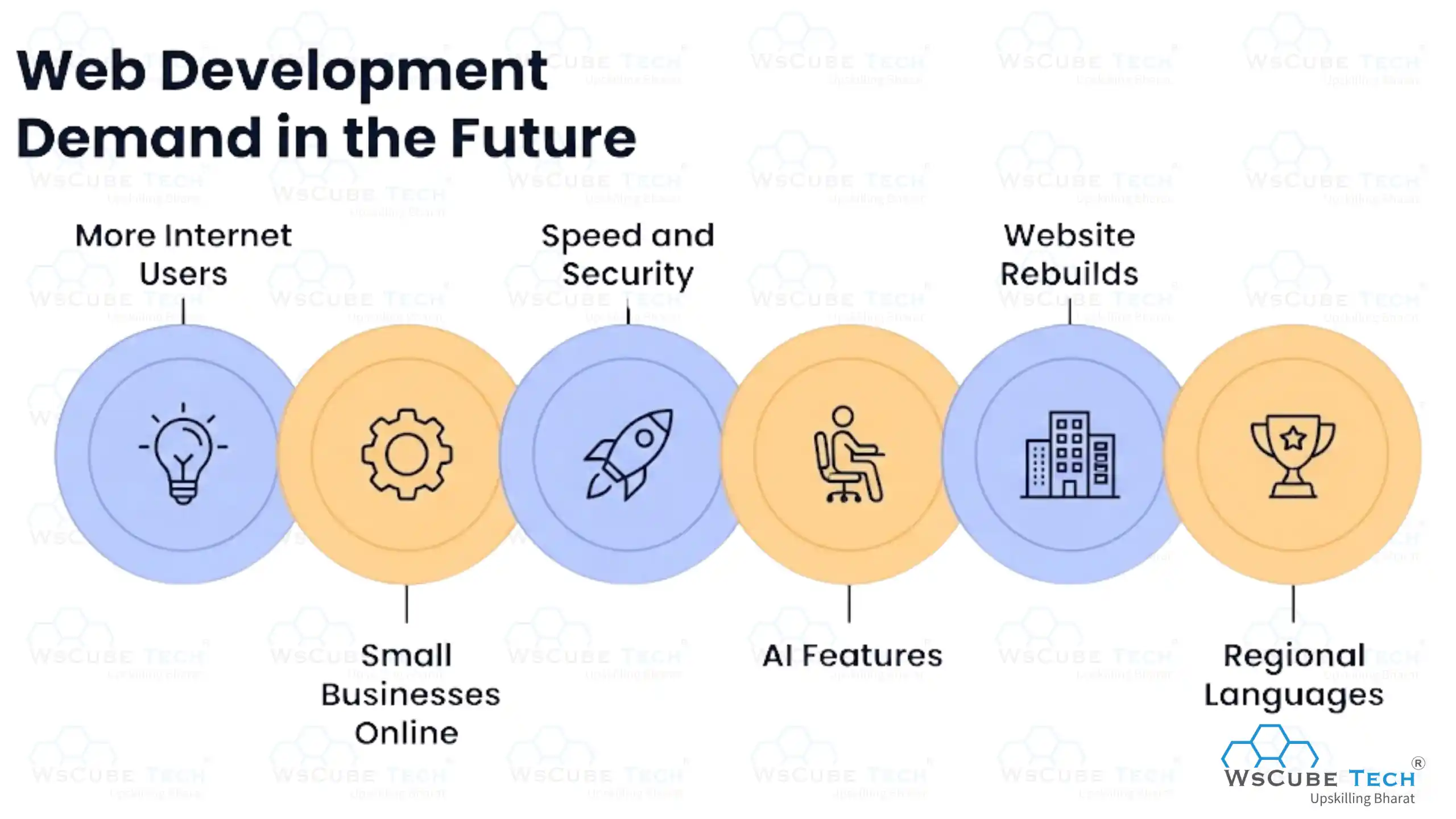
1. More Internet Users
India adds millions of new internet users every year, and most of them come online through a phone. Every one of them needs pages that load fast on slow networks. Businesses must rebuild old sites to handle this traffic, and that work goes to developers.
2. Small Businesses Online
Local shops, clinics, gyms, coaching centers, and salons are creating websites and booking pages. Most of them cannot afford a big agency, so they hire freelancers or small teams. This alone creates a steady stream of entry-level work.
3. Speed and Security
A slow site loses customers, and a hacked site loses trust. Companies now pay developers just to fix loading speed, clean up code, and close security gaps. This is repeat work, not a one-time project.
4. AI Features
Chat support, smart search, and personal recommendations are now expected on regular websites. Someone has to connect these AI services to the site and make them work smoothly. Developers who can handle APIs are doing this job.
5. Website Rebuilds
Websites do not stay useful forever. Design trends shift, browsers change rules, and old code breaks. Every few years, a business has to update or rebuild, which keeps demand steady on its own.
6. Regional Languages
A large share of new users prefer content in their own language. Brands are adding Hindi, Tamil, Marathi, and other versions to reach them. This creates extra front-end and content structure work.
Top Web Development Trends Shaping the Future
Web development is moving fast, and a few trends are leading the change. Some of them affect how you write code. Others change how users interact with the web. Understanding these trends helps you pick the right skills early instead of chasing every new tool.
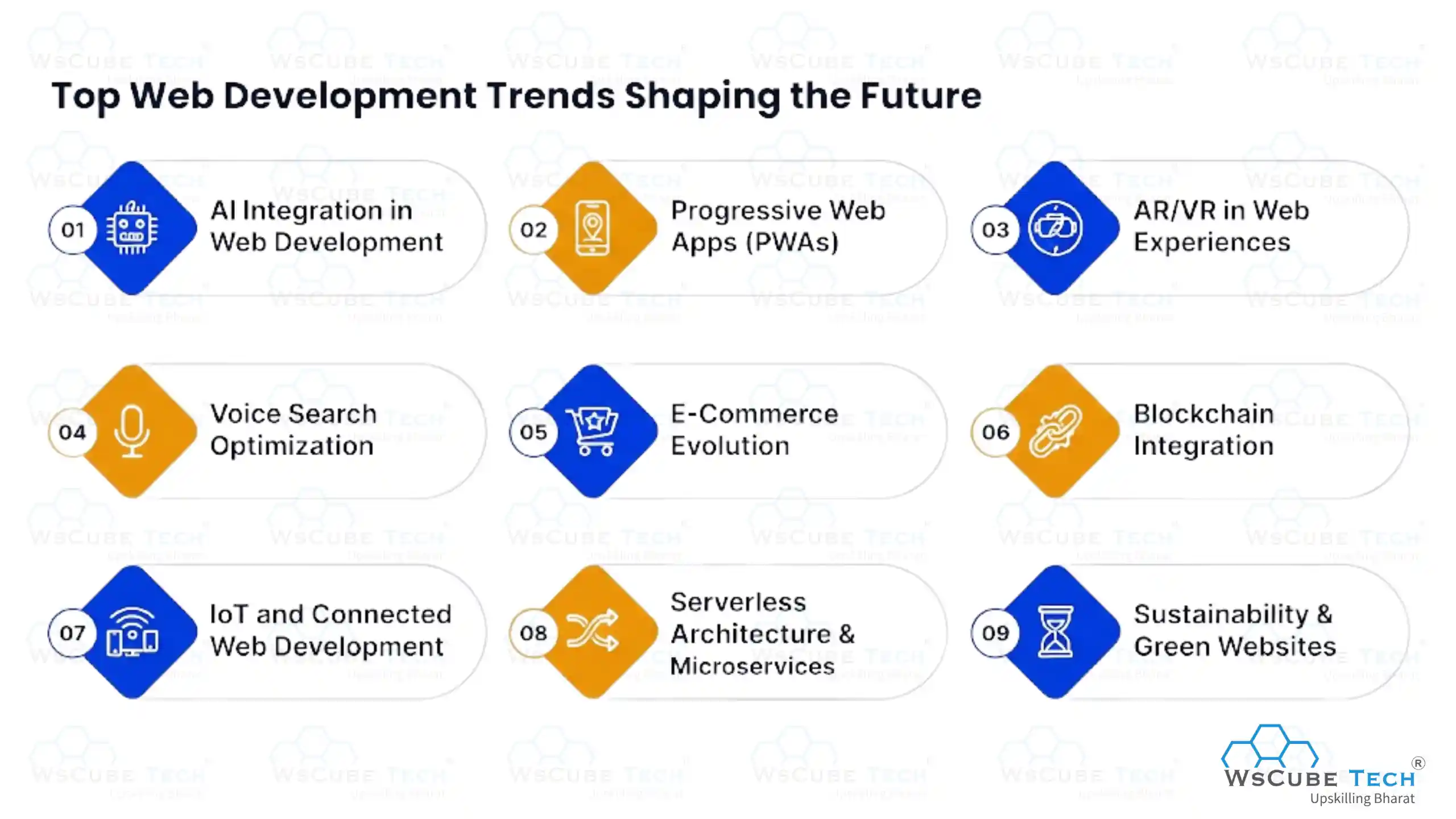
1. AI Integration in Web Development
Artificial intelligence is now part of everyday coding. Developers use AI to write boilerplate, fix bugs, and test faster. Websites also use AI for search, chat support, and personal recommendations.
2. Progressive Web Apps (PWAs)
PWAs are websites that behave like mobile apps. They work offline, load fast, and can be installed on a phone without an app store. Many Indian brands prefer them because they save cost and reach more users.
3. AR/VR in Web Experiences
Augmented and virtual reality are entering the browser. Shoppers can now view furniture or clothes in 3D before buying. This creates new work for developers who understand WebGL and 3D libraries.
4. Voice Search Optimization
More people search by speaking than typing. Websites now need clean structure, fast loading, and natural language content to appear in voice results. Developers play a big role in making pages voice-friendly.
5. E-Commerce Evolution
Online shopping keeps changing with faster checkouts, UPI flows, and live selling. Stores need custom features that ready-made templates cannot handle. This keeps steady work coming for skilled developers.
6. Blockchain Integration
Blockchain is used for payments, digital records, and ownership proof. Web developers connect these systems to normal websites through wallets and APIs. It is a niche skill, but it pays well.
7. IoT and Connected Web Development
Smartwatches, smart TVs, and home devices all send data to the web. Developers build the dashboards that show this data clearly. As devices grow, so does the need for these interfaces.
8. Serverless Architecture & Microservices
Companies are breaking large systems into small independent parts. This makes apps easier to scale and cheaper to run. Developers who understand cloud functions and APIs have an edge here.
9. Sustainability & Green Websites
Heavy websites use more energy and load slower. Brands now ask for lighter pages, cleaner code, and smaller image sizes. Green web practices are becoming a real hiring point.
Note: You do not need all nine trends. Pick two that match your interest and go deep.
Web Development Future Scope in India
India is one of the fastest-growing digital markets in the world. More users online means more websites, more apps, and more maintenance work.
Startups, agencies, and global companies all hire from India because of cost and talent. This makes the web development future scope in India especially strong for freshers.
What this means for you:
- Local Business Demand: Thousands of small businesses still run on WhatsApp and phone calls. They are now moving to proper websites and booking pages, and most hire freshers or freelancers.
- Regional Language Websites: Many new users prefer Hindi, Tamil, or Marathi over English. Brands are building separate language versions, which adds fresh front-end work.
- Tier 2 and Tier 3 Growth: Jobs are no longer limited to metro cities. Companies in Jaipur, Indore, and Coimbatore now hire web developers directly, with lower living costs.
- Freelance and Agency Work: Small agencies take more projects than they can handle. They regularly hire freelancers for landing pages, WordPress work, and bug fixes.
- Remote Jobs With Foreign Clients: US, UK, and Gulf companies hire Indian developers for remote roles. These usually pay well above the local average for the same work.
- Startup Hiring: New startups launch daily, and almost all need a web product from day one. Small teams prefer developers who can handle both front end and back end.
An online full stack development course is a practical way to cover both sides of this demand in one go.
Read More Web Development Related Guides
Web Developer Scope in the Future: Career Opportunities
Web development does not lock you into one job title. It opens a set of roles that all share the same base skills. You can stay technical, move towards design, or shift into product later. The web development scope in future job markets covers far more than the frontend developer tag.
Roles you can target:
- Frontend Developer: Builds everything the user sees and clicks. You work with frontend languages like JavaScript and focus on layout, speed, and responsiveness.
- Backend Developer: Handles the logic, database, and APIs behind the screen. You use backend programming languages such as Python or Java to keep data safe and correct.
- Full Stack Developer: Covers both sides of the product. This role pays more and is preferred by startups that want one person to ship a full feature.
- Web App Developer: Builds tools like dashboards, booking systems, and admin panels. The work is heavier on logic than on design.
- UI Developer: Turns design files into clean, working interfaces. A good fit if you enjoy visual detail along with code.
- WordPress or CMS Developer: Builds and customizes sites on ready-made platforms. Demand is steady because most small businesses run on a CMS.
- Freelance Web Developer: Works project by project with clients directly. You control your rates and hours once you have a few live projects.
- Web Performance and SEO Specialist: Fixes slow loading, broken structure, and technical SEO issues. Companies pay well for this because it directly affects traffic and sales.
If you are still deciding, this breakdown of web development career paths explains what each role does daily.
Will AI Replace Web Developers?
No, AI will not replace web developers, but it will replace developers who only copy and paste code. AI has changed how fast the work gets done, not whether the work exists. The job is shifting from typing code to deciding what should be built and checking that it actually works.
Here is the honest picture:
- AI Writes, Humans Decide: AI can produce a login page in seconds, but it cannot tell you what the business actually needs. Someone has to choose the features, the flow, and the priority.
- Review Is Still Manual: AI code often looks correct and breaks later. Logic gaps, weak security, and missed edge cases still need a human to catch them before release.
- Clients Are Not Clear: Real requirements come in half-formed, over calls and voice notes. Turning that mess into a working plan is a human skill, not a prompt.
- Production Bugs Are Messy: When a live site crashes, the problem is rarely in one file. Tracing it across code, servers, and data needs judgment and experience.
- Speed Becomes the Advantage: Developers who use AI well ship more in less time. That makes them more valuable, not less, compared to those who avoid it.
Expert Tip: Treat AI as a junior teammate. You still have to review its work before shipping.
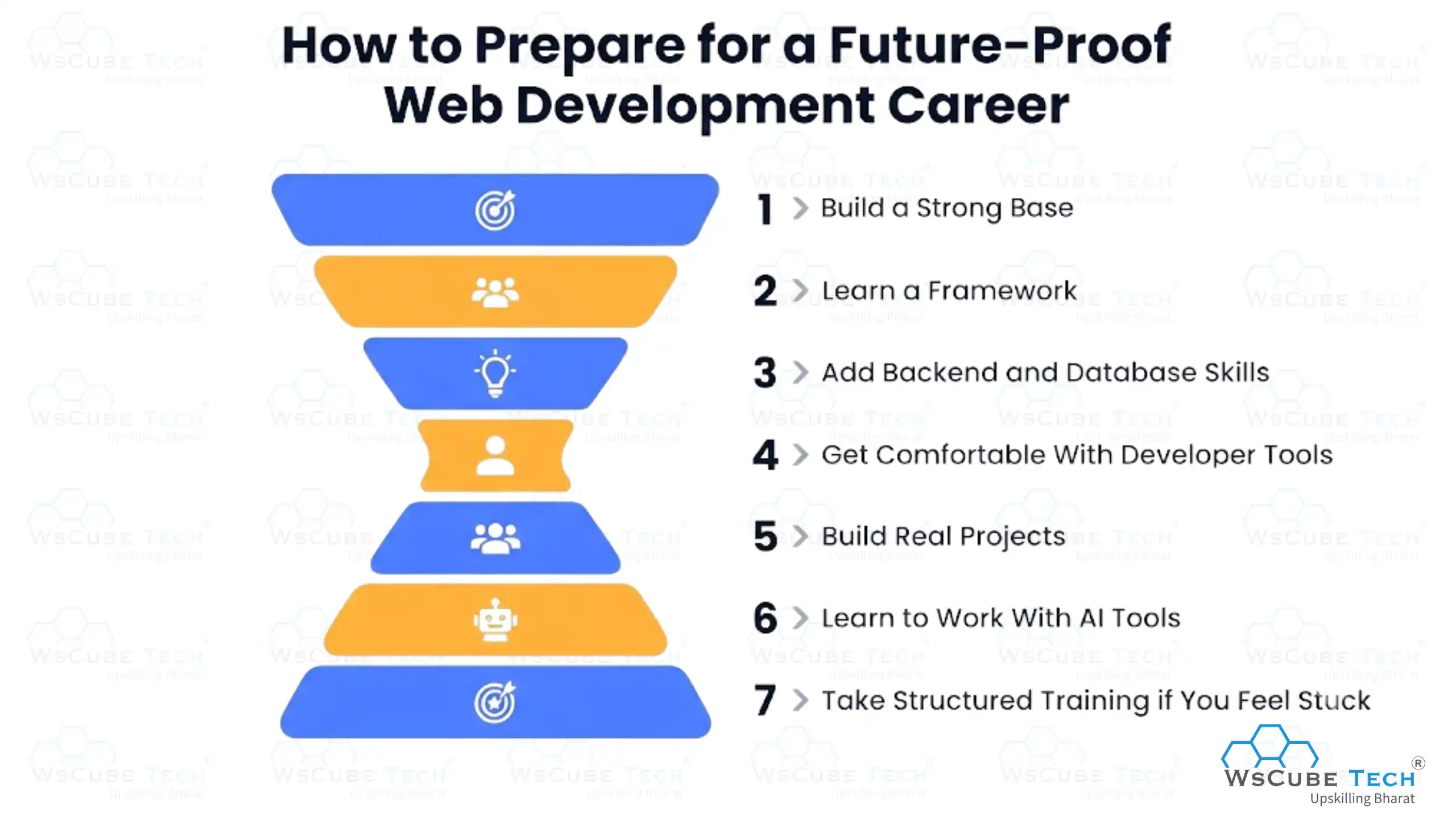
How to Prepare for a Future-Proof Web Development Career
Preparing for this field is simple if you follow an order. Start with the basics, build small projects, then add advanced skills. Consistency matters far more than speed here.
Step 1: Build a Strong Base
Begin with HTML, CSS, and JavaScript. These three run almost every website on the internet. Give them enough time before jumping to frameworks.
Step 2: Learn a Framework
Pick one popular framework like React and stick with it. Frameworks help you build faster and are expected in most job listings. Do not learn three at once.
Step 3: Add Backend and Database Skills
Learn one backend language and one database such as SQL. This lets you handle login, data storage, and APIs. It also moves you closer to full stack roles.
Step 4: Get Comfortable With Developer Tools
Learn Git, browser dev tools, and hosting basics. Explore common web development tools that teams use daily. These small skills make you look job-ready in interviews.
Step 5: Build Real Projects
Make three to five projects that solve a real problem. A clone is fine, but add one feature of your own. Host them online so recruiters can click and see.
Step 6: Learn to Work With AI Tools
Use AI to speed up writing, testing, and debugging. Learn how to prompt clearly and how to spot wrong output. This is now a normal part of the job.
Step 7: Take Structured Training if You Feel Stuck
Self-learning works, but many students lose direction midway. A guided online full stack development course gives you a fixed path, mentor support, and real projects. It also saves months of trial and error.
Note: One good hosted project beats ten half-finished tutorials on your resume.
Explore Our Web Development Related Courses
Future of Web Development: Detailed Video Guide
Frequently Asked Questions
The future of web development in India looks strong because internet users and online businesses keep growing. More websites, apps, and digital services mean steady hiring for skilled developers.
Yes. The scope of web development will stay wide because businesses will always need websites, updates, and new features. Only the tools and frameworks will change.
Yes, it is worth learning. Entry is easy, projects are visible, and the skills transfer well into app, cloud, and AI roles later.
No. AI speeds up coding, but it cannot understand client needs, business logic, or fix complex production issues on its own.
JavaScript is the safest choice for the browser side. On the backend, Python and Java remain strong and widely used in Indian companies.
Freshers usually start between 3 and 8 LPA depending on skills and city. Experienced full stack developers often earn much higher with good projects.
Full stack usually pays more and gives more job options. Frontend only is easier to start with, so many students begin there and expand later.
Yes. Many students start with HTML and CSS without any prior coding experience. Regular practice matters more than your academic stream.
Most learners take six to twelve months with steady practice. The timeline depends on daily study hours and how many real projects you build.
Web design focuses on how a site looks and feels. Web development focuses on building the working product using code.
E-commerce, EdTech, fintech, healthcare, and SaaS hire heavily. Agencies and startups also hire freshers in large numbers.
Yes, freelancing is common in this field. Once you have three or four live projects, small businesses and startups are easy to approach.
Core coding, one framework, backend basics, Git, cloud hosting, and AI tool usage. Communication and problem-solving matter just as much.
It can be during deadlines or bug fixes. Most days are manageable if you plan tasks and test your code properly.
Both have good scope. Web development has a wider entry point and more freelance work, while app development is more specialized.

Explore Our Free Tech Tutorials
| Python Tutorial | Java Tutorial | JavaScript Tutorial |
| C Tutorial | C++ Tutorial | HTML Tutorial |
| CSS Tutorial | SQL Tutorial | DSA Tutorial |
Practice Coding With Our Free Compilers
| Online Python Compiler | Online HTML Compiler | Online C Compiler |
| Online C++ Compiler | Online JS Compiler | Online Java Compiler |
Join Our On-Campus Full Stack Related Courses
Free Courses for You


Leave a comment
Your email address will not be published. Required fields are marked *Comments (0)
No comments yet.