
Ever wondered how hackers break into systems so easily? Or how companies stay protected from these attacks? It may sound like something out of a movie, but it’s happening every day—and it’s closer to your digital life than you think.
Using the internet without understanding how vulnerable data can be creates confusion about what ethical hacking means and how it actually protects systems instead of harming them.
Ignoring this can lead to serious risks like data theft, privacy breaches, and even financial loss. That’s why gaining the right knowledge is more important than ever, especially as cyber threats continue to grow rapidly.
In this blog, you’ll learn what ethical hacking is, how it works, why it matters, and how to start your journey in this exciting field.
What Does an Ethical Hacker Do?
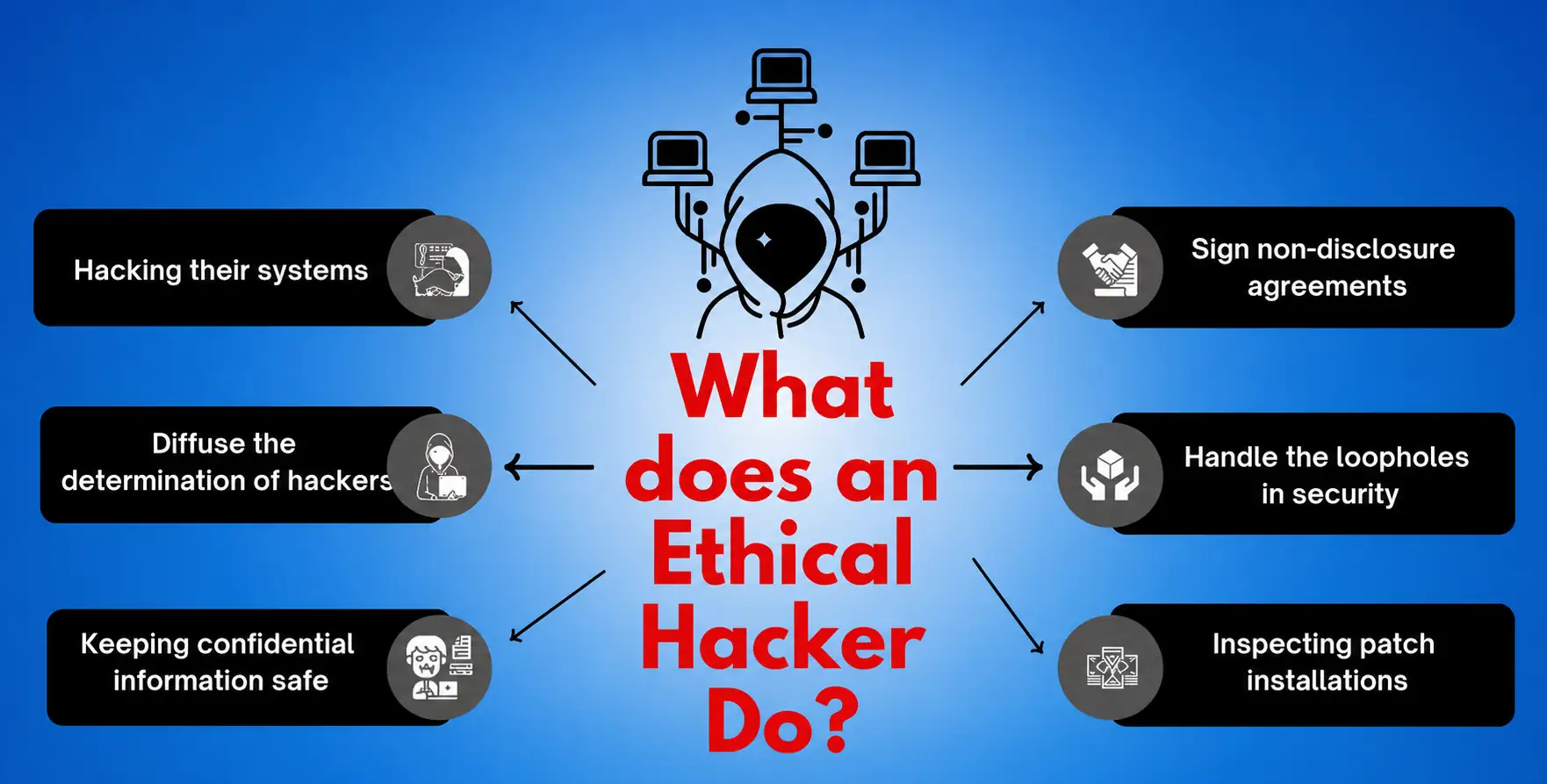
An ethical hacker is a cybersecurity professional who tests systems, networks, and applications to find security weaknesses before real attackers can exploit them. They perform controlled attacks, identify vulnerabilities, and analyze risks that could harm data or systems. Their work helps organizations understand security gaps and take the right steps to improve protection.
They also identify and fix security loopholes, check patch updates, and keep confidential information safe. Ethical hackers follow legal guidelines, often signing agreements before testing systems. They create reports, suggest improvements, and help resolve issues. Their main goal is to prevent cyberattacks, protect sensitive data, and build secure systems.
If you want to learn ethical hacking in detail, follow a step-by-step guide on How to Learn Ethical Hacking. That helps build the right skills, understand tools, and guide the learning process from basics to advanced level.
How Ethical Hacking Works
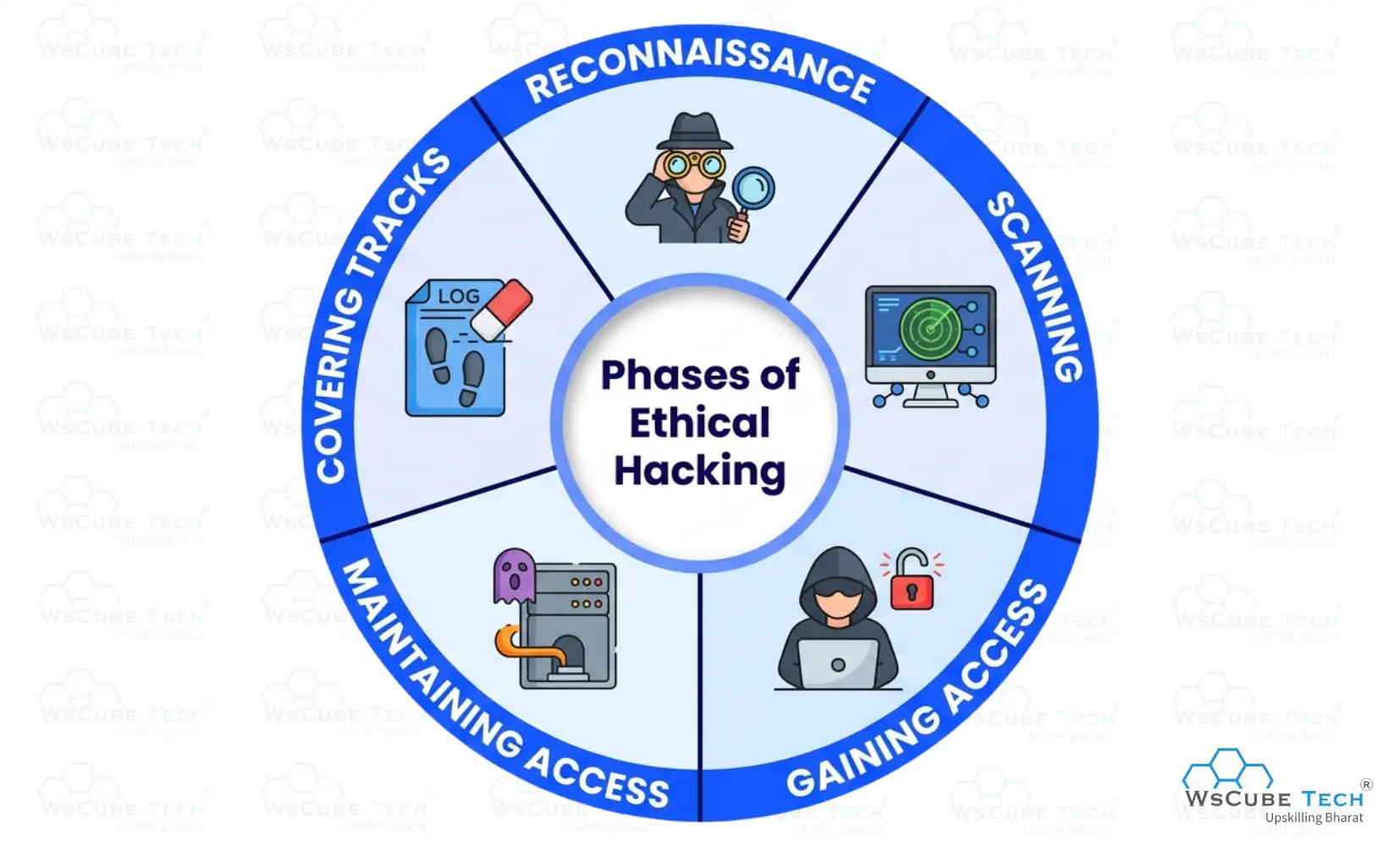
Ethical hacking works through a step-by-step process where experts test systems to find and fix security weaknesses before attackers can exploit them. It involves gathering information, testing vulnerabilities, and improving protection to keep systems safe. Below are the key phases:
Phases of Ethical Hacking
Below are the phases that explain how ethical hacking is performed step by step:
1. Reconnaissance (Information Gathering)
In this phase, the ethical hacker collects information about the target system, such as IP addresses, domain details, and network structure. This can involve both passive and active methods. The goal is to understand the system and identify possible entry points for further testing.
2. Scanning
During scanning, the ethical hacker uses tools to identify open ports, running services, and potential vulnerabilities in the system. This phase helps in understanding how the system responds to different inputs. It highlights weak points that can be tested further in the next stage.
3. Gaining Access
In this phase, ethical hackers perform controlled attacks to exploit identified vulnerabilities and gain access to the system. This helps them understand how attackers could break in. It also shows the level of damage that could occur if the weaknesses are not fixed.
4. Maintaining Access
After gaining access, the ethical hacker checks if they can maintain their presence in the system without being detected. This simulates real-world cyberattacks where hackers stay inside systems for a long time. It helps measure the seriousness of the vulnerability and its potential impact.
5. Covering Tracks
In this final phase, ethical hackers analyze how attackers might hide their activities to avoid detection. They study logs and system behavior to understand possible traces. This helps organizations improve monitoring systems and quickly detect any suspicious or unauthorized activities.
Types of Ethical Hacking
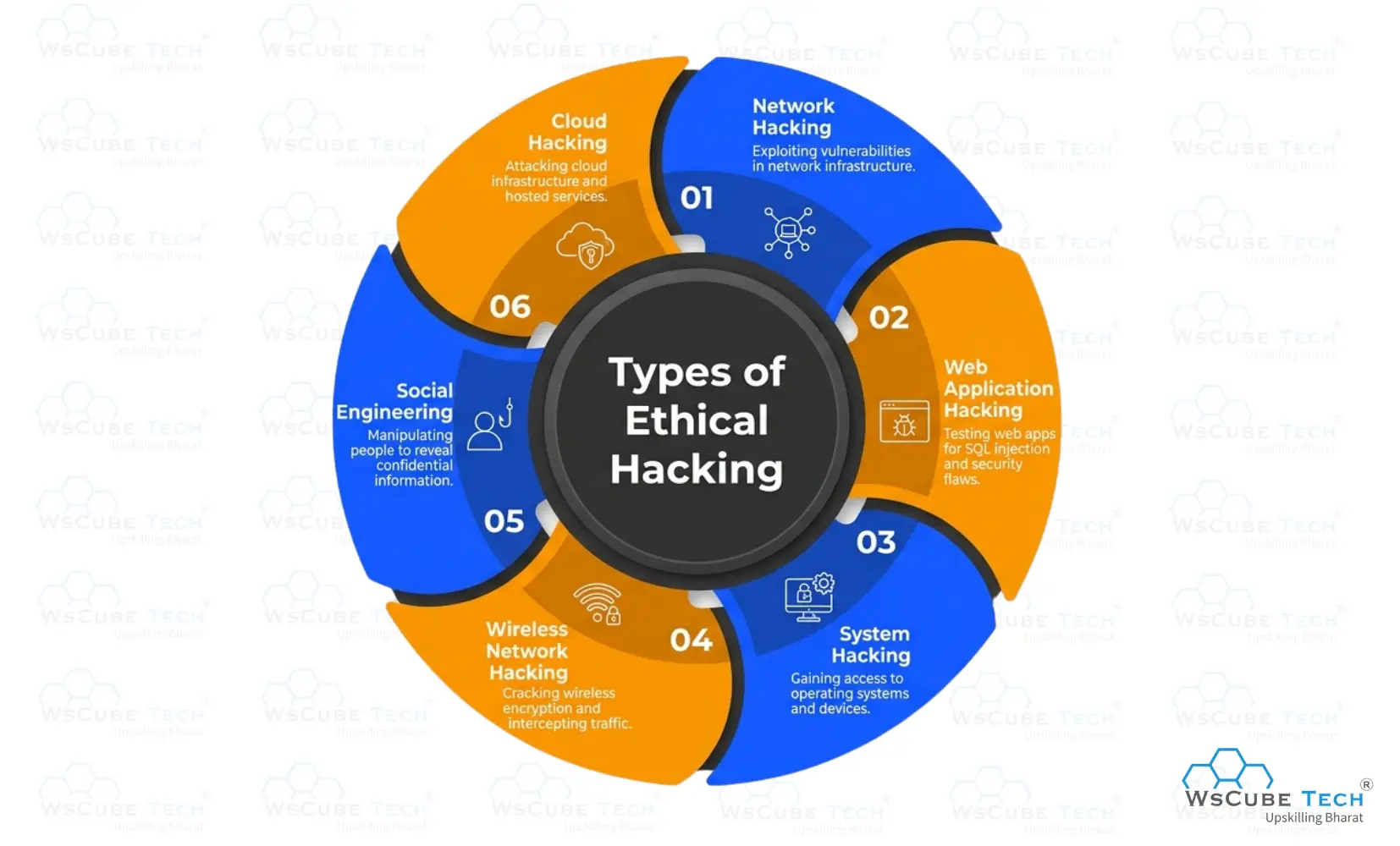
Ethical hacking includes different areas of security testing focused on systems, networks, and human behavior. Below are the main types of ethical hacking:
1. Network Hacking
Network hacking focuses on testing the security of network infrastructure, including routers, switches, and servers. Ethical hackers identify vulnerabilities like open ports, weak configurations, or insecure protocols. This helps prevent unauthorized access and ensures secure communication within the network environment.
2. Web Application Hacking
Web application hacking involves testing websites and web-based applications for security flaws such as SQL injection, cross-site scripting (XSS), and authentication issues. Ethical hackers analyze how inputs are handled to prevent attacks and protect user data from being exposed or misused.
3. System Hacking
System hacking targets operating systems to identify vulnerabilities like weak passwords, outdated software, or misconfigurations. Ethical hackers attempt controlled access to understand risks and improve system security. This ensures that computers and servers remain protected from unauthorized entry.
4. Wireless Network Hacking
Wireless network hacking tests the security of Wi-Fi networks by identifying weak encryption methods, default passwords, or unauthorized access points. Ethical hackers ensure that wireless communication is secure and protected from intrusions or data interception.
5. Social Engineering
Social engineering focuses on human behavior rather than technical systems. Ethical hackers test how easily individuals can be tricked into revealing sensitive information through phishing or manipulation. This helps improve awareness and strengthen human-based security defenses.
6. Cloud Hacking
Cloud hacking examines cloud-based systems for security risks related to data storage, access control, and configurations. Ethical hackers identify misconfigurations or weak permissions that could expose sensitive data, helping organizations secure their cloud environments effectively.
Recommended Professional Certificates
Ethical Hacking Bootcamp
Penetration Testing Bootcamp
Benefits of Ethical Hacking
After exploring “what is ethical hacking?”, it is also important to know its benefits. Below are the key advantages:
- Improves System Security: Ethical hacking helps identify and fix security weaknesses before attackers exploit them. It strengthens systems, networks, and applications, ensuring better protection of sensitive data and reducing the chances of cyberattacks.
- Prevents Data Breaches: By detecting vulnerabilities early, ethical hacking reduces the risk of data breaches. It helps organizations protect confidential information such as customer data, financial records, and business details from unauthorized access or theft.
- Builds Trust and Reputation: Strong security measures increase customer confidence and trust. Organizations that invest in ethical hacking demonstrate commitment to data protection, which enhances their reputation and builds long-term relationships with clients and users.
- Supports Legal Compliance: Ethical hacking helps organizations meet cybersecurity laws and industry standards. Regular security testing ensures compliance with regulations, reducing legal risks and avoiding penalties related to data protection and privacy violations.
- Enhances Career Opportunities: Ethical hacking opens doors to high-demand cybersecurity roles with competitive salaries and growth potential. It answers the question Is Ethical Hacking a Good Career?, as professionals gain valuable skills and opportunities across various industries.
- Reduces Financial Losses: Cyberattacks can cause major financial damage. Ethical hacking helps prevent such losses by identifying risks early, minimizing downtime, and protecting business operations from disruptions caused by security breaches.
Tools Used in Ethical Hacking
Ethical hacking uses various tools to scan, test, and secure systems from vulnerabilities and potential cyber threats. Below are the tools:
1. Nmap

- Used for network scanning and discovering active devices, open ports, and services running on a network system.
- Helps identify security weaknesses and understand network structure for better vulnerability assessment and testing.
- Widely used by ethical hackers for mapping networks and detecting potential entry points in systems.
2. Metasploit

- A powerful tool used for penetration testing and exploiting vulnerabilities in systems and applications safely.
- Helps simulate real cyberattacks to test system security and identify critical weaknesses effectively.
- Provides a wide range of exploit modules and payloads for advanced security testing.
3. Wireshark

- A network protocol analyzer used to capture and inspect data packets traveling across a network.
- Helps detect suspicious activity, analyze traffic patterns, and identify potential security issues.
- Useful for troubleshooting network problems and improving overall network security monitoring.
4. Burp Suite

- Used for testing the security of web applications by identifying vulnerabilities like SQL injection and XSS.
- Helps analyze HTTP requests and responses to find weaknesses in web applications.
- Commonly used for manual and automated testing of web security issues.
5. SQLmap
- An automated tool used to detect and exploit SQL injection vulnerabilities in web applications.
- Helps access databases, extract data, and test input fields for security flaws.
- Useful for securing web applications against database-related attacks.
6. John the Ripper

- A popular password cracking tool used to test the strength of passwords in systems and applications.
- Helps identify weak passwords using methods like brute force and dictionary attacks.
- Useful for improving password security and enforcing strong authentication.
7. Aircrack-ng

- A powerful tool used to test wireless network security by analyzing Wi-Fi passwords and encryption protocols.
- Helps identify weak encryption methods like WEP and WPA vulnerabilities in wireless setups.
- Useful for strengthening Wi-Fi security and preventing unauthorized access to networks.
8. Hydra

- A fast password cracking tool used to perform brute-force attacks on login systems and services.
- Supports multiple protocols such as SSH, FTP, HTTP, and Telnet for testing authentication security.
- Helps identify weak passwords and improve system protection by strengthening login mechanisms.
- Widely used for security testing to ensure strong and secure authentication systems.
9. Nikto
- An open-source web server scanner used to detect vulnerabilities and outdated software.
- Helps identify misconfigurations, insecure files, and potential risks in web servers.
- Useful for improving web server security and preventing attacks.
10. OpenVAS
- An open-source vulnerability scanning tool used to detect security weaknesses in systems and networks.
- Helps identify outdated software, misconfigurations, and known vulnerabilities that attackers could exploit.
- Provides detailed reports with risk levels and recommended fixes for better security management.
- Useful for continuous monitoring and improving overall system protection.
Skills Required to Become an Ethical Hacker
Ethical hacking requires a mix of technical knowledge and practical abilities to identify and fix security issues effectively. Below are the required skills:
Technical Skills
- Networking Knowledge: Strong understanding of networking concepts like TCP/IP, DNS, HTTP, and firewalls helps analyze data flow, detect vulnerabilities, and secure communication between systems and networks effectively.
- Operating Systems (Linux & Windows): Knowledge of operating systems, especially Linux and Windows, is essential to understand system behavior, manage permissions, and identify security weaknesses during testing processes.
- Programming Skills: Basic knowledge of languages like Python, Java, or C helps in writing scripts, automating tasks, and understanding how applications work and where vulnerabilities may exist.
- Web Application Security: Understanding web technologies like HTML, CSS, JavaScript, and databases helps identify vulnerabilities such as SQL injection and cross-site scripting in web applications.
- Knowledge of Cybersecurity Concepts: Familiarity with concepts like encryption, authentication, firewalls, and malware helps in understanding how security systems work and how they can be tested or bypassed.
- Penetration Testing Skills: The ability to perform penetration testing helps simulate real-world attacks to find vulnerabilities and assess the strength of security systems in a controlled and legal environment.
- Familiarity with Hacking Tools: Knowledge of tools like Nmap, Metasploit, and Wireshark helps in scanning networks, exploiting vulnerabilities, and analyzing system security effectively.
- Database Management Basics: Understanding databases like MySQL or MongoDB helps identify vulnerabilities related to data storage, access control, and injection attacks in applications.
Soft Skills
- Problem-Solving Skills: Strong problem-solving ability helps analyze complex security issues, identify root causes, and find effective solutions. It enables ethical hackers to think critically and handle unexpected challenges during security testing.
- Analytical Thinking: Analytical thinking helps break down systems and understand how different components interact. It allows better identification of patterns, vulnerabilities, and potential threats in complex environments.
- Attention to Detail: Careful observation is important to detect small security flaws that may be missed easily. Even minor vulnerabilities can lead to major risks, so precision plays a key role in ethical hacking.
- Communication Skills: Clear communication helps explain technical issues in simple terms. Ethical hackers need to create reports and share findings with teams, ensuring everyone understands the risks and solutions.
- Curiosity and Continuous Learning: A strong desire to learn helps stay updated with new technologies and cyber threats. Ethical hacking requires constant learning to keep up with evolving security challenges.
- Time Management: Good time management ensures tasks are completed efficiently, especially during testing phases. It helps prioritize work, meet deadlines, and handle multiple security assessments effectively.
Upcoming Masterclass
Attend our live classes led by experienced and desiccated instructors of Wscube Tech.



Ethical Hacking Course Eligibility
Below are basic eligibility criteria for an ethical hacking course, including educational background, technical knowledge, and skills required to start learning cybersecurity effectively.
| Criteria | Details |
| Educational Qualification | Minimum 10th or 12th pass; graduates in IT or Computer Science preferred but not mandatory. |
| Basic Computer Knowledge | An understanding of computers, internet usage, and basic software operations is required. |
| Networking Basics | Basic knowledge of networking concepts like IP, DNS, and protocols is helpful. |
| Programming Knowledge | Not mandatory, but basic knowledge of Python, C, or Java is beneficial. |
| Operating Systems | Familiarity with Windows and Linux operating systems is important. |
| Interest in Cybersecurity | Strong interest in security, ethical practices, and problem-solving is essential. |
Career Opportunities in Ethical Hacking
Ethical hacking offers various career opportunities in cybersecurity, focusing on protecting systems, identifying vulnerabilities, and preventing cyber threats. Below are the career opportunities in ethical hacking:
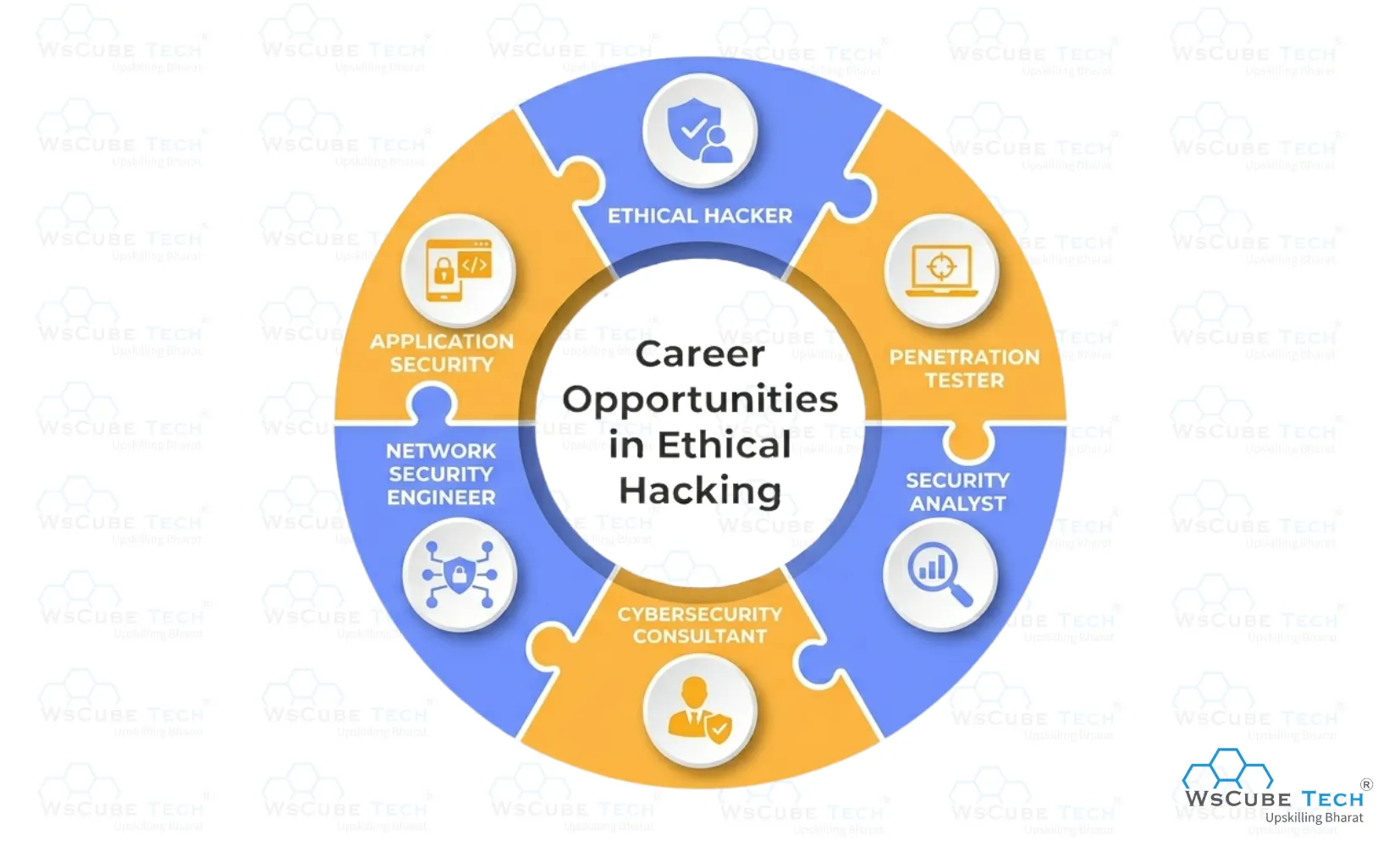
- Ethical Hacker: Tests systems, networks, and applications to find security weaknesses before attackers exploit them. Involves performing controlled attacks, analyzing risks, and helping organizations strengthen their overall cybersecurity defenses effectively.
- Penetration Tester: Simulates real-world cyberattacks to identify vulnerabilities in systems and applications. Focuses on exploiting weaknesses in a controlled way to evaluate security strength and recommend improvements for better protection.
- Security Analyst: Monitors systems, detects potential threats, and responds to security incidents. Involves analyzing logs, identifying suspicious activities, and implementing security measures to protect data and prevent cyberattacks.
- Cybersecurity Consultant: Provides expert advice on improving security systems and policies. Involves assessing risks, identifying vulnerabilities, and recommending strategies to protect organizations from cyber threats.
- Network Security Engineer: Designs and manages secure network infrastructures. Focuses on configuring firewalls, monitoring network activity, and ensuring safe data transmission to prevent unauthorized access and cyber threats.
- Application Security Engineer: Secures software by identifying vulnerabilities, testing applications, and implementing security measures during development to protect against potential attacks.
Read More Guides on Ethical Hacking
Advantages and Disadvantages of Ethical Hacking
Below are the key advantages and disadvantages of ethical hacking that help understand its importance and limitations:
Advantages of Ethical Hacking
- Improves System Security: Ethical hacking helps identify vulnerabilities in systems and networks before attackers exploit them, allowing organizations to fix issues early and strengthen overall security effectively.
- Prevents Data Breaches: By detecting weaknesses in advance, ethical hacking reduces the risk of data theft and protects sensitive information from unauthorized access, misuse, or cyberattacks.
- Enhances Trust and Reputation: Organizations that use ethical hacking show commitment to security, building trust among users and customers while improving their reputation in the market.
- Supports Compliance Requirements: Ethical hacking helps organizations meet security standards and legal requirements, ensuring proper data protection and reducing risks of penalties or legal issues.
- Helps in Risk Management: Helps organizations understand threats, plan better security strategies, and reduce the impact of cyberattacks.
- Encourages Continuous Improvement: Regular ethical hacking tests help organizations update their security systems, stay prepared for new threats, and continuously improve cybersecurity measures.
Disadvantages of Ethical Hacking
- High Cost of Implementation: Ethical hacking requires skilled professionals and advanced tools, which can be expensive. Small organizations may find it difficult to afford regular security testing and monitoring.
- Risk of Misuse: If ethical hacking knowledge is used unethically, it can lead to serious security threats. Skilled individuals may misuse their expertise for illegal activities.
- Time-Consuming Process: Ethical hacking involves detailed testing and analysis, which can take time, especially for large and complex systems.
- Requires Skilled Professionals: Effective ethical hacking depends on experienced professionals. Lack of proper skills can lead to incomplete testing and undetected vulnerabilities.
- Possible System Disruption: During testing, some activities may temporarily affect system performance or availability, causing minor disruptions if not handled carefully.
- Legal Risks if Misused: Ethical hacking must follow strict legal guidelines. Unauthorized testing or misuse of tools can lead to legal issues and penalties.
Legal Aspects of Ethical Hacking
Ethical hacking must follow strict legal rules and permissions to ensure testing is authorized, safe, and does not violate any laws. Below are the key legal aspects:
1. Authorization and Permission
Ethical hacking must always be performed with proper written permission from the organization. Unauthorized testing is illegal and can lead to serious legal consequences. Clearly defined scope and approval ensure all activities remain lawful and within agreed boundaries.
2. Non-Disclosure Agreement (NDA)
Ethical hackers often sign non-disclosure agreements to protect sensitive information discovered during testing. This ensures that confidential data is not shared or misused. Maintaining privacy and confidentiality is a key legal responsibility in ethical hacking.
3. Compliance with Laws and Regulations
Ethical hacking must follow national and international cybersecurity laws and data protection regulations. Compliance ensures that testing does not violate legal standards and helps organizations avoid penalties, legal issues, and damage to their reputation.
4. Defined Scope of Testing
A clear scope defines what systems, networks, or applications can be tested. Ethical hackers must stay within this scope to avoid unauthorized access. Going beyond the defined scope can result in legal violations and serious consequences.
5. Responsible Reporting
Ethical hackers must report vulnerabilities responsibly to the organization without exploiting them. Proper reporting ensures issues are fixed securely. Misusing discovered vulnerabilities or sharing them publicly without permission can lead to legal action.
Explore Our Cybersecurity Related Courses
How to Become an Ethical Hacker
Becoming an ethical hacker requires learning skills, gaining knowledge, and following a step-by-step approach to build a strong cybersecurity career.
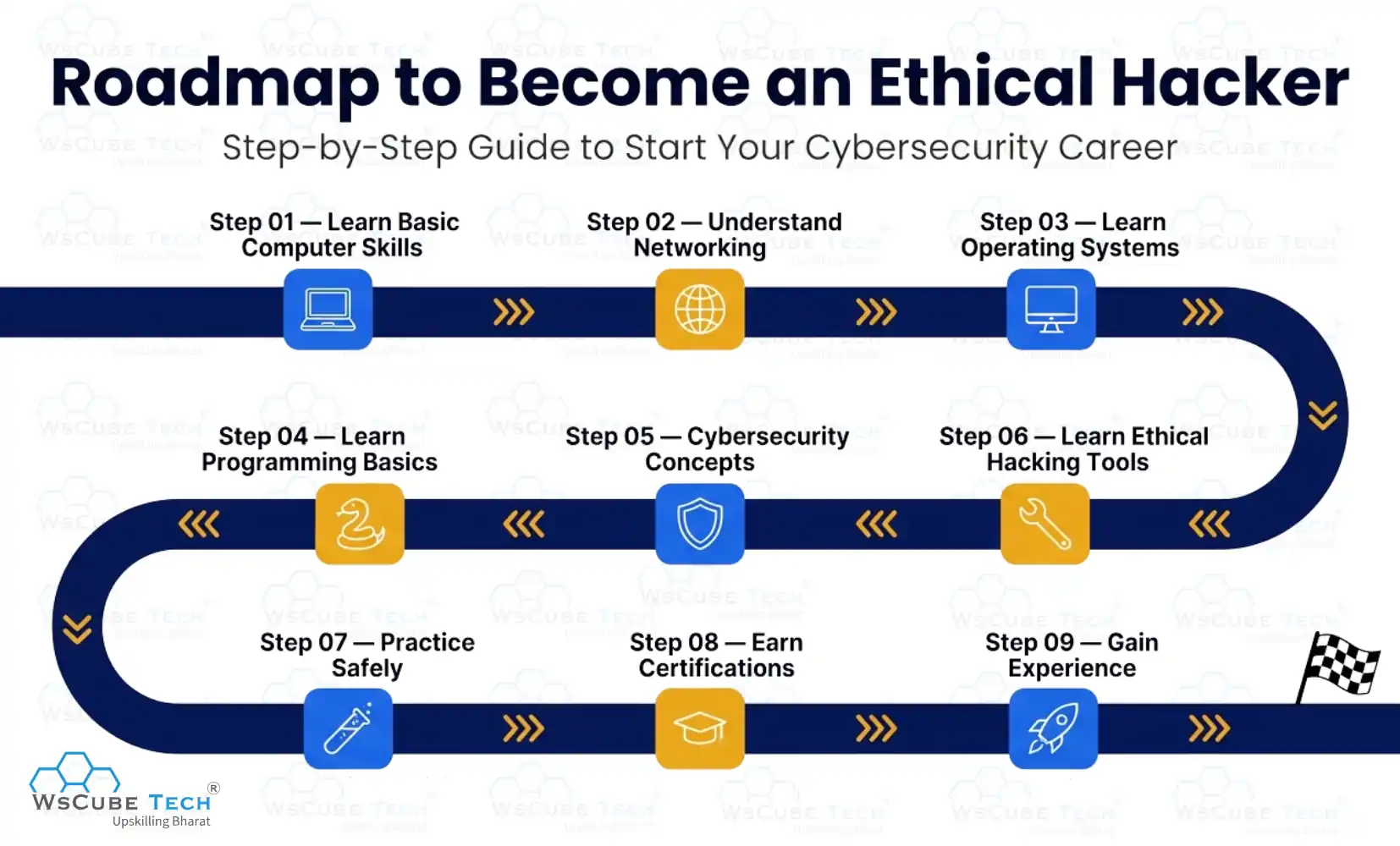
Step 1: Learn Basic Computer Skills
Start with understanding basic computer concepts, including how systems work, file management, and internet usage. A strong foundation in computer basics helps in learning advanced cybersecurity concepts more easily and builds confidence for further technical learning.
Step 2: Understand Networking Fundamentals
Learn networking concepts like IP addresses, DNS, TCP/IP, and protocols. Understanding how data travels across networks helps identify vulnerabilities and analyze security issues effectively, which is essential for ethical hacking and penetration testing tasks.
Step 3: Learn Operating Systems (Linux & Windows)
Gain knowledge of operating systems, especially Linux and Windows. Learn commands, file systems, and user management. Linux is widely used in ethical hacking, so becoming comfortable with it helps perform security testing more efficiently.
Step 4: Learn Programming Basics
Basic programming knowledge in languages like Python, C, or Java helps in writing scripts, automating tasks, and understanding application behavior. It also helps identify vulnerabilities in code and improves problem-solving skills during ethical hacking processes.
Step 5: Understand Cybersecurity Concepts
Learn core cybersecurity concepts such as encryption, firewalls, malware, and authentication. This knowledge helps in understanding how systems are protected and how attackers try to bypass security measures during cyberattacks.
Step 6: Learn Ethical Hacking Tools
Get hands-on experience with tools like Nmap, Metasploit, and Wireshark. These tools help scan networks, identify vulnerabilities, and test system security in real-world scenarios under controlled and legal conditions.
Step 7: Practice in a Safe Environment
Practice ethical hacking in a controlled environment like virtual labs or platforms. This helps build practical skills without breaking any laws and improves confidence in performing real-world security testing tasks.
Step 8: Earn Certifications
Consider certifications like CEH (Certified Ethical Hacker) to validate skills. Certifications improve credibility, increase job opportunities, and help build a strong career in cybersecurity and ethical hacking. You can also enroll in the WsCube Tech online ethical hacking certification course to gain practical knowledge and hands-on experience.
Step 9: Gain Experience and Keep Learning
Work on real-world projects, internships, or bug bounty programs to gain experience. Continuous learning is important in ethical hacking because cyber threats keep evolving, and staying updated helps maintain strong security skills.
Common Myths About Ethical Hacking
After exploring “what is ethical hacking definition?” and its concepts, many misconceptions still exist about its purpose, legality, and career scope. Below are the common myths:
1. Ethical Hacking is Illegal
Many believe ethical hacking is illegal, but it is completely legal when done with proper permission. Ethical hackers work under agreements and follow legal guidelines to test systems. Their goal is to improve security, not cause harm or misuse data.
2. Ethical Hackers are Just Hackers
A common myth is that ethical hackers are the same as malicious hackers. In reality, ethical hackers use their skills for protection, not damage. They follow rules, work with organizations, and focus on finding and fixing vulnerabilities responsibly.
3. Only Experts Can Learn Ethical Hacking
Many think ethical hacking is only for experts or highly technical individuals. However, beginners can also learn it with proper guidance and practice. Starting with basic concepts and gradually improving skills makes it accessible to anyone interested in cybersecurity.
4. Ethical Hacking is Only About Coding
Some believe ethical hacking is all about coding, but it also involves networking, security tools, and strong problem-solving skills. While programming helps, understanding systems, vulnerabilities, and attack methods is equally important. Practical knowledge, tools, and real-world testing play a major role in this field.
5. Ethical Hacking is Easy and Quick to Learn
There is a myth that ethical hacking can be learned quickly without much effort. In reality, it requires consistent practice, learning, and patience. Building strong skills takes time, dedication, and continuous effort to stay updated with new threats.

FAQs About Ethical Hacking
Ethical hacking is the process of testing systems, networks, and applications to find security weaknesses. It works by using controlled techniques to identify vulnerabilities and fix them before attackers can exploit them.
An ethical hacker is a cybersecurity professional who legally tests systems to identify vulnerabilities. They use hacking techniques with permission to improve security, protect data, and prevent cyberattacks in organizations.
Types of ethical hacking include network hacking, web application hacking, system hacking, wireless hacking, social engineering, and cloud hacking. Each type focuses on identifying and fixing vulnerabilities in different areas of cybersecurity.
Yes, ethical hacking is legal in India when performed with proper authorization. It must follow cybersecurity laws and guidelines. Unauthorized hacking activities are illegal and can lead to serious legal consequences.
In real-world scenarios, ethical hackers test systems for vulnerabilities, perform penetration testing, analyze security risks, and provide solutions. They help organizations strengthen defenses and prevent potential cyberattacks.
Skills required include networking knowledge, programming basics, understanding of operating systems, security tools, and problem-solving abilities. Strong analytical thinking and continuous learning are also important in ethical hacking.
Beginners can start by learning networking basics, operating systems, and cybersecurity concepts. Practicing with labs, using tools, and following structured courses helps build skills gradually and gain practical experience.
Coding is not mandatory but is helpful in ethical hacking. Basic knowledge of languages like Python or C helps in scripting, automation, and understanding vulnerabilities in applications and systems.
Common tools include Nmap for scanning, Metasploit for penetration testing, Wireshark for packet analysis, and Burp Suite for web security testing. These tools help identify vulnerabilities and improve system security.
Ethical hackers work with permission to find and fix vulnerabilities, while malicious hackers exploit weaknesses for personal gain or damage. The key difference is intent, legality, and purpose behind their actions.
Yes, ethical hacking is a good career option in 2026 due to increasing cyber threats. It offers high demand, good salaries, and growth opportunities across industries focusing on cybersecurity and data protection.
In India, ethical hackers can earn between ₹4 LPA to ₹10 LPA for beginners, while experienced professionals can earn significantly higher depending on skills, certifications, and experience in cybersecurity roles.
Basic qualifications include 10th or 12th pass with computer knowledge. Understanding networking and programming basics is helpful. However, many courses are beginner-friendly and do not require advanced qualifications.
Learning ethical hacking basics may take a few months, while becoming proficient can take one to two years. It depends on practice, consistency, and how deeply concepts and tools are understood.
Conclusion
Ethical hacking plays a crucial role in protecting systems, networks, and data from cyber threats. It helps identify vulnerabilities, improve security, and prevent attacks before they cause damage. With increasing digital risks, its importance continues to grow.
Learning ethical hacking not only builds strong cybersecurity skills but also opens career opportunities. With proper knowledge, practice, and guidance, anyone can start and grow in this field successfully.
Free Courses For You
| Free Django Course | Free Affiliate Marketing Course |
| Free Semrush Course | Free Video Editing Course |
| Free Blogging Course | Free AngularJS Course |
| Free Shopify Course | Free Photoshop Course |
Explore our Free Resources





Leave a comment
Your email address will not be published. Required fields are marked *Comments (0)
No comments yet.