
Ever wondered how people legally hack systems and protect companies from cyberattacks? It sounds exciting but also intimidating, leaving many beginners asking, “Is ethical hacking hard to learn?” or feeling it’s complex at first.
The biggest challenge is not the difficulty, but the direction. With endless topics like networking, Linux, programming, and tools, beginners often feel confused about where to begin and what actually matters.
This confusion can slow you down. You may feel stuck, lose motivation, or spend time without real progress, missing out on a fast-growing and rewarding career path.
But here’s the truth—ethical hacking is learnable if you follow a clear path. In this blog, you’ll understand its real difficulty level, the common challenges beginners face, and simple, practical steps to start learning with confidence.
If you want to avoid confusion and learn the right way from the beginning, you can join our ethical hacking course online, where experts teach you step by step from scratch through live classes.
What is Ethical Hacking?
Ethical hacking is the practice of legally testing computer systems, networks, and applications to find security weaknesses before malicious hackers can exploit them. Ethical hackers use the same techniques as real attackers, but with permission, to improve cybersecurity and protect data. Their goal is to identify risks early, prevent data breaches, and help organizations build stronger, more secure systems.
Below are the key aspects of ethical hacking:
- Authorized Access: Ethical hackers work with proper permission from organizations.
- Security Testing: They identify vulnerabilities in systems, networks, and applications.
- Use of Tools & Techniques: They use tools like penetration testing software to simulate attacks.
- Problem Solving: They analyze risks and suggest fixes to improve security.
- Legal and Ethical Practice: Their work follows laws and ethical guidelines to ensure safety.
Is Ethical Hacking Hard to Learn?
Ethical hacking is not extremely hard to learn, but it is also not something you can master quickly. It requires time, patience, and consistent effort. If you are willing to learn step by step and stay curious, the journey becomes much easier.
The difficulty mainly depends on how you approach learning. Ethical hacking involves understanding concepts like networking, operating systems, and security basics, which may feel challenging at first but become clearer with practice.
Overall, ethical hacking is manageable if you stay consistent and follow a structured path. With the right guidance and regular practice, you can gradually build your skills and become confident in this field.
Is Ethical Hacking Hard for Beginners?
Ethical hacking can feel challenging for beginners at the start, mainly because everything is new. Concepts like networking, operating systems, and security basics may seem confusing when you first encounter them.
However, it becomes easier once you build a strong foundation. Starting with basic concepts and learning step by step helps you understand how systems work and how security is applied in real scenarios.
Practice plays a big role for beginners. The more you work on labs, simulations, and real-world examples, the more confident and comfortable you become with ethical hacking skills.
If you want to learn step by step, you can explore the ethical hacking course syllabus to understand what topics to cover and how to start your learning journey effectively.
Recommended Professional Certificates
Ethical Hacking Bootcamp
Penetration Testing Bootcamp
Ethical Hacking Difficulty Explained
Ethical hacking involves multiple skills and concepts, making it moderately challenging, but with the right guidance, it becomes easier to learn. Below are the key areas that define its difficulty:
1. Technical Complexity (Networking, OS, Programming)
Ethical hacking requires understanding core technical areas like networking, operating systems, and basic programming. These concepts can feel difficult at first, especially for beginners without a technical background. However, once you learn how systems communicate, how operating systems work, and basic coding logic, it becomes easier to understand security concepts and identify vulnerabilities step by step.
2. Tools and Technologies to Learn
Ethical hackers use various tools and technologies to test system security and find vulnerabilities. Learning tools like penetration testing software, scanning tools, and security frameworks can feel overwhelming at first. However, you don’t need to learn everything at once. Start with basic tools, understand their purpose, and gradually explore advanced tools as your knowledge and confidence grow.
3. Continuous Learning Requirement
Ethical hacking is a constantly evolving field because new cyber threats and vulnerabilities appear regularly. This means you need to keep learning and updating your skills over time. While this may sound challenging, it also makes the field exciting and dynamic, helping you stay relevant and improve your expertise continuously.
4. Real-World Problem Solving
Ethical hacking is not just about theory; it involves solving real-world security problems. You need to think like an attacker, analyze systems, and find practical solutions to fix vulnerabilities. This problem-solving approach can be challenging at first, but with regular practice and hands-on experience, your analytical skills and confidence improve significantly.
Ethical Hacking: Easy or Difficult?
Ethical hacking is neither completely easy nor extremely difficult; it falls somewhere in between. The difficulty depends on your background, interest, and how you approach learning. If you start with the basics and follow a clear path, it becomes easier over time.
For beginners, it may feel challenging at first because of technical concepts and tools. However, with consistent practice and hands-on learning, these challenges become manageable.
In simple terms, ethical hacking may seem difficult in the beginning, but with patience, guidance, and regular practice, it becomes much easier and more interesting to learn.
Upcoming Masterclass
Attend our live classes led by experienced and desiccated instructors of Wscube Tech.



What Makes Ethical Hacking Easy or Hard? Key Factors
The difficulty of ethical hacking depends on your background, learning approach, consistency, and ability to apply concepts practically. Below are the key factors:
1. Prior IT Knowledge
Having basic knowledge of computers, networking, and operating systems makes learning ethical hacking much easier. If you already understand how systems work, you can quickly grasp security concepts and tools. Beginners without this background may take more time, but with consistent learning and practice, they can still build strong skills.
2. Learning Resources and Guidance
The quality of learning resources and guidance plays a big role in your journey. Structured courses, clear tutorials, and proper mentorship help you learn faster and avoid confusion. Without guidance, learners may struggle to choose the right path or spend time on less important topics.
If you are interested, you can join our online ethical hacking course that provides a structured learning path, step-by-step guidance, and hands-on practice to help you build strong skills confidently
3. Practice and Hands-On Experience
Ethical hacking is a practical skill, so hands-on experience is essential. Practicing on labs, simulations, and real scenarios helps you understand concepts better. The more you practice, the more confident you become in identifying and solving security problems.
4. Time Commitment
Learning ethical hacking requires consistent time and effort. It cannot be mastered overnight, and regular study and practice are necessary. The more time you invest daily or weekly, the faster you will build your skills and understanding.
5. Consistency and Patience
Consistency and patience are key factors in learning ethical hacking. Progress may feel slow at times, but regular effort helps you improve steadily. Staying patient and committed ensures long-term success in this field.
Also Read: Ethical Hacking Course Fees and Duration
How to Make Ethical Hacking Easier to Learn?
Learning ethical hacking becomes easier with the right strategy, consistency, and focus on fundamentals instead of jumping into advanced concepts quickly. Below are the effective ways to simplify your learning:
1. Start with the basics first
Begin by learning fundamental concepts like networking, operating systems, and basic programming. These form the foundation of ethical hacking and make advanced topics easier to understand. Avoid jumping directly into complex tools. When your basics are strong, you can connect concepts better and learn faster without feeling overwhelmed.
2. Use Structured Learning Paths
Follow a well-organized learning path instead of random topics. Structured ethical hacker roadmaps or courses help you learn step by step, covering important concepts in the right order. This reduces confusion and ensures you don’t miss essential topics while building your skills.
3. Practice on Labs and Simulations
Practice is the most important part of learning ethical hacking. Use online labs, virtual machines, and simulations to apply what you learn. Hands-on experience helps you understand real-world scenarios and improves your problem-solving skills effectively.
4. Join Communities and Forums
Joining communities and forums allows you to learn from others, ask questions, and stay updated. Engaging with like-minded learners and experts helps you solve doubts quickly and stay motivated throughout your learning journey.
Read More Blog Topics
| How long to be an Ethical Hacker | Is Ethical Hacking a Good Career |
| Ethical Hacking Course Eligibility | How to Become an Ethical Hacker |
Common Mistakes That Make Ethical Hacking Harder
Many beginners struggle with ethical hacking due to common mistakes that slow learning, create confusion, and reduce overall progress and confidence. Below are the key mistakes:
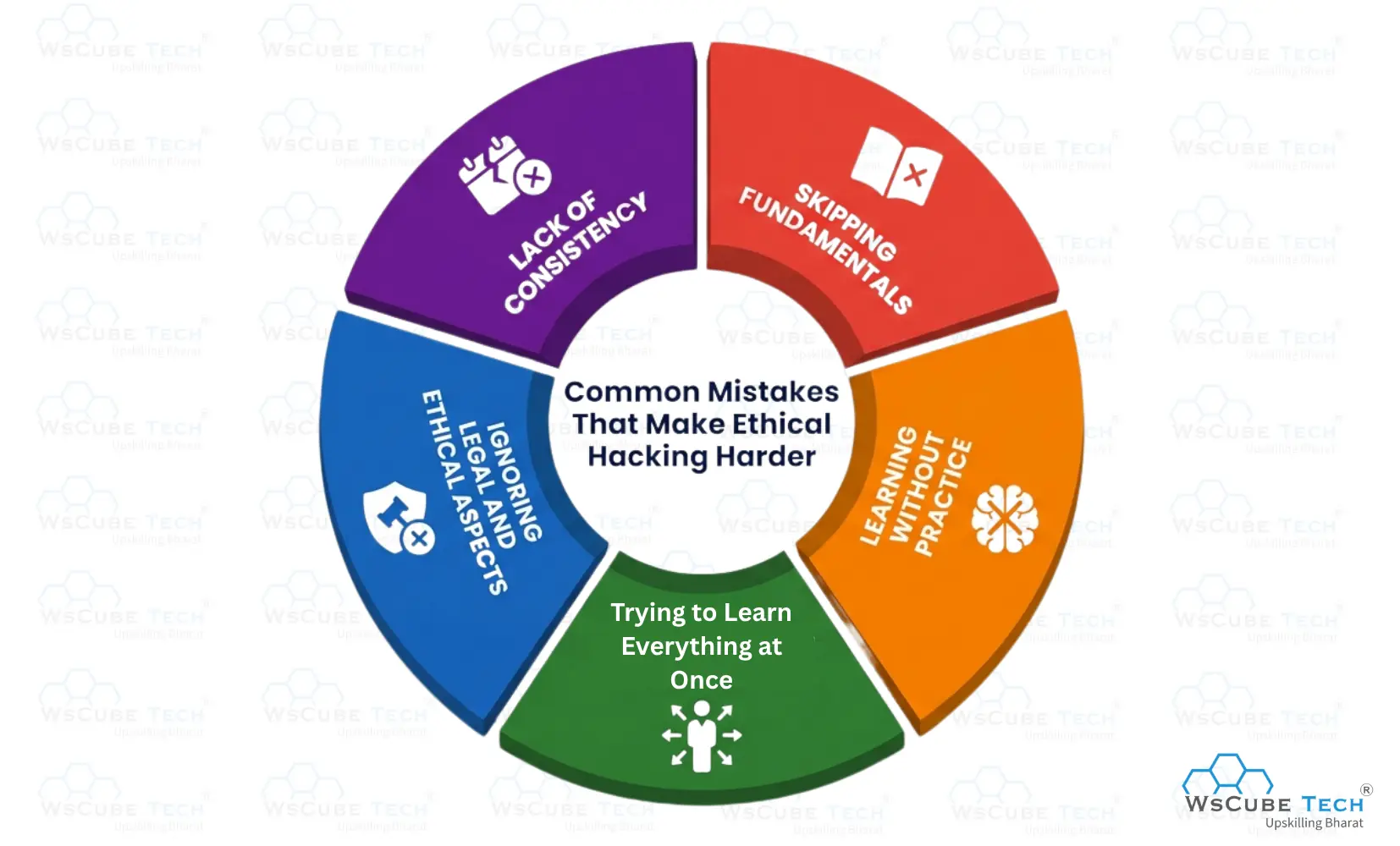
1. Skipping Fundamentals
Skipping basics like networking, operating systems, and programming can make ethical hacking much harder. These concepts are the foundation of everything you learn later. Without understanding how systems work, tools and techniques will feel confusing. Building a strong base first helps you learn faster and apply concepts correctly in real scenarios.
2. Learning Without Practice
Just reading or watching isn’t enough; it leads to weak understanding. Ethical hacking is practical, so hands-on practice is essential. Regular lab work builds real skills, confidence, and a stronger problem-solving ability.
3. Trying to Learn Everything at Once
Trying to learn too many topics at the same time can be overwhelming. It often leads to confusion and lack of clarity. Instead, focus on one concept at a time and move step by step. This approach helps you understand topics properly and build strong, long-lasting knowledge.
4. Ignoring Legal and Ethical Aspects
Ethical hacking must always be done with proper permission and within legal boundaries. Ignoring these rules can lead to serious consequences. Understanding legal guidelines ensures you practice safely and responsibly while building a professional career in cybersecurity.
5. Lack of Consistency
Learning ethical hacking irregularly slows down progress. Skipping practice or studying occasionally makes it harder to retain concepts. Staying consistent with learning and practice helps you improve steadily and build strong skills over time.
Free Courses For You
| Django Course | Affiliate Marketing Course |
| Semrush Course | Video Editing Course |
| Blogging Course | AngularJS Course |
| Shopify Course | Photoshop Course |
Learn Ethical Hacking With WsCube Tech
If you’re interested, WsCube Tech offers an online ethical hacking course that helps you learn step by step with expert guidance. The course follows a structured path, making it easier for beginners to understand concepts and build practical skills with confidence.
Start a high-demand cybersecurity career with our ethical hacking course online, where you learn how real hackers think and how to stop them. Gain hands-on experience through live training, practical labs, and real attack simulations to become job-ready.
FAQs About Is Ethical Hacking Hard to Learn
Ethical hacking can feel challenging for beginners due to new concepts, but with consistent practice, proper guidance, and a step-by-step approach, it becomes easier and more manageable over time.
It feels difficult initially because beginners face unfamiliar topics like networking, Linux, and security tools. Lack of direction and too much information at once can create confusion and slow learning progress.
Ethical hacking is not necessarily harder than programming; both require logical thinking. Ethical hacking combines multiple skills, while programming focuses mainly on coding concepts and problem-solving.
Yes, a non-technical person can learn ethical hacking by starting with basics like networking and gradually building technical skills through structured learning and consistent practice.
Learning the basics of ethical hacking may take 3–6 months, while becoming proficient can take 1–2 years, depending on your dedication, practice, and consistency in learning.
Basic knowledge of networking, operating systems, and programming helps make learning easier. Problem-solving skills, curiosity, and hands-on practice are also important to understand concepts and apply them effectively.
Coding knowledge is helpful but not mandatory at the beginning. Basic scripting in languages like Python or Bash can improve your skills, but many tools can be used without advanced programming knowledge.
Ethical hacking is a part of cybersecurity, so it’s not harder but more specialized. It focuses on testing systems for vulnerabilities, while cybersecurity covers broader areas like defense, monitoring, and risk management.
The most difficult part is understanding real-world vulnerabilities and thinking like an attacker. It requires strong analytical skills, practice, and the ability to apply concepts practically.
Yes, you can learn ethical hacking at home using online courses, labs, and practice platforms. Consistency, discipline, and hands-on practice are key to success.
With the right guidance and structured learning path, ethical hacking becomes much easier. Clear direction, practical exercises, and mentorship help reduce confusion and significantly speed up your learning process.
Ethical hacking can be difficult due to multiple concepts, tools, and continuous updates in the field, which require consistent learning and strong foundational knowledge.
Yes, ethical hacking is a great career with high demand, good salary, and growth opportunities. The effort required to learn it is worth the long-term benefits.
Yes, you can become an ethical hacker without a degree by focusing on skills, certifications, and practical experience. Many professionals succeed through self-learning, online courses, and real-world practice rather than formal education.
Final Verdict: Is Ethical Hacking Hard or Easy?
Ethical hacking is neither completely hard nor truly easy; it depends on your mindset, consistency, and learning approach. For beginners, it may feel challenging at first due to technical concepts and tools, but it becomes easier as you build a strong foundation.
With the right guidance, regular practice, and patience, ethical hacking becomes manageable and even enjoyable. If you stay consistent and focus on learning step by step, you can confidently master the skills and build a successful career in cybersecurity.
Join Our Cybersecurity Related Courses



Leave a comment
Your email address will not be published. Required fields are marked *Comments (0)
No comments yet.