Ever wondered if you are eligible to become an ethical hacker and build a career in cybersecurity? Many beginners feel confused about where to start and what qualifications are actually required.
The biggest problem is the lack of clear information about ethical hacking course eligibility. Different institutes set different criteria, which makes it hard to understand who can apply and what skills you truly need.
This confusion can delay your learning journey or even stop you from exploring a high-demand career as an ethical hacker with strong growth and opportunities.
The good news is, getting started is easier than you think. In this blog, you will learn ethical hacking course eligibility criteria, required skills, qualifications, and how to confidently begin your journey as an ethical hacker.
If you’re interested in ethical hacking, you can join our online ethical hacking course and become a certified ethical hacker.
What is Ethical Hacking?
Ethical hacking is the process of legally testing computer systems, networks, and websites to find security weaknesses before cybercriminals can exploit them. Ethical hackers, also known as white-hat hackers, use the same techniques as malicious hackers but with proper permission to identify vulnerabilities, improve system security, and protect sensitive data from cyber threats. Below are the key areas covered in ethical hacking:
- Network Security Testing: Finding weaknesses in networks, routers, and firewalls.
- Website Security: Checking websites for vulnerabilities like SQL injection and XSS.
- System Security: Testing operating systems and software for security flaws.
- Password & Authentication Testing: Identifying weak passwords and login loopholes.
- Vulnerability Assessment: Scanning systems to detect possible threats.
- Penetration Testing: Simulating real cyberattacks in a controlled way.
- Data Protection: Ensuring confidential information remains secure.
- Cyber Threat Prevention: Helping organizations prevent hacking attempts.
Suggested Reading: Ethical Hacking Course Syllabus (Fees, Duration, Eligibility)
Basic Eligibility Criteria for Ethical Hacking Courses
Before joining an ethical hacking course, it is important to understand the basic requirements. Below are the key eligibility criteria explained in detail:
1. Minimum Educational Qualification
Most ethical hacking courses require candidates to have completed at least 10th or 12th standard, depending on the course level. Certificate and beginner-level courses usually accept students after 10th or 12th, while diploma or advanced programs may prefer graduation in computer science, IT, or a related field. However, many institutes also allow beginners with basic computer knowledge.
2. Age Requirements
There is generally no strict age limit for learning ethical hacking. Students, college learners, working professionals, and career switchers of almost any age can enroll in these courses. Some institutes may require candidates to be at least 16 or 18 years old for certification programs, especially when advanced tools and cybersecurity labs are involved.
3. Academic Streams (Science, Commerce, Arts)
Students from Science, Commerce, or Arts streams can all pursue ethical hacking courses. While science students may find networking and technical concepts easier to understand, learners from other streams can also start with beginner-friendly courses. Most institutes focus more on interest, problem-solving ability, and basic computer knowledge rather than academic background alone.
Do You Need a Degree?
No, a degree is not always required to start learning ethical hacking. Many certificate and online courses are designed for beginners without any formal degree. However, for advanced diploma programs, degree courses, or specialized cybersecurity roles, having a graduation degree in IT, computer science, or a related field can be an added advantage.
So, this is the minimum ethical hacking course eligibility in India required to start learning.
Who Can Learn Ethical Hacking?
Ethical hacking can be learned by anyone with an interest and basic computer knowledge. Below are the main groups who can start learning:
1. Students (School & College Level)
School and college students who are interested in cybersecurity, networking, and technology can start learning ethical hacking through beginner-level courses. Starting early helps build a strong foundation in cybersecurity concepts and can open future career opportunities in IT security, penetration testing, and cyber defense roles.
2. IT Professionals & Developers
IT professionals, software developers, network engineers, and system administrators can learn ethical hacking to strengthen their cybersecurity skills. It helps them understand vulnerabilities, secure applications, and protect networks from threats. This knowledge also improves career growth opportunities in cybersecurity and information security roles.
3. Non-Technical Background Learners
Learners from non-technical backgrounds, such as commerce, arts, or management, can also start ethical hacking with beginner-friendly courses. Many institutes offer step-by-step training that covers basic computer concepts, networking, and security fundamentals, making it easier for beginners to understand and grow in this field.
4. Career Switchers
Professionals who want to switch into cybersecurity can learn ethical hacking and build a new career path. With growing demand for cybersecurity experts, many people from support, operations, and non-IT roles transition into this field through certification and practical training.
5. Freelancers & Tech Enthusiasts
Freelancers, tech enthusiasts, and self-learners who enjoy exploring systems, networks, and security tools can also pursue ethical hacking. With online courses, labs, and certifications available, they can develop practical skills and even work on freelance cybersecurity projects or bug bounty programs.
Skills Required for Ethical Hackers
Ethical hackers need both technical and interpersonal abilities to succeed in cybersecurity roles. Below are the important technical and soft skills required:
Technical Skills
- Networking Fundamentals: Understanding IP addresses, routers, firewalls, DNS, and network protocols to identify vulnerabilities and secure communication between systems and networks effectively.
- Operating Systems Knowledge: Strong knowledge of Windows, Linux, and macOS systems helps in detecting weaknesses, misconfigurations, and security loopholes across platforms.
- Programming & Scripting: Basic knowledge of Python, JavaScript, SQL, and Bash scripting is useful for automation, vulnerability testing, and exploit analysis.
- Web Application Security: Understanding vulnerabilities such as SQL injection, XSS, CSRF, and authentication flaws is essential to securing websites and web applications.
- Penetration Testing Tools: Familiarity with tools such as Nmap, Wireshark, Burp Suite, and Metasploit helps test systems and identify security issues.
- Vulnerability Assessment: Ability to scan systems, analyze reports, and identify potential threats before attackers can exploit security weaknesses.
- Cryptography Basics: Understanding encryption, hashing, SSL/TLS, and secure communication methods helps protect sensitive data, secure systems, and prevent unauthorized access during data transmission and storage.
Soft Skills Required for Ethical Hackers
- Problem-Solving Skills: Ability to analyze complex systems, identify hidden vulnerabilities, and find effective solutions quickly during security testing and threat analysis processes.
- Analytical Thinking: Helps in understanding attack patterns, system weaknesses, and possible security loopholes through logical and structured thinking.
- Attention to Detail: Even small mistakes can cause security risks, so focusing on minor details helps in identifying hidden vulnerabilities and preventing potential threats.
- Communication Skills: Explaining technical issues in simple language helps teams and clients understand risks and implement proper security measures effectively.
- Curiosity & Continuous Learning: Cyber threats keep evolving, so staying updated with new tools, techniques, and attack methods is essential.
- Ethical Responsibility: Ethical hackers must work legally, follow guidelines, and use their skills only for authorized security purposes.
Also Read: How to Become an Ethical Hacker? Full Roadmap
Common Myths About Ethical Hacking Eligibility
Many learners avoid ethical hacking because of common misconceptions. Below are the most common myths and the truth behind them:
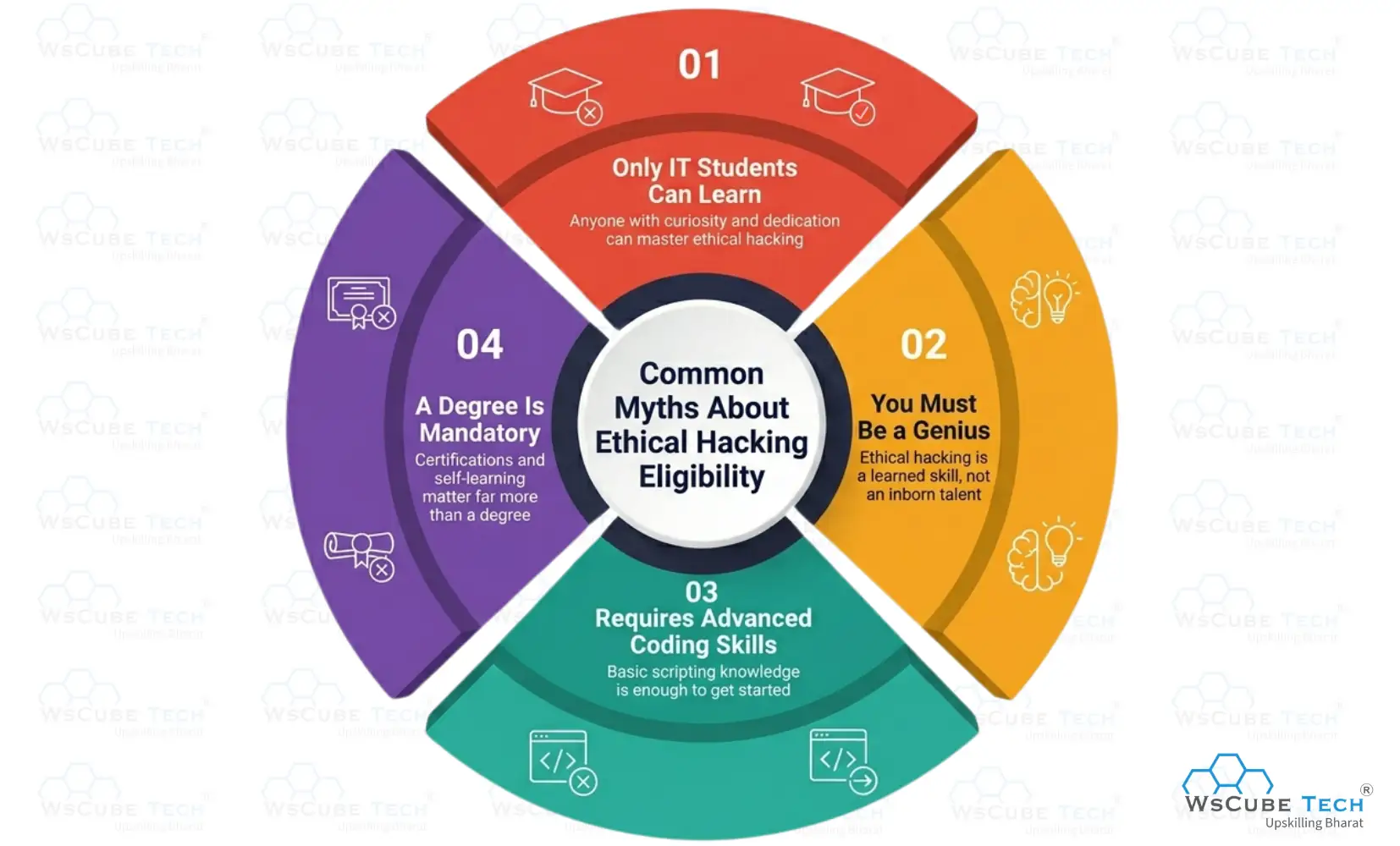
Myth 1: Only IT Students Can Learn
This is one of the biggest myths. Ethical hacking can be learned by students from science, commerce, arts, and other backgrounds. While IT students may have some technical advantage, many beginner-friendly courses start from the basics, making it accessible for anyone with interest and basic computer knowledge.
Myth 2: You Must Be a Genius
You do not need to be a genius to learn ethical hacking. What matters more is curiosity, logical thinking, and problem-solving ability. With regular practice, step-by-step learning, and hands-on experience, beginners can gradually develop strong cybersecurity skills and grow confidently in this field.
Myth 3: Requires Advanced Coding Skills
Advanced coding skills are not always required at the beginning. Many beginner courses teach basic scripting and security concepts first. Learning simple languages like Python or SQL gradually is enough to start, and advanced coding can be developed later with practice and experience.
Myth 4: A Degree Is Mandatory
Another common myth is that a formal degree is compulsory. In reality, many certificate and online ethical hacking courses accept learners without a degree. Practical skills, certifications, and hands-on lab experience often matter more than formal education in this field.
Free Courses For You
| Django Course | Affiliate Marketing Course |
| Semrush Course | Video Editing Course |
| Blogging Course | AngularJS Course |
| Shopify Course | Photoshop Course |
Ethical Hacking Course Fees & Duration
After learning about the eligibility criteria, it is also important to understand the fees and duration of an ethical hacking course before choosing the right program. Below is a general overview of the fees and course duration for different course types:
| Course Type | Duration | Approximate Fees |
| Certificate Course | 1–3 months | ₹5,000 – ₹20,000 |
| Diploma Course | 6–12 months | ₹18,000 – ₹60,000 |
| Advanced Certification | 3–6 months | ₹15,000 – ₹80,000 |
| Degree Program | 3–4 years | ₹50,000 – ₹2,00,000 per year |
| Online Short-Term Course | 4–8 weeks | ₹2,000 – ₹20,000 |
Note: Fees may vary depending on the institute, certification level, course mode (online or offline), lab access, tools included, course duration, trainer experience, location, and the reputation of the certification provider.
Career Opportunities After Learning Ethical Hacking
Ethical hacking opens multiple career paths in cybersecurity, offering high demand, growth, and rewarding job opportunities across industries. Below are the top career opportunities:
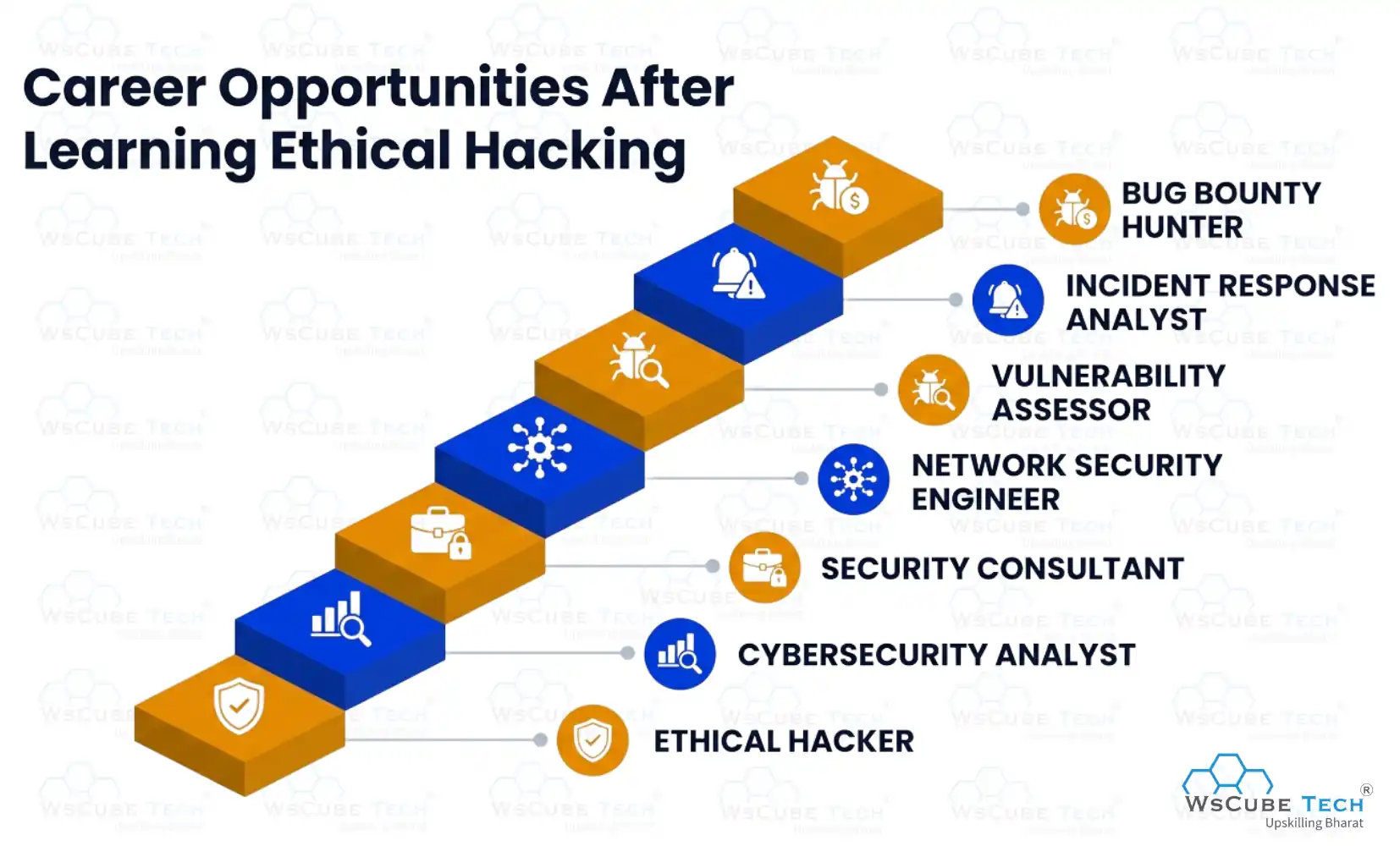
- Ethical Hacker / Penetration Tester: Tests systems, websites, and networks to identify vulnerabilities and help organizations fix security weaknesses before attackers can exploit them, ensuring stronger protection against cyber threats and data breaches.
- Cybersecurity Analyst: A cybersecurity analyst monitors systems, detects threats, analyzes security incidents, and helps protect organizational data from cyberattacks and unauthorized access.
- Security Consultant: Security consultants advise companies on improving cybersecurity strategies, risk management, compliance, and implementing strong security measures to prevent attacks.
- Network Security Engineer: These professionals secure networks, firewalls, routers, and servers to protect data flow, ensure safe communication, and prevent unauthorized access or network-based attacks across organizational systems
- Vulnerability Assessor: A vulnerability assessor scans systems, applications, and networks to identify weaknesses and provides reports with recommendations for better security.
- Incident Response Analysts: They handle security breaches, investigate cyber incidents, minimize damage, identify the root cause, and restore systems quickly after attacks or data leaks to ensure business continuity and improve future security measures.
- Bug Bounty Hunter: Bug bounty hunters find security flaws in websites and applications and report them to companies in exchange for rewards or payments.
Learn Ethical Hacking With WsCube Tech
If you are interested in joining an online ethical hacking course, WsCube Tech offers a practical learning program designed for beginners and aspiring cybersecurity professionals. The course focuses on building strong fundamentals through expert guidance and easy-to-follow training.
Start a high-demand cybersecurity career with our online ethical hacking course, designed to teach you how real hackers think and how to stop them. Learn from scratch through live training, hands-on labs, and real attack simulations to build practical, job-ready skills.

FAQs About Ethical Hacking Course Eligibility
Anyone with basic computer knowledge and an interest in cybersecurity is eligible for an ethical hacking course, including students, professionals, career switchers, and beginners from both technical and non-technical backgrounds.
Yes, students can start learning ethical hacking after 10th through beginner-friendly certificate courses that teach networking, cybersecurity basics, and ethical hacking fundamentals in a simple and structured way.
Yes, students from Science, Commerce, or Arts streams can pursue ethical hacking courses after 12th and begin building a strong career in cybersecurity and information security roles.
No, advanced coding is not mandatory at the beginning. Basic knowledge of Python, SQL, or scripting languages is helpful and can be learned gradually during the course.
Yes, students from Commerce or Arts backgrounds can also learn ethical hacking, as most beginner courses start with the fundamentals and do not require a technical academic background.
Generally, there is no strict age limit for ethical hacking courses. Anyone interested in cybersecurity can enroll, though some institutes may prefer candidates above 16 or 18 years.
No, a degree is not always required. Practical skills, certifications, hands-on labs, and cybersecurity knowledge are often more important than formal academic qualifications in this field.
Yes, non-technical students can join ethical hacking courses designed for beginners, where they learn computer basics, networking, cybersecurity concepts, and ethical hacking tools step by step.
Science and computer-related streams can be helpful, but students from any stream can pursue ethical hacking with interest, logical thinking, and basic computer knowledge.
Python is not mandatory but highly recommended for ethical hacking. It helps automate tasks, write scripts, and understand exploits, making your learning process more efficient and practical.
Yes, beginners can absolutely start learning ethical hacking through foundation-level courses that cover basic concepts, tools, cybersecurity principles, and practical lab exercises.
The minimum skills include basic computer knowledge, networking fundamentals, logical thinking, problem-solving ability, curiosity, and a willingness to continuously learn cybersecurity concepts and tools.
It usually takes around 3 to 6 months to learn the basics through a structured course, while advanced expertise may require continuous practice and certifications.
After learning ethical hacking, you can work as an ethical hacker, penetration tester, cybersecurity analyst, network security engineer, vulnerability assessor, or incident response specialist.
Conclusion
Choosing the right path in cybersecurity starts with understanding the basic requirements and building the right skills step by step. Ethical hacking is open to students, professionals, and beginners from any background, making it an accessible and rewarding career option for many learners today.
By clearly understanding the eligibility criteria for ethical hacking courses in India, you can confidently begin your journey without confusion or delay. With the right mindset, practical learning, and consistency, you can develop strong cybersecurity skills and unlock exciting career opportunities in this fast-growing field.
Join Our Cybersecurity Related Courses



Leave a comment
Your email address will not be published. Required fields are marked *Comments (0)
No comments yet.