If you’ve been wondering, “How long does it take to become an ethical hacker?”, you’re not alone. Almost every beginner has this question before starting.
The problem is, most people don’t have a clear roadmap. They jump between courses, tools, and tutorials without knowing what to learn first or how long each step should take.
This confusion leads to wasted time, slow progress, and frustration. Many learners lose motivation because they don’t see results quickly or feel overwhelmed by too much information.
In this blog, you’ll learn a realistic timeline, key factors that affect your learning speed, and simple tips to become an ethical hacker faster.
You can join our online ethical hacking course, where you will learn from scratch with expert guidance in live classes.
What is Ethical Hacking?
Ethical hacking is the process of legally testing computers, networks, and applications to find security weaknesses before malicious hackers can exploit them. Ethical hackers, also called white-hat hackers, use the same techniques as attackers but work with permission to improve system security. Their goal is to identify vulnerabilities, fix them, and protect sensitive data from cyber threats.
It plays an important role in cybersecurity by helping organizations prevent data breaches and attacks. Ethical hackers perform tasks like vulnerability assessment and penetration testing to strengthen defenses and keep systems secure.
Who is an ethical hacker?
An ethical hacker is a cybersecurity professional who legally tests systems, networks, and applications to find security vulnerabilities before malicious hackers can exploit them. They work with proper permission and use hacking techniques responsibly to improve security and protect sensitive data. Their main goal is to identify weaknesses, report them, and help organizations fix them. Below are the key roles of an ethical hacker:
- Security Tester: Evaluates systems and networks to identify vulnerabilities and weaknesses.
- Penetration Tester: Simulates real-world attacks to evaluate security defenses and responses.
- Problem Solver: Identifies security issues and provides effective solutions to fix them quickly.
- Risk Analyst: Evaluates potential threats and measures their impact on systems and data.
- Security Advisor: Recommends best practices and strategies to improve overall cybersecurity posture.
- Ethical Professional: Follows legal guidelines and ensures all testing activities are authorized and responsible.
Types of Ethical Hackers
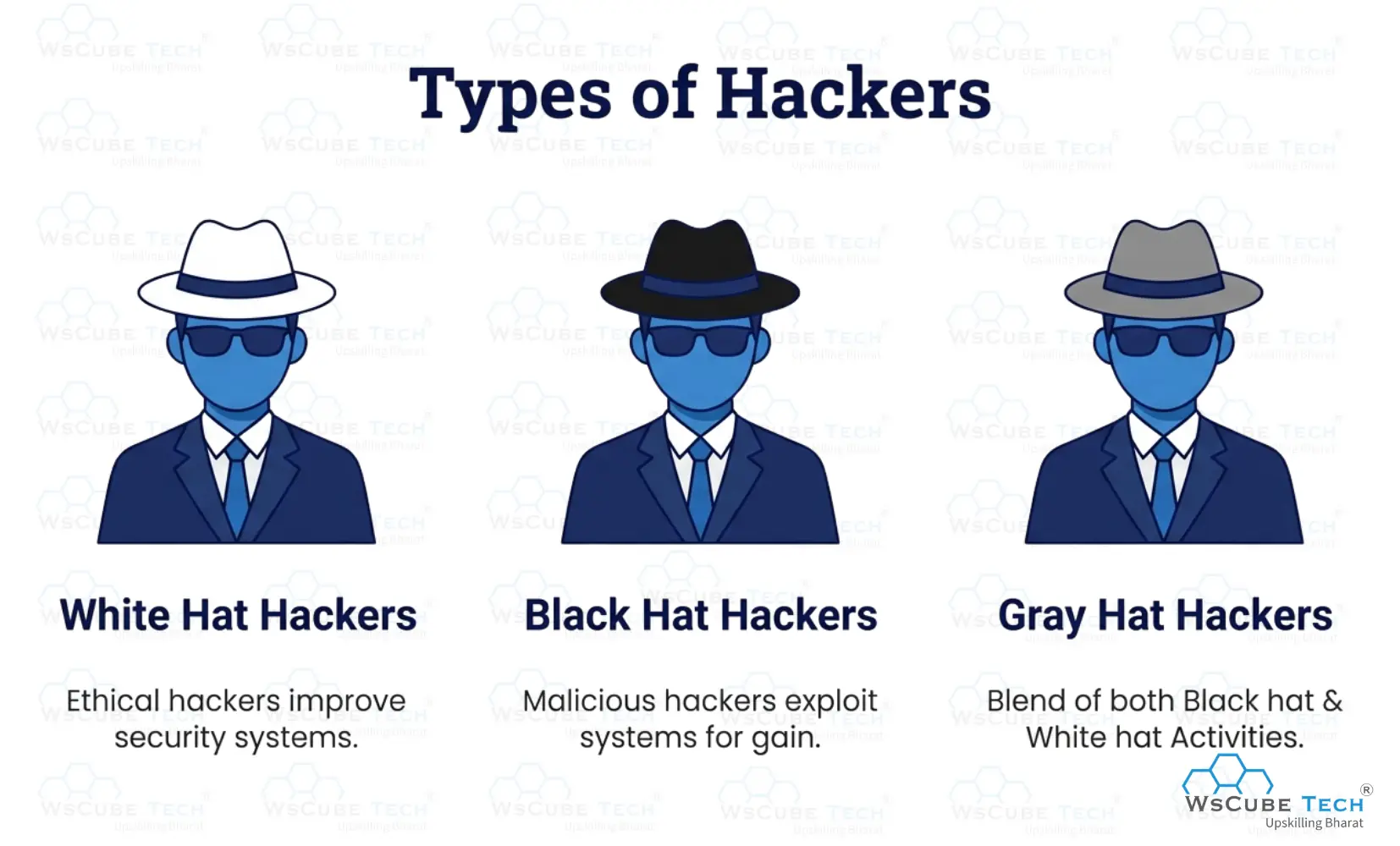
Ethical hackers are classified based on their roles and skills in cybersecurity. Each type focuses on tasks like testing systems, finding vulnerabilities, and improving security. Understanding these types helps you choose the right career path. Below are the three main types of ethical hackers:
1. White Hat Hacker
White hat hackers are authorized professionals who legally test systems and networks to find security weaknesses. They work for companies or as consultants to improve cybersecurity. Their main goal is to protect systems from cyberattacks by identifying and fixing vulnerabilities before attackers can exploit them.
2. Gray Hat Hacker
Gray hat hackers operate between ethical and unethical hacking. They may access systems without permission, but they usually do not have harmful intentions. Instead of exploiting vulnerabilities, they often report them to organizations. However, their actions can still be legally risky because they may violate rules by testing systems without proper authorization.
3. Black Hat Hacker
Black hat hackers are malicious individuals who exploit system vulnerabilities for personal gain. They may steal sensitive data, spread malware, or damage systems. Their activities are illegal and harmful. Understanding their techniques is important because it helps ethical hackers strengthen security, prevent attacks, and protect systems from real-world cyber threats.
Recommended Professional Certificates
Ethical Hacking Bootcamp
Penetration Testing Bootcamp
How Long Does It Take to Become an Ethical Hacker? (Quick Answer)
Becoming an ethical hacker typically takes 6 months to 2 years, depending on your background, learning approach, and consistency. Beginners usually need time to understand basic concepts like networking, operating systems, and cybersecurity fundamentals before moving to advanced topics.
If you already have knowledge of programming or IT, you can learn faster—often within 6 to 12 months with regular practice. However, complete beginners may take closer to 1 to 2 years to gain strong skills and hands-on experience in ethical hacking tools and techniques.
The key factor is consistent practice and real-world learning. Ethical hacking is a practical field, so working on labs, simulations, and projects can significantly speed up your journey and help you become job-ready faster.
Ethical Hacking Learning Timeline (Beginner to Expert)
Learning ethical hacking follows a step-by-step journey from basics to advanced skills, depending on your consistency and practice over time. Below is the complete learning timeline:
Basics of IT & Networking: 0–3 Months
In the first three months, focus on building a strong foundation in IT concepts and networking basics. Learn about IP addresses, DNS, protocols, and how the internet works. Also, understand operating systems like Windows and Linux. These basics are essential because ethical hacking depends heavily on how systems and networks function.
Learning Cybersecurity Fundamentals: 3–6 Months
During this phase, you start learning core cybersecurity concepts such as types of attacks, vulnerabilities, encryption, and security principles. You also get familiar with basic tools and techniques used in ethical hacking. This stage builds your understanding of how systems can be attacked and protected.
Hands-On Practice & Tools: 6–12 Months
This is the most important stage where you focus on practical learning. You start using tools like Nmap, Burp Suite, and Metasploit. Practice on labs, capture-the-flag challenges, and real-world scenarios. Hands-on experience helps you apply your knowledge and build confidence in finding vulnerabilities.
Advanced Skills & Specialization: 12–24 Months
At this stage, you move to advanced topics like web security, network security, and penetration testing. You can choose a specialization based on your interest. You also work on real-world projects, bug bounty programs, and certifications to become job-ready and build a strong cybersecurity career.
Factors That Influence Ethical Hacking Learning Time
Many factors affect how fast you learn ethical hacking, including your background, resources, practice habits, and learning approach. Below are the key factors that influence learning time:
1. Your Technical Background
Your starting point plays a big role. If you already know programming, networking, or Linux, you will learn faster. Beginners with no technical knowledge may need extra time to first understand basic concepts. A strong foundation always speeds up your ethical hacking journey.
2. Learning Method (Self-Taught vs Courses vs Degree)
The way you learn matters a lot. Self-learning offers flexibility but can feel confusing without proper direction. Structured courses provide step-by-step guidance, while degree programs offer deeper knowledge but take more time. Choosing the right method can improve your learning speed and efficiency.
3. Practice Time & Consistency
Consistency is one of the biggest factors. Practicing daily, even for a few hours, helps you build skills faster. Irregular learning slows progress and creates gaps in understanding. Ethical hacking is skill-based, so regular hands-on practice is more important than just theoretical knowledge.
4. Access to Labs and Real-World Scenarios
Having access to platforms like virtual labs, simulations, and real-world environments helps you learn faster. Practical exposure allows you to test skills, understand real attacks, and improve problem-solving abilities. Without practice environments, learning remains incomplete and slower.
5. Guidance & Community Support
Learning with mentors or being part of cybersecurity communities can speed up your journey. You can ask questions, solve doubts quickly, and stay updated with trends. Community support also keeps you motivated and helps you learn from real experiences shared by others.
Upcoming Masterclass
Attend our live classes led by experienced and desiccated instructors of Wscube Tech.




Skills You Need to Learn Ethical Hacking Faster
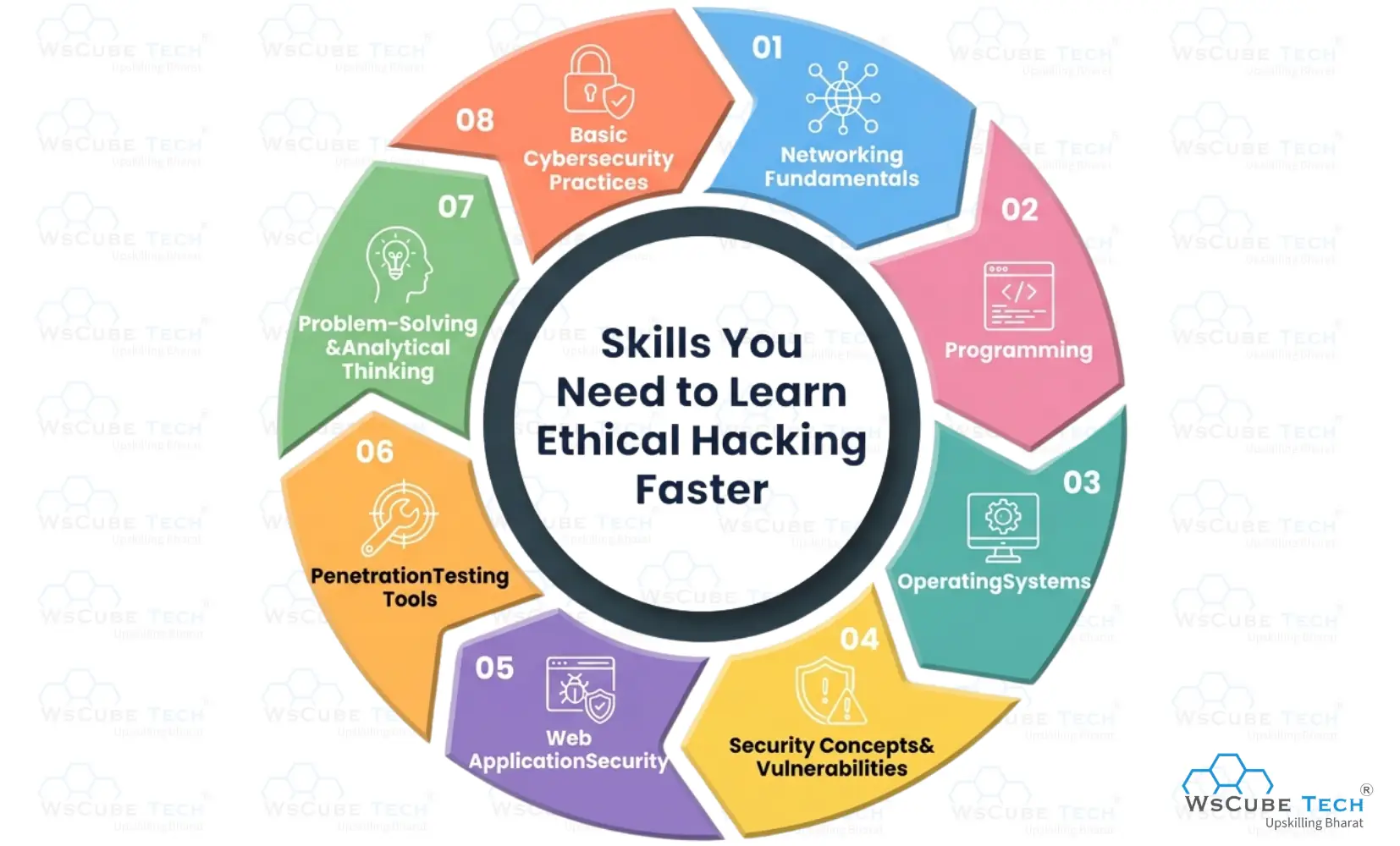
To learn ethical hacking faster, you need to focus on the right skills from the beginning. Below are the important skills you need to build a strong foundation and progress quickly:
1. Networking Fundamentals
Understanding networking basics like IP addresses, protocols, ports, DNS, and how data travels across networks is essential. Ethical hacking heavily depends on network knowledge because most attacks target network-level weaknesses. A strong grasp of networking helps you identify vulnerabilities and understand how systems communicate.
2. Programming (Python, JavaScript, Bash)
Programming helps you automate tasks, understand scripts, and analyze vulnerabilities. Python is widely used in cybersecurity, JavaScript is important for web security, and Bash is useful for Linux-based operations. You don’t need to be an expert, but basic coding skills can significantly improve your learning speed.
3. Operating Systems (Linux, Windows)
You should be comfortable working with both Linux and Windows systems. Linux is especially important because many hacking tools run on it. Learning commands, file systems, and system behavior is crucial.
4. Security Concepts & Vulnerabilities
Understanding core security concepts like threats, vulnerabilities, encryption, and common attack types is essential. This knowledge helps you think like an attacker and identify weak points in systems, making it easier to protect them from real-world threats.
5. Web Application Security
Learn how websites work and how vulnerabilities like SQL injection, XSS, and authentication flaws occur. This is one of the most in-demand areas in ethical hacking and bug bounty programs.
6. Penetration Testing Tools
Familiarity with tools like Nmap, Burp Suite, Metasploit, and Wireshark helps you perform real-world testing. Understanding how to use these tools properly improves your practical skills and makes your learning more effective.
7. Problem-Solving & Analytical Thinking
Ethical hacking requires strong problem-solving skills. You need to analyze systems, think logically, and find creative ways to identify vulnerabilities and security gaps.
8. Basic Cybersecurity Practices
Understanding firewalls, antivirus systems, authentication methods, and security policies helps you see how systems are protected. This knowledge allows you to understand both attack and defense strategies, making you a more complete cybersecurity professional.
Read More Guides on Ethical Hacking
| Is Ethical Hacking a Good Career | Ethical Hacking Course Fee & Duration |
| Ethical Hacking Course Eligibility | How to Become an Ethical Hacker |
Common Mistakes That Slow Down Your Progress
Many beginners make simple mistakes that increase the time to become an ethical hacker. Avoiding these can help you learn faster and stay on the right path. Below are the common mistakes you should avoid:
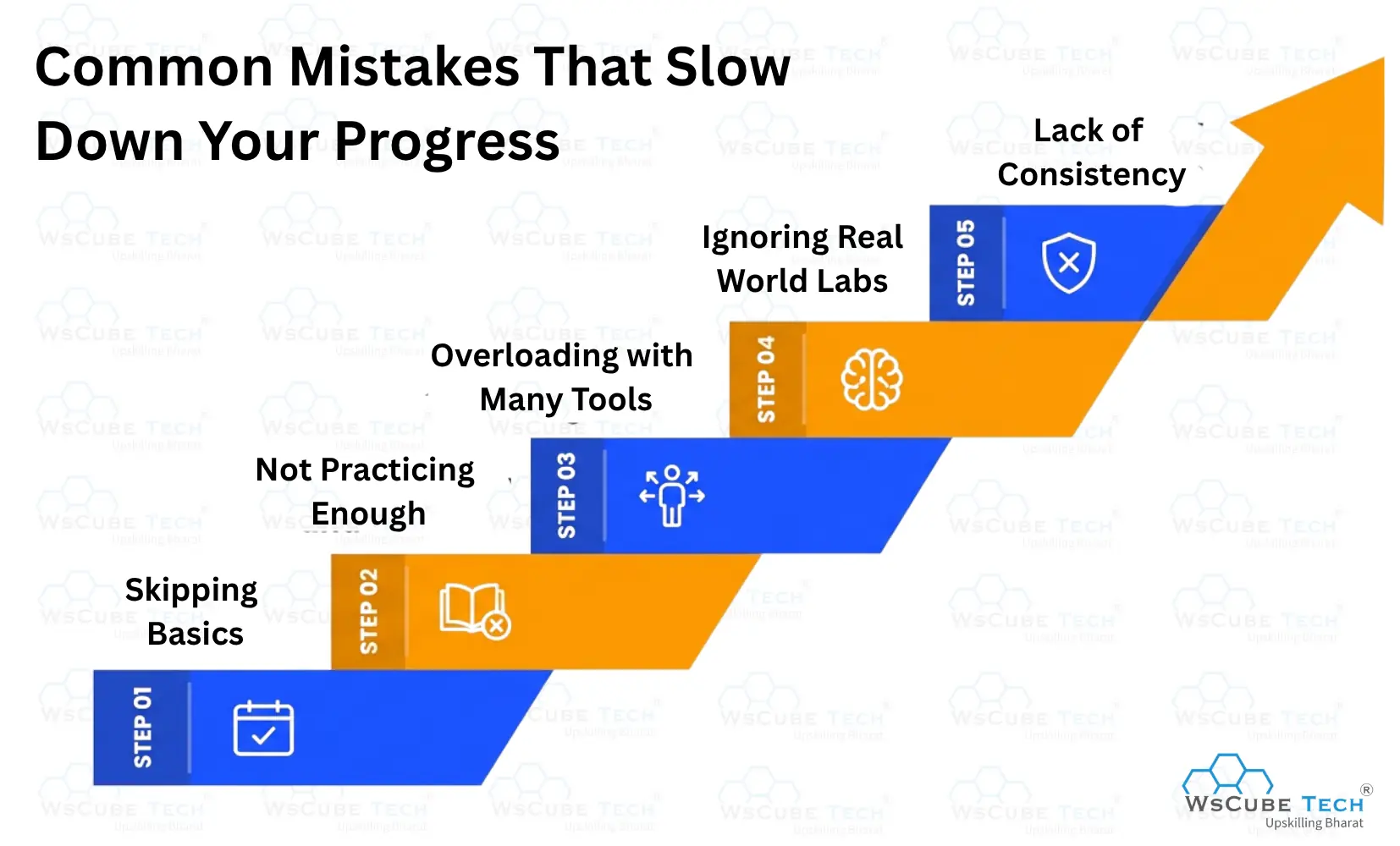
1. Skipping Basics
Skipping fundamentals like networking, operating systems, and basic security concepts can slow your progress significantly. Without a strong foundation, advanced topics become confusing and harder to understand. You may rely on tools without knowing how they work, which limits your growth. Building basics first makes learning faster and more effective.
2. Not Practicing Enough
Only watching tutorials or reading theory is not enough. Ethical hacking is a practical skill, and without regular hands-on practice, you won’t develop real problem-solving abilities. Lack of practice slows down your learning and reduces confidence when working on real-world scenarios or labs.
3. Overloading with Too Many Tools
Trying to learn too many tools at once can confuse you. Each tool has its own purpose, and learning everything together can feel overwhelming. Instead, focus on a few important tools first and understand them deeply before moving to others for better progress.
4. Ignoring Real-World Labs
Learning without practicing in real-world environments limits your growth. Labs and platforms like TryHackMe or Hack The Box help you apply concepts practically. Ignoring them makes it harder to understand real attacks and slows down your overall learning journey.
5. Lack of Consistency
Inconsistent learning is a major mistake. Studying randomly without a routine creates gaps in knowledge. Regular daily practice, even for a short time, helps you build skills faster and stay consistent in your ethical hacking journey.
If you want to learn step by step, you can explore the Ethical Hacking Course Syllabus to understand what topics to cover and how to start your learning journey effectively.
Free Courses For You
| Django Course | Affiliate Marketing Course |
| Semrush Course | Video Editing Course |
| Blogging Course | AngularJS Course |
| Shopify Course | Photoshop Course |
Tips to Become an Ethical Hacker Faster
Following the right strategies can reduce your ethical hacking learning time and help you gain skills more efficiently. Below are the best tips to speed up your learning:
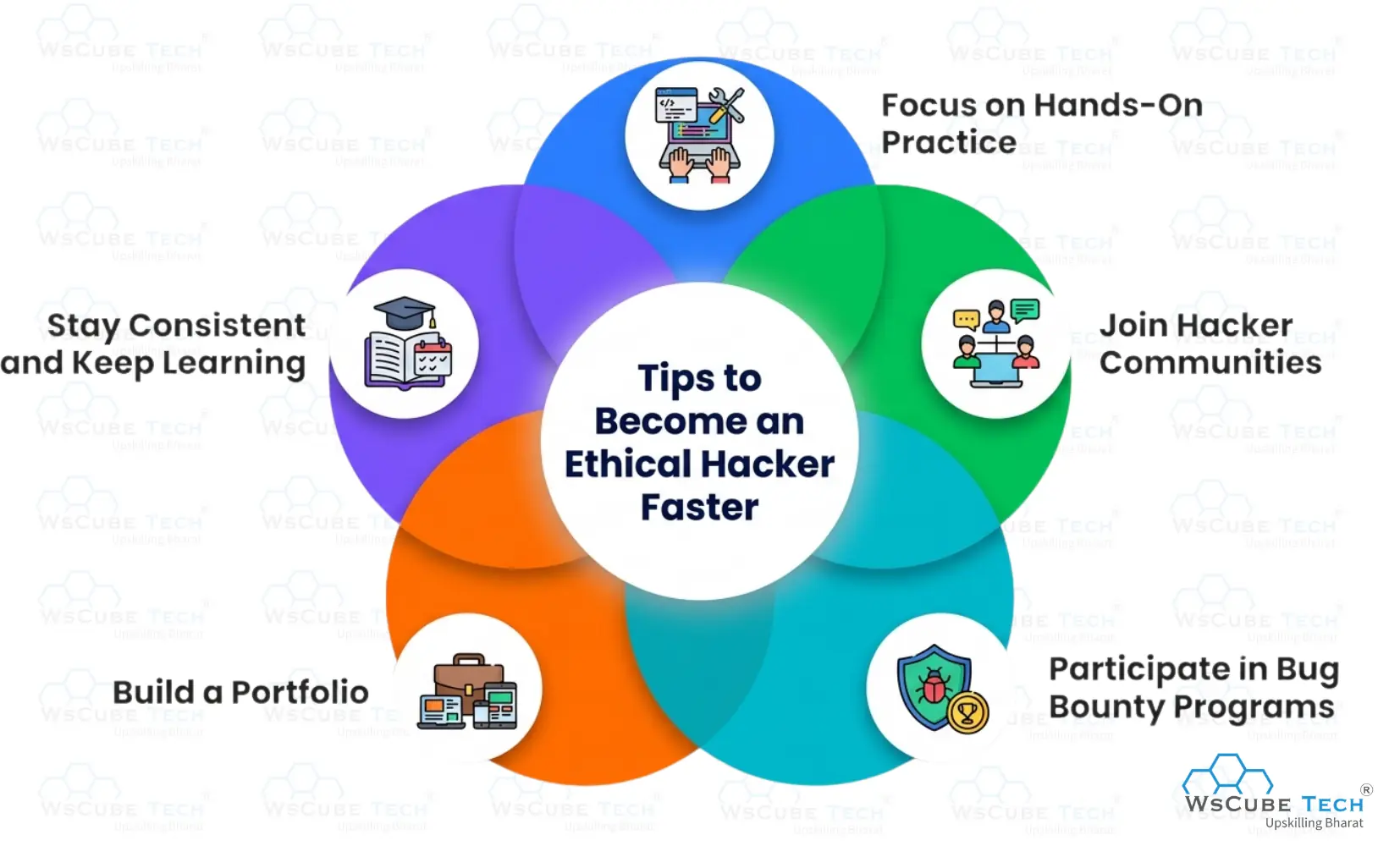
1. Focus on Hands-On Practice
Hands-on practice is the fastest way to learn ethical hacking. Instead of only reading or watching tutorials, you should regularly practice on labs and platforms like TryHackMe or Hack The Box. Real-world practice helps you understand how attacks work, improves problem-solving skills, and builds confidence in applying your knowledge effectively.
2. Join Hacker Communities
Being part of cybersecurity communities helps you learn faster. You can ask questions, share knowledge, and learn from experienced hackers. Communities also keep you updated with the latest trends, tools, and techniques, making your learning more practical and engaging.
3. Participate in Bug Bounty Programs
Bug bounty programs allow you to find real vulnerabilities in live systems and earn rewards. This gives you practical experience and helps you understand real-world security issues. It also improves your skills and builds credibility in the cybersecurity field.
4. Build a Portfolio
Creating a portfolio of your work is important. You can include projects, lab results, and vulnerabilities you’ve discovered. A strong portfolio showcases your skills to employers and helps you stand out when applying for jobs or freelance opportunities.
5. Stay Consistent and Keep Learning
Consistency is key in ethical hacking. Learning regularly, even for a short time daily, helps you improve faster. Cybersecurity is always evolving, so staying updated with new tools, techniques, and threats is essential for long-term success.
If you want to know the eligibility criteria in detail, you can check out our ethical hacking course eligibility to understand requirements, skills needed, and who can enroll in this course.
Learn Ethical Hacking With WsCube Tech
If you’re interested, WsCube Tech offers an online ethical hacking course that helps you learn step by step with expert guidance. The course follows a structured path, making it easier for beginners to understand concepts and build practical skills with confidence.
Start a high-demand cybersecurity career with our ethical hacking course online, where you learn how real hackers think and how to stop them. Gain hands-on experience through live training, practical labs, and real attack simulations to become job-ready.
FAQs About Ethical Hacking Learning Time
It usually takes 6 months to 2 years to learn ethical hacking, depending on your background, learning speed, and practice. Consistent effort and hands-on experience can significantly reduce the overall learning time.
For beginners with no technical background, it may take around 1 to 2 years to become job-ready. Learning basics first and practicing regularly helps you progress faster in your ethical hacking journey.
You can learn basic concepts in 3 months, but becoming a skilled ethical hacker requires more time and practice. Hands-on experience and real-world exposure are essential for developing strong cybersecurity skills.
Six months is enough to build a solid foundation if you study consistently and practice daily. However, mastering ethical hacking requires more time, real-world practice, and continuous learning beyond the basics.
Mastering ethical hacking can take 2 to 5 years or more, depending on your dedication and experience. Continuous learning, advanced practice, and staying updated with new threats are essential for long-term expertise.
Yes, you can learn ethical hacking without a technical background, but it may take more time. Starting with basic computer, networking, and programming concepts will help you build a strong foundation.
Studying 2–4 hours daily with consistent practice is ideal. Regular hands-on learning, along with theory, helps you build skills faster than irregular or long sessions.
Yes, regular practice significantly reduces learning time. Ethical hacking is a practical skill, and consistent hands-on experience helps you understand concepts better, improve problem-solving skills, and gain confidence faster.
Yes, you can become an ethical hacker through self-study using online resources, labs, and practice platforms. However, having a structured plan and guidance can make your learning faster and more effective.
After gaining the required skills, it may take a few months to get a job, depending on your portfolio, certifications, and interview preparation. Practical experience and projects improve your chances significantly.
Certifications can speed up your learning by providing structured knowledge and industry recognition. They help you understand concepts better and improve job opportunities, but practical skills are equally important.
Ethical hacking can feel challenging at the beginning due to technical concepts, but it becomes easier with consistent practice. A step-by-step approach and strong basics make the learning process manageable and effective.
Your technical background, learning method, practice consistency, and access to labs affect your speed. Guidance, resources, and hands-on experience also play an important role.
The fastest way is to combine structured learning with hands-on practice. Focus on basics, use labs, learn essential tools, and practice regularly to build real skills and reduce your overall learning time.

Conclusion
Becoming an ethical hacker is not about a fixed timeline but your dedication, consistency, and practice. While it may take a few months to learn the basics and up to two years to become job-ready, your learning speed depends on how effectively you build skills and gain hands-on experience.
Join Our Cybersecurity Related Courses




Leave a comment
Your email address will not be published. Required fields are marked *Comments (0)
No comments yet.