Technology is growing fast, and companies are constantly looking for skilled professionals who can build complete web applications from start to finish. Learning modern development skills helps you stay competitive in today’s digital world. Whether you want to start a new career, switch fields, or upgrade your technical expertise, gaining practical knowledge in both frontend and backend development can open many opportunities. With structured training and hands-on projects, you can build real-world applications and strengthen your problem-solving abilities.
In this guide, we will explore everything you need to know about the full stack developer course syllabus, including key modules, important tools, and essential skills that help you become job-ready and confident in building powerful web applications.
Understanding the full stack developer course syllabus helps you build strong frontend and backend skills for real-world applications.
You can join the full stack development course by WsCube Tech to gain practical experience and become job-ready.
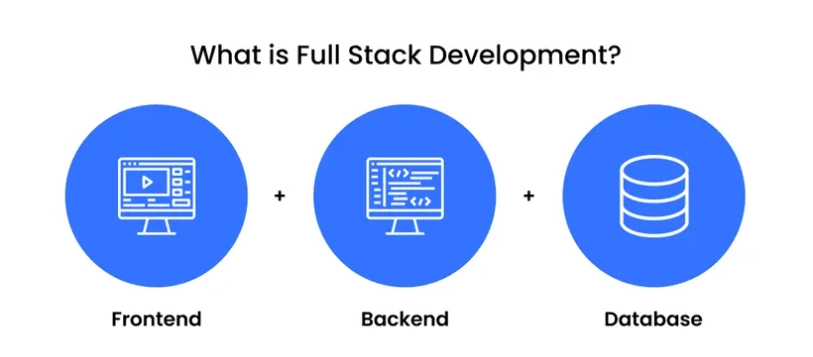
What is Full Stack Development?
Full-stack development is the ability to build and manage both the front-end and back-end parts of a web application. It involves working on everything users see on their screens as well as the server, database, and application logic running in the background. A full stack developer understands how different parts of a web application connect and function together smoothly.
By learning full stack development, you gain the skills to handle complete projects independently. You can design user interfaces, manage databases, write server-side code, and deploy applications, making you versatile and highly valuable in today’s tech-driven job market.
A well-structured full stack developer syllabus plays a key role in guiding your learning journey. It helps you understand what to learn first and how to move step by step, covering everything from front-end technologies like HTML, CSS, and JavaScript to back-end development, databases, and deployment. By following a clear full stack web developer syllabus, you can avoid confusion, stay focused, and build the right skills needed to become a job-ready developer in today’s competitive market.
Who is a Full Stack Developer?
A full stack developer is a web development professional who works on both the front-end and back-end of web applications. This means you handle everything from designing user interfaces to managing servers and databases. A full-stack developer understands how different technologies connect and work together to build complete, functional, and user-friendly applications.
The role of a full-stack developer in web development involves the following key responsibilities:
- Front-end Development: Designing and building responsive, user-friendly interfaces.
- Back-end Development: Building server-side logic and application functionality.
- Database Management: Storing, organizing, and retrieving data efficiently.
- Server Management: Handling hosting, deployment, and server configuration.
- API Integration: Connecting applications with external services and tools.
- Version Control Management: Using tools like Git to track and manage code changes.
Recommended Professional Certificates
Full Stack Development Course with AI Engineering
WordPress Bootcamp
Full Stack Developer Course Syllabus (With MERN Stack)
Below is the complete Full Stack Developer course syllabus based on the MERN stack:
Module 1: Web Development Fundamentals
- How the Internet Works
- Client-Server Architecture
- HTTP & HTTPS
- Introduction to Web Technologies
- Development Environment Setup
Module 2: HTML (HyperText Markup Language)
- Introduction to HTML5
- Basic Structure of a Web Page
- Headings, Paragraphs, and Formatting Tags
- Links and Images
- Lists and Tables
- Forms and Input Elements
- Semantic HTML Tags
Module 3: CSS (Cascading Style Sheets)
- Introduction to CSS3
- Selectors and Properties
- Colors, Fonts, and Text Styling
- Box Model
- Flexbox
- CSS Grid
- Responsive Web Design
- Media Queries
- Bootstrap Basics
Module 4: JavaScript Fundamentals
- Introduction to JavaScript
- Variables, Data Types, and Operators
- Functions and Scope
- Arrays and Objects
- DOM Manipulation
- Events and Event Handling
- ES6+ Feature
Module 5: Advanced JavaScript
- Asynchronous JavaScript
- Promises and Async/Await
- Fetch API & API Calls
- Error Handling
- Local Storage & Session Storage
Module 6: React.js (Frontend Development)
- Introduction to React
- Components and JSX
- Props and State
- React Hooks
- Routing with React Router
- Forms Handling
- API Integration in React
Module 7: Node.js (Backend Development)
- Introduction to Node.js
- Node Modules
- Creating a Server
- File System Module
- NPM and Package Management
Module 8: Express.js
- Introduction to Express
- Routing
- Middleware
- RESTful API Development
- Authentication & Authorization (JWT)
Module 9: MongoDB (Database)
- Introduction to NoSQL
- MongoDB Basics
- CRUD Operations
- Mongoose
- Database Relationships
Module 10: Full Stack Integration
- Connecting React with Backend
- Handling API Requests
- State Management
- Building a Complete MERN Application
Module 11: Deployment & Version Control
- Git & GitHub
- Environment Variables
- Deployment on Cloud Platforms
- Project Hosting
Module 12: Project Development
- Building Full Stack Applications
- API Integration
- Testing and Debugging
- Final Project
This full stack web development syllabus gives you a strong foundation in building modern web applications using the MERN stack. It covers all the key concepts included in the syllabus of full stack developer, helping you understand both front-end and back-end development in a structured way. To give you a broader perspective, let’s also look at another popular stack used in the industry, so you can compare and choose what fits your learning goals better.
Upcoming Masterclass
Attend our live classes led by experienced and desiccated instructors of Wscube Tech.



Full Stack Developer Course Syllabus (With MEAN Stack)
Below is the complete Full Stack Developer course syllabus based on the MEAN stack:
Module 1: Web Development Fundamentals
- Introduction to Web Development
- How the Internet Works
- Client-Server Architecture
- HTTP & HTTPS
- Development Environment Setu
Module 2: HTML (HyperText Markup Language)
- HTML5 Basics
- Page Structure and Elements
- Headings, Paragraphs, and Formatting
- Links, Images, Lists, and Tables
- Forms and Input Fields
- Semantic HTML
Module 3: CSS (Cascading Style Sheets)
- CSS Fundamentals
- Selectors and Properties
- Box Model
- Flexbox
- CSS Grid
- Responsive Web Design
- Media Queries
- Bootstrap
Module 4: JavaScript Fundamentals
- Introduction to JavaScript
- Variables, Data Types, and Operators
- Functions and Scope
- Arrays and Objects
- DOM Manipulation
- Events and Event Handling
- ES6+ Features
Module 5: Advanced JavaScript
- Asynchronous JavaScript
- Promises and Async/Await
- Fetch API & HTTP Requests
- Error Handling
- Local Storage & Session Storage
Module 6: Angular (Frontend Framework)
- Introduction to Angular
- Components and Modules
- Templates and Data Binding
- Directives and Pipes
- Services and Dependency Injection
- Routing in Angular
- Forms (Template-driven & Reactive)
- API Integration
Module 7: Node.js (Backend Development)
- Introduction to Node.js
- Node Modules
- Creating a Server
- File System Module
- NPM and Package Management
Module 8: Express.js
- Introduction to Express
- Routing
- Middleware
- RESTful API Development
- Authentication & Authorization (JWT)
Module 9: MongoDB (Database)
- Introduction to NoSQL
- MongoDB Basics
- CRUD Operations
- Mongoose
- Database Relationships
Module 10: Full Stack Integration
- Connecting Angular with Backend
- Handling API Requests
- State Management
- Building a Complete MEAN Application
Module 11: Version Control & Deployment
- Git & GitHub
- Environment Variables
- Deployment on Cloud Platforms
- Application Hosting
Module 12: Project Development
- Building Full Stack Applications
- API Integration
- Testing and Debugging
- Final Capstone Project
This full stack web developer syllabus based on the MEAN stack helps you understand how to build dynamic and scalable web applications using modern tools and frameworks. It follows a structured approach similar to a complete full stack web development syllabus, covering everything from front-end development with Angular to back-end services and database management. To give you more options and a better understanding of different technologies, let’s also explore another widely used stack in full stack development.
Explore More Blog Topics
Full Stack Development Course Syllabus (With PHP & MySQL)
Here is a Full Stack Web Development course syllabus with a focus on PHP and MySQL for back-end development:
Module 1: Web Development Fundamentals
- Introduction to Web Development
- How the Internet Works
- Client-Server Architecture
- HTTP & HTTPS
- Setting Up Development Environment
Module 2: HTML (HyperText Markup Language)
- Introduction to HTML5
- Basic Structure of Web Pages
- Headings, Paragraphs, and Text Formatting
- Links, Images, Lists, and Tables
- Forms and Input Elements
- Semantic HTML
Module 3: CSS (Cascading Style Sheets)
- Introduction to CSS3
- Selectors and Properties
- Colors, Fonts, and Styling
- Box Model
- Flexbox
- CSS Grid
- Responsive Web Design
- Media Queries
- Bootstrap Basics
Module 4: JavaScript Fundamentals
- Introduction to JavaScript
- Variables, Data Types, and Operators
- Functions and Scope
- Arrays and Objects
- DOM Manipulation
- Events and Event Handling
- ES6+ Features
Module 5: Advanced JavaScript
- Asynchronous JavaScript
- AJAX
- Fetch API
- Form Validation
- Error Handling
Module 6: PHP (Backend Development)
- Introduction to PHP
- PHP Syntax and Variables
- Data Types and Operators
- Conditional Statements
- Loops
- Functions in PHP
- Arrays in PHP
- Working with Forms
- File Handling
- Sessions and Cookies
Module 7: MySQL (Database Management)
- Introduction to Databases
- MySQL Installation & Setup
- Creating Databases and Tables
- CRUD Operations
- SQL Queries (SELECT, INSERT, UPDATE, DELETE)
- Joins and Relationships
- Database Normalization
Module 8: PHP & MySQL Integration
- Connecting PHP with MySQL
- Handling Form Data
- Performing CRUD Operations
- Authentication System (Login & Registration)
- Password Encryption
Module 9: Version Control & Deployment
- Git & GitHub Basics
- Hosting a PHP Application
- Domain & Server Setup
- Introduction to cPanel
Module 10: Project Development
- Building Dynamic Web Applications
- API Integration
- Testing and Debugging
- Final Capstone Project
This full stack developer course syllabus with PHP & MySQL focuses on building dynamic, database-driven websites and helps you understand server-side development in a simple and practical way.
Also Read: Top 13 Best Backend Programming Languages
Full Stack Development Course Syllabus (With Python and Django)
Here is a Full Stack Web Development course syllabus with a focus on Python and Django for back-end development:
Module 1: Web Development Fundamentals
- Introduction to Web Development
- How the Internet Works
- Client-Server Architecture
- HTTP & HTTPS
- Development Environment Setup
Module 2: HTML (HyperText Markup Language)
- HTML5 Basics
- Structure of Web Pages
- Headings, Paragraphs, and Formatting
- Links, Images, Lists, and Tables
- Forms and Input Fields
- Semantic HTML
Module 3: CSS (Cascading Style Sheets)
- CSS Fundamentals
- Selectors and Properties
- Box Model
- Flexbox
- CSS Grid
- Responsive Web Design
- Media Queries
- Bootstrap
Module 4: JavaScript Fundamentals
- Introduction to JavaScript
- Variables, Data Types, and Operators
- Functions and Scope
- Arrays and Objects
- DOM Manipulation
- Events and Event Handling
- ES6+ Features
Module 5: Advanced JavaScript
- Asynchronous JavaScript
- AJAX
- Fetch API
- Form Validation
- Error Handling
Module 6: Python Programming
- Introduction to Python
- Variables and Data Types
- Conditional Statements
- Loops
- Functions
- Lists, Tuples, and Dictionaries
- Object-Oriented Programming (OOP)
- File Handling
- Exception Handling
Module 7: Django Framework
- Introduction to Django
- Django Project Structure
- Models, Views, and Templates (MVT)
- URL Routing
- Forms in Django
- Django Admin Panel
- Authentication System
- REST API Basics
Module 8: Database Management
- Introduction to Databases
- SQLite and PostgreSQL
- Django ORM
- CRUD Operations
- Database Relationships
Module 9: Full Stack Integration
- Connecting Frontend with Django Backend
- API Integration
- Handling Forms and User Data
- Building a Complete Django Web Application
Module 10: Version Control & Deployment
- Git & GitHub
- Environment Variables
- Deploying Django Applications
- Hosting and Domain Setup
Module 11: Project Development
- Building Dynamic Web Applications
- Testing and Debugging
- Performance Optimization
- Final Capstone Project
This full stack developer course syllabus with Python and Django focuses on building secure and scalable web applications, while also aligning with a practical full stack web development course syllabus to help you understand both front-end and back-end development in a simple way.
Must Read: Python Course Duration and Fees [Details]
WsCube Tech Tip: Don’t just study the syllabus; make a decision today and join the online course to start building your future now.
Skillset Required to Become a Full Stack Developer
A full-stack developer needs technical knowledge, problem-solving ability, and a strong understanding of modern web technologies. Below are the key skills required:
- Frontend Development Skills: Understanding HTML, CSS, and JavaScript is important for creating responsive and interactive user interfaces. Familiarity with frameworks like React or Angular helps in developing modern, dynamic, and user-friendly web applications.
- Backend Development Skills: Knowledge of server-side languages such as Node.js, Python, or PHP is required to build application logic. Understanding APIs, authentication, and request handling is important for developing secure and scalable systems.
- Database Management: Knowledge of databases such as MySQL or MongoDB helps you to store, manage, and retrieve application data efficiently. Understanding CRUD operations and schema design is essential for managing structured information.
- Version Control & Deployment: Use tools like Git and GitHub to manage and track code changes efficiently. Basic knowledge of deployment, hosting, and server configuration helps you launch and maintain applications successfully.
- Problem-Solving & Debugging: Strong logical thinking helps you identify and fix errors quickly. Debugging skills and understanding code flow improve application performance and reliability.
Mastering these full stack developer skills makes you confident, job-ready, and highly valuable in today’s competitive tech industry.
Explore our Popular Development Related Courses
Importance of a Comprehensive Full Stack Developer Course Syllabus
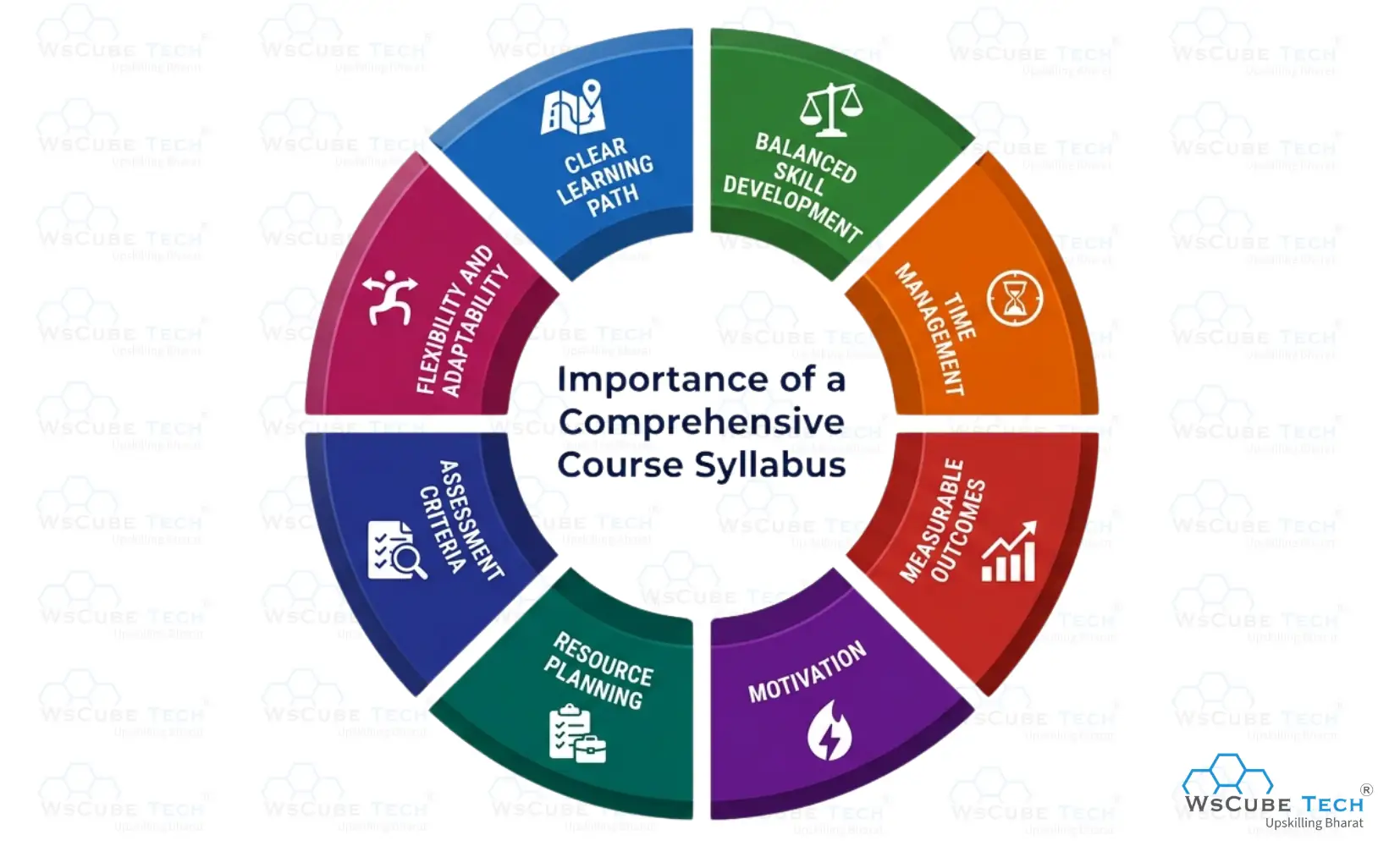
A comprehensive course syllabus is highly important in the context of full-stack development for several reasons:
1. Clear Learning Path
A well-structured full stack development syllabus outlines the learning journey from start to finish. It provides a clear roadmap, helping you understand what you will learn and at which stage of the course.
2. Balanced Skill Development
Full stack development requires proficiency in both front-end and back-end technologies. A comprehensive syllabus ensures a balanced curriculum, making sure you gain the necessary skills across all essential areas.
3. Time Management
You can manage your time effectively and set realistic goals when you know what to expect in each part of the full stack developer course. This reduces stress and improves overall productivity.
4. Measurable Outcomes
A syllabus defines clear learning objectives and expected outcomes. It allows students and instructors to track progress and evaluate the achievement of educational goals.
5. Motivation
A well-organized full stack development course syllabus motivates students by highlighting engaging topics and real-world projects they will work on as they advance through the program.
6. Resource Planning
Students can plan for necessary resources, including books, software tools, and hardware, in advance. This ensures they are properly prepared and equipped for the course.
7. Assessment Criteria
A full stack development syllabus clearly outlines how students will be assessed, including assignments, exams, and grading methods. This transparency helps students understand expectations and performance standards.
8. Flexibility and Adaptability
Although comprehensive, a syllabus can be updated to reflect changes in the field of full-stack development, ensuring students learn relevant, current, and industry-ready skills.
Suggested Reading: Python Developer Salary in India (Freshers & Experienced)
Role of Full Stack Development in the Modern Tech Industry
Full stack development plays a crucial role in today’s modern tech industry for several important reasons:
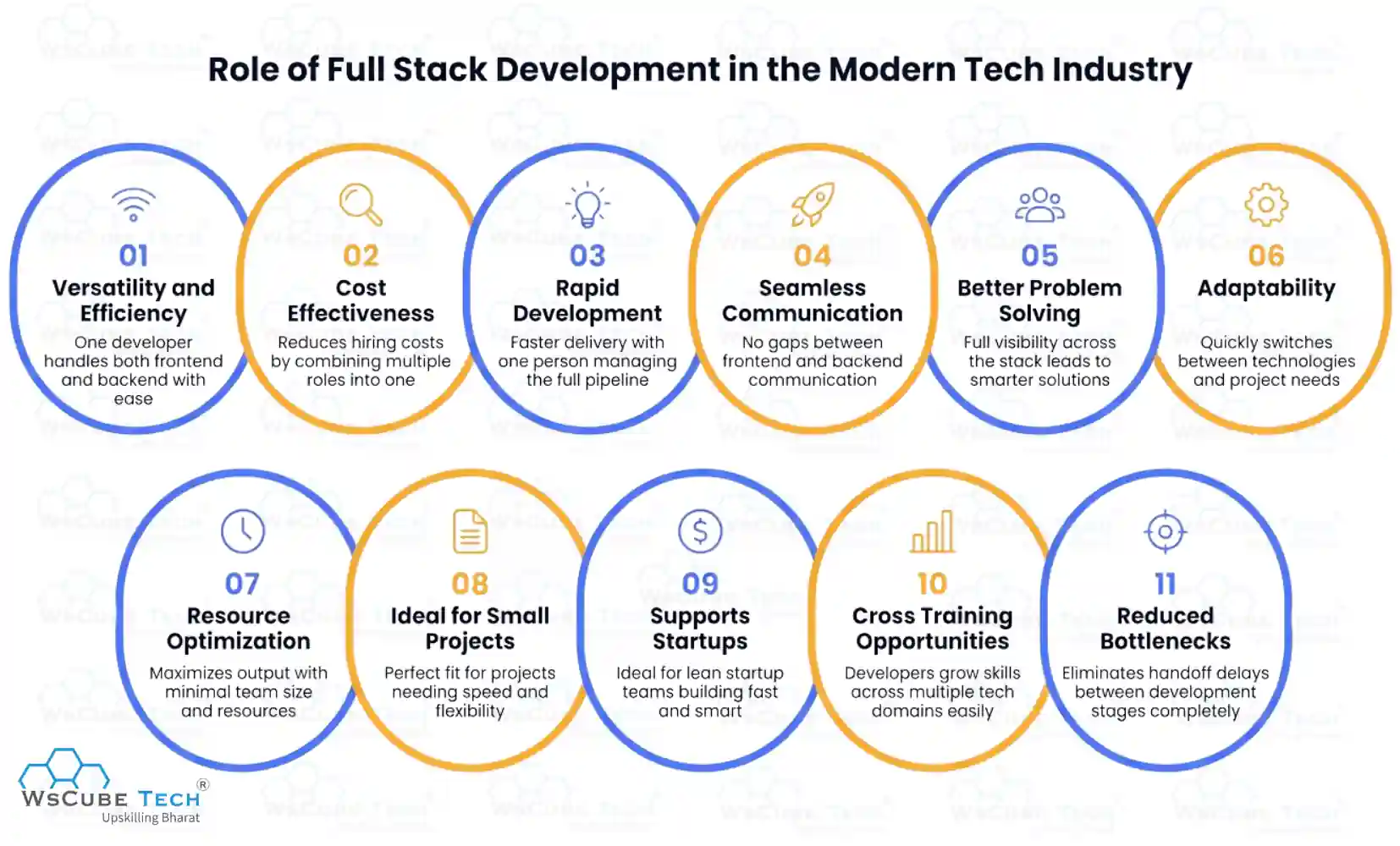
1. Versatility and Efficiency
Full stack developers have a broad skill set that allows them to work on both front-end and back-end development. This versatility increases efficiency and reduces the dependency on multiple specialized developers for a single project.
2. Cost-Effectiveness
For startups and small businesses with limited budgets, hiring a full stack developer is often a cost-effective solution. One developer can manage the entire development cycle, from planning and coding to deployment and maintenance.
3. Rapid Development
Full stack developers can quickly build prototypes and minimum viable products (MVPs). Their knowledge of multiple technologies enables faster development, helping businesses launch products and services in less time.
4. Seamless Communication
Full stack developers understand both client-side and server-side processes. This knowledge improves communication between teams and ensures smoother collaboration during application development.
5. Better Problem Solving
With a complete understanding of the application structure, full stack developers can identify issues across the entire system. This helps in resolving technical problems more efficiently and effectively.
6. Adaptability
The tech industry constantly evolves with new tools and frameworks. Full stack developers are highly adaptable because they are familiar with a wide range of technologies and can quickly learn and implement new skills as industry demands change.
7. Resource Optimization
In larger organizations, full stack developers support specialized teams by handling tasks that do not require deep specialization. This improves productivity and optimizes resource utilization.
8. Ideal for Small to Medium Projects
Full stack developers are well-suited for small and medium-sized projects where a compact and efficient team is preferred. They can deliver complete solutions with minimal coordination overhead.
9. Support for Startups and Entrepreneurs
Startups often require quick development with limited investment. Full stack developers help build initial web applications and digital platforms efficiently, supporting faster business growth.
10. Cross-Training Opportunities
Full stack development encourages developers to expand their technical knowledge across the entire stack. This improves collaboration, flexibility, and overall team performance.
11. Reduced Development Bottlenecks
When developers can handle both front-end and back-end tasks, project delays are minimized. This reduces bottlenecks caused by team handoffs and speeds up the overall development process.
Related Reading: 15+ Best Programming Languages to Learn
Who Should Learn Full Stack Development?
Full stack development is suitable for learners who want to build complete web applications and develop practical skills for modern software development careers. Below are points:
- Students and Fresh Graduates: Students who want to start a career in the IT industry can learn full stack development to gain practical skills in building websites and applications from scratch independently.
- Working Professionals: Professionals planning to switch careers into the technology field can learn full stack development to enhance technical knowledge, gain practical development skills, and explore better career opportunities in software development and web application development roles.
- Freelancers and Entrepreneurs: Learning full stack development allows you to build websites and applications independently. You can manage complete projects, reduce dependency on others, and create digital products for clients or your own business.
- Software Developers: Developers who already know front-end or back-end technologies can expand their skills by learning full stack development to work on complete application development projects efficiently.
- Tech Enthusiasts: Individuals interested in learning programming and modern technologies can learn full stack development to understand how websites and applications are designed, developed, and deployed successfully.
Learning full stack development helps you become versatile, job-ready, and capable of building real-world applications confidently in today’s fast-growing technology-driven industry.
Join Full Stack Development Course With WsCube Tech
If you want to build a high-paying career in web development, joining the WsCube Tech full stack developer course is one of the most practical choices you can make. This course is designed to make you job-ready by training you in both frontend and backend technologies, along with databases, deployment, and real-world projects.
If you are serious about making a career in tech, this is the right time to enroll, learn in-demand skills, and build strong projects that you can showcase in your portfolio and interviews

FAQs About Full Stack Course Syllabus
Full stack development means you work on both the front-end and back-end parts of a web application. You learn how to design user interfaces, manage databases, write server-side logic, and build complete web applications from scratch.
A full stack developer course syllabus usually includes HTML, CSS, JavaScript, front-end frameworks, back-end programming, database management, API integration, version control, deployment, and real-world project development to help you build complete web applications efficiently.
You can benefit if you are a student, working professional, freelancer, or career switcher. The full stack developer curriculum helps you gain technical skills required to build complete applications and improve job opportunities.
The duration of a full stack development syllabus usually ranges from 3 to 6 months for basic learning and up to 12 months for advanced training, depending on course structure, learning pace, and practical project work.
A full stack syllabus commonly includes programming languages such as HTML, CSS, JavaScript for front-end development, and Node.js, Python, or PHP for back-end development along with database technologies like MySQL or MongoDB.
Yes, a full stack syllabus is designed for beginners as well. You can start learning from basic concepts like HTML and CSS and gradually move towards advanced topics like backend programming and deployment.
By learning the MERN stack, you can build complete web applications using JavaScript. It helps you work on front-end and back-end using a single programming language and improves your practical development skills.
Yes, you can learn full stack development using Python. Frameworks like Django or Flask help you handle server-side logic, manage databases, and build secure web applications along with front-end technologies.
The average salary of a full stack developer in India usually ranges from ₹6 LPA to ₹15 LPA for freshers. With experience and advanced skills, you can earn higher salaries in web development roles.
No, you do not need a computer science degree to learn full stack development. With the right training, practice, and project-based learning, you can gain the required skills and start your career.
After learning full stack development, you can apply for roles like web developer, software developer, front-end developer, back-end developer, or full stack developer in IT companies and startups based on your skills.
Finished reading the Full Stack Developer Course Syllabus? Check out this roadmap to move ahead.
Conclusion
A well-structured full stack developer course syllabus helps you understand the complete web development process from front-end design to back-end functionality and deployment. It provides a clear learning roadmap that improves your technical knowledge, practical implementation skills, and problem-solving ability throughout your development journey.
By following a comprehensive syllabus, you can build real-world applications, understand how different technologies work together, and prepare yourself for industry-level development roles. Consistent learning with a proper roadmap helps you become confident, job-ready, and capable of handling complete web development projects successfully.
Start Learning With Our Free Tutorials
| Python Tutorial | Java Tutorial | JavaScript Tutorial |
| C Tutorial | C++ Tutorial | HTML Tutorial |
| CSS Tutorial | SQL Tutorial | DSA Tutorial |
Explore Our Free Programs
Practice Coding With Our Free Compilers
| Online Python Compiler | Online HTML Compiler | Online C Compiler |
| Online C++ Compiler | Online JS Compiler | Online Java Compiler |
Free Courses for You




Leave a comment
Your email address will not be published. Required fields are marked *Comments (0)
No comments yet.