
In the modern business, companies rely on both online promotion strategies and data-based decision systems to grow and compete effectively. When discussing Digital Marketing and Data Analytics, it becomes important to understand how these two areas contribute differently to business performance while still working toward a common goal.
What is Digital Marketing?
Digital marketing is the process of promoting products or services through online platforms such as websites, search engines, social media, email, and mobile applications. Instead of depending on traditional advertising methods like newspapers or television, businesses use the internet to reach their target audience more effectively.
The main aim of digital marketing is to attract the right audience, provide useful information, and encourage actions such as making a purchase, registering for a service, or submitting an inquiry.
For example, if a local gym runs Facebook ads to promote a discount offer and people register through an online form on the gym’s website, this activity is known as digital marketing.
What is Data Analytics?
Data analytics is the process of collecting, organizing, and analyzing data to discover meaningful patterns and support better decision-making. Instead of depending on guesswork, organizations use data analytics to understand what is happening, why it is happening, and what steps should be taken next.
In simple words, data analytics turns raw data into useful insights. This data can come from sources such as websites, sales reports, customer feedback, financial records, or internal systems. By studying this information, businesses can make smarter and more accurate decisions.
For example, if an online store notices that most customers buy more products during weekends, the company can use this data to run special weekend offers and increase sales. This process of analyzing past data to make better business decisions is called data analytics.
Digital Marketing vs Data Analytics: Comparison Table
Now that the meaning of both digital marketing and data analytics is clear, although both fields work with digital systems and performance data, their objectives, tools, and daily responsibilities are different.
The table below highlights the key differences in a clear and structured manner:
| Basis of Comparison | Digital Marketing | Data Analytics |
| Primary Focus | Promoting products or services through digital channels | Analyzing data to support business decisions |
| Objective | Attract, engage, and convert customers | Identify patterns and generate insights |
| Core Activities | Running campaigns, creating content, managing ads, and improving brand visibility | Collecting data, cleaning data, analyzing trends, building reports |
| Tools Commonly Used | Google Ads, Meta Ads Manager, SEO tools, email platforms | Excel, SQL, Python, Power BI, Tableau |
| Type of Work | Creative and communication-focused | Analytical and logic-focused |
| Performance Measurement | Clicks, conversions, engagement rate, return on ad spend | Accuracy of insights, model performance, decision impact |
| Required Skills | Content creation, audience targeting, campaign management | Data interpretation, statistical thinking, problem-solving |
| Career Outcome | Marketing strategist, SEO specialist, social media manager | Data analyst, business analyst, data scientist |
Recommended Professional Certificates
AI-Powered Digital Marketing Course
Performance Marketing Bootcamp
SEO Specialist Bootcamp
The Evolution of Digital Marketing and Data Analytics
Before comparing their current roles, it is important to understand how digital marketing and data analytics developed over time. Both fields evolved in response to changes in technology, internet usage, and business needs. Their growth explains why they are now closely connected in modern organizations.
Evolution of Digital Marketing
Digital marketing began in the 1990s with the rise of the internet and company websites. At that time, businesses mainly used websites as online brochures to share basic information. Email marketing soon followed as a direct way to communicate with customers.
In the early 2000s, search engines became central to online activity. This led to the growth of Search Engine Optimization (SEO) and paid search advertising. Businesses started focusing on ranking higher in search results to attract traffic.
With the expansion of social media platforms, digital marketing shifted again. Companies began using platforms like Facebook, Twitter, and later Instagram and LinkedIn to engage directly with audiences. Content marketing, influencer marketing, and video marketing became common strategies.
Today, digital marketing is more data-driven. Marketers track user behavior, measure campaign performance in real time, and personalize content based on customer preferences. The focus has moved from simple online presence to targeted engagement and measurable results.
Evolution of Data Analytics
Data analytics has a longer history than it began with basic statistical analysis and reporting. In its early stage, organizations used spreadsheets and simple databases to review past performance. This phase mainly focused on descriptive reporting.
As computing power improved, businesses began storing larger amounts of structured data. This enabled more detailed analysis and the use of business intelligence tools to identify trends and patterns.
With the growth of big data, cloud storage, and advanced programming tools, data analytics expanded further. Predictive models and machine learning techniques became part of business strategy. Companies started using data not only to understand past events but also to forecast future outcomes.
Today, data analytics plays a strategic role. It supports real-time decision-making, risk assessment, customer analysis, and performance optimization across departments.
The evolution of both fields shows a clear connection: as digital platforms created more data, analytics became essential for turning that data into meaningful business insights.
Also Read: Difference Between Digital Marketing vs Social Media Marketing
Key Components of Digital Marketing and Data Analytics
Each field is built on specific elements that define its structure, tools, and responsibilities. By breaking them into components, the difference becomes more practical and easier to understand.
Key Components of Digital Marketing
Digital marketing consists of several interconnected activities that work together to attract and convert customers.
The main key components of digital marketing are listed below:
- Search Engine Optimization (SEO): Improves a website’s visibility on search engines by optimizing content, keywords, and technical structure so that potential customers can easily find the business online.
- Content Marketing: Involves creating valuable and relevant content such as blogs, videos, and guides to attract audiences, build trust, and support long-term brand awareness.
- Social Media Marketing: Uses social platforms to connect with audiences, share updates, promote products, and strengthen customer relationships through direct interaction.
- Paid Advertising (PPC): Runs targeted advertisements on search engines and social media platforms to quickly drive traffic, generate leads, and increase conversions.
- Email Marketing: Sends personalized messages to subscribers to maintain communication, promote offers, and encourage repeat engagement or purchases.
- Performance Tracking: Measures campaign results using metrics such as clicks, conversions, and engagement rates to improve future marketing strategies.
Key Components of Data Analytics
Data analytics is structured around systematic processes that transform raw data into meaningful insights for decision-making.
The main key components of data analytics are listed below:
- Data Collection: Gathers relevant information from various sources such as websites, sales systems, and applications to ensure analysis is based on accurate and sufficient data.
- Data Cleaning and Preparation: Organizes and corrects data by removing errors, handling missing values, and formatting it properly before analysis begins.
- Data Analysis: Applies logical methods, statistical techniques, and analytical tools to identify patterns, relationships, and trends within the data.
- Data Visualization: Presents insights through charts, dashboards, and reports so decision-makers can clearly understand complex information.
- Decision Support: Converts analytical findings into actionable recommendations that guide business planning, forecasting, and strategy development.
Upcoming Masterclass
Attend our live classes led by experienced and desiccated instructors of Wscube Tech.



Skills Required for Digital Marketing and Data Analytics
To succeed in digital marketing and data analytics, it is essential to understand the skills required in each field. Although both areas are related, the skills they require differ in focus and usage.
Skills Required for Digital Marketing
Before choosing between digital marketing and data analytics, you should understand the skills required in both careers. Even though they are connected, their skill sets are not the same.
The main skills required for digital marketing are listed below:
- Content Creation: Ability to write clear and engaging content for blogs, advertisements, social media posts, and email campaigns.
- SEO Knowledge: Understanding of keyword research, on-page optimization, and search ranking principles to improve online visibility.
- Social Media Management: Ability to plan campaigns, schedule posts, and interact with audiences across platforms.
- Paid Advertising Skills: Knowledge of running and managing ad campaigns, budgeting, and performance tracking.
- Data Interpretation: Basic ability to read marketing metrics such as conversion rates, click-through rates, and return on investment.
- Communication Skills: Clear written and verbal communication to engage audiences and collaborate with teams.
If you want to build these skills step by step with practical training, you can join the Digital Marketing course at WsCube Tech. It offers hands-on learning, real projects, and expert guidance to help you start your career with confidence.
Skills Required for Data Analytics
Data analytics requires logical thinking, technical skills, and structured problem-solving ability.
The main skills required for data analytics are listed below:
- Statistical Understanding: Basic knowledge of statistical concepts to interpret trends and ensure accurate conclusions.
- Data Management: Ability to collect, clean, and organize data properly before analysis.
- Technical Tool Knowledge: Familiarity with tools such as Excel, SQL, Python, or BI software to process and analyze data.
- Analytical Thinking: Skill in identifying patterns, understanding relationships, and solving problems based on data findings.
- Data Visualization: Ability to present insights clearly using charts and dashboards for better decision-making.
- Business Awareness: Understanding how data insights connect to business goals and strategic planning.
If you want to master data analytics with practical learning and real-world projects, you can join the Data Analytics course. The course focuses on industry-relevant tools, hands-on training, and career support to help you become job-ready with confidence.
Also Read: Data Analyst vs Data Engineer
Tools Used for Digital Marketing and Data Analytics
Professionals in both fields rely on tools to work efficiently and accurately. Marketing tools help manage campaigns and engage customers, while analytics tools focus on analyzing data and supporting decision-making. Below are the tools used in digital marketing and data analytics.
Tools Used in Digital Marketing
Digital marketing relies on platforms that help manage campaigns, target audiences, and measure performance.
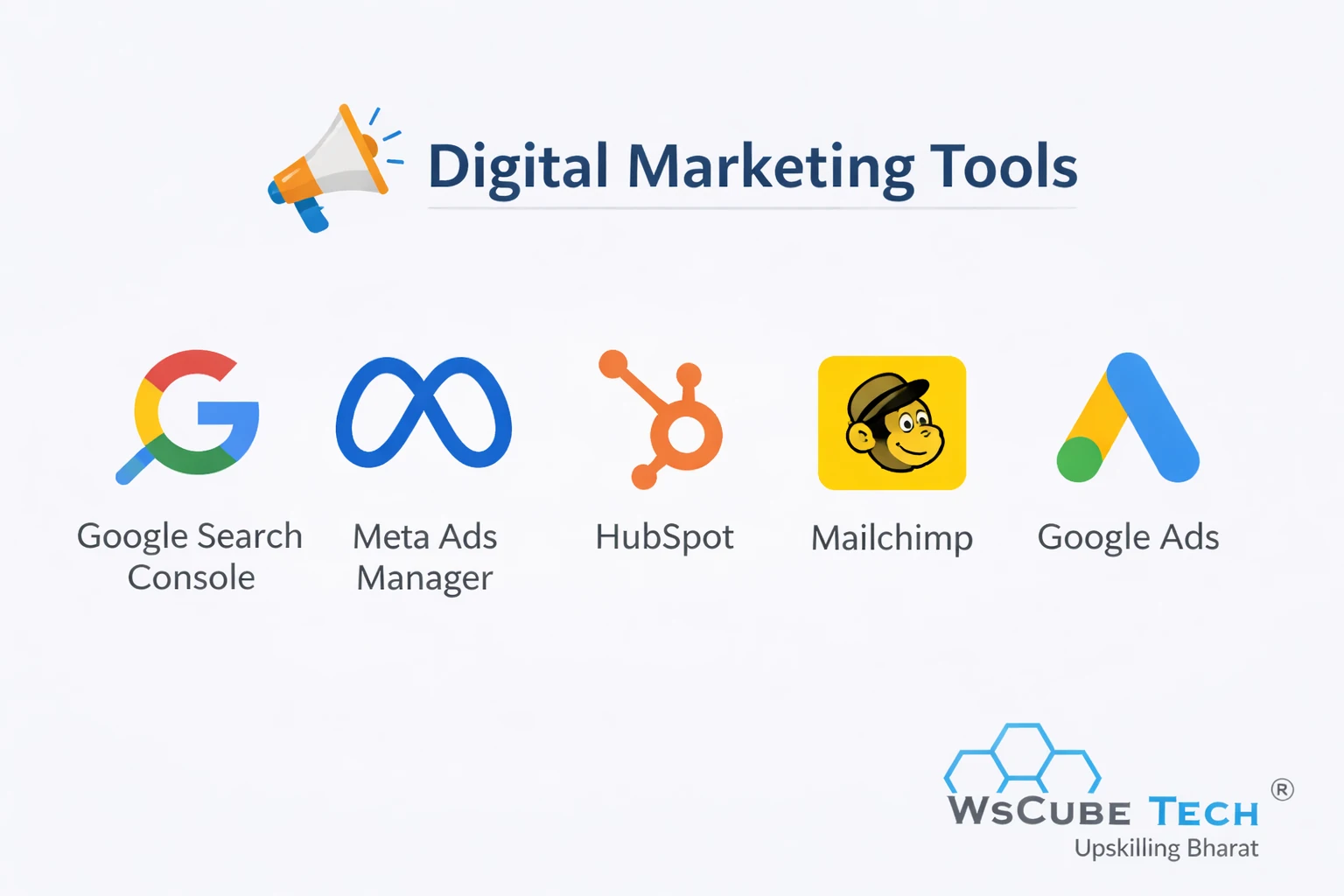
The table below highlights commonly used tools in digital marketing and their primary purpose:
| Tools | Main Purpose |
| Google Search Console, SEMrush | Monitor website performance, track keywords, and improve search rankings |
| Google Analytics | Analyze website traffic, user behavior, and conversion performance |
| Meta Ads Manager, LinkedIn Campaign Manager | Create, manage, and track social media campaigns |
| Mailchimp, HubSpot | Design, automate, and measure email campaigns |
| Google Ads | Run targeted ad campaigns and track return on investment |
Tools Used in Data Analytics
Data analytics depends on technical tools that assist in data collection, cleaning, analysis, and reporting.
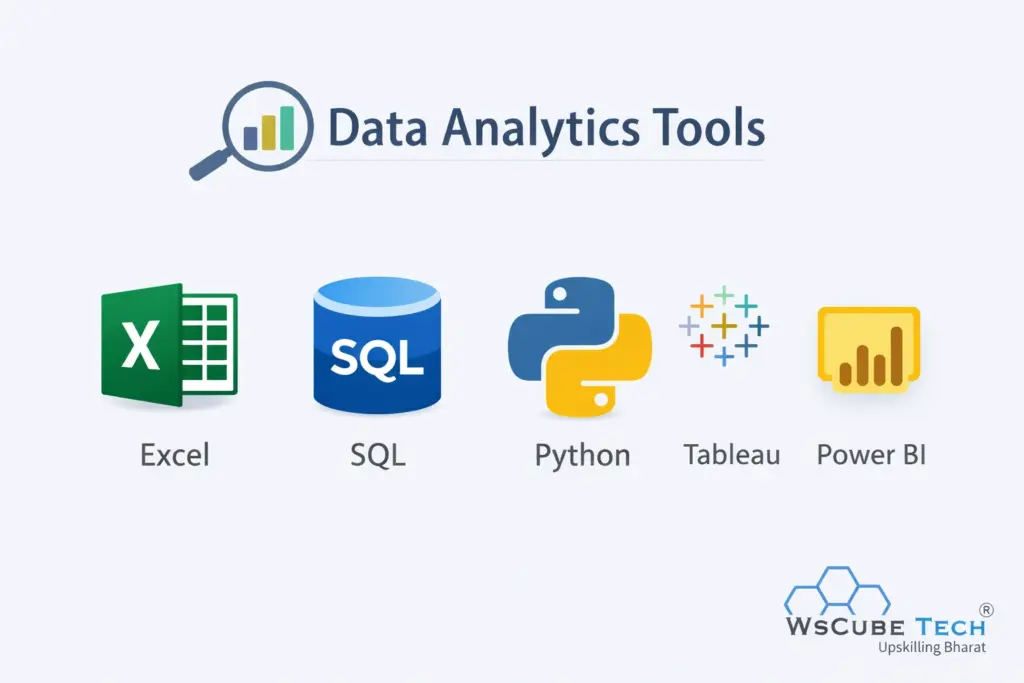
The table below outlines commonly used tools in data analytics and their core functions:
| Tools | Main Purpose |
| Microsoft Excel | Perform calculations, basic analysis, and structured reporting |
| SQL | Retrieve, manage, and manipulate structured data from databases |
| Python, R | Conduct advanced data processing and statistical analysis |
| Power BI, Tableau | Create dashboards and interactive data visualizations |
| Cloud databases, Data warehouses | Store and organize large volumes of structured data |
Recommended Professional Certificates
Data Analytics Course with Gen AI
Data Science Course with Internship & Placement Support
Career Opportunities After Learning Digital Marketing and Data Analytics
After learning digital marketing and data analytics, many career opportunities become available. With proper training and hands-on experience, both fields offer stable and growth-oriented job roles. However, the nature of work in each field is different. Below are the top careers in digital marketing and data analytics.
Career Opportunities in Digital Marketing
Digital marketing careers focus on customer engagement, campaign execution, and brand growth.
The main career opportunities after learning digital marketing are listed below:
- Digital Marketing Executive: Plans and manages online campaigns, coordinates with content and design teams, and tracks performance metrics to improve lead generation.
- SEO Specialist: Optimizes website content and structure to improve search engine rankings and increase organic traffic.
- Social Media Manager: Develops posting strategies, manages audience interaction, and analyzes engagement data across platforms.
- Content Marketing Manager: Creates and supervises content strategies that support brand awareness and customer retention.
- PPC Specialist: Manages paid advertising campaigns, controls budgets, and improves ad performance based on conversion data.
- Email Marketing Specialist: Designs targeted email campaigns, segments audiences, and monitors response rates to maintain customer relationships.
Career Opportunities After Learning Data Analytics
Data analytics careers focus on interpreting data, solving problems, and supporting business decisions.
The main career opportunities after learning data analytics are listed below:
- Data Analyst: Collects, cleans, and analyzes structured data to identify trends and provide clear reports for decision-making.
- Business Analyst: Uses data insights to improve business processes, reduce inefficiencies, and support operational planning.
- Data Scientist: Applies statistical methods and machine learning techniques to build predictive models and solve complex problems.
- Business Intelligence (BI) Analyst: Develops dashboards and visual reports that help management monitor key performance indicators.
- Data Engineer: Designs and maintains data pipelines and storage systems to ensure accurate and efficient data flow.
- Market Research Analyst: Examines market trends and customer behavior data to support strategic planning and product decisions.
Read More Marketing and Data Guides
Digital Marketing vs Data Analytics: Salary Comparison (India & Global)
Salary levels in digital marketing and data analytics differ based on technical depth, specialization, and market demand.
Data analytics salary levels are generally higher because these roles require statistical knowledge, programming skills, and structured data handling.
Digital marketing salaries grow steadily with experience, especially in performance marketing and strategic roles. Compensation depends on experience, location, industry, and skill level.
Salary Comparison in India:
The following table presents the salary comparison for Digital Marketing and Data Analytics roles in India:
| Experience | Avg Salary/Annual – Digital Marketing (India) | Avg Salary/Annual – Data Analytics (India) |
| Entry-Level (0–1 yrs) | ₹2.5 – ₹5 LPA | ₹3 – 6 LPA |
| Early Career (1–3 yrs) | ₹3.5 – ₹8 LPA | ₹5 – 10 LPA |
| Mid-Level (4–6 yrs) | ₹6 – ₹12 LPA | ₹8 – 15 LPA |
Note: Compensation is typically higher in major tech and business hubs such as Bengaluru, Hyderabad, Mumbai, and Delhi NCR. Advanced technical skills or specialization increase earning potential.
Salary Comparison in the United States:
The following table presents the salary comparison for Digital Marketing and Data Analytics roles in United States:
| Experience | Avg Salary/Annual – Digital Marketing (USA) | Avg Salary/Annual – Data Analytics (USA) |
| Entry-Level (0–1 yrs) | $40k– $60k | $51K – $79K |
| Early Career (1–3 yrs) | $44k – $65k | $54K – $84K |
| Mid-Level (4–6 yrs) | $50k – $71k | $56K – $89K |
Future Scope in Digital Marketing and Data Analytics
Both digital marketing and data analytics have promising futures. Businesses today depend heavily on digital tools and insights, which increases demand in these fields. Yet, the type of opportunities available may change with technological progress.
Future Scope in Digital Marketing
Digital marketing continues to expand as internet usage, mobile devices, and online commerce increase.
The future scope of digital marketing includes the following areas:
- Growth of E-commerce Marketing: As online shopping increases, businesses require professionals who can manage product promotions, paid ads, and customer engagement strategies.
- Increased Use of AI in Marketing: AI tools are commonly used for audience targeting, content recommendations, and campaign performance analysis.
- Personalized Marketing Strategies: Companies focus more on delivering customized content based on user behavior and preferences.
- Video and Short-Form Content Marketing: Demand for video-based promotion continues to rise across social platforms.
- Performance-Based Marketing Roles: Organizations prefer measurable marketing strategies, increasing demand for professionals skilled in campaign optimization and analytics.
Future Scope in Data Analytics
Data analytics is becoming more important as organizations generate larger volumes of data.
The future scope of data analytics includes the following areas:
- Expansion of Data-Driven Decision Making: Businesses increasingly rely on data insights rather than assumptions for strategic planning.
- Integration with Artificial Intelligence and Machine Learning: Advanced analytics techniques are commonly used to improve prediction accuracy and automation.
- Demand Across Multiple Industries: Sectors such as finance, healthcare, retail, and manufacturing require skilled data professionals.
- Real-Time Data Processing: Organizations seek faster insights to respond quickly to market changes.
- Increased Focus on Data Governance and Security: As data usage grows, maintaining accuracy, privacy, and compliance becomes essential.
Digital Marketing Vs Data Analytics: Which Career Should You Choose?
The decision about which career you should choose should be based on your personal strengths, work preferences, and long-term professional goals rather than only on market trends.
Choose Digital Marketing If:
- You enjoy creativity and content creation.
- You like communicating with people and understanding customer behavior.
- You are interested in branding, advertising, and social media platforms.
- You prefer dynamic work that involves campaigns and audience engagement.
- You are comfortable analyzing basic performance metrics, but do not want highly technical programming work.
Choose Data Analytics If:
- You enjoy working with numbers and logical problem-solving.
- You are interested in data, statistics, and structured analysis.
- You are willing to learn tools such as Excel, SQL, Python, or BI platforms.
- You prefer research-based and insight-driven work rather than customer-facing tasks.
- You want to work in roles that support business strategy and decision-making.
Explore Our Related Courses
| Data Analytics Course | Digital Marketing Course |
| Business Analytics Course | Performance Marketing Course |
| Data Science Course | SEO Course |
Digital Marketing and Data Analytics: Advantages and Disadvantages
It is important to evaluate the benefits and limitations of both fields in a structured manner. The following tables provide a clear comparison of advantages and disadvantages of each domain.
Digital Marketing: Advantages and Disadvantages
The advantages and disadvantages of digital marketing are summarized in the table below
| Category | Points |
| Advantages | -High demand as most businesses depend on online promotion and digital presence. Creative work involving content creation, branding strategies, and campaign design. -Flexible career options including freelancing, agency roles, and remote work. -Clear performance tracking through measurable metrics such as clicks, leads, and conversions. -Relatively easier entry with certifications, internships, and practical experience. |
| Disadvantages | -Strong competition due to a large number of professionals entering the field. -Performance pressure because campaign results are directly measurable. -Constant platform updates require regular skill improvement. -Success may depend on changing market trends and audience preferences. |
Data Analytics: Advantages and Disadvantages
The advantages and disadvantages of data analytics are summarized in the table below:
| Category | Points |
| Advantages | -Growing demand across industries that rely on data-driven decisions. -Competitive salary potential due to technical and analytical expertise. -Strong focus on logical reasoning and problem-solving skills. -Transferable skills applicable in finance, healthcare, retail, and technology sectors. -Relatively easier entry with certifications, internships, and practical experience. |
| Disadvantages | -Requires learning technical tools, statistics, and data management concepts. -Continuous need to upgrade skills as tools and technologies evolve. -The work environment may be more structured and less creative. -High accuracy standards since incorrect analysis can affect business outcomes. |

FAQs About Digital Marketing vs Data Analytics
Digital marketing is generally considered easier to start because it requires less technical knowledge in the beginning. Data analytics involves statistics, logical reasoning, and technical tools, which may require more structured learning.
Data analytics roles commonly offer higher starting salaries due to technical expertise requirements. However, experienced digital marketing professionals, especially in performance marketing or strategy roles, can also earn competitive salaries.
Yes, transition is possible. Since digital marketing uses performance data and metrics, learning analytical tools such as Excel, SQL, or basic Python can help move into data analytics roles.
Both fields offer long-term stability. However, data analytics may have broader industry demand because almost every sector relies on data-driven decision-making.
Important metrics include click-through rate (CTR), conversion rate, customer acquisition cost (CAC), return on ad spend (ROAS), and engagement rate.
Interviewers commonly expect familiarity with tools such as Google Analytics, Google Ads, Excel, SQL, Power BI, or similar platforms, depending on the role.
There is no single best tool, as each serves a different purpose. The choice depends on the goal, such as SEO, paid ads, or analytics. For example, Google Analytics is used for traffic tracking, while Google Ads is used for advertising campaigns.
Digital marketing is generally easier to start because it focuses on creativity and platform management. Data analytics requires technical skills and statistical understanding, which may take more time to learn.
It depends on your interest. If you like creativity and marketing, choose digital marketing. If you enjoy numbers and data, data analytics is better for you.
No, coding is not required. Basic knowledge of HTML is helpful, but most tools are easy to use without coding.
Yes, basic coding is usually needed. You may need to learn SQL, Python, or similar tools to work with data.
Both fields have good job opportunities. Digital marketing has more entry-level roles, while data analytics has high demand in technical roles.
Explore Our Free Courses
| Semrush Course | GTM Course | Blogging Course |
| Email Marketing Course | Video Editing Course | Affiliate Marketing Course |
| Shopify Course | AngularJS Course | Photoshop Course |
Join Our On-Campus Digital Marketing and Data Analytics Courses






Leave a comment
Your email address will not be published. Required fields are marked *Comments (0)
No comments yet.