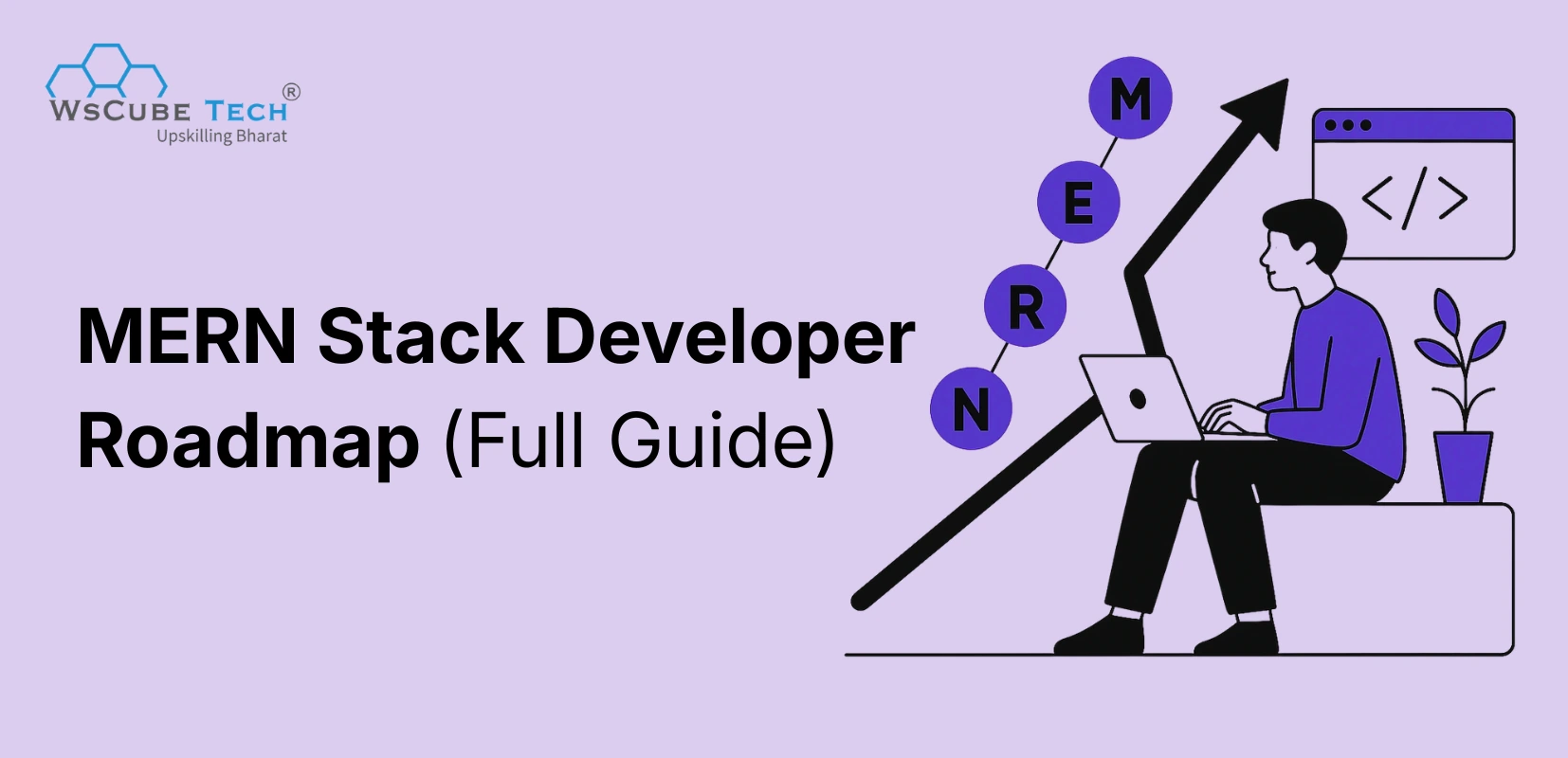
The MERN stack is one of the most popular technologies used for building modern and dynamic web applications. It includes MongoDB, Express.js, React, and Node.js — powerful technologies that help developers create fast, scalable, and interactive websites using JavaScript throughout the development process. Because of its strong industry demand and wide range of applications, MERN stack development has become a popular career choice for aspiring developers.
For beginners, learning the MERN stack can feel confusing at first because there are multiple technologies, frameworks, and concepts to understand. Without the right guidance, it’s easy to get lost while deciding what to learn first and how to move forward. This MERN Stack Developer roadmap 2026 provides a clear and step-by-step learning path that helps you understand each technology in the right order. From web development basics to advanced MERN stack concepts, this roadmap helps you build practical skills, create real-world projects, and become industry-ready with confidence.
Want to master MERN stack development with practical training and real projects? Join the online MERN stack course by WsCube Tech and learn step by step with hands-on practice, project-based learning, and industry-focused development skills.
What is the MERN Stack?
The MERN stack is a popular full-stack web development stack made up of MongoDB, Express.js, React, and Node.js. It allows you to build complete web applications using JavaScript across both frontend and backend, making development faster and more consistent.
This stack is widely used to create modern, scalable, and high-performance web applications. MERN supports component-based UI development, efficient server-side processing, and flexible database management, making it a strong choice for startups and enterprise projects.
Key Responsibilities of a MERN Stack Developer
After understanding what the MERN stack is, it is equally important to know what a MERN stack developer actually does. A MERN stack developer is responsible for building complete web applications by efficiently handling both frontend and backend development. Below are the key responsibilities:
- Build responsive, interactive user interfaces with React to deliver a smooth user experience and high performance.
- Develop scalable backend applications and REST APIs using Node.js and Express.js.
- Design, manage, and optimize MongoDB databases for efficient data storage and retrieval.
- Connect frontend components with backend services to ensure smooth data flow.
- Implement authentication, authorization, and security best practices to protect user data.
- Test, debug, deploy, and maintain full-stack applications for reliable performance.
Why Choose MERN Stack Development?
MERN stack development is a smart choice if you want to build modern, fast, and scalable web applications using a single programming language. Since JavaScript is used across both frontend and backend, the development process becomes simpler, more efficient, and easier to maintain.
The MERN stack is widely used by startups and large companies due to its flexibility and strong performance. It offers a rich ecosystem of libraries, strong community support, and excellent career opportunities. Learning MERN helps you build real-world projects, grow full-stack skills, and prepare for high-demand developer roles.
Recommended Professional Certificates
Full Stack Development Course with AI Engineering
WordPress Bootcamp
MERN Stack Developer Roadmap 2026: Step-by-Step Guide
This complete roadmap for MERN stack developers is designed to take you from beginner to job-ready full-stack professional. It follows a clear, step-by-step path to help you build strong fundamentals, gain practical experience, and develop industry-ready skills with confidence.
Below are the steps that help you become a skilled MERN Stack Developer:
- Learn Web Development Basics (HTML, CSS, JavaScript)
- Learn JavaScript in Depth
- Work with Git and GitHub
- Learn React for Frontend Development
- State Management and React Ecosystem
- Learn Node.js for Backend Development
- Build Backend with Express.js
- Work with MongoDB (NoSQL Database)
- Build REST APIs and Backend Integration
- Learn Authentication, Authorization, and Security
- Learn Deployment, DevOps Basics, and Docker
- Work with Cloud Platforms (AWS / GCP)
- Build Real-World MERN Stack Projects
- Create Portfolio and GitHub Profile
- Prepare for MERN Stack Developer Jobs
Now, we will go through each step one by one to clearly explain what you should learn, which key concepts to focus on, and how each step helps you grow as a MERN stack developer.
Step 1: Learn Web Development Basics (HTML, CSS, JavaScript)
This step builds the strong foundation required for becoming a MERN stack developer. Every modern web application is created using HTML, CSS, and JavaScript, so understanding these core technologies is essential before moving to React, Node.js, or databases.
- HTML (HyperText Markup Language): Learn how to structure web pages using headings, paragraphs, lists, images, links, forms, tables, and semantic elements such as header, footer, section, and article. HTML defines the basic layout and content structure of a website.
- CSS (Cascading Style Sheets): Understand how to style web pages using colors, fonts, spacing, and backgrounds. Learn layout techniques like Flexbox and Grid, responsive design with media queries, and basic animations to create modern, mobile-friendly websites.
- JavaScript Basics: Learn essential programming concepts such as variables, data types, functions, loops, conditions, events, and basic DOM manipulation to add interactivity and dynamic behavior to web pages.
By completing this step, you will be able to build simple, responsive, and interactive websites. These skills form the backbone of the MERN stack and make learning React and advanced JavaScript much easier in the next steps.
You can learn HTML, CSS, and JavaScript through our free tutorials, designed for beginners with easy examples and practical practice.
Step 2: Learn JavaScript in Depth
After learning the basics, the next step is to understand JavaScript in depth. JavaScript is the core language of the MERN stack, so having a strong understanding of advanced JavaScript concepts is essential for working with React, Node.js, and backend logic.
- Advanced JavaScript Concepts: Understand how JavaScript works internally by learning scope, hoisting, closures, execution context, and the this keyword.
- ES6+ Features: Learn essential ES6+ features such as arrow functions, template literals, destructuring, spread and rest operators, modules, and default parameters to write clean and modern code.
- Asynchronous JavaScript: Learn callbacks, promises, async/await, and how to handle asynchronous operations like API calls and data fetching.
- Arrays and Objects in Depth: Master array methods like map, filter, reduce, and forEach, along with object manipulation techniques for clean and efficient code.
- Error Handling and Debugging: Learn try-catch blocks, effective error handling methods, and how to debug JavaScript code using browser developer tools.
Completing this step will help you write clean, efficient, and scalable JavaScript code. It prepares you for building complex frontend applications with React and powerful backend logic using Node.js in the upcoming steps.
Step 3: Work with Git and GitHub
Git and GitHub are essential tools for managing code and collaborating on real-world projects. As a MERN stack developer, you must know how to track changes, manage multiple versions of an application, and work efficiently with other developers.
- Understanding Git Basics: Learn how version control works, including repositories, commits, branches, merges, and resolving merge conflicts. This helps you save progress, revert changes when needed, and experiment safely without affecting the main codebase.
- Using GitHub Effectively: Learn how to create and manage repositories on GitHub, push and pull code, work with remote branches, and use pull requests for collaboration and code reviews.
- Branching and Collaboration Workflow: Understand common workflows such as feature branches and main branch management. Practice contributing to team projects, reviewing code, and following proper commit message conventions.
- Project Management and Open Source: Learn how to use issues, README files, and basic documentation. Explore open-source projects to understand real-world collaboration and improve your coding practices.
Mastering Git and GitHub helps you work professionally, collaborate confidently, and build a strong GitHub portfolio that improves your chances of landing MERN stack developer roles.
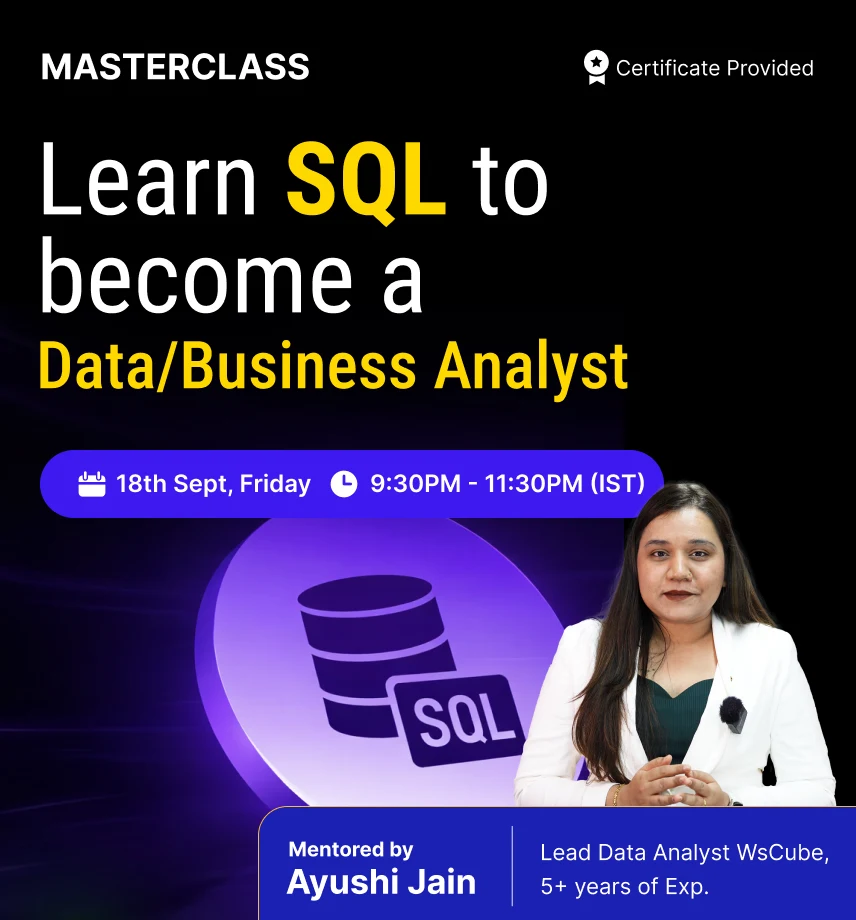
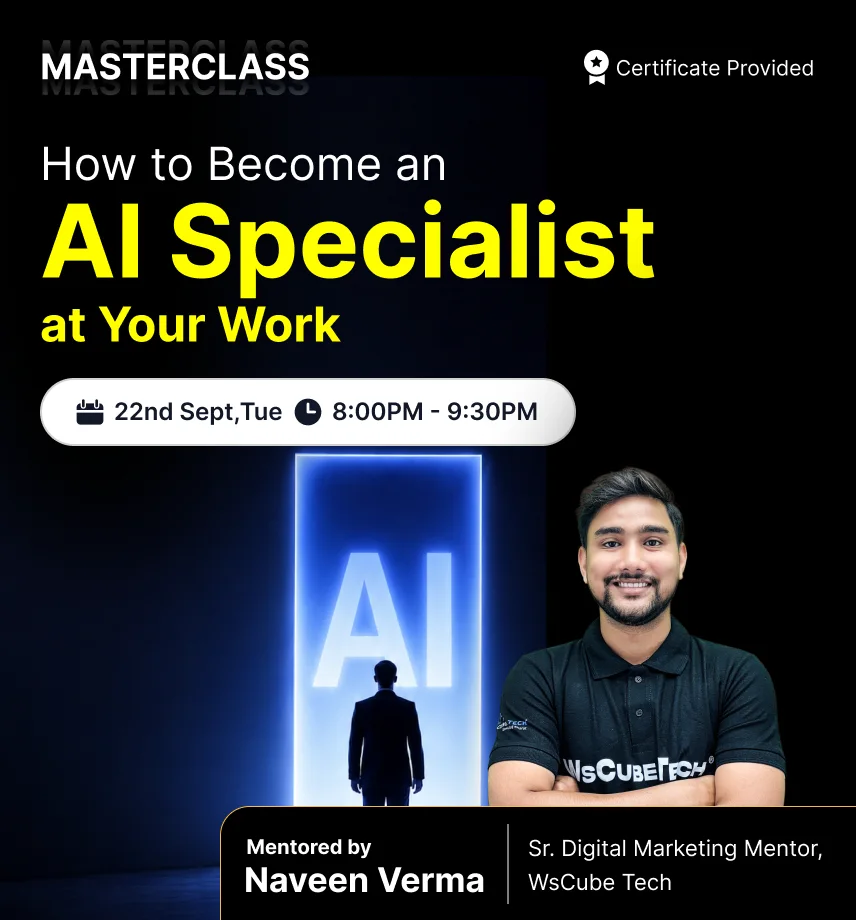
Upcoming Masterclass
Attend our live classes led by experienced and desiccated instructors of Wscube Tech.





Step 4: Learn React for Frontend Development
React is a powerful and commonly used JavaScript library for building fast, interactive, and scalable user interfaces. It is a core part of the MERN stack and plays a crucial role in creating dynamic frontend applications that update efficiently based on user interactions and data changes.
Learning React allows you to break complex user interfaces into small, reusable components. This component-based approach makes applications easier to develop, maintain, and scale. A strong understanding of React is essential for building modern frontend applications and working confidently on full-stack MERN projects.
- React Fundamentals: Learn JSX syntax, functional components, props, and component structure to build clean, reusable, and well-organized user interface components.
- State Management and Events: Understand how to manage component state using the useState hook, handle user events, and update the UI dynamically based on user actions.
- Component Lifecycle and Hooks: Learn how React components behave during their lifecycle and use essential hooks like useEffect to manage side effects such as API calls, timers, and component updates.
- Routing in React: Use React Router to build single-page applications with multiple views, enabling smooth navigation without full page reloads.
- Forms and Controlled Components: Learn how to handle form inputs, manage controlled components, perform validation, and efficiently handle user-submitted data.
- API Integration: Connect React applications with backend APIs to fetch, display, create, and update data dynamically using tools like Fetch or Axios.
By completing this step, you will be able to build responsive, interactive, and scalable frontend applications. These skills prepare you for advanced state management, backend integration, and building real-world MERN stack projects.
Step 5: State Management and React Ecosystem
As React applications grow in size and complexity, managing data and application state becomes more important. In this step, you learn how to handle state efficiently and explore the React ecosystem to build scalable and maintainable applications.
- Local vs Global State: Understand the difference between component-level state and shared application state, and learn when to use each to keep your code organized.
- Context API: Learn how to use the React Context API to share data across components without prop drilling.
- State Management Libraries: Get familiar with tools like Redux, Redux Toolkit, or Zustand for managing complex state in larger applications, and understand when these tools are necessary.
- React Ecosystem Tools: Learn commonly used libraries such as Axios for API calls, React Query for data fetching, and UI libraries like Material UI or Tailwind CSS.
- Performance Optimization: Understand techniques like memoization, lazy loading, and code splitting to improve application performance.
By mastering state management and the React ecosystem, you will be able to build scalable, well-structured, and production-ready frontend applications for real-world MERN stack projects.
Step 6: Learn Node.js for Backend Development
Node.js is a powerful JavaScript runtime used to build fast, scalable, and efficient backend applications. In the MERN stack, Node.js handles server-side logic, processes client requests, and manages communication between the frontend, APIs, and databases.
Learning Node.js helps you use JavaScript beyond the browser and understand how backend systems work. It is essential for building APIs, handling data, and creating real-time features in modern web applications.
- Node.js Fundamentals: Understand how Node.js works, including its event-driven, non-blocking architecture and execution environment.
- Modules and Package Management: Learn how to use built-in Node.js modules and manage external packages using npm.
- Creating and Managing Servers: Learn how to create HTTP servers, handle client requests and responses, and manage basic routing logic.
- Asynchronous Programming in Node.js: Master callbacks, promises, and async/await to write efficient and scalable backend code.
- Environment Variables and Configuration: Learn how to manage environment variables, configure applications securely, and separate development and production settings.
By completing this step, you will be able to build scalable backend services and gain a strong foundation for creating REST APIs and server-side applications using Express.js in the next step.
Explore More Career Roadmaps
Step 7: Build Backend with Express.js
Express.js is a fast, lightweight, and flexible Node.js framework used to build backend applications and RESTful APIs. In the MERN stack, Express.js plays a key role by simplifying server-side development and providing a clean structure for handling routes, middleware, and application logic.
Learning Express.js helps you write organized, scalable, and maintainable backend code. It allows you to build APIs that connect the frontend to databases and efficiently handle real-world application requirements.
- Express.js Fundamentals: Learn how to set up an Express server, understand the request–response cycle, and handle different HTTP methods such as GET, POST, PUT, and DELETE.
- Routing and Application Structure: Understand how to organize routes, controllers, and services to keep backend code clean, modular, and easy to manage.
- Middleware in Express: Learn how middleware works and how to use it for logging requests, parsing data, handling authentication, validating input, and managing errors.
- REST API Development: Build RESTful APIs following best practices, use proper status codes, and design endpoints that are easy to understand and maintain.
- Error Handling and Validation: Learn how to handle errors centrally, send meaningful error responses, and validate incoming data to improve application reliability and security.
- Connecting with Databases: Understand how to connect Express applications with MongoDB and manage data operations efficiently.
By completing this step, you’ll be able to build structured, scalable, and secure backend applications. This prepares you to connect your backend with databases like MongoDB and build complete MERN stack applications in the next steps.
Step 8: Work with MongoDB (NoSQL Database)
MongoDB is a popular NoSQL database used in the MERN stack to store and manage application data in a flexible, JSON-like format. It is designed for scalability, performance, and ease of development, making it a perfect choice for modern web applications that handle large and dynamic data.
Learning MongoDB helps you design efficient data models and manage data without the limitations of fixed table schemas. It allows you to work comfortably with real-world data that changes over time.
- MongoDB Basics: Understand what NoSQL databases are, how MongoDB stores data using collections and documents, and how it differs from traditional SQL databases.
- CRUD Operations: Learn how to create, read, update, and delete data using MongoDB queries to manage application data effectively.
- Data Modeling and Schema Design: Learn how to design clean and optimized data structures for users, products, orders, and other application entities.
- Using Mongoose with MongoDB: Understand how to use Mongoose to define schemas, models, and validations, making MongoDB integration easier and more structured.
- Relationships and References: Learn how to handle relationships between documents using references or embedded documents based on application needs.
- Indexing and Performance Optimization: Understand how indexes work in MongoDB and how they improve query performance for large datasets.
After learning MongoDB, you will be able to store, retrieve, and manage data efficiently in MERN stack applications. Strong MongoDB skills are essential for building scalable, data-driven full-stack projects that effectively handle real-world application data.
Step 9: Build REST APIs and Backend Integration
Building REST APIs is a core part of MERN stack development. REST APIs act as a bridge between the frontend and backend, allowing data to move smoothly and securely between the user interface, server logic, and database. In this step, you focus on designing APIs that connect React applications with backend services and MongoDB.
A strong understanding of REST APIs ensures your applications are scalable, maintainable, and easy to integrate with different clients such as web or mobile apps.
- Understanding REST Architecture: Learn the fundamentals of REST, including resources, endpoints, HTTP methods (GET, POST, PUT, DELETE), request–response flow, and proper use of status codes.
- API Development with Express and Node.js: Build RESTful APIs using Express.js to handle requests, process data, and send responses efficiently.
- Connecting APIs with MongoDB: Integrate MongoDB with backend APIs to perform data operations such as create, read, update, and delete.
- Frontend and Backend Integration: Connect React frontend applications with backend APIs to fetch, display, create, and update data dynamically.
- API Testing and Debugging: Learn how to test APIs using tools like Postman and debug issues to ensure reliable communication between frontend and backend.
Mastering REST APIs and backend integration helps you build complete full-stack applications where data flows smoothly between the user interface, server, and database.
Explore More on MERN Stack Guides
| How to Be a MERN Stack Developer | MERN Stack Course Syllabus |
| MERN Stack Developer Salary in India | MERN Stack Project Ideas |
Step 10: Learn Authentication, Authorization, and Security
Security is an important part of any web application. In MERN stack development, you must know how to protect user data, control access to resources, and secure backend systems from common threats.
- Authentication Concepts: Learn how user authentication works, including secure sign-up, login, logout, session handling, and safe management of user credentials.
- Authorization and Access Control: Understand how to control user permissions and restrict access to routes and resources based on roles.
- JWT and Token-Based Authentication: Learn how JSON Web Tokens securely manage user authentication and enable safe communication between frontend and backend systems.
- Password Security: Understand password hashing and encryption, using tools like bcrypt, to store user credentials securely.
- Protecting Routes and APIs: Learn how to secure backend routes and APIs to prevent unauthorized access and ensure that only authenticated and authorized users can interact with sensitive application data.
- Basic Web Security Practices: Learn how to prevent common threats like XSS, CSRF, and misconfigured environment variables in web applications.
Strong knowledge of authentication, authorization, and security helps you build safe, reliable, and production-ready MERN stack applications.
Step 11: Learn Deployment, DevOps Basics, and Docker
Deployment and DevOps knowledge helps you take your MERN stack applications from local development to live production environments. This stage focuses on making applications stable, scalable, and accessible to real users.
- Application Deployment Basics: Learn how to deploy frontend and backend applications to production servers and configure environments properly.
- Environment Variables and Configuration: Understand how to securely manage sensitive data such as API keys, database credentials, and configuration settings using environment variables across development and production.
- DevOps Fundamentals: Learn basic DevOps concepts like CI/CD pipelines, build processes, and automated deployments.
- Docker Fundamentals: Understand how Docker works, create Docker images, and use containers to run applications consistently across different environments.
- Containerizing MERN Applications: Learn how to containerize React, Node.js, and MongoDB services to simplify deployment, improve scalability, and maintain consistency across environments.
- Monitoring and Maintenance: Understand basic logging, performance monitoring, and application maintenance practices.
Learning deployment, DevOps basics, and Docker prepares you to launch, manage, and scale MERN stack applications confidently in real-world production environments.
Step 12: Work with Cloud Platforms (AWS / GCP)
Cloud platforms like AWS and Google Cloud are widely used to host, deploy, and scale MERN stack applications. They offer services for computing, storage, networking, and databases, helping applications run reliably in production environments.
Learning cloud platforms helps developers manage servers, scale applications based on demand, and improve performance and security. Knowledge of AWS or GCP is valuable for deploying real-world MERN applications and working in modern cloud-based development environments.
Step 13: Build Real-World MERN Stack Projects
Building real-world MERN stack projects is a crucial step toward becoming a confident full-stack developer. Projects allow you to apply React, Node.js, Express.js, and MongoDB together in practical scenarios and understand how complete applications are built.
By working on full-stack projects, you learn how frontend and backend systems interact, how data flows through APIs, and how production-level features are implemented. You can explore MERN Stack projects ideas to practice real-world use cases, improve coding skills, understand complete project workflows, and build full-stack applications that reflect real industry requirements.
Explore Our Web Development Related Courses
Step 14: Create Portfolio and GitHub Profile
Creating a strong portfolio is essential for showcasing your MERN stack skills and real-world project experience. A well-designed portfolio website highlights your projects, technologies used, and problem-solving abilities in a professional and easy-to-understand format.
Your GitHub profile should reflect consistent practice with clean, well-structured code, meaningful commit history, and clear README files. Adding live project links and proper documentation helps recruiters evaluate your skills and improves your chances of landing MERN stack developer roles.
Step 15: Prepare for MERN Stack Developer Jobs
Preparing for MERN stack developer jobs involves strengthening both technical and practical skills. Focus on revising core concepts of React, Node.js, Express.js, and MongoDB, along with JavaScript fundamentals. Practice building full-stack projects, solving coding problems, and understanding common interview questions related to MERN stack development.
You should also work on resume building, highlighting real-world projects, GitHub contributions, and deployed applications. Practice technical interviews, system design basics, and problem-solving questions. Understanding how to explain your projects clearly helps interviewers evaluate your skills and practical experience.
To gain structured guidance and industry-focused training, you can explore our MERN stack course online by WsCube to learn from experts, build job-ready projects, and prepare confidently for real MERN stack developer roles.
Career Opportunities After Learning MERN Stack Development
Following a clear MERN stack roadmap 2026 opens doors to high-demand full-stack roles, helping developers build scalable web applications and grow successful careers in modern software development.
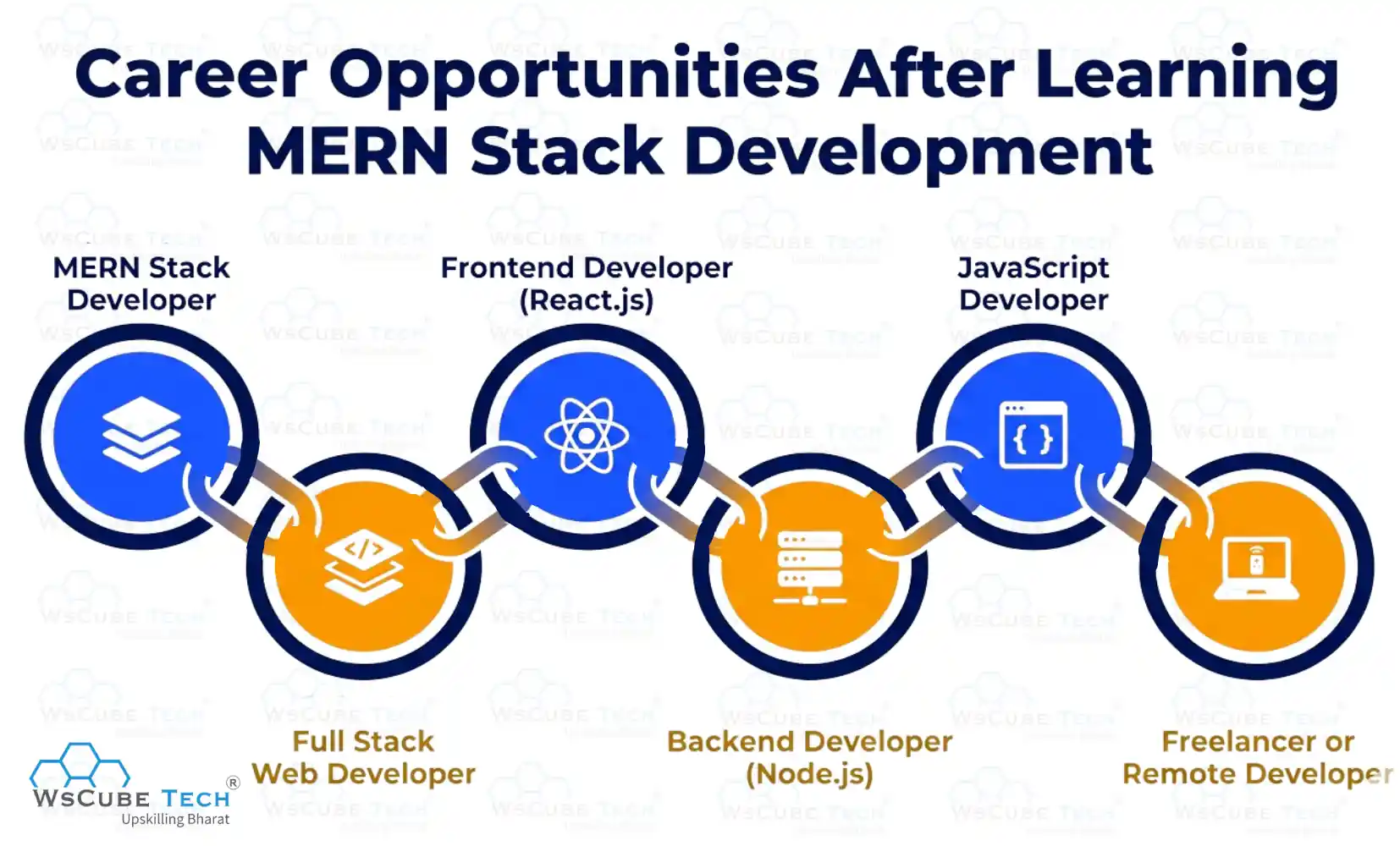
- MERN Stack Developer: Responsible for building complete web applications using MongoDB, Express, React, and Node.js, handling frontend, backend, APIs, and databases in production-ready projects.
- Full Stack Web Developer: Works on both client-side and server-side development, manages databases, integrates APIs, and delivers end-to-end web solutions for startups and enterprise applications.
- Frontend Developer (React.js): Focuses on creating responsive and interactive user interfaces using React, collaborating with designers and backend teams to deliver smooth user experiences.
- Backend Developer (Node.js): Designs server-side logic, builds secure APIs, manages databases, and ensures application performance, scalability, and data security.
- JavaScript Developer: Specializes in JavaScript across frontend and backend development, builds dynamic applications, improves performance, and works with modern frameworks and libraries.
- Freelancer or Remote Developer: Works independently on client projects, builds full-stack applications remotely, manages deployments, and earns through global freelance platforms or remote roles.
With strong MERN stack skills, practical projects, and a solid portfolio, developers can access diverse career paths, competitive salaries, and long-term growth in the web development industry.
Salary Expectations for MERN Stack Developers in India
| Role | Avg. Annual Salary | Experience Level |
| Junior MERN Developer | ₹2.6 LPA – ₹6 LPA | 0-2 years |
| Full Stack Developer (MERN) | ₹7LPA – ₹17LPA | 4-6 years |
| Senior MERN Developer / Tech Lead | ₹15LPA – ₹32LPA | 6+ years |
MERN Stack Developer Salary in India increase with experience and skill level. Entry-level roles focus on learning and growth, mid-level developers earn competitive packages, and senior professionals receive higher pay for architecture, scalability, and leadership responsibilities.
Compensation also varies based on location and company size. Product-based companies usually offer higher salaries compared to smaller organizations and service-based firms.
MERN Stack Developer Roadmap 2026 - Video Guide
FAQs About MERN Stack Developer Roadmap
MERN stack development means you build full-stack web applications using MongoDB, Express.js, React, and Node.js. You handle both frontend and backend using JavaScript, which helps you create fast, scalable, and modern web applications efficiently.
MERN is often better for you because React is more popular than Angular and widely used in startups and companies. MERN also offers better flexibility, strong community support, and more job opportunities for modern full-stack roles.
Yes, the MERN stack roadmap is suitable for beginners if you start with HTML, CSS, and JavaScript. The roadmap follows a clear sequence, helping you understand concepts step by step without feeling overwhelmed or confused.
You can complete the MERN stack developer roadmap 2026 in around 6 to 12 months. The timeline depends on your learning speed, daily practice, consistency, and how many real-world projects you build during learning.
In the roadmap for MERN stack developers, you should first learn HTML, CSS, and core JavaScript. Strong JavaScript fundamentals help you easily understand React, Node.js, APIs, and backend logic later.
To become a MERN stack developer, you need JavaScript skills, React for frontend, Node.js and Express for backend, MongoDB for databases, Git for version control, and basic deployment knowledge for real-world applications.
React is important, but it is not the only key part. You also need backend skills with Node.js and Express, database knowledge with MongoDB, and the ability to connect frontend and backend smoothly.
Yes, you can get a job after following the MERN stack developer roadmap if you build strong projects. Recruiters focus on practical skills, real-world applications, problem-solving ability, and clear understanding of concepts.
While learning the MERN stack, you should build CRUD applications, authentication systems, blogs, dashboards, and full-stack apps. These projects help you practice real-world features and improve your confidence and portfolio.
Explore Our Free Tech Tutorials
| Python Tutorial | Java Tutorial | JavaScript Tutorial |
| C Tutorial | C++ Tutorial | HTML Tutorial |
| CSS Tutorial | SQL Tutorial | DSA Tutorial |
Practice Coding With Our Free Compilers
| Online Python Compiler | Online HTML Compiler | Online C Compiler |
| Online C++ Compiler | Online JS Compiler | Online Java Compiler |
Join Our On-Campus Full Stack Related Courses
Free Courses for You



Leave a comment
Your email address will not be published. Required fields are marked *Comments (0)
No comments yet.