
Data science has become one of the most exciting and fast-growing fields in today’s digital era. It focuses on collecting, analyzing, and interpreting data to help organizations make smart and data-driven decisions across different industries.
A career in data science in India offers excellent opportunities for growth, high salaries, and job security. Professionals in this field work with data, use advanced tools, and solve real-world problems, making them highly valuable in industries like healthcare, finance, and e-commerce.
In this blog, you will understand the different career options in data science, the required education, and the right path to start your journey.
What is Data Science?
Data science is a field that focuses on collecting, analyzing, and interpreting data to extract useful insights and support better decision-making. It combines programming, statistics, and domain knowledge to turn raw data into meaningful information used across industries like healthcare, finance, and technology. It also helps organizations understand patterns, improve efficiency, and make smarter business decisions. Below are the key components of data science:
- Data Collection: Collecting data from various sources like databases, websites, and sensors.
- Data Cleaning: Removing errors and preparing data for analysis.
- Data Analysis: Examining data to find patterns and trends.
- Data Visualization: Presenting data using charts and graphs for easy understanding.
- Machine Learning: Using algorithms to make predictions and automate decisions.
Why Choose Data Science as a Career?
Data science offers high demand, excellent salaries, career growth, and opportunities to solve real-world problems using data. Below are the key reasons to choose data science as a career:
- High Demand for Professionals: Data science is one of the fastest-growing fields globally, with companies actively hiring skilled professionals to analyze data, make decisions, and improve business performance across multiple industries.
- Attractive Salary Packages: Data science professionals receive competitive salaries due to their specialized skills. Even entry-level roles offer good pay, while experienced professionals can earn significantly higher packages in top companies.
- Diverse Career Opportunities: Data science offers multiple career paths, including data analyst, machine learning engineer, business analyst, data engineer, and AI specialist, allowing you to choose a role based on your interests and skills.
- Work Across Industries: Data science is widely applied in healthcare, finance, e-commerce, education, and technology sectors, allowing professionals to work in different domains, gain valuable experience, and solve real-world business problems using data-driven insights and analytical skills.
- Continuous Learning and Growth: This field is constantly evolving, allowing you to regularly learn new tools, technologies, and techniques, helping you stay up to date, enhance your skills, and achieve long-term professional growth.
Recommended Professional Certificates
Data Analytics Mentorship Program
Data Science & AI Mentorship Program
Skills Required for a Successful Data Science Career
To build a successful career in data science, a strong combination of technical knowledge, analytical thinking, and problem-solving skills is essential. Below are the key skills required:
Essential Technical Skills
- Programming Skills (Python, R): Knowledge of Python and R is important for data analysis, automation, and building machine learning models. Familiarity with libraries like Pandas, NumPy, Scikit-learn, and TensorFlow helps in efficient data processing and modeling.
- Database Management: Knowledge of SQL and database systems is essential for efficiently storing, retrieving, and managing large datasets in real-world data science projects.
- Machine Learning: Understanding machine learning algorithms and techniques, such as regression, classification, clustering, and decision trees, helps in developing predictive models, identifying patterns, and generating accurate predictions from both structured and unstructured data.
- Data Visualization: Skills with tools and libraries such as Tableau, Power BI, Matplotlib, and Seaborn help present complex data through charts and graphs, making insights easier to understand and communicate clearly.
- Data Cleaning and Preprocessing: The ability to clean and prepare raw data is essential for removing errors, handling missing values, and ensuring accurate, reliable analysis results.
- Big Data Technologies: Familiarity with tools such as Hadoop and Spark helps handle large datasets efficiently and process data at scale, improving analysis and performance.
Analytical and Mathematical Skills
- Statistical Knowledge: Understanding concepts such as probability, distributions, averages, and hypothesis testing helps in analyzing data accurately, identifying patterns, and generating reliable insights to solve real-world problems and improve overall outcomes.
- Data Interpretation: Ability to interpret complex datasets allows you to extract meaningful insights, identify trends, and support business decisions with clear, logical, and well-structured analysis.
- Problem-Solving Ability: Analytical thinking is essential for identifying problems, accurately interpreting data, and finding effective solutions through logical, structured approaches.
Interpersonal & Business Skills
- Communication Skills: The ability to clearly explain data insights to non-technical stakeholders supports better decision-making, ensuring that complex findings are easily understood and effectively applied to business strategies.
- Business Understanding: Understanding business goals and industry needs helps in applying data science solutions effectively to solve real-world problems and improve decision-making.
- Team Collaboration: Working effectively with cross-functional teams, such as developers, analysts, and managers, ensures smooth project execution and helps achieve common goals through shared knowledge and teamwork.
- Critical Thinking: Strong critical thinking helps evaluate data, question assumptions, and make better decisions that improve outcomes and reduce risks.
Also Read: Data Science Course Eligibility: After 12th, Graduation & More
Different Careers in Data Science (Key Roles)
Below are the top careers in data science that you can explore to build a successful and rewarding career in this field:
1. Data Analyst
- Role: A data analyst collects, processes, and analyzes data to identify trends, generate insights, and support business decisions. They work with structured data, create reports, and help organizations improve performance through data-driven insights.
- Key Skills: Knowledge of SQL, Excel, Python, and data visualization tools is essential for analyzing data, creating dashboards, and presenting insights clearly. Strong analytical thinking and attention to detail are also important.
- Career Path: Entry-level roles start as junior data analysts, with growth opportunities to senior analyst, business analyst, or data scientist. With experience, professionals can move into advanced analytics or leadership roles.
2. Data Scientist
- Role: A data scientist works with large and complex datasets to extract meaningful insights, build predictive models, and solve real-world problems using machine learning, statistics, and advanced analytical techniques to support business growth.
- Key Skills: Strong knowledge of Python or R, machine learning, statistics, and data analysis is essential. Skills in data visualization, problem-solving, and handling large datasets are also important for delivering accurate and valuable insights.
- Career Path: Entry-level roles start as junior data scientists or data analysts, with growth opportunities to senior data scientist, machine learning engineer, or AI specialist. With experience, professionals can move into leadership and advanced research roles.
3. Data Engineer
- Role: A data engineer designs, builds, and maintains data pipelines and systems that collect, store, and process large volumes of data efficiently for analysis and business use.
- Key Skills: Strong knowledge of SQL, Python, databases, and big data technologies like Hadoop and Spark is essential. Skills in data warehousing, ETL processes, and system design are also important.
- Career Path: Entry-level roles start as junior data engineers, with growth opportunities to senior data engineer, data architect, or big data engineer.
4. Machine Learning Engineer
- Role: A machine learning engineer designs, builds, and deploys machine learning models into real-world applications. They work on improving model performance, handling large datasets, and ensuring models run efficiently in production environments.
- Key Skills: Strong knowledge of Python, machine learning algorithms, data structures, and model optimization is essential. Familiarity with frameworks like TensorFlow and Scikit-learn, along with problem-solving skills, is also important.
- Career Path: Entry-level roles may start as ML engineers or data analysts, with growth opportunities to senior machine learning engineer, AI engineer, or research scientist. With experience, professionals can move into advanced AI roles or leadership positions.
5. Data Architect
- Role: A data architect designs and manages the overall data structure of an organization. They create data models, define data flow, and ensure data systems are scalable, secure, and efficient for business use.
- Key Skills: Strong knowledge of databases, data modeling, SQL, and data warehousing is essential. Skills in system design, cloud platforms, and big data technologies are also important for building robust data architectures.
- Career Path: Entry-level roles may start as data engineers or database developers, with growth opportunities to senior data architect or enterprise architect. With experience, professionals can move into leadership and strategic roles.
6. AI Specialist / Researcher
- Role: An AI specialist or researcher develops advanced AI models and algorithms to solve complex problems. They focus on innovation, improving model accuracy, and applying AI techniques in real-world applications.
- Key Skills: Strong knowledge of machine learning, deep learning, Python, and mathematics is essential. Familiarity with frameworks like TensorFlow and PyTorch, along with research and problem-solving skills, is also important.
- Career Path: Entry-level roles may start as AI engineers or junior researchers, with growth opportunities to senior AI specialist, research scientist, or AI lead. With experience, professionals can move into advanced research or leadership roles.
7. Business Intelligence Analyst
- Role: A business intelligence analyst collects, analyzes, and interprets business data to help organizations make better strategic decisions. They create reports, dashboards, and insights to improve performance and efficiency.
- Key Skills: Strong knowledge of SQL, Excel, data visualization tools such as Power BI and Tableau, and data analysis. Analytical thinking and understanding business processes are also important.
- Career Path: Entry-level roles start as junior BI analysts, with growth opportunities to senior BI analyst, data analyst, or analytics manager.
Also Read: Data Analyst vs. Data Scientist: Key Differences & Comparison
Education Required for Data Science Careers
A strong educational background helps build the foundation for a successful career in data science, although skills and practical experience also play an important role in this field.
- Bachelor’s Degree: A degree in computer science, information technology, mathematics, statistics, or engineering provides a strong foundation in programming, data analysis, and problem-solving, helping you understand core data science concepts and preparing you for entry-level roles.
- Master’s Degree (Optional): A master’s degree in data science, artificial intelligence, or related fields can help gain deeper knowledge and improve job opportunities in advanced roles.
- Certifications and Courses: Online certifications and data science courses help in learning practical skills, tools, and technologies required in the industry and are useful for beginners and career switchers.
- Practical Experience: Hands-on experience through projects, internships, and real-world problem-solving is essential for building skills and improving job readiness in data science.
Read more on Career Guides
How to Start a Career in Data Science?
To start a career in data science, follow a simple roadmap: choose the right skills → learn programming and statistics → practice with real-world projects → gain internships → apply for entry-level jobs. Focus on building a strong base and understanding how data is used in real-world scenarios.
Consistency and continuous learning play an important role in this journey. Working on projects, improving problem-solving skills, and learning new tools and technologies will help gain practical experience and build confidence.
Many beginners wonder how to start a career in data science after 12th, so here is a simple roadmap you can follow: choose the right stream → select a relevant degree → learn key skills → practice with projects → gain internships → apply for jobs.
After gaining basic knowledge and hands-on experience, apply for internships or entry-level roles. This helps gain real-world exposure, improve skills, and start a successful career in data science.
Read in Detail: Data Scientist Roadmap: A Guide for Beginners
Data Science Salary in India
Data science is one of the highest-paying career options in India due to its growing demand across industries. Professionals in this field earn competitive salaries at every stage of their career, making it a highly attractive option for long-term growth and financial stability.
Salary Based on Experience
| Experience Level | Average Salary (Per Year) |
| Freshers (0–1 years) | ₹4L – ₹7L |
| 1–3 years | ₹6L – ₹12L |
| 4–6 years | ₹12L – ₹20L |
| 7–10 years | ₹18L – ₹30L |
| 10+ years | ₹30L+ |
Salary Based on Job Role
| Job Role | Average Salary (Per Year) |
| Data Analyst | ₹6.5L – ₹7.2L |
| Data Scientist | ₹15L – ₹16.6L |
| Data Engineer | ₹11.3L – ₹12.5L |
| Machine Learning Engineer | ₹11.8L – ₹13L |
| AI Specialist | ₹20.7L – ₹22.9L+ |
| Business Intelligence Analyst | ₹9.2L – ₹10.2L+ |
| Data Architect | ₹32..2L – ₹35.6L+ |
Note: Salaries may vary depending on skills, experience, company type, and location. Professionals with advanced skills and certifications often earn higher packages.
Upcoming Masterclass
Attend our live classes led by experienced and desiccated instructors of Wscube Tech.

Top Data Science Companies in India
Top companies play a key role in building strong data science careers in India by offering excellent job opportunities, advanced projects, and career growth in analytics, AI, and machine learning. Below are some of the top companies hiring data science professionals:
- Tata Consultancy Services (TCS): A leading IT company that hires data science professionals for analytics, AI, and business intelligence projects across global clients.
- Infosys: Known for digital transformation services, Infosys offers strong opportunities in data science, machine learning, and AI-based solutions.
- Wipro: Wipro provides roles in data analytics, big data, and AI, helping professionals work on real-world enterprise projects.
- Accenture: A global company offering high-paying roles in data science, AI, and analytics with exposure to advanced technologies and international clients.
- IBM India: IBM focuses on AI, cloud computing, and data science, offering roles in research, analytics, and advanced data-driven solutions.
- Amazon India: A top tech company that hires data scientists for customer analytics, recommendation systems, and large-scale data processing.
- Flipkart: One of India’s leading e-commerce companies, offering roles in data analysis, business intelligence, and machine learning.
- Mu Sigma: A data analytics company specializing in decision sciences, offering strong opportunities for freshers and experienced professionals.
Challenges in a Data Science Career
A career in data science offers many opportunities, but it also comes with several challenges. Below are the key challenges faced in this field:
- Handling Large and Complex Data: Working with large, unstructured datasets can be difficult, as it requires efficient data processing, cleaning techniques, and strong technical skills to manage and analyze data effectively.
- Data Quality Issues: Poor or incomplete data can affect the accuracy of analysis, making it challenging to generate reliable insights and requiring extra time for cleaning and preprocessing tasks.
- Keeping Up with New Technologies: New tools, frameworks, and techniques are introduced regularly, making it important to continuously learn and upgrade skills to stay relevant and competitive in the field.
- Understanding Business Problems: Translating business requirements into data-driven solutions can be challenging, as it requires both technical knowledge and a clear understanding of business goals and industry context.
- Communication of Insights: Explaining complex data findings to non-technical stakeholders can be difficult, requiring strong communication and visualization skills to present insights clearly and effectively.
How to Overcome These Challenges
- Continuously learn new tools, technologies, and industry trends to stay updated and competitive in the field.
- Practice working with real-world datasets to improve data handling, cleaning, and analysis skills.
- Focus on improving communication skills to explain insights clearly to both technical and non-technical audiences.
- Build strong fundamentals in statistics, programming, and machine learning concepts.
- Gain domain knowledge to better understand business problems and provide practical data-driven solutions.
Must Read: Data Science Course Syllabus: Fees, Duration, Eligibility, Details (With PDF)
Future Scope of Data Science Careers
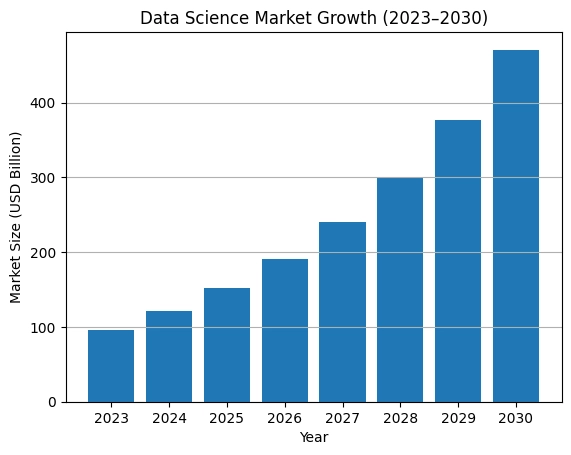
Data science has a strong and promising future as the demand for data-driven decision-making continues to grow rapidly across industries worldwide. The market is expanding quickly, creating excellent career opportunities and long-term growth potential.
Data science has a very strong future as the demand for data-driven decision-making continues to grow rapidly across industries. According to market research, the global data science platform market was valued at approximately $96.25 billion in 2023 and is expected to reach $470.92 billion by 2030, growing at a 26% CAGR, indicating significant career opportunities.
In India, growth is even faster, with the market expected to reach approximately $1,193.1 million by 2027, at a 33.7% CAGR. This rapid expansion is driven by technologies such as AI, machine learning, IoT, and big data, which are increasing the demand for skilled data scientists across industries.
Tips to Build a Successful Career in Data Science
Below are the important tips to build a successful career in data science:
- Learn the Basics: Start with a strong foundation in programming, statistics, and data analysis to build a solid base for advanced concepts.
- Work on Projects: Practice using real-world datasets to gain hands-on experience, strengthen problem-solving skills, and understand how data is applied in real-life scenarios, helping build confidence and improve overall practical knowledge.
- Master Tools and Technologies: Learn tools like Python, SQL, Tableau, and machine learning libraries to work efficiently with data and build useful data-driven solutions.
- Build a Strong Portfolio: Create practical projects based on real-world data to demonstrate your skills, analytical thinking, and hands-on experience, helping you attract recruiters and improve your chances of securing a job.
- Stay Updated: Keep learning about new trends, tools, and technologies to remain competitive in the fast-growing field of data science.
- Improve Communication Skills: Learn to explain data insights clearly and simply so that non-technical stakeholders can understand and use the information effectively.
- Gain Practical Experience: Apply for internships or entry-level roles to get real-world exposure, understand industry requirements, and improve your overall skills.
Learn Data Science with WsCube Tech
If you want to learn data science from beginner to advanced level, WsCube Tech provides a structured online data science course. This program focuses on practical learning through real-world datasets, machine learning projects, and AI application development.
With expert mentorship, step-by-step guidance, and hands-on projects, you can build industry-ready skills and gain confidence to start a career in Data Science, Machine Learning, and Artificial Intelligence within a 20 weeks.

FAQs about Data Science Careers
Start by learning basics like Python, statistics, and data analysis. Work on projects, build a portfolio, take online courses, and apply for internships or entry-level roles.
Yes, data science is a great career option in India due to high demand, attractive salaries, and growing opportunities across industries like IT, healthcare, finance, and e-commerce.
A degree in computer science, mathematics, statistics, or engineering is helpful. However, skills, certifications, and practical experience also play an important role in becoming a data scientist.
Yes, non-technical students can start by learning programming, statistics, and data analysis step by step. With consistent practice and projects, they can build a successful data science career.
Key skills include programming, statistics, machine learning, data visualization, and problem-solving. Strong analytical thinking and communication skills are also important for working effectively in data science roles.
It usually takes around 6 to 12 months to learn data science basics, depending on learning speed, background, and consistency in practice and working on real-world projects.
The salary of a data scientist in India ranges from ₹8L to ₹20L per year, depending on experience, skills, company, and job role, with higher growth over time.
Python and R are the most important programming languages for data science. SQL is also essential for database management, while Python is widely used for analysis and machine learning.
Main job roles include data analyst, data scientist, data engineer, machine learning engineer, and AI specialist. Each role focuses on different aspects of data analysis and model development.
Yes, coding is important in data science. Knowledge of languages like Python or R helps with data analysis, automation, and the efficient building of machine learning models.
Data science can be challenging at the beginning, but with consistent practice, clear understanding of basics, and working on projects, beginners can gradually learn and become comfortable.
Begin by learning fundamentals like Python, statistics, and data analysis. Practice with projects, take online courses, build a portfolio, and apply for internships to gain practical experience.
Conclusion
Data science has become one of the most valuable and fast-growing career options today, offering strong opportunities across different industries. As organizations rely more on data, the need for skilled professionals continues to increase, creating better career growth and learning opportunities.
Starting in this field requires effort, practice, and the right approach. By learning key skills, working on real projects, and staying consistent, it is possible to build a successful career. With time and experience, data science can lead to a stable and rewarding future.
Practice Coding With Our Free Compilers





Leave a comment
Your email address will not be published. Required fields are marked *Comments (0)
No comments yet.