
Think about the last time you searched for a product online and ended up buying it. That entire journey, from the search to the purchase, was shaped by someone's digital marketing objectives.
Every brand you see on Instagram, every blog that shows up on Google, and every email sitting in your inbox exists because a marketer sets a specific goal and builds a strategy around it. Without clear digital marketing goals, campaigns run without direction and budgets get wasted.
Whether you are launching a new product, trying to attract more website visitors, or looking to retain existing customers, your goals of digital marketing will decide every move you make.
In this blog, we will walk you through the most important digital marketing objectives, why they matter, and real examples for each one.
What are Digital Marketing Objectives?
Objectives of digital marketing are the results and targets that marketers and their teams try to achieve through different strategies and tactics. A few examples of digital marketing objectives are increasing market share, improving ROI, boosting sales, etc.
Understanding digital marketing objectives demands time and effort. Hence, join our digital marketing course that offers comprehensive curriculum designed by experienced mentors. You will learn different types of marketing goals, strategies to achieve them, and more.
Why are Digital Marketing Goals & Objectives Important?
Strategically set digital marketing objectives allow the marketing team and company to envision the right tactics and ways to achieve them. They give a purpose and direction to everyone involved, so each member works toward the same goal.
When you have a clear goal, your team can determine and build the best campaigns that provide the highest return on investment. You can use this return to increase your marketing budget for the next campaign.
Also, when the team knows its target, it can see all the possibilities, take necessary steps to achieve the goals, and measure the success. With more efforts to meet the digital marketing goal, businesses witness increased growth and revenue.
A marketing funnel has three major levels:
- Discovery - It's at the top of the funnel and involves people discovering the brand while looking for a specific product or service.
- Consideration - It's at the center of the funnel and refers to the stage when users are ready to buy a product.
- Purchase - It lies at the bottom of the funnel and occurs when a user makes a purchase.
With a clear goal, you can shift from one stage of the marketing funnel to the next seamlessly rather than moving aimlessly from task to task.
Recommended Professional Certificates
AI-Powered Digital Marketing Course
Performance Marketing Bootcamp
SEO Specialist Bootcamp
Steps to Set Effective Digital Marketing Objectives (Goals)
Setting digital marketing objectives without a clear process often leads to wasted effort. Follow these steps to build objectives that are measurable and aligned with your business.
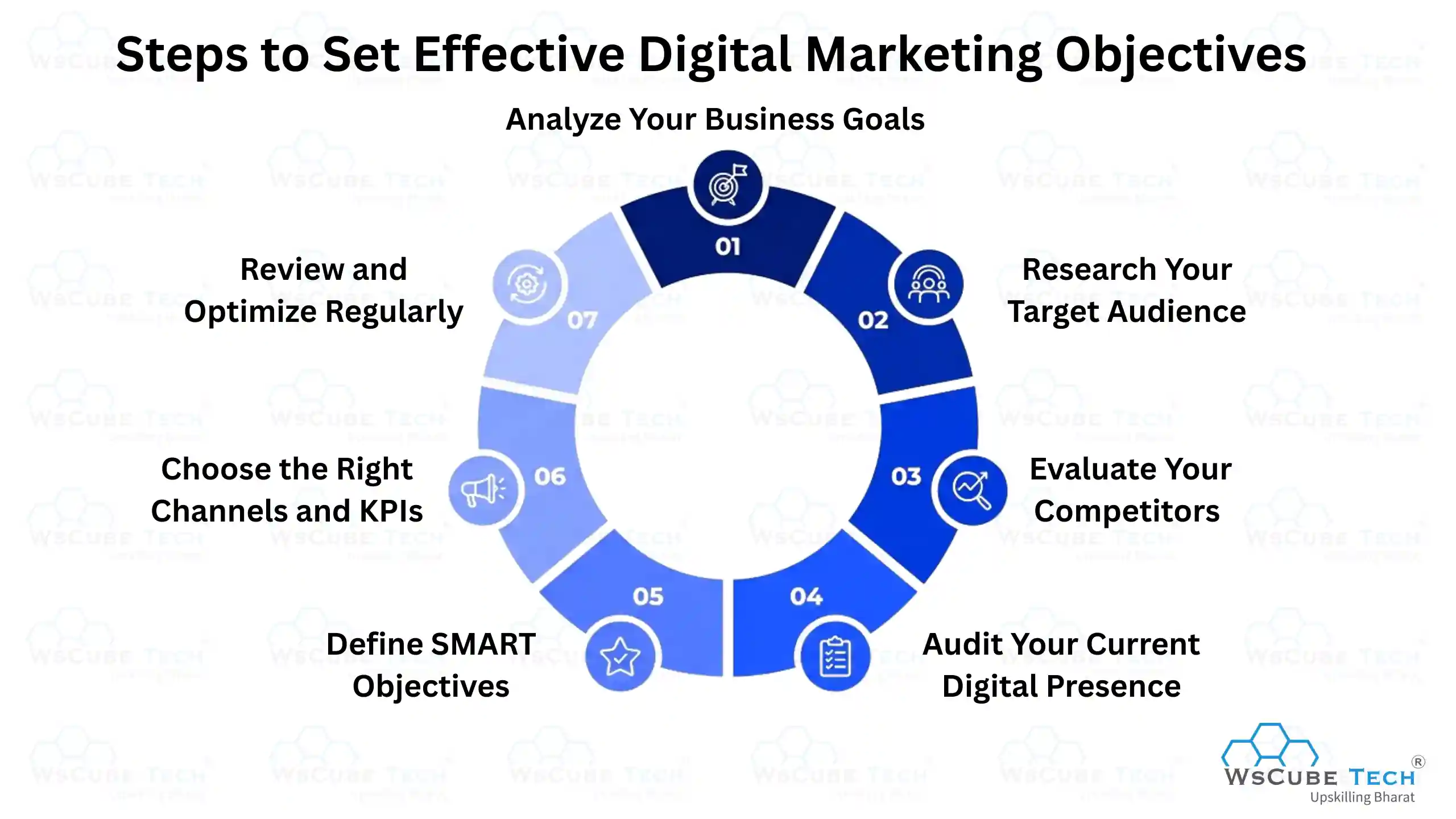
Step 1: Analyze Your Business Goals
Start by identifying what your business needs most right now, whether that is more sales, better brand visibility, or a larger customer base. Your digital marketing objectives must directly support your overall business direction and not exist in isolation.
Step 2: Research Your Target Audience
Study your audience's behavior, preferences, platforms they use, and the problems they want solved. The more clearly you understand who you are targeting, the more focused and effective your digital marketing goals will be.
Step 3: Evaluate Your Competitors
Audit what your competitors are doing across search, social media, and content. Identify gaps in their strategy and areas where you can do better, as this gives you a realistic benchmark to set your own goals against.
Step 4: Audit Your Current Digital Presence
Review your website performance, existing content, social media engagement, and past campaign results. Understanding where you currently stand helps you set realistic and meaningful digital marketing strategy objectives.
Step 5: Define SMART Objectives
Turn your broad goals into Specific, Measurable, Attainable, Realistic, and Timely objectives. For example, instead of "increase traffic," a SMART goal would be "increase organic website traffic by 30% in the next three months."
Step 6: Choose the Right Channels and KPIs
Pick the digital channels that best reach your audience, such as SEO, email, social media, or paid ads, and assign clear KPIs to each objective. This ensures you can accurately track progress and measure success.
Step 7: Review and Optimize Regularly
Set a schedule to review your goals every month or quarter. Analyze what is working, drop what is not, and adjust your tactics to keep your digital marketing goals on track.
Upcoming Masterclass
Attend our live classes led by experienced and desiccated instructors of Wscube Tech.



Top 8 Objectives of Digital Marketing (With Example)
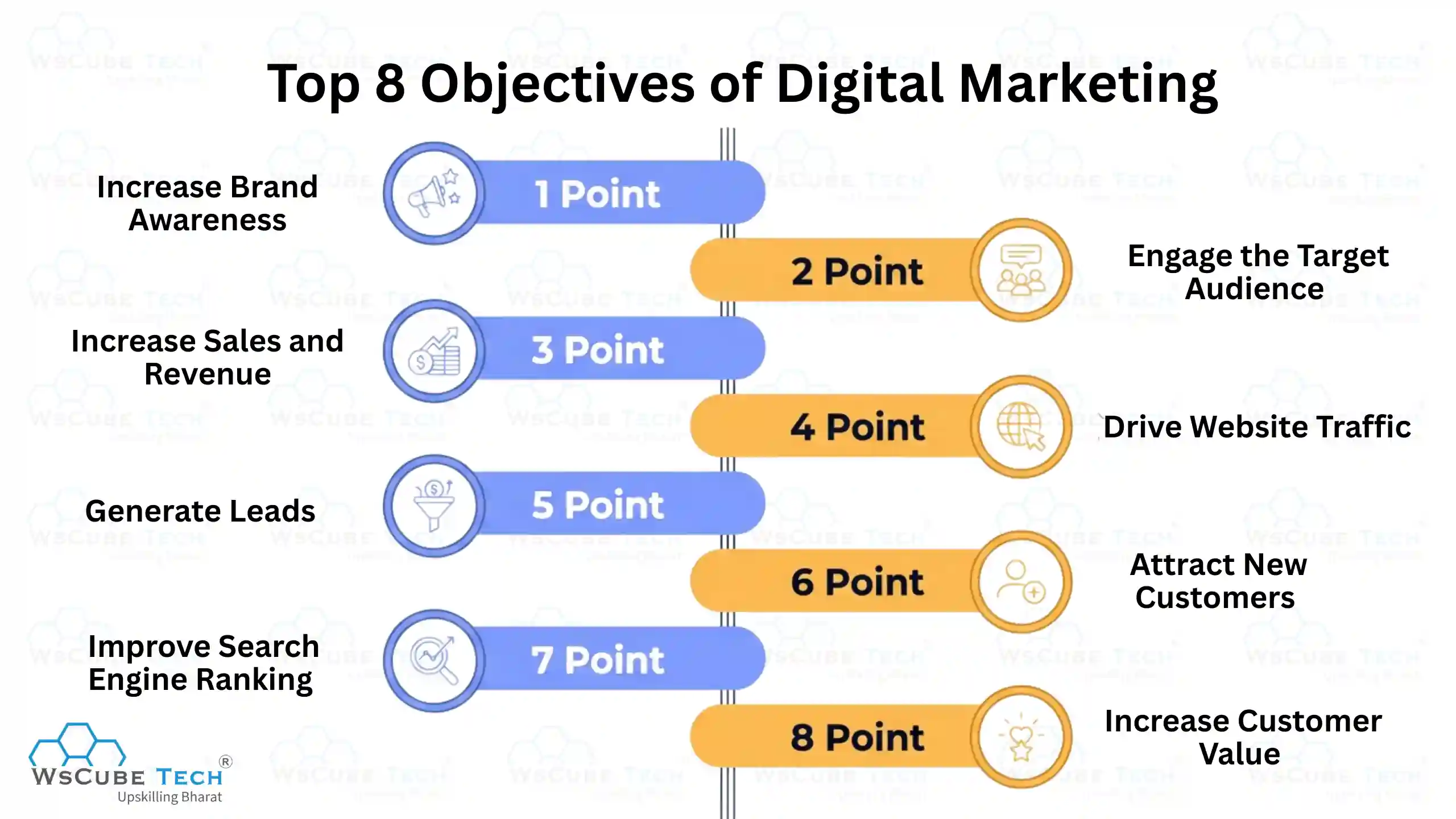
Although specific marketing objectives can vary based on a company’s products, services, and target audiences, there are a few common digital marketing objectives that every marketer tries to achieve. We have listed some of those goals below:
- Increase Brand Awareness
- Engage the Target Audience
- Increase Sales and Revenue
- Drive Website Traffic
- Generate Leads
- Attract New Customers
- Improve Search Engine Ranking
- Increase Customer Value
1. Increase Brand Awareness
Brand awareness is about making sure your target audience recognizes and remembers your brand when they need a product or service you offer. Whether you are launching a startup, introducing a new product, or targeting a new audience segment, getting your brand in front of the right people is the foundation of every digital marketing strategy.
Key tactics:
- Share informative and engaging content across social media
- Post about your company's vision, culture, and story
- Run surveys, polls, and interactive campaigns
- Create consistent visual identity and brand voice across channels
Example: A new skincare brand runs Instagram reels and short-form videos showing behind-the-scenes product creation, building familiarity and trust before the product even launches.
2. Engage the Target Audience
Brand engagement measures how much your potential customers interact with your content, listen to your story, and explore your brand. Higher engagement builds a loyal community that advocates for your brand organically.
Key tactics:
- Post regularly and reply to comments and messages
- Personalize communication with segmented content
- Host live sessions, Q&As, and contests
- Keep website content updated and relevant
Example: A fitness app sends personalized weekly progress emails to users and runs monthly Instagram challenges with branded hashtags to keep the community active.
Expert Tip: Track success by monitoring likes, shares, comments on social, and open or click-through rates for email campaigns.
3. Increase Sales and Revenue
Boosting sales and revenue is one of the most direct digital marketing goals for any business. Campaigns at every stage of the funnel can be designed to move prospects closer to a purchase.
Key tactics:
- Identify the highest-converting channels and double down on them
- Build an active online community through quality content
- Share product tutorials, demos, and customer success stories
- Use retargeting campaigns to re-engage warm prospects
- Reward loyal customers with a points or referral program
Example: An e-commerce brand runs a retargeting campaign on Meta Ads targeting users who viewed products but did not purchase, offering a 10% discount code to push them toward conversion.
4. Drive Website Traffic
Website traffic is the lifeblood of digital marketing. Without visitors, there are no leads, no conversions, and no sales. The goal is to attract the right visitors who are likely to engage with your content and products.
Key tactics:
- Optimize your website for search engines (on-page SEO)
- Create high-value blog content targeting relevant keywords
- Run paid campaigns on Google and social platforms
- Add strong call-to-actions and internal linking throughout the site
Example: A B2B SaaS company publishes weekly SEO-optimized blogs on topics their target buyers search for, driving consistent organic traffic to their service pages.
5. Generate Leads
Lead generation is about attracting potential customers and collecting their details for further nurturing. This is the consideration stage of the funnel where your goal is to convert website visitors into qualified prospects.
Key tactics:
- Offer downloadable resources like ebooks, templates, or whitepapers
- Use website forms, webinars, and gated content
- Run targeted campaigns with high-intent keywords
- Send email newsletters with clear CTAs
Example: A digital marketing agency offers a free "Website SEO Audit" tool on their site. Visitors enter their email to access the report, and the agency follows up with a nurture email sequence.
Expert Tip: Measure lead quality by tracking the lead-to-customer conversion rate alongside total volume.
6. Attract New Customers
Attracting new customers ensures long-term brand growth and relevance. The strategies here differ from retention, focusing instead on reaching people who have never interacted with your brand before.
Key tactics:
- Leverage customer reviews and referral programs
- Collaborate with complementary brands or influencers
- Run awareness campaigns in new markets or geographies
- Organize events (online or offline) that bring in fresh audiences
Example: A meal-prep service partners with a fitness influencer to offer their followers an exclusive first-week discount, reaching a highly relevant new audience at scale.
7. Improve Search Engine Ranking
Ranking higher on search engine result pages is one of the most impactful and also most competitive digital marketing strategy objectives. SEO drives organic traffic, reduces ad spend, and builds long-term brand authority.
Key tactics:
- Publish new, relevant content and blogs targeting priority keywords
- Build quality backlinks from authoritative websites
- Fix technical SEO issues like crawl errors, slow page speed, and broken URLs
- Create effective metadata and use structured data (schema markup)
Example: A law firm creates a dedicated FAQ page answering the most common legal questions their clients search for, optimized with structured data to increase chances of appearing in Google's featured snippets.
8. Increase Customer Value
Retaining and growing the value of existing customers is just as important as acquiring new ones. Loyal customers spend more, refer others, and lower your overall cost of acquisition over time.
Key tactics:
- Offer dedicated and responsive customer support
- Run loyalty programs with reward points and exclusive perks
- Send personalized emails with relevant product recommendations
- Share educational content and resources that help customers get more from your product
- Give early access to new features or products
Example: A subscription software company sends monthly "tips and tricks" emails to existing users, showing them advanced features they have not explored yet. This reduces churn and increases long-term account value.
Expert Tip: Measure customer value through purchase frequency, referral rates, and customer lifetime value (CLV).
Expand Your Marketing Skills
Some More Digital Marketing Objectives Examples
To create effective marketing strategies and achieve desired results, you need to understand examples of digital marketing objectives. We have shared a few of them below for clarity:
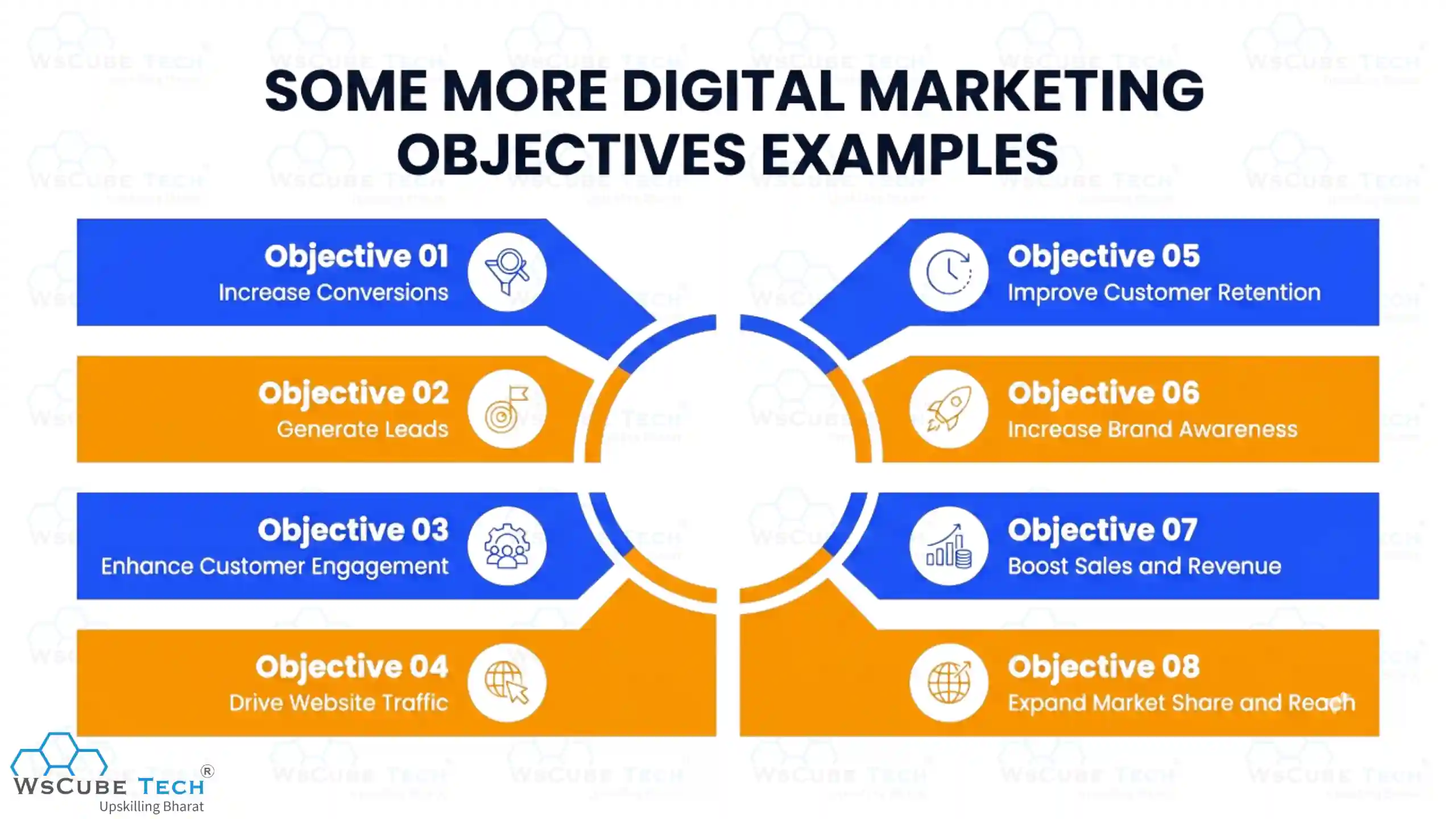
1. Increase Conversions
Objective: Optimize the website and different marketing platforms to improve conversion rates.
Example: Running A/B testing for different website layouts to find the most effective one.
2. Generate Leads
Objective: To collect information about the target customers for further nurturing.
Example: Offering website visitors a downloadable ebook or whitepaper to encourage them to sign up for newsletters.
3. Enhance Customer Engagement
Objective: Interact with customers and engage them with the brand.
Example: Conduct live or Q&A sessions with followers or host contests.
4. Drive Website Traffic
Objective: To attract more visitors to the website.
Example: Creating and implementing SEO strategies that can boost organic search rankings and enhance targeted PPC campaigns to drive traffic to the website.
5. Improve Customer Retention
Objective: To retain customers and build brand loyalty.
Example: Sending personalized emails to inform customers about the latest deals and discounts.
6. Increase Brand Awareness
Objective: To improve brand visibility and recognition.
Example: Creating a social media marketing campaign that encourages user-generated content with branded hashtags.
7. Boost Sales and Revenue
Objective: To increase overall sales and revenue.
Example: Promoting products for a limited time and offering discounts to encourage immediate purchases.
8. Expand Market Share and Reach
Objective: To enter new markets and reach a wider section of the audience.
Example: Creating content and marketing campaigns for specific regions.
Digital Marketing SMART Objectives
SMART is a guide for marketers while defining their objectives. It ensures that the goals are clear and easier to measure. SMART stands for:
- Specific: The objectives should be detailed and concrete, answering the basic what, where, who, when, how, and why questions.
- Measurable: You must be able to measure your goals and results to know if you have achieved what you aimed for. Think of all the KPIs you will use to define success.
- Attainable: Goals should be achievable to yield results.
- Realistic: Your objectives must be realistic, which means you must have the resources to attain them.
- Timely: Mention a timeline to achieve your goals. You can divide a long-term goal into smaller objectives to avoid hassle and complexities.
Explore Our Most Popular Marketing Courses
Digital Marketing SMART Objectives Examples
- Improve Customer Retention SMART Objective: Retain 20% more customers in the next four months through a customer loyalty program, quality post-purchase support, and personalized messages and emails.
- Increase Conversion Rate SMART Objective: Increase conversion rate by 3% in the next quarter by optimizing user experience, adding compelling CTAs, and running A/B tests.
- Boost Organic Website Traffic SMART Objective: Increase organic website traffic by 35% within the stipulated time by using the best SEO practices, creating quality content, and sharing blogs and posts across social media channels.
- Expand Market Reach SMART Objective: Enter a new market and acquire new customers the next year by implementing region-specific ad campaigns and associating with local influencers.
- Increase Online Sales for a Product SMART Objective: Increase sales of a particular product by 12% within the stipulated time through an optimized product web page, targeted PPC campaigns, and exclusive discounts.
- Generate Quality Leads via Email Marketing SMART Objective: Get 500 to 600 new email subscribers within a specific time through ebooks and webinars, including implementing an automated email nurturing campaign.

FAQs about Digital Marketing Objectives
Digital marketing objectives are specific, measurable goals that guide a brand's online strategy. They define what a business wants to achieve through digital channels, such as increasing brand awareness, generating leads, or boosting sales.
The main goal of digital marketing is to connect a brand with its target audience online and drive meaningful actions, whether that is a purchase, a sign-up, or increased brand visibility. The specific goals of digital marketing vary based on the stage of the business and the campaign.
The top 8 digital marketing objectives are increasing brand awareness, engaging the target audience, boosting sales and revenue, driving website traffic, generating leads, attracting new customers, improving search engine ranking, and increasing customer value.
A SMART digital marketing objective is one that is Specific, Measurable, Attainable, Realistic, and Timely. For example, "increase organic traffic by 30% in 90 days through SEO and content marketing" is a SMART goal.
Start by understanding your business goals and audience, then audit your current performance, evaluate competitors, and set SMART objectives tied to clear KPIs. Review and adjust them regularly based on results.
Goals are broad, long-term outcomes a brand wants to achieve, like "grow brand awareness." Objectives are the specific, measurable steps taken to reach those goals, such as "increase social media reach by 20% in 60 days."
Common digital marketing strategy objectives include increasing website traffic by 40% through SEO, generating 500 new email leads per month, reducing customer churn by 15% with a loyalty program, and improving conversion rate by 3% through A/B testing.
Clear digital marketing objectives give your team direction, help allocate budget efficiently, and make it possible to measure whether campaigns are actually working. Without defined goals, marketing efforts lack focus and ROI.
Common metrics include website traffic, conversion rate, cost per lead, email open and click-through rates, social media engagement, search engine rankings, and customer lifetime value. The right metrics depend on the specific digital marketing goal being tracked.
Digital marketing objectives should be reviewed at least once every quarter. Reviewing them regularly helps you identify what is working, fix what is not, and align your strategy with any shifts in business priorities or market conditions.
Conclusion
No matter what product or service you offer, setting clear digital marketing objectives is non-negotiable. They align your team, focus your budget, and give every campaign a measurable purpose. Whether you are working on brand awareness, lead generation, or customer retention, the right digital marketing objectives will always point your efforts in the right direction.
If you want to go deeper into building strategies that actually deliver results, join our digital marketing course for hands-on learning guided by industry experts. Make sure your goals are SMART, tied to your business vision, and revisited regularly so you stay competitive in a fast-moving digital world.
Join Our On-Campus Digital Marketing Program
Explore Our Free Courses






Leave a comment
Your email address will not be published. Required fields are marked *Comments (0)
No comments yet.