
Content marketing has become one of the most powerful ways for businesses to grow online. Yet a surprising number of people still confuse it with general advertising or social media posting. If you have been wondering what content marketing really means, how it works, and why every serious brand is investing in it, you are in the right place.
This guide covers everything, from a clear content marketing definition to practical steps for building your own strategy. Whether you are brand new to this or looking to sharpen what you already know, this is the only content marketing guide you will need.
What Is Content Marketing?
At its core, content marketing is a strategic approach to creating and sharing valuable, relevant, and consistent content. The goal is to attract a clearly defined audience and, over time, drive profitable actions from that audience.
The Content Marketing Institute defines it this way: content marketing is about giving people genuinely useful information, not shouting a sales pitch at them.
Think about it this way. When you search for "how to fix a leaking tap" and a plumbing company's blog gives you a clear, step-by-step answer, that is content marketing in digital marketing at work. The company did not advertise directly. Instead, it helped you, earned your trust, and stayed top of mind for when you need a plumber.
The content marketing meaning is simple: help before you sell.
A related concept is content and marketing working together. Every piece of content you create: whether a blog post, a YouTube video, or an email newsletter is also a marketing asset. It builds your brand, brings in traffic, and moves people toward a buying decision.
Why Content Marketing Is Important
Numbers tell the story better than anything else. According to Demand Metric, content marketing generates over three times as many leads as outbound marketing and costs 62% less. That is a dramatic difference in efficiency. The average return on investment for content marketing in 2025 was $7.65 for every $1 spent, according to SQ Magazine.
Here are a few more reasons why content marketing benefits are hard to ignore:
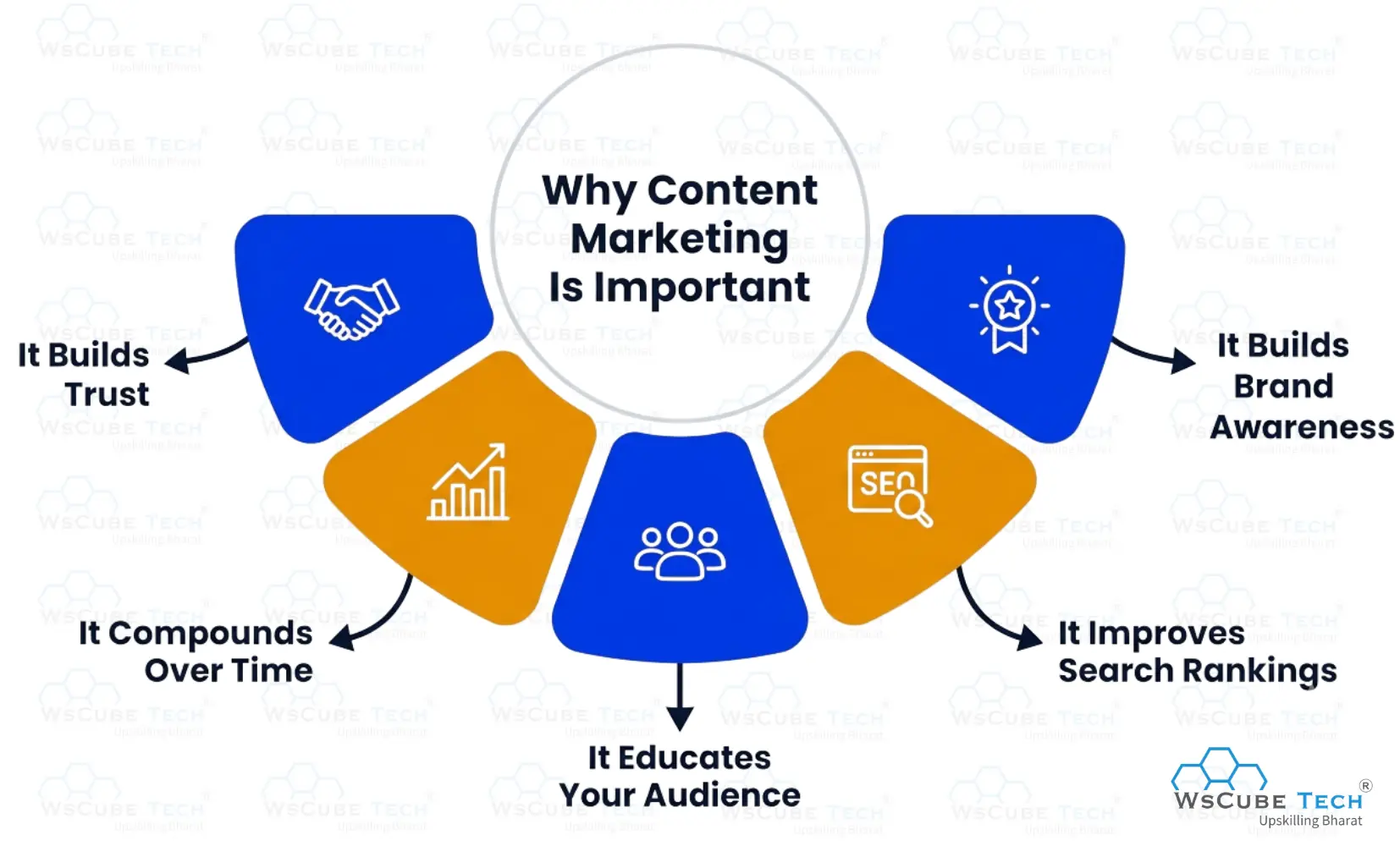
- It builds trust: People buy from brands they trust. Helpful content builds that trust before a sales conversation even starts.
- It compounds over time: A well-written blog post or video can bring in traffic for years after it was published. Unlike paid ads, which stop working the moment your budget runs out, content keeps delivering.
- It improves search rankings: Content is the fuel that powers SEO. Without content, there is nothing for Google to rank.
- It educates your audience: 76% of marketers say content marketing helps them generate demand and leads, while 63% say it helps nurture those leads along the way.
- It builds brand awareness: 81% of marketers say content marketing helped them create brand awareness in the last year alone.
The content marketing basics really come down to one idea: if you consistently help people, they will eventually trust you enough to buy from you.
How Does Content Marketing Work?
Content marketing works by attracting strangers, turning them into visitors, converting visitors into leads, and eventually making them loyal customers.
Here is the simple flow:
- Someone searches for a question online or sees a helpful video.
- They land on your content and get a useful answer.
- They start to trust your brand.
- They sign up for your email list or follow you on social media.
- Over time, through more helpful content, they become a paying customer.
This process takes time. Content marketing is not a quick fix. It is a long-term investment that gets stronger the longer you stick with it. That compounding effect is what makes it so powerful compared to running ads that stop the moment you pause your budget.
The key is consistency. Publishing one blog post and expecting results is like planting one seed and expecting a forest. The brands that win at content and marketing are the ones that show up consistently, answer real questions, and keep improving their content over time.
Content Marketing vs Traditional Marketing: Key Differences
It helps to understand where content marketing sits in relation to other marketing approaches.
Traditional marketing includes TV commercials, newspaper ads, billboards, and radio spots. It works by interrupting people. You are watching a show, and an ad breaks in. That is the defining feature of traditional marketing: it interrupts.
Content marketing does the opposite. It attracts. Instead of pushing a message at people who did not ask for it, you create something people actively choose to read, watch, or listen to.
Here is a simple comparison:
| Factor | Traditional Marketing | Content Marketing |
| Approach | Interrupts the audience | Attracts the audience |
| Cost | Generally high | Lower, especially long-term |
| Lifespan | Short (campaign ends, impact fades) | Long (content keeps working for years) |
| Trust | Lower (people are skeptical of ads) | Higher (useful content builds genuine trust) |
| Measurability | Limited | Highly measurable |
Now, content marketing vs digital marketing is a slightly different comparison. Digital marketing is the broader category. It includes paid ads, social media, email campaigns, SEO, and yes, content marketing too. So content marketing is a type of digital marketing, but not all digital marketing is content marketing.
The key difference is intent. Digital marketing can use direct sales tactics. Content marketing always leads with value and education first.
Recommended Professional Certificates
AI-Powered Digital Marketing Course
Performance Marketing Bootcamp
SEO Specialist Bootcamp
Relation Between Content Marketing and SEO
Content marketing and SEO are two sides of the same coin. You simply cannot have one without the other. SEO (search engine optimization) is the process of making your website and content easy for search engines to find and rank. But SEO needs something to work with. That something is content.
What is content in marketing from an SEO perspective? It is every blog post, guide, video description, landing page, and product description that Google can crawl and index. Here is how they work together:
- Your content marketing strategy identifies topics and keywords your audience is searching for.
- You create content around those keywords.
- Google finds, crawls, and ranks your content.
- People searching for those keywords discover your brand.
Content marketing tips for SEO include focusing on what is called "topical authority." Instead of writing random blog posts, you create a cluster of content around one core topic. Google rewards websites that prove deep knowledge in a specific area.
Also important in 2026 is E-E-A-T (Experience, Expertise, Authoritativeness, and Trustworthiness). Google uses these signals to judge content quality. To rank well, your content needs to demonstrate real-world experience, back up claims with credible sources, and come from a trustworthy website.
Content Marketing Funnel: TOFU, MOFU, and BOFU Explained
The content marketing funnel maps the journey a person takes from never having heard of you to becoming a paying customer. It has three stages.
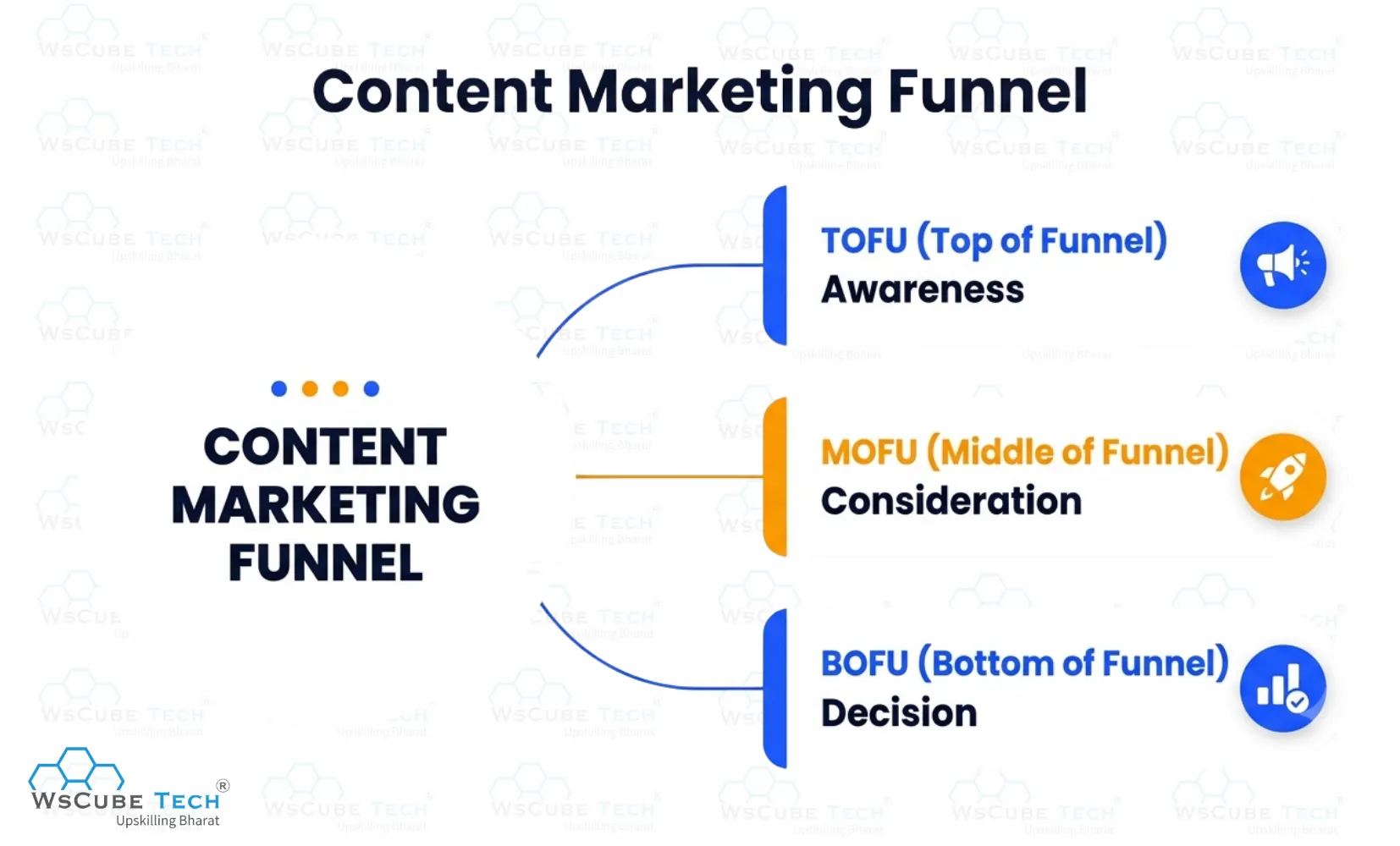
1. TOFU (Top of Funnel): Awareness
This is where someone realizes they have a problem. They are searching for answers, not solutions yet. Content at this stage should educate and attract a broad audience. Think blog posts, social media content, short videos, and infographics.
Example: "What is content marketing?" is a TOFU question. The person is learning.
2. MOFU (Middle of Funnel): Consideration
Here, the person knows their problem and is now comparing solutions. They are interested but not ready to buy. Content at this stage builds trust and helps them evaluate options. Think case studies, comparison guides, webinars, and email sequences.
3. BOFU (Bottom of Funnel): Decision
The person is ready to make a choice. Content here removes the final objections. Think free trials, demos, pricing pages, testimonials, and ROI calculators.
One important thing to note: modern buyers do not always follow this path in a straight line. Someone might read a pricing page before they read a single blog post. Because of this, your content marketing strategy needs content at all three stages, not just one.
Different Types of Content Marketing
There is no single format that works for every audience or every business. One of the greatest content marketing benefits is the variety of formats available. Here are the main types:
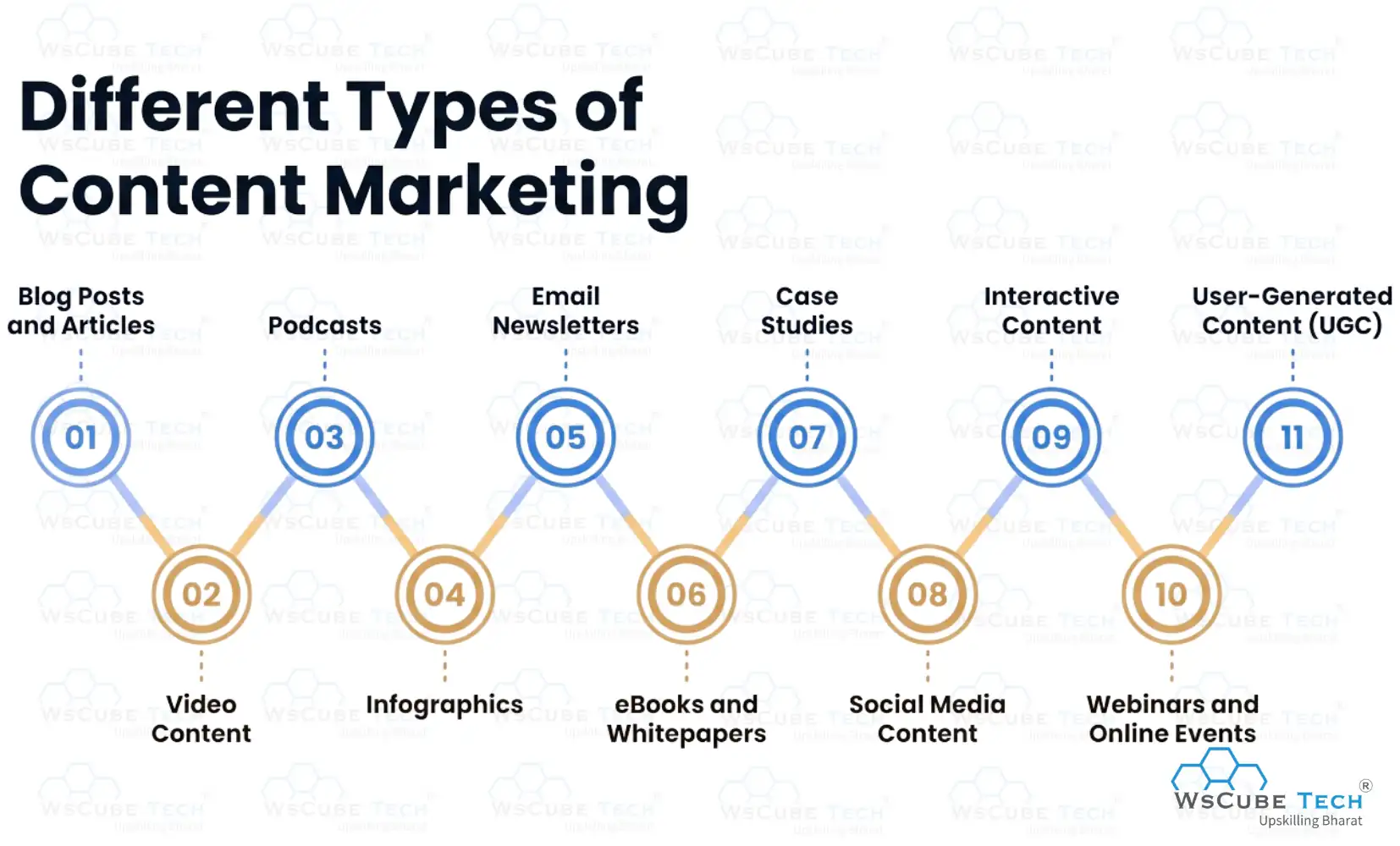
1. Blog Posts and Articles
The most widely used format. Blogs are excellent for SEO, thought leadership, and educating your audience. 79% of marketers actively maintain a blog as part of their strategy.
2. Video Content
Video has become essential. 91% of businesses now use video as a marketing tool. Short-form video (Reels, TikTok, YouTube Shorts) currently delivers the highest ROI of any content format. According to Taboola, for every $1,000 spent on short-form video in 2025, direct sales attributed $8,900.
3. Podcasts
Audio is growing fast. In 2025, 61% of B2B marketers used audio platforms including podcasts as part of their strategy. Branded podcasts can increase brand favorability by 14%.
4. Infographics
Visual representations of data or processes. Great for social sharing and explaining complex ideas quickly.
5. Email Newsletters
One of the highest-ROI content formats available. 71% of B2B marketers use email newsletters. Email marketing returns an average of $42 for every dollar spent.
6. eBooks and Whitepapers
Long-form content used to capture leads and demonstrate deep expertise. Popular in B2B marketing where buyers do extensive research.
7. Case Studies
Real-world stories showing how your product or service solved a customer's problem. According to Taboola, case studies and customer success stories were the most popular content type in 2025 at 41%.
8. Social Media Content
Organic posts on platforms like LinkedIn, Instagram, Facebook, and X. 90% of marketers use social media to share their content.
9. Interactive Content
Quizzes, calculators, polls, and assessments. This format drives engagement by asking the audience to participate rather than just consume. Adoption of interactive shopping experiences through content rose by 40% in 2025.
10. Webinars and Online Events
Live or recorded sessions that educate your audience and generate qualified leads. Webinars were among the top five most effective distribution channels in 2025.
11. User-Generated Content (UGC)
Content created by your customers, not your brand. Reviews, testimonials, social media posts, and unboxing videos all count. UGC builds authenticit. 65% of consumers are more likely to buy from posts featuring real customers than from traditional influencer content.
The right mix of content marketing types depends on your audience, your goals, and your available resources.
Upcoming Masterclass
Attend our live classes led by experienced and desiccated instructors of Wscube Tech.



Content Marketing for B2B vs. B2C: Key Differences
While the core principles of content marketing remain the same, the strategy varies significantly depending on whether you are targeting businesses or individual consumers. Understanding these differences helps marketers create content that resonates with the right audience and drives better results.
| Aspect | B2B Content Marketing | B2C Content Marketing |
| Target Audience | Businesses, decision-makers, and professionals | Individual consumers |
| Buying Behavior | Rational, research-driven, and slower | Emotional, impulse-driven, and faster |
| Decision Process | Multiple stakeholders involved | Usually a single buyer |
| Primary Goal | Build trust, educate, and generate qualified leads | Create engagement, brand awareness, and sales |
| Content Style | Educational, informative, and data-driven | Entertaining, emotional, and visually appealing |
| Best-Performing Formats | Whitepapers, case studies, webinars, eBooks, detailed guides | Short-form videos, social media posts, user-generated content, interactive experiences |
| Content Length | Generally long-form and detailed | Usually short, concise, and easy to consume |
| Key Distribution Channels | LinkedIn, email marketing, industry blogs, webinars | Instagram, YouTube, Facebook, TikTok, influencer platforms |
| Success Factors | Expertise, credibility, and ROI-focused messaging | Storytelling, social proof, and emotional connection |
1. B2B Content Marketing
B2B (business-to-business) buyers are typically rational, thorough, and research-oriented. Studies show that buyers are often 57–70% through their purchasing journey before contacting a sales team. As a result, content must educate and build trust long before direct sales conversations begin.
B2B content is usually more detailed and data-driven. Formats such as whitepapers, webinars, case studies, industry reports, and comprehensive guides perform particularly well. In fact, 76% of B2B marketers report educational content as their highest-performing content type. LinkedIn remains the leading platform for B2B content distribution and thought leadership.
2. B2C Content Marketing
B2C (business-to-consumer) purchasing decisions are generally quicker and influenced more by emotions. Consumers respond strongly to storytelling, entertainment, social proof, and personalized experiences.
As a result, B2C content often focuses on short-form videos, engaging social media posts, influencer collaborations, and visually rich content. Video content usage in B2C marketing is 35% higher than in B2B, while interactive shopping experiences continue to gain popularity among consumers.
3. The Common Ground
Despite their differences, both B2B and B2C content marketing share the same fundamental principle: understand your audience's needs and provide value before asking for a purchase or commitment. The better your content solves problems, answers questions, or entertains your audience, the more effective your marketing efforts will be.
What Is Content Marketing Personalization?
Content marketing personalization means delivering different content experiences to different people based on who they are, what they have done, or where they are in their buying journey.
Instead of showing everyone the same blog post or email, you tailor the message. A first-time visitor to your website sees an introductory guide. A returning customer who already bought from you sees tips on getting more value from their purchase.
Personalization works because people respond to content that feels relevant to them. 56% of online customers are more likely to return to websites that offer personalized recommendations.
In 2026, personalization has moved beyond just using someone's first name in an email. It now involves segmenting audiences based on behavior, purchase history, and stage in the buyer journey. AI has made this easier than ever — allowing marketers to analyze large amounts of data and automatically deliver the right content to the right person at the right time.
Content marketing personalization basics to know:
- Segment your email list and send different content to different groups.
- Use behavioral triggers (someone viewed your pricing page three times) to deliver targeted follow-up content.
- Create landing pages that adapt based on where the visitor came from.
- Personalize CTAs based on whether someone is a first-time visitor or a returning customer.
Personalization is no longer a nice-to-have in modern content marketing strategy. It is what separates brands that convert from brands that just create content.
Must-Know Concepts in Digital Marketing
Key Elements of a Content Marketing Strategy
A content marketing strategy is your plan for what content you will create, who it is for, where you will publish it, and how you will measure success. Without a strategy, content marketing becomes guesswork.
73% of B2B and 70% of B2C marketers now have a documented content marketing strategy. Organizations with documented strategies generate three times more leads per dollar spent than those without one.
Here are the core elements every strategy needs:
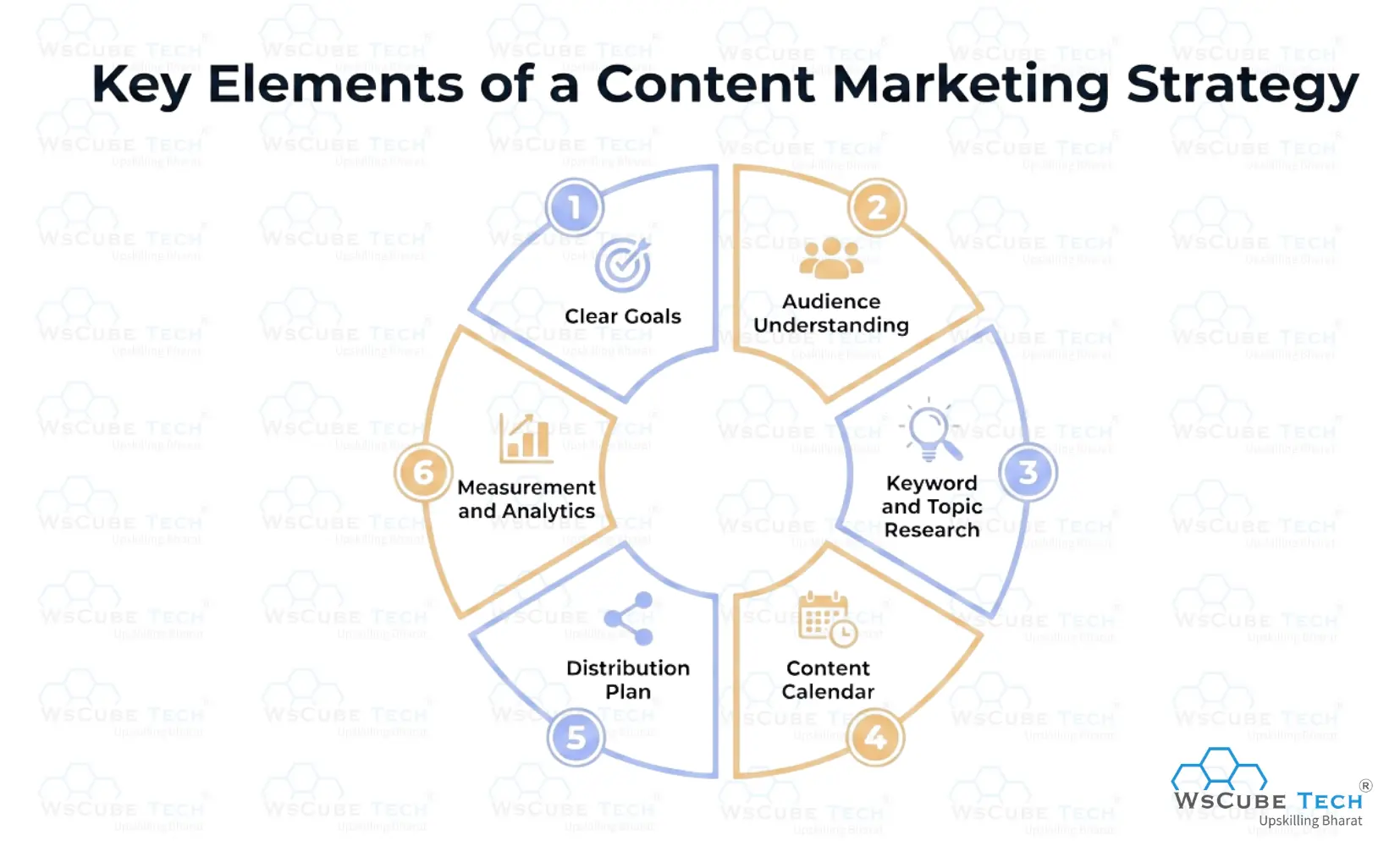
1. Clear Goals
What do you want your content to achieve? More website traffic? More email subscribers? More leads? More sales? Goals need to be specific and measurable.
2. Audience Understanding
Who are you creating content for? Build detailed audience profiles (sometimes called buyer personas) that describe your ideal customer's problems, goals, questions, and preferred content formats.
3. Keyword and Topic Research
What are people actually searching for? Use tools like Google Search Console, Ahrefs, or Semrush to find topics your audience cares about. Align content topics to search intent — what someone is actually trying to accomplish when they type that query.
4. Content Calendar
A content calendar keeps you organized and consistent. It maps out what content you will publish, when, and on which platform.
5. Distribution Plan
Creating content is only half the job. You also need a plan to get it in front of people. That includes SEO, social media, email newsletters, and repurposing content across multiple formats.
6. Measurement and Analytics
How will you know if your content is working? Identify your key metrics upfront: traffic, leads, email open rates, conversion rates, and revenue influenced by content.
Understand the Demands of Content Marketing
Before investing your time and resources, it is important to understand what content marketing truly requires. While it can be one of the most effective long-term marketing strategies, success depends on commitment, patience, and a clear plan.
1. It Takes Time to Deliver Results
Content marketing is not a quick-win strategy. Unlike paid advertising, which can generate immediate traffic, SEO-focused content often takes time to gain visibility and rankings.
Most businesses do not see significant organic results for at least three to six months. Setting realistic expectations from the beginning helps you stay focused on long-term growth.
2. Consistency Is Essential
Publishing a single blog post is unlikely to produce meaningful results. Sustainable growth comes from consistently creating, updating, and promoting valuable content over time.
Many marketers struggle with maintaining a consistent content schedule, which can slow down overall performance and impact long-term success.
3. Focus on Quality, Not Quantity
Creating more content does not automatically lead to better results. High-quality content that answers user questions, solves problems, and satisfies search intent is far more valuable than publishing large volumes of low-quality articles.
One of the biggest challenges marketers face today is creating content that ranks well and meets audience expectations.
4. Content Distribution Requires Equal Attention
Producing content is only one part of the process. Many businesses spend most of their effort creating content but very little time promoting it. To maximize reach and engagement, content should be actively distributed through channels such as social media, email marketing, industry communities, and outreach campaigns. Ideally, you should dedicate as much effort to promotion as you do to creation.
5. Budget Planning Matters
Although content marketing can be cost-effective compared to some other marketing channels, it is not completely free. Expenses may include content creation, SEO tools, graphic design, promotion, and professional support.
Many businesses allocate a significant portion of their marketing budget to content initiatives because of their long-term value and potential return on investment.
Steps to Create a Content Marketing Strategy
Here is a simple, step-by-step content marketing process you can follow:
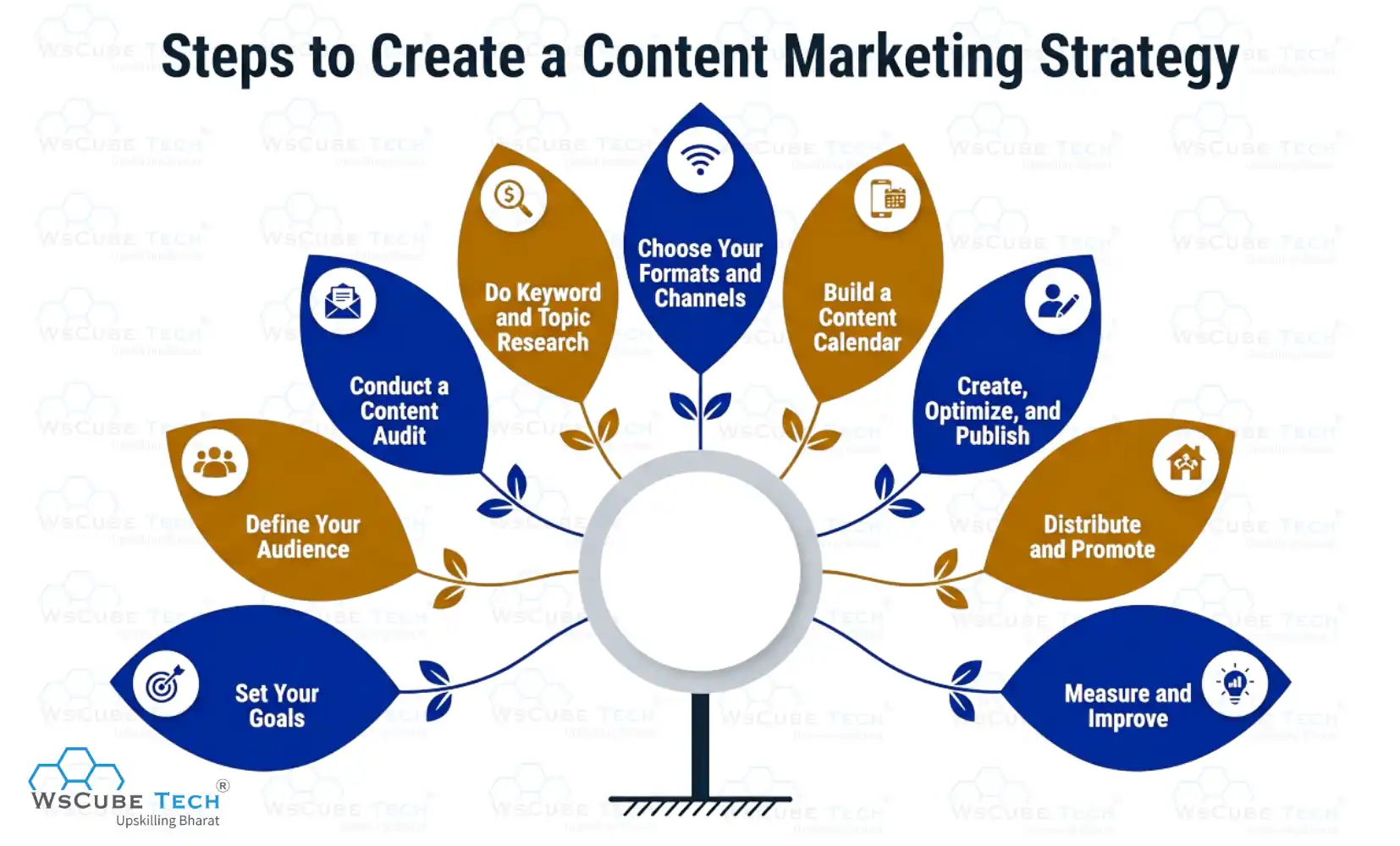
Step 1: Set Your Goals
Start with what you want to achieve. Use the SMART framework (Specific, Measurable, Achievable, Relevant, Time-bound). For example: "Grow organic blog traffic by 40% in six months."
Step 2: Define Your Audience
Create buyer personas that describe your ideal customer in detail. What problems do they have? What questions do they ask? What content formats do they prefer?
Step 3: Conduct a Content Audit (if you have existing content)
If you already have content, audit it before creating more. Find out what is already working, what can be improved, and what gaps exist.
Step 4: Do Keyword and Topic Research
Find the topics your audience is searching for. Group related keywords into clusters. This becomes the backbone of your content plan.
Step 5: Choose Your Formats and Channels
Pick the formats and content marketing channels that best match your audience and goals. Do not try to be everywhere at once. Start with one or two channels and do them well.
Step 6: Build a Content Calendar
Map out your content at least a month in advance. Include the topic, format, target keyword, publishing date, and who is responsible for creating it.
Step 7: Create, Optimize, and Publish
Write or produce your content. Optimize it for SEO. Publish it on your chosen platform.
Step 8: Distribute and Promote
Share your content across email, social media, and any other relevant channels. Repurpose it into different formats. Turn a blog post into a video, a social post, and an email.
Step 9: Measure and Improve
Review your analytics regularly. What is working? What is not? Adjust your strategy based on real data, not assumptions.
Content marketing best practices say you should revisit and update older content regularly. A blog post published two years ago can be refreshed and often ranks much higher after an update.
Explore Our Most Popular Marketing Courses
Role of a Content Marketer
A content marketer is the person responsible for planning, creating, distributing, and analyzing content to achieve marketing goals. Here are some key roles of a content marketer you must know:
- Develops the content strategy and decides what to create and why
- Conducts keyword research to find high-value topics
- Writes or manages the creation of blog posts, emails, whitepapers, social posts, and video scripts
- Optimizes all content for search engines
- Manages the content calendar and editorial workflow
- Distributes content across the right channels
- Tracks performance using analytics tools
- Collaborates with designers, sales teams, and product teams
- Stays current on content marketing trends and algorithm changes
At senior levels, content marketers also manage budgets, lead teams, and connect content directly to business revenue. The best content marketers combine analytical thinking with a genuine ability to write and tell stories.
Best Content Marketing Tools You Need
The right tools make content marketing faster, smarter, and more measurable. Here are the essential categories:
1. Keyword Research and SEO
- Ahrefs and Semrush are the industry leaders. Both help you find keywords, analyze competitors, and track rankings.
- Google Search Console is free and shows exactly what searches are bringing people to your site.
2. Content Creation
- Surfer SEO helps you optimize content for specific keywords by analyzing top-ranking pages.
- Grammarly for editing and clarity.
- Notion or Google Docs for writing and collaboration.
3. AI Writing Assistance
- AI tools like Claude or ChatGPT can help with brainstorming, outlining, and drafting. 89% of marketers now use generative AI for content. Use AI to accelerate your workflow while keeping your human voice and insight intact.
4. Distribution and Scheduling
- Buffer and Hootsuite for scheduling social media posts.
- Mailchimp or ConvertKit for email marketing.
5. Analytics and Measurement
- Google Analytics 4 for website traffic and user behavior.
- Hotjar for heatmaps showing how people interact with your content.
6. Content Management
- WordPress remains the most widely used CMS for content-heavy websites.
- HubSpot combines CMS, CRM, and marketing automation in one platform.
These content marketing tools do not need to be expensive. Many offer free tiers that are perfectly capable for small businesses just getting started.
Real-World Content Marketing Examples That Actually Worked
Seeing what content marketing looks like in practice helps bring the concept to life.
1. HubSpot

HubSpot built its entire business on content. The company publishes hundreds of detailed guides, templates, and research reports every year. Its blog brings in millions of visitors every month. That content engine helped HubSpot grow from a startup into a company valued at over $30 billion. The core of its approach: answer every question a marketer or salesperson might have, for free, before asking for anything in return.
2. Red Bull

Red Bull does not sell energy drinks through its content. It publishes extreme sports videos, funds athletes, and runs events. The content IS the brand. Red Bull Media House produces TV shows, documentaries, and online content that millions of people watch because they genuinely enjoy it. Sales follow naturally.
3. Neil Patel

Neil Patel built one of the world's most recognized digital marketing brands entirely through content. His blog publishes detailed, data-backed guides that rank for thousands of keywords. The blog itself is a working example of the content marketing strategy he teaches.
4. Canva

Canva built Design School, a library of free tutorials, templates, and design guides. This content serves two purposes: it helps people learn design, and it naturally introduces them to the Canva product. It is a perfect example of how content marketing in digital marketing should work , the content and the product are genuinely aligned.
Content Marketing Trends 2026 You Cannot Afford to Ignore
The content marketing trends shaping 2026 are a mix of technology shifts and changing audience behavior.
1. AI is everywhere, but human voice wins
94% of marketers plan to use AI in content creation in 2026. But the brands that stand out are the ones using AI to work faster while keeping a genuine human perspective. AI-generated content that sounds generic is being ignored. Original opinions, real experience, and honest storytelling are what earn trust.
2. Short-form video still dominates
Short-form video delivers more ROI than any other content format right now. Brands that are not investing in Reels, Shorts, or TikTok-style video are falling behind.
3. Topical authority over keywords
Google no longer rewards pages that simply include the right keywords. It rewards websites that demonstrate deep, trustworthy expertise on a subject. Building a cluster of interconnected content around your core topics is now more important than targeting individual keywords.
4. Answer Engine Optimization (AEO)
50% of consumers now use AI-powered search tools like Perplexity, Gemini, or ChatGPT as their primary research tool. Optimizing your content to appear in these AI-generated answers is a new frontier for content marketing.
5. First-party data and personalization
As third-party cookies disappear, brands are building their own email lists and using first-party data to personalize content and marketing experiences. The brands that own their audience will win.
6. B2B influencer and creator partnerships
75% of B2B marketers are increasing budgets for influencer and creator partnerships in 2026. Thought leaders and niche creators are becoming a core distribution channel for B2B content.
Common Content Marketing Mistakes to Avoid
Even experienced teams make these mistakes. Knowing them in advance saves you a lot of wasted effort.
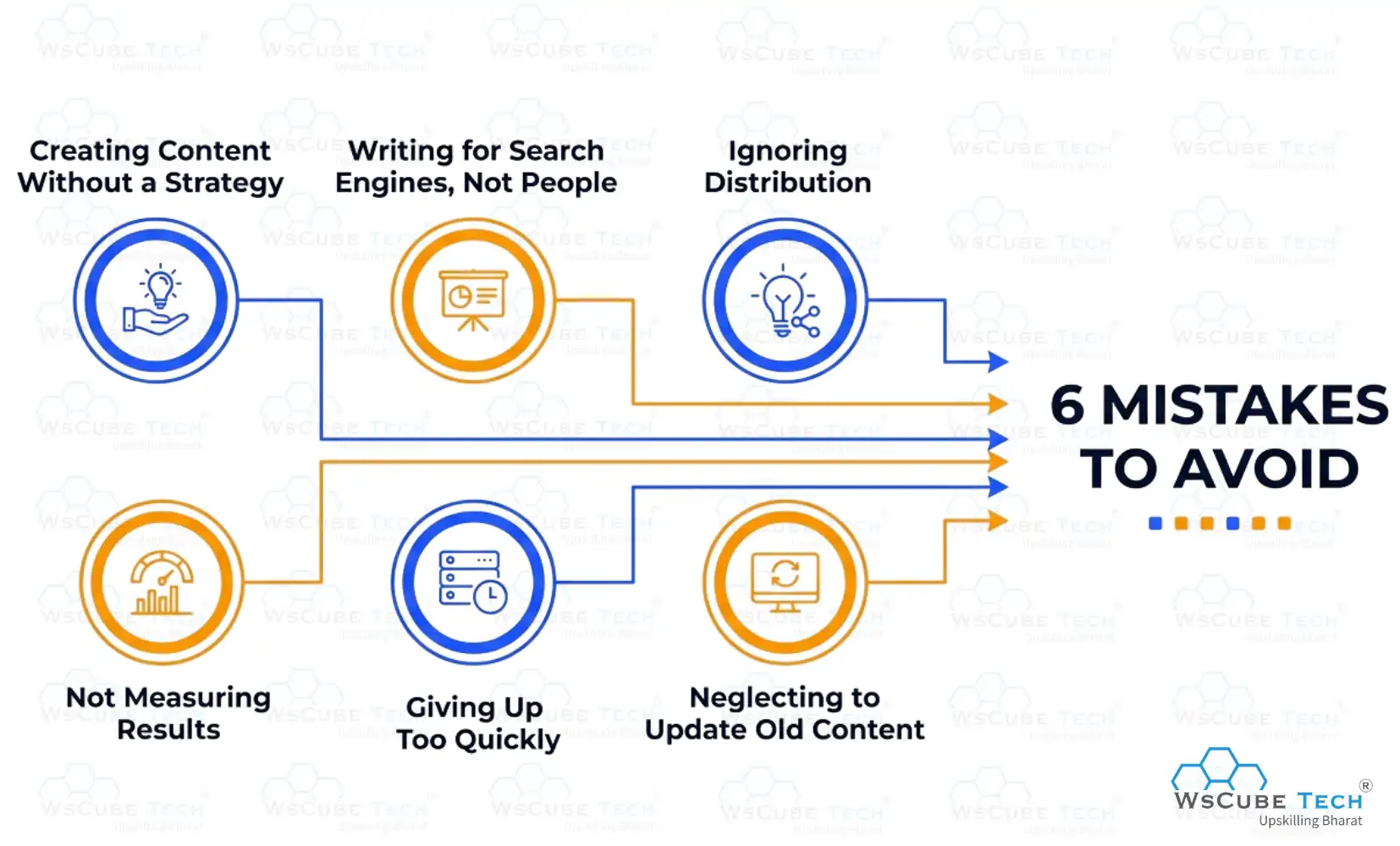
- Creating content without a strategy: Publishing randomly without a clear plan is how most content efforts fail. Every piece of content should have a purpose, a target audience, and a measurable goal.
- Writing for search engines, not for people: Over-optimizing for keywords at the expense of readability is penalized by Google and ignored by readers. Write for your audience first, then optimize.
- Ignoring distribution: Many businesses put all their effort into creation and almost none into getting the content seen. Publishing without promotion means most of your content will never be found. Build a distribution habit.
- Not measuring results: Only 29% of marketers measure content marketing ROI effectively. If you are not tracking what is working, you are flying blind. Set up proper analytics from day one.
- Giving up too quickly: Content marketing takes time. Most businesses see meaningful SEO results after three to six months of consistent effort. Stopping after six weeks because results are not instant is the single most common reason content marketing fails.
- Neglecting to update old content: Content gets outdated. An article about "2022 trends" is not helpful in 2026. Refreshing older content with updated information is one of the fastest ways to recover lost rankings and traffic.

FAQs About Content Marketing
Content marketing is when a brand creates helpful, relevant content like blog posts, videos, or podcasts to attract and build trust with its target audience, instead of running traditional ads.
Social media marketing focuses on building an audience and engagement on platforms like Instagram or LinkedIn. Content marketing is broader as it includes any type of content created to attract and convert an audience, including blog posts, videos, emails, and more. Social media is often a distribution channel for content marketing.
SEO content typically takes three to six months to rank and bring in significant traffic. Email and social content can show results faster. The timeline depends on your industry, competition, and consistency.
It varies widely. 58% of companies spend between $5,000 and $10,000 per month on content marketing. Small businesses can get started for far less, especially with AI tools helping reduce production costs.
No. AI can help content marketers work faster and smarter, but it cannot replace the human judgment, original insight, and genuine experience that make content worth reading. The marketers being replaced are those who refuse to adapt, not those who use AI intelligently.
There is no single best type. Blog posts, video, and email newsletters consistently rank among the highest ROI formats. The best type for your business depends on your audience, resources, and goals.
Yes. Content marketing is one of the most cost-effective marketing strategies for small businesses. By creating valuable content that answers customer questions, small businesses can attract organic traffic, generate leads, and build brand authority without spending heavily on advertising.
The primary goals of content marketing are to increase brand awareness, attract qualified traffic, generate leads, build customer trust, improve search engine rankings, and ultimately drive sales and customer retention.
Common content marketing examples include blog posts, videos, podcasts, case studies, email newsletters, infographics, social media content, webinars, ebooks, and how-to guides. Businesses use these formats to educate, engage, and convert their audience.
Content marketing helps improve SEO by creating keyword-targeted content that search engines can index and rank. High-quality content also attracts backlinks, increases user engagement, and helps websites build authority in their industry.
There is no universal rule, but consistency is more important than frequency. Many businesses publish one to four high-quality pieces of content per week. The ideal publishing schedule depends on your resources, audience needs, and marketing goals.
Content marketing success can be measured using key performance indicators (KPIs) such as website traffic, search rankings, engagement rates lead generation, conversion rates, email subscribers, backlinks, and revenue generated from content-driven channels.
Successful content marketers typically need skills in content writing, SEO, keyword research, audience research, storytelling, analytics, social media marketing, email marketing, and content strategy. AI tools can enhance these skills but do not replace them.
Conclusion
Content marketing is not a trend. It is a fundamental shift in how businesses build relationships with their customers. By consistently creating content that helps, educates, or entertains your audience, you earn their trust long before they ever think about buying from you.
The brands that invest in content and marketing today are the ones that will own their markets tomorrow. Whether you are starting your first blog or scaling an enterprise content operation, the principles are the same: know your audience, create genuine value, distribute consistently, and measure everything.
A well-executed content marketing strategy does not just bring in traffic. It builds a brand, generates leads, shortens sales cycles, and creates loyal customers who come back again and again. The best time to start was a year ago. The second best time is now.
Join Our On-Campus Digital Marketing Program
Explore Our Free Courses






Leave a comment
Your email address will not be published. Required fields are marked *Comments (0)
No comments yet.