
If you have ever wondered what is niche marketing, you are not alone. Many successful businesses grow by focusing on a small, specific market rather than trying to reach everyone. Niche marketing allows you to understand your audience better, solve their problems, and create products that truly matter. Certainly, this targeted approach helps you to stand out and build trust in a crowded marketplace.
Whether you want to start a blog, an online store, or a service-based business, choosing the right niche is important. In this detailed guide, we will break down the process into easy steps so you can identify better opportunities and build a strong foundation for long-term growth.
If you are interested in marketing and want to build real skills, you can join our online digital marketing course. In this course, you will learn important topics like SEO, social media marketing, PPC advertising, content marketing, and more.
What is a Niche Market? With Examples
A niche market is a small and clearly defined group of customers within a larger market who have specific needs, preferences, or interests. Instead of targeting a broad audience, businesses focus on a particular segment and create products or services specifically designed for that segment.
In simple terms, a niche market means “serving a specific group of people in a better and more focused way.” This approach helps businesses understand their audience deeply, offer more personalized solutions, and stand out from competitors. Because the audience is more targeted, it becomes easier to build trust, connect with customers, and create strong brand loyalty.
Some Examples of Niche Markets:
1. Fitness for New Mothers
Instead of general fitness programs, some businesses create workout plans specially designed for new mothers after pregnancy.
2. Organic Food for Kids
Rather than targeting all food buyers, brands focus only on healthy, organic food products made especially for children.
3. Budget Travel for Students
Travel companies may target students seeking affordable trips by offering low-cost packages, hostels, and group tours.
4. Gaming Accessories for Mobile Gamers
Rather than targeting all gamers, some brands focus only on mobile gamers, offering triggers, cooling fans, and gaming earphones.
5. Skincare for Sensitive Skin
Rather than offering general skincare, some brands create products specifically for people with sensitive skin, using gentle, chemical-free ingredients.
6. Online Learning for Working Professionals
Some platforms design courses only for working people who want to upgrade skills without leaving their jobs.
Purpose of Niche Marketing
Niche marketing focuses on reaching a specific audience with clear needs and interests. Instead of targeting everyone, businesses connect deeply with the right people, making their strategies more effective, engaging, and profitable.
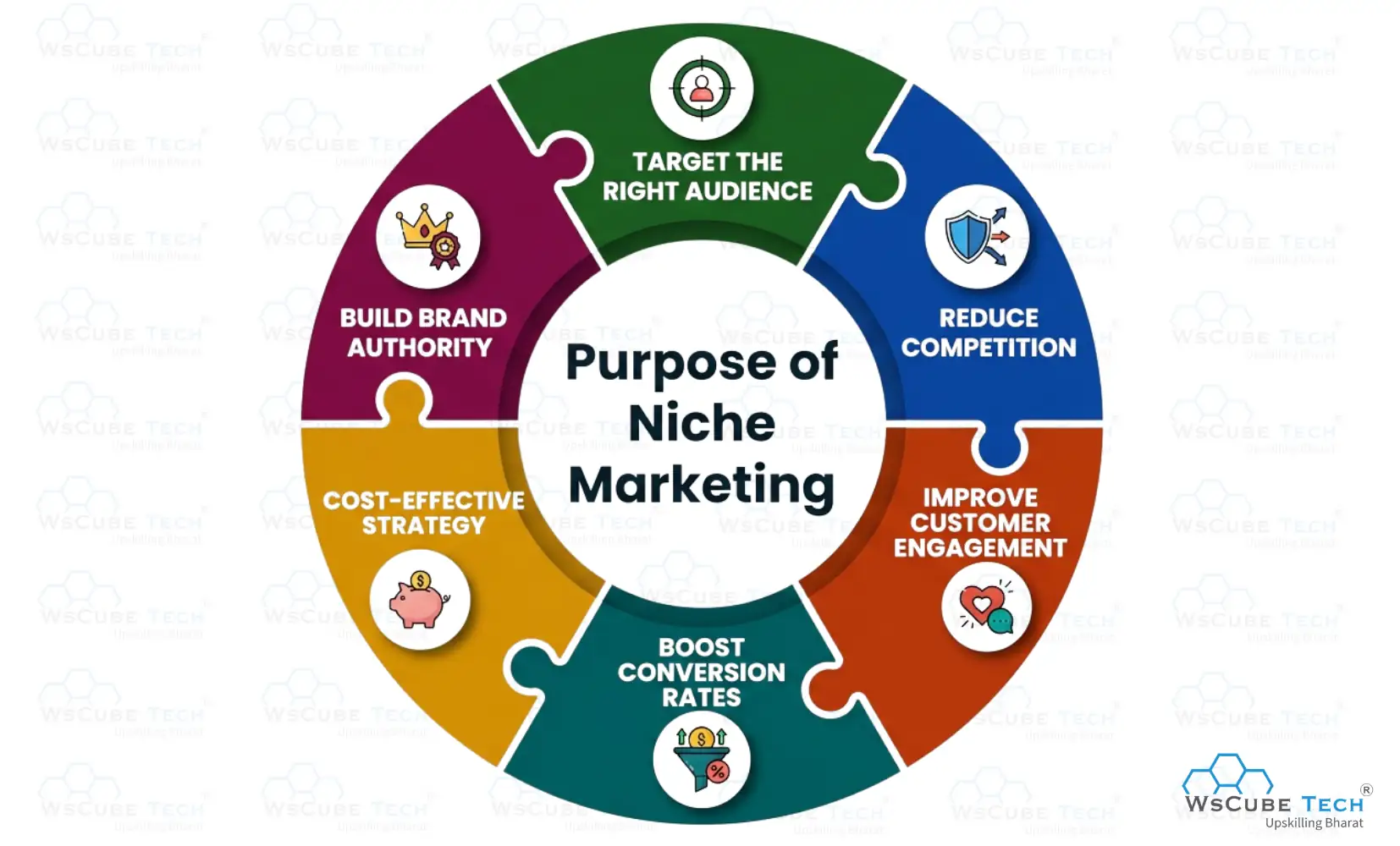
- Target the Right Audience: Niche marketing helps businesses focus on a specific group of people with clear needs, making marketing efforts more effective and result-driven.
- Reduce Competition: By narrowing your audience, you face less competition than in broad markets, allowing your brand to stand out more easily.
- Improve Customer Engagement: When you tailor your message to a defined audience, it becomes more relevant, increasing engagement, trust, and customer loyalty.
- Boost Conversion Rates: Niche marketing attracts highly interested customers, increasing the likelihood of converting leads into paying customers.
- Cost-Effective Strategy: It reduces unnecessary spending by targeting only potential buyers rather than a broad, less relevant audience.
- Build Brand Authority: Specializing in a niche helps position your business as an expert, increasing credibility and long-term growth opportunities.
Recommended Professional Certificates
AI-Powered Digital Marketing Course
Performance Marketing Bootcamp
SEO Specialist Bootcamp
Mass Market vs Niche Market: Comparison
Understanding the difference between a mass market and a niche market is important for building the right business strategy. Both approaches target customers, but they differ in audience size, focus, and marketing style.
Mass Market
A mass market targets a large group of people with common needs. Businesses create products that appeal to a wide audience rather than focusing on a specific group. The goal is to sell in high volume and reach as many customers as possible.
For example, products such as basic clothing, soft drinks, and smartphones are designed for the mass market because almost everyone uses them.
Niche Market
A niche market focuses on a small and specific group of people with unique needs or interests. Businesses create specialized products or services for this audience.
For example, vegan skincare products and fitness programs for senior citizens are designed for niche markets.
Key Differences Between Mass Market and Niche Market
| Feature | Mass Market | Niche Market |
| Target Audience | Large and broad audience | Small and specific group |
| Customer Needs | General and common needs | Specific and unique needs |
| Competition | High competition | Lower competition |
| Marketing Approach | Generic marketing for everyone | Targeted and personalized marketing |
| Product Variety | Standardized products | Specialized products |
| Pricing Strategy | Competitive pricing with lower margins | Premium pricing possible |
| Customer Loyalty | Lower loyalty due to many options | Higher loyalty due to personalized offerings |
| Examples | Soft drinks, fast food, smartphones | Organic food, pet-specific products, vegan items |
Which One is Better?
There is no one-size-fits-all answer. A mass market strategy is ideal for businesses aiming for large-scale sales and brand reach. On the other hand, a niche market is ideal for businesses that want to specialize, face less competition, and build strong customer relationships. Choosing the right approach depends on your goals, resources, and target audience.
Benefits of Niche Marketing
Niche marketing helps businesses target specific audiences, build trust, improve engagement, stand out from competitors, and achieve strong long-term growth results. Just check out some of the finest benefits present below:
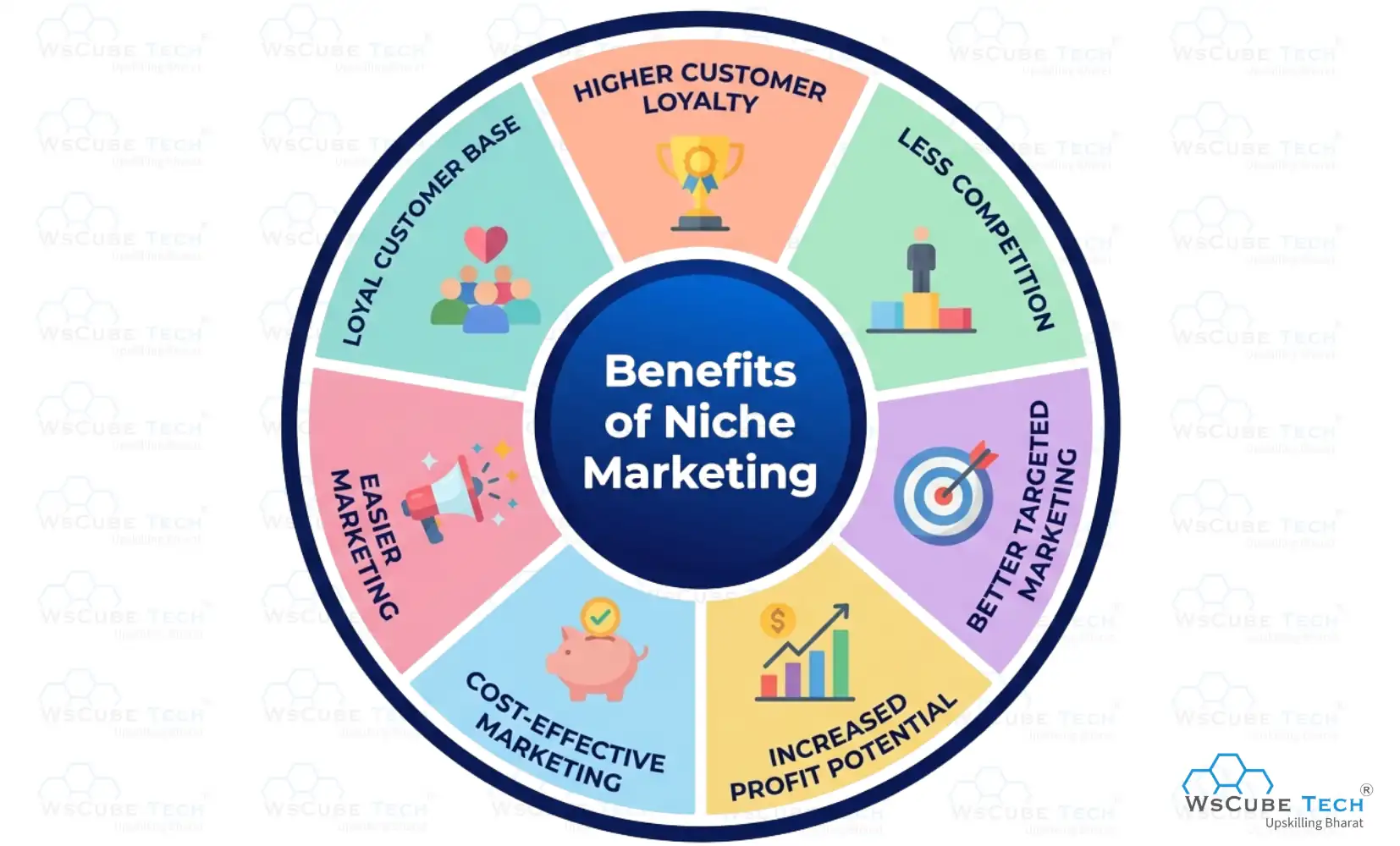
- Higher Customer Loyalty: When you target a precise niche, your audience or followers feel understood and valued. Overall, it builds stronger relationships and trust, leading to higher customer loyalty. Satisfied customers are more likely to return, recommend your brand to others, and become long-term supporters.
- Less Competition: Niche marketing eliminates competition by focusing on a limited, targeted audience. So, instead of competing with large brands in a wider market, you can position yourself as an expert in your niche and get ready to catch the attention of more customers more easily.
- Better Targeted Marketing: With a precise niche, your marketing becomes more focused and effective. You can create content, ads, and offers that directly match your audience’s requirements, increasing engagement, conversions, and overall marketing performance.
- Increased Profit Potential: By serving a specific audience with tailored solutions, you can charge premium prices and increase profitability. Therefore, niche markets often value quality and expertise, enabling businesses to generate higher revenue with minimal effort.
- Cost-Effective Marketing: Niche marketing reduces unnecessary expenses by targeting a specific audience. It allows businesses to use focused strategies, optimize budgets, and achieve better results with lower investment.
- Easier Marketing: Marketing becomes simpler with a clear niche audience. Businesses can create relevant messages, choose the right platforms, and deliver content that connects quickly and effectively.
- Loyal Customer Base: Serving a specific niche builds strong relationships and trust. Customers feel valued, stay connected with the brand, and are more likely to return and recommend it.
Upcoming Masterclass
Attend our live classes led by experienced and desiccated instructors of Wscube Tech.




Types of Niche Marketing
Niche marketing targets a specific audience with unique needs; what is niche in digital marketing means focused, personalized, and relevant content strategies. Now, it’s time to check out several types:
1. Psychographic Niche
A psychographic niche targets an audience's lifestyle, values, interests, and personality traits. This approach helps brands connect emotionally with customers by aligning products with their beliefs, hobbies, and motivations, thereby strengthening brand relationships.
2. Geographic Niche
Geographic niche marketing targets customers based on location, such as city, region, or country. Businesses tailor products or services according to local culture, climate, or preferences, making their offerings more relevant and appealing.
3. Behavioral Niche
A behavioral niche focuses on customer actions like buying habits, brand loyalty, usage frequency, and preferences. Marketers analyze how users interact with their products and develop great strategies that align with their behavior to achieve far better engagement and conversions than before.
4. Demographic Niche
The particular type focuses on characteristics of the audience like age, gender, income, education, and occupation. A fine example is selling luxury products to high-income professionals, which is niche marketing to a clearly defined, specific demographic.
Understanding different niche types helps businesses effectively target the right people. Also, by focusing on specific groups, brands can enhance engagement, build trust, and achieve better marketing results with less competition.
Related Reading: Scope of Digital Marketing in India
How to Identify a Profitable Niche?
Choosing the right niche ensures demand, growth, and focus; understanding your audience improves profitability and the clarity of niche marketing. So, just check out some of the significant things present as follows:
1. Market Research Techniques
Begin the process by exploring trends, competitors, and industry reports. Use tools like Google Trends, forums, and social media to see what people are concerned about. Moreover, this helps you discover gaps across the entire market and recognize opportunities others may have overlooked.
2. Finding Customer Pain Points
A profitable niche solves real problems. So, pay attention to customer complaints, reviews, and questions on platforms like Reddit or Quora. When you understand what frustrates your audience, it’s easy to create solutions that truly connect and offer value.
3. Keyword Research for Niche Selection
Keyword research helps you to understand what people are actively looking for online. Therefore, use effective tools such as Google Keyword Planner or Ubersuggest to find low-competition, high-search-volume keywords. This ensures your niche has traffic potential and SEO growth opportunities.
4. Analyzing Market Demand
Before finalizing your niche, validate its demand. Look at search volume, product sales, and competitor activity. A good niche has consistent demand, growing interest, and enough space for new businesses to enter and succeed.
Steps to Build a Successful Niche Marketing Strategy
A strong niche marketing strategy focuses on a specific audience, helping businesses stand out, improve engagement, increase conversions, and build long-term loyalty. Consider the steps presented below:
Step 1: Define Your Target Audience
Identify your real customers by analyzing demographics, interests, and their behaviors. Also, a clear profile helps you create personalized content and offers, making marketing more effective and relevant.
Step 2: Create a Unique Value Proposition
Your value proposition should clearly explain why the audience should opt for you. Highlight what makes your product or service different from others and focus on solving specific problems your audience faces.
Step 3: Select the Right Marketing Channels
Opt for platforms where your audience stays active, such as email, social media, and blogs. Also, focusing on the most appropriate channels will increase efficiency, engagement, and reach.
Step 4: Build Brand Authority
Build trust by posting valuable and relevant content, testimonials, and expert insights. Also, as your audience sees you as an authority, they are more likely to trust and buy from your brand.
By mastering a niche marketing strategy, your business not only grows faster but also creates a lasting competitive edge. Therefore, focus on providing value in your content, and you’ll build trust and loyalty that lead to long-term success.
Read More Important Digital Marketing Guides
Best Examples of Niche Marketing
Niche marketing targets specific audiences with tailored offerings, helping brands meet unique needs, build strong connections, and succeed without broad competition. Consider some of the best examples of niche marketing:
Real-Life Brand Examples
Nike: Targets athletes and fitness enthusiasts by offering high-performance sportswear, shoes, and gear designed for different sports and training needs.
Glossier: Focuses on people who prefer simple and natural beauty. Its products are designed for minimalist skincare and everyday makeup users.
Tesla: Appeals to eco-conscious and tech-savvy buyers by offering innovative electric cars with advanced features and a premium brand image.
This shows how strong brands clearly understand their audience and create products that match their specific needs and lifestyle.
Case Studies of Successful Niche Businesses
Dollar Shave Club: Focused on men who wanted affordable and hassle-free shaving products.
- Offered low-cost razors through a simple subscription model
- Used funny and relatable marketing to connect with everyday users
- Solved a common problem: expensive and inconvenient razor shopping
- Quickly gained popularity and disrupted traditional grooming brands
This example shows how identifying a clear problem and targeting a specific audience can help a niche business grow fast.
A primary lesson is to understand your audience deeply and solve their specific issue. Also, focus more on clear messaging, consistency, and value. When you build trust and meet unique needs, your niche marketing approach becomes powerful and sustainable.
Successful brands prove that focusing on a smaller, well-defined audience leads to bigger results.
By applying these insights and refining your niche marketing strategy, you can build a strong brand that stands out and grows consistently.
Must Read: 15 Latest Digital Marketing Trends
Niche Marketing vs Broad Marketing: Which Strategy Works Best?
Choosing the right marketing approach plays a major role in your business growth. Whether you focus on a specific audience or target a mass market, your decision should align with your goals, budget, and long-term vision. Understanding the difference between niche marketing and broad marketing can help you create a smarter and more effective strategy.
| Aspect | Niche Marketing | Broad Marketing |
| Target Audience | Specific and well-defined group | Large and diverse audience |
| Messaging | Personalized and targeted | General and wide-reaching |
| Competition | Lower competition | High competition |
| Cost | More cost-effective | Expensive due to mass reach |
| Engagement | Higher engagement and connection | Lower engagement due to less personalization |
| Conversion Rate | Higher due to relevance | Lower compared to niche |
| Brand Awareness | Limited but strong within a niche | Wide but less personalized |
Common Mistakes to Avoid in Niche Marketing
Many businesses fail not because of a bad idea, but due to poor execution. Understanding what is niche marketing helps you avoid common pitfalls and build a focused approach. Just check out the mistakes and avoid them to get positive results:
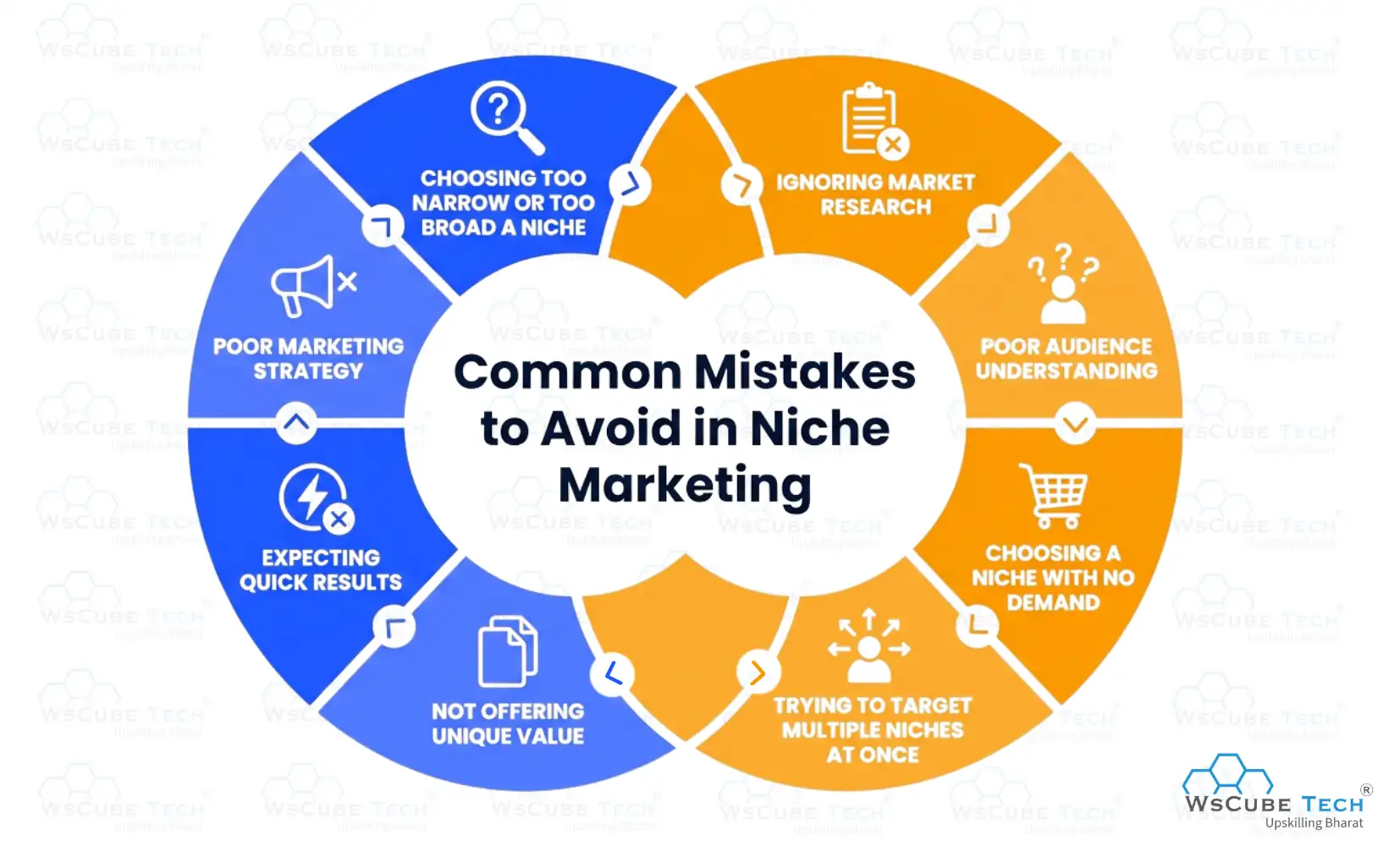
- Choosing Too Narrow or Too Broad a Niche: Opting for the right niche that is too narrow limits your audience and growth potential, while a broad niche increases competition. The key is to find a balanced niche with enough demand and manageable competition for sustainable success.
- Ignoring Market Research: Skipping proper research can lead to poor decisions and useless effort. Without analyzing trends, competitors, and demand, you may enter a niche with low potential or high competition, making it harder to attain success.
- Poor Audience Understanding: Not understanding your audience’s needs, preferences, and pain points can weaken your technique. When you fail to connect with your audience, your messaging becomes ineffective, leading to low engagement and poor conversions.
- Choosing a Niche with No Demand: Selecting a niche without proper market research can lead to poor results. If there is no demand, your products or services won’t sell, limiting growth and profitability.
- Trying to Target Multiple Niches at Once: Doing so can weaken your message and confuse your audience. It reduces focus, making it harder to build authority, connect effectively, and achieve strong marketing results.
- Not Offering Unique Value: Without a clear unique value proposition, your brand may struggle to stand out. Customers need a strong reason to choose you over competitors within the same niche.
- Expecting Quick Results: Niche marketing requires patience and consistency. Expecting instant success can lead to disappointment. Building trust, authority, and a loyal audience takes time and continuous effort.
- Poor Marketing Strategy: Even with a good niche, weak marketing strategies can fail. Lack of proper planning, targeting, and execution can result in low visibility, poor engagement, and missed business opportunities.
Therefore, avoiding these common mistakes can strengthen your strategy and improve the chances of getting positive results. So, just focus on research, clarity, and understanding to make your niche marketing efforts more effective and long-lasting.
Tools for Niche Market Research
Using the right tools helps analyze trends, competition, and audience behavior, enabling smarter decisions, lower risks, and a strong niche foundation.
1. Keyword Research Tools
Google Keyword Planner, Ubersuggest, and Ahrefs can reveal what people are searching for. In addition to showing search volume and competition, they generate keyword ideas and help pinpoint profitable niche opportunities.
2. Competitor Analysis Tools
SEMrush and SimilarWeb let you analyze competitors’ strategies and track their traffic sources. By reviewing their superb quality content and keywords, you can spot gaps and refine your own approach.
3. Audience Insights Tools
Google Analytics and Meta Audience Insights provide valuable data on user behavior, interests, and demographics. With these insights, you can create targeted content and connect better with your niche audience.
Using the right tools gives you a competitive advantage. Not only that, but with thorough research and data-driven decision-making, you can easily identify profitable niches and create a strategy that delivers consistent, long-term results.
Explore Our Most Popular Marketing Courses
How to Promote Your Niche Business?
Promoting a niche business requires focused strategies that target the right audience with relevant content to drive traffic, build trust, and boost conversions.
1. SEO Strategies for Niche Marketing
Optimize your website with targeted keywords, quality content, and proper on-page SEO. Focus on low-competition keywords and user intent. This helps your niche business rank higher on search engines and attract the right audience organically.
2. Social Media Marketing
Choose platforms where your audience is active and engage consistently. Share valuable posts, interact with followers, and use hashtags strategically. Building a strong social presence helps increase visibility and connect with your niche community.
3. Content Marketing for Targeted Audience
Create content that is helpful, informative, and engaging, solving your audience’s problems. Blogs, videos, and guides can position you as an expert. Consistent content builds trust and highlights niche marketing benefits by improving engagement and long-term growth.
Promoting your niche business effectively requires consistency and value. By using the right strategies, you can build authority, attract loyal customers, and grow your brand successfully in a competitive market.
Future Trends in Niche Marketing
Niche marketing is evolving with technology, focusing on personalization, smaller segments, and authentic connections to stay competitive and capture new opportunities. Below are some future trends that everyone must know:
- AI and Personalization: Building on the need for personalization, AI is transforming how businesses understand and target audiences. AI tools analyze user behavior, preferences, and interactions to deliver personalized experiences. This allows brands to create highly relevant content, improving engagement, customer satisfaction, and conversion rates.
- Micro-Niche Growth: Following this, businesses are now focusing on micro-niches with very limited audiences. Also, these smaller segments have less competition and higher engagement, making it easier for brands to build strong connections and establish authority quickly.
- Influencer-Driven Niches: In addition to this, micro-niche techniques, influencers are playing a huge role in transforming niche markets. Brands collaborate with niche influencers who have authentic and targeted followers. So, this approach builds trust, enhances credibility, and helps businesses reach the right audience more effectively.
Certainly, the future of niche marketing lies in personalization and authenticity. Also, by embracing all these trends, businesses can outpace competitors and build stronger connections with their audiences. Just get ready, move ahead, and then use the right methods to attain positive results.

FAQs About Niche Marketing
A niche market is a specific segment of a larger market with unique needs, preferences, or problems that businesses target with specialized products or services.
Start with market research, identify customer pain points, analyze demand, and validate your idea using keyword research tools to ensure sufficient interest and minimal competition.
Certainly, it helps businesses stand out in competitive markets, connect with the right audience, and achieve better results with less effort and lower marketing costs.
Examples include vegan skincare products, fitness programs for busy professionals, eco-friendly fashion, and pet products for specific breeds or needs.
A niche should be specific enough to target a clear audience, yet broad enough to ensure sufficient demand and growth potential for long-term success.
Tools like keyword planners, competitor analysis platforms, and audience insight tools help identify trends, demand, and opportunities in your chosen niche.
Yes, niche marketing is ideal for beginners because it reduces competition and lets you focus on a specific audience, making it easier to build authority and trust.
Success depends on consistency, strategy, and market demand. With the right approach, results can start appearing within a few months.
Common mistakes include choosing the wrong niche, ignoring research, and failing to understand the target audience, all of which can limit growth and success.
Conclusion
Understanding what a niche market is is essential to building a focused, successful business. By applying the right niche marketing strategy, you can identify profitable opportunities, connect with the right audience, and stand out in competitive markets. The niche marketing benefits include better targeting, higher engagement, and improved conversions. With proper research, consistency, and a clear plan, niche marketing can help you build a strong brand and achieve long-term growth.
Join Our On-Campus Digital Marketing Program
Explore Our Free Courses






Leave a comment
Your email address will not be published. Required fields are marked *Comments (0)
No comments yet.