Getting started with web designing sounds exciting, but do you need a specific qualification to begin? Many people assume it requires a technical degree, which often stops them before they even try.
The truth is, web designing is one of the most accessible career paths today. Most courses—whether online or offline—have very basic eligibility criteria. Typically, you just need to have completed 10th or 12th grade. Some advanced programs may prefer a background in computers, but it’s not mandatory.
What really matters is your creativity, interest in design, and willingness to learn tools like HTML, CSS, and UI/UX basics.
Below, we’ll cover the eligibility criteria, required skills, who can apply, and the career opportunities available after completing the course.
What is Web Designing?
Web designing is the process of creating and designing the layout, structure, and visual appearance of a website to make it attractive, user-friendly, and easy to navigate. It includes elements such as page layout, colors, fonts, images, buttons, and responsive design to ensure the website works smoothly on different devices like mobiles, tablets, and desktops.
The main goal of web designing is to improve user experience while presenting information in a clear and engaging way. Below are the key topics covered in web designing:
- Website Layout Design: Creating the structure and arrangement of web pages, headers, menus, and sections.
- UI/UX Design: Focusing on user interface and user experience to make websites easy and pleasant to use.
- Responsive Design: Designing websites that adjust properly on mobile, tablet, and desktop screens.
- Colors and Typography: Choosing suitable color combinations, fonts, and text styles for better readability.
- Graphics and Images: Using images, icons, banners, and visual elements to enhance the website’s look.
- Basic Coding Knowledge: Understanding HTML, CSS, and basic JavaScript used in web page creation.
Why Choose a Web Designing Course?
A web designing course helps you build creative, technical, and career-ready skills to design professional, user-friendly, and visually appealing websites. Below are the key reasons to choose this course:
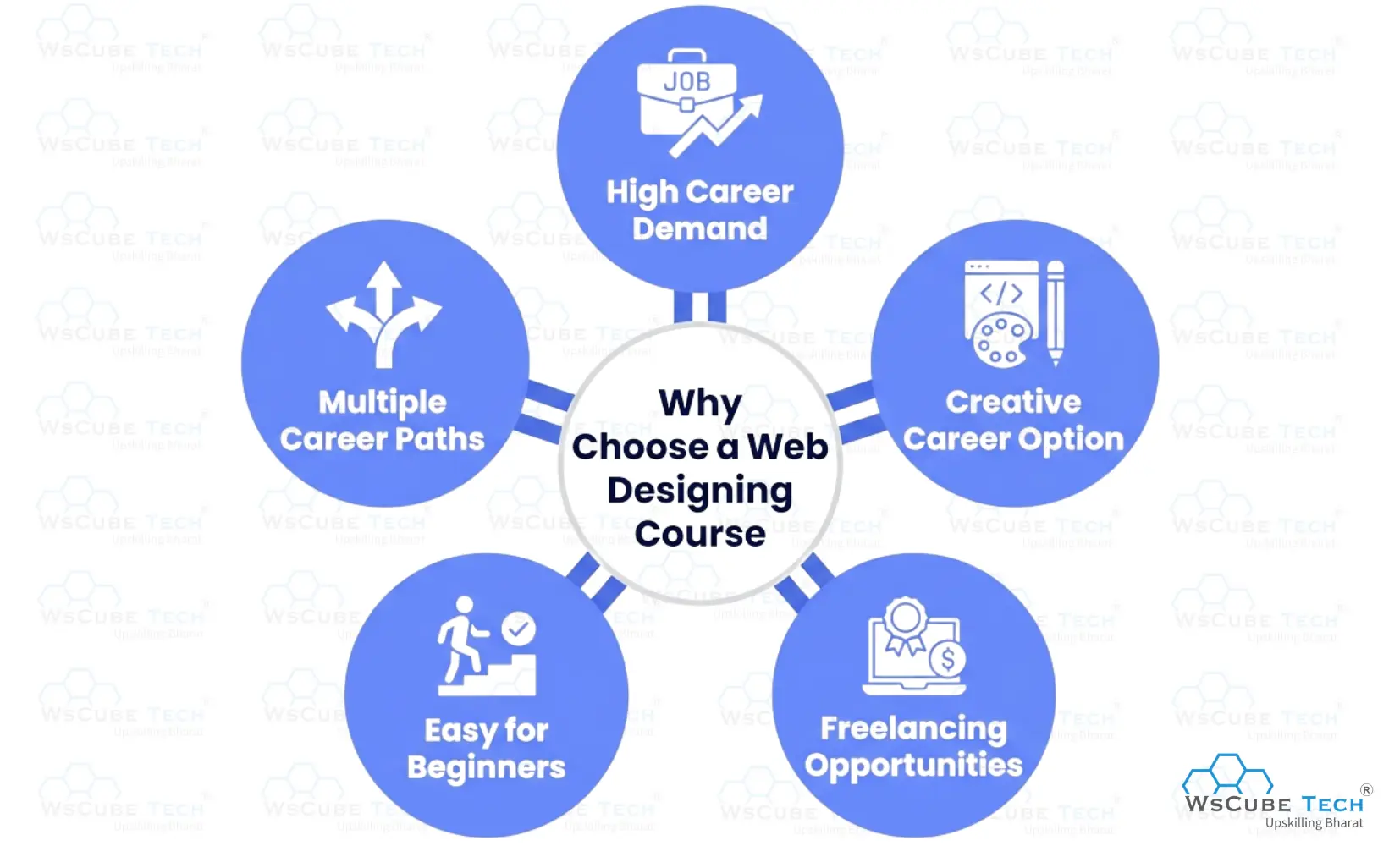
- High Career Demand: Web designing skills are in high demand across industries as every business needs a professional online presence, creating strong career opportunities in companies, startups, agencies, and freelancing platforms.
- Creative Career Option: This course is perfect for students who enjoy creativity, layouts, colors, fonts, and visual storytelling, allowing them to turn their design ideas into attractive and functional websites.
- Freelancing Opportunities: After learning web designing, you can work as a freelancer and take projects from clients worldwide, giving you flexibility, extra income, and the freedom to work from anywhere. It also helps you build experience and a strong portfolio.
- Easy for Beginners: Web designing courses are beginner-friendly and usually start with basic concepts like HTML, CSS, design tools, and responsive layouts, making them suitable even without prior coding knowledge.
- Multiple Career Paths: It opens doors to roles such as web designer, UI/UX designer, front-end developer, website consultant, and digital creative professional across various industries.
Web Designing Course Eligibility Criteria
The eligibility criteria for a web designing course generally include educational qualification, minimum marks, and age requirements depending on the course type.
1. Educational Qualification
Most institutes require candidates to have completed 10th or 12th from a recognized board. For advanced diploma or degree programs, some colleges may also ask for graduation-level qualifications or equivalent academic background.
2. Minimum Marks Required
Certificate and diploma courses usually do not have strict percentage requirements, but degree-level programs may require candidates to score at least 45% to 50% marks in their previous qualifying examination.
3. Age Limit
There is generally no fixed age limit for enrolling in a web designing course, which makes it suitable for students, beginners, freshers, and even working professionals looking to upgrade their skills.
If you want to explore the web designing course syllabus, you can explore the given link.
Eligibility for Online Certificate Courses in Web Designing
Online certificate courses in web designing are highly flexible and beginner-friendly, making them suitable for students, freshers, and working professionals. These courses are designed for anyone who wants to learn web design skills from home at their own pace.
In most cases, there are no strict educational requirements, and candidates with 10th or 12th qualifications can easily enroll. Many platforms also allow anyone with an interest in website design to join, regardless of academic background.
The best part is that prior coding knowledge is usually not required. These courses start with basics like HTML, CSS, design principles, and responsive layouts, making them perfect for beginners.
Recommended Professional Certificates
Full Stack Development Course with AI Engineering
WordPress Bootcamp
Eligibility for Diploma in Web Designing
Diploma courses in web designing are a great option for students who want detailed practical and theoretical knowledge of website design. These courses usually cover design tools, HTML, CSS, responsive layouts, and basic front-end development concepts.
Most institutes require candidates to have completed 10th or 12th grade from a recognized board with around 40% to 50% marks to apply for a diploma course. Some institutes may prefer students who have passed 12th, especially for advanced diploma programs.
In most cases, there is no strict requirement for prior coding knowledge. Diploma courses are beginner-friendly and suitable for students, freshers, and working professionals who want to build strong web designing skills.
Eligibility for Degree Courses in Web Designing
Degree courses in web designing are ideal for students who want in-depth knowledge and better career opportunities in the design and development field. These programs usually cover web design, UI/UX, front-end development, and advanced design tools.
Most colleges require candidates to have completed 12th grade from a recognized board with a minimum of 45% to 50% marks to apply for degree-level courses such as B.Sc., BCA, or other design-related programs. Some institutes may have slightly different percentage requirements.
For advanced degree or postgraduate courses, graduation may be required. Although prior coding knowledge is helpful, many degree courses begin with the basics, making them suitable for beginners as well.
Also Read: Future of Web Development: Scope, Trends & Career
Web Designing Course Fees and Duration
Web designing course fees and duration vary based on the course type, institute, and learning mode. Below is the detailed overview:
| Course Type | Duration | Typical Fees (INR) |
| Online Courses | 1–3 Months | ₹5,000 – ₹50,000 |
| Diploma Course | 6 Months–2 Years | ₹25,000 – ₹1,50,000 |
| Advanced Diploma | 12–18 Months | ₹50,000 – ₹2,00,000+ |
| Degree Course | 3–4 Years | ₹50,000 – ₹5,00,000+ |
Note: Fees may vary depending on the institute, course curriculum, and certification level.
Skills Required for a Web Designing Course
Strong skills in creativity, coding basics, and problem-solving help you succeed in web designing and build professional websites. Below are the essential skills:
Core Technical Skills
- HTML & CSS Knowledge: Understanding the structure and styling of web pages using HTML and CSS to create well-designed and responsive layouts for modern websites.
- Basic JavaScript: Learning JavaScript helps you add interactivity like animations, form validations, and dynamic content to enhance user experience on websites.
- Responsive Design: Ability to design websites that work smoothly on mobiles, tablets, and desktops using flexible layouts and media queries.
- UI/UX Design Principles: Understanding the principles of User Interface (UI) and User Experience (UX) helps create intuitive, user-friendly, and visually appealing website designs.
- Design Tools Knowledge: Familiarity with tools like Figma, Adobe XD, or Photoshop to create layouts, wireframes, and prototypes for web pages.
- Basic SEO Understanding: Knowing the basics helps you design websites optimized for search engines and improve online visibility.
Key Soft Skills & Foundational Knowledge
- Creativity and Visual Thinking: Ability to think creatively and design unique layouts that attract users and enhance the overall website appearance.
- Problem-Solving Skills: Helps you identify issues in design or functionality and find effective solutions during website development.
- Attention to Detail: Ensures accuracy in design elements, layouts, spacing, fonts, and coding to create a professional, polished, and visually appealing website.
- Communication Skills: Important for understanding client requirements and collaborating with developers, designers, or team members.
- Time Management: Helps you complete projects on time, manage multiple tasks efficiently, prioritize design work, and meet client deadlines smoothly in web designing projects.
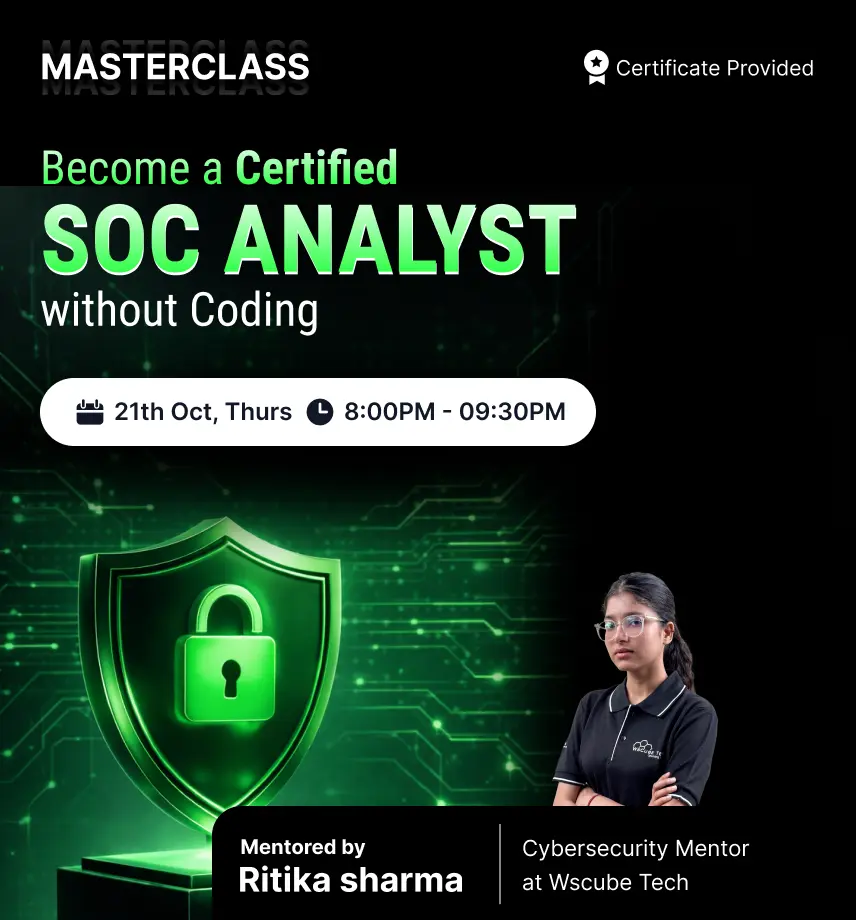
Upcoming Masterclass
Attend our live classes led by experienced and desiccated instructors of Wscube Tech.


Is Coding Knowledge Required for Web Designing Course Eligibility?
No, coding knowledge is generally not mandatory for joining a web designing course. Most beginner-level certificate, diploma, and online courses start from the basics, making them suitable for students and freshers with no prior technical background.
In fact, the eligibility criteria for web designing courses usually focus more on educational qualifications, interest in design, and basic computer knowledge rather than coding skills. Institutes understand that many learners join to start from scratch.
However, having basic knowledge of HTML, CSS, or simple web concepts can be an added advantage. These skills are usually taught during the course itself, so beginners can easily learn as they progress.
Who Can Apply for a Web Designing Course?
If you are wondering “who is eligible for web designing course?”, the good news is that students, beginners, freshers, and working professionals from any stream can apply. Below are the main categories of applicants who are eligible to enroll in the course:
- Students After 10th or 12th: Students who have completed 10th or 12th from any stream can apply for web designing courses and start building creative and technical skills for future career opportunities.
- College Students: Students pursuing graduation in any field can join a web designing course alongside their studies to gain practical skills and improve their chances of getting better job opportunities.
- Working Professionals: Professionals from non-technical or technical backgrounds can switch careers by learning web designing, gaining creative and digital skills, and exploring new job roles or freelance opportunities.
- Freelancers and Entrepreneurs: Learners who want to start freelancing or build their own online business can learn web designing to create websites, manage projects independently, and increase their earning potential.
- Career Switchers: Those looking to change their career path can apply for a web designing course to enter the creative and digital industry with practical job-ready skills.
Must Read: Is Full-Stack Developer a Good Career?
Career Opportunities After Completing the Web Designing Course
After completing the web designing course, you can explore multiple creative and technical career paths. Below are the top career opportunities:
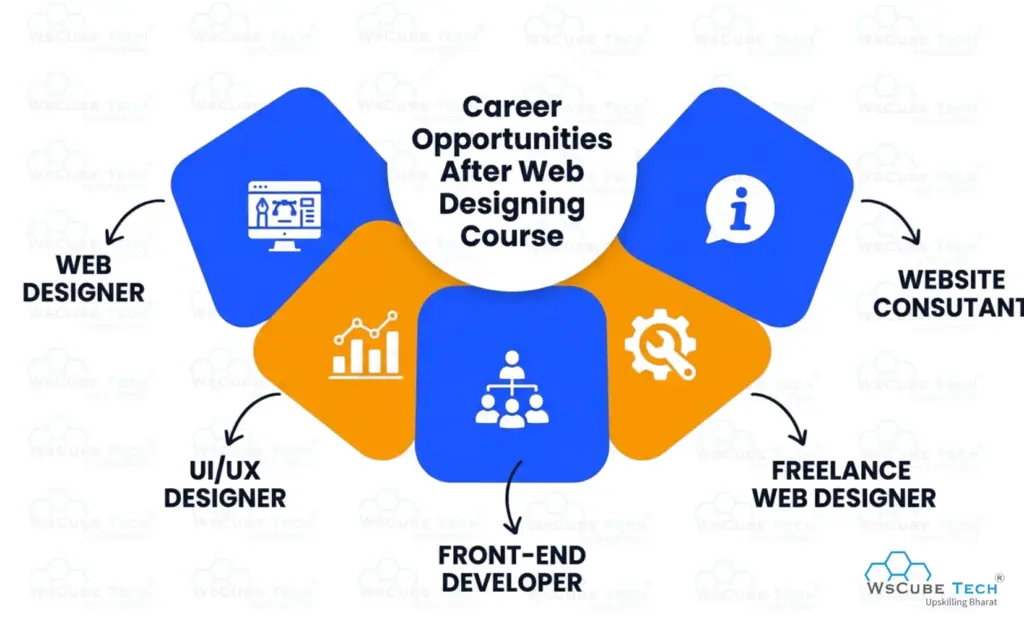
- Web Designer: Work on designing attractive website layouts, landing pages, and responsive interfaces for businesses, startups, agencies, and personal brands to improve their online presence and user experience.
- UI/UX Designer: Focus on creating user-friendly interfaces and smooth user experiences by designing wireframes, prototypes, layouts, and interactive designs that improve website usability and customer satisfaction.
- Front-End Developer: Use HTML, CSS, JavaScript, and design tools to transform website layouts into fully functional, responsive web pages that work smoothly across mobile, tablet, and desktop devices, ensuring better performance, usability, and a seamless user experience for users.
- Freelance Web Designer: Take independent client projects from around the world, create custom websites, and build a strong portfolio while earning through flexible freelance work opportunities.
- Website Consultant: Help businesses improve their website design, performance, user experience, and online branding by suggesting effective design and layout strategies.
Explore More Blog Topics
| Web Design Vs Web Development | Java vs JavaScript |
| Magento Vs WooCommerce | HTML Vs HTML5 |
| Frontend Vs Backend Development | Coding Vs Programming |
| Popular Web Development Languages | Best Web Development Frameworks |
Top Recruiters and Industries Hiring Web Designers
Web designers are in demand across multiple industries as businesses increasingly focus on building a strong online presence. Below are some of the top recruiters and industries hiring web designers:
Industries Hiring Web Designers
- IT Companies and Software Firms: Technology companies hire web designers to create websites, landing pages, dashboards, and user-friendly digital interfaces for clients and products.
- Digital Marketing Agencies: Agencies frequently hire web designers for website design, campaign landing pages, UI improvements, and brand-focused web experiences.
- E-commerce Companies: Online shopping platforms need web designers to create attractive product pages, user-friendly checkout flows, and responsive websites.
- Startups and SaaS Companies: Startups often hire web designers to build modern websites, app interfaces, and brand-focused user experiences.
- Media and Publishing Companies: News portals, blogs, and content websites require skilled web designers for engaging layouts and smooth navigation.
- Freelance Platforms: Platforms like Upwork and Fiverr offer opportunities to work with clients globally.
Top Recruiters
- Tata Consultancy Services
- Infosys
- Wipro
- Accenture
- Cognizant
- HCL Technologies
- Tech Mahindra
- Capgemini
- IBM
- Deloitte
Learn Web Development With WsCube Tech
If you're planning to start your journey in web development, WsCube Tech offers a beginner-friendly full-stack developer online course designed to build strong fundamentals from scratch. This course covers everything from creating website layouts and responsive designs to understanding UI/UX principles and working with modern web technologies—all through practical, hands-on training and real-world projects.
FAQs About Web Designing Course Eligibility
Students, beginners, freshers, and working professionals from any stream are eligible for a web designing course. Most institutes accept candidates who have completed 10th or 12th from a recognized board.
Yes, many certificate and diploma-level web designing courses allow students to join after completing 10th. These courses usually focus on basic design concepts, HTML, CSS, and website layout fundamentals.
Yes, students can easily join certificate, diploma, and degree-level web designing courses after 12th. This is one of the most common eligibility requirements for advanced and career-focused programs.
No, prior coding knowledge is generally not required for a web designing course. Most beginner-friendly courses start with the basics of HTML, CSS, design tools, and responsive website design.
Most certificate and diploma courses do not have strict percentage requirements. Degree-level courses may require around 45% to 50% marks in the previous qualifying examination depending on the institute.
No, there is usually no fixed age limit for joining a web designing course. Students, freshers, career switchers, and working professionals of different age groups can easily enroll.
Yes, beginners can easily apply for a web designing course. Most courses are designed to start from basic concepts, making them suitable for learners with no prior experience.
Yes, working professionals can join web designing courses to upskill, switch careers, or start freelancing. Online and weekend courses make it easier to learn alongside a job.
Online web designing courses usually have simple eligibility criteria. Anyone with basic computer knowledge and an interest in learning website design can join, even without strict academic requirements.
For a diploma in web designing, most institutes require candidates to have completed 10th or 12th from a recognized board, usually with around 40% to 50% marks.
Degree-level web designing courses generally require candidates to complete 12th from a recognized board with around 45% to 50% marks, depending on the college or university.
The duration depends on the course type. Certificate courses may take 1–3 months, diploma courses 6–12 months, and degree courses usually take 3–4 years.
Web designing course fees vary by course type and institute. Online courses may start from ₹10,000, while diploma and degree courses can range from ₹30,000 to ₹3,00,000+.
Yes, after completing a web designing course, you can apply for roles such as web designer, UI/UX designer, front-end developer, freelancer, or website consultant across different industries.
Conclusion
Choosing the right course starts with understanding the eligibility criteria for web designing courses, including qualifications, required skills, and basic requirements. This helps students, beginners, and working professionals select the most suitable certificate, diploma, or degree program.
With flexible learning options and strong career opportunities, web designing is an excellent field to build creative and technical skills. It also opens doors to freelancing, jobs, and long-term professional growth in the digital industry.
Free Courses for You



Leave a comment
Your email address will not be published. Required fields are marked *Comments (0)
No comments yet.