
Ethical hacking is a smart and future-ready career in today’s digital age, where data is as valuable as money. Ethical hackers, also called white-hat hackers, legally break into systems to find security gaps before cybercriminals do.
Their main goal is to protect sensitive information and strengthen cybersecurity. With rising online threats, companies across industries are actively hiring skilled professionals in this field.
This career in ethical hacking not only offers high income but also constant challenges and learning opportunities. If you enjoy solving problems and understanding how systems work, ethical hacking can give you a powerful and meaningful career path in cybersecurity.
If you want to start your journey, you can join an ethical hacking course at WsCube Tech to learn practical skills and build a strong foundation in cybersecurity.
What Is Ethical Hacking?
Ethical hacking is the practice of legally testing a computer system, network, or website to find security weaknesses. It is done by skilled professionals, often called white-hat hackers, who work with permission from the owner.
The main goal of ethical hacking is to identify and fix problems before malicious hackers can use them to steal data or cause damage. In simple words, ethical hackers act like “good hackers” who help keep systems safe and secure.
Recommended Professional Certificates
Ethical Hacking Bootcamp
Penetration Testing Bootcamp
Different Career Options in Ethical Hacking
Ethical hacking offers multiple career paths focused on protecting systems and preventing cyberattacks. These roles require strong technical skills and problem-solving ability. Below are the career opportunities in ethical hacking you can explore:
1. Penetration Tester
A Penetration Tester (also called a “Pen Tester”) is a cybersecurity professional who tests systems, networks, or applications to find security vulnerabilities before attackers can exploit them, simulating real-world attacks in a safe and controlled way while helping organizations identify risks, strengthen defenses, and protect sensitive data from potential cyber threats.
Key Responsibilities:
- Perform security testing on websites, networks, and applications
- Identify vulnerabilities and security weaknesses
- Safely exploit issues to understand their impact
- Prepare detailed reports with fixes and recommendations
Skills Required:
- Knowledge of networking and operating systems
- Basic understanding of programming (Python, JavaScript)
- Familiarity with tools like Metasploit, Burp Suite, Nmap
- Strong problem-solving and analytical skills
Salary Range of Penetration Tester in India: ₹10 LPA – ₹12 LPA (depending on experience and skills)
2. Security Analyst
A Security Analyst is a cybersecurity professional who monitors systems and networks to detect, analyze, and prevent security threats. They continuously track suspicious activities, respond to incidents, and ensure that an organization’s data and systems remain protected from cyberattacks.
Key Responsibilities:
- Monitor network traffic and security alerts
- Detect and respond to cyber threats and attacks
- Analyze vulnerabilities and recommend security improvements
- Maintain security tools like firewalls and antivirus systems
Skills Required:
- Knowledge of network security and protocols
- Understanding of security tools and SIEM systems
- Basic knowledge of operating systems and cybersecurity concepts
- Strong analytical and problem-solving skills
Salary Range of Security Analyst in India: ₹6 LPA – ₹8 LPA
3. Cybersecurity Consultant
A Cybersecurity Consultant is a professional who advises organizations on how to protect their systems, networks, and data from cyber threats. They analyze security risks, design protection strategies, and help implement strong security policies while suggesting improvements and ensuring best security practices are followed.
Key Responsibilities:
- Assess security risks and identify vulnerabilities
- Recommend security solutions and best practices
- Design and implement security policies and frameworks
- Guide organizations on compliance and data protection
Skills Required:
- Strong understanding of cybersecurity concepts and risk management
- Knowledge of security frameworks and compliance standards
- Familiarity with networking, cloud, and system security
- Good communication and problem-solving skills
Salary Range of Cybersecurity Consultant in India: ₹11 LPA – ₹13 LPA
4. Network Security Engineer
A Network Security Engineer is a cybersecurity professional who designs, implements, and manages secure network systems to protect data from unauthorized access and cyber threats. They ensure safe communication between systems using firewalls, encryption, and monitoring tools, while continuously detecting risks, fixing vulnerabilities, and maintaining strong network security.
Key Responsibilities:
- Design and maintain secure network infrastructure
- Configure firewalls, VPNs, and intrusion detection systems
- Monitor network traffic for suspicious activities
- Identify and fix security vulnerabilities
Skills Required:
- Strong knowledge of networking concepts (TCP/IP, DNS, etc.)
- Understanding of firewalls, VPNs, and network security tools
- Familiarity with operating systems and system security
- Problem-solving and analytical skills
Salary Range of Network Security Engineer in India: ₹7 LPA – ₹9 LPA
5. Application Security Specialist
An Application Security Specialist is a cybersecurity professional who focuses on securing software and applications from vulnerabilities and cyber threats. They ensure that applications are safe during development and after deployment by identifying and fixing security issues.
Key Responsibilities:
- Test applications for security vulnerabilities
- Identify and fix coding-related security issues
- Work with developers to build secure applications
- Perform code reviews and security assessments
Skills Required:
- Knowledge of secure coding practices
- Understanding of web application security (OWASP Top 10)
- Familiarity with tools like Burp Suite, OWASP ZAP
- Basic programming knowledge (Java, Python, etc.)
Salary Range of Application Security Specialist in India: ₹13 LPA – ₹18 LPA
6. Cloud Security Expert
A Cloud Security Expert is a cybersecurity professional who protects cloud-based systems, data, and applications from cyber threats. They ensure that cloud environments are secure by managing access, monitoring activities, and applying strong security controls to prevent data breaches.
Key Responsibilities:
- Secure cloud platforms like AWS, Azure, or Google Cloud
- Manage identity and access controls (IAM)
- Monitor cloud environments for threats and vulnerabilities
- Implement encryption and data protection strategies
Skills Required:
- Knowledge of cloud platforms (AWS, Azure, GCP)
- Understanding of cloud security concepts and IAM
- Familiarity with network and data security
- Problem-solving and analytical skills
Salary Range of Cloud Security Expert in India: ₹17 LPA – ₹21 LPA
7. Malware Analyst
A Malware Analyst is a cybersecurity professional who studies and analyzes malicious software such as viruses, ransomware, and spyware to understand how they work and how to stop them. They break down malware to identify its behavior, origin, and impact on systems.
Key Responsibilities:
- Analyze malware samples and study their behavior
- Reverse engineer malicious code to understand attacks
- Identify threats and develop prevention strategies
- Create reports on malware findings and security risks
Skills Required:
- Knowledge of operating systems (Windows, Linux)
- Understanding of malware analysis and reverse engineering
- Familiarity with tools like IDA, Wireshark, and sandbox environments
- Strong analytical and problem-solving skills
Salary Range of Malware Analyst in India: ₹6 LPA – ₹9 LPA
8. VAPT Specialist
A VAPT Specialist (Vulnerability Assessment and Penetration Testing Specialist) is a cybersecurity professional who identifies security weaknesses in systems, networks, and applications, and then tests how those weaknesses can be exploited to improve security. They use both automated and manual techniques to assess risks, fix vulnerabilities, and strengthen overall system security.
Key Responsibilities:
- Perform vulnerability assessments to find security gaps
- Conduct penetration testing to simulate real attacks
- Analyze risks and prioritize vulnerabilities
- Provide detailed reports with solutions and recommendations
Skills Required:
- Knowledge of networking and cybersecurity fundamentals
- Understanding of VAPT methodologies and tools
- Familiarity with tools like Nessus, Burp Suite, Nmap
- Strong analytical and problem-solving skills
Salary Range of VAPT Specialist in India: ₹6 LPA – ₹8 LPA
9. SOC Analyst (Security Operations Center Analyst)
A SOC Analyst (Security Operations Center Analyst) is a cybersecurity professional who monitors systems and networks in real time to detect, analyze, and respond to security threats. They handle alerts, investigate suspicious activities, and take quick action to prevent cyberattacks and minimize damage.
Key Responsibilities:
- Monitor security alerts and logs continuously
- Detect and respond to potential threats
- Investigate incidents and identify root causes
- Maintain and update security tools and systems
Skills Required:
- Knowledge of cybersecurity fundamentals and networking
- Familiarity with SIEM tools (like Splunk, IBM QRadar)
- Understanding of threat detection and incident response
- Strong analytical and problem-solving skills
Salary Range of SOC Analyst in India: ₹5 LPA – ₹6 LPA
10. Digital Forensics Investigator
A Digital Forensics Investigator is a cybersecurity professional who investigates cybercrimes by collecting, analyzing, and preserving digital evidence from computers, networks, and devices. They help identify how an attack happened and who was responsible.
Key Responsibilities:
- Collect and analyze digital evidence from systems and devices
- Investigate cyber incidents and security breaches
- Recover deleted or hidden data
- Prepare reports for legal or organizational use
Skills Required:
- Knowledge of operating systems and file systems
- Understanding of forensic tools and techniques
- Familiarity with cyber laws and evidence handling
- Strong analytical and problem-solving skills
Salary Range of Digital Forensics Investigator in India: ₹5 LPA – ₹6 LPA
11. Ethical Hacking Trainer / Instructor
An Ethical Hacking Trainer is a professional who teaches cybersecurity and ethical hacking concepts to students or professionals. They help learners understand hacking techniques, tools, and security practices through practical training, real-world examples, and hands-on learning sessions.
Key Responsibilities:
- Teach ethical hacking concepts and tools
- Conduct practical sessions and live demonstrations
- Create training materials and course content
- Guide students in projects, labs, and certifications
Skills Required:
- Strong knowledge of ethical hacking and cybersecurity
- Hands-on experience with tools like Metasploit, Burp Suite, Nmap
- Good communication and teaching skills
- Ability to explain complex topics in a simple way
Salary Range of Ethical Hacking Trainer in India: ₹19 LPA – ₹21 LPA
12. Chief Information Security Officer (CISO)
A Chief Information Security Officer (CISO) is a senior cybersecurity leader responsible for managing an organization’s overall security strategy, ensuring systems, data, and networks are protected while aligning security practices with business goals and compliance requirements. They lead security teams, handle major incidents, set policies, and make important decisions to reduce risks and improve overall security.
Key Responsibilities:
- Develop and manage the organization’s cybersecurity strategy
- Oversee security policies, risk management, and compliance
- Lead security teams and handle major security incidents
- Ensure data protection and secure business operations
Skills Required:
- Strong knowledge of cybersecurity, risk management, and governance
- Leadership and decision-making skills
- Understanding of compliance standards and security frameworks
- Excellent communication and strategic planning skills
Salary Range of CISO in India: ₹45 LPA – ₹50 LPA
Upcoming Masterclass
Attend our live classes led by experienced and desiccated instructors of Wscube Tech.


How to Make a Career in Ethical Hacking?
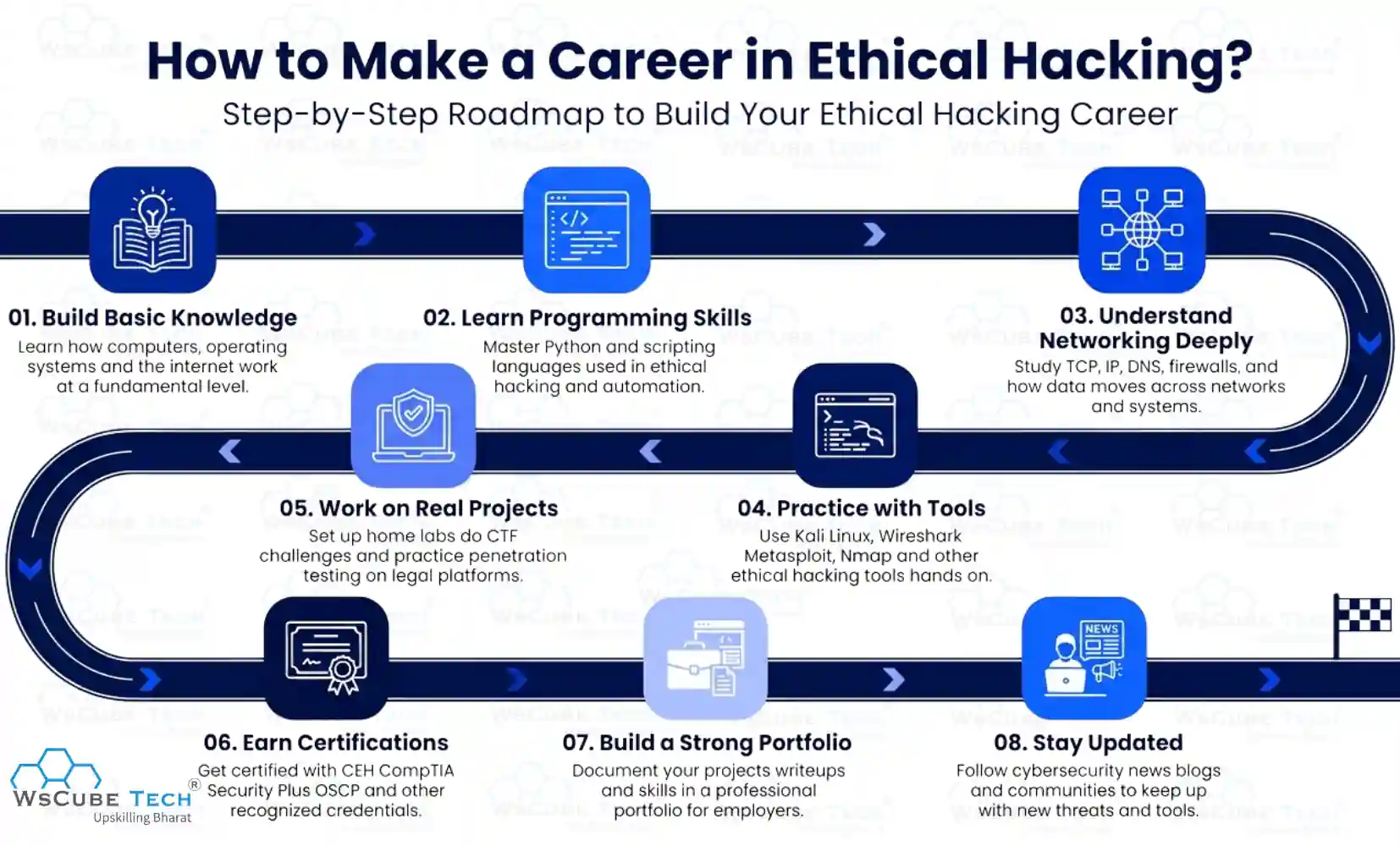
Starting a career in ethical hacking may feel confusing at first, but with the right approach, it becomes simple and achievable. You just need to follow the right steps and stay consistent with learning and practice:
1. Build Basic Knowledge
Start by learning the basics of computers, networking, and operating systems like Linux and Windows. Understanding how systems work is very important. These fundamentals help you easily understand security concepts and build a strong foundation in ethical hacking.
2. Learn Programming Skills
Learning programming languages like Python, JavaScript, or C helps you understand how applications are built and where vulnerabilities exist. You don’t need to be an expert, but basic coding knowledge will make it easier to analyze, test, and exploit security weaknesses.
3. Understand Networking Deeply
Networking is a core part of ethical hacking. Learn concepts like TCP/IP, DNS, HTTP, and firewalls. This helps you understand how data flows between systems and how attackers can intercept or manipulate that data during cyberattacks. It also helps you identify weak points in networks and improve overall system security.
4. Practice with Tools
Start using popular tools like Nmap, Burp Suite, Metasploit, and Wireshark. Hands-on practice is very important in ethical hacking. Use virtual labs and safe environments to test your skills and understand how real attacks and defenses work.
5. Work on Real Projects
Practice on platforms like TryHackMe, Hack The Box, or bug bounty programs. These platforms provide real-world scenarios where you can test your skills. Working on real projects improves your confidence and helps you gain practical experience.
6. Earn Certifications
Certifications like CEH, OSCP, and CompTIA Security+ help validate your skills. They increase your chances of getting a job and show that you have proper knowledge and training in ethical hacking and cybersecurity practices.
7. Build a Strong Portfolio
Create a portfolio to showcase your projects, reports, and practical work. Include vulnerability reports, lab work, or bug bounty findings. A strong portfolio helps you stand out and proves your skills to recruiters and companies.
8. Stay Updated
Cybersecurity is always changing, so it is important to stay updated with the latest tools, threats, and techniques. Follow blogs, join communities, and keep practicing regularly to improve your skills and stay ahead in this field.
If you want to learn step by step in detail, you can explore "How to Learn Ethical Hacking?" to understand which topics to cover and how to start your learning journey effectively.
Explore More on Ethical Hacking Guides
| Is Ethical Hacking Hard to Learn | How long to be an Ethical Hacker |
| Ethical Hacking Course Syllabus | Ethical Hacking Course Fee & Duration |
| Ethical Hacking Course Eligibility | How to Become an Ethical Hacker |
Key Skills Required for Ethical Hacking Careers
Building a successful ethical hacking career requires strong technical skills and continuous learning to identify vulnerabilities and prevent cyber threats. The following are the key skills required:
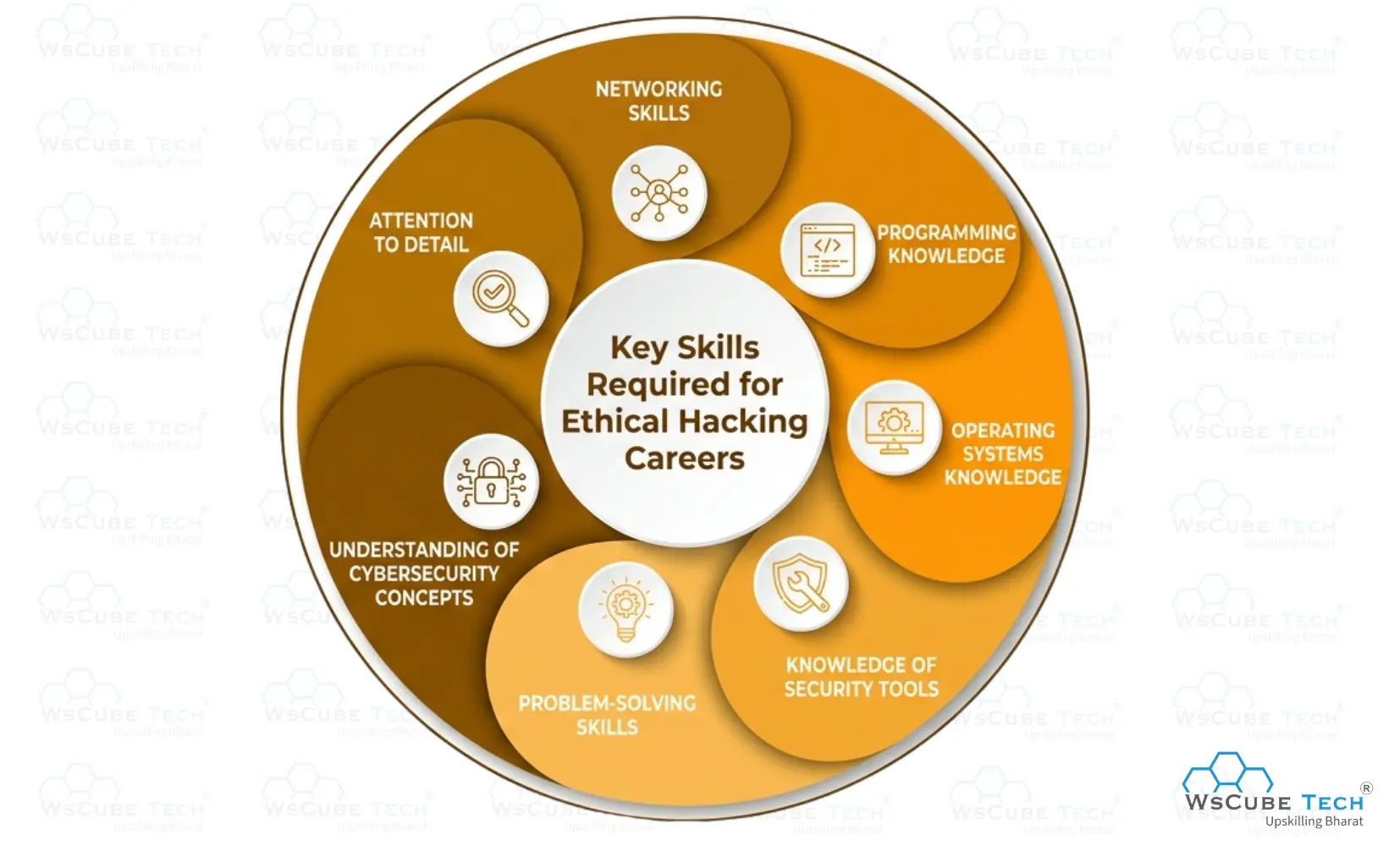
- Networking Skills: Understanding networking concepts like TCP/IP, DNS, HTTP, and firewalls helps you analyze how data flows across systems and identify vulnerabilities that attackers may exploit during cyberattacks.
- Programming Knowledge: Basic knowledge of programming languages such as Python, JavaScript, or C helps you understand application logic, identify coding issues, and create scripts to test and automate security tasks more efficiently and accurately.
- Operating Systems Knowledge: Familiarity with operating systems such as Linux and Windows helps you understand system behavior, manage environments, and detect security weaknesses across platforms used in real-world systems.
- Knowledge of Security Tools: Experience with tools like Nmap, Burp Suite, Metasploit, and Wireshark helps you perform scanning, testing, and analysis to identify vulnerabilities and strengthen system security effectively.
- Problem-Solving Skills: Strong analytical and problem-solving skills help you think like an attacker, identify vulnerabilities, and develop solutions to protect systems from cyber threats.
- Understanding of Cybersecurity Concepts: Knowledge of concepts like encryption, authentication, and network security helps you understand how security systems work and how to defend against different types of cyberattacks.
- Attention to Detail: Paying close attention to small details helps you identify hidden security flaws that may be missed easily but can lead to serious vulnerabilities if not addressed properly.
Join Our Cybersecurity Related Courses
Future Scope of Ethical Hacking Careers
The future of ethical hacking is extremely promising, driven by rising cyber threats and digital growth. Globally, there are around 3.5 million unfilled cybersecurity jobs, and the industry is expected to grow by 33% by 2033. In India alone, the cybersecurity market is projected to reach $36.8 billion by 2033, creating massive job opportunities. (
Additionally, India may need 1–1.5 million cybersecurity professionals, while cyberattacks continue to increase every year. This growing demand, combined with a shortage of skilled experts, ensures strong job security, high salaries, and long-term career growth in ethical hacking.
If you want to explore this topic in detail, check out Is Ethical Hacking a Good Career? to understand salary trends, demand, growth opportunities, and whether this career path is the right fit for you.
Tips to Succeed in Ethical Hacking Careers
Succeeding in ethical hacking requires practice, strong fundamentals, and continuous learning. Below are the tips to succeed in ethical hacking careers:
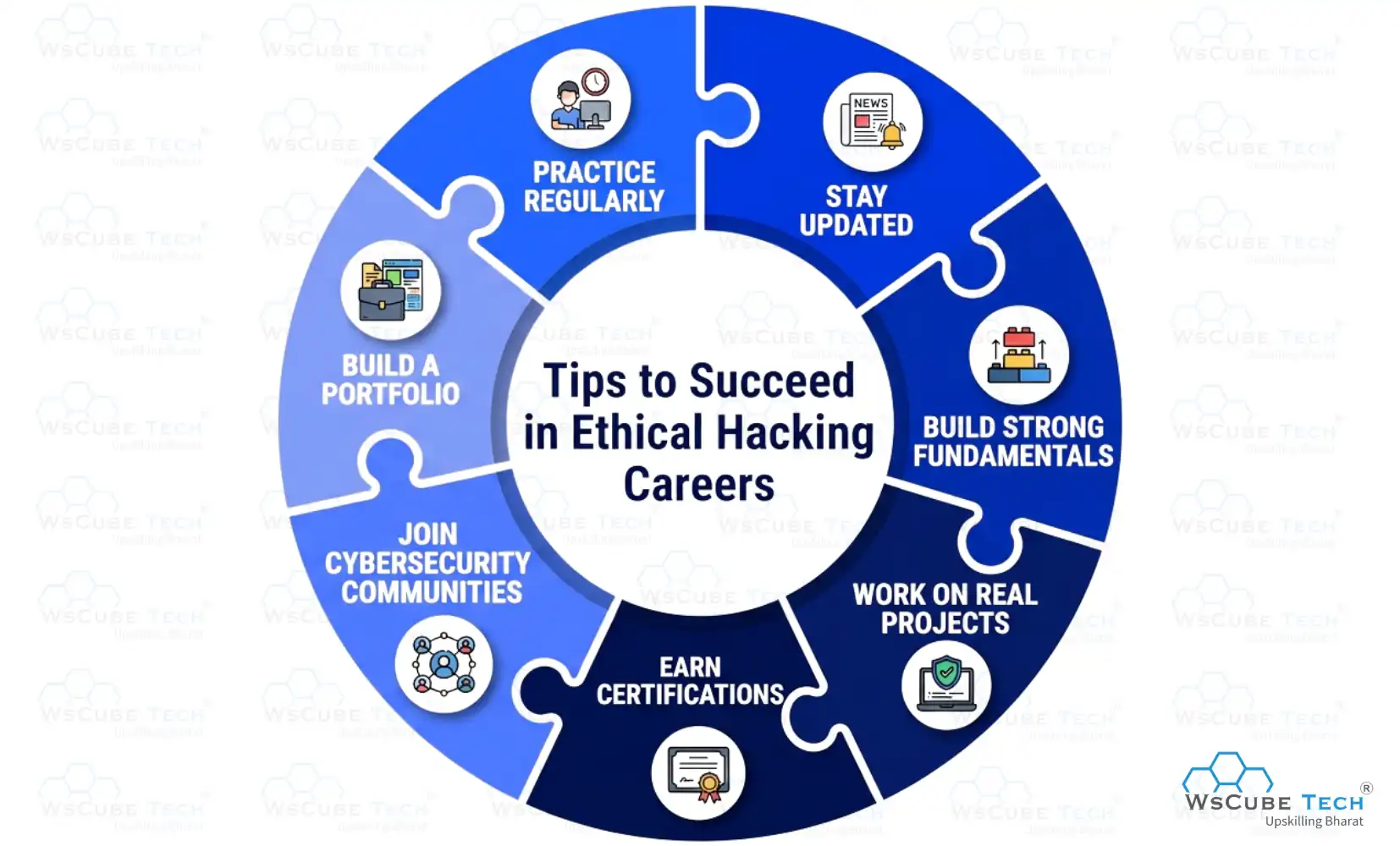
- Practice Regularly: Consistent practice is essential to improve your ethical hacking skills. Work on labs, challenges, and real-world scenarios regularly to gain hands-on experience and build confidence in identifying and fixing security issues effectively.
- Stay Updated: Cybersecurity evolves rapidly, so keep learning about new tools, threats, and techniques. Following blogs, tutorials, and industry updates helps you stay relevant and prepared for modern cyberattack methods and defense strategies.
- Build Strong Fundamentals: Focus on networking, operating systems, and programming basics. A strong foundation helps you understand system behavior, identify vulnerabilities easily, and build advanced ethical hacking skills with better clarity and confidence.
- Work on Real Projects: Platforms like TryHackMe and Hack The Box provide real-world practice. Working on such projects helps you apply knowledge, improve problem-solving skills, and understand how real cyberattacks and defenses actually work.
- Earn Certifications: Certifications like CEH and OSCP validate your knowledge and skills. They improve your credibility, increase career opportunities, and show your commitment to learning ethical hacking and cybersecurity practices seriously.
- Join Cybersecurity Communities: Engaging with online communities helps you learn from experts, share knowledge, and stay up to date. It also opens networking opportunities and helps you grow faster in the cybersecurity field.
- Build a Portfolio: Creating a portfolio with projects, reports, and practical work showcases your skills. It clearly shows your expertise and helps you stand out when applying for jobs or freelance opportunities.

FAQs About Careers in Ethical Hacking
Yes, you can start after 12th by learning basic IT and cybersecurity skills. Enroll in courses, practice regularly, and gain certifications to build a strong foundation and gradually enter ethical hacking careers.
Popular roles include Penetration Tester, Security Analyst, and Cloud Security Expert. Demand is increasing due to rising cyber threats, making these roles strong career options with good growth opportunities.
Yes, ethical hacking offers strong career growth in India. With increasing cyber threats, companies are hiring skilled professionals, offering good salaries and long-term job stability across IT, banking, and government sectors.
A degree in computer science or cybersecurity is helpful but not mandatory. Skills in networking, programming, and security tools, along with certifications like CEH or Security+, are more important for getting jobs.
Basic coding knowledge is helpful but not always required at the beginning. Learning languages like Python or JavaScript helps in understanding applications, automating tasks, and identifying vulnerabilities more effectively in advanced roles.
Certifications like CEH and CompTIA Security+ are great for beginners. They provide foundational knowledge of cybersecurity concepts, tools, and techniques, helping you start your journey and improve job opportunities in the field.
It usually takes 6 months to 2 years depending on your learning speed and practice. Consistent effort, hands-on experience, and certifications can help you become job-ready faster in this field.
Freshers can earn around ₹3–₹6 LPA, while experienced professionals can earn ₹10–₹20+ LPA. Salary depends on skills, certifications, experience, and the role you choose in cybersecurity.
Common roles include Penetration Tester, Security Analyst, Network Security Engineer, VAPT Specialist, and Cybersecurity Consultant. Each role focuses on different aspects of finding vulnerabilities and protecting systems from cyber threats.
Yes, beginners without a technical background can start by learning basics like networking and operating systems. With practice, proper guidance, and consistent learning, anyone can build skills and enter this field successfully.
Key skills include networking, programming basics, operating systems knowledge, security tools, and problem-solving. Continuous learning and hands-on practice are essential to identify vulnerabilities and protect systems effectively.
Yes, ethical hacking is a strong long-term career. With increasing cyber threats, demand for skilled professionals continues to grow, offering job security, career growth, and opportunities to work in various industries worldwide.
Yes, demand is increasing as cyberattacks grow worldwide. Organizations need skilled professionals to protect systems, making ethical hacking a highly in-demand career with strong growth and job opportunities in the future.
Start by building skills, practicing on labs, and earning certifications. Create a strong portfolio and apply for internships or entry-level roles. Practical experience and consistency help you secure your first job faster.
Conclusion
Ethical hacking is a fast-growing field with multiple career opportunities across different roles like penetration testing, security analysis, and cloud security. With increasing cyber threats, the demand for skilled professionals continues to rise, making it a stable and rewarding career choice.
By building strong fundamentals, practicing regularly, and staying updated with the latest trends, you can successfully grow in this field. With the right skills and dedication, ethical hacking can offer long-term growth, good salary potential, and exciting career opportunities.
Explore our Free Resources
| Python Tutorial | Python Program | Online Python Compiler |
| JavaScript Tutorial | JavaScript Program | Online JS Compiler |
| C Tutorial | C Program | Online C Compiler |
Free Courses For You






Leave a comment
Your email address will not be published. Required fields are marked *Comments (0)
No comments yet.