Are you confused about how much you should spend on a web design course? Or wondering how long it will take before you start building real websites?
Many beginners struggle to understand the exact fees and duration of web design courses. With so many options available, it becomes difficult to choose the right course that fits both your budget and time.
This confusion often leads to poor decisions, wasted money, or enrolling in courses that don’t match your goals. As a result, you may feel stuck or unsure about your career path.
But don’t worry, there is a clear way to choose the right course. In this blog, you will learn about web designing course fees and duration, different course types, and how to pick the best option for your needs.
What is Web Designing?
Web designing is the process of creating the look and feel of a website. It focuses on how a website appears and how users interact with it. A web designer works on layout, colors, fonts, images, and overall style to make the site attractive and easy to use.
Good web design helps visitors find information quickly and enjoy their experience. It also ensures the website works well on different devices like mobiles and computers. In simple words, web designing is about making a website beautiful, user-friendly, and useful for people who visit it.
Why Choose a Web Designing Course in 2026?
A web designing course in 2026 opens doors to exciting digital career opportunities. Below are the key reasons to choose this field.
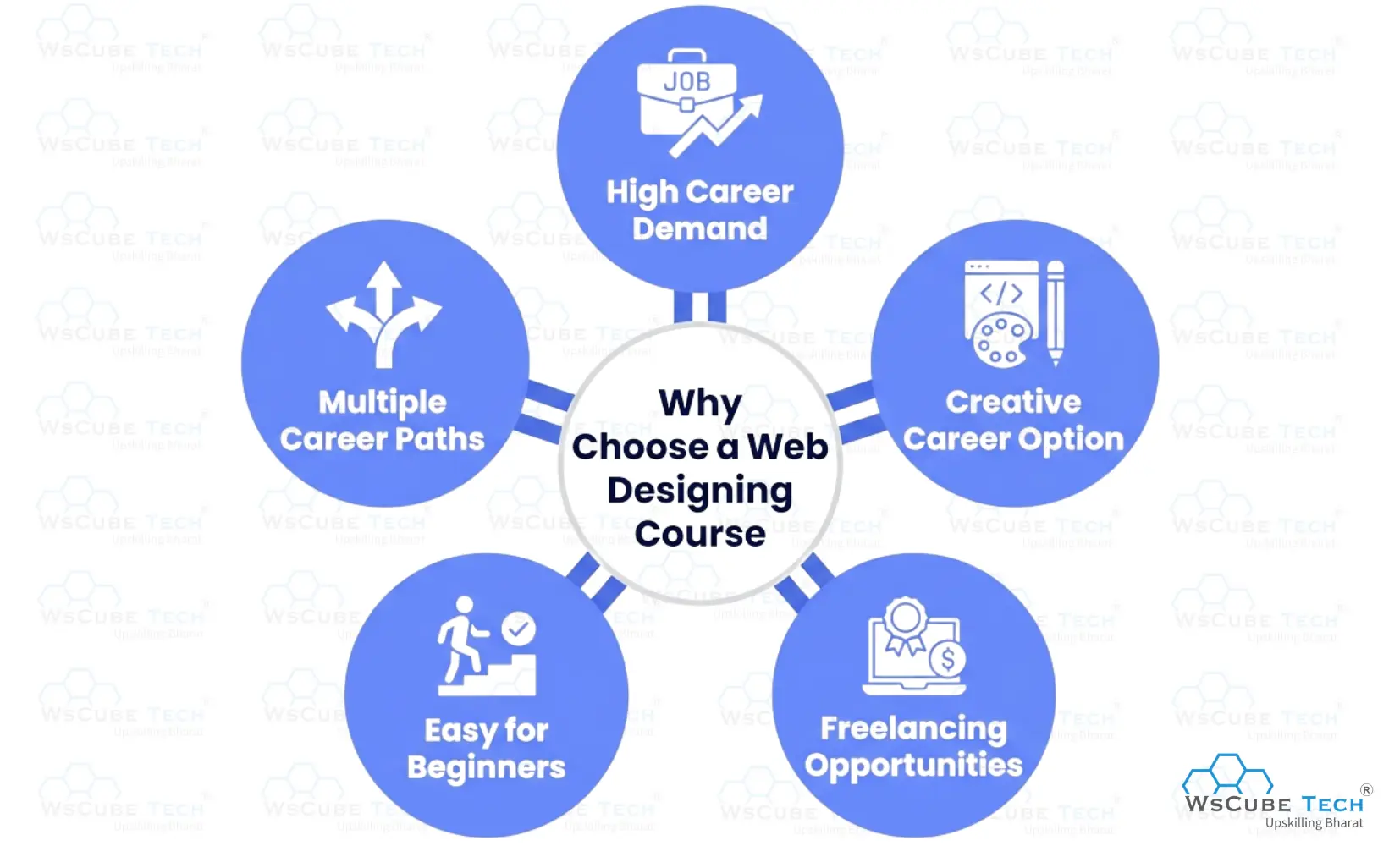
- High Career Demand: As businesses continue moving online, the demand for skilled web designers is growing rapidly. Companies need professionals who can create responsive, attractive, and user-friendly websites to improve their online presence.
- Creative and Technical Skills: This course helps you develop both creativity and technical knowledge by covering website layouts, colors, typography, HTML, CSS, JavaScript, and industry-standard design tools.
- Freelancing Opportunities: Web designing offers excellent freelancing and remote work options. You can work with clients worldwide, build websites for businesses, and earn income independently from home.
- Short Course Duration: Most web designing courses can be completed within a few months, allowing students and beginners to quickly gain practical skills and start applying for jobs or freelance projects.
- Strong Career Growth: After completing the course, you can explore career roles such as web designer, UI designer, front-end developer, or even start your own web design agency.
If you’re interested in web design, you can enroll in WsCubeTech’s online full-stack web development course. This course teaches you everything step by step, from front-end design to back-end development, and provides practical skills to build real-world projects.
Suggested Reading: 15+ Best Programming Languages to Learn
Web Designing Course Duration
The duration of a web designing course depends on the course type, learning mode, and career goals. Below is the breakdown of different web designing course durations:
1. Online Certification / Bootcamp: 1–6 Months
Certificate and bootcamp courses are short-term programs designed for beginners and working professionals who want to quickly gain practical skills. These courses mainly focus on HTML, CSS, JavaScript, responsive design, UI basics, and live projects. They are ideal for learners who want to start freelancing, internships, or entry-level jobs in a short time.
2. Diploma in Web Designing: 1–2 Years
A diploma in web designing offers detailed knowledge of website creation, design principles, and front-end technologies. It includes HTML, CSS, JavaScript, UI/UX basics, and project-based learning. This option is suitable for students who want strong practical skills and better career opportunities in web design and development.
3. Bachelor’s Degree: 3–4 Years
A bachelor’s degree in web designing, web development, or related fields provides in-depth knowledge and long-term career benefits. It covers web technologies, design principles, user experience, and programming. This option is ideal for students seeking better career growth and advanced roles in the IT industry.
4. PG Diploma / Postgraduate Courses: 1–2 Years
PG diploma and postgraduate courses are designed for students who already hold a bachelor’s degree and want advanced specialization in web designing, UI/UX, or front-end development. These programs focus on advanced frameworks, project management, and industry-level projects, helping learners prepare for higher-level career roles.
5. Self-Paced Courses: Flexible Duration
Self-paced courses allow learners to study according to their own schedule. The duration depends on your learning speed and available time, ranging from a few weeks to several months. These are best for students and professionals who need flexibility while learning practical website design skills.
Recommended Professional Certificates
Full Stack Development Course with AI Engineering
WordPress Bootcamp
Web Designing Course Fees in India
Web designing course fees in India vary based on course type, duration, institute reputation, and learning mode you choose. Below is the breakdown of fees for different web designing courses in India:
| Course Type | Duration | Typical Fees in India |
| Online Certification / Bootcamp | 1–6 Months | ₹5,000 – ₹50,000 |
| Diploma in Web Designing | 6 Months–2 Years | ₹10,000 – ₹2,00,000 |
| Bachelor's Degree | 3–4 Years | ₹50,000 – ₹5,00,000+ |
| PG Diploma / Postgraduate Course | 1–2 Years | ₹30,000 – ₹3,00,000+ |
| Self-Paced Online Course | Flexible | Free – ₹20,000 |
Note: Fees may vary depending on the institute, course curriculum, certification, and placement support.
Factors Affecting Web Designing Course Cost
Web designing course fees vary based on course type, institute quality, duration, learning mode, and additional features included in programs. Below are the key factors affecting web design course fees:
- Institute Reputation and Brand Value: Well-known institutes, universities, and premium training centers usually charge higher fees because of their experienced faculty, better placement support, industry recognition, and advanced learning resources.
- Course Type and Duration: Short-term courses like certifications are more affordable, while diploma and degree programs cost more due to longer duration and in-depth learning. Advanced courses with specialization also increase overall fees.
- Online or Offline Learning Mode: Online courses are often more affordable because they reduce infrastructure costs, whereas offline classroom training may include higher fees for lab facilities and in-person mentoring.
- Course Curriculum and Tools Covered: Courses that include advanced topics like UI/UX design, front-end frameworks, live projects, Figma, Adobe XD, portfolio building, and a complete web designing course syllabus usually have higher fees.
- Placement Support and Certifications: Institutes offering placement assistance, internships, interview preparation, and recognized certifications may charge extra fees compared to basic training programs.
- Location of the Institute: Institutes in metro cities and popular education hubs often have higher fees than local training centers due to infrastructure and demand.
Free vs Paid Web Designing Courses (Comparison)
Choosing between free and paid web designing courses depends on your learning goals, budget, and certification needs. Below is the comparison.
| Feature | Free Web Designing Courses | Paid Web Designing Courses |
| Cost | Free of cost | ₹3,000 – ₹3,50,000 or more |
| Course Content | Basic to intermediate topics | Beginner to advanced with a structured curriculum |
| Certification | Usually not provided or limited | Industry-recognized certificates provided |
| Practical Projects | Limited or self-practice | Includes guided projects and real-world assignments |
| Mentor Support | No or minimal support | Expert guidance and doubt-solving sessions |
| Career Support | Not available | Includes placement assistance or career guidance |
| Learning Experience | Self-learning, less structured | Structured, step-by-step learning |
| Best For | Beginners exploring basics | Serious learners aiming for career growth |
Upcoming Masterclass
Attend our live classes led by experienced and desiccated instructors of Wscube Tech.



Is a Web Designing Course Worth the Fees?
Yes, a web designing course is worth the fees if it helps you build practical skills and a strong portfolio. In India, course fees usually range from ₹3,000 to ₹3,50,000, depending on the course type and institute. At the same time, entry-level web designers often earn around ₹2.2 Lakhs to ₹3.1 Lakhs per year.
For example, even if you invest around ₹30,000–₹50,000 in a good course, you may recover that amount within the first few months of getting a job. Many professionals also increase their income through freelancing, where project-based earnings can be even higher.
So, the course fees can be a smart investment if the program includes live projects, portfolio building, and placement support. The real value depends on the skills and opportunities you gain after completion.
Also Read: Web Designing Course Eligibility: Requirements & Skills
Tips to Choose the Right Course Based on Budget
Choosing the right web designing course within your budget helps you learn effectively without overspending. Here are the key tips to follow:
- Set Your Budget Range: Start by deciding how much you can comfortably spend on the course. This helps you shortlist options and avoid choosing programs that may create financial pressure later.
- Compare Course Features: Do not focus only on the fees. Compare the course content, duration, live projects, certification, mentorship, and placement support to understand the overall value and choose a course that fits your career goals and budget.
- Check Free and Affordable Options: If your budget is limited, begin with free resources or affordable online certification courses before investing in advanced diploma or degree programs.
- Look for Placement Support: A slightly higher fee may be worth it if the course offers internships, resume support, mock interviews, and placement assistance to accelerate career growth.
- Read Reviews and Success Stories: Check student reviews, ratings, and placement outcomes to ensure the course delivers good learning quality and career opportunities within your budget.
- Choose According to Career Goals: Select a short-term affordable course for quick skill development or a degree program if you are planning long-term professional career growth.
Explore More Blog Topics
Career Opportunities After a Web Designing Course
A web designing course opens doors to multiple creative and technical career paths in the digital industry. Below are the top opportunities:
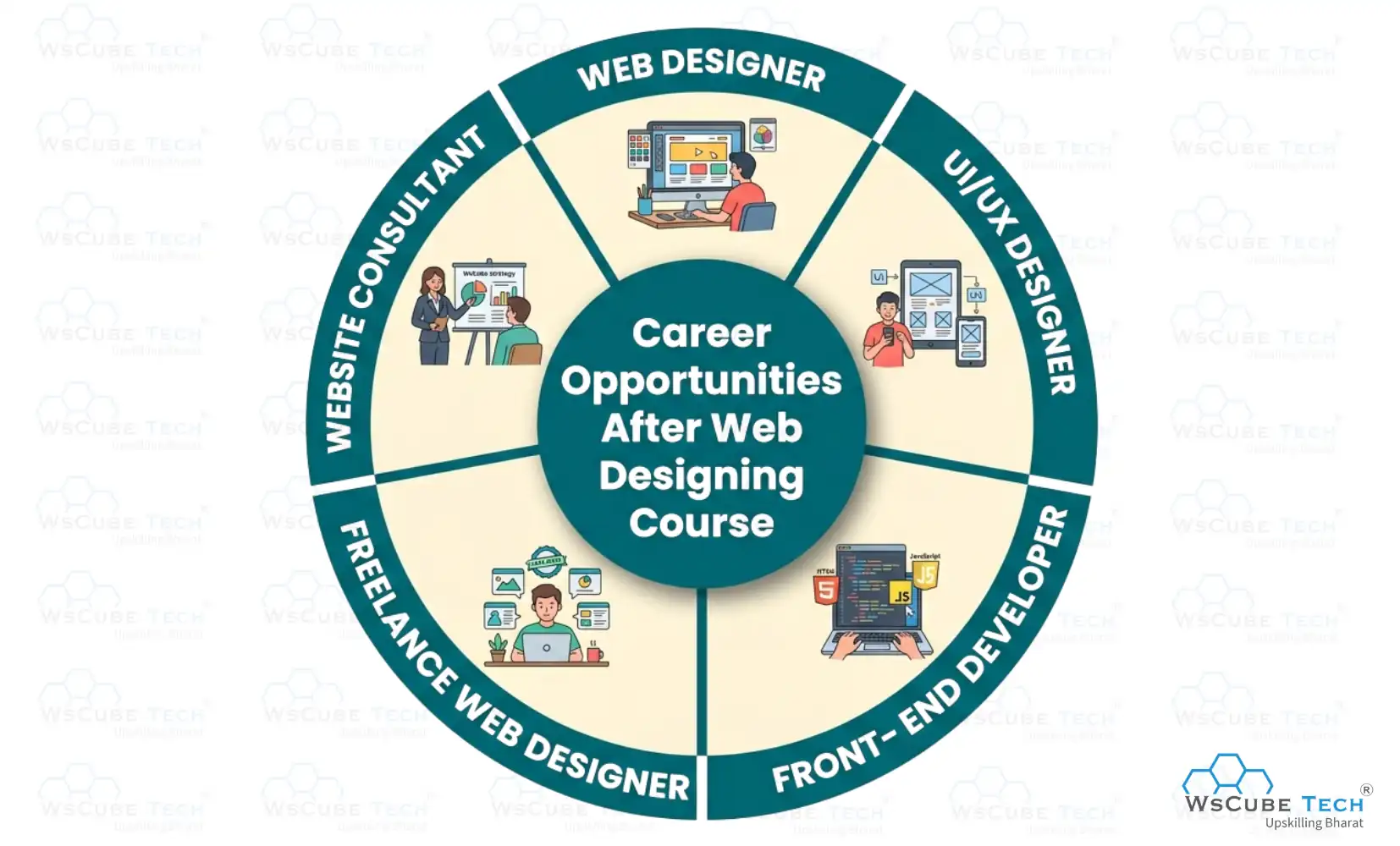
- Web Designer: Work on creating visually appealing, responsive, and user-friendly websites for businesses, blogs, e-commerce stores, and startups by designing layouts, color schemes, navigation, and interactive elements.
- UI/UX Designer: Focus on improving user experience and interface design by creating wireframes, prototypes, user flows, and visually engaging designs that make websites and applications easy to use.
- Front-End Developer: Build the visible part of websites using HTML, CSS, JavaScript, and frameworks while ensuring smooth performance, responsive layouts, and interactive user experiences that work seamlessly across desktops, tablets, and mobile devices.
- Freelance Web Designer: Offer website design services independently to clients, startups, and local businesses, allowing flexible work schedules and opportunities to earn through project-based assignments.
- Web Developer: Handle both design and development aspects of websites, including front-end integration, basic back-end functionality, and website maintenance for better career growth opportunities.
- Digital Design Specialist: Work on website banners, landing pages, promotional creatives, and visual assets for digital marketing campaigns, helping brands improve their online presence and engagement.
- Graphic Designer: Create logos, banners, icons, and visual elements for websites, social media, and digital platforms to improve branding and overall design appeal.
Salary After Completing a Web Designing Course
After knowing everything about web designing course duration and fees, it is also important to understand the salary opportunities available after course completion. Below is the average salary breakdown for popular job roles in this field.
| Job Profile | Average Annual Salary (in INR) |
| Web Designer | ₹3.7 LPA-₹4 LPA |
| UI/UX Designer | ₹7.6 LPA-₹8.4 LPA |
| Front-End Developer | ₹6.1 LPA-₹6.7 LPA |
| Web Developer | ₹4.4 LPA-₹4.9 LPA |
| Digital Design Specialist | ₹8.9 LPA-₹10.1 LPA |
| Graphic Designer | ₹4.3 LPA-₹4.7 LPA |
| Freelance Web Designer | ₹3.4 LPA-₹4.2 LPA |
Note: Freelance web designer income may vary depending on project size, client base, experience, and freelancing platform.
Source: AmbitionBox, based on updated 2026 salary data for web design and related roles in India.
FAQs on Web Design Course Fees and Duration
The average web designing course fees in India range between ₹5,000 and ₹3,00,000 depending on course type, duration, and institute. Basic courses cost less, while advanced programs are more expensive.
The web design course duration and fees vary based on course type. Certification courses take 1–6 months, diplomas require 1–2 years, and degree programs usually take 3–4 years.
Web designing courses are not always expensive for beginners. Many affordable options, including online certifications and short-term courses, are available that help you start learning without investing a large amount initially.
Yes, you can complete a basic web designing course in 3 months through certification or bootcamp programs. These courses focus on essential skills like HTML, CSS, and basic design concepts.
Free web designing courses are useful for beginners to understand basic concepts and tools. However, they may lack structured learning, certifications, and career support compared to paid professional courses.
The web designing course fees online usually range from free to ₹50,000 depending on the platform, course depth, and certification. Paid courses often provide better structure, projects, and career guidance.
A diploma in web designing typically takes 1 to 2 years to complete. It covers advanced topics like UI/UX design, responsive layouts, and project work for better career opportunities.
A bachelor’s degree in web designing can cost between ₹50,000 and ₹3,00,000 per year depending on the college, facilities, and curriculum offered. Private institutions usually charge higher fees than government colleges.
Yes, web designing course prices often vary by the institute’s location. Institutes in metro cities usually charge higher fees due to better infrastructure, more experienced trainers, and higher demand than in smaller cities.
Higher fees do not always guarantee better job placement. While premium institutes may offer strong support, your skills, portfolio, and practical experience play a more important role in getting hired.
The major factors affecting web design course fees include the institute’s reputation, course duration, curriculum, tools covered, learning mode, and placement support, all of which influence the overall cost of the program.
A web designing course is worth the fees if it offers practical training, updated curriculum, and career support. It helps you build skills, create projects, and explore job or freelancing opportunities.
Self-paced web designing courses have flexible duration, ranging from a few weeks to several months. You can learn at your own speed, making them ideal for students and working professionals.
Conclusion
A web designing course can be a great investment for students and professionals looking to build creative and technical skills. From short-term certifications to degree programs, the fees and duration vary based on your learning goals and budget.
Choosing the right course depends on course content, placement support, and career opportunities. With the right skills and practical projects, it can open doors to rewarding jobs and freelancing opportunities.
Start Learning With Our Free Tutorials





Leave a comment
Your email address will not be published. Required fields are marked *Comments (0)
No comments yet.