
When we talk about ranking a website, off-page SEO becomes one of the most crucial parts of the entire SEO process. If you want your pages to move up on Google and stay ahead of competitors, you must understand what is off page SEO and how it actually works in the real world.
In simple words, your rankings depend not only on what you publish on your site but also on the signals you build outside it. Let’s understand everything down in the simplest, most practical way so that you can apply it confidently.
What is Off-Page SEO?
Off-page SEO is all the activities you do outside your website to improve its trust, authority, popularity, and search engine ranking. While on-page SEO focuses on your content and structure, off-page SEO focuses on how other websites and people talk about you, link to you, mention your brand, and recommend your pages.
These external signals help Google understand that your website is valuable, reliable, and worthy of ranking higher.
Common off-page SEO activities include backlink building, social signals, reviews, citations, PR, brand mentions, and more. Think of it as building your website’s reputation across the internet.
Most Important Thing You Must Know About Off-Page SEO
Not every backlink or off-page activity carries the same value. You must focus on earning backlinks from relevant niche websites that already have strong authority, high traffic, and a clean reputation.
Backlinks from unrelated or low-quality sites bring little value and may even hurt rankings.
Example (WsCube Tech):
If WsCube Tech gets a backlink from a top education website like Shiksha, GeeksforGeeks, Careers360 or a major tech publisher, Google sees it as a high-value recommendation. But a backlink from a random cooking blog adds no authority because it is irrelevant.
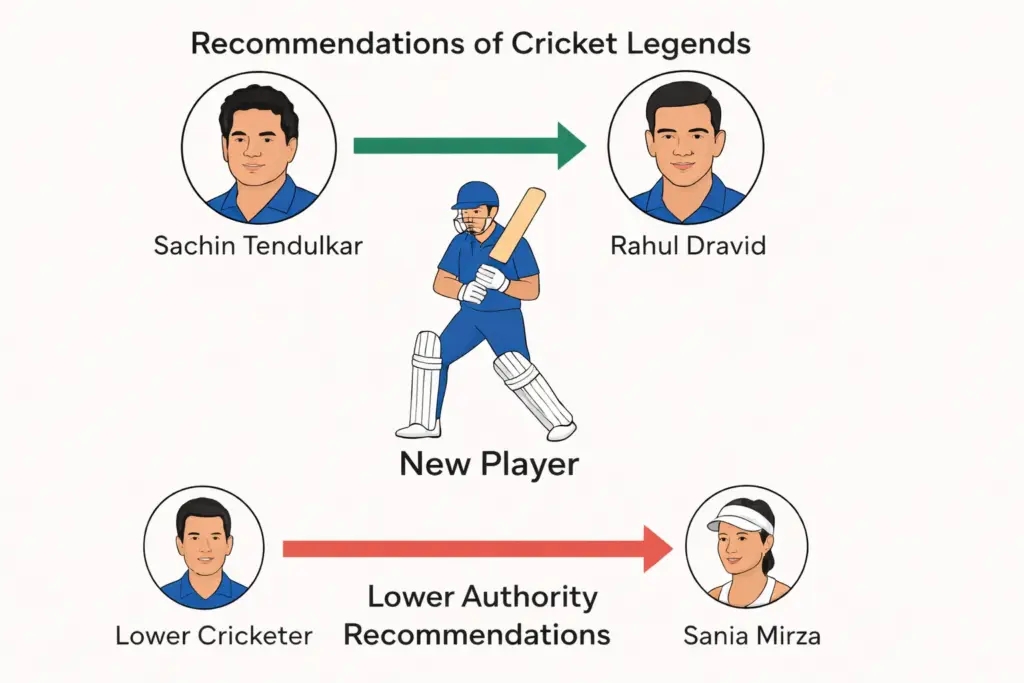
Cricket Example:
Imagine a new cricketer making his debut. If legends like Sachin Tendulkar or Rahul Dravid publicly praise him, that recommendation carries huge weight. Their authority and niche relevance give the new player instant credibility.
But if an average-performing Ranji player praises him, the effect is much smaller. And if a tennis star like Sania Mirza praises him, the impact becomes even less because the niche is unrelated.
The higher the authority + the closer the niche → the stronger the value.
Why Off-Page SEO is Important?
These are the top benefits off-page SEO for a website:
1. It Builds Trust and Authority Your Website Needs
Google ranks websites based on how trustworthy others think they are. When high-authority websites link to you, mention you, or recommend your brand, it sends a strong signal that your content is reliable.
This external validation boosts your domain authority and directly impacts how quickly you can rank for competitive keywords.
2. It Improves Your Search Engine Rankings Faster
Even if your on-page SEO is perfect, you won’t outrank competitors without strong off-page signals.
Backlinks, citations, and brand mentions show Google that users trust your website beyond your own content. This helps your pages climb rankings faster, especially in niches like education, travel, finance, tech, and health.
3. It Drives High-Quality Referral Traffic
When you get backlinks from high-traffic and relevant websites, you don’t just gain SEO power—you also get real people clicking through those links. This boosts targeted traffic, helps with conversions, and increases brand visibility. A single link from a major site can bring thousands of relevant users to your pages.
4. It Strengthens Your Brand Reputation
Off-page SEO isn’t only about links; it’s also about how the internet perceives your brand. Positive reviews, PR mentions, social shares, and recommendations shape your authority just like personal branding shapes a public figure’s reputation. The stronger your brand looks online, the easier it becomes to rank.
5. It Helps You Outperform Competitors in Every Niche
SEO is a competitive game. If your competitors have more high-quality backlinks and stronger external signals, Google sees them as more credible.
With the right off-page SEO activities, like guest posts, digital PR, and authority mentions, you can outrank websites even if they are older or have more content.
6. It Supports Long-Term SEO Growth
Off-page SEO builds authority that keeps growing with time. Unlike paid ads, the effects don’t stop when you stop spending. Once you build a strong backlink profile and brand presence, Google continues to reward your site with better visibility and faster indexing.
Recommended Professional Certificates
AI-Powered Digital Marketing Course
Performance Marketing Bootcamp
SEO Specialist Bootcamp
Most Relevant Off-Page SEO Techniques
There are numerous techniques and activities, but these off-page SEO or backlink building techniques matter the most in 2026 and beyond:
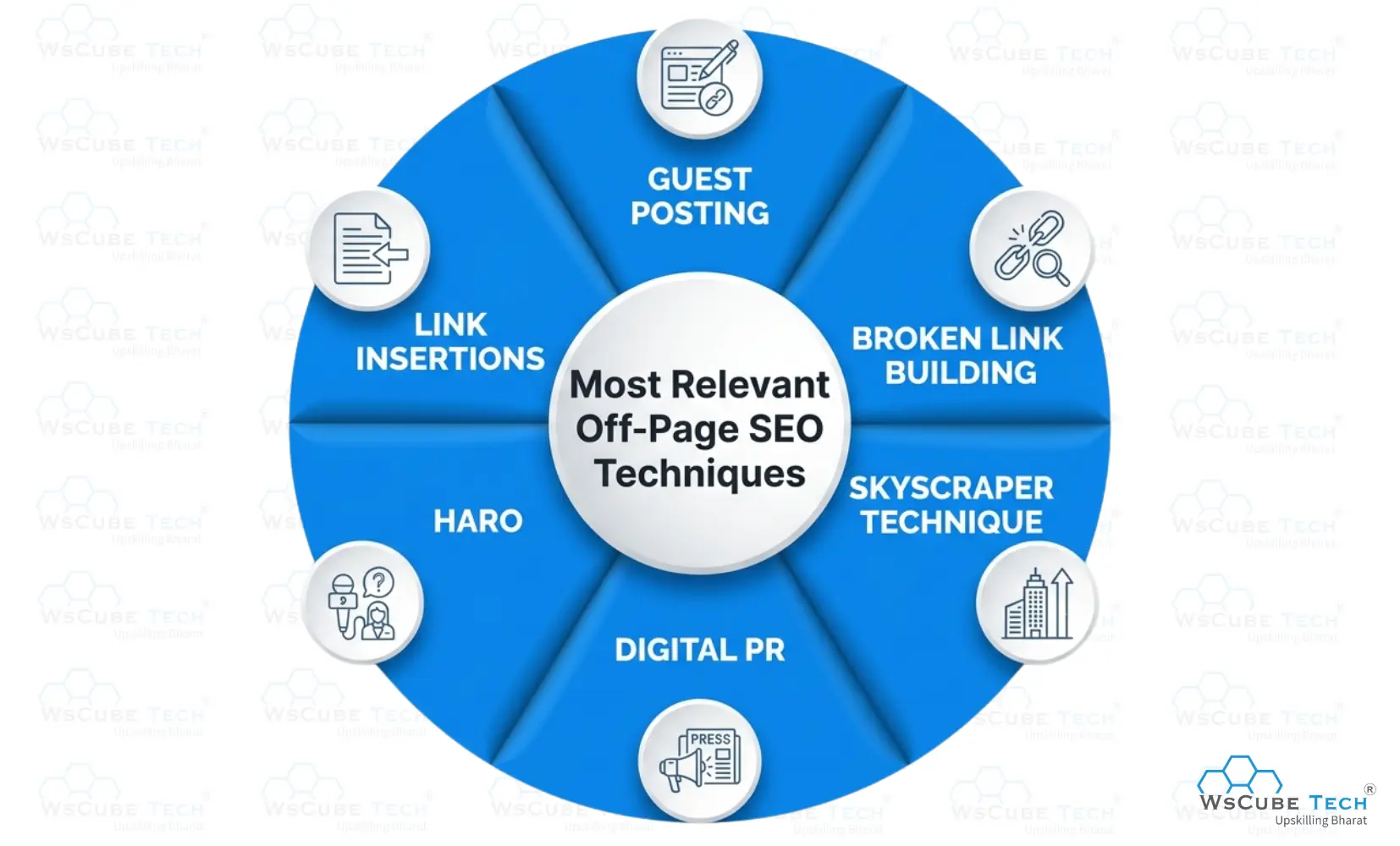
1. Guest Posting (Guest Blogging)
Guest posting is one of the most reliable and safest off-page SEO techniques. It simply means you write an article for another website in your niche, and in return, you get a contextual backlink.
Google values guest posts because the link comes naturally inside useful content written by you. The quality of the guest post matters more than the quantity. When you publish helpful, original, and insightful articles on relevant websites, you build authority, reach new audiences, and position yourself as an expert.
The key is to choose websites that are niche-relevant, have good organic traffic, and follow strict editorial standards.
- Guest posting works best on niche-related websites
- Editorial quality matters strongly
- Publisher’s traffic improves your referral traffic
Practical Tips:
Search for: “write for us + your niche” or “guest post + your niche”.
Example: If you run a coding website like WsCube Tech, publish a guest post on a tech blog explaining “Top C Programming Concepts”, and insert your link naturally.
2. Broken Link Building
Broken link building is a white-hat method where you find broken (dead) links on other websites and offer your content as the replacement. Website owners hate broken links because they create a poor user experience.
When you inform them politely and offer a working, relevant article from your site, they often replace the broken link with yours.
This method works well because you're solving a problem for the webmaster while earning a natural backlink. It takes research and patience, but the success rate is high when you target niche-relevant blogs and resource pages.
- Works best on resource pages
- Requires tools like Ahrefs or Broken Link Checker
- High acceptance rate if the replacement is strong
Practical Tips:
Find broken links on “Top Java Guides” resources and suggest your working guide.
Example: If a coding site has a broken link on “C Arrays Explained,” send your tutorial as the replacement.
3. Skyscraper Technique
The skyscraper technique is about finding high-performing content in your niche and creating something even better—more detailed, more updated, more visual, or more practical.
Once your improved version is ready, you reach out to websites that linked to the older version and suggest your updated article. Since you’re offering something superior, many websites happily update the link.
This technique works only if your content is genuinely better, not just longer. Visuals, stats, design, and clarity all play important roles.
- Your content must genuinely offer more value
- Outreach needs to be personalized
- Works best in competitive niches
Practical Tips:
If the internet has “50 HTML Tags You Must Know,” create a fresher version with 100 tags, visuals, examples, and a downloadable cheat sheet.
Example: WsCube Tech creates a detailed “HTML Tutorial” and reaches out to sites linking to older tutorials.
4. Digital PR (Press Features & News Mentions)
Digital PR helps you earn high-authority mentions from news websites, magazines, interviews, and industry portals. These are extremely powerful backlinks because they come from trusted publications with massive audiences.
Rather than building small links everywhere, a few strong PR mentions can shift your entire ranking profile. Digital PR can include interviews, data reports, founder stories, expert opinions, or unique insights. It improves your online reputation, builds brand trust, and also sends strong authority signals to Google.
- Brings high-authority backlinks
- Boosts brand credibility
- Works well for long-term SEO
Practical Tips:
If WsCube Tech releases a “Survey on Demand for Python Developers,” different media sites may cover it and link back.
5. HARO (Help a Reporter Out)
HARO connects journalists with experts. When you sign up, you receive daily queries from reporters. If you respond with valuable insights, they may quote you in their articles and link back to your website.
These backlinks often come from big sites like Forbes, Business Insider, and Times of India. It’s a powerful and ethical way to build authority while sharing your expert knowledge. The key is to answer only the questions relevant to your niche and write clear, helpful responses.
- You must answer quickly
- Journalists prefer unique insights
- Proven method for high authority links
Practical Tips:
If a journalist asks, “Why is JavaScript so popular?”, write a sharp expert answer.
Example: “JavaScript dominates because it's everywhere—from frontend to backend.”
6. Niche Edits / Curated Links / Link Insertions
Niche edits are backlinks added to existing articles on relevant websites. Instead of writing a new guest post, the publisher inserts your link inside a current, ranking article. These links work well because they already have authority, age, and traffic.
It’s faster than guest posting and more effective if the placement is natural. The key is relevance; the article must genuinely relate to your topic.
- Quicker than guest posting
- Works best in contextually relevant articles
- Must avoid spammy offers
Practical Tips:
If a website has an article on “Best Python Resources,” ask for inclusion of your detailed Python Course.
Upcoming Masterclass
Attend our live classes led by experienced and desiccated instructors of Wscube Tech.


Off-Page SEO Activities for Easy Link Building
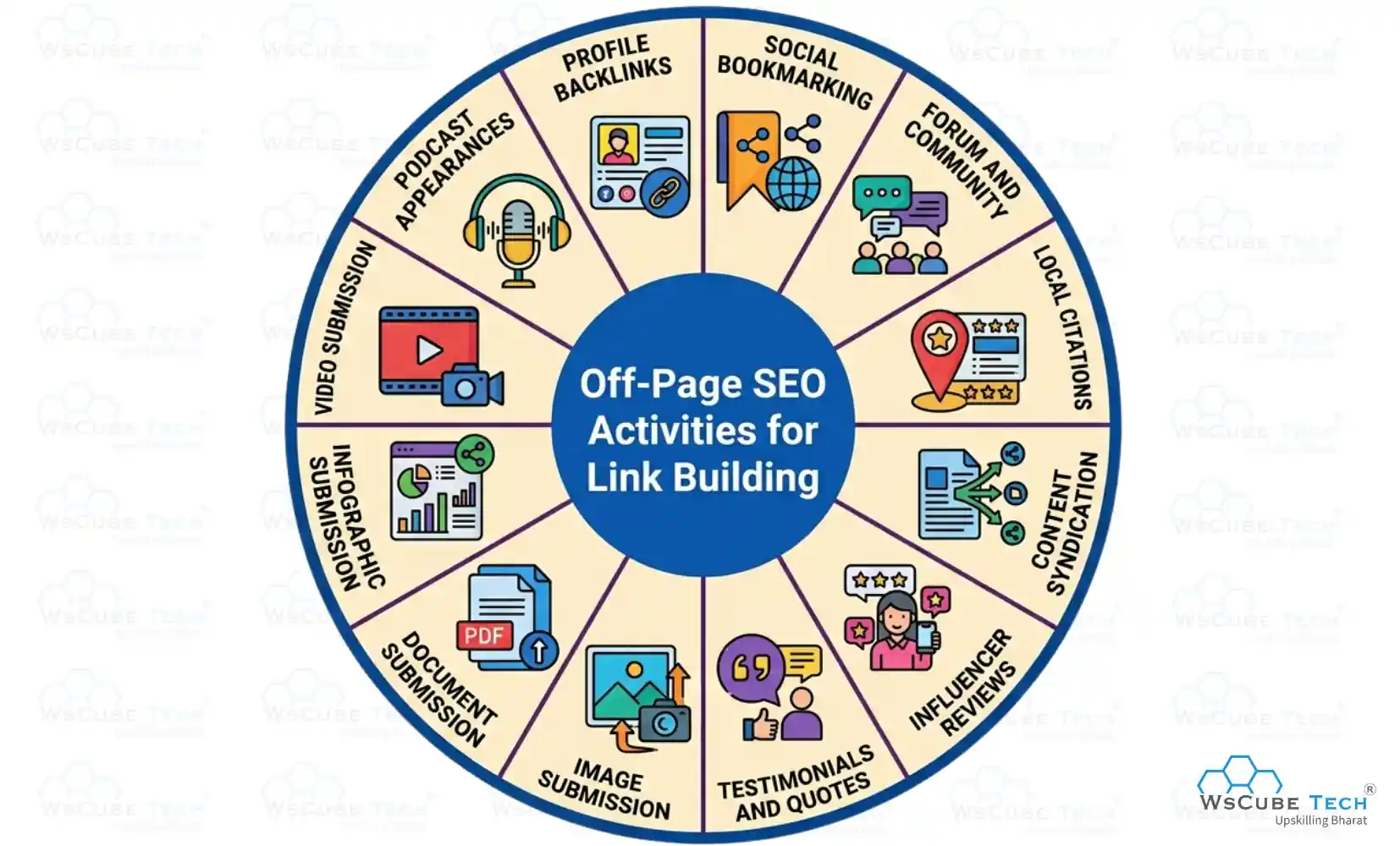
If you have a low budget for off-page SEO, use the techniques covered below. These offer lesser value but still better than not having any off-page strategy:
1. Profile Backlinks
Profile backlinks come from creating accounts on trusted websites like GitHub, Crunchbase, About.me, or university portals. While most profile links are no-follow, they help diversify your backlink profile, strengthen brand presence, and build foundational SEO signals. They’re not meant for ranking power but for legitimacy, citations, and trust-building.
- Basic foundation for off-page
- Builds brand presence
- Helps Google trust your entity
Practical Tips:
Create profiles for WsCube Tech on platforms like Crunchbase with a link to the website.
2. Social Bookmarking
Social bookmarking sites store and recommend web pages. Platforms like Mix, Scoop.it, or Flipboard help your content get discovered faster. While these links don’t directly boost rankings, they improve indexing, bring referral traffic, and can help low-authority sites gain early visibility.
- Best for new content
- Helps with indexing
- Increases referral traffic
Practical Tips:
Bookmark your latest “Digital Marketing Course Guide” on Flipboard and Mix.
3. Forum & Community Posting
Participating in forums like Reddit, Quora, StackOverflow, or niche communities helps you answer questions and build authority. When you add helpful insights, people trust your expertise. These platforms also allow subtle, context-based links where appropriate. These aren’t for “SEO power” but for relevance, traffic, and brand trust.
- Helps build authority
- Must be value-driven
- No aggressive link dropping
Practical Tips:
If someone asks, “How to learn digital marketing easily?”, you can respond with steps and include the link to your online digital marketing course.
4. Local Citations
For businesses offering services in physical locations, citations on Google Business Profile, Justdial, IndiaMart, Sulekha, Yelp, and others help with rankings. Consistency in name, address, and phone number is crucial. These are essential for local SEO and trust-building.
- Improves local rankings
- Boosts map visibility
- Must maintain NAP accuracy
Practical Tips:
Add WsCube Tech’s details to Justdial + Google Business Profile + IndiaMart with the same address and phone number.
5. Content Syndication
Content syndication means republishing your blog or article on external platforms like Medium, LinkedIn Articles, Substack, or Vocal Media. While links are usually no-follow, they bring traffic and help your content reach new audiences. To avoid duplication issues, use canonical links or summaries.
- Helps reach wider audience
- Creates authority signals
- Keep canonical tags where needed
Practical Tips:
Publish a summarized version of your “JavaScript Tutorial” on Medium with a link to the full guide.
6. Influencer Collaboration & Reviews
When influencers in your niche talk about your content, course, or product, it generates trust and visibility. Their posts often include backlinks, mentions, and social signals. This method works especially well in education, fitness, tech, and lifestyle niches.
- Works best in niche collaborations
- Provides natural brand mentions
- Often brings viral reach
7. Testimonials & Expert Quotes
Giving testimonials to tools, services, or platforms you actually use can earn you backlinks. Businesses love showcasing testimonials from real users, and they often publish them on high-authority pages with your link included.
- Very easy to do
- Builds trust + authority
- High acceptance rate
8. Image Submission
Image submission is an underrated off-page technique where you upload high-quality images to trusted image-sharing platforms like Pinterest, Flickr, Freepik Contributor, and Behance.
Each upload allows you to include a link back to your website. These links help with brand visibility, referral traffic, and Google Image search domination. If you work in niches like education, food, travel, coding, fitness, or design, image submission becomes powerful because visual content attracts natural shares and mentions.
Optimizing the filename, ALT text, title, and description helps Google understand your website better and index your images faster.
- Works great for visual niches
- Helps rank in Google Images
- Drives consistent referral traffic
9. Document Submission (PDF, PPT, DOC Sharing)
Document sharing involves uploading helpful educational files such as PDFs, DOCs, and PPTs on websites like SlideShare, Scribd, and Academia. These platforms allow you to attach website links inside the document or in the description.
This method works extremely well for tutorials, guides, notes, presentations, and checklists. Document-sharing builds authority, helps Google index your content, and drives long-term organic traffic. Since these sites rank well in Google, your uploaded documents also get indexed quickly.
- Best for education, coding, research, and business niches
- Increases brand trust
- Helps you reach learners and professionals
10. Infographic Submission
Infographic submission means designing a visually appealing infographic and uploading it to infographic directories like Visual.ly, InfographicLove, Pinterest, etc.
Infographics attract natural backlinks because people love to share visuals in their articles, presentations, and social posts. When someone uses your infographic, they usually credit your website as the source, which results in natural backlinks. Infographics also appear in Google Images, increasing your overall visibility.
- Helps earn natural backlinks
- Works best when the infographic is data-rich
- Boosts social shares
11. Video Submission
Video submission is a powerful off-page technique where you upload educational, promotional, or tutorial-based videos. These platforms allow you to add website links in the description, pinned comments, cards, or end screens.
Videos improve brand awareness, build trust, and attract backlinks when other websites embed your videos. Search engines give high weightage to video platforms, so your content gets discovered quickly.
- Best for tutorials and how-to content
- Brings long-term traffic
- Helps build a strong brand presence
12. Podcast Appearances & Audio Submission
Podcast backlinking involves appearing on podcasts or uploading your audio episodes on Spotify, Apple Podcasts, Google Podcasts, and Podbean. Podcast websites usually include a link to your website in the show notes, making them high-authority contextual backlinks.
Podcasts also help build personal branding, improve trust, and attract new audiences. Audio content is easier to consume, and many websites embed podcast episodes, leading to natural links.
- High-authority show-notes backlinks
- Helps in personal and brand authority building
- Works for education, marketing, coding, health, lifestyle niches
Off-Page SEO Strategy
This strategy is designed so any beginner can follow it and start building authority, trust, and rankings for their website.
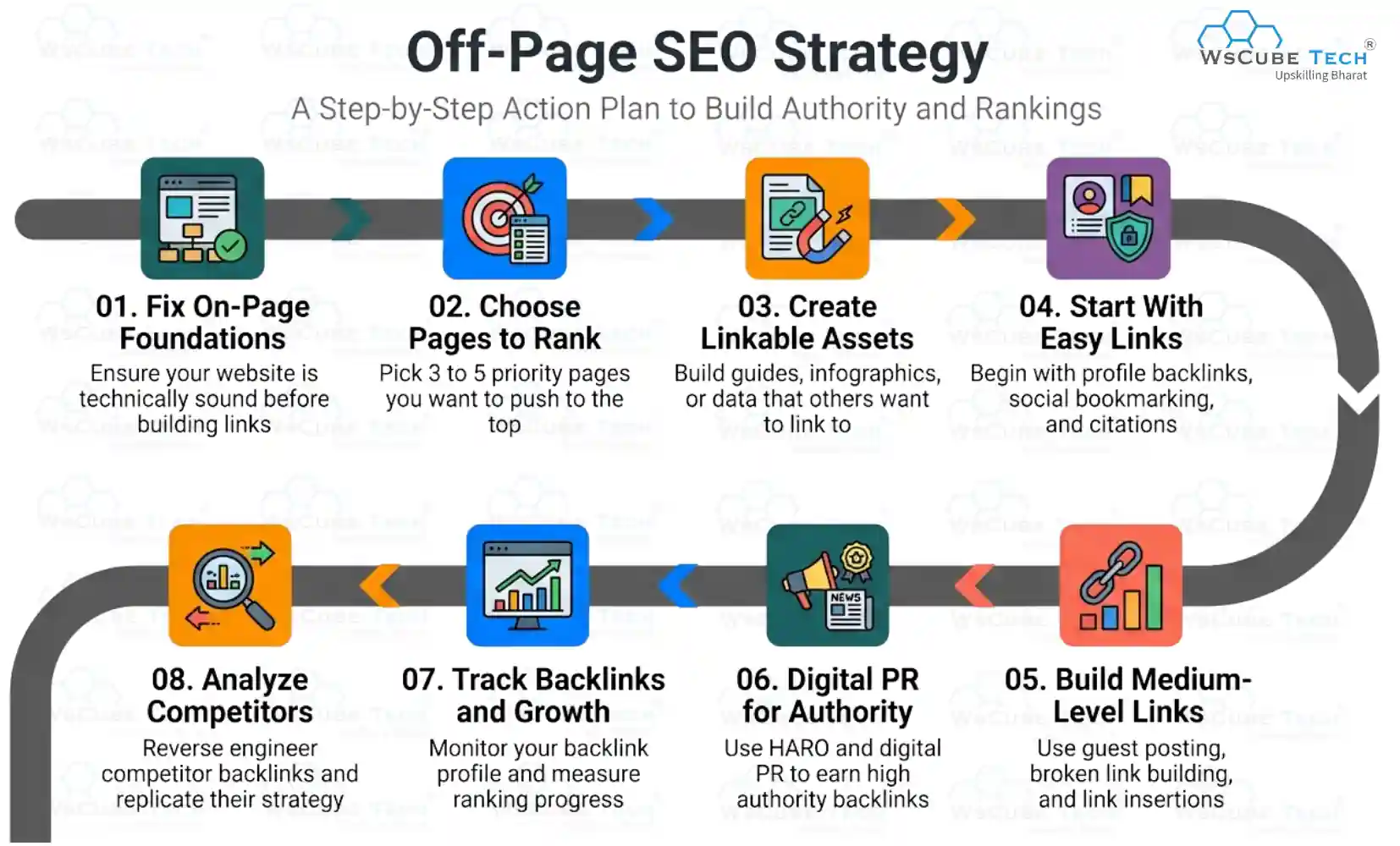
Step 1: Fix Your On-Page Foundations First
Off-page SEO works only when your on-page SEO is strong. Before building backlinks, ensure your website has:
- Optimized title tags & meta descriptions
- High-quality content
- Fast performance
- No technical SEO errors
Example:
If WsCube Tech wants backlinks for its C Language Tutorial, the content must be complete, error-free, and useful.
Step 2: Choose 3–5 Pages You Want to Rank First
Don’t build backlinks randomly. Pick your priority pages based on:
- High search volume
- Strong business value
- Real ranking potential
These will be your “linkable assets.”
Example:
A digital marketing website could target pages like:
- SEO Guide
- Digital Marketing Course
- PPC Tutorial
Step 3: Create Linkable Content Assets
Not all pages earn links easily. Create content designed to attract backlinks:
- Ultimate guides
- Statistics pages
- Tools
- Industry research
- Infographics
- Checklists
Example:
“100+ SEO Statistics for 2026” naturally attracts backlinks from bloggers and marketers.
Read More Marketing Guides
| What is PPC? Pay-Per-Click | What is 360° Digital Marketing? |
| What is Google Ads? | What is Performance Marketing? |
| What is Email Marketing? | What is Search Engine Marketing? |
Step 4: Start With Easy & Safe Links (Foundational Links)
Create these links first:
- Social profiles
- Directories
- Citations
- Image submissions
- Document uploads
- Web 2.0 pages
These make your website look legitimate in Google’s eyes.
Step 5: Build Medium-Level Links (Guest Posts, Niche Edits)
These are the links that start improving rankings:
- Guest posts
- Niche edits
- Resource page links
- Expert quotes
Always ensure niche relevance.
Example:
A coding blog publishing a guest post on GeeksforGeeks-like websites (if allowed).
Step 6: Use Digital PR for High-Authority Links
This is where real authority comes from:
- Founder interviews
- Case studies
- Research reports
- Press releases
- HARO responses
These links help you beat strong competitors.
Step 7: Track Your Backlinks & Monitor Growth
Use tools to track:
- Number of new backlinks
- Referring domains
- Authority score
- Traffic from backlinks
Step 8: Analyze Competitors & Reverse Engineer What They Did
This speeds up your growth. You see what worked for them and do it better.
Off-Page SEO Tools
| Tool Name | Purpose |
| Ahrefs | Backlink analysis, competitor research |
| SEMrush | Link audit, backlink tracking |
| Ubersuggest | Competitor backlinks, keyword ideas |
| Moz Link Explorer | Domain authority, backlink tracking |
| Majestic SEO | Trust flow, citation flow |
| Google Search Console | Monitor current backlinks |
| HARO | High-authority PR backlinks |
Off-Page SEO Mistakes to Avoid
- Buying cheap backlinks: These bring penalties and long-term damage.
- Linking from irrelevant niches: Irrelevant backlinks dilute your authority.
- Using the same anchor text repeatedly: Leads to unnatural link profile.
- Ignoring no-follow links: They still help your link diversity and trust.
- Focusing only on quantity, not quality: 10 good links > 1,000 spam links.
Explore Our Most Popular Marketing Courses
Off-Page SEO vs On-Page SEO
| Factor | On-Page SEO | Off-Page SEO |
| Focus | Inside the website | Outside the website |
| Purpose | Improve relevance & structure | Improve authority & trust |
| Activities | Content, keywords, speed, internal links | Backlinks, PR, citations, mentions |
| Control | Fully controlled | Partially controlled |
| Examples | Title tags, meta description | Guest posts, HARO, link building |
Also Read: Difference Between On-Page vs Off-page SEO
FAQs About Off-Page SEO
It tells Google that other websites trust and recommend your content.
Backlinks are links from other websites pointing to your pages.
No. High-authority, niche-relevant links have more value.
Guest posting and digital PR consistently deliver strong results.
There’s no fixed number. Focus on quality over quantity.
A link that does not pass authority but helps with visibility and traffic.
Yes, they diversify your backlink profile and improve naturalness.
Spam or irrelevant links that may harm your rankings.
Use the disavow tool after identifying them through Search Console or tools.
Yes, it may look manipulative.
Join Our On-Campus Digital Marketing Program
Explore Our Free Courses




Leave a comment
Your email address will not be published. Required fields are marked *Comments (0)
No comments yet.