In 2026, social media has become a powerful platform for brand growth, audience engagement, and online visibility. Understanding what is social media management helps businesses create smarter content, connect with the right audience, and stay competitive in the fast-changing digital world. This guide covers the best strategies, tools, benefits, and trends shaping social media management today.
What Is Social Media Management?
Social media management is the process of creating, scheduling, managing, and analyzing content across social media platforms to grow a brand’s online presence. It helps businesses connect with audiences, increase engagement, build trust, and drive sales through platforms like Instagram, Facebook, LinkedIn, and YouTube.
Social media management also includes community engagement, performance tracking, content planning, and strategy building. With businesses investing heavily in digital marketing, it has also become a fast-growing social media management career for creative and marketing professionals.
What Does a Social Media Manager Do?
A social media manager handles a brand’s online presence across platforms like Instagram, Facebook, LinkedIn, and YouTube. They create engaging content, schedule posts, interact with followers, analyze performance metrics, and build strategies to improve reach, engagement, and conversions.
Their goal is to grow brand awareness, build customer relationships, and drive business growth through consistent and effective social media management. Now, checkout what social media manage will do:
- Creates and publishes social media content
- Plans monthly content calendars
- Manages audience engagement and replies
- Tracks analytics and performance metrics
- Runs paid social media campaigns
- Researches trends and viral content
- Builds brand awareness and online presence
- Collaborates with influencers and creators
- Improves follower growth and engagement
- Develops social media marketing strategies
Why Social Media Management Is Important in 2026
In 2026, businesses rely heavily on social platforms to build visibility, connect with audiences, and drive sales. Certainly, social media management aims to create consistent strategies for online growth.
With AI, social search, and changing algorithms growing rapidly, brands need a strong social media presence. Effective management helps businesses improve engagement, trust, customer relationships, and conversions. Now, it’s time to learn Why Social Media Management Is Important in 2026:
- Builds strong online brand visibility
- Helps businesses connect with target audiences
- Increases engagement and customer interaction
- Drives website traffic and quality leads
- Supports sales and business growth
- Improves customer trust and loyalty
- Helps brands stay competitive online
- Tracks audience behavior and performance insights
- Boosts social search visibility and discoverability
- Enhances content consistency across platforms
Social Media Management vs Social Media Marketing
Social media management focuses on handling daily social activities like content posting, engagement, and analytics, while social media marketing targets promotions, campaigns, and conversions using advanced technologies for better performance.
| Aspect | Social Media Management | Social Media Marketing |
| Main Focus | Managing daily social activities | Promoting products and services |
| Goal | Build engagement and community | Generate leads and sales |
| Content Type | Regular posts and interactions | Campaign-based promotional content |
| Activities | Scheduling, replying, monitoring | Advertising and paid campaigns |
| Strategy | Long-term brand presence | Short-term business growth |
| Metrics Tracked | Engagement and follower growth | ROI, conversions, and revenue |
| Audience Approach | Relationship building | Customer acquisition |
| Tools Used | Scheduling and analytics tools | Ad management and campaign tools |
Key Components of Social Media Management
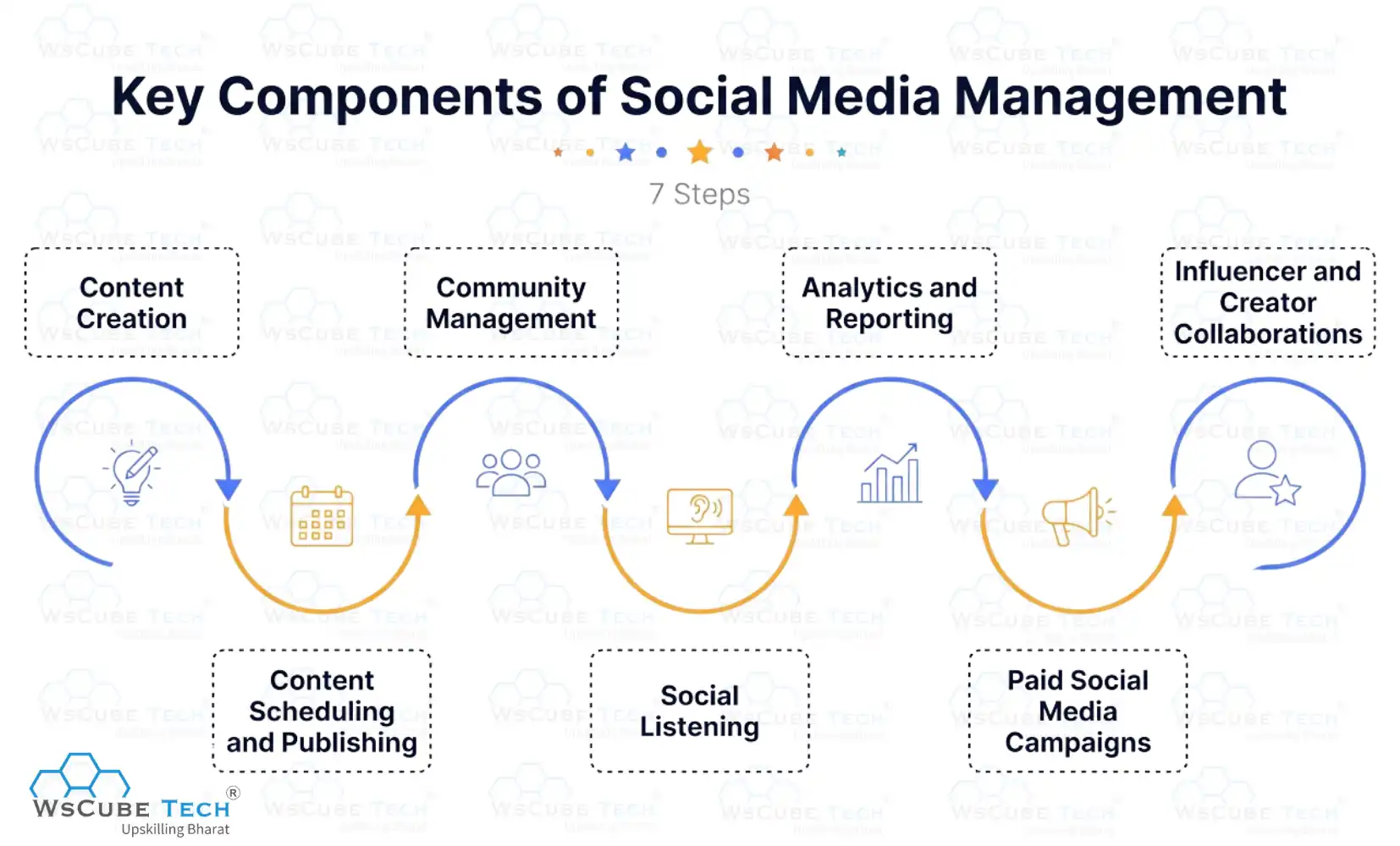
Effective social media management includes multiple activities that help brands build visibility, engage audiences, improve performance, and grow online consistently. These components also shape a successful social media management career today.
1. Content Creation
Content creation involves designing engaging posts, videos, graphics, captions, and stories for different platforms. High-quality content helps brands attract audiences, increase engagement, improve visibility, and strengthen online presence consistently.
2. Content Scheduling and Publishing
Scheduling and publishing help brands maintain consistent posting across platforms. Using calendars and automation tools saves time, improves workflow efficiency, and ensures content reaches audiences at the right time.
3. Community Management
Community management focuses on interacting with followers through comments, messages, and discussions. It helps brands build trust, improve relationships, increase engagement, and create loyal online communities over time.
4. Social Listening
Social listening helps businesses monitor audience conversations, brand mentions, trends, and competitor activities. It provides valuable insights for improving content strategies, customer experience, and audience engagement effectively.
5. Analytics and Reporting
Analytics and reporting track important metrics like engagement, reach, impressions, clicks, and conversions. These insights help brands measure performance, optimize strategies, and improve overall social media results.
6. Paid Social Media Campaigns
Paid social media campaigns use advertisements to promote products, services, or content. They help businesses reach targeted audiences, generate leads, increase conversions, and improve return on investment.
7. Influencer and Creator Collaborations
Influencer and creator collaborations help brands expand their reach and build credibility. Partnering with trusted creators increases audience engagement, improves brand awareness, and drives stronger customer connections online.
Recommended Professional Certificates
AI-Powered Digital Marketing Course
Performance Marketing Bootcamp
SEO Specialist Bootcamp
Work of Social Media Manager
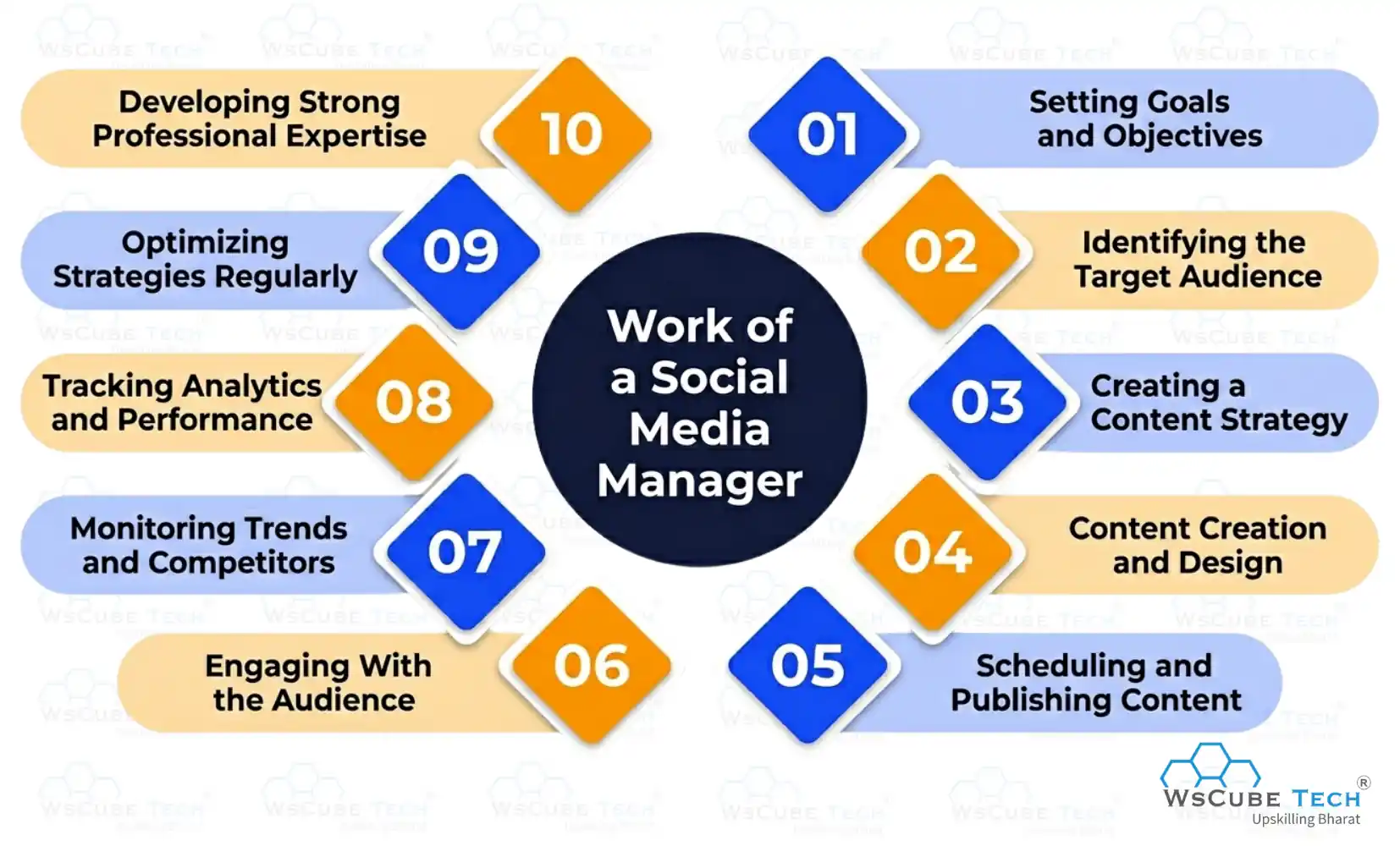
Understanding how social media management works is an important step in learning How to Become a Social Media Manager. It involves planning, creating, publishing, analyzing, and optimizing content across platforms. These activities help brands improve engagement, build visibility, and achieve marketing goals consistently online.
1. Setting Goals and Objectives
The process begins with defining clear business goals such as increasing brand awareness, generating leads, improving engagement, or driving website traffic through social media platforms.
2. Identifying the Target Audience
Businesses analyze their audience based on demographics, interests, behavior, and online activity to create content that connects with the right people effectively.
3. Creating a Content Strategy
A proper content strategy includes planning post types, content themes, captions, hashtags, visuals, and posting frequency to maintain consistency across platforms.
4. Content Creation and Design
Brands create engaging videos, graphics, reels, stories, blogs, and captions that match audience interests and platform trends to improve reach and engagement.
5. Scheduling and Publishing Content
Using scheduling tools helps businesses publish posts consistently at optimal times, saving effort while maintaining regular audience interaction and platform activity.
6. Engaging With the Audience
Social media managers reply to comments, messages, and mentions to build stronger customer relationships, improve trust, and increase community engagement online.
7. Monitoring Trends and Competitors
Businesses track industry trends, viral topics, and competitor strategies to stay updated and improve content performance in changing digital environments.
8. Tracking Analytics and Performance
Analytics tools measure engagement, reach, clicks, impressions, conversions, and follower growth to understand what content performs best across different platforms.
9. Optimizing Strategies Regularly
Based on analytics and audience behavior, brands update their strategies, improve content quality, and refine campaigns for better long-term performance and growth.
10. Developing Strong Professional Expertise
Successful managers continuously improve communication, creativity, analytics, and skills to adapt to social media management platform updates, AI tools, and changing audience expectations in 2026.
Top Social Media Platforms for Businesses
In 2026, businesses use different social platforms to reach audiences, improve engagement, and grow online visibility. Social media management certainly means picking up the right platforms and strategies for success.
1. Instagram

Instagram works best for visual content, reels, stories, and influencer collaborations. Brands should focus on short-form videos, audience engagement, hashtags, and consistent posting to improve visibility and reach.
2. Facebook

Facebook helps businesses build communities, run targeted ads, and share diverse content formats. Consistent posting, Facebook Groups, live videos, and customer interaction improve engagement and brand awareness.
3. LinkedIn

LinkedIn is ideal for B2B marketing, professional networking, and thought leadership. Businesses should share industry insights, employee content, case studies, and educational posts to build credibility online.
4. YouTube

YouTube helps businesses grow through educational videos, tutorials, reviews, and long-form content. Optimized titles, thumbnails, keywords, and audience retention strategies improve video performance and visibility.
5. X (Twitter)

X (Twitter) is effective for real-time updates, trending discussions, and audience interaction. Businesses should post regularly, engage in conversations, use relevant hashtags, and share timely industry updates consistently.
6. Threads

Emerging platforms like Threads help brands connect with audiences through conversational and community-focused content. Early adoption, authentic engagement, and trend monitoring help businesses gain competitive advantages online.
Social Media Management Strategy
A strong social media management strategy helps businesses improve brand visibility, audience engagement, and business growth.
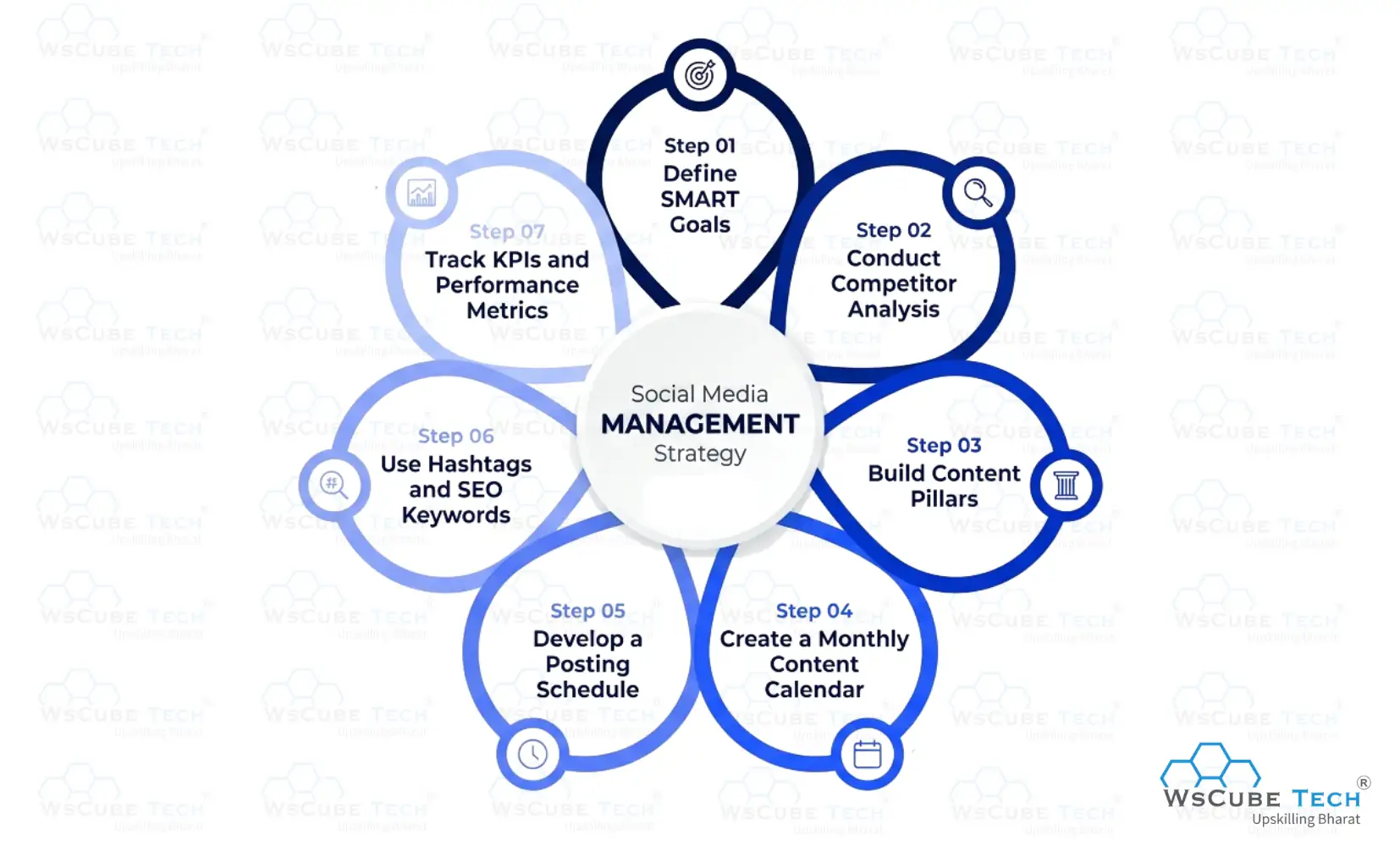
1. Define SMART Goals
Start by setting SMART goals that are specific, measurable, achievable, relevant, and time bound. Clear goals help businesses track progress and create focused social media strategies effectively.
2. Conduct Competitor Analysis
Analyze competitors to understand their content style, posting frequency, audience engagement, and campaign strategies. This helps businesses identify opportunities, trends, and areas for improvement in their strategy.
3. Build Content Pillars
Content pillars are core topics that guide content creation consistently. Businesses should focus on educational, promotional, entertaining, and engaging content themes relevant to their target audience.
4. Create a Monthly Content Calendar
A monthly content calendar helps organize posts, campaigns, festivals, product launches, and trends. Planning content in advance improves consistency, workflow management, and audience engagement.
5. Develop a Posting Schedule
Posting consistently at optimal times increases visibility and interaction. Businesses should identify when their audience is most active and schedule posts accordingly for better engagement results.
6. Use Hashtags and SEO Keywords
Relevant hashtags and SEO keywords improve content discoverability on social platforms and search engines. Optimized captions help businesses increase reach, engagement, and social search visibility effectively.
7. Track KPIs and Performance Metrics
Tracking metrics like engagement, impressions, clicks, conversions, and follower growth helps businesses measure campaign success and improve future strategies based on audience behavior and performance insights.
Strong planning, consistency, analytics, creativity, and communication are essential social media management skills that help brands grow successfully in the competitive digital landscape of 2026.
Upcoming Masterclass
Attend our live classes led by experienced and desiccated instructors of Wscube Tech.


Benefits of Social Media Management
Social media management helps businesses improve visibility, engagement, customer relationships, and sales. It also creates opportunities for growth using advanced techniques and strategies.
1. Increases Brand Awareness
Social media management helps businesses reach wider audiences consistently through engaging content, trending topics, and platform visibility, improving overall brand recognition, and online presence effectively.
2. Improves Audience Engagement
Regular posting, interactive content, and timely responses help brands connect with audiences better, increasing likes, comments, shares, and overall customer engagement across social platforms consistently.
3. Drives Website Traffic
Strategic social media campaigns encourage users to visit websites, blogs, landing pages, and product pages, helping businesses increase traffic, leads, and potential customer conversions online.
4. Builds Customer Trust and Loyalty
Consistent communication, audience interaction, and valuable content help brands establish credibility, strengthen customer relationships, and build long-term loyalty among followers and potential buyers online.
5. Supports Business Growth and Sales
Effective social media strategies help businesses promote products, generate leads, improve conversions, and increase revenue by reaching highly targeted audiences across multiple digital platforms.
6. Provides Valuable Audience Insights
Analytics and reporting tools help businesses understand audience behavior, preferences, engagement patterns, and content performance, allowing smarter marketing decisions and better campaign optimization strategies.
7. Enhances Competitive Advantage
Businesses using strong social media strategies stay ahead of competitors by following trends, creating engaging content, and adapting quickly to changing platform algorithms and audience interests.
8. Creates Career Opportunities
The growing demand for digital marketing experts has made social media management career opportunities highly popular for creative professionals, marketers, strategists, content creators, and communication specialists worldwide.
Social Media Management Best Practices
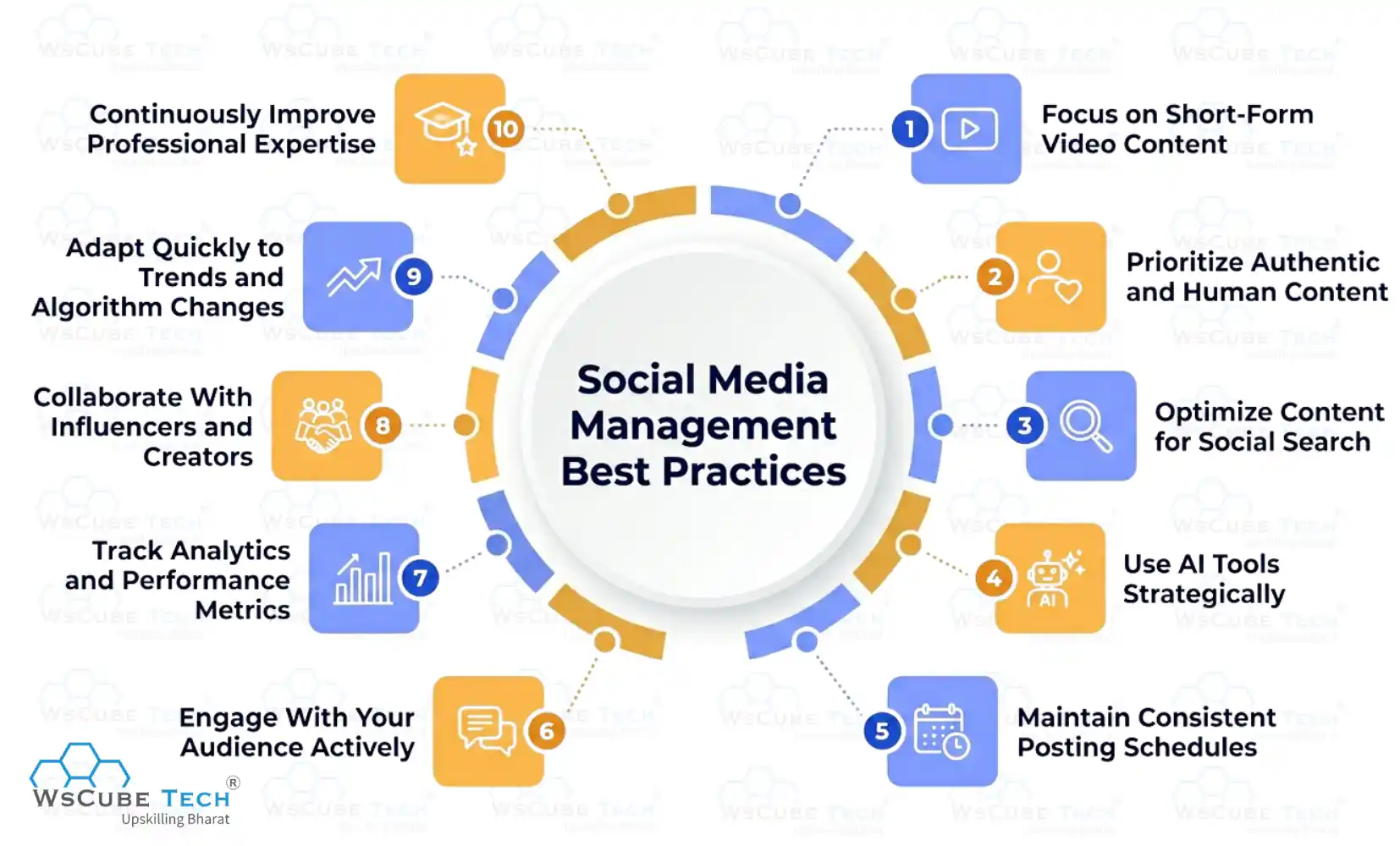
Social media success in 2026 depends on consistency, creativity, analytics, and adaptability. Below are the social media management best practices you should follow.
1. Focus on Short-Form Video Content
Short-form videos on Instagram Reels, and YouTube Shorts generate higher engagement, reach, and visibility. Businesses should create entertaining, informative, and trend-driven video content consistently online.
2. Prioritize Authentic and Human Content
Audiences prefer genuine, relatable, and transparent content over highly promotional posts. Brands should focus on storytelling, behind-the-scenes content, and real customer experiences to build trust effectively.
3. Optimize Content for Social Search
Social platforms now function like search engines. Businesses should use relevant keywords, hashtags, optimized captions, and searchable content to improve discoverability and increase audience reach organically.
4. Use AI Tools Strategically
AI helps automate scheduling, generate captions, analyze performance, and improve workflows. Businesses should combine AI efficiency with creativity to maintain authentic communication and stronger audience relationships online.
5. Maintain Consistent Posting Schedules
Regular posting improves visibility, engagement, and audience retention. Businesses should create content calendars and publish consistently across platforms to maintain strong brand presence and audience interaction.
6. Engage With Your Audience Actively
Replying to comments, messages, and mentions helps brands build trust and loyalty. Active engagement strengthens customer relationships and improves overall social media community growth and interaction.
7. Track Analytics and Performance Metrics
Monitoring engagement, reach, conversions, and audience behavior helps businesses identify successful content strategies. Data-driven decisions improve campaign performance and long-term social media marketing effectiveness significantly.
8. Collaborate With Influencers and Creators
Influencer partnerships help businesses expand audience reach, improve credibility, and increase engagement. Brands should collaborate with creators whose audience and values align with their business goals.
9. Adapt Quickly to Trends and Algorithm Changes
Social media algorithms and trends change frequently. Businesses should stay updated with platform changes, trending formats, and audience preferences to remain competitive and maintain strong visibility online.
10. Continuously Improve Professional Expertise
Strong communication, creativity, analytics, adaptability, and social media management skills are essential for managing successful campaigns and building effective brand strategies in the evolving digital landscape of 2026.
Must-Know Concepts in Social Media Marketing
Common Social Media Management Mistakes to Avoid
Social media management requires creating consistent strategies that improve engagement, visibility, and audience relationships. Avoiding common mistakes helps businesses maintain credibility, improve performance, and achieve long-term digital growth successfully.
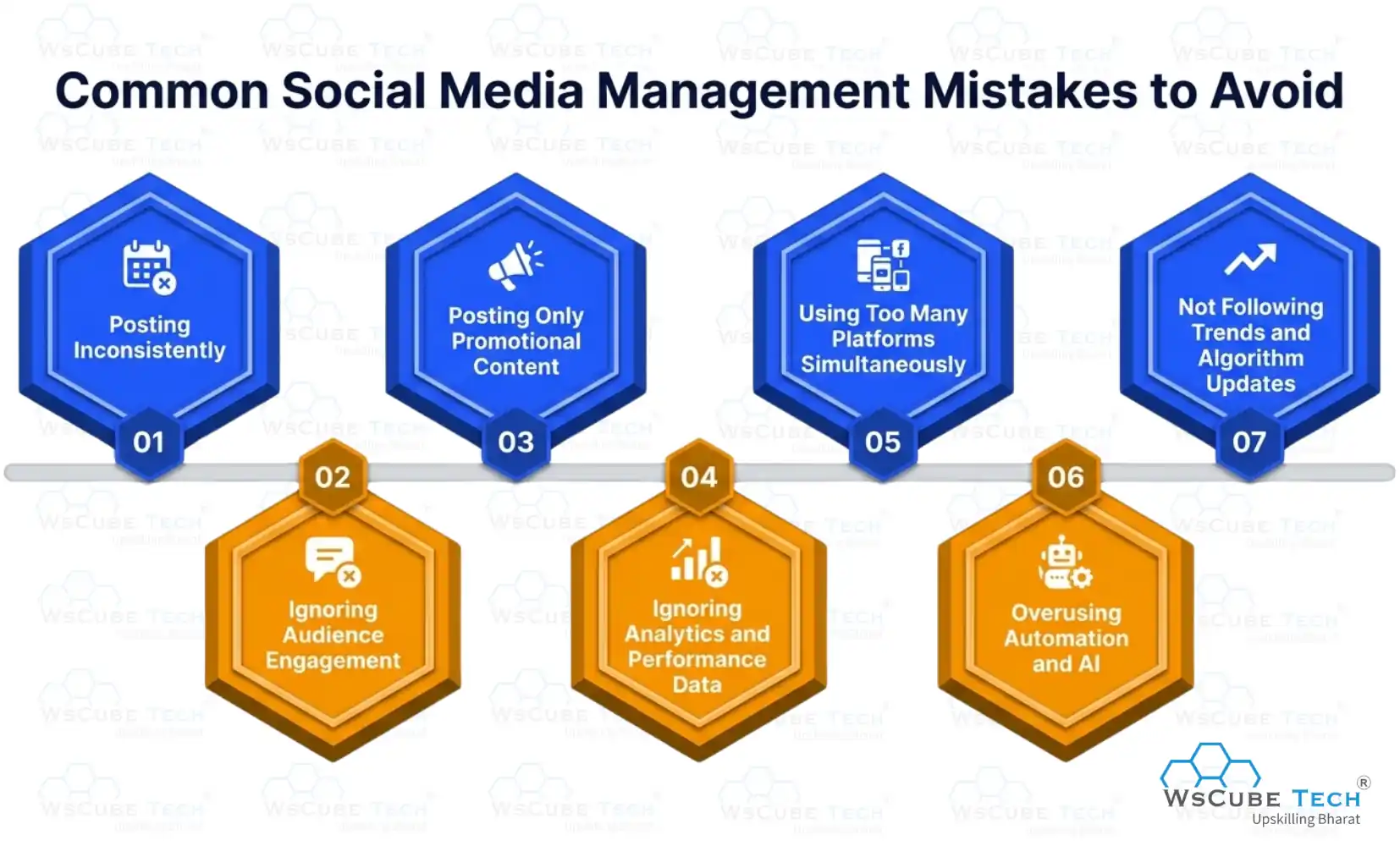
1. Posting Inconsistently
Irregular posting reduces audience engagement and brand visibility. Businesses should maintain consistent posting schedules to stay active, relevant, and connected with their target audience online effectively.
2. Ignoring Audience Engagement
Failing to reply to comments, messages, and mentions weakens customer relationships. Active audience interaction helps businesses build trust, loyalty, and stronger online communities consistently over time.
3. Posting Only Promotional Content
Constantly promoting products without providing value can reduce audience interest. Businesses should balance promotional posts with educational, entertaining, and engaging content for better audience retention online.
4. Ignoring Analytics and Performance Data
Without tracking performance metrics, businesses cannot understand audience behavior or campaign effectiveness. Analytics help improve content strategies, engagement rates, and overall social media marketing performance significantly.
5. Using Too Many Platforms Simultaneously
Managing every social platform without proper strategy can reduce content quality and consistency. Businesses should focus on platforms where their target audience is most active online.
6. Overusing Automation and AI
Excessive automation can make content feel robotic and impersonal. Brands should combine automation with human creativity and authentic communication to maintain stronger audience relationships effectively online.
7. Not Following Trends and Algorithm Updates
Ignoring platform trends and algorithm changes can reduce visibility and engagement. Businesses should stay updated with evolving social media management strategies to remain competitive in 2026.
Social Media Management Metrics You Should Track
Tracking the right social media metrics helps businesses measure performance, understand audience behavior, and improve marketing strategies effectively. These insights help brands make data-driven decisions and achieve better engagement, visibility, and conversions online.
1. Engagement Rate
Engagement rate measures how audiences interact with content through likes, comments, shares, saves, and clicks. High engagement shows that content connects well with followers and encourages audience participation.
Why it matters:
- Measures audience interest
- Improves content strategy
- Increases community interaction
2. Reach
Reach shows the number of unique users who viewed your content. It helps businesses understand how far their posts are spreading across social platforms.
Why it matters:
- Tracks content visibility
- Measures audience exposure
- Helps improve brand awareness
3. Impressions
Impressions indicate how many times content appears on users’ screens, including repeated views from the same person.
Why it matters:
- Measures content visibility frequency
- Helps analyze content distribution
- Shows platform exposure levels
4. Follower Growth Rate
Follower growth tracks how quickly your audience increases over time. Consistent growth often reflects strong content strategies and audience interest.
Why it matters:
- Measures audience expansion
- Shows brand popularity
- Tracks long-term growth performance
5. Click-Through Rate (CTR)
CTR measures how many users click links in posts, ads, or stories after viewing content. It helps businesses evaluate content effectiveness and audience action.
Why it matters:
- Tracks audience interest
- Measures content effectiveness
- Improves campaign optimization
6. Conversion Rate
Conversion rate shows how many users complete desired actions such as purchases, sign-ups, downloads, or inquiries through social media campaigns.
Why it matters:
- Measures campaign success
- Tracks sales and leads
- Evaluates return on investment
7. Audience Demographics
Audience demographic data includes age, gender, location, interests, and online behavior. These insights help businesses create more targeted and personalized content strategies.
Why it matters:
- Helps target the right audience
- Improves content personalization
- Enhances marketing strategies
8. Video Performance Metrics
Video metrics include watch time, retention rate, views, and completion percentage. These metrics help businesses understand how audiences interact with video content.
Why it matters:
- Measures video engagement
- Improves content quality
- Increases audience retention
9. Social Share of Voice (SOV)
Share of Voice measures how often people mention your brand compared to competitors across social platforms and online discussions.
Why it matters:
- Tracks brand popularity
- Measures market presence
- Helps analyze competitor performance
10. Customer Response Time
Response time measures how quickly businesses reply to comments, messages, and customer inquiries on social media platforms.
Why it matters:
- Improves customer experience
- Builds trust and loyalty
- Strengthens audience relationships
Explore Our Most Popular Marketing Courses
Social Media Management Trends for 2026
Social media continues evolving rapidly with AI, automation, personalization, and short-form content shaping digital marketing strategies. Businesses must adapt quickly to maintain audience engagement and growth.
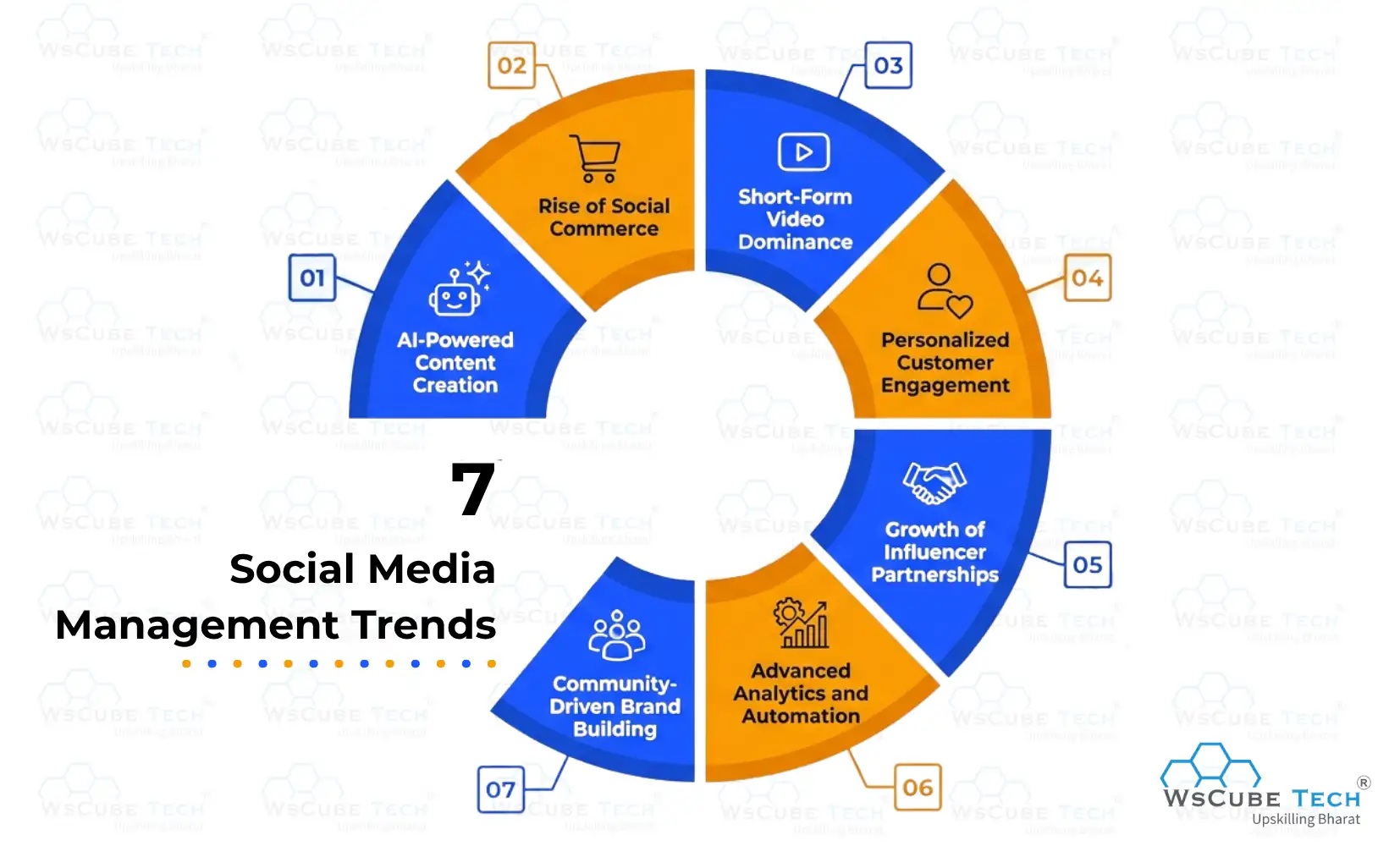
1. AI-Powered Content Creation
AI-driven platforms are helping brands generate captions, visuals, videos, and audience insights faster, improving creativity, consistency, and overall efficiency across social campaigns significantly.
2. Rise of Social Commerce
Social platforms are becoming shopping destinations where users discover, review, and purchase products directly, creating seamless customer experiences, and increasing conversion opportunities for businesses.
3. Short-Form Video Dominance
Short videos continue attracting maximum engagement as audiences prefer fast, entertaining, and informative content across Instagram Reels, YouTube Shorts, and emerging platforms globally.
4. Personalized Customer Engagement
Brands focus on hyper-personalized interactions using customer data, behavioral insights, and automation to deliver relevant content that strengthens loyalty and improves user experience.
5. Growth of Influencer Partnerships
Micro and niche influencers are becoming more valuable because audiences trust authentic recommendations, helping brands achieve stronger engagement, credibility, and targeted community-driven marketing results.
6. Advanced Analytics & Automation
Businesses increasingly rely on social media management tools to track performance, automate scheduling, analyze engagement metrics, and optimize campaigns for improved marketing effectiveness consistently online.
7. Community-Driven Brand Building
Successful brands prioritize conversations, user-generated content, and active communities to create deeper relationships, boost trust, and encourage long-term customer advocacy through social media management strategies.
Best Social Media Management Tools (2026 List)
Businesses use social media management tools to schedule posts, analyze performance, improve engagement, automate workflows, manage campaigns, and streamline content strategies across multiple social media platforms efficiently in 2026.
1. Hootsuite
It helps businesses schedule posts, monitor engagement, track analytics, and manage multiple social accounts from one centralized dashboard efficiently and consistently.
2. Buffer
It is popular for easy post scheduling, team collaboration, content planning, analytics tracking, and maintaining consistent social media publishing across platforms.
3. Sprout Social
This tool offers advanced analytics, customer engagement tools, reporting features, and social listening capabilities to improve audience interaction and campaign performance.
4. Canva

It allows users to design professional social media graphics, videos, presentations, and branded content quickly using customizable templates and AI-powered design tools.
5. Later

This tool specializes in Instagram scheduling, visual content planning, hashtag management, and social media publishing for creators, influencers, and growing brands online.
6. SocialPilot

It certainly helps agencies and businesses automate posting, manage multiple accounts, collaborate with teams, and track campaign performance through detailed analytics tools.
7. HubSpot

It combines social media management, CRM, email marketing, automation, and analytics to improve customer engagement and overall digital marketing performance effectively.
8. Metricool
Overall, this tool provides detailed analytics, competitor tracking, scheduling features, and performance insights to help businesses optimize their social media strategies efficiently.
9. Agorapulse

Well, this tool helps businesses manage social inboxes, schedule content, monitor audience engagement, and generate performance reports for better campaign management results.
10. Semrush

It supports content research, SEO optimization, social media analytics, competitor analysis, and digital marketing strategies for improved online visibility and audience reach.
Read More Blogs Related to Instagram & YouTube
How to Choose the Right Social Media Management Tool
The right social media management tool helps businesses manage content, track performance, and improve audience engagement efficiently. Here are some important factors to consider while choosing a tool:
1. Identify Your Business Goals
Choose a tool that supports your marketing objectives, whether focused on content scheduling, analytics, customer engagement, advertising management, or audience growth strategies effectively.
2. Check Platform Compatibility
Ensure the tool supports all major social platforms your business uses, allowing seamless management of Instagram, Facebook, LinkedIn, YouTube, and other networks together.
3. Analyze Automation Features
Good social media management tools should provide automation for scheduling posts, publishing content, replying to messages, and generating reports to save valuable time consistently.
4. Review Analytics & Reporting
Select tools offering detailed analytics, engagement tracking, audience insights, and performance reports that help businesses measure campaign success and improve future marketing decisions.
5. Evaluate User-Friendly Interface
A simple and organized dashboard improves workflow efficiency, helping teams manage campaigns easily without requiring advanced technical expertise or lengthy onboarding processes for users.
6. Consider Collaboration Features
Businesses with multiple team members should choose tools supporting role management, approvals, shared calendars, and communication features for smoother collaboration and productivity improvements.
7. Compare Pricing & Scalability
Choose a solution matching your budget while offering flexible plans that can scale as your business grows, and marketing needs become more advanced over time.
8. Focus on Integration Options
The ideal tool should integrate smoothly with CRM systems, email platforms, analytics software, and design applications to improve workflow efficiency and marketing coordination effectively.
9. Check Customer Support Quality
Reliable customer support, tutorials, and community resources help businesses solve technical issues quickly while improving overall platform usability and operational confidence for teams consistently.
10. Match Features with Team Expertise
Select a tool aligned with your team’s social media management skills, ensuring employees can effectively use features without facing unnecessary complexity or operational challenges regularly.
Social Media Management Tips for Beginners
Social media success begins with smart planning, creativity, and consistency. Understanding social media management means building strategies that improve engagement, visibility, and long-term audience growth effectively.
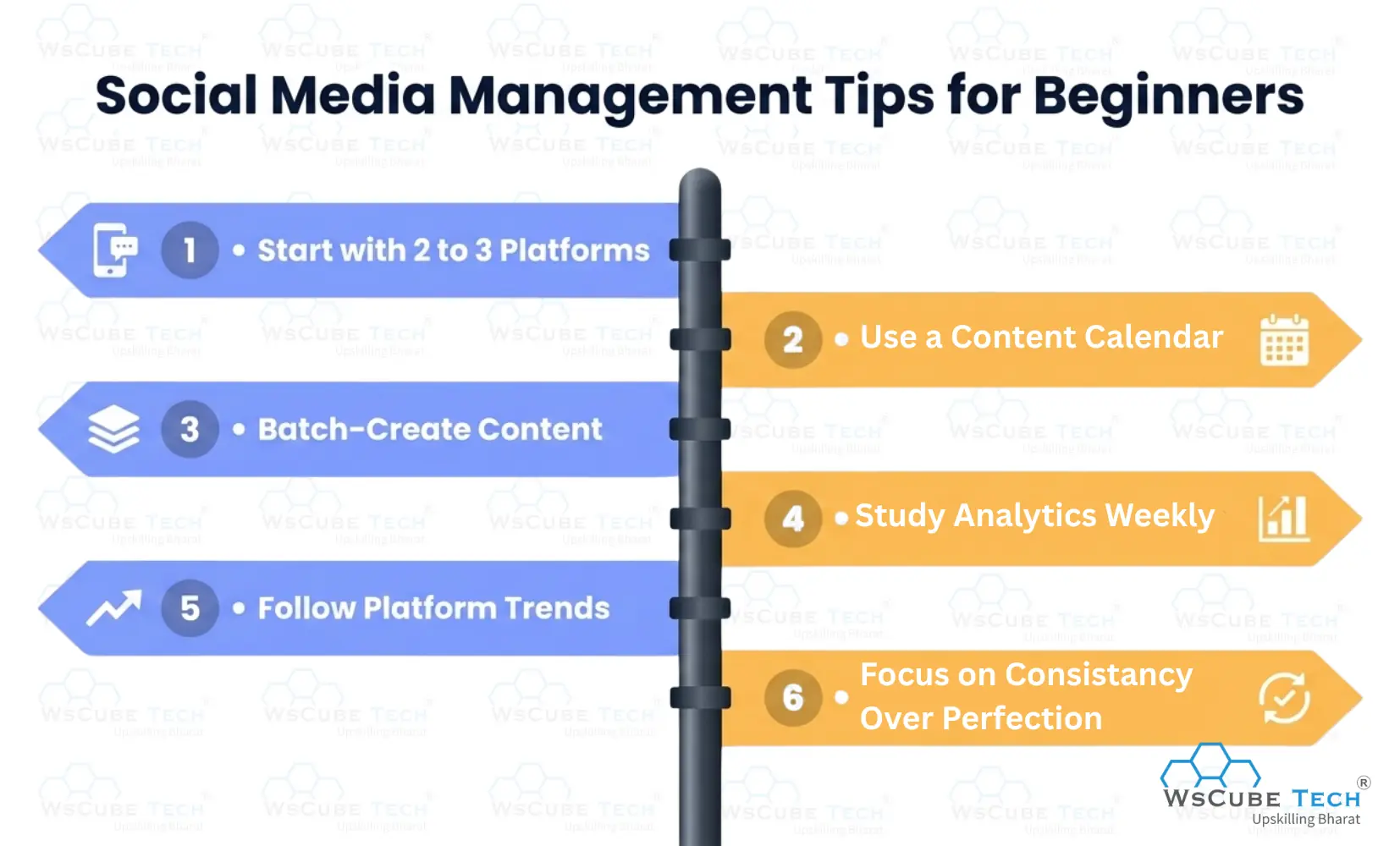
1. Start with 2–3 Platforms
Beginners should focus on two or three platforms initially to understand audience behavior, create quality content, maintain consistency, and avoid feeling overwhelmed while growing steadily.
2. Use a Content Calendar
A content calendar helps organize posting schedules, maintain regular uploads, plan campaigns early, reduce last-minute stress, and improve overall content strategy for better engagement.
3. Batch-Create Content
Creating multiple posts together saves time, improves productivity, maintains branding consistency, reduces daily workload, and helps beginners stay active across platforms without interruptions regularly.
4. Study Analytics Weekly
Reviewing analytics weekly helps identify successful content, understand audience preferences, improve engagement strategies, track growth patterns, and make smarter decisions for future social media management efforts.
5. Follow Platform Trends
Keeping up with trending formats, hashtags, challenges, and platform updates helps beginners create relevant content, increase visibility, attract audiences, and improve engagement opportunities consistently.
6. Focus on Consistency Over Perfection
Consistent posting builds audience trust, improves platform reach, increases engagement gradually, and helps beginners learn faster instead of waiting endlessly for perfect content before publishing.
Recommended Professional Certificates
AI-Powered Digital Marketing Course
Performance Marketing Bootcamp
SEO Specialist Bootcamp
How to become a social media manager in 2026?
Social media management is one of the fastest-growing digital careers in 2026. It involves content creation, audience engagement, branding, analytics, and marketing strategies to help businesses grow across multiple social platforms. Below are some important steps that can help you become a successful social media manager in 2026:
1. Learn Digital Marketing Basics: Understand SEO, content marketing, branding, analytics, and social platforms to build a strong foundation in social media management careers.
2. Master Major Social Platforms: Learn Instagram, Facebook, LinkedIn, YouTube algorithms, audience behavior, trends, and content strategies for better engagement growth.
3. Develop Content Creation Skills: Practice designing graphics, writing captions, editing videos, and creating engaging posts that attract audiences and strengthen brand visibility online.
4. Learn Social Media Advertising: Understand paid campaigns, targeting methods, ad creatives, budgeting, and analytics to run successful advertising campaigns across multiple platforms effectively.
5. Build a Personal Portfolio: Create sample campaigns, content calendars, analytics reports, and social media pages to showcase practical experience and professional marketing abilities.
6. Use AI and Scheduling Tools: Learn Canva, ChatGPT, Buffer, Hootsuite, and Meta Business Suite to improve productivity and simplify social media management tasks efficiently.
7. Gain Practical Experience and Certifications: You can join a best online digital marketing course where you will learn digital marketing, including social media marketing, PPC, SEO, and more.
Overall, by following these steps, you can move in the right direction to become a successful social media manager. To build a strong career in this field, it is important to invest time in learning social media strategies, gaining practical experience, and improving your knowledge continuously.
Future of Social Media Management
The future of social media management will continue growing as businesses depend heavily on digital platforms for branding, audience engagement, and customer relationships.
AI tools, creator marketing, and data-driven strategies are transforming every social media management career, creating new opportunities for skilled digital marketing professionals.
Why the Future of Social Media Management Is Strong:
- Businesses increasingly invest in social media marketing for brand visibility and customer engagement.
- AI-powered tools improve content creation, scheduling, analytics, and audience targeting capabilities.
- Short-form video content continues driving higher reach, engagement, and conversions across platforms globally.
- Influencer collaborations are becoming essential for modern brand promotion and trust-building strategies.
- Social commerce is expanding rapidly, allowing direct shopping through social media platforms seamlessly.
- Companies require skilled professionals to manage communities, campaigns, analytics, and online reputation effectively.
- Emerging technologies like AR, VR, and AI will create more interactive social media experiences.

FAQs About Social Media Management
Social media management involves creating, scheduling, analyzing, and managing content across different social media channels for business growth.
It helps businesses improve brand awareness, audience engagement, customer communication, and online visibility through consistent digital marketing strategies.
Popular platforms include Instagram, Facebook, LinkedIn, X, Pinterest, and YouTube for audience engagement and brand promotion.
Common tools include Hootsuite, Buffer, Canva, Sprout Social, Later, and Meta Business Suite for scheduling and analytics.
Posting frequency depends on the platform, audience behavior, and content strategy, but consistency is more important than excessive posting.
Key skills include content creation, communication, analytics, creativity, trend analysis, scheduling, branding, and audience engagement strategies.
Yes, small businesses can increase visibility, attract customers, build trust, and improve sales through effective social media marketing efforts.
AI helps automate scheduling, generate content ideas, analyze audience behavior, and improve marketing performance through data-driven insights.
Short videos, engaging visuals, educational posts, interactive stories, and trend-based content usually perform better across most platforms.
Yes, it offers growing opportunities in digital marketing, branding, content strategy, influencer marketing, and online business management across industries.
Join Our On-Campus Digital Marketing Program
Explore Our Free Courses





Leave a comment
Your email address will not be published. Required fields are marked *Comments (0)
No comments yet.