Digital marketing has become one of the fastest-growing career options in 2026, creating opportunities for students, professionals, freelancers, and business owners. With companies shifting online, the demand for skilled digital marketers is increasing rapidly across every industry.
Before joining any program, understanding the digital marketing course eligibility is important to choose the right course based on your education, skills, and career goals. Most courses are beginner-friendly and do not require technical expertise or coding knowledge.
This guide explains the latest digital marketing course eligibility criteria, qualifications, required skills, age limits, and course requirements in simple words to help you start your digital marketing journey confidently.
If you want practical learning with real projects and expert guidance, you can join the digital marketing course at WsCube Tech to build industry-ready skills and grow your career confidently.
What is a Digital Marketing Course?
A digital marketing course teaches SEO, social media, PPC, content marketing, and online branding skills. Understanding eligibility for digital marketing course programs and eligibility criteria for digital marketing course admissions helps learners choose suitable career-focused training programs.
- Helps learners understand online marketing strategies effectively.
- Covers SEO, social media, PPC, and content marketing basics.
- Suitable for students, professionals, freelancers, and business owners.
- Most courses do not require coding knowledge or technical background.
- Offers practical skills for high-demand digital marketing careers.
- Available in online, offline, certification, and diploma formats.
Why Digital Marketing is a Popular Career Choice in 2026
Digital marketing is a high-demand career in 2026 because businesses rely on online growth. Understanding eligibility for digital marketing course programs helps learners enter this fast-growing industry confidently.
- High demand for skilled digital marketers worldwide.
- Multiple career opportunities across industries and businesses.
- Work-from-home and freelance opportunities are increasing rapidly.
- No technical or coding background is required for beginners.
- Competitive salaries and faster career growth potential.
- Businesses are investing more in digital advertising and branding.
Digital Marketing Course Eligibility Criteria in 2026
Understanding the eligibility criteria for digital marketing course helps students, beginners, and professionals choose suitable programs based on education, age, and career goals in India.
1. Basic digital marketing course eligibility
Beginners can join courses after completing 10th or 12th grade. Basic computer knowledge and communication skills are preferred under common digital marketing course criteria today.
2. Minimum educational qualification
Certificate courses usually require 10th or 12th qualification, while advanced diploma or postgraduate programs may need graduation from a recognized university or college.
3. Age limit and academic background
There is generally no upper age limit for digital marketing courses. Students from Science, Commerce, and Arts streams can apply without restrictions or barriers.
Eligibility for Digital Marketing Course After 10th
Students can join beginner-level digital marketing programs after completing 10th standard. Understanding the required digital marketing course qualification helps learners choose suitable certification courses and start early careers successfully.
- Most certificate courses accept students after 10th grade completion.
- Basic computer and internet knowledge is helpful for learning.
- No specific stream or academic background is required.
- Online digital marketing courses are available for flexible learning.
- Students can learn SEO, social media, and content marketing basics.
- Communication and creativity skills provide additional advantages.
- Short-term certification courses are best for beginners after the 10th.
Digital Marketing Course Eligibility After 12th
Students from all streams can pursue digital marketing programs after school. Understanding digital marketing course eligibility after 12th helps students select suitable career-focused courses easily.
Digital Marketing Course Eligibility after 12th for Arts students
Arts students can easily pursue digital marketing courses after 12th. Strong creativity and communication skills make meeting digital marketing course eligibility requirements simple and beneficial.
Digital Marketing Course Eligibility after 12th for Commerce students
Commerce students have excellent opportunities in digital marketing because of business knowledge. Meeting digital marketing course eligibility requirements helps them understand marketing strategies effectively.
Digital Marketing Course Eligibility after 12th for science students
Science students can join digital marketing programs after 12th without restrictions. Analytical thinking and technical understanding help fulfill digital marketing course eligibility requirements successfully.
Can students join a digital marketing course after school?
Yes, students can join certificates or diploma programs immediately after school. Basic computer knowledge and communication skills are enough to meet digital marketing course eligibility criteria.
Recommended Professional Certificates
AI-Powered Digital Marketing Course
Performance Marketing Bootcamp
SEO Specialist Bootcamp
Qualification for Digital Marketing Course
People from different educational and professional backgrounds can pursue digital marketing programs today. Understanding who can join digital marketing course helps students and professionals select suitable learning opportunities easily.
Minimum qualification for digital marketing course
Most beginner digital marketing courses require candidates to complete 10th or 12th standard. Basic computer knowledge and communication skills are also considered beneficial.
Graduation requirements for advanced programs
Advanced certifications and postgraduate courses may require graduation from recognized universities. Understanding qualification for digital marketing course helps candidates choose suitable advanced programs successfully.
Digital marketing course qualification for diploma and certification courses
Diploma and certification programs usually accept students after 12th grade. These courses focus on practical learning, industry skills, and real-world marketing techniques.
Who Can Join a Digital Marketing Course?
Digital marketing courses are suitable for learners from different educational and professional backgrounds. Understanding the digital marketing course eligibility criteria helps candidates choose suitable career-focused programs confidently.
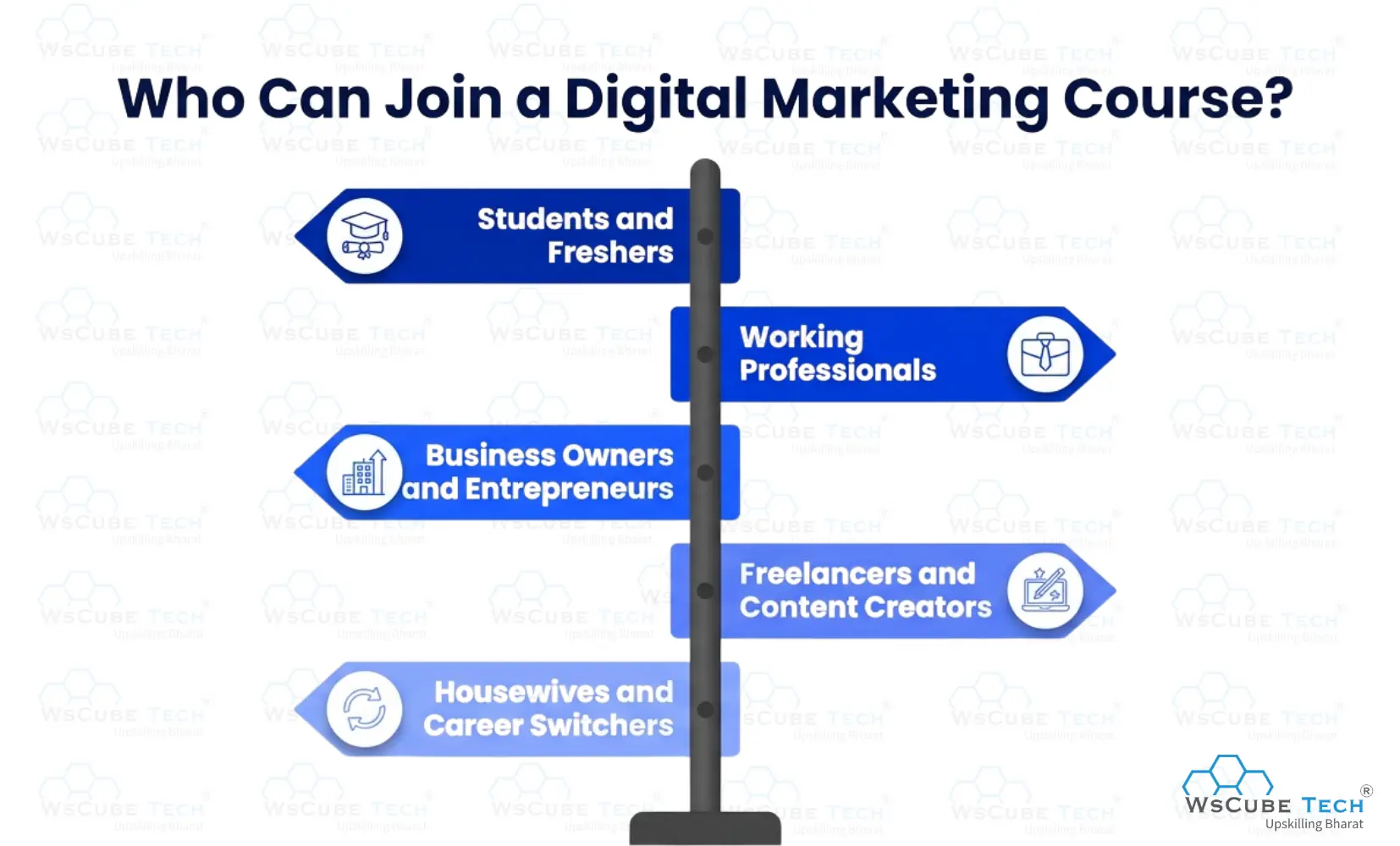
1. Students and freshers
Students and freshers can join digital marketing courses after school or graduation. Basic communication skills and internet knowledge are enough to begin learning successfully.
2. Working professionals
Working professionals can upgrade their marketing and online branding skills through flexible courses. These programs help improve career growth and job opportunities effectively.
3. Business owners and entrepreneurs
Business owners can learn digital marketing to promote products, generate leads, and increase online visibility without depending completely on external marketing agencies.
4. Freelancers and content creators
Freelancers and content creators can improve social media growth, audience engagement, and online branding through practical digital marketing skills and advanced content strategies.
5. Housewives and career switchers
Housewives and career switchers can start flexible careers in digital marketing. Understanding the qualification for digital marketing course helps them select suitable beginner-friendly programs.
Eligibility Criteria for Digital Marketing Course for Different Program Types
Different digital marketing programs have varying admission requirements based on course level. Understanding the eligibility criteria for digital marketing course helps candidates select suitable learning paths confidently.
1. Certificate courses
Certificate digital marketing courses usually accept students after 10th or 12th standard. These beginner-friendly programs focus on practical marketing and online branding skills.
2. Diploma courses
Diploma courses generally require candidates to complete 12th grade from recognized boards. These programs provide detailed industry knowledge with practical project-based learning experiences.
3. Advanced digital marketing programs
Advanced digital marketing programs may require graduation and basic marketing understanding. Many institutes follow specific digital marketing course criteria for professional-level certifications and training.
4. PG certification courses
Postgraduate certification courses usually require a bachelor’s degree from recognized universities. These programs focus on advanced strategies, analytics, leadership, and professional digital marketing skills.
5. Online digital marketing courses
Online digital marketing courses offer flexible eligibility requirements for students and professionals. Most programs only require internet access, communication skills, and basic computer knowledge.
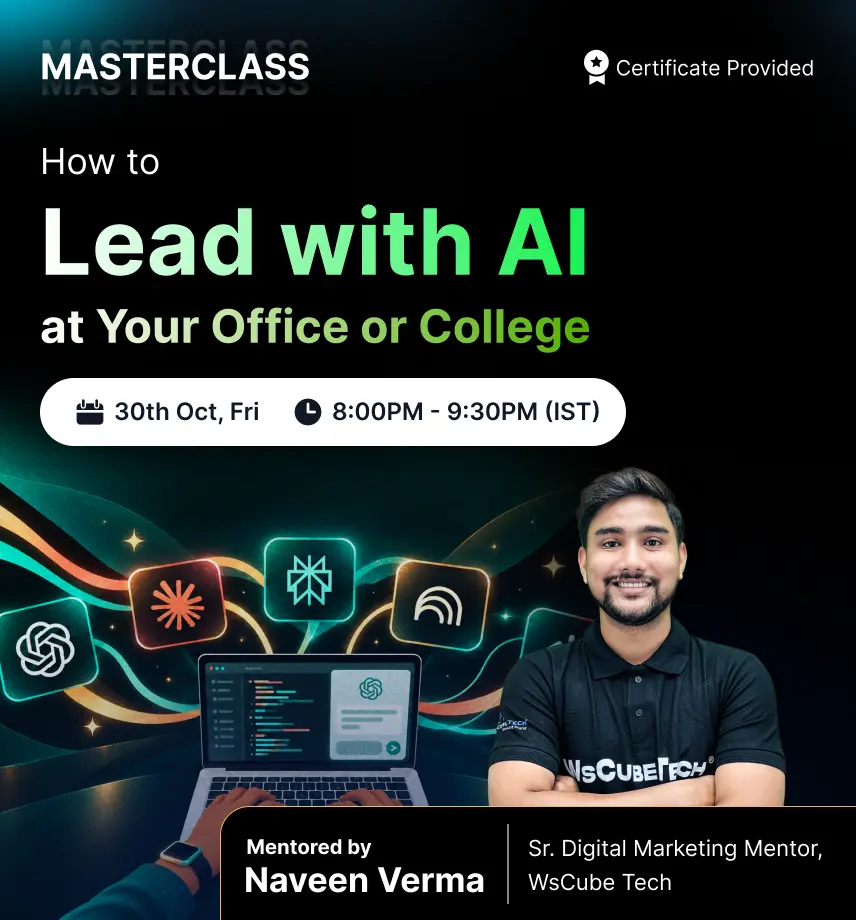
Upcoming Masterclass
Attend our live classes led by experienced and desiccated instructors of Wscube Tech.


Digital Marketing Course Eligibility & Requirements
Digital marketing courses require basic technical and communication abilities for effective learning. Understanding the necessary skills helps students prepare for successful marketing careers confidently.
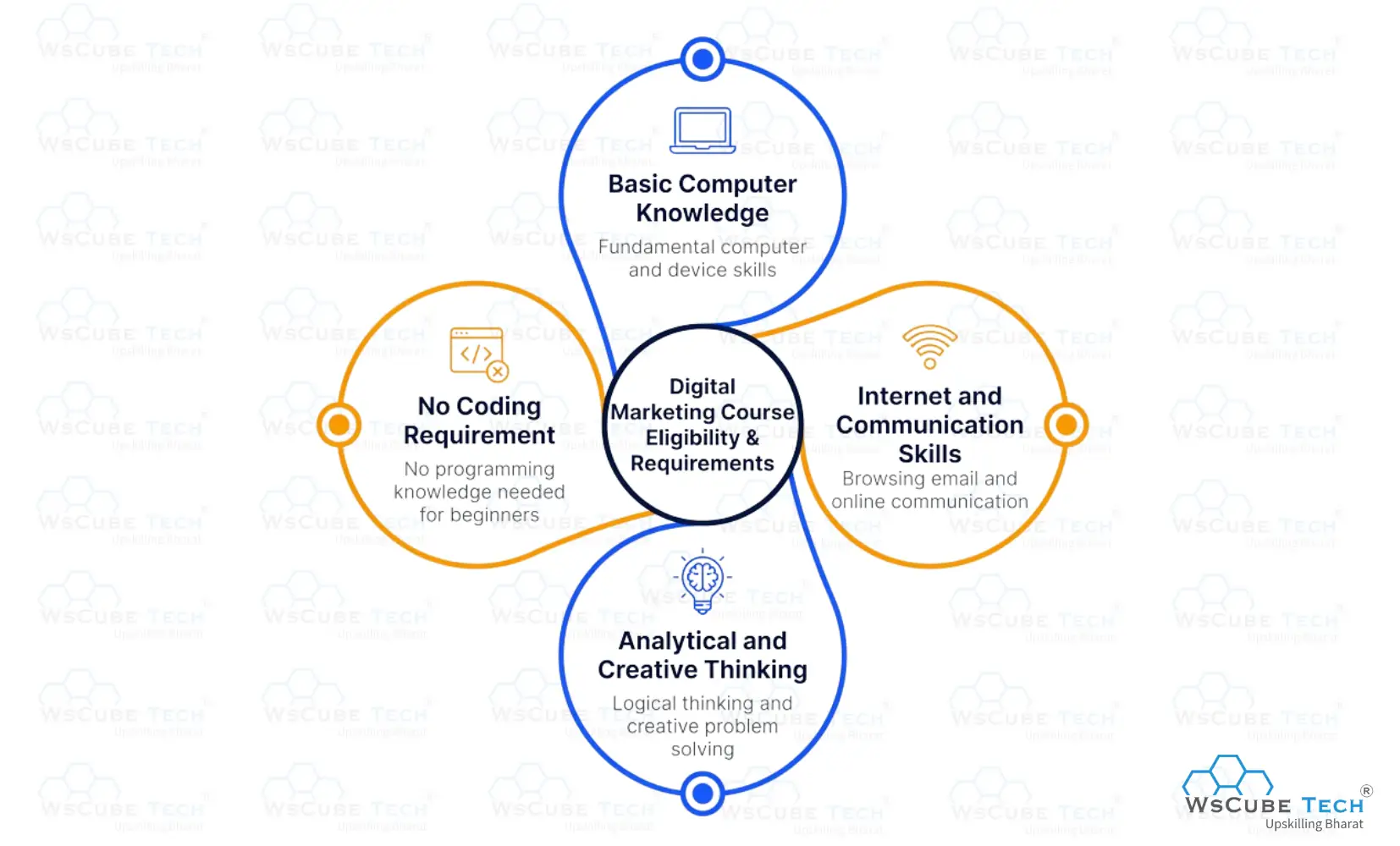
1. Basic computer knowledge
Basic computer understanding is important for using marketing tools, browsing platforms, creating presentations, and managing campaigns effectively during practical digital marketing training sessions.
2. Internet and communication skills
Strong internet browsing and communication abilities help students understand online platforms better. These skills support digital marketing course eligibility after 12th for beginners successfully.
3. Analytical and creative thinking
Analytical and creative thinking help marketers understand audience behavior, improve campaigns, solve problems, and create engaging content for better digital marketing performance.
4. No coding requirement for beginners
Coding knowledge is not compulsory for beginner digital marketing courses. Basic learning interest and digital marketing course qualification requirements are enough to start successfully.
Digital Marketing Course Criteria for Top Institutes in India
Top digital marketing institutes in India offer courses for students, graduates, working professionals, and entrepreneurs. Most institutes have flexible admission requirements, making digital marketing one of the easiest career-oriented fields to enter in 2026.
Understanding the eligibility for digital marketing course helps candidates select the right institute and program according to their educational background and career goals.
1. Educational Qualification Requirements
Most institutes accept students after 10th or 12th standard for certificate and diploma programs. Advanced and postgraduate digital marketing courses may require graduation from a recognized university. Candidates from Arts, Commerce, and Science streams are generally eligible for admission.
2. Skills Preferred by Top Institutes
Leading institutes prefer candidates with basic computer knowledge, internet browsing skills, and communication abilities. Creativity, analytical thinking, and interest in online marketing are considered additional advantages during learning.
3. Eligibility for Online and Offline Courses
Online digital marketing courses usually have simple admission processes with minimal restrictions. Offline classroom programs may require document verification and educational qualification proof during enrollment.
4. Requirements for Advanced Programs
Advanced digital marketing certifications often prefer graduates or professionals with basic marketing understanding. Some institutes may also conduct interviews or aptitude assessments before admission.
5. Age Limit and Experience Criteria
Most institutes do not have a strict age limit for admission. Freshers, freelancers, business owners, and working professionals can join digital marketing programs easily.
Skills Required Along with Digital Marketing Course Eligibility
Along with meeting the digital marketing course eligibility criteria, students should also develop practical skills that help them succeed in modern digital marketing careers effectively.
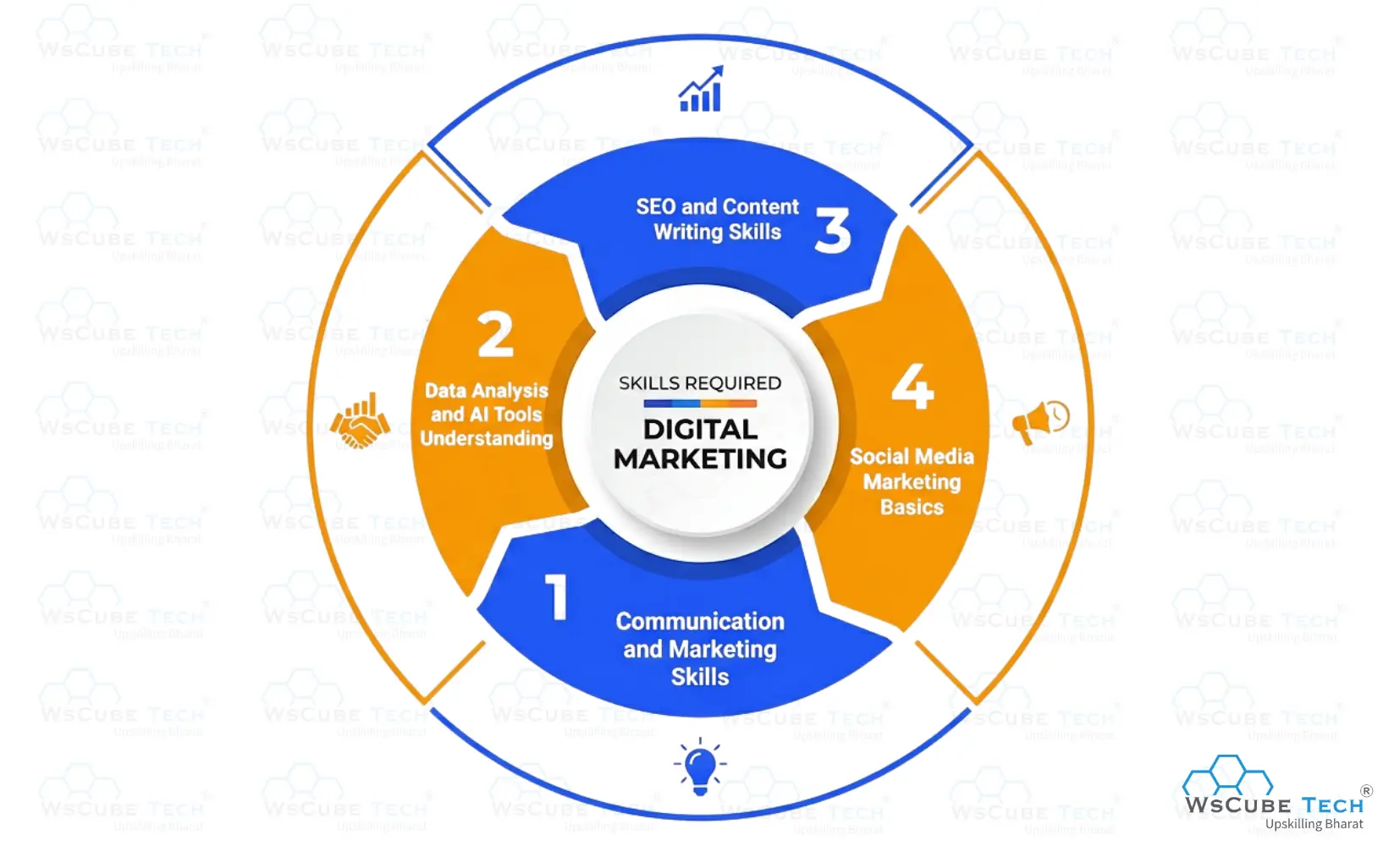
1. SEO and content writing skills
Basic SEO and content writing skills help students create optimized blogs, improve website rankings, and attract targeted audiences through effective online marketing strategies.
2. Social media marketing basics
Understanding social media platforms helps learners manage campaigns, increase audience engagement, and promote brands effectively across Instagram, Facebook, LinkedIn, and other platforms.
3. Communication and marketing skills
Strong communication and marketing abilities help students understand customer behavior, create compelling campaigns, and build better relationships with online audiences successfully.
4. Data analysis and AI tools understanding
Basic knowledge of analytics and AI tools helps marketers track campaign performance, understand audience insights, and improve strategies according to digital marketing course eligibility criteria trends.
Digital Marketing Learning & Career Resources
Is Coding Required for Digital Marketing Courses?
No, coding is not mandatory for most digital marketing courses, especially beginner-level programs. Students mainly learn SEO, social media marketing, content creation, paid advertising, and analytics tools.
Basic technical understanding can be helpful, but advanced programming knowledge is usually unnecessary. Most institutes focus more on creativity, communication, and marketing strategies rather than coding skills. Meeting the basic digital marketing course qualification is generally enough to start learning successfully.
Can Non-Technical Students Learn Digital Marketing?
Yes, non-technical students can easily learn digital marketing because most courses focus on creativity, communication, branding, and online marketing strategies instead of advanced programming knowledge.
Understanding the digital marketing course eligibility & requirements helps students know who can join digital marketing course programs and start building successful careers confidently in 2026.
Entrance Exams for Digital Marketing Courses: Are They Required?
Most digital marketing institutes do not require entrance exams for beginner or certification courses. Admissions are usually based on educational qualifications and basic communication skills only.
Some advanced programs or postgraduate certifications may conduct interviews or aptitude assessments during admission. Understanding digital marketing course qualification and digital marketing course eligibility after 12th helps students choose suitable programs more confidently.
Documents Required for Digital Marketing Course Admission
Students applying for digital marketing programs must submit basic educational and identity documents during admission. These documents help institutes verify qualifications according to standard digital marketing course criteria successfully.
- 10th mark sheet and certificate
- 12th mark sheet and certificate
- Graduation degree or provisional certificate (for advanced programs)
- Government photo ID proof (Aadhaar card, PAN card, passport, etc.)
- Passport-size photographs
- Updated resume or CV (for professional courses)
- Address proof document
- Transfer certificate (if required by institute)
- Migration certificate (for university programs)
- Category certificate (if applicable)
- Work experience certificate (for advanced certifications)
- Online application form and admission fee receipt
Duration and Fees Based for Digital Marketing Course Qualification
The duration and fees of digital marketing courses vary depending on the course level, institute type, and candidate qualifications. Understanding the digital marketing course eligibility criteria helps students choose programs that match their educational background, budget, and career goals.
Certificate Digital Marketing Courses
Certificate courses are ideal for beginners and students after 10th or 12th standards. These short-term programs usually last between 1 to 6 months.
- Average Fees: ₹20,000 to ₹60,000
- Suitable For: Beginners, students, freelancers, and freshers
Diploma Digital Marketing Courses
Diploma courses provide detailed practical and theoretical knowledge of digital marketing tools and strategies. These programs generally take 6 months to 1 year to complete.
- Average Fees: ₹30,000 to ₹1,50,000
- Suitable For: 12th-pass students and working professionals
Advanced Digital Marketing Programs
Advanced courses focus on SEO, performance marketing, analytics, AI tools, and campaign management. Graduation may be preferred for admission into some advanced programs.
- Duration: 6 months to 18 months
- Average Fees: ₹80,000 to ₹3,00,000
Postgraduate Certification Courses
PG certification programs are designed for graduates and professionals seeking specialized marketing knowledge. These programs often include internships and live projects.
- Duration: 1 year to 2 years
- Average Fees: ₹1,50,000 to ₹5,00,000
Online Digital Marketing Courses
Online courses offer flexible learning schedules and affordable pricing options. They are suitable for learners who want to study from home while managing work or education.
- Duration: 1 month to 12 months
- Average Fees: ₹65,000 to ₹1,00,000
Explore Our Most Popular Marketing Courses
Online vs Offline Digital Marketing Course Eligibility Criteria
Online and offline digital marketing courses have similar admission requirements, but learning methods and flexibility differ.
| Feature | Online Digital Marketing Courses | Offline Digital Marketing Courses |
| Educational Qualification | Usually requires 10th, 12th, or graduation | Usually requires 10th, 12th, or graduation |
| Admission Process | Simple online registration process | May require document verification at institute |
| Learning Mode | Flexible self-paced or live online classes | Classroom-based face-to-face learning |
| Attendance Requirement | Flexible attendance options | Regular classroom attendance required |
| Technical Requirements | Internet connection and laptop/mobile needed | Basic classroom learning setup needed |
| Practical Training | Online projects and digital assignments | Live classroom projects and practical sessions |
| Suitable For | Working professionals, freelancers, students | Students preferring classroom interaction |
| Fees | Generally, more affordable | Usually higher due to classroom facilities |
| Schedule Flexibility | High flexibility for learners | Fixed class schedules |
| Location Limitation | Accessible from anywhere | Requires physical presence at institute |
Free vs Paid Courses: Eligibility Differences Explained
Free and paid digital marketing courses have different admission requirements, learning experiences, certifications, and support systems. Understanding these differences helps students choose courses according to goals, budget, and learning preferences.
| Feature | Free Digital Marketing Courses | Paid Digital Marketing Courses |
| Eligibility Requirements | Usually open for everyone | May require 10th, 12th, or graduation |
| Admission Process | Simple signup or registration | Formal admission and document verification |
| Course Fees | No cost involved | Requires course fee payment |
| Certification | Limited or basic certificates | Industry-recognized certifications |
| Learning Support | Minimal mentor support | Dedicated trainer and mentorship support |
| Course Depth | Basic introductory concepts | Advanced practical and industry-level training |
| Practical Projects | Limited assignments | Live projects and case studies included |
| Placement Assistance | Usually not available | Placement and internship support available |
| Flexibility | Highly flexible self-learning | Structured learning schedule |
| Suitable For | Beginners exploring digital marketing | Students and professionals seeking careers |
Salary Scope After Completing a Digital Marketing Course
Digital marketing offers strong salary growth for students, freshers, and professionals across industries. Understanding the eligibility criteria for digital marketing course helps candidates build rewarding and high-demand careers successfully.
| Job Role | Average Salary in India (Per Year) |
| SEO Executive | ₹2.6LPA-₹2.8LPA |
| Social Media Manager | ₹5.7LPA-₹6.3LPA |
| Performance Marketer | ₹5.9LPA-₹6.5LPA |
| Content Strategist | ₹7.7LPA-₹8.5LPA |
| Digital Marketing Analyst | ₹4.9LPA-₹5.4LPA |
| PPC Specialist | ₹6.7LPA-₹7.4LPA |
| Email Marketing Specialist | ₹5.5LPA-₹6.1LPA |
| Digital Marketing Manager | ₹11LPA-₹12.1LPA |
| Freelance Digital Marketer | ₹3.7LPA-₹4.1LPA |
| AI & Automation Marketing Expert | ₹9.8LPA-₹10.8LPA |
Source: AmbitionBox, based on the latest 2026 salary data for digital marketing roles in India.
Recommended Professional Certificates
AI-Powered Digital Marketing Course
Performance Marketing Bootcamp
SEO Specialist Bootcamp
Common Myths About Eligibility for Digital Marketing Course
Many students misunderstand digital marketing admissions because of outdated assumptions. Understanding the real digital marketing course criteria helps learners confidently choose suitable programs and career opportunities.
Myth 1: You Need a Technical Background
Many people believe only technical students can learn digital marketing. Students from Arts, Commerce, and Science backgrounds can successfully pursue courses.
Myth 2: Coding Is Mandatory
Coding knowledge is not compulsory for beginner digital marketing courses. Most programs focus on marketing strategies, creativity, communication, analytics, and audience engagement skills.
Myth 3: Only Graduates Can Apply
Many certification and diploma courses accept students after 10th or 12th standards. Graduation is mainly required for advanced or postgraduate digital marketing programs.
Myth 4: Digital Marketing Courses Have Strict Age Limits
There is usually no upper age limit for digital marketing programs. Students, professionals, entrepreneurs, and career switchers can join courses at any stage.
Myth 5: Expensive Courses Are Always Better
Free and affordable courses can also provide valuable skills and certifications. Learning quality mainly depends on practical training, projects, mentorship, and dedication levels.
Myth 6: English Fluency Is Mandatory
Basic English understanding is helpful, but complete fluency is not necessary. Many institutes provide simplified training and regional-language support for learners successfully.
Myth 7: Only Marketing Students Are Eligible
Students from any educational background can pursue digital marketing programs. Understanding the qualification for a digital marketing course helps candidates select suitable beginner-friendly learning paths effectively.
Tips to Choose the Right Course Based on Your Qualification
Choosing the right course according to your education and goals becomes easier by understanding the eligibility criteria for digital marketing course properly.
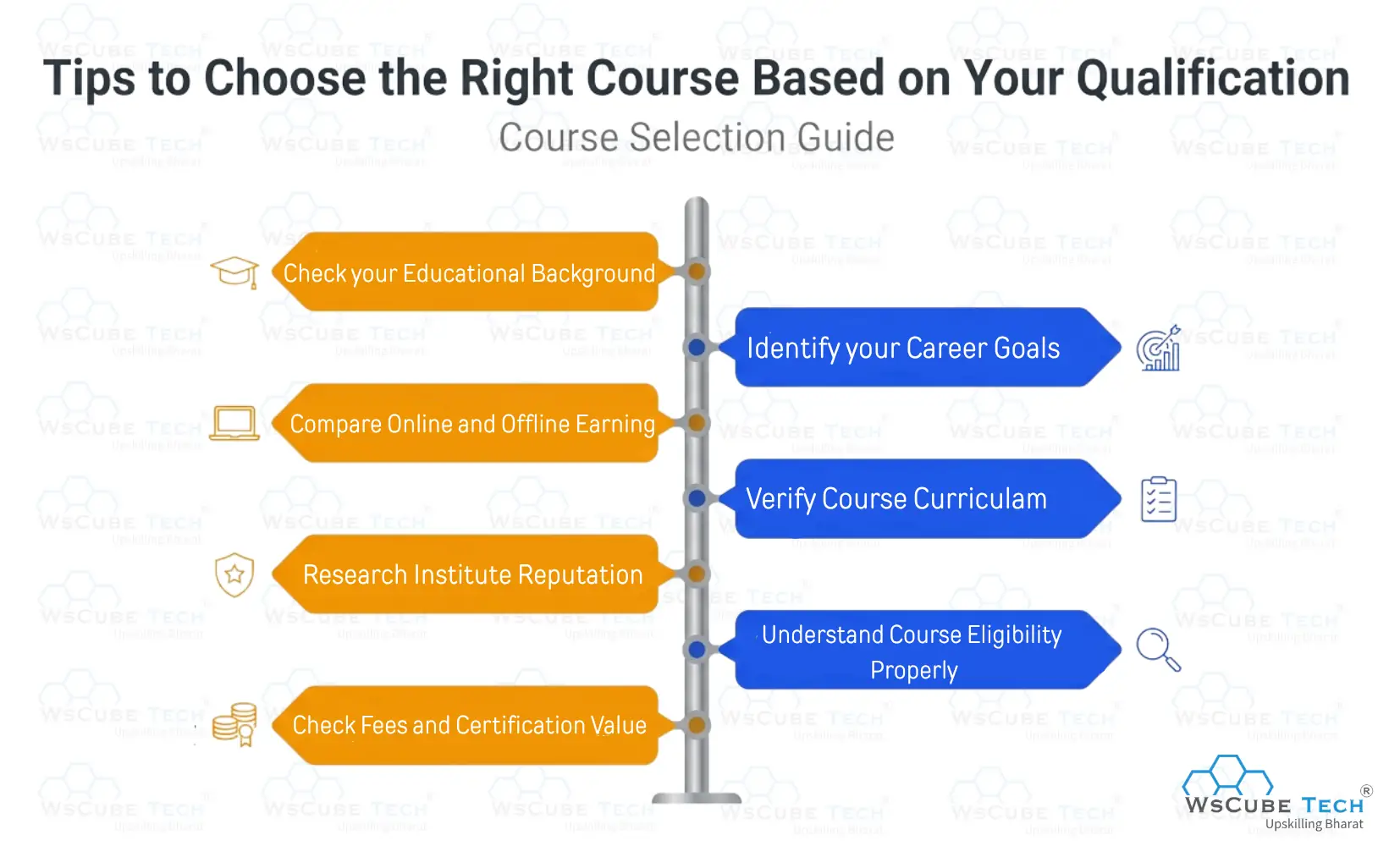
Tip 1: Check Your Educational Background
Choose certificates, diplomas, or advanced programs according to your academic level. Understanding the qualification for digital marketing course helps avoid unsuitable course selections.
Tip 2: Identify Your Career Goals
Select courses based on career interests like SEO, social media, content writing, or performance marketing to build focused industry-relevant digital skills successfully.
Tip 3: Compare Online and Offline Learning
Online courses provide flexibility, while offline classes offer classroom interaction. Choose learning formats according to schedule, budget, comfort, and personal learning preferences carefully.
Tip 4: Verify Course Curriculum
Always check whether the course includes SEO, Google Ads, analytics, AI tools, social media marketing, and practical projects for better career opportunities later.
Tip 5: Research Institute Reputation
Choose institutes with experienced trainers, placement assistance, certifications, internships, and positive student reviews to ensure better learning and career growth opportunities.
Tip 6: Understand Course Eligibility Properly
Before enrollment, confirm who can join digital marketing course programs according to age, education, skills, and career goals for smoother admission processes successfully.
Tip 7: Check Fees and Certification Value
Compare course fees, certifications, placement support, and practical training quality before enrolling to ensure long-term value and better professional learning outcomes.
FAQs About Digital Marketing Course Eligibility
The basic digital marketing course eligibility usually includes completing 10th or 12th standard. Candidates should also have basic computer knowledge, internet understanding, and communication skills for easier learning.
The digital marketing course eligibility criteria for beginners are simple. Most institutes accept students after school education and do not require technical or coding backgrounds for admission.
The eligibility for digital marketing course after graduation depends on program level. Graduates from any stream can apply for advanced certifications, diploma programs, and postgraduate digital marketing courses.
The eligibility criteria for digital marketing course in India generally include basic education qualifications, communication abilities, and computer understanding. Most institutes keep admission requirements flexible for students and professionals.
Yes, advanced digital marketing course criteria may include graduation, basic marketing understanding, and practical knowledge. Some institutes also conduct interviews or aptitude assessments during admissions.
The minimum qualification for digital marketing course admission is usually 10th or 12th standard. Advanced certifications and postgraduate programs may require graduation from recognized universities.
The digital marketing course eligibility & requirements for online programs are flexible. Students mainly need internet access, communication skills, and basic computer knowledge to start learning successfully.
Students, graduates, freelancers, entrepreneurs, housewives, and professionals can enroll easily. Understanding who can join digital marketing course programs helps learners choose suitable career-focused certifications confidently.
Graduation is not compulsory for every qualification for digital marketing course requirement. Many certificates and diploma programs allow students to enroll immediately after completing school education.
The required digital marketing course qualification after school education is generally completing 10th or 12th standard. Students from Arts, Commerce, and Science streams can apply easily.
Conclusion
Digital marketing has become one of the most flexible and career-focused fields for students, professionals, freelancers, and entrepreneurs in 2026.
From eligibility requirements and course types to salaries, certifications, and career opportunities, understanding the right path helps learners make smarter educational and professional decisions. Whether you are applying after 10th, 12th, or graduation, the qualification for digital marketing course is usually simple and beginner-friendly.
With growing demand for SEO, social media, AI marketing, and performance marketing skills, digital marketing offers excellent career growth, remote work opportunities, and long-term industry relevance for learners from every background.
Join Our On-Campus Digital Marketing Program
Explore Our Free Courses






Leave a comment
Your email address will not be published. Required fields are marked *Comments (0)
No comments yet.