

Data science has become one of the most popular and fast-growing career choices in today’s digital world. With companies relying on data to make better decisions, the demand for skilled professionals is increasing rapidly. Many learners and professionals often wonder, “Is data science a good career?” when thinking about long-term growth, salary, and job stability in this field.
This career offers excellent opportunities across industries like IT, healthcare, finance, and e-commerce. It provides high-paying jobs, strong career growth, and flexibility to work on real-world problems using data. As organizations generate massive amounts of data every day, the need for data scientists continues to rise, making it a future-proof career option.
Let’s learn what data science is, why it is a popular career choice, its benefits, required skills, salary, future scope, and how to start your journey in this exciting and rewarding field.
What is Data Science?
Data science is a field that focuses on collecting, analyzing, and interpreting large amounts of data to extract useful insights and support decision-making. It combines different areas such as programming, statistics, and data analysis to solve real-world problems. Data scientists use tools and techniques to find patterns, predict outcomes, and help businesses make smarter decisions based on data rather than assumptions.
Why is Data Science a Popular Career Choice?
Data science has become a popular career choice because it offers high demand, attractive salaries, and strong career growth. Companies across industries use data to make better decisions, improve services, and increase profits. As a result, skilled data professionals are needed everywhere.
Another reason is the variety of job opportunities available. From healthcare and finance to e-commerce and technology, data science is used in almost every field. This gives professionals the flexibility to work in different industries and roles.
Data science also allows you to work with modern tools and technologies like machine learning and artificial intelligence. It involves solving real-world problems using data, which makes the work interesting and meaningful.
Is Data Science a Good Career in 2026?
Yes, data science is a good career in 2026 as it plays a key role in helping organizations make smart, data-driven decisions. With businesses focusing more on innovation and efficiency, data science has become essential, offering stable opportunities and making it a reliable choice for long-term career growth.
Below are the reasons:
- High salary packages in top companies
- Wide range of job roles available
- Demand in industries like healthcare, finance, and e-commerce
- Opportunity to work with AI and modern technologies
- Continuous learning and skill development
Recommended Professional Certificates
Data Analytics Mentorship Program
Data Science & AI Mentorship Program
Benefits of Choosing Data Science as a Career
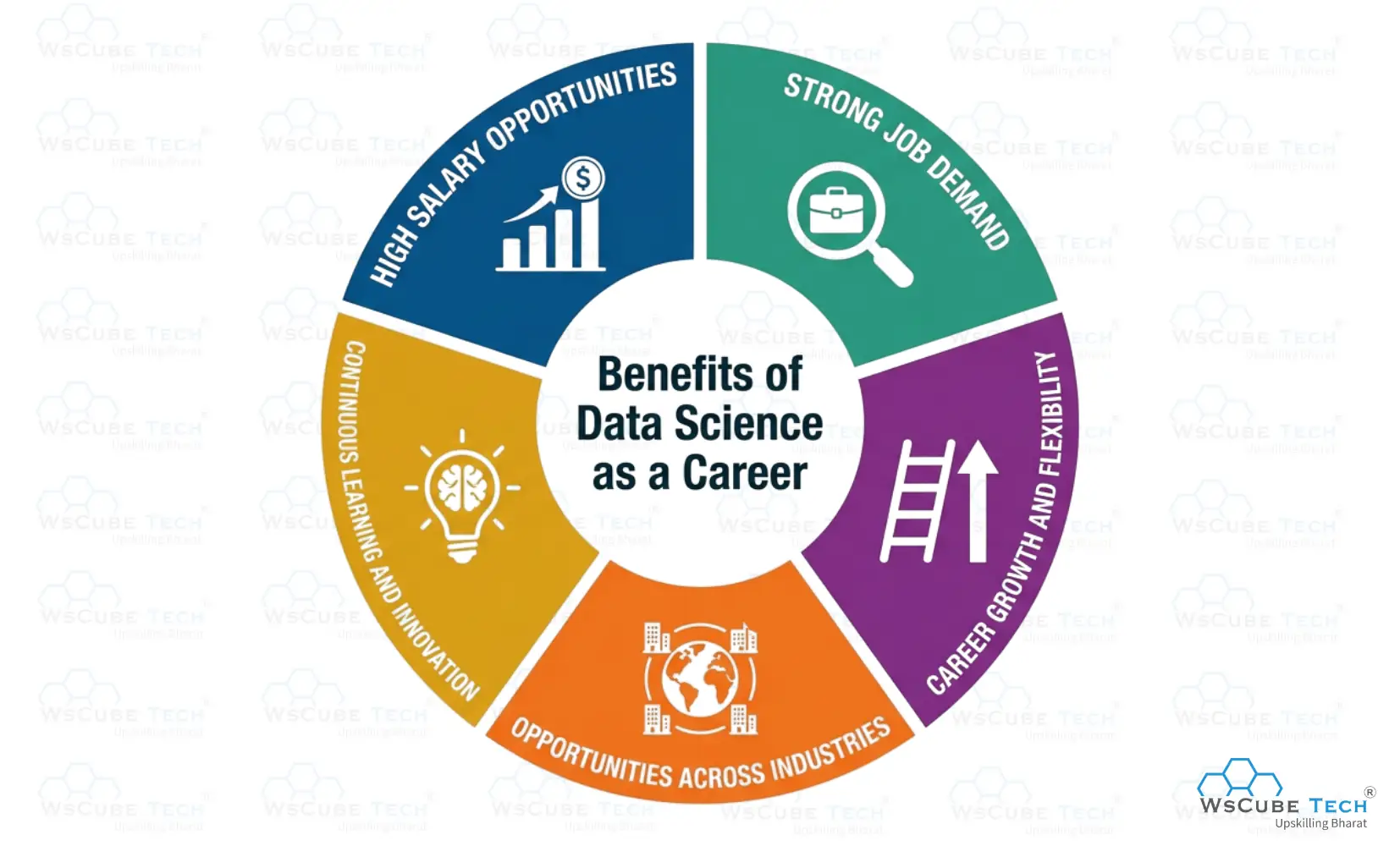
Below are the main benefits of choosing data science as a career that you will explore in detail:
- High Salary Opportunities: Data science professionals earn competitive salaries due to their specialized skills, making it one of the highest-paying career options across industries and experience levels.
- Strong Job Demand: The demand for data scientists is increasing rapidly as companies rely on data-driven decisions, ensuring better job security and consistent career opportunities in the market.
- Career Growth and Flexibility: Data science offers excellent career growth with multiple roles and paths, allowing you to switch domains, work remotely, or explore different industries based on your interests and skills.
- Opportunities Across Industries: Data science is used in industries like healthcare, finance, retail, and technology, allowing professionals to explore diverse domains and work on different types of real-world problems.
- Continuous Learning and Innovation: Data science is a rapidly evolving field where new tools, technologies, and techniques emerge regularly. It provides continuous opportunities to learn new skills, experiment with innovative ideas, and stay updated with the latest trends in artificial intelligence and data analytics.
Suggested Reading: Is Data Science Hard to Learn? Beginner Guide
Challenges in a Data Science Career
Data science is a rewarding career, but it also comes with certain challenges that you should be aware of before entering this field. One of the biggest challenges is the need to continuously learn new tools, technologies, and concepts, as the field evolves rapidly. Keeping up with programming languages, machine learning techniques, and industry trends can be time-consuming.
Another challenge is handling large and complex datasets, which often require strong problem-solving and analytical skills. Data scientists also need to communicate their insights clearly to non-technical stakeholders, which can be difficult at times. Additionally, competition in this field is increasing, so building strong skills and practical experience is essential to stand out.
Skills Required to Become a Data Scientist
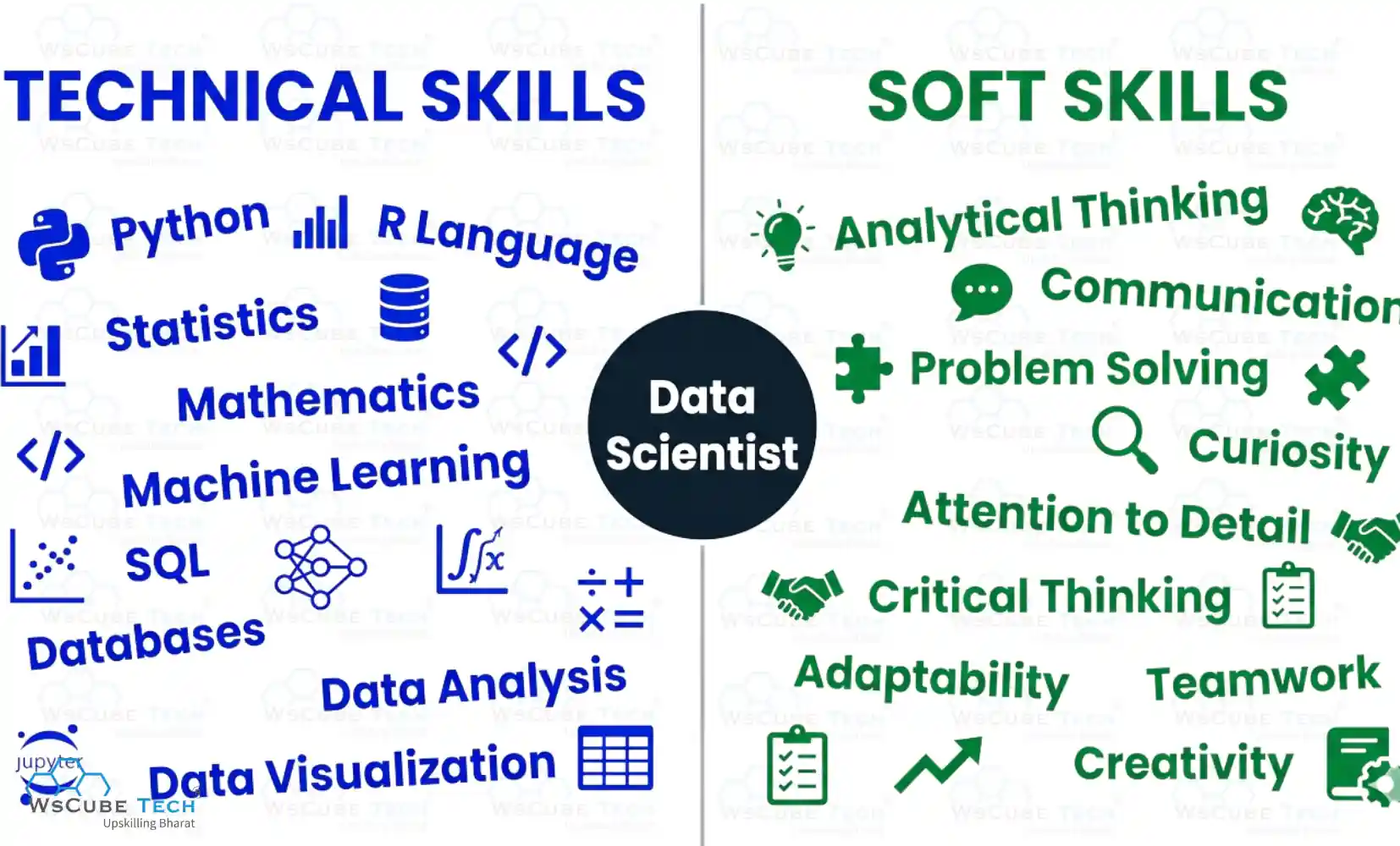
To become a data scientist, you need a mix of programming, analytical thinking, and problem-solving abilities to work with data effectively. Below are the technical skills:
Technical Skills
- Programming Languages (Python/R): You should learn programming languages like Python and R to handle data, build models, and perform data analysis efficiently in real-world projects.
- Statistics and Mathematics: A strong understanding of statistics, probability, and basic mathematics helps you analyze data, identify patterns, and build accurate machine learning models.
- Data Analysis and Visualization: Skills with tools like Excel, Pandas, or Tableau help analyze data and present insights through charts and visual reports.
- Machine Learning Basics: Understanding machine learning algorithms helps you build predictive models, automate tasks, and improve decision-making across industries using data-driven approaches.
- SQL and Databases: SQL helps extract, manage, and query data from databases, an essential skill for handling large datasets.
Soft Skills
- Analytical Thinking: Ability to understand complex problems, analyze data logically, and find meaningful patterns that help in making better business decisions.
- Communication Skills: Ability to explain data insights clearly and simply so stakeholders understand information easily and use it effectively for better decision-making and improved business outcomes.
- Problem-Solving Skills: Data scientists must solve real-world problems by choosing the right approach, tools, and techniques based on the given data.
- Curiosity and Continuous Learning: A curious mindset helps explore data more deeply and stay up to date with new tools, trends, and technologies in data science.
- Attention to Detail: Paying close attention to data ensures accuracy, reduces errors, and helps in creating reliable models and meaningful insights.
Must Read: Data Science Course Eligibility: After 12th, Graduation & More
Educational Requirements for Data Science
To build a career in data science, having a relevant educational background is helpful but not mandatory. Many data scientists have degrees in computer science, mathematics, statistics, or engineering, as these fields develop strong analytical thinking and problem-solving skills.
A bachelor’s degree is usually enough to start with entry-level roles, while a master’s degree can help deepen your knowledge and open more opportunities. However, you can also enter this field through online courses, certifications, and self-learning. The most important factor is building strong skills in programming, data analysis, and gaining hands-on experience through real-world projects.
Upcoming Masterclass
Attend our live classes led by experienced and desiccated instructors of Wscube Tech.

Tools and Technologies Used in Data Science
Below is a table of the most commonly used tools and technologies in data science:
| Category | Tools / Technologies | Purpose |
| Programming Languages | Python, R | Data analysis, modeling, automation |
| Data Visualization | Tableau, Power BI, Matplotlib, Seaborn | Creating charts and dashboards |
| Machine Learning | Scikit-learn, TensorFlow, Keras | Building predictive models |
| Big Data Technologies | Hadoop, Apache Spark | Handling large-scale data |
| Databases | MySQL, PostgreSQL, MongoDB | Storing and managing data |
| Data Manipulation | Pandas, NumPy | Data cleaning and processing |
| Cloud Platforms | AWS, Google Cloud, Microsoft Azure | Cloud storage and computing |
| Version Control | Git, GitHub | Code management and collaboration |
Top Job Roles in Data Science
Data science offers various career roles based on skills and interests. Below are the roles:
- Data Analyst: Collects, processes, and analyzes data to identify trends and insights, helping businesses understand performance and make better, data-driven decisions effectively.
- Data Scientist: Works with large datasets, builds machine learning models, and extracts meaningful insights to solve complex problems and support data-driven decision-making.
- Machine Learning Engineer: Designs, builds, and deploys machine learning models, focusing on automation, improving performance, and integrating models into real-world applications.
- Data Engineer: Develops and manages data pipelines, ensuring data is collected, stored, and processed efficiently. They build scalable systems that support data analysis, maintain data quality, and enable organizations to use data effectively for business decisions.
- Business Analyst: Uses data to understand business needs, identify problems, and suggest solutions to improve processes and overall business performance.
Also Read: Data Analyst Salary in India (Freshers & Experienced)
Data Science Salary in India (Freshers to Experienced)
Data science offers attractive salaries at all career levels, from freshers to experienced professionals. Salaries vary based on skills, experience, company, and location, but overall, it remains one of the highest-paying career options in India.
Fresher Level Data Science Salary
| Job Role | Approximate Salary (INR) |
| Data Scientist | ₹6,00,000 – ₹14,00,000 |
| Data Analyst | ₹4,00,000 – ₹8,00,000 |
| Machine Learning Engineer | ₹6,00,000 – ₹12,00,000 |
| Business Intelligence Analyst | ₹4,00,000 – ₹10,00,000 |
| Data Engineer | ₹5,00,000 – ₹10,00,000 |
Mid and Senior Level Data Science Salary
| Job Role | Experience | Approximate Salary (INR Per Year) |
| Data Scientist | 3–5 Years | ₹10,00,000 – ₹22,00,000 |
| Senior Data Scientist | 5–8 Years | ₹13,00,000 – ₹28,00,000 |
| Machine Learning Engineer | 3–6 Years | ₹10,00,000 – ₹20,00,000 |
| Lead Data Scientist | 6–10 Years | ₹20,00,000 – ₹36,00,000 |
| Data Science Manager | 8+ Years | ₹25,00,000 – ₹38,00,000 |
Explore our Roadmap Blogs
Who Should Choose Data Science as a Career?
Data science is a great career choice for individuals who enjoy working with data, solving problems, and learning new technologies. It is suitable for people who are curious, analytical, and interested in understanding patterns and insights from data.
- Students from Technical Background: Those with backgrounds in computer science, mathematics, or engineering can easily adapt to data science concepts and tools.
- Working Professionals Looking for Career Switch: Professionals from IT, finance, or other fields can switch to data science by learning the required skills and gaining practical experience.
- Problem Solvers and Analytical Thinkers: People who enjoy analyzing data, finding patterns, and solving real-world problems can do well in this field.
- People Interested in AI and Technology: If you are interested in machine learning, AI, and modern technologies, data science is a great career to build smart solutions and grow your technical skills.
- Beginners Willing to Learn: Even beginners with no technical background can start learning data science with dedication, practice, and the right learning path.
Also Read: Data Analyst vs. Data Scientist: Key Differences & Comparison
Is a Data Science Career Suitable for Beginners?
This is a common question that arises among beginners: Is data science a good career path? The answer is yes, data science is beginner-friendly for those who are ready to learn and stay consistent. While it may seem complex at the beginning, you can start with basic concepts like programming, statistics, and data analysis, and then gradually move to advanced topics.
Many online courses, tutorials, and practical projects make it easier to learn step by step. By practicing regularly and working on real projects, you can build strong skills and confidently start your journey in data science, even without having a technical background.
If you want to learn from basic to advanced, you can join our online data science course, which helps you build practical skills, work on real-world projects, and gain proper guidance throughout your learning journey.
Future Scope of Data Science
The future scope of data science is very promising as companies are increasingly using data-driven strategies to grow their businesses. With advancements in AI, machine learning, and big data, the demand for skilled professionals is rising across industries like healthcare, finance, e-commerce, and technology. Data science is becoming essential for decision-making, innovation, and improving business performance, making it a stable and future-proof career option.
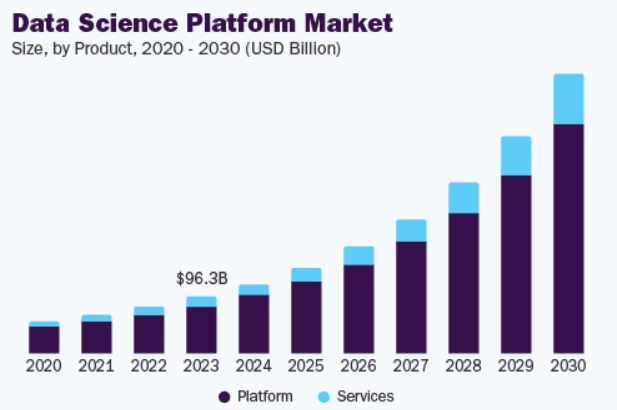
The global market for data science platforms was estimated at around USD 96.25 billion in 2023 and is expected to reach USD 470.92 billion by 2030, growing at a CAGR of 26.0%. This rapid growth highlights the increasing demand and strong future potential of data science across industries worldwide.
How to Start a Career in Data Science?
Starting a career in data science requires learning the right skills, practicing regularly, and gaining hands-on experience through real-world projects. Below is the step-by-step roadmap:
1. Build Strong Foundations in Technical Skills
Begin by learning core concepts like Python programming, statistics, and data analysis. A strong foundation helps you understand advanced topics easily and apply your knowledge effectively in real-world data science tasks.
2. Take Structured Courses and Certifications
Enroll in online courses or certifications that provide step-by-step learning, practical assignments, and guidance to help you understand data science concepts clearly and build job-ready skills.
3. Build a Portfolio of Projects
Work with real datasets, solve practical problems, and develop clear case studies to present your approach. Publish your projects on GitHub or a personal portfolio site to highlight your skills, build trust, and improve your chances of getting better job opportunities.
4. Gain Practical Experience and Network
Apply for internships, freelance work, or entry-level roles to gain experience, and connect with professionals through LinkedIn or communities to learn, grow, and explore opportunities.
5. Prepare for Interviews
Practice common interview questions, improve problem-solving skills, revise concepts, and work on communication skills to confidently explain your projects and technical knowledge during interviews.
Also Read: Data Scientist Roadmap: A Guide for Beginners
Learn Data Science and AI Program with WsCube Tech
If you are interested in learning from scratch, from basics to advanced, WsCube Tech offers a comprehensive Data Science & AI Mentorship Program. In this program, you will gain hands-on experience by working on real datasets, building machine learning models, and deploying AI applications. With expert guidance, structured learning, and practical projects, you can develop industry-ready skills and confidently build a strong career in Data Science, Machine Learning, and Artificial Intelligence in just 20 weeks.

FAQs About Data Science as a Career
Yes, data science is a great career in 2026 due to high demand, strong salaries, and growing opportunities across industries driven by data, AI, and automation technologies.
Data science may seem challenging at first, but beginners can learn it step by step with consistent practice, starting from basics like programming, statistics, and data analysis.
A background in computer science, mathematics, or statistics can be helpful, but it is not required. Strong practical skills, certifications, and hands-on project experience play a key role in entering this field.
Yes, non-technical students can learn data science by starting with basic concepts, practicing regularly, and building projects, even without prior experience in coding or technical fields.
Learning data science usually takes 6 to 12 months, depending on your learning pace, consistency, and the time you spend practicing concepts and working on projects.
A data science career requires skills in programming languages such as Python, statistics, data analysis, and basic machine learning. Strong problem-solving ability, logical thinking, and communication skills are also important for clearly explaining insights.
Yes, coding is important in data science, especially languages like Python or R, as they are used for data analysis, building models, and handling large datasets efficiently.
In India, data scientists typically earn salaries ranging from ₹6 LPA to ₹14 LPA at the entry level, while experienced professionals can achieve significantly higher compensation based on their skills, experience, and expertise.
Top roles include data scientist, data analyst, machine learning engineer, data engineer, and business analyst, each focusing on analyzing data and supporting business decision-making processes.
Data science can be challenging at times due to deadlines and complex problems, but it becomes manageable with experience, proper planning, and strong problem-solving skills.
The future of data science is very strong, with increasing demand across industries due to the growth of data, AI, and automation, making it a stable and high-growth career.
Start by learning Python, basic statistics, and data analysis concepts. Practice with real datasets, build projects, and create a portfolio. Take online courses, gain hands-on experience, and apply for internships or entry-level roles.
Conclusion
Data science is one of the most promising and rewarding career options in today’s digital world. With high demand, attractive salaries, and opportunities across multiple industries, it offers strong growth and long-term stability. Although it requires continuous learning and effort, anyone with the right mindset and dedication can build a successful career in this field.
If you are interested in working with data, solving real-world problems, and learning modern technologies, data science can be a smart and rewarding career path to consider.
Practice Coding With Our Free Compilers





Leave a comment
Your email address will not be published. Required fields are marked *Comments (0)
No comments yet.