

How does Apple know when to launch a new iPhone feature, or how does Zomato stay ahead of Swiggy in the food delivery race?
The answer lies in smart competitor analysis.
Every leading brand constantly studies its rivals, their marketing campaigns, pricing, customer reviews, and even social media tone, to make informed moves. This process, known as competitive analysis, helps businesses discover what’s working in the market, where opportunities lie, and how they can stand out.
Whether you’re a small startup or a growing enterprise, understanding your competition is a growth strategy. Let’s discuss what competitor analysis is, why it matters, how to do it, and the tools that make it easier.
What is Competitive Analysis?
Competitive analysis is the process of identifying and evaluating your competitors to understand their strengths, weaknesses, strategies, and performance. By doing competitor analysis, you can discover what’s helping others succeed and use those insights to refine your own marketing, product, and growth strategy.
It’s about studying the market from your rivals’ lens, understanding their pricing, content, advertising, and customer engagement. Whether you’re running a business, launching a new product, or planning marketing campaigns, competitive analysis gives you the data you need to make smarter, evidence-based decisions that keep you ahead of the competition.
Benefits of Competitor Analysis
These are the primary competitive analysis advantages:
1. Understand Market Trends
By tracking competitors, you gain a clearer view of shifting consumer preferences and industry trends, allowing you to adapt your strategy before it’s too late.
2. Identify Strengths and Weaknesses
Competitor analysis reveals what others are doing better, and where they’re falling short, so you can learn from both their successes and mistakes.
3. Improve Your Marketing Strategy
It helps you refine messaging, pricing, and content strategies by studying what engages your competitors’ audiences the most.
4. Discover New Opportunities
You can uncover market gaps your rivals haven’t noticed yet, like unserved customer needs or untapped regions.
5. Benchmark Your Performance
Competitive analysis lets you measure your growth against top players in your industry and set realistic benchmarks for improvement.
6. Enhance Product Development
By observing what’s working for others, you can innovate and add features that meet or exceed market expectations.
7. Strengthen Customer Retention
Learning from your competitors’ customer engagement tactics helps you create better experiences and build long-term loyalty.
8. Make Data-Driven Decisions
Rather than guessing, you can make decisions backed by real insights from your competition analysis reports and tools.
Recommended Professional Certificates
Digital Marketing Mentorship Program
Advanced AI Marketing Bootcamp
Performance Marketing Bootcamp
SEO Specialist Bootcamp
Goals and Objectives of Competitive Analysis
- To identify your direct and indirect competitors
- To understand customer expectations and market demands
- To evaluate product differentiation and pricing strategies
- To monitor marketing and communication tactics
- To uncover threats and opportunities early
- To plan better business strategies for long-term growth
- To align your brand positioning with market trends
Types of Competitive Analysis
Let’s go through the major types of competitor analysis you should know.
1. Direct Competitor Analysis
This focuses on companies offering the same products or services to the same target audience.
For example, Zomato vs. Swiggy or Apple vs. Samsung. It helps you understand pricing, features, and customer satisfaction gaps.
2. Indirect Competitor Analysis
Here, you study businesses that solve the same problem but with different solutions.
For instance, Netflix and YouTube both compete for users’ screen time even though they offer different formats.
3. Product-Based Competitive Analysis
You analyze specific products—quality, features, packaging, and innovation. This type helps you identify what differentiates your offering and how you can improve your product roadmap.
4. Marketing Competitive Analysis
This involves examining competitors’ marketing strategies: ads, SEO, content, social media, and email campaigns. You’ll learn which platforms drive the most engagement and what messaging connects best with the audience.
5. Social Media Competitive Analysis
By studying your competitors’ social handles, you can track posting frequency, engagement rate, audience sentiment, and influencer collaborations to strengthen your own social media strategy.
6. SEO Competitive Analysis
A must for online businesses. You analyze your rivals’ keywords, backlinks, and ranking pages to find SEO opportunities and improve your organic visibility.
7. UX/UI Competitive Analysis
This examines user experience, including website design, navigation, content layout, and ease of conversion. It’s especially useful for improving your website or app’s usability and customer journey.
8. Financial Competitive Analysis
Used by investors and strategists, this evaluates competitors’ financial health, revenue models, and pricing patterns to understand their sustainability and potential threats.
9. Customer Experience Competitive Analysis
You analyze how your competitors handle customer support, complaints, and satisfaction. This helps you offer a more reliable and trust-driven brand experience.

Competitive Strategy Frameworks
These are the frameworks of competitor analysis strategy:
1. Porter’s Five Forces
It is a way to judge market attractiveness by checking five pressures:
- industry rivalry
- threat of new entrants
- threat of substitutes
- bargaining power of buyers
- bargaining power of suppliers.
How you use it:
We assess each force as Low/Medium/High and note actions.
Example:
Food delivery (India).
- Rivalry: High (Zomato vs Swiggy).
- New entrants: Medium (logistics + capital intensive).
- Substitutes: High (phone-in to restaurants, dine-in).
- Buyer power: High (price-sensitive users, coupons).
- Supplier power: Medium (popular restaurants negotiate).
- Action: Focus on loyalty, exclusive restaurant partnerships, and subscription benefits to reduce churn.
2. SWOT Analysis
It is a crisp view of internal Strengths and Weaknesses vs external Opportunities and Threats.
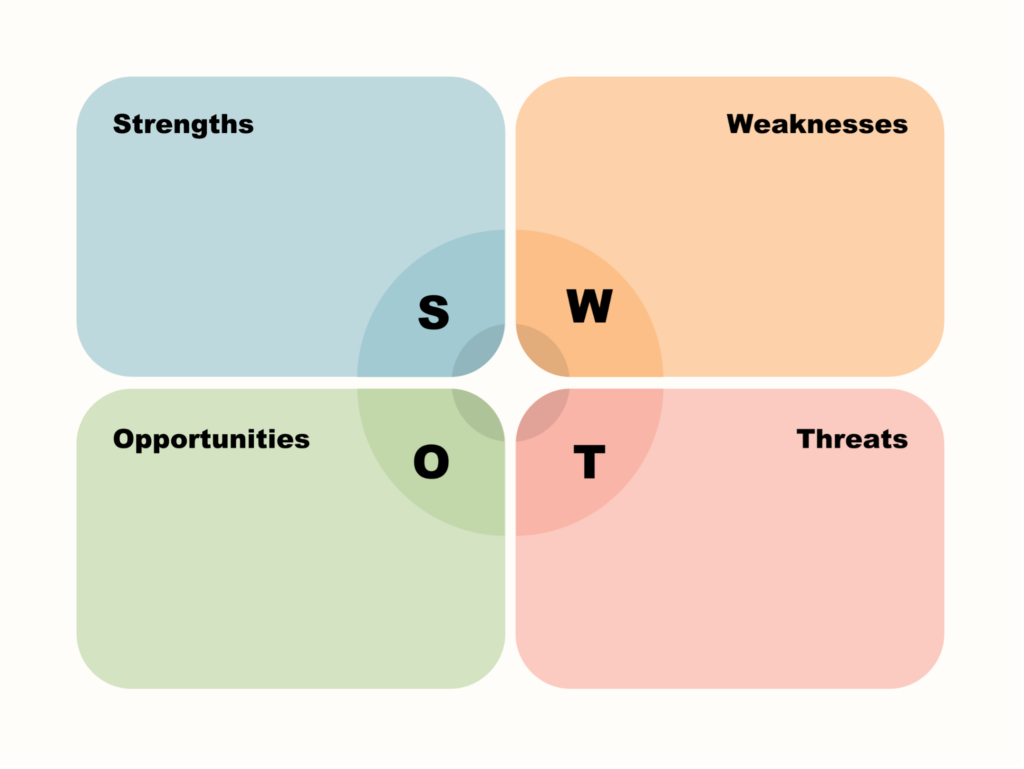
How you use it:
Do a quick SWOT for you and for each top competitor; compare.
Example:
D2C skincare brand.
- Strengths: Fast product launches, strong Instagram community.
- Weaknesses: Weak SEO, slow COD refunds.
- Opportunities: Men’s skincare, chemist distribution.
- Threats: Large FMCG copying hero products.
- Action: Invest in SEO content and faster returns, launch men’s line first.
3. Competitive Positioning Map (Perceptual Map)
It is a 2x2 graph that shows where brands sit in buyers’ minds on two axes (e.g., Price vs Quality, Speed vs Variety).
How you use it:
Plot you and competitors; look for under-served quadrants.
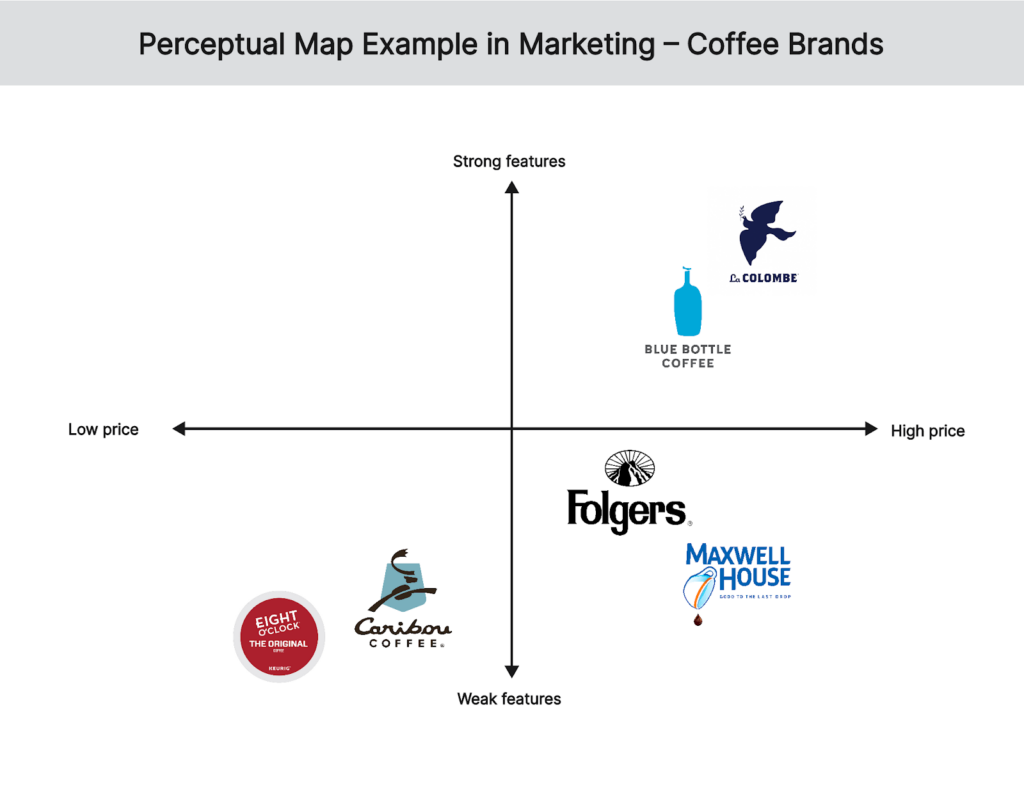
Example:
Cloud storage.
- Axes: Price (low→high) vs Collaboration features (basic→advanced).
- Gap found: Low-price + advanced collaboration.
- Action: Build team collaboration features, maintain budget pricing.
4. Competitive Matrix
It is a table that compares features, pricing, channels, and support across rivals.
How you use it:
Score 0/1/2 per feature; spot parity, gaps, and differentiators.
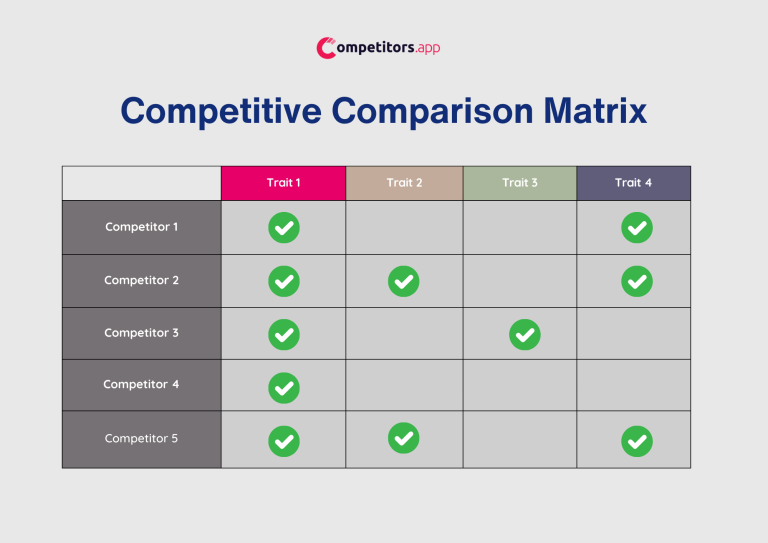
Example:
Email marketing SaaS.
- Columns: Automation, SMS add-on, AI subject lines, free tier, India billing, 24×7 chat.
- Action: Add AI subject lines and India billing; highlight them on the pricing page.
5. Value Proposition Canvas
Maps customer jobs, pains, and gains against your product’s pain relievers and gain creators.
How you use it:
Do one canvas per key segment; repeat for a competitor.
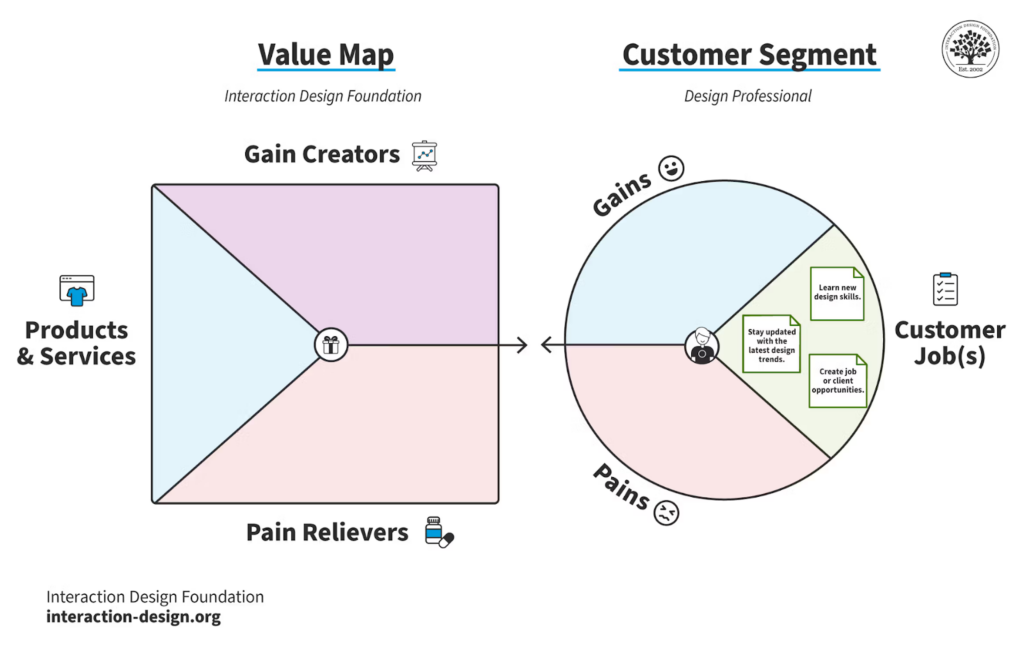
Example:
Edtech test prep.
- Student jobs: Concept clarity, score improvement.
- Pains: Overwhelm, lack of doubt support.
- Gains: Rank, confidence.
- Action: Daily doubt rooms + targeted micro-tests; message the relief loudly.
6. Value Chain Analysis
It breaks your operations into activities (inbound logistics → service) to find cost or differentiation advantages.
How you use it:
Compare each activity with a competitor’s strengths.
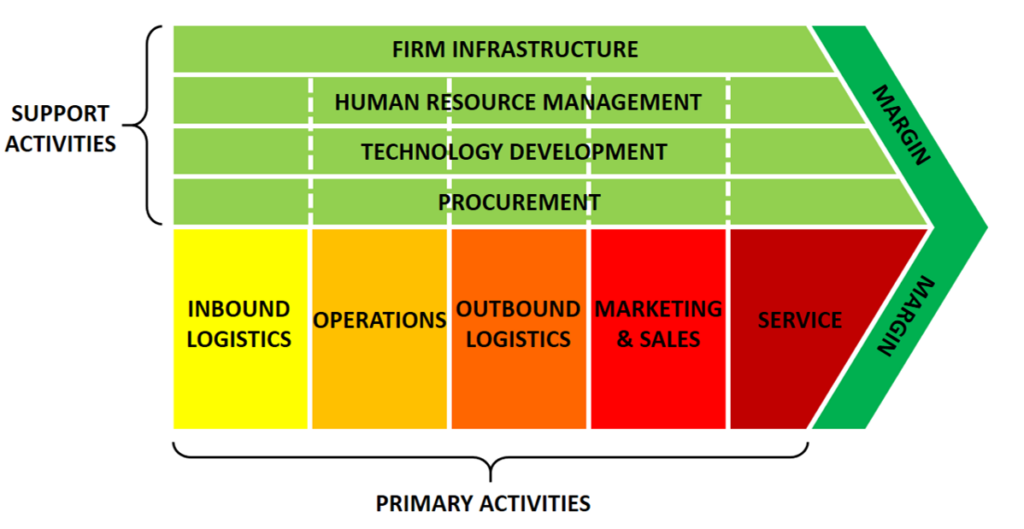
Example:
Furniture D2C.
- Competitor wins at last-mile assembly.
- Action: Partner network for 48-hour assembly; market it as a promise.
7. Benchmarking
It is a systematic comparison of KPIs against leaders to learn what to adopt or improve.
How you use it:
Pick 8–12 KPIs (CAC, LTV, CSAT, NPS, AOV, delivery TAT).
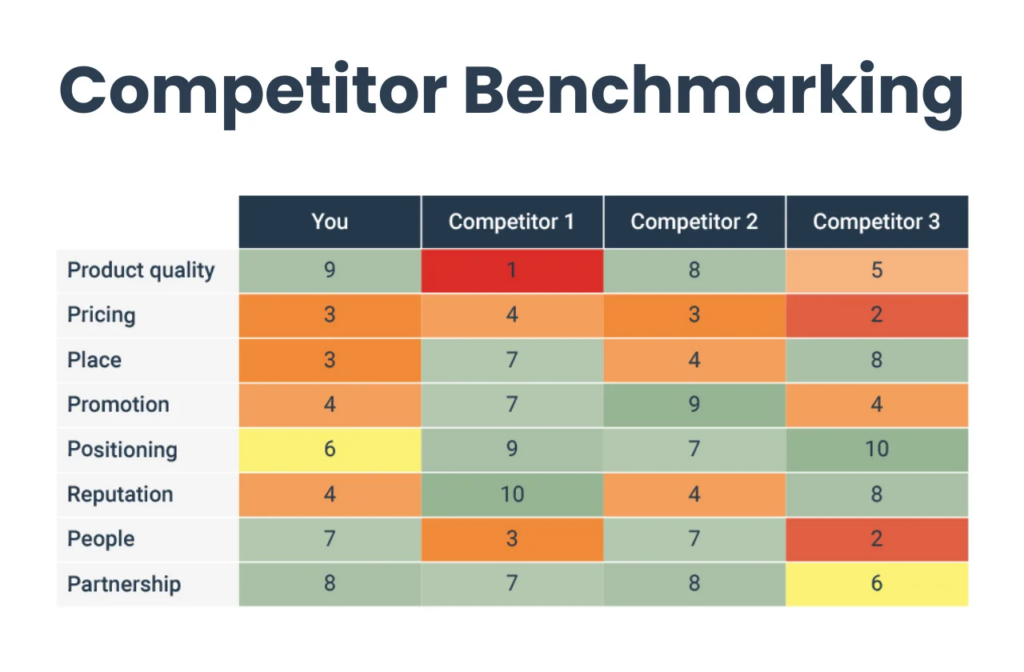
Example:
Quick commerce.
- Your delivery TAT: 32 min; competitor: 19 min.
- Action: Micro-warehouses near dense clusters; improve slot accuracy.
8. Blue Ocean Strategy
Create uncontested market space by eliminating/raising/reducing/creating factors.
How you use it:
Fill the ERRC grid (Eliminate, Reduce, Raise, Create).
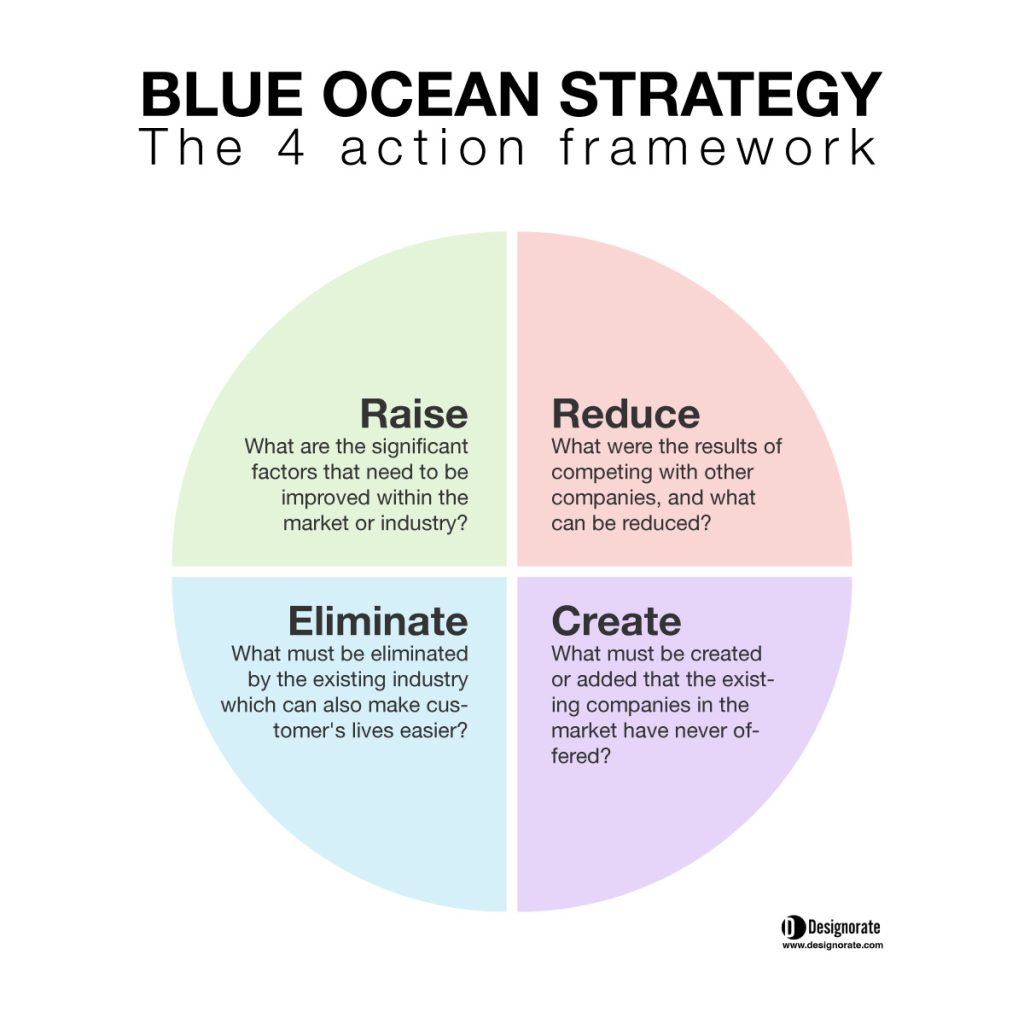
Example:
Budget gym chain.
- Eliminate joining fee; Reduce frills; Raise trainer attention; Create app-based habit journeys.
- Action: Launch “No-frills, high-attention” format at mid-tier pricing.
Expand Your Marketing Skills
How to Do a Competitive Analysis?
Step 1: Define scope and questions
Decide markets, segments, and time frame. Write 5–7 decision questions (pricing, features, channels). This keeps your competitor analysis focused on actions, not trivia.
Step 2: Identify real competitors
List direct and indirect players. Add emerging substitutes. Prioritise the top 5 using a scoring model (overlap of audience, geography, offerings, keywords).
Step 3: Gather data ethically
Collect from websites, pricing pages, app stores, review sites, social feeds, job posts, help centers, newsletters, press, and tools. Save screenshots; log dates to avoid outdated inputs.
Step 4: Build a competitive matrix
Create a table for features, pricing tiers, guarantees, integrations, SLAs, support, refunds, and top claims. Score each item to reveal parity and white spaces.
Step 5: Analyze marketing & SEO
Track channels, messaging, offers, lead magnets, top landing pages, keywords, backlinks, ad angles, and CTAs. Note what wins attention and what you can outdo.
Step 6: Assess product & UX
Sign up for trials, place test orders, or use sandboxes. Evaluate onboarding, speed, navigation, search, checkout, and support touchpoints. Record friction and delight.
Step 7: Review pricing & packaging
Capture list prices, hidden fees, discounts, free tiers, trials, and refund policies. Compare value per rupee and communicate your edge clearly.
Step 8: Map customer voice
Scan ratings, NPS comments, Reddit/Quora threads, and social replies. Tag complaints and praises. Use patterns to shape features, policies, and copy.
Step 9: Apply frameworks
Run Five Forces for market pressure, SWOT for readiness, a positioning map to spot gaps, and an ERRC grid for bold moves. This turns data into direction.
Step 10: Convert insights to actions
Create an action backlog grouped by Impact vs Effort: quick wins (copy, offers), mid-term (features, UX), long-term (ops, partnerships). Assign owners and deadlines.
Step 11: Report clearly
Use one-page executive summary, the comparison matrix, 3–5 charts, and a prioritized roadmap. Keep emphasis on decisions, not just observations.
Step 12: Monitor continuously
Set a monthly or quarterly cadence. Track 8–10 KPIs, pricing changes, launches, and reviews. Competitive analysis works best as an ongoing habit, not a one-off project.
Tools for Competitive Analysis
| Tool Name | Free Option | Best For / Key Use Case |
| Google Trends | Yes | Track search interest, seasonal trends, and keyword popularity to compare brand visibility. |
| SimilarWeb | Limited Free | Analyze competitor traffic sources, engagement metrics, and audience demographics. |
| Ubersuggest | Limited Free | Discover competitors’ top keywords, backlinks, and content performance for SEO. |
| SEMrush | No | All-in-one SEO and PPC tool to analyze competitor keywords, backlinks, and advertising. |
| Ahrefs | No | In-depth backlink audits, keyword gap analysis, and organic traffic tracking. |
| SpyFu | Limited Free | Reveal competitors’ Google Ads keywords, ad history, and top-performing paid campaigns. |
| BuzzSumo | Limited Free | Analyze top-performing content across topics, brands, and social media platforms. |
| Moz Pro | No | SEO and link-building analysis to compare domain authority and keyword performance. |
| Social Blade | Yes | Track YouTube, Instagram, and Twitter competitor stats and follower growth trends. |
| Sprout Social | No | Advanced social media competitor analytics, engagement tracking, and sentiment analysis. |
| Hootsuite | Limited Free | Monitor competitors’ social performance and schedule comparative reports. |
| Hotjar | Basic Free | Visualize competitor-inspired UX improvements using heatmaps and session recordings. |
| Owletter | No | Analyze competitors’ email campaigns and newsletters for content frequency and tone. |
| Canva Competitor Benchmark (Canva Pro) | Yes | Analyze design trends and competitor brand visuals for marketing inspiration. |
| Wappalyzer | Yes | Discover competitors’ tech stacks—CMS, analytics, marketing tools—used on their websites. |
| Crunchbase | Limited Free | Track funding, partnerships, and growth insights of business competitors. |
| Mailcharts | Limited Free | Monitor competitors’ email marketing patterns and promotional strategies. |
| Brand24 | No | Track competitor brand mentions and sentiment across web and social media. |
| BuiltWith | Yes | Check technologies and integrations used on competitors’ websites. |
| Quantcast | Yes | Understand audience demographics, behavior, and preferences compared to your competitors. |
Upcoming Masterclass
Attend our live classes led by experienced and desiccated instructors of Wscube Tech.

Competitive Analysis Example
Let’s understand competitive analysis with a practical, relatable example.
Example Scenario: Zomato vs Swiggy (Food Delivery Apps in India)
Both Zomato and Swiggy dominate India’s online food delivery market. Suppose you are launching a new startup named FoodMate, planning to enter this space.
Before jumping in, you conduct a competitor analysis to understand what they’re doing right, where they’re lacking, and how you can position yourself better.
Competitive Analysis Chart
| Category | Zomato | Swiggy | Insights for FoodMate |
| App Performance & UX | Fast and simple UI, integrates dining & delivery | Intuitive design, includes grocery & instant delivery | Combine food + grocery + dine-in booking in one app |
| Pricing & Offers | Regular discounts, Zomato Gold & Pro plans | Swiggy One subscription for free delivery | Introduce loyalty points with cashback wallet |
| Delivery Speed | 25–35 minutes average | 20–30 minutes average | Focus on under-20-minute deliveries via micro hubs |
| Customer Engagement | Blog, social campaigns, influencer tie-ups | Fun social tone, memes, community posts | Build a strong community-driven brand personality |
| Customer Service | Chat support, refund within 24 hrs | 24/7 customer support & quick resolution | Offer live agent support + instant refunds |
| Marketing Strategy | Celebrity ads, sports tie-ins | Humorous campaigns, real-time Twitter marketing | Use micro-influencers & localized social content |
| Strengths | Brand trust, variety, reviews | Fast delivery, multiple verticals (Instamart, Genie) | Leverage innovation and localized campaigns |
| Weaknesses | High delivery charges during surge | Occasional delivery delays | Solve both with transparent pricing + reliability |
From this competitive analysis example, we can see how evaluating multiple business aspects — from app design to marketing tone — helps spot gaps and opportunities.
For instance, Zomato focuses on premium experiences, while Swiggy prioritizes speed and convenience. A new entrant like FoodMate could stand out by focusing on transparency, local partnerships, and AI-driven personalization.
When you perform your own competitors analysis, follow a similar framework — compare product, pricing, marketing, and customer satisfaction. The insights you gain will guide better positioning, smarter marketing, and faster growth in your target market.
Common Mistakes to Avoid in Competitive Analysis
Even the best marketers and strategists can misinterpret data or focus on the wrong details while doing competitive analysis. Here are the most common mistakes you should avoid:
1. Focusing Only on Direct Competitors: Many businesses forget to analyze indirect competitors or substitutes. Always study brands solving the same customer problem in different ways — they can be your biggest threat tomorrow.
2. Using Outdated or Incomplete Data: Markets evolve fast. Relying on last year’s data or old reports can lead to wrong decisions. Keep your competitor analysis current with updated performance and trend metrics.
3. Copying Instead of Learning: The goal isn’t to mimic your competitors but to understand what’s working and innovate better. Copying strategies blindly often leads to brand confusion and lost identity.
4. Ignoring Customer Feedback: Many skip analyzing customer reviews and social sentiment. These insights show what people love or hate about competitors — vital clues for improving your product or service.
5. Not Defining Clear Objectives: Starting competition analysis without a clear goal—like pricing, marketing, or product development—wastes time and data. Always know why you’re doing it before you begin.
6. Neglecting Internal Comparison: Competitive analysis is useless if you don’t compare those findings with your own metrics. Benchmark your strengths, weaknesses, and progress alongside competitors for real insights.
7. Failing to Take Action: The biggest mistake is doing the research and not using it. Turn insights into clear strategies—optimize pricing, improve messaging, or enhance UX based on what you discover.

FAQs About Competitor & Competitive Analysis
The purpose of competitive analysis is to identify market gaps, compare performance, and find opportunities to improve your product, marketing, and customer experience.
Common types include direct competitor analysis, indirect competitor analysis, product-based, marketing, social media, SEO, and UX/UI competitive analysis. Each focuses on different aspects of competition.
It helps marketers understand what works in the industry—messaging, channels, and campaigns—so you can design strategies that stand out and attract your target audience.
Ideally once every quarter. But in fast-changing markets like e-commerce or tech, monthly tracking helps you stay ahead of emerging trends and competitors.
Market analysis studies the overall industry trends and customer segments, while competitive analysis focuses specifically on individual competitors within that market.
Startups can spot untapped opportunities, refine their product ideas, price effectively, and learn from established brands’ mistakes without wasting resources.
It’s a table comparing competitors based on parameters like features, pricing, marketing, and customer reviews. It visually highlights where you stand stronger or weaker.
It’s a structured approach, like Porter’s Five Forces or the Value Chain, used to evaluate how competitors operate and how you can gain a sustainable advantage.
A competitive advantage is the unique value or feature that makes your business perform better than others, like faster delivery, lower prices, or superior customer service.
It’s used to find competitors’ top-ranking keywords, backlinks, and content gaps. This helps you plan your SEO strategy and outperform them in organic search.
You may miss changing market trends, lose customers to better offers, or keep investing in strategies that no longer work effectively.
It involves studying competitors’ content strategy, engagement, follower growth, and campaign performance to learn what resonates with audiences on each platform.
Explore Our Free Courses





Leave a comment
Your email address will not be published. Required fields are marked *Comments (0)
No comments yet.