Performance marketing is a digital strategy where brands pay for measurable actions like clicks, leads, or sales. Understanding the types of performance marketing helps businesses improve targeting, conversions, and campaign efficiency effectively.
In 2026, businesses rely on advanced performance marketing channels to achieve faster growth, better ROI, and data-driven advertising success. These channels help brands track performance, optimize budgets, and acquire customers more efficiently online.
Performance-based advertising works through search ads, affiliate campaigns, influencer promotions, and social media strategies. Exploring the different types of performance marketing allows businesses to choose profitable methods and scale campaigns with measurable results.
If you want to learn these strategies practically, the WsCube Tech Performance Marketing Course can help you understand paid ads, targeting, and campaign optimization through real-world projects.
Key Takeaways:
- The best performance marketing types focus on measurable actions like sales, leads, app installs, and website conversions.
- Choosing the right performance marketing channels can help businesses reduce advertising costs while improving campaign performance.
- Understanding the types of performance marketing channels makes it easier to target audience across multiple digital platforms.
- Data tracking and real-time optimization are major reasons why performance marketing delivers higher ROI than traditional advertising.
- Businesses using multiple performance marketing strategies can improve customer acquisition, engagement, and long-term online growth effectively.
What is Performance Marketing?
Performance marketing is a digital marketing strategy where businesses pay only for specific results like clicks, leads, sales, or app installs. It focuses on measurable results and better return on investment (ROI).
It uses platforms like Google Ads, Meta Ads, affiliate marketing, and search engine marketing to target the right audience. Marketers can track campaign performance, analyze data, and optimize strategies in real time.
Performance marketing helps businesses grow faster with cost-effective advertising and data-driven decisions. It is one of the most in-demand digital marketing skills for professionals, brands, startups, and e-commerce businesses worldwide.
What Are Performance Marketing Channels?
Performance marketing channels are digital platforms businesses use to generate measurable results like clicks, leads, and sales. They support various online advertising and customer acquisition strategies.
Performance marketing channels include search engines, social media, affiliate platforms, and email campaigns. These channels help brands target audiences and achieve measurable business growth online.
Recommended Professional Certificates
AI-Powered Digital Marketing Course
Performance Marketing Bootcamp
SEO Specialist Bootcamp
Types of Performance Marketing (Different Channels)
Performance marketing helps businesses generate measurable results through targeted advertising strategies. Choosing the right performance marketing channels improves conversions, customer engagement, and long-term return on investment effectively. Below are the different types of performance marketing channels.
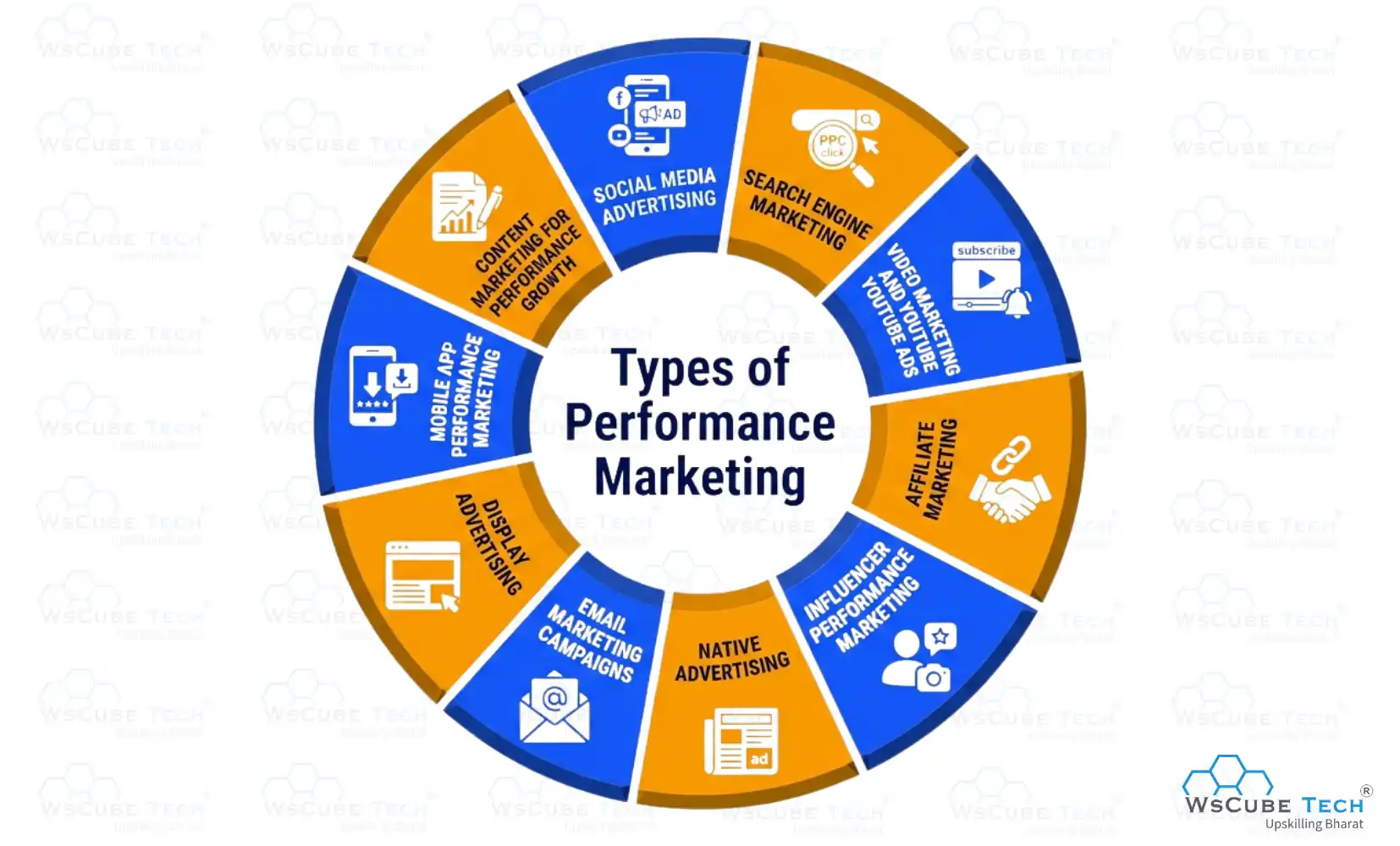
1. Social Media Advertising
Social media advertising uses platforms like Facebook, Instagram, LinkedIn, and X to promote products, increase engagement, and drive conversions through highly targeted advertising campaigns.
- Facebook and Instagram Ads: Facebook and Instagram ads help brands reach targeted audiences using demographics, interests, and behavior-based targeting. These ads support conversions, engagement, and brand awareness effectively.
- LinkedIn and Twitter/X Advertising: LinkedIn advertising works best for B2B marketing and professional audiences, while Twitter/X advertising helps brands increase visibility, engagement, and real-time audience interaction online.
- Best Social Media Performance Marketing Channels: Facebook, Instagram, LinkedIn, TikTok, and X are leading performance marketing channels because they provide advanced targeting, measurable analytics, and strong audience engagement opportunities.
2. Search Engine Marketing (SEM)
Search Engine Marketing is among the most effective performance marketing types that help businesses drive targeted traffic through paid search advertisements on search engines like Google and Bing.
- Google Ads and PPC Campaigns Explained: Google Ads allows advertisers to create PPC campaigns targeting users searching for specific keywords. Businesses pay only when users click ads, making campaigns highly measurable and cost-effective.
- Keyword Targeting and Conversion Tracking: Keyword targeting helps advertisers reach relevant audiences by searching for products or services. Conversion tracking measures clicks, leads, purchases, and campaign performance for better optimization decisions.
- Why SEM Is One of the Best Performance Marketing Types: SEM delivers fast visibility, targeted traffic, measurable conversions, and higher ROI. It is one of the best different types of performance marketing for lead generation and sales.
3. Video Marketing and YouTube Ads
Video marketing helps brands increase engagement, explain products visually, and improve conversions using creative storytelling and targeted video advertising campaigns online.
- Why Video Ads Improve Engagement: Video ads attract attention quickly, improve audience retention, and deliver messages effectively through visuals, audio, and storytelling techniques across digital platforms.
- Best Video Advertising Strategies: Successful video strategies include short-form videos, product demonstrations, storytelling content, influencer collaborations, and retargeting campaigns for better audience engagement and conversions.
- YouTube as a Powerful Performance Marketing Channel: YouTube is among the strongest performance marketing channels because it offers massive audience reach, advanced targeting, and measurable advertising performance analytics globally
4. Affiliate Marketing
Affiliate marketing is one of the most popular types of performance marketing where affiliates promote products and earn commissions for successful sales, clicks, or leads through referral links.
- How Affiliate Marketing Works: Brands partner with affiliates who promote products using blogs, videos, websites, or social media. Affiliates earn commissions whenever users complete desired actions through their unique tracking links.
- Best Affiliate Platforms for Beginners: Popular affiliate platforms include Amazon Associates, ShareASale, CJ Affiliate, Rakuten Advertising, and ClickBank. These platforms help beginners start affiliate campaigns with simple tracking and reporting tools.
- Benefits of This Type of Performance Marketing: Affiliate marketing offers low investment, better audience reach, measurable ROI, and scalable growth. It remains one of the most effective performance marketing channels for businesses today.
5. Influencer Performance Marketing
Influencer marketing is among the growing types of performance marketing where creators promote products to engage audiences and drive measurable sales, traffic, and brand engagement.
- How Influencer Campaigns Generate Sales: Influencers create authentic content that builds trust among followers. Their recommendations encourage purchases, website visits, app downloads, and improved customer engagement for brands.
- Tracking ROI in Influencer Marketing: Brands track influencer performance using affiliate links, promo codes, engagement metrics, conversions, impressions, and sales data to measure campaign effectiveness accurately.
- Best Platforms for Influencer Collaborations: Instagram, YouTube, TikTok, and LinkedIn are popular platforms for influencer collaborations because they provide high audience engagement and strong content visibility.
Upcoming Masterclass
Attend our live classes led by experienced and desiccated instructors of Wscube Tech.


6. Native Advertising
Native advertising promotes sponsored content that matches the design and experience of the platform, making advertisements appear more natural and less intrusive to users.
- What Is Native Advertising: Native ads blend with platform content while promoting products or services subtly. They improve user engagement because advertisements look similar to regular content experiences.
- Benefits of Native Ads for Brands: Native advertising improves click-through rates, audience trust, user engagement, and brand visibility. It is one of the most effective types of performance marketing channels today.
- Popular Native Advertising Platforms: Taboola, Outbrain, Revcontent, and Yahoo Native are widely used native advertising platforms that help brands distribute sponsored content to targeted audiences effectively.
7. Email Marketing Campaigns
Email marketing campaigns help businesses nurture leads, improve engagement, and drive conversions through personalized emails, automated workflows, and targeted promotional campaigns effectively.
- Performance-Based Email Marketing Strategies: Performance-based email strategies include segmentation, personalized messaging, abandoned cart emails, promotional offers, and A/B testing to increase conversions and customer retention.
- Automation and Lead Nurturing: Automation tools send timely emails based on user actions. Lead nurturing helps businesses guide potential customers through the buying journey efficiently.
- Measuring Email Marketing ROI: Businesses measure email ROI using open rates, click-through rates, conversions, bounce rates, and customer retention metrics to optimize future campaigns successfully.
8. Display Advertising
Display advertising uses banners, images, videos, and interactive creatives to attract users across websites, apps, and digital platforms for increased visibility and conversions.
- Banner Ads and Retargeting Campaigns: Banner ads increase brand awareness, while retargeting campaigns re-engage users who previously visited websites or interacted with products online before purchasing.
- Programmatic Advertising Explained: Programmatic advertising uses AI and automated systems to buy ad placements in real time, improving targeting accuracy and advertising efficiency for businesses.
- Display Ads as Performance Marketing Channels: Display ads remain vital for performance marketing channels because they increase visibility, retarget audiences, and support lead generation across multiple digital platforms effectively.
9. Mobile App Performance Marketing
Mobile app marketing focuses on app installs, user engagement, retention, and in-app conversions using targeted advertising campaigns across mobile devices and applications.
- App Install Campaigns: App install campaigns encourage users to download mobile applications through social media ads, search advertising, influencer promotions, and app store optimization techniques.
- In-App Advertising Strategies: In-app advertising includes rewarded ads, banner ads, native ads, and video advertisements designed to increase engagement and improve monetization opportunities within applications.
- Mobile Marketing Trends in 2026: AI-powered targeting, short-form videos, voice search, personalization, and privacy-focused advertising are major mobile marketing trends shaping campaigns in 2026.
10. Content Marketing for Performance Growth
Content marketing helps businesses attract audiences, generate leads, and improve SEO rankings using valuable blogs, videos, guides, and educational content strategies online.
- SEO-Driven Content Strategies: SEO-driven content focuses on keyword optimization, search intent, backlinks, and valuable information to improve rankings, organic traffic, and online visibility consistently.
- Lead Generation Through Content Marketing: Businesses generate leads through blogs, eBooks, webinars, landing pages, and downloadable resources that encourage users to share contact information voluntarily.
- Combining Content and Paid Advertising: Combining content marketing with paid advertising increases reach, improves conversions, and strengthens brand visibility across multiple performance marketing channels effectively.
Expand Your Marketing Skills
Different Types of Performance Marketing (Comparison)
Understanding the different types of performance marketing helps businesses compare channels based on ROI, targeting, engagement, scalability, and conversions to choose the best strategy for long-term growth.
| Type of Performance Marketing | Main Purpose | Best For | Cost Model | ROI Potential | Key Advantage |
| Affiliate Marketing | Generate sales through affiliates | E-commerce & bloggers | Commission-based | High | Low-risk and scalable |
| Search Engine Marketing (SEM) | Drive targeted search traffic | Lead generation & sales | PPC (Pay Per Click) | Very High | Instant visibility |
| Social Media Advertising | Increase engagement and conversions | Brand awareness & sales | CPC/CPM | High | Advanced audience targeting |
| Influencer Marketing | Promote through creators | Lifestyle & D2C brands | Sponsored/Commission | High | Builds trust quickly |
| Native Advertising | Blend ads with content | Content-focused brands | CPC/CPM | Medium-High | Non-intrusive advertising |
| Email Marketing | Nurture leads and customers | Retention & conversions | Subscription-based | Very High | High customer retention |
| Display Advertising | Increase visibility online | Brand awareness | CPC/CPM | Medium | Strong retargeting options |
| Video Marketing & YouTube Ads | Improve engagement visually | Product promotion | CPV/CPC | High | Better audience retention |
| Mobile App Marketing | Increase app installs and usage | App businesses | CPI/CPC | High | Mobile-focused targeting |
| Content Marketing | Generate organic traffic and leads | SEO & authority building | Long-term investment | High (Long-Term) | Sustainable growth |
How to Choose the Right Performance Marketing Channels?
Choosing the right marketing channel depends on business goals, audience behavior, and budget. Understanding performance marketing types helps brands improve targeting, conversions, and long-term campaign success.
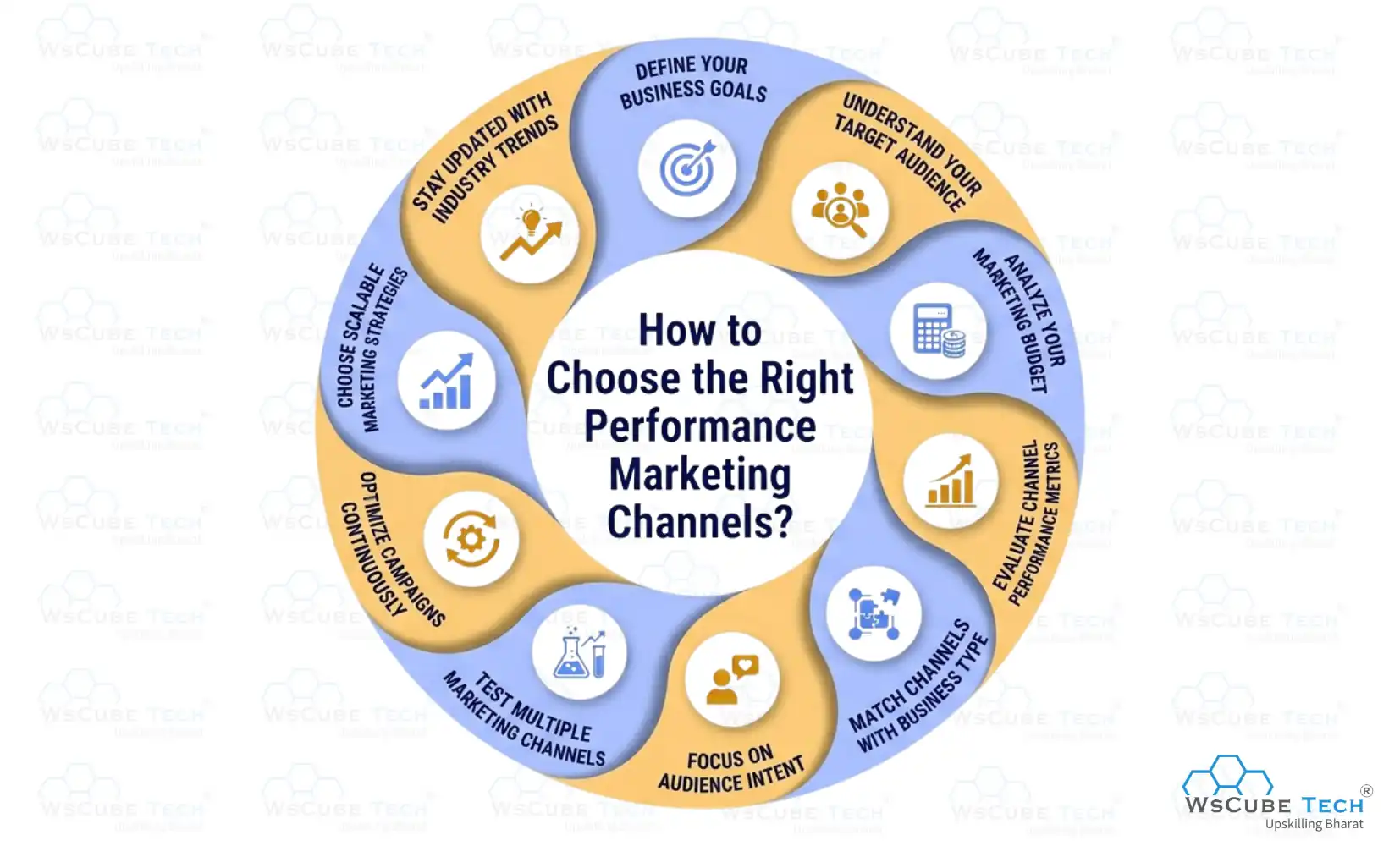
1. Define Your Business Goals: Start by identifying whether your goal is brand awareness, lead generation, sales, or app installs. Clear objectives help businesses select suitable performance marketing channels for better results.
2. Understand Your Target Audience: Research audience interests, demographics, online behavior, and preferred platforms carefully. Understanding users help businesses choose the right types of performance marketing channels for maximum engagement and conversions.
3. Analyze Your Marketing Budget: Different marketing strategies require different budgets and resources. Businesses should compare advertising costs, expected returns, and scalability before investing heavily in any marketing campaign.
4. Evaluate Channel Performance Metrics: Track metrics like CTR, conversion rates, CPA, and ROI regularly. Performance data helps businesses understand which marketing channels generate profitable and consistent customer acquisition results.
5. Match Channels with Business Type: E-commerce brands perform well on social media and affiliate marketing, while B2B businesses benefit more from LinkedIn advertising, email marketing, and search engine campaigns.
6. Focus on Audience Intent: Choose channels based on customer intent and buying stage. Search ads target ready-to-buy users, while social media and content marketing improve awareness and engagement effectively.
7. Test Multiple Marketing Channels: Running A/B tests across different platforms help businesses discover which campaigns, audiences, and creatives perform best before scaling marketing efforts for long-term growth successfully.
8. Optimize Campaigns Continuously: Monitor campaign performance regularly and optimize targeting, ad creatives, landing pages, and bidding strategies. Continuous improvements help businesses achieve higher ROI and better conversion rates.
9. Choose Scalable Marketing Strategies: Select marketing channels that support long-term business growth without increasing costs significantly. Scalable channels help businesses maintain profitability while expanding audience reach consistently over time.
10. Stay Updated with Industry Trends: Digital marketing trends change rapidly every year. Businesses should follow AI-powered advertising, automation tools, short-form videos, and evolving consumer behavior to remain competitive online successfully.
Explore Our Most Popular Marketing Courses
Common Mistakes to Avoid in Performance Marketing
Performance marketing can deliver strong results, but common mistakes often reduce conversions and ROI. Understanding the types of performance marketing helps businesses avoid ineffective strategies successfully.
1. Ignoring Audience Research: Many businesses launch campaigns without understanding audience interests, behavior, and preferences. Poor audience research leads to low engagement, wasted budgets, and reduced conversion opportunities online.
2. Choosing the Wrong Marketing Channel: Using unsuitable marketing channels affects campaign performance negatively. Businesses should select platforms based on audience activity, business goals, and overall advertising objectives carefully before investing.
3. Not Tracking Campaign Performance: Failing to monitor clicks, conversions, and engagement prevents businesses from understanding campaign effectiveness. Performance tracking helps marketers optimize ads and improve overall return on investment consistently.
4. Poor Landing Page Optimization: Slow-loading or confusing landing pages increase bounce rates and reduce conversions significantly. Businesses should create user-friendly pages with clear calls-to-action and optimized mobile experiences.
5. Focusing Only on Short-Term Results: Many marketers ignore long-term branding while chasing immediate conversions. Balancing sales-focused campaigns with audience trust and engagement improve sustainable business growth successfully over time.
6. Avoiding A/B Testing: Without testing ad creatives, headlines, and targeting strategies, businesses miss optimization opportunities. Regular A/B testing helps identify high-performing campaigns and improve advertising efficiency consistently.
7. Ignoring Data and Analytics: Businesses that avoid analytics struggle to improve campaigns effectively. Understanding performance marketing types through data insights helps brands optimize targeting, budgets, and customer acquisition strategies successfully.
Latest Trends in Performance Marketing for 2026
The different types of performance marketing are evolving rapidly with AI, automation, creator-led campaigns, and privacy-focused strategies shaping digital advertising trends in 2026.
1. AI-Powered Campaign Automation: AI tools automate bidding, targeting, audience segmentation, and ad optimization. Businesses now use AI-driven systems to improve conversions, reduce costs, and increase campaign efficiency.
2. Hyper-Personalized Advertising: Brands use customer behavior, predictive analytics, and AI insights to deliver personalized advertisements, emails, and recommendations that improve engagement, retention, and conversion rates significantly.
3. First-Party Data Strategies: With third-party cookies declining, businesses now rely heavily on first-party data collection, customer insights, and privacy-safe targeting effective digital advertising campaigns.
4. Creator-Led and Influencer Commerce: Brands increasingly collaborate with creators for authentic promotions, long-term partnerships, and direct product sales through influencer-driven social commerce campaigns online.
5. Short-Form Video Marketing: Short-form videos on TikTok, Instagram Reels, and YouTube Shorts dominate engagement because audiences prefer fast, entertaining, and interactive visual content experiences.
6. AI Search and Generative Engine Optimization (GEO): Search marketing is shifting toward AI-generated answers and conversational search. Businesses now optimize content for AI engines instead of traditional search rankings alone.
7. Retail Media Advertising Growth: Retail media networks are becoming major advertising platforms because they provide real purchase data, precise targeting, and stronger conversion tracking for brands.
8. Privacy-First Marketing: Consumers expect transparent data usage and stronger privacy protection. Brands now focus on ethical advertising and privacy-focused customer experiences for building long-term trust.
9. Omnichannel Performance Marketing: Businesses combine search ads, social media, email campaigns, influencer marketing, and video advertising to create seamless customer experiences across multiple platforms.
10. Conversational and AI Commerce: AI chatbots, virtual assistants, and conversational commerce tools now help customers discover products, ask questions, and complete purchases directly within messaging platforms.
11. Mobile-First Advertising Strategies: Mobile advertising continues dominating digital marketing budgets as businesses prioritize mobile-friendly websites, app campaigns, and smartphone-focused shopping experiences for users.
12. Interactive and Shoppable Content: Interactive ads, live shopping streams, and shoppable videos allow users to purchase products directly while consuming content, improving engagement and conversion opportunities.

Tools Used in Performance Marketing
Performance marketing tools help businesses track analytics, automate campaigns, optimize conversions, and manage different types of performance marketing strategies effectively online.
1. Google Analytics: Google Analytics helps businesses monitor website traffic, user behavior, conversions, bounce rates, and campaign performance using detailed reports and audience tracking insights effectively.
2.Google Ads: Google Ads allows businesses to create search, display, shopping, and video advertisements while tracking clicks, conversions, keywords, and overall advertising performance efficiently online.
3. Meta Ads Manager: Meta Ads Manager helps businesses manage Facebook and Instagram campaigns, optimize targeting, track engagement, and improve advertising ROI through advanced analytics features.
4. SEMrush: SEMrush is a popular SEO and marketing tool used for keyword research, competitor analysis, backlink monitoring, content optimization, and search performance tracking effectively.
5. HubSpot: HubSpot helps businesses automate email marketing, CRM management, lead nurturing, analytics, and customer engagement for improving marketing performance and sales growth efficiently.
6. Ahrefs: Ahrefs provides keyword tracking, backlink analysis, SEO audits, competitor research, and content performance insights that help businesses improve organic visibility and search rankings.
7. Mailchimp: Mailchimp supports email marketing automation, audience segmentation, campaign management, analytics tracking, and personalized communication for improving customer engagement and conversion rates consistently.
Benefits of Understanding Performance Marketing Types
Understanding the different types of performance marketing helps businesses improve targeting, increase conversions, optimize budgets, and choose effective strategies for sustainable digital growth successfully online.
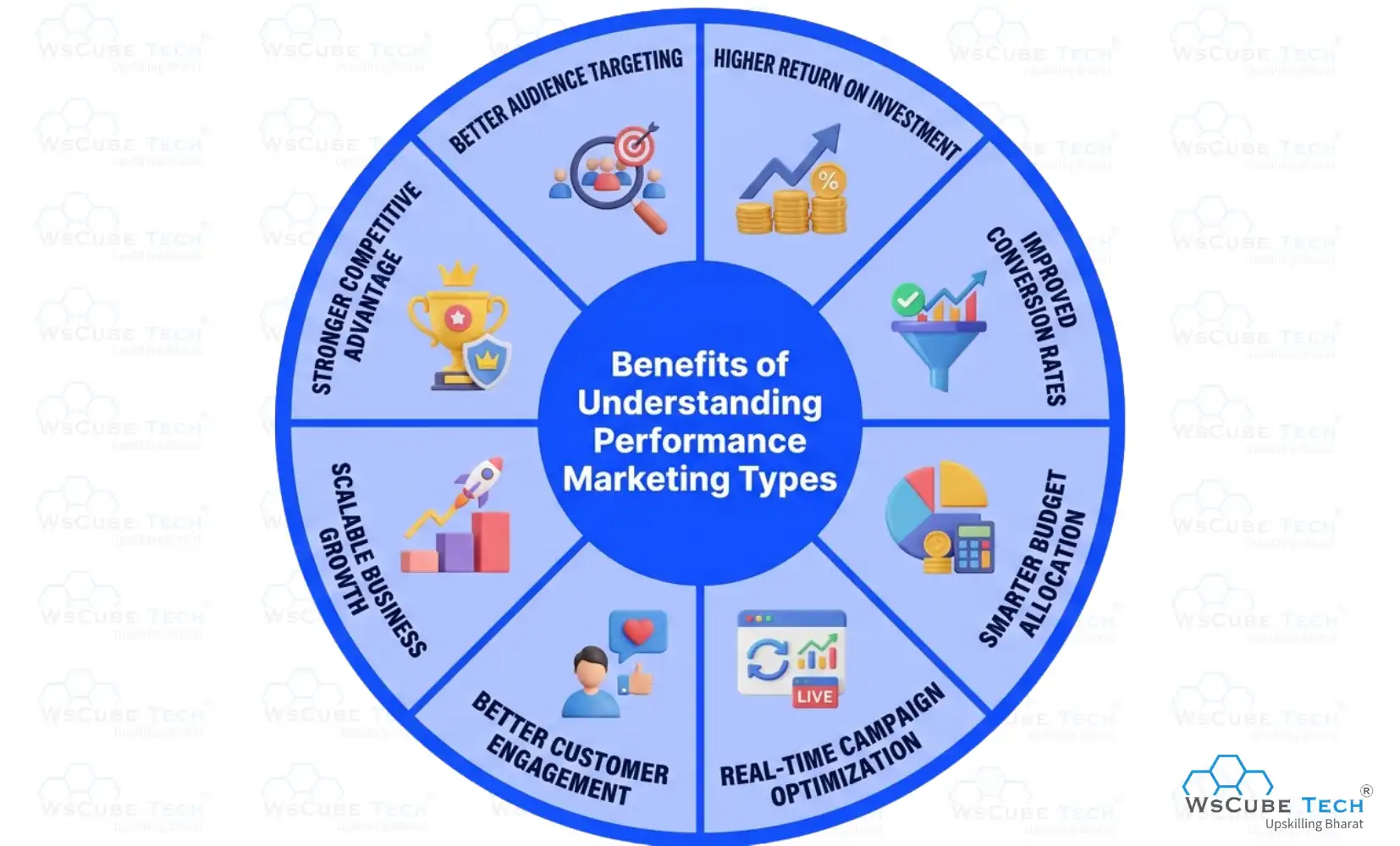
1. Better Audience Targeting: Businesses can target specific customer groups based on interests, behavior, demographics, and intent, improving engagement rates and increasing chances of successful conversions significantly online.
2. Higher Return on Investment (ROI): Performance marketing helps businesses spend budgets efficiently by focusing on measurable results like clicks, leads, and sales instead of uncertain advertising outcomes online.
3. Improved Conversion Rates: Understanding marketing strategies help businesses create optimized campaigns, attractive landing pages, and better advertisements that encourage users to complete desired actions successfully online.
4. Smarter Budget Allocation: Businesses can distribute advertising budgets effectively across high-performing platforms, reducing unnecessary expenses, and maximizing campaign profitability through data-driven marketing decisions consistently online.
5. Real-Time Campaign Optimization: Performance marketing provides instant analytics and campaign insights, allowing businesses to optimize targeting, creatives, bidding strategies, and audience engagement for improved advertising performance.
6. Better Customer Engagement: Using personalized advertisements, content, and retargeting strategies help businesses improve audience interaction, brand trust, and long-term customer relationships across multiple digital platforms effectively.
7. Scalable Business Growth: Businesses can scale up successful campaigns easily by increasing budgets, expanding audience targeting, and optimizing high-performing marketing channels for consistent revenue and business growth.
8. Stronger Competitive Advantage: Understanding modern marketing trends and strategies helps businesses stay ahead of competitors, attract customers effectively, and improve overall digital presence within competitive industries successfully.

FAQs About Performance Marketing Types
The types of performance marketing include affiliate marketing, search engine marketing, social media advertising, influencer marketing, email marketing, display advertising, video marketing, and content marketing strategies.
Affiliate marketing, social media advertising, and email marketing are beginner-friendly performance marketing types because they require lower budgets and offer measurable campaign tracking opportunities online.
Popular performance marketing channels include Google Ads, Facebook Ads, Instagram, YouTube, LinkedIn, email marketing platforms, and affiliate networks that deliver measurable customer acquisition results consistently.
Performance marketing channels help businesses target audiences effectively, track conversions, optimize advertising budgets, improve ROI, and scale campaigns based on measurable data insights successfully.
The different types of performance marketing used in 2026 include AI-driven advertising, influencer collaborations, video marketing, search advertising, mobile campaigns, and automated email strategies.
Affiliate marketing works by rewarding affiliates with commissions whenever users' complete actions like purchases, clicks, or sign-ups through unique referral links successfully online.
Search engine marketing and email marketing usually provide the highest ROI because they target users with strong buying intent and personalized customer engagement strategies effectively.
Businesses measure success using metrics like conversions, click-through rates, return on ad spend, customer acquisition costs, engagement rates, and overall campaign profitability consistently online.
Yes, social media advertising is a major part of performance marketing because businesses track clicks, leads, conversions, and engagement through measurable advertising campaigns online effectively.
The future of performance marketing focuses on AI automation, personalized advertising, creator-led campaigns, privacy-focused targeting, and advanced analytics for improving customer acquisition strategies successfully.
Conclusion
Performance marketing helps businesses achieve measurable growth through strategies like affiliate marketing, SEM, social media advertising, influencer campaigns, email marketing, and content marketing.
Understanding trends, tools, benefits, and optimization techniques improve conversions, targeting, and long-term business success effectively. Choosing the right performance marketing channels allows businesses to maximize ROI, engage targeted audiences, and scale campaigns successfully.
By avoiding common mistakes and following modern marketing trends, brands can build stronger online visibility, customer trust, and sustainable digital growth in 2026.
Join Our On-Campus Digital Marketing Program
Explore Our Free Courses





Leave a comment
Your email address will not be published. Required fields are marked *Comments (0)
No comments yet.