
If you want to grow your brand faster in 2026, you simply cannot ignore the power of Instagram influencer marketing. This strategy has quietly become one of the most effective ways for businesses to reach real customers and drive sales.
Today, brands trust creators more than traditional ads because users relate to them, follow them, and make buying decisions based on their recommendations.
With massive reach, high engagement, and proven ROI, influencer marketing on Instagram gives businesses a direct path to visibility, trust, and conversions. In this guide, you’ll understand everything needed to launch successful campaigns from day one.
What Is Instagram Influencer Marketing?
Instagram influencer marketing is a promotional strategy where brands collaborate with Instagram creators to showcase, review, or recommend their products or services to a targeted audience.
At its core, it works on trust, where users believe influencers because they follow them for lifestyle inspiration, entertainment, expertise, or authenticity. The influencer acts as a bridge between the brand and audience, making the promotion look natural instead of sales-heavy.
This marketing style is trending because Instagram has become a visual-first platform with the highest engagement across reels, stories, and posts. With the creator economy booming, brands now rely on influencers to drive awareness, sales, and long-term customer loyalty in a cost-effective way.

Why Instagram is a Top Platform for Influencer Marketing?
1. Instagram’s Visual-First Appeal
Instagram is built around photos, reels, short videos, stories, and aesthetic content. This visual format makes product showcasing far more effective than text-heavy platforms.
Whether it's fashion, fitness, beauty, lifestyle, food, travel, or gadgets, Instagram allows influencers to present products in an aspirational, engaging, and creative way.
This makes it easier for audiences to imagine how the product fits into their real life, leading to better conversions and stronger brand recall.
2. High User Engagement Compared to Other Platforms
Instagram remains one of the most interactive social platforms, with users liking, sharing, saving, replying, and engaging with creator content daily. Reels have pushed engagement even higher with their algorithm-driven reach.
For brands, this means more visibility for the same amount of content. Because Instagram rewards engaging posts, influencer content often appears in Explore pages and suggested feeds, giving brands additional free reach. This allows even small businesses to achieve big results with smart influencer collaborations.
3. Brands Prefer Instagram for Creator Collaborations (Backed by Data)
According to the Influencer Marketing Benchmark Report 2025, Instagram continues to lead the industry. 57% of brands say it is their top platform for influencer campaigns. TikTok follows closely with a preference rate of 52%. YouTube attracts 37% of brands, while 28% rely on Facebook, and only 12% consider LinkedIn for influencer collaborations.
This data clearly shows that Instagram is still the number one choice for brands worldwide. Its solid mix of engagement, formats, and mature creator ecosystem makes it the most trusted platform for influencer-based promotions.
4. Strong Creator Ecosystem With Every Niche Covered
Instagram has millions of creators across all categories: beauty, fashion, education, finance, travel, parenting, tech, food, healthcare, fitness, and even hyper-local city-based niches.
No matter what a brand sells, there are relevant influencers who already speak to that audience. Additionally, Instagram’s Collab feature, tagging tools, broadcast channels, and analytics dashboard make brand-creator partnerships smoother, more transparent, and easier to measure.
5. Multiple Content Formats for Every Marketing Goal
Brands prefer Instagram because it offers every type of content format needed to run successful campaigns:
- Reels for viral reach
- Stories for quick product showcases
- Static posts for brand positioning
- Carousels for educational storytelling
- Lives for real-time product demos
- Collab posts for dual audience reach
These formats help brands achieve goals like engagement, awareness, conversions, product launches, testimonials, and long-term brand building.
6. High Conversions Through Trust-Based Recommendations
Users buy what their favourite creators recommend because influencer content feels personal, relatable, and trustworthy. Unlike ads, these recommendations come from someone users follow daily, making the brand message more believable.
This trust translates directly into product trials, website visits, and real sales. For small businesses with limited resources, Instagram influencers offer one of the highest ROI channels to acquire customers quickly and affordably.
Recommended Professional Certificates
AI-Powered Digital Marketing Course
Performance Marketing Bootcamp
SEO Specialist Bootcamp
Benefits of Instagram Influencer Marketing
These are the top advantages of influencer marketing on Instagram:
1. Higher Engagement and Stronger Audience Connection
Instagram influencers create content that feels real, relatable, and personal—making engagement significantly higher compared to traditional advertising. This is exactly why Instagram influencer marketing works so well: people trust creators they follow.
With authentic storytelling, brands get deeper visibility and stronger customer interaction without sounding overly promotional.
2. Better Targeting Through Niche Influencers
Using influencers with specific audiences allows brands to reach people who genuinely care about the product category.
From beauty and fitness to travel and tech, influencer marketing on Instagram helps brands talk directly to highly targeted communities, increasing conversion and brand loyalty with minimal wastage.

3. Cost-Effective Campaigns With Higher ROI
Compared to big-budget ads, working with nano and micro influencers is budget-friendly and delivers strong results. Brands get real engagement, organic reach, and conversions without burning money.
This makes Instagram influencers marketing one of the most economical and high-ROI digital marketing strategies for businesses of all sizes.
4. Social Proof That Drives Buying Decisions
People trust recommendations far more than ads. When influencers show how a product fits into their lifestyle, it instantly increases credibility. This social proof builds confidence and encourages users to try the product, directly influencing purchase decisions and boosting online sales.
5. Versatile Content Formats for Every Marketing Goal
Instagram provides content options like reels, stories, static posts, carousels, collaborations, and Live sessions. These formats help brands achieve a variety of goals, like reach, engagement, brand awareness, education, and conversions, making influencer marketing highly flexible and result-oriented.
6. Boosts Brand Awareness Faster Than Organic Social
Instagram’s algorithm pushes creator content further than brand content. This helps new or smaller businesses get discovered quickly when partnered with influencers. The boosted visibility leads to higher reach, more website visits, and better brand recall compared to relying only on organic posts.
7. Helps Create Long-Term Customer Trust
Influencer partnerships aren’t just for short-term promotions. When creators consistently promote a brand, it builds familiarity and long-term trust. This creates loyal customers who follow the brand journey through influencers they admire.
8. Generates High-Quality UGC (User-Generated Content)
Influencers produce studio-like content that brands can reuse across ads, websites, email campaigns, and social media. This reduces in-house content costs and gives brands ongoing creative assets that perform well because they look natural, not staged.
Types of Influencers on Instagram
| Influencer Type | Follower Range | Average Engagement Rate | Estimated Average Cost per Post (INR) |
| Nano Influencers | 1,000 – 10,000 | 1% – 3% | ₹1,000 – ₹5,000 |
| Micro Influencers | 10,000 – 100,000 | 1.5% – 3% | ₹5,000 – ₹40,000 |
| Mid-Tier Influencers | 100,000 – 500,000 | 1% – 2% | ₹40,000 – ₹1,00,000 |
| Macro Influencers | 500,000 – 1 Million | 1% – 1.5% | ₹1,00,000 – ₹3,00,000 |
| Mega/Celebrity Influencers | 1 Million+ | 0.5% – 1% | ₹3,00,000 – ₹10,00,000+ |
Research shows that a large share of Instagram creators, nearly 76%, fall into the nano-influencer category. Despite having smaller followings, they deliver impressive results, recording an average engagement of around 1.73%, which makes them extremely valuable for brands targeting close-knit audiences.
Read More Guides Related to Instagram
Types of Instagram Influencer Marketing Campaigns
1. Sponsored Posts
These are classic paid promotions where influencers create a photo or carousel post featuring the product. It blends into their regular feed, making the recommendation look natural. Sponsored posts help build trust, visibility, and long-term brand recall.
2. Instagram Reels Promotions
Reels are currently the most powerful format for reach. Brands collaborate with influencers for creative, short-form videos that can go viral. These campaigns help generate massive awareness and quick traction due to Instagram’s reel-first algorithm.
3. Story Shoutouts & Swipe-Up Links
Stories help brands drive instant traffic through swipe-up links, discount codes, or quick reviews. Because they disappear in 24 hours, followers engage with them actively. It’s an excellent format for flash sales, announcements, or time-bound promotions.
4. Influencer Live Sessions
Going live with influencers helps brands showcase their products in real time. The audience can ask questions, see demos, and engage directly. Live sessions create trust and authenticity because the content is unfiltered and interactive.
5. Product Seeding / Barter Collaborations
Brands send products to influencers as gifts without any mandatory deliverables. Creators who genuinely like the product often share it on their own. This method is cost-effective and helps brands identify long-term ambassadors.
6. Affiliate-Based Promotions
Influencers earn a commission for every sale they drive using their unique link or coupon code. This aligns incentives for both sides and is highly performance-driven—perfect for e-commerce and D2C brands.
7. Giveaways & Contests
Influencers run contests on behalf of the brand to boost engagement, followers, and visibility. These campaigns usually generate thousands of interactions in a short time and work exceptionally well for new product launches.
8. Influencer Takeovers
The influencer temporarily controls the brand’s Instagram account to share behind-the-scenes content. This drives massive engagement and brings the influencer’s audience to the brand page.
Upcoming Masterclass
Attend our live classes led by experienced and desiccated instructors of Wscube Tech.




How to Do Influencer Marketing on Instagram?
Let’s understand the process of influencer marketing on Instagram:
1. Define Your Campaign Goal Clearly
Decide what you want—increased sales, brand awareness, engagement, app installs, or UGC. Clear goals help you pick the right creators and campaign type. Strong clarity also helps in measuring ROI more accurately once the campaign is live.
2. Understand Your Target Audience
Know the age group, location, interests, and buying behaviors of the people you want to reach. Matching your audience with the influencer’s followers ensures your campaign delivers maximum impact without wasting budget on irrelevant audiences.
3. Shortlist Influencers That Fit Your Brand
Look beyond follower count. Analyse engagement rate, content quality, audience demographics, and authenticity. Choose creators whose personality aligns with your brand voice. For better selection and evaluation, digital marketing skills help—something you can learn through WsCube Tech’s online Digital Marketing Course.
4. Reach Out and Finalize Deliverables
Send a clear proposal with campaign goals, timelines, content expectations, and budget. Align on the number of posts, reels, stories, keywords, hashtags, and usage rights. Professional communication ensures smoother collaboration and stronger relationships with creators.
5. Review Content Before It Goes Live
Influencer content should follow brand guidelines but still retain the creator’s originality. Review scripts, captions, and visuals to ensure accuracy without making the content look forced. Consistency maintains the authenticity that influencer marketing is known for.
6. Track Campaign Performance in Real Time
Monitor metrics such as reach, views, clicks, engagement, and conversions. This helps evaluate what type of creators and formats are giving the best results. A foundation in data-driven marketing—taught in WsCube’s course—can help you optimize future campaigns.
7. Repurpose Influencer Content Across Channels
Use influencer-generated content in ads, websites, landing pages, and email campaigns. This increases ROI and extends the life of the content. Good repurposing can boost results significantly without increasing costs.
Also Read: Target Audience: What It Is + How to Find Yours
Instagram Influencer Marketing: Metrics to Track
| Metric | What It Measures | Why It Matters |
| Engagement Rate | Interactions such as likes, comments, saves, replies | Shows audience interest and content relevance |
| Reach | Number of unique users who saw the content | Helps understand campaign visibility |
| Impressions | Total views including repeat views | Indicates the content’s exposure frequency |
| Story Views | How many people watched the story | Useful for analysing quick promotions & announcements |
| Click-Through Rate (CTR) | Percentage of users who clicked a link | Shows traffic-driving power of the influencer |
| Conversions / Sales | Purchases or sign-ups generated via influencer codes or links | Direct indicator of revenue impact |
| Follower Growth | Increase in brand account followers | Reflects long-term brand-building from campaigns |
Explore Our Most Popular Marketing Courses
Instagram Influencer Marketing Examples
Below are some real, well-known Instagram influencer marketing examples:
1. Daniel Wellington – Building a Global Brand Through Micro Influencers
Daniel Wellington became a global fashion accessory brand largely through Instagram influencer marketing. Instead of relying on celebrities, they collaborated with thousands of micro influencers who posted styled photos with DW watches using branded hashtags like #DanielWellington.
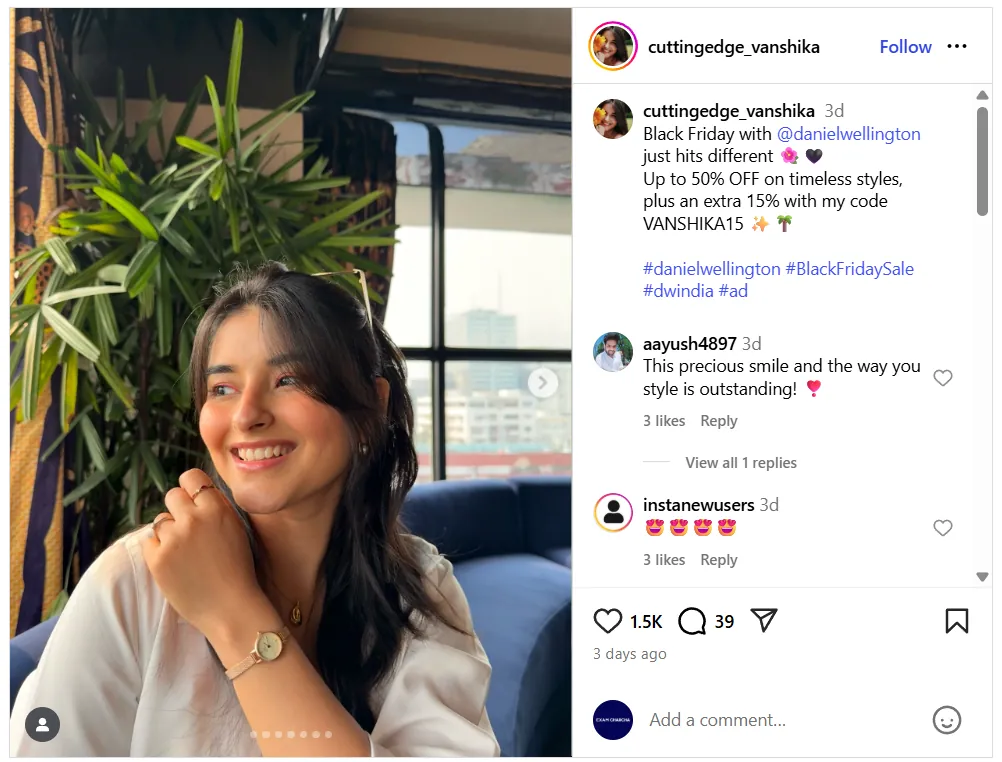
Influencers shared discount codes, outfit inspirations, and lifestyle shots, making the brand aspirational. This approach helped DW generate massive organic visibility, reach new audiences worldwide, and create a premium image—all with a cost-effective, scalable influencer strategy.
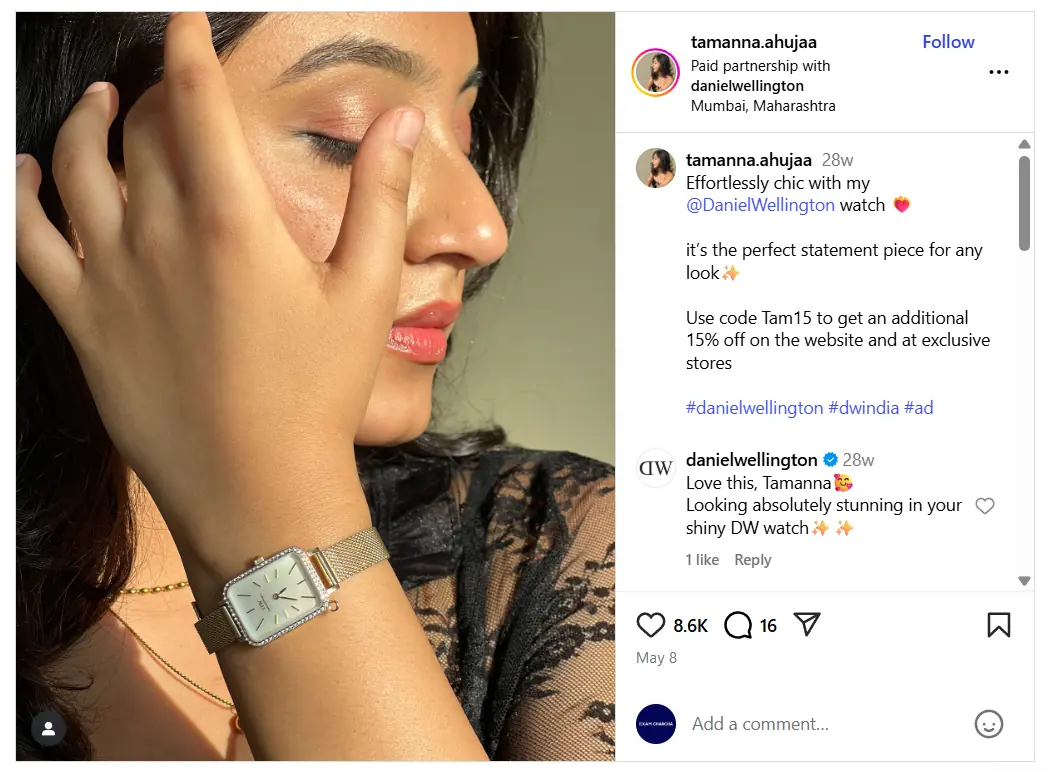
2. Nykaa – Driving Beauty Sales Using Indian Beauty Creators
Nykaa has consistently used Instagram influencers—especially beauty and skincare creators—to promote product launches, festive sales, and exclusive brand collaborations. Influencers create tutorials, swatches, reel transitions, and GRWM videos showcasing Nykaa products.
These authentic recommendations help users make informed choices, boosting both awareness and sales. During the Pink Friday Sale, influencer content generated huge traffic and conversions on the app, proving how powerful creator-driven storytelling is for India’s beauty market.

3. Puma – Using Fitness & Lifestyle Influencers for Product Positioning
Puma often collaborates with fitness trainers, athletes, dancers, and lifestyle creators to promote its sportswear collections on Instagram. These influencers share workout routines, dance reels, and athleisure looks wearing Puma products, naturally integrating the brand into their daily life.
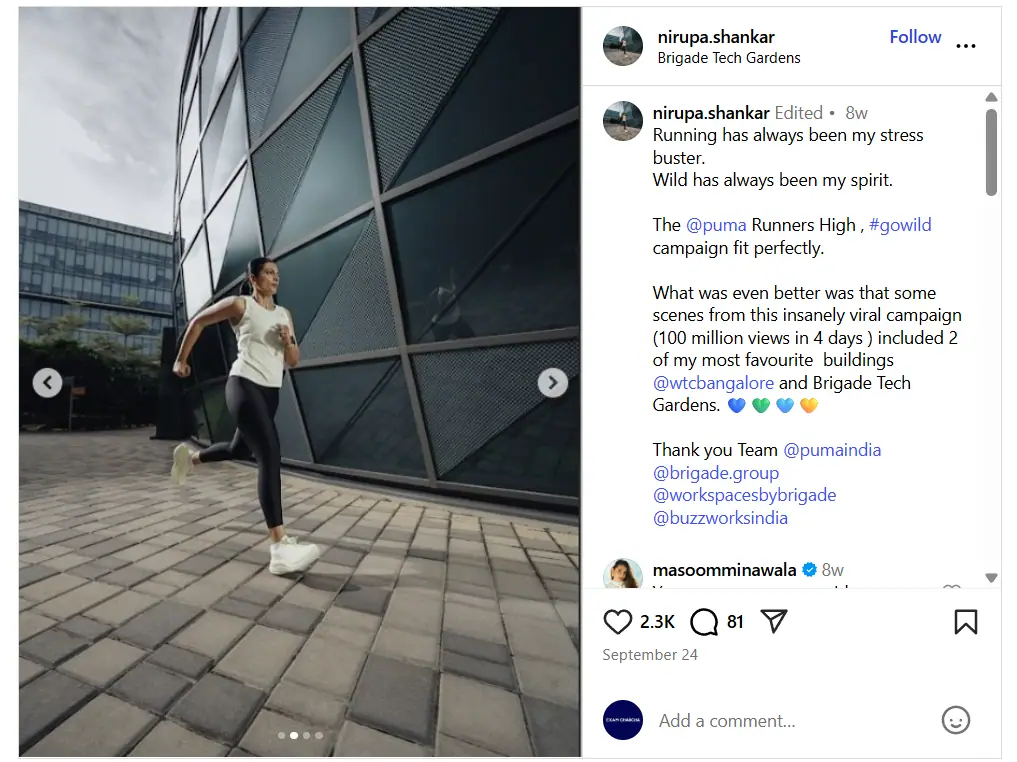
By associating with active and energetic creators, Puma reinforces its identity as a youth-focused, performance-driven brand. These campaigns consistently boost engagement, brand visibility, and product desirability among Gen-Z and millennials.
How Much Does Instagram Influencer Marketing Cost?
Instagram influencer marketing costs vary widely depending on the influencer's follower size, engagement, niche, and content format. On average, brands spend anywhere between ₹1,000 to ₹10,00,000+ per post.
Nano and micro influencers are budget-friendly, while celebrity influencers and high-reach reels cost significantly more.
How to Measure the ROI of Instagram Influencer Marketing?
To measure ROI, compare the total value generated from an influencer campaign—such as sales, leads, traffic, reach, and engagement—against the amount you spent. Track both direct actions (like conversions through codes or links) and indirect impact (brand awareness, followers gained, and long-term recall) to understand true performance.
- Engagement Rate (likes, comments, saves, shares)
- Reach & Impressions
- Click-Through Rate (CTR)
- Conversions / Sales from links or coupon codes
- Cost Per Engagement (CPE)
- Cost Per Acquisition (CPA)
- Traffic generated to website/app
- Follower growth during the campaign
- Story view drop-off rate
- Content quality and audience sentiment
- Repeat purchases from influencer-driven customers
FAQs About Instagram Influencer Marketing
Instagram offers high engagement, multiple content formats, a strong creator ecosystem, and a visually rich platform. It’s also the preferred influencer channel for most brands.
Brands use influencer tools like Modash, Upfluence, HypeAuditor, or manually search through hashtags, niche pages, competitor campaigns, and Instagram recommendations to find authentic creators.
Nano and micro influencers (1K–100K followers) often deliver the best results due to higher engagement, stronger community trust, and budget-friendly pricing.
A good engagement rate generally ranges from 1.5% to 4%. Nano influencers often have the strongest engagement.
Yes. Influencers build trust with their audience, and their recommendations often lead to immediate website visits, conversions, and repeat purchases.
Yes. Influencers understand what resonates with their audience. Brands should provide guidelines but allow creators to maintain their authentic style.
Yes. As per advertising guidelines, influencers must use disclosure tags like #ad, #sponsored, or “Paid Partnership” to maintain transparency.
Brands check engagement quality, follower authenticity, comment patterns, audience demographics, and use tools like HypeAuditor or SocialBlade to detect fake followers.
Absolutely. Influencers help new brands get discovered quickly by showcasing products to their loyal audience and generating immediate trust.
Join Our On-Campus Digital Marketing Program
Explore Our Free Courses




Leave a comment
Your email address will not be published. Required fields are marked *Comments (0)
No comments yet.