
Business analytics is a valuable skill for people who want to understand data and use it to solve business problems. But how do you start learning it, and which course should you choose? The good news is that you do not need to be an expert in mathematics or programming to begin.
With the right learning path, you can gradually develop the skills required for this field. In this guide, we will explain how to do a Business Analytics course, including eligibility, course options, essential skills, and career opportunities.
What Is a Business Analytics Course?
A business analytics course teaches you how to collect, clean, study, and present data so that a company can make smarter decisions. Instead of learning only theory, you work on real problems such as falling sales, high customer churn, or rising costs. This practical skill set is the core of business analytics.
Most courses cover these areas:
- Excel for data cleaning, formulas, and pivot tables
- SQL for pulling data from databases
- Power BI or Tableau for dashboards and reports
- Statistics for finding patterns and testing ideas
- Python basics (optional in many programs)
- Business communication for explaining insights to managers
Courses can last a few weeks or two years, and they range from free online classes to full MBA programs. The main goal is to help you develop the skills needed for roles such as business analyst, data analyst, and reporting analyst.
Recommended Professional Certificates
Data Analytics Course with Gen AI
Data Science Course with Internship & Placement Support
Who Should Take a Business Analytics Course?
A business analytics course is not only for people with a tech background. If you enjoy solving problems with facts and numbers, it can work for you. Here are the groups who gain the most from it.
1. Fresh Graduates
Graduates from any stream can use this course to build job-ready skills. It adds practical tools like Excel, SQL, and Power BI to your degree and helps you stand out in hiring.
2. Commerce and Management Students
If you study commerce, BBA, or MBA, analytics gives your finance and marketing knowledge a technical edge. You learn to back every business idea with data instead of guesses.
3. Non-IT Graduates
Students from arts, science, or mechanical backgrounds can switch to analytics without a coding degree. Most beginner courses start from zero and teach each tool step by step.
4. Working Professionals Switching Careers
If you work in sales, operations, or support, this course helps you move into higher-paying analyst roles. Your industry knowledge becomes a big advantage when you add data skills.
5. Marketing, Finance, and Operations Professionals
Professionals in these fields already handle reports and targets. Learning analytics helps you automate reports, find hidden trends, and make stronger decisions that leaders notice.
6. Entrepreneurs and Business Owners
Founders can use analytics to track sales, control costs, and understand customers better. Even basic skills help you read your numbers with confidence and plan growth smartly.
Eligibility & Prerequisites for a Business Analytics Course
Before you decide how to pursue a business analytics course, check whether you meet the entry rules. Eligibility depends on the type of course you choose. Short certificate programs are open to almost everyone, while degree and PG programs follow stricter rules. Here is a simple breakdown of what you usually need.
1. Educational Qualification
For most certificate and diploma courses, a 12th pass or a graduation degree in any stream is enough. Postgraduate programs and MBA courses usually ask for a bachelor's degree with a minimum percentage, often around 50 percent.
Some top institutes also prefer a background in commerce, engineering, statistics, or mathematics, but many still accept students from other fields if they clear the entrance test or interview.
2. Eligibility by Stream
Students from every stream can enter this field, but each background has a different starting point:
- Commerce and management: You already understand sales, finance, and reports, so you can learn tools quickly.
- Engineering and IT: You will find SQL and Python easy, and you can focus on business thinking.
- Science and math: Your comfort with statistics gives you a strong base for modeling.
- Arts and humanities: You bring strong communication skills, and you only need to build tool skills.
3. Age Limit
There is no fixed age limit for private and online courses. Students, fresh graduates, and professionals in their thirties or forties all enroll every year. Some university programs may have age restrictions, so check the official admission guidelines before applying.
4. Work Experience
Most beginner programs do not need any work experience. Advanced programs, executive PG courses, and some MBA tracks may ask for one to three years of experience.
5. Entrance Tests and Documents
Certificate courses rarely need an entrance exam. MBA and PGDM programs often ask for scores in CAT, XAT, GMAT, or similar tests, followed by a group discussion and interview.
Want to know more about this? Visit this guide on business analyst course eligibility to check the exact requirements for each course level.
Types of Business Analytics Courses
Business analytics courses are available in different formats, durations, and fee ranges. The right option depends on your budget, available time, current skills, and career goals. Comparison of Business Analytics Courses is presented in the table below:
| Course Type | Duration | Approximate Fees | Best For |
| Free Online Course | 2–8 weeks | Free | Beginners exploring business analytics |
| Short-Term Certificate | 1–3 months | ₹5,000–₹25,000 | Students learning specific tools |
| Professional Certification | 3–6 months | ₹20,000–₹60,000 | Job seekers and career switchers |
| Advanced Bootcamp | 6–9 months | ₹40,000–₹1,00,000 | Learners seeking practical projects and career support |
| PG Diploma in Business Analytics | 9–12 months | ₹1,50,000–₹5,00,000 | Graduates seeking a formal qualification |
| MBA in Business Analytics | 2 years | ₹5,00,000–₹25,00,000 | Students aiming for management roles |
Note: These fees are approximate and vary by institute, course format, and year. Check the official website for the latest details.
How to Do a Business Analytics Course: Step-by-Step
Success in business analytics requires clear goals, consistent practice, and practical experience. Spend the first month choosing a course, months two to four learning essential tools and building projects, and months five and six completing your portfolio, earning certification, and applying for jobs.
Step 1: Define Your Career Goal
Decide what you want to achieve after completing the course, whether it is landing your first job, earning a promotion, or switching careers. A clear goal helps you choose the right course, duration, learning format, and budget.
Step 2: Assess Your Current Skill Level
Evaluate your knowledge of Excel, basic mathematics, statistics, and communication. Compare your current abilities with the business analyst skills employers expect. This assessment helps identify skill gaps and determine which concepts you should learn first.
Step 3: Shortlist and Compare Courses
Shortlist three to five courses and compare their curriculum, fees, duration, trainers, practical projects, and placement support. Read student reviews, check instructor experience, and attend a demo class whenever possible to make an informed decision before enrolling.
Step 4: Enroll and Build a Study Schedule
Once enrolled, create a realistic study schedule with fixed daily learning hours. Divide the syllabus into weekly targets, allocate time for practical exercises, and track your progress regularly. Consistency helps you complete the course without falling behind.
Step 5: Practice with Real-World Projects
Apply your learning to real-world datasets from industries such as retail, finance, and marketing. Practice cleaning data, writing SQL queries, and creating dashboards. These projects strengthen analytical thinking, improve technical skills, and prepare you for workplace challenges.
Step 6: Build a Portfolio and Earn a Certification
Create a portfolio showcasing your best projects, dashboards, and analytical findings on GitHub, LinkedIn, or a personal website. Complete your course certification and consider additional Excel, SQL, or Power BI certifications to demonstrate your practical knowledge.
Step 7: Apply for Jobs and Internships
Update your resume with relevant technical skills, certifications, and completed projects. Apply for entry-level analyst positions and internships that match your abilities. Practice SQL questions, business case studies, and data storytelling to improve your interview performance.
Explore More Blogs Related to Business Analytics
Common Mistakes to Avoid While Doing a Business Analytics Course
Many learners lose time and money because of small errors that are easy to avoid. Knowing them early can save you months of effort. Watch out for these seven mistakes.
- Choosing a Course Only Because It Is Cheap: Do not choose a course based only on fees. Compare its syllabus, practical projects, mentorship, and placement support before enrolling.
- Skipping the Basics: Avoid jumping directly into advanced tools. Build a strong foundation in Excel, SQL, and statistics before learning advanced analytics techniques.
- Only Watching Videos Without Practice: Watching tutorials is not enough. Practice with real datasets, write SQL queries, create dashboards, and solve business problems independently.
- Ignoring Business Understanding: Learning tools alone is insufficient. Understand business operations, objectives, and challenges to turn data insights into meaningful recommendations.
- Having No Portfolio: A certificate may not demonstrate practical skills. Build a portfolio featuring SQL projects, dashboards, and business case studies to showcase your abilities.
- Trying to Learn Too Many Tools at Once: Learning multiple tools simultaneously can be overwhelming. Master one tool through regular practice and projects before moving to the next.
- Not Preparing for Interviews: Completing a course does not guarantee a job. Practice SQL questions, analytical case studies, and project explanations to prepare for interviews.
Upcoming Masterclass
Attend our live classes led by experienced and desiccated instructors of Wscube Tech.



Tips to Succeed in Your Business Analytics Course
Success in analytics comes from steady effort and smart habits, not from rushing. These tips will help you learn faster and stay consistent. If you want clear direction on how to do a business analytics course with confidence, apply them from day one.
1. Study a Little Every Day
Short daily study sessions are more effective than long weekend marathons. Spend 60 to 90 minutes learning new concepts, practicing skills, and revising previous lessons. This approach improves retention, maintains consistency, and reduces last-minute stress.
2. Learn by Building Projects
Choose topics you enjoy, such as cricket statistics, food sales, or social media trends, and create dashboards using real datasets. Practical projects make learning interesting, strengthen analytical skills, and help you build a portfolio for future job opportunities.
3. Practice SQL and Excel Often
SQL and Excel are essential tools in many data analyst roles. Practice writing queries, creating formulas, cleaning datasets, and solving analytical problems daily. Regular practice improves accuracy, builds confidence, and prepares you for technical interviews and workplace challenges.
4. Improve Your Communication Skills
Data analysts must explain complex findings to non-technical audiences. Practice presenting charts, summarizing insights, and explaining patterns in simple language. Always connect your findings to business goals and recommend practical actions that help stakeholders make informed decisions.
5. Join Communities and Ask Questions
Join online learning groups, LinkedIn communities, and data analytics study circles to connect with other learners and professionals. Ask questions, share your projects, and seek feedback regularly. These interactions can improve your understanding, expand your network, and reveal job opportunities.
6. Follow Real Business News and Case Studies
Read business news and case studies to understand how companies use data to solve problems, improve operations, and increase revenue. Real-world examples strengthen your business understanding and help you explain analytical decisions during interviews, project presentations, and portfolio discussions.
7. Track Your Progress and Revise
Maintain a simple record of completed topics, practice exercises, projects, and areas needing improvement. Review your progress every weekend and revisit difficult concepts. Regular revision strengthens your foundation, identifies learning gaps, and helps you measure improvement consistently.
Join WsCube Tech for Your Business Analytics Course
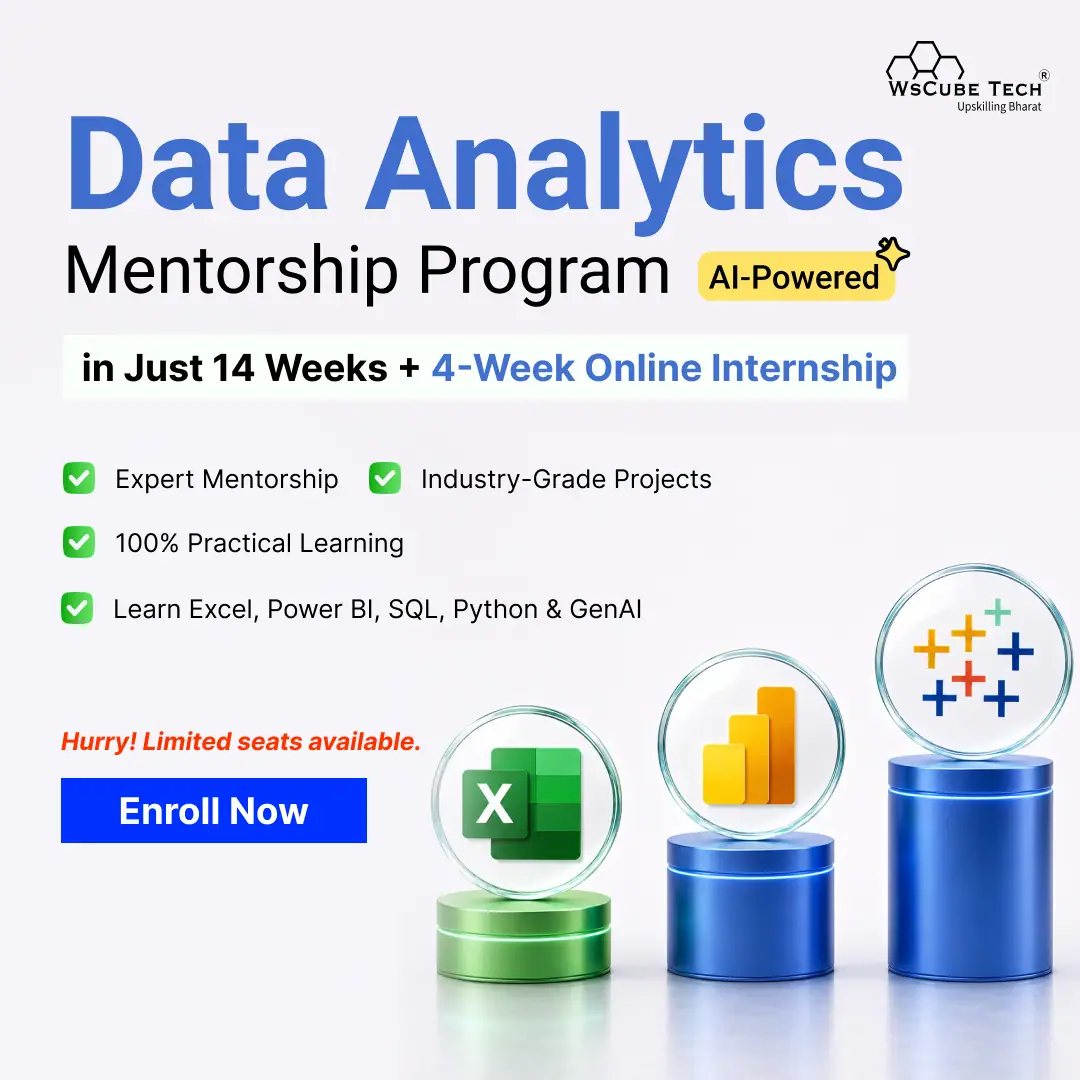
If you want to build a career in business analytics, WsCube Tech offers a structured Business Analytics Course with a 14-week learning program followed by a 4-week internship. The course is designed to help you learn business analytics from the fundamentals and develop practical skills for real-world business problems.
You will get the opportunity to learn from experienced Business Analysts associated with companies such as Microsoft, KPMG, Amazon, and Rapido. The program also highlights industry mentorship and practical exposure to help you prepare for career opportunities in analytics.
Explore the WsCube Tech Business Analytics Course to learn more about the curriculum, internship, and admission details.

Frequently Asked Question
It is a training program that teaches you to collect, clean, analyze, and present data using tools like Excel, SQL, and Power BI, so businesses can make better, faster decisions.
Yes. Demand for data-driven roles keeps growing across banking, IT, and e-commerce, and a practical course with projects gives freshers and career switchers a clear path into entry-level analyst jobs.
Yes. Beginner courses start with Excel and basic statistics, so students from commerce, arts, and management can learn step by step without prior coding knowledge or any IT work experience.
Most learners need roughly three to six months with daily practice. Short certificates take one to three months; PG diplomas take about a year, and MBA programs take two years.
Business analytics solves business problems with Excel, SQL, and dashboards, while data science needs deeper coding and machine learning. Beginners usually start with analytics and move to data science later.
Fees range from free to about Rs 25 lakh for an MBA. Certificate and professional programs usually cost between Rs 5,000 and Rs 60,000, depending on mentors, projects, and placement.
No, not at the start. Excel, SQL, and Power BI need little or no programming. Python is optional, and it helps later for automation, forecasting, and more advanced analysis work. To learn more, read our detailed guide on Is Business Analytics Require Coding?.
The average salary after completing a BA course in India typically ranges from ₹4 LPA to ₹12 LPA for entry-level roles, depending heavily on your qualification, technical skills, and college tier.
You can apply for roles like business analyst, data analyst, reporting analyst, MIS executive, and operations analyst in IT, banking, retail, healthcare, marketing, and e-commerce companies across India and abroad.
Yes, free platforms teach Excel, SQL, and Power BI basics. They help you test your interest, but paid courses add mentor support, live projects, certification, and placement help for jobs.
Get Job-Ready with Our Practical Online Courses
Join Our On-Campus Data-Related Programs
| Data Science Course in Jaipur | Data Science Course in Jodhpur |
| Data Analytics Course in Jaipur | Data Analytics Course in Jodhpur |
Explore Our Free Courses




Leave a comment
Your email address will not be published. Required fields are marked *Comments (0)
No comments yet.