
Choosing the right business analytics books can make learning data, decision-making, statistics, and business problem-solving much easier. A good book can help you understand concepts clearly, learn from real examples, and build knowledge that goes beyond simply using tools such as Excel, SQL, Power BI, or Python.
Whether you are a student, aspiring analyst, working professional, or someone planning a career switch, the right book can give your learning journey more structure. In this guide, we have selected books covering analytics fundamentals, data storytelling, statistics, business analysis, metrics, data science, and practical decision-making. Choose one based on your current level and career goals.
Business Analytics Books at a Glance
The table below gives you a quick comparison of the recommended books. It includes books for beginners and readers who want to move toward advanced analytics, business analysis, or data-driven decision-making.
| Book Name | Author | Level | Key Focus | Why You Should Read |
| Business Analytics, 3rd Edition | James R. Evans | Beginner to Intermediate | Descriptive and predictive analytics | Strong foundation in modern business analytics |
| Business Analytics, Data Science, and AI: A Managerial Approach, 6th Edition | Ramesh Sharda, Dursun Delen, Efraim Turban | Intermediate | Analytics, data science, AI, decision-making | Updated 2026 edition with a broad modern view |
| Data Science for Business | Foster Provost, Tom Fawcett | Beginner to Intermediate | Data-analytic thinking | Helps connect data science with business problems |
| Storytelling with Data | Cole Nussbaumer Knaflic | Beginner to Intermediate | Data visualization and communication | Excellent for presenting insights clearly |
| Lean Analytics | Alistair Croll, Benjamin Yoskovitz | Beginner to Intermediate | Metrics, KPIs, experiments | Useful for product, startup, and growth analytics |
| Competing on Analytics | Thomas H. Davenport, Jeanne G. Harris | Intermediate to Advanced | Analytics strategy | Shows how businesses can use analytics strategically |
| Naked Statistics | Charles Wheelan | Beginner | Statistics | Makes statistics easier to understand |
| Python for Data Analysis | Wes McKinney | Intermediate | Python, pandas, data preparation | Useful for analysts who want to add Python |
| BABOK Guide | International Institute of Business Analysis | Intermediate to Advanced | Business analysis | Strong reference for requirements, stakeholders, and analysis |
| HBR's 10 Must Reads on AI, Analytics, and the New Machine Age | Harvard Business Review | Intermediate | AI, analytics, and business strategy | Connects analytics with modern business trends |
These books are not meant to be read in one fixed order. Your choice should depend on whether you want to learn analytics concepts, improve your business analysis skills, understand statistics, or communicate insights better.
Recommended Professional Certificates
Data Analytics Course with Gen AI
Data Science Course with Internship & Placement Support
Top 10 Business Analytics Books
Whether you are a beginner or an experienced professional, the right book can make learning business analytics easier and more practical. From analytics fundamentals and statistics to data visualization, business strategy, and AI, these top business analytics books cover the skills and knowledge you need to grow. Explore each book to find the one that best matches your learning goals.
1. Business Analytics, 3rd Edition
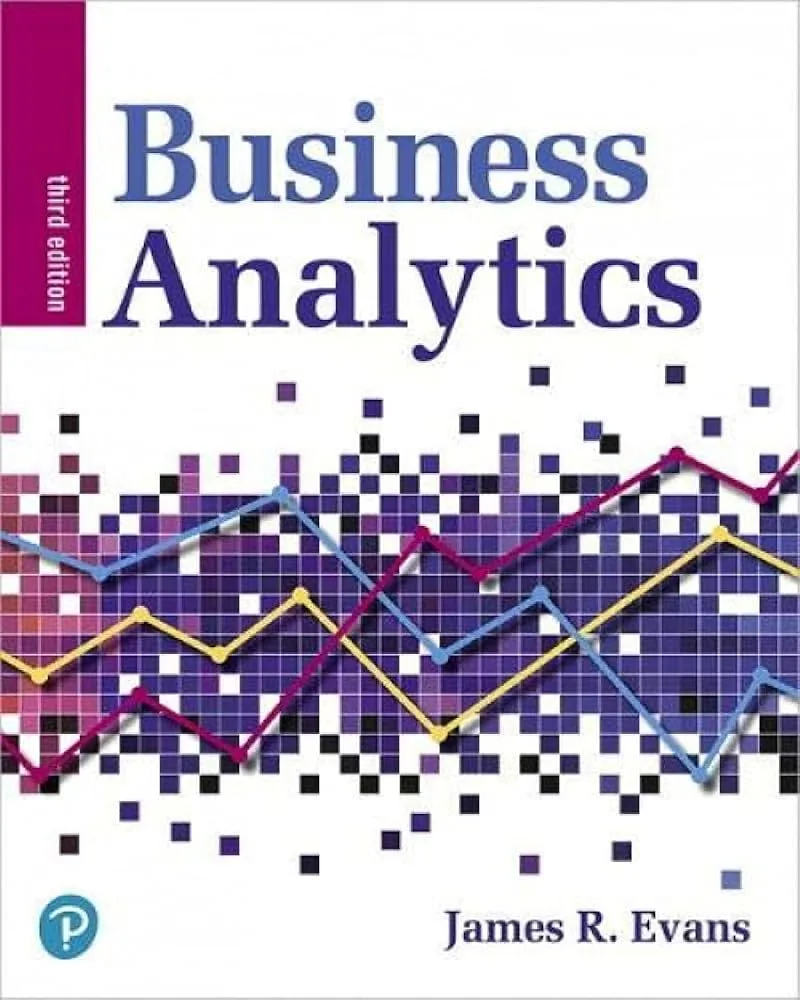
Business Analytics, 3rd Edition by James R. Evans is a strong starting point for anyone who wants to understand how organizations use analytics. Pearson describes the book as covering the fundamental concepts of modern business analytics and examining analytics from both descriptive and predictive perspectives.
It is especially useful for students and beginners because it does not focus only on formulas. It also explains how analysis can support business decisions and how to interpret analytical models.
Key Learnings:
You can expect to learn about:
- Descriptive and predictive analytics
- Basic statistical concepts
- Data analysis and interpretation
- Business decision-making
- Analytical models
- Communicating analytical results
Who Should Read It?
This is one of the best business analytics books for students, beginners, and professionals who want a structured introduction to the subject.
- Author: James R. Evans
- Level: Beginner to Intermediate
- Best for: Learning core analytics concepts
Book Link:
Business Analytics, 3rd Edition on Pearson
2. Business Analytics, Data Science, and AI: A Managerial Approach, 6th Edition
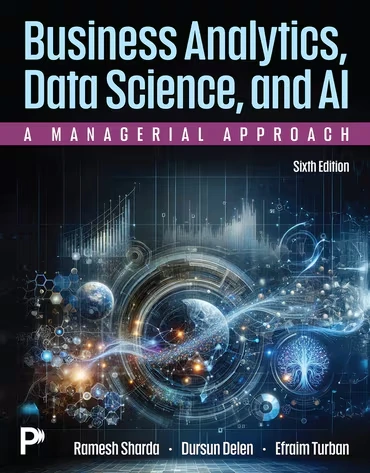
If you want a more current view of analytics, this 6th edition is worth considering. Pearson lists the updated edition as published in February 2026. It brings together business analytics, data science, and AI from a managerial perspective.
This makes it particularly relevant for readers who want to understand how analytics connect with modern technologies and business strategy.
Key Learnings:
The book can help you understand:
- Business analytics fundamentals
- Data science concepts
- Artificial intelligence in business
- Decision support
- Analytical technologies
- How organizations apply data to business problems
Who Should Read It?
It is a good choice for students, managers, aspiring analysts, and professionals who want to understand analytics beyond individual tools.
- Authors: Ramesh Sharda, Dursun Delen, Efraim Turban
- Level: Intermediate
- Best for: Analytics, AI, and business decision-making
Book Link:
Business Analytics, Data Science, and AI: A Managerial Approach on Pearson
3. Data Science for Business
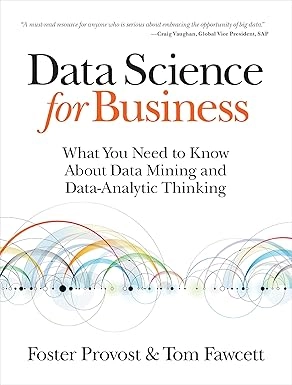
Data Science for Business focuses on a key skill many new analysts overlook: understanding the business problem before jumping into the data.
O'Reilly describes the book as an introduction to data science principles and the data-analytic thinking needed to extract useful knowledge and business value from data. The book also covers topics such as predictive modeling, evidence, probabilities, and business problems.
Key Learnings:
You can learn about:
- Data-analytic thinking
- Business problems and data science solutions
- Predictive modelling
- Evidence and probabilities
- Model evaluation
- Overfitting
- Turning data into business value
Who Should Read It?
This is one of the must-read books for business analyst professionals who want to develop stronger analytical thinking rather than simply learn software.
It is also useful for aspiring data analysts and business analysts who want to understand how data can support decisions.
- Authors: Foster Provost, Tom Fawcett
- Level: Beginner to Intermediate
- Best for: Data-driven thinking
Book Link:
Data Science for Business on O'Reilly
4. Storytelling with Data
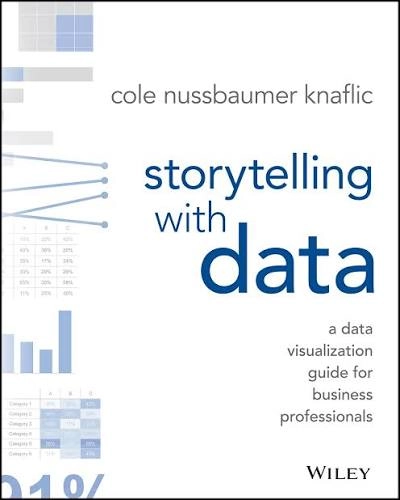
Finding an insight is only half the job. You also need to explain that insight to managers, clients, and other stakeholders.
Storytelling with Data teaches the fundamentals of data visualization and explains how to communicate information effectively through charts and stories. Wiley highlights topics such as choosing the right graph, reducing clutter, directing attention, and using design principles.
The book is also used as a textbook by more than 100 universities, according to Wiley.
Key Learnings:
You can learn how to:
- Choose suitable charts
- Remove unnecessary visual clutter
- Highlight important information
- Design clearer graphs
- Understand your audience
- Turn analysis into a compelling story
Who Should Read It?
This is one of the good books for business analyst professionals who regularly create dashboards, presentations, reports, or management summaries.
- Author: Cole Nussbaumer Knaflic
- Level: Beginner to Intermediate
- Best for: Data visualization and communication
Book Link:
Storytelling with Data on Wiley
5. Lean Analytics
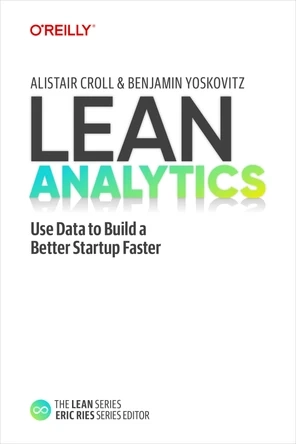
Lean Analytics focuses on using data to understand whether a product or business is moving in the right direction. O'Reilly's current listing covers metrics, segmentation, cohort analysis, A/B testing, leading and lagging indicators, and identifying the One Metric That Matters.
The book also includes more than 30 case studies and insights from over 100 business experts, according to O'Reilly.
Key Learnings:
You can learn:
- How to select useful metrics
- Vanity metrics versus meaningful metrics
- Cohort analysis
- A/B testing
- Customer development
- Business model measurement
- Product and growth analytics
- How to focus on important KPIs
Who Should Read It?
It is useful for product analysts, business analysts, startup teams, product managers, marketers, and entrepreneurs.
- Authors: Alistair Croll, Benjamin Yoskovitz
- Level: Beginner to Intermediate
- Best for: Metrics, KPIs, startups, and product analytics
Book Link:
Upcoming Masterclass
Attend our live classes led by experienced and desiccated instructors of Wscube Tech.


6. Competing on Analytics
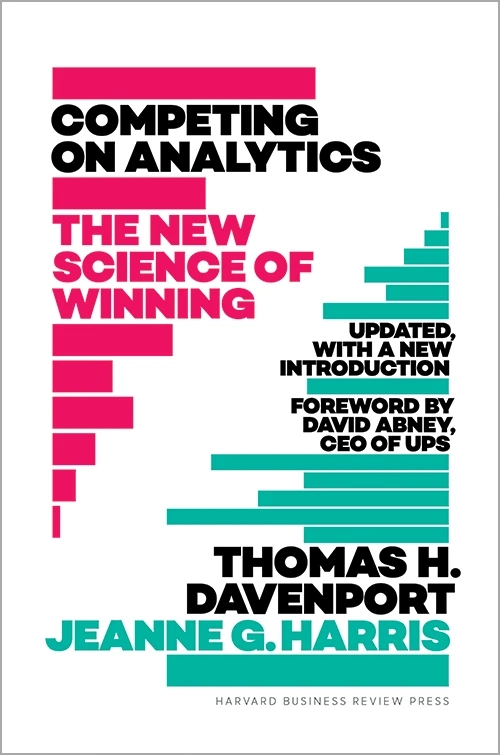
Competing on Analytics takes a wider view. Instead of focusing mainly on how to analyze a dataset, it looks at how organizations can make analytics a strategic advantage.
The updated edition explains a five-stage model of analytical competition and discusses predictive, prescriptive, and autonomous analytics across areas such as marketing, supply chain, finance, operations, HR, and R&D.
Key Learnings:
The book helps readers understand:
- How analytics can support business strategy
- Analytical maturity
- Data-driven decision-making
- Predictive and prescriptive analytics
- Building analytical capabilities
- The role of people and technology
- Using analytics across business functions
Who Should Read It?
This is better suited to experienced analysts, managers, consultants, business leaders, and professionals who already understand basic analytics.
- Authors: Thomas H. Davenport, Jeanne G. Harris
- Level: Intermediate to Advanced
- Best for: Analytics strategy
Book Link:
Competing on Analytics on Harvard Business Review Store
7. Naked Statistics
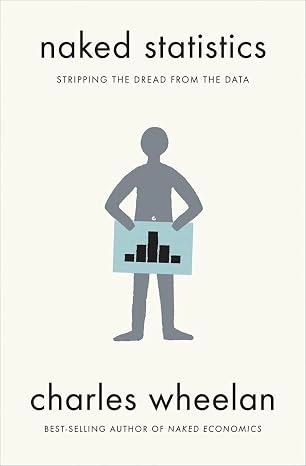
Statistics can be one of the most confusing parts of analytics for beginners. Naked Statistics is designed to make statistical ideas easier to understand without making the reader feel like they are studying a highly mathematical textbook.
The book covers statistical thinking in an accessible way and helps readers build the basic understanding needed to interpret data correctly.
Key Learnings:
Readers can strengthen their understanding of:
- Averages and variation
- Probability
- Correlation
- Regression
- Statistical reasoning
- Data interpretation
- Common mistakes in using statistics
Who Should Read It?
It is particularly useful if you are uncomfortable with mathematics or statistics and want to build confidence before moving into advanced analytics.
Students can also use it alongside formal business analytics textbooks when they need a simpler explanation of statistical concepts.
- Author: Charles Wheelan
- Level: Beginner
- Best for: Understanding statistics
Book Link:
Naked Statistics listing and bibliographic details
8. Python for Data Analysis
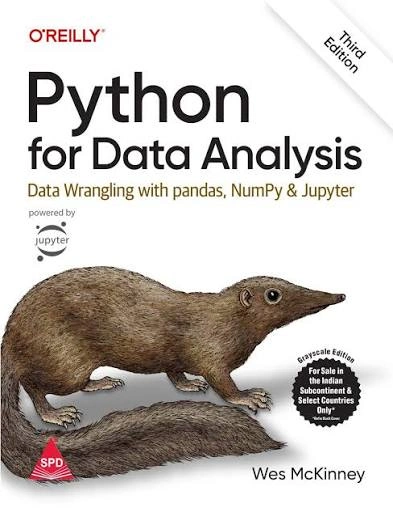
Python isn't required for every business analyst, but it can become valuable as your analytical work becomes more advanced.
Python for Data Analysis, 3rd Edition was published by O'Reilly in 2022 and contains 582 pages. It covers Python for data analysis along with libraries such as NumPy, pandas, matplotlib, SciPy, scikit-learn, and stats models.
The book also covers data cleaning, data loading, visualization, aggregation, and working with pandas.
Key Learnings:
You can learn:
- Python basics for analysis
- pandas
- NumPy
- Data cleaning
- Data loading and storage
- Data aggregation
- Data visualization
- Working with analytical datasets
Who Should Read It?
Choose this book if you already understand basic analytics and want to add Python to your toolkit. This isn't the first book you need as a complete beginner. Start with analytics and statistics fundamentals before moving into programming.
- Author: Wes McKinney
- Level: Intermediate
- Best for: Python-based data analysis
Book Link:
Python for Data Analysis on O'Reilly
9. A Guide to the Business Analysis Body of Knowledge, BABOK Guide
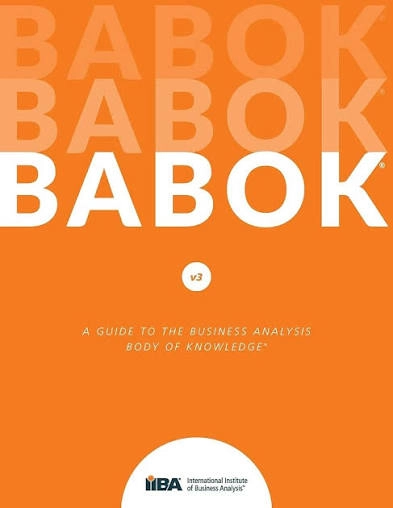
The BABOK Guide is different from most analytics books on this list. It focuses on the wider practice of business analysis, including requirements, stakeholders, strategy, solution evaluation, techniques, and competencies.
IIBA describes the BABOK Guide as the globally recognized standard for business analysis. Its current resources cover six knowledge areas and provide guidance on tasks, techniques, perspectives, and competencies.
Key Learnings:
You can explore:
- Business analysis planning
- Stakeholder engagement
- Requirements management
- Strategy analysis
- Requirements analysis
- Solution evaluation
- Business analysis techniques
- Underlying competencies
Who Should Read It?
The BABOK Guide is ideal for aspiring and experienced business analysts, especially those preparing IIBA certifications or looking for a professional reference.
It is also useful if you are comparing business analysis books with analytics-focused resources because it shows the broader business analysis process.
- Publisher: International Institute of Business Analysis (IIBA)
- Level: Intermediate to Advanced
- Best for: Business analysis practices
Book Link:
10. HBR's 10 Must Reads on AI, Analytics, and the New Machine Age
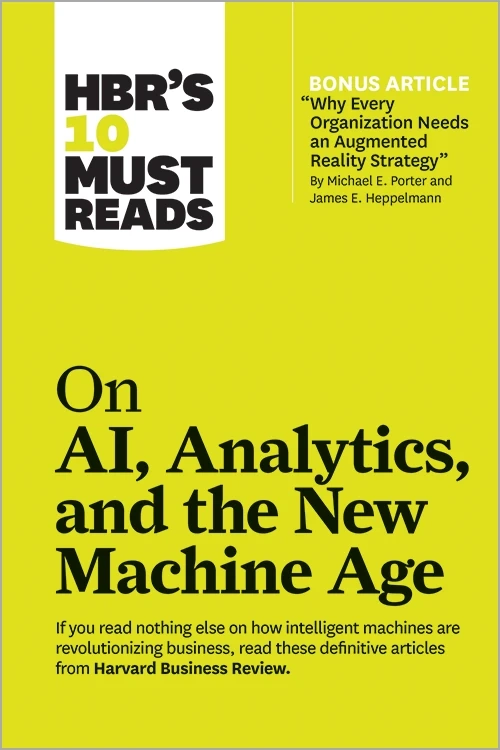
Analytics is increasingly connected with artificial intelligence and machine learning. This collection from Harvard Business Review provides a useful way to understand that connection from a business perspective.
The book brings together articles about AI, data analytics, algorithms, augmented reality, blockchain, and human-machine collaboration. Published in 2019, it is 192 pages long.
Key Learnings:
Readers can explore:
- AI and business strategy
- Data-driven decision-making
- Machine learning
- Algorithms
- Human and machine collaboration
- AI-powered business models
- Emerging technology trends
Who Should Read It?
Choose this book if you already understand basic analytics and want to learn how AI and advanced analytics can influence organizations and business strategy.
- Publisher: Harvard Business Review
- Level: Intermediate
- Best for: AI, analytics, and business strategy
Book Link:
HBR's 10 Must Reads on AI, Analytics, and the New Machine Age
Read More Related Guides
How to Choose the Right Business Analytics Book
No single book is perfect for everyone. Your ideal choice depends on your current knowledge, career goal, and the type of work you want to do.
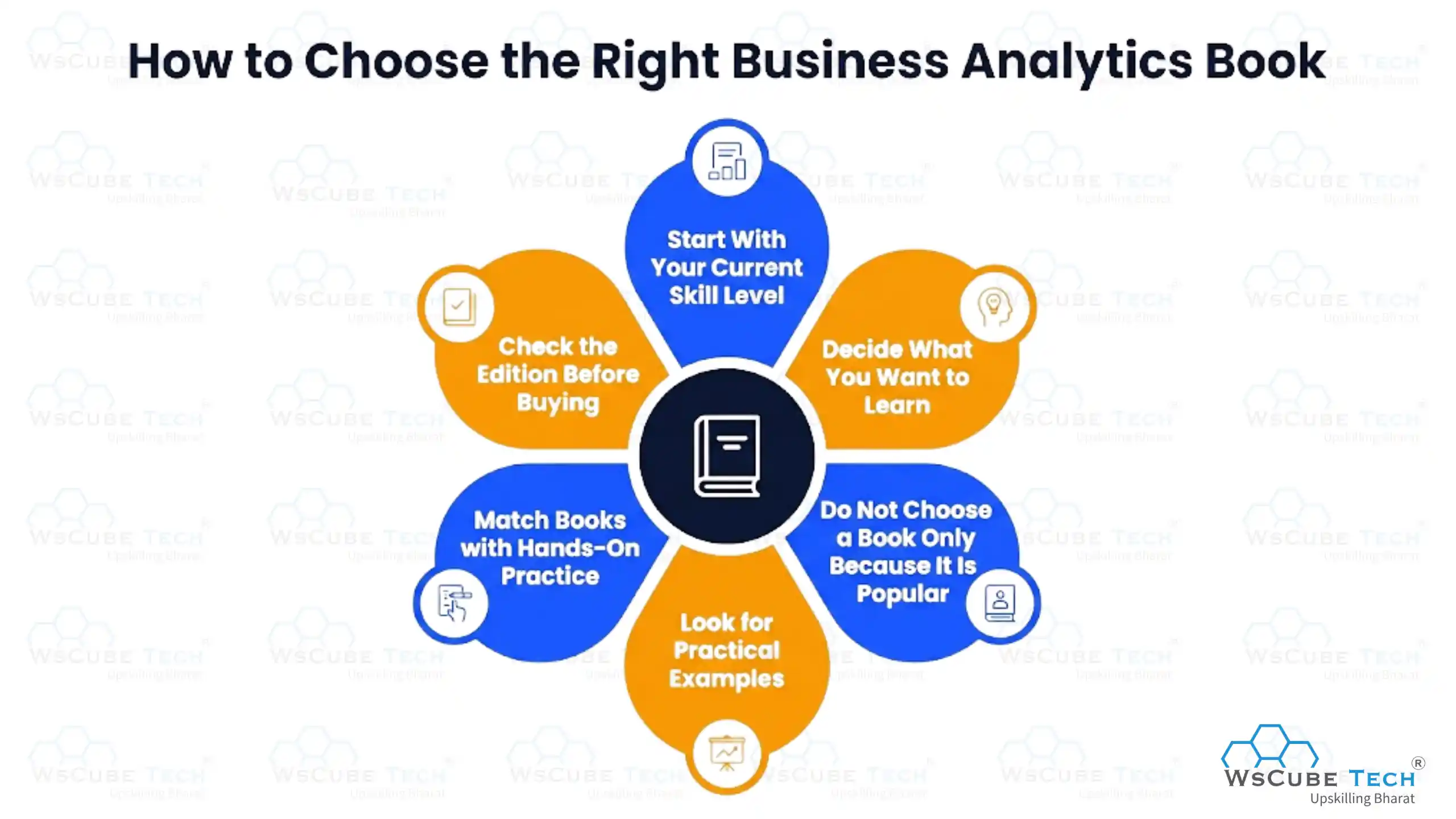
1. Start With Your Current Skill Level
If you are completely new to analytics, begin with an introductory book such as Business Analytics by James R. Evans or Data Science for Business.
If you already know the basics, move towards Lean Analytics, Storytelling with Data, or Python for Data Analysis.
2. Decide What You Want to Learn
Different books solve different learning needs. Understanding the types of business analytics can also help you decide which topics and skills you want to focus on.
- Analytics fundamentals: Business Analytics
- Data-driven thinking: Data Science for Business
- Statistics: Naked Statistics
- Visualization: Storytelling with Data
- Metrics and KPIs: Lean Analytics
- Python: Python for Data Analysis
- Business analysis: BABOK Guide
- Analytics strategy: Competing on Analytics
- AI and analytics: HBR's 10 Must Reads on AI, Analytics, and the New Machine Age
3. Do Not Choose a Book Only Because It Is Popular
A popular book may not match your learning goal. For example, a beginner does not need to start with a book focused heavily on analytical strategy.
Choose the book that fills your current knowledge gap.
4. Look for Practical Examples
Books that explain concepts through business cases, examples, exercises, and real situations can make learning easier.
This is particularly important when you are learning concepts such as KPIs, customer segmentation, forecasting, requirements analysis, or data storytelling.
5. Match Books with Hands-On Practice
Reading alone will not make you job ready. Try to apply what you learn using Excel, SQL, Power BI, Python, or another relevant tool.
For example, after learning about data visualization, create a dashboard. After learning about KPIs, analyze a small business dataset and identify the metrics that matter.
6. Check the Edition Before Buying
Analytics changes quickly, particularly in areas involving AI, data platforms, and programming tools. Always check the edition and publication date before purchasing.
For example, Pearson currently lists the 6th edition of Business Analytics, Data Science, and AI: A Managerial Approach as a 2026 publication.
Why You Should Read Business Analytics Books
Books remain useful even when you can find thousands of analytics tutorials online. They offer structured explanations that are often difficult to get from short videos or individual articles.
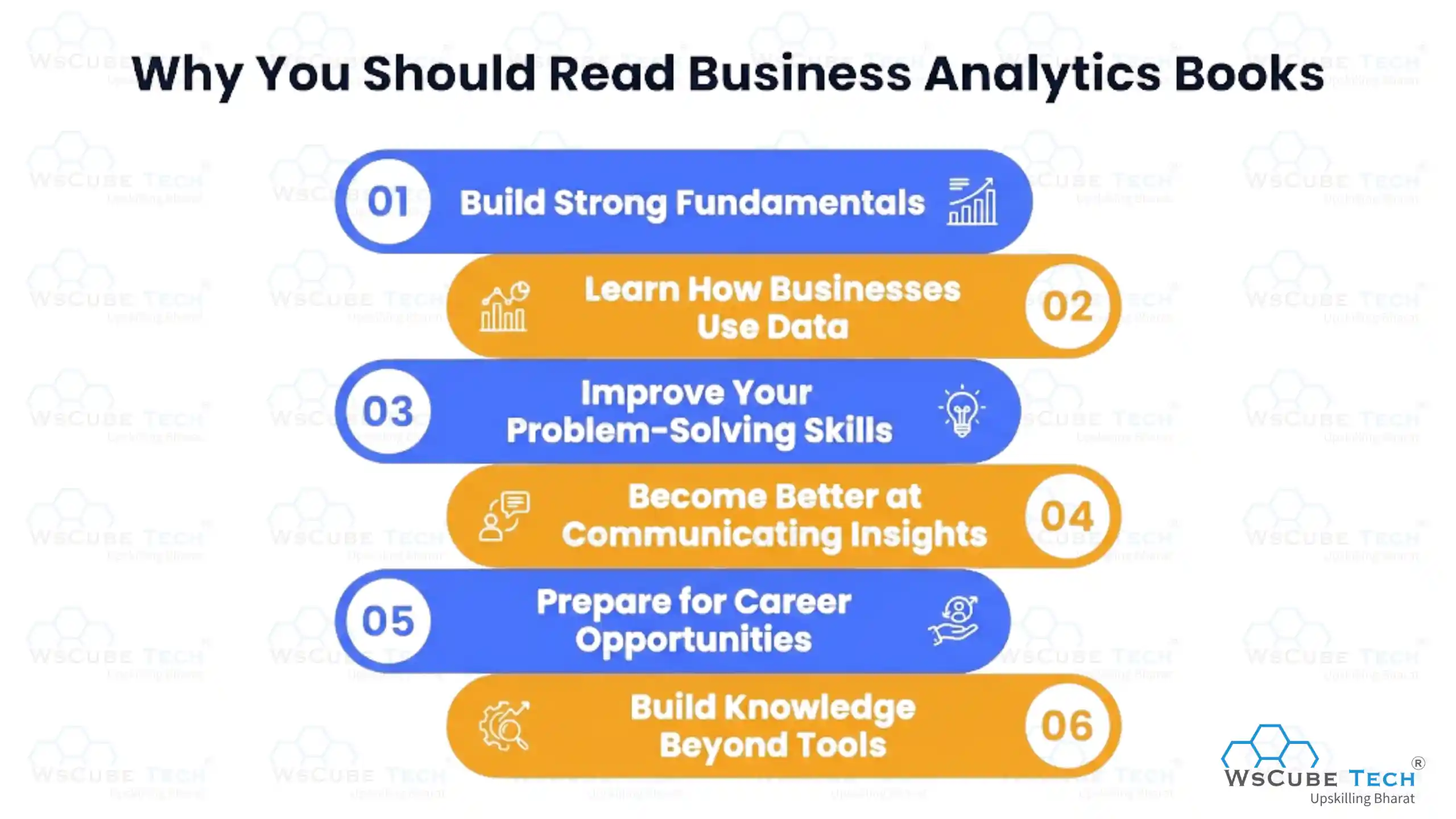
1. Build Strong Fundamentals
Tools change, but fundamental concepts such as statistics, business problems, metrics, data quality, and decision-making remain important.
2. Learn How Businesses Use Data
Analytics is not just about creating charts. The real purpose is to answer questions and support better decisions. Books such as Data Science for Business focus strongly on connecting analytical thinking with business problems.
3. Improve Your Problem-Solving Skills
Good analysts ask the right questions before analyzing data. Reading case studies and business examples can help you understand how experienced professionals approach problems.
4. Become Better at Communicating Insights
An analyst may produce an accurate report, but the report has limited value if decisionmakers cannot understand it. Storytelling with Data focuses specifically on communicating data clearly and effectively.
5. Prepare for Career Opportunities
The broader business and analytics field continues to offer opportunities. In the US, the Bureau of Labor Statistics projects employment for management analysts to grow by 9% between 2024 and 2034, with about 98,100 openings per year on average. The median annual wage for management analysts was $101,190 in May 2024.
This does not mean reading a book guarantees a job. However, strong analytical thinking combined with practical skills can help you prepare roles involving data, business problems, and decision-making.
6. Build Knowledge Beyond Tools
You can learn how to use Excel or Power BI through a tutorial, but understanding why a metric matter or how to present an insight requires broader business knowledge. That is where books can add real value.
Explore Our Data Related Courses
| Online Data Analytics Course | Live Internship + 100% Job Support |
| Online Business Analytics Course | Live Internship + 100% Job Support |
| Online Data Science Course | Live Internship + 100% Job Support |
How to Get the Most from These Books
Do not try to read all ten books from cover to cover. Instead, create a simple learning path.
- For complete beginners: Start with Business Analytics and Naked Statistics.
- For aspiring business analysts: Read Data Science for Business, followed by the BABOK Guide.
- For dashboard and reporting skills: Add Storytelling with Data.
- For product and growth analytics: Read Lean Analytics.
- For advanced analytical thinking: Move to Competing on Analytics.
- For Python skills: Add Python for Data Analysis after you are comfortable with basic analytics.
- For modern AI and analytics trends: Read Business Analytics, Data Science, and AI or the HBR collection.
This approach is more effective than buying multiple books and leaving them unfinished. If you are also following a structured business analyst course, use these books as supporting resources rather than trying to replace practical projects and assignments with reading.
Are Books Enough to Become a Business Analyst?
No. Books can give you a strong knowledge base, but becoming job-ready requires more than reading. If you are planning to build a career in this field, learning how to become business analyst can help you understand the skills, learning path, and practical steps involved. You should also practice:
- Excel
- SQL
- Data visualization
- Business case studies
- Requirements gathering
- Stakeholder communication
- Problem-solving
- Presentations
- Real-world projects
A useful approach is to read one chapter and then apply the concept to a small project. For example, after learning about customer segmentation, analyze a sample customer dataset and create a simple report. This turns passive reading into active learning.
FAQs about Business Analytics Books
Business Analytics by James R. Evans, Data Science for Business, and Naked Statistics are good starting points. They help build fundamental knowledge before moving into advanced topics.
Some of the best business analyst books for beginners include Data Science for Business, Storytelling with Data, and the BABOK Guide. Start with the first two for easier learning, then use BABOK as a professional reference.
The BABOK Guide is an important reference for business analysis professionals. Data Science for Business and Storytelling with Data are also valuable because they strengthen analytical thinking and communication skills.
Yes, free learning resources exist, although not every popular commercial book is legally available for free. IIBA provides a free Business Analysis Standard and free glossary resources, while its BABOK Guide is a separate resource. Makre sure to use legitimate sources always when looking for free books or study material.
Yes. Business analytics textbooks can be especially useful when you want structured learning, detailed explanations, exercises, and academic references. However, combine textbook learning with practical projects.
For most beginners, it is better to learn basic analytics concepts first and then strengthen your statistics knowledge. You don't need advanced mathematics to start business analytics.
No. Business analyst course books can support your learning, but practical experience matters just as much. Work on case studies, projects, requirements documents, dashboards, and presentations to build job-ready skills.
You do not need to read all ten. Start with one book that matches your goal, finish the important chapters, and apply the concepts through projects. Then move to another book to fill a specific skill gap.
Storytelling with Data is a strong choice because it focuses on selecting appropriate charts, reducing clutter, directing attention, and communicating insights effectively.
Python for Data Analysis, 3rd Edition by Wes McKinney, is a strong choice for intermediate learners. It covers Python, pandas, NumPy, data cleaning, visualization, aggregation, and other practical analysis tasks.
Competing on Analytics is a strong choice for analytics strategy. It focuses on analytical competition, organizational capabilities, and the strategic use of analytics across business functions.
For most beginners, a practical starting combination is Business Analytics by James R. Evans for fundamentals, Naked Statistics for statistical thinking, and Storytelling with Data for communicating insights. Once you have the basics, add Data Science for Business and Lean Analytics for deeper practical understanding.
Explore Our Free Tech Tutorials
| Python Tutorial | Java Tutorial | JavaScript Tutorial |
| C Tutorial | C++ Tutorial | HTML Tutorial |
| CSS Tutorial | SQL Tutorial | DSA Tutorial |
Practice Coding With Our Free Compilers
| Online Python Compiler | Online HTML Compiler | Online C Compiler |
| Online C++ Compiler | Online JS Compiler | Online Java Compiler |
Join Our On-Campus Data Analytics Program
Join Our On-Campus Data Science Program
Explore Our Free Courses



Leave a comment
Your email address will not be published. Required fields are marked *Comments (0)
No comments yet.