Ever wondered why some brands seem to be everywhere online while others struggle to get noticed? The answer often comes down to how well they use different types of digital marketing to reach the right audience at the right time.
From social media posts and email campaigns to search engine rankings and influencer partnerships, each strategy plays a unique role in helping businesses grow. In this guide, we'll break down the most effective types of digital marketing, explain how they work, and help you understand which ones deliver the best results.
If you're planning to build a career in this field, this knowledge can also help you choose the right digital marketing course to get started.
What is Digital Marketing?
Digital marketing means promoting products, services, or brands using the internet and digital channels. It includes websites, social media, search engines, emails, and even mobile apps. Unlike traditional marketing (TV, radio, print), it’s measurable, targeted, and cost-effective.
There are different types of digital marketing, each with its own purpose, strategy, and audience. Understanding them helps you choose the best mix for your goals.
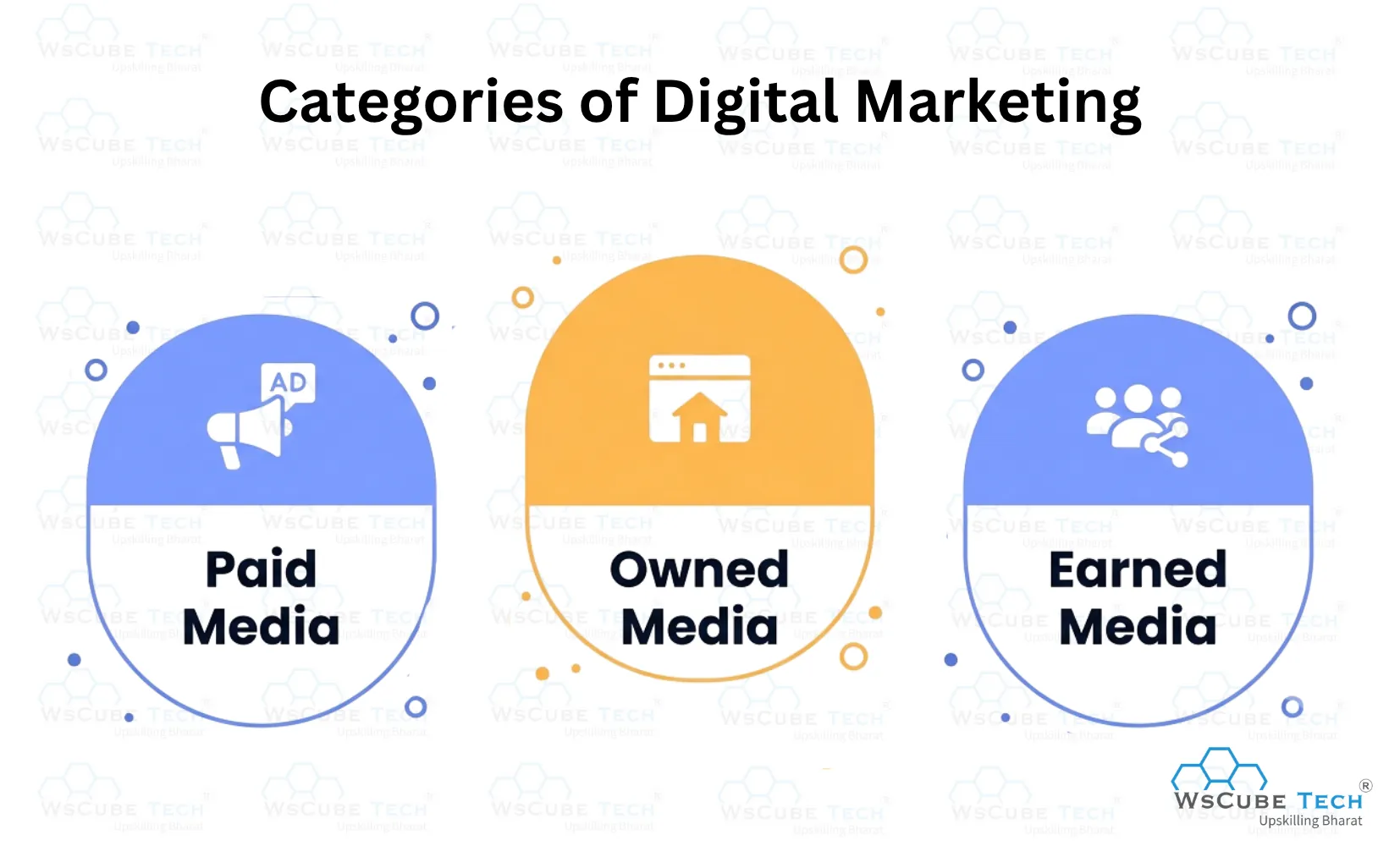
Categories of Digital Marketing: Paid, Owned, and Earned Media
Before exploring the different types of digital marketing, it's important to understand how digital marketing channels are categorized. Most online marketing strategies fall under paid, owned, or earned media, helping businesses reach their target audience in different ways.
Paid Media
Paid media includes marketing channels where businesses pay to promote their products, services, or content.
- Google Ads and PPC campaigns
- Social media advertising
- Display and banner ads
- Sponsored content and influencer collaborations
Owned Media
Owned media refers to digital assets that a business controls and manages directly.
- Business website
- Blog content
- Email newsletters
- Mobile apps
- Social media profiles
Earned Media
Earned media is the visibility and recognition a brand gains organically through customer engagement and third-party mentions.
- Customer reviews and testimonials
- Social media shares and mentions
- Press coverage
- User-generated content
- Word-of-mouth recommendations
Many of the types of digital marketing discussed below can fall into one or more of these categories, depending on the strategy and goals of a campaign.
Why Learn About Different Types of Digital Marketing?
Digital marketing is constantly evolving, and businesses use a variety of channels to connect with their audience online. Understanding the different types of digital marketing can help you make informed decisions, whether you're a business owner, student, or marketing professional.
Here are some key reasons to learn about digital marketing:
- Every channel serves a different purpose: While SEO helps drive organic traffic, social media builds engagement, and email marketing strengthens customer relationships.
- Businesses rarely rely on a single strategy: Most successful brands combine multiple digital marketing methods to achieve their goals.
- Career opportunities continue to grow: Digital marketing skills are in high demand across industries, making them valuable for professionals and job seekers.
- Consumer behavior is shifting online: Understanding how brands reach customers online helps you stay relevant in today's digital-first world.
- It helps you stay ahead of competitors: Knowing how different marketing channels work can give businesses a competitive advantage.
Learning these marketing channels is the first step toward understanding how brands attract, engage, and retain customers online.
Recommended Professional Certificates
AI-Powered Digital Marketing Course
Performance Marketing Bootcamp
SEO Specialist Bootcamp
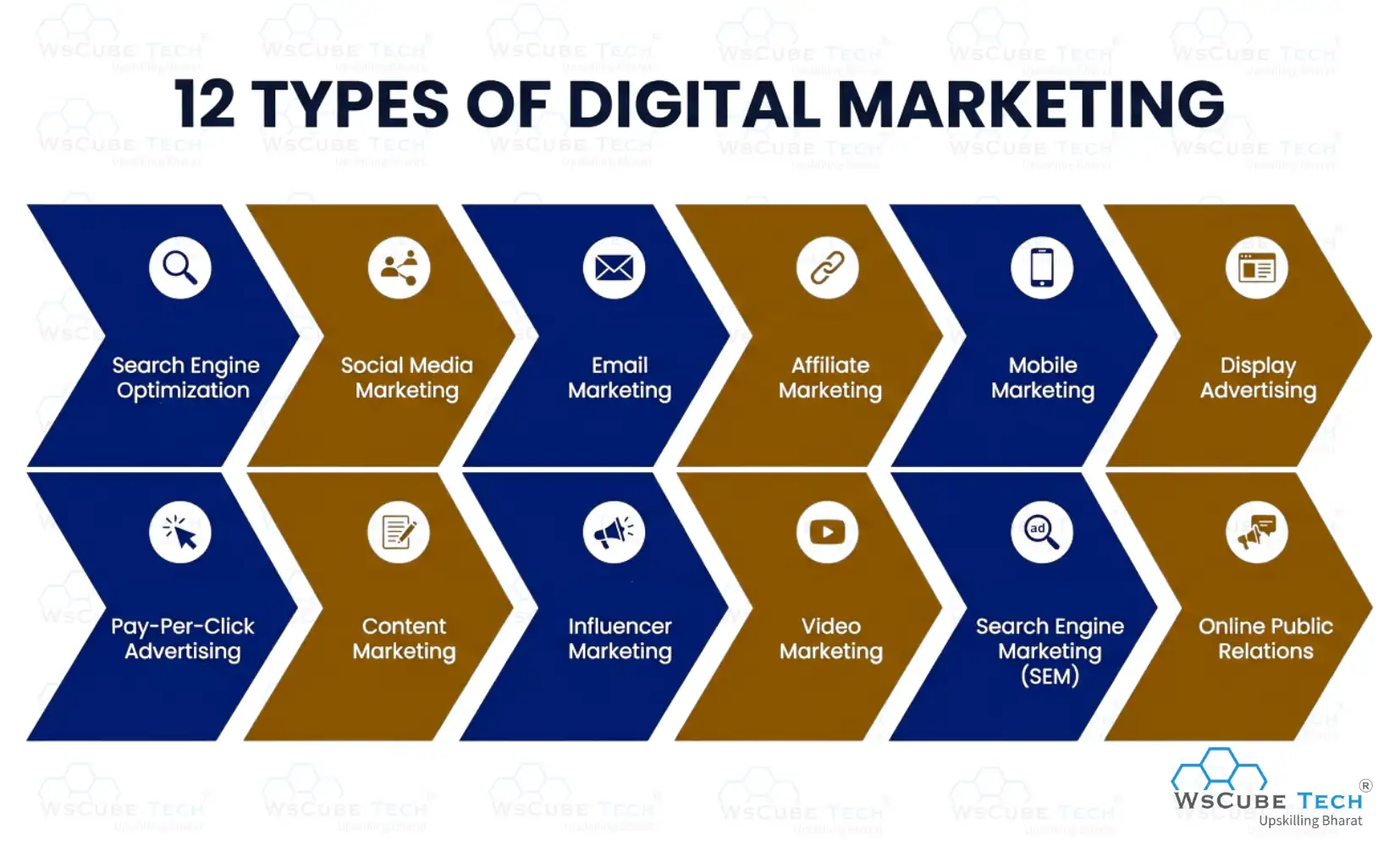
12 Types of Digital Marketing
The main types of digital marketing include SEO, PPC advertising, Social Media Marketing (SMM), Content Marketing, Email Marketing, Influence Marketing, Affiliate Marketing, Video Marketing, Mobile Marketing, Search Engine Marketing, Display Advertising, and Online PR.
Let’s these all digital marketing types in detail:
1. Search Engine Optimization (SEO)
SEO is the process of optimizing your website so it ranks higher on Google and other search engines. When people search for something, you want your page to appear on top. SEO includes using the right keywords, improving page speed, creating quality content, and getting backlinks from trusted sites.
SEO helps bring free (organic) traffic to your website and builds credibility over time.
Example:
If you run a blog about digital marketing and your article “Best SEO Tools” appears on the first page of Google, that’s SEO success.
Pro Tip: SEO is a long-term strategy. Focus on creating helpful content consistently rather than chasing quick rankings.
2. Pay-Per-Click Advertising (PPC)
In PPC advertising, you pay only when someone clicks on your ad. These ads appear on platforms like Google, Bing, or social media. PPC helps you reach customers instantly and is ideal for generating quick results.
You can target specific keywords, locations, and audiences. It’s measurable, so you can track how much you spend and earn per click.
Example:
An online shoe brand runs Google Ads for “buy running shoes online.” Every time someone clicks and visits their site, they pay a small amount, maybe ₹5 or ₹10.
3. Social Media Marketing (SMM)
Social Media Marketing means using platforms like Facebook, Instagram, LinkedIn, or Twitter (X) to connect with your audience. You can share posts, run ads, and engage with followers.
It’s great for brand awareness, customer loyalty, and even direct sales. Social media lets you reach millions of users based on their age, interest, and behavior.
Example:
Zomato’s humorous and trending Instagram posts grab huge attention and engagement. They don’t just sell food; they connect emotionally with users.
4. Content Marketing
Content marketing focuses on creating and sharing valuable content, like blogs, videos, guides, or infographics, to educate and attract potential customers. Instead of direct selling, you provide useful information that builds trust and authority.
Good content keeps your audience coming back and positions you as an expert in your field.
Example:
HubSpot publishes free marketing guides and blogs that help readers learn. Over time, these readers become their paying customers.
5. Email Marketing
Email marketing is one of the oldest yet most effective digital marketing types. It’s all about sending personalized emails to your audience through newsletters, offers, updates, or reminders.
It helps nurture leads, maintain relationships, and drive repeat sales. You can track open rates, clicks, and conversions easily.
Example:
Flipkart sends festive season discount emails with special deals for loyal customers, driving thousands of daily sales.
6. Influencer Marketing
In influencer marketing, brands collaborate with popular individuals on social media who have large, engaged audiences. These influencers promote the brand’s products through posts, videos, or stories.
It works well because people trust influencers they follow, and their recommendations feel more genuine than traditional ads.
Example:
A skincare brand partners with a YouTuber who reviews their new moisturizer and shares a discount code, leading to more sales.
Upcoming Masterclass
Attend our live classes led by experienced and desiccated instructors of Wscube Tech.


7. Affiliate Marketing
Affiliate marketing is a partnership-based system where others promote your products for a commission. It’s like word-of-mouth marketing, but online and performance-based.
You only pay affiliates when they bring actual results, such as a sale or signup, making it a low-risk marketing type.
Example:
Amazon’s Affiliate Program pays bloggers a small percentage of every sale made through their referral links.
8. Video Marketing
Video marketing involves using videos to promote your products or explain your services. It’s one of the most engaging forms of digital marketing because people prefer watching over reading.
Videos can be used on YouTube, Instagram Reels, Facebook, or even your website. They boost engagement, trust, and conversions.
Example:
Nike’s motivational YouTube ads featuring athletes inspire millions while subtly promoting their products.
9. Mobile Marketing
Mobile marketing focuses on reaching users on smartphones and tablets. It includes SMS marketing, mobile ads, in-app notifications, and mobile-friendly websites.
Since most people use their phones daily, it’s one of the most effective online marketing types for modern audiences.
Example:
Swiggy sends push notifications like “Your favorite restaurant has 30% off today”, instantly bringing users back to the app.
10. Search Engine Marketing (SEM)
Search Engine Marketing (SEM) is a combination of SEO and PPC. It helps you appear both in paid ads and organic search results. SEM gives faster visibility compared to SEO alone and ensures your brand dominates search engines.
Example:
A digital marketing course provider uses Google Ads (PPC) for immediate traffic and SEO for long-term ranking; a perfect SEM mix.
11. Display Advertising
Display advertising uses banner ads, images, and videos that appear on websites, apps, or YouTube. These ads help increase brand recall and visibility.
You can target audiences based on their interests, demographics, or previous browsing behavior.
Example:
A travel agency runs banner ads for “Summer Holiday Packages” that appear when users browse news sites or watch YouTube.
12. Online Public Relations (PR)
Online PR helps manage a brand’s reputation digitally. It includes writing press releases, collaborating with bloggers, handling online reviews, and publishing brand news on trusted websites.
This builds authority, trust, and credibility with both customers and search engines.
Example:
A startup publishes success stories and interviews on top news websites like YourStory or Economic Times to boost visibility.
Types of Digital Marketing Campaigns and Their Primary Goals
While each marketing channel serves a unique purpose, understanding their primary goals can help you choose the right strategy for your business.
| Digital Marketing Type | Primary Goal |
| SEO | Drive long-term organic traffic |
| PPC Advertising | Generate immediate traffic and leads |
| Social Media Marketing | Increase brand awareness and engagement |
| Content Marketing | Build trust and authority |
| Email Marketing | Nurture leads and retain customers |
| Influencer Marketing | Expand reach and build credibility |
| Affiliate Marketing | Drive performance-based sales |
| Video Marketing | Boost engagement and conversions |
| Mobile Marketing | Reach users on mobile devices |
| Search Engine Marketing (SEM) | Improve search visibility |
| Display Advertising | Increase brand visibility and recall |
| Online PR | Strengthen brand reputation and trust |
This comparison provides a quick overview of the different types of digital marketing and the key objective each channel helps businesses achieve.
Expert Advice: There's no single best type of digital marketing. The most successful brands combine multiple channels to create a balanced strategy.
Expand Your Marketing Skills
How to Choose the Right Type of Digital Marketing
With so many marketing channels available, choosing the right type of digital marketing can feel overwhelming. The best strategy depends on your goals, audience, budget, and business needs. Here are some factors to consider:
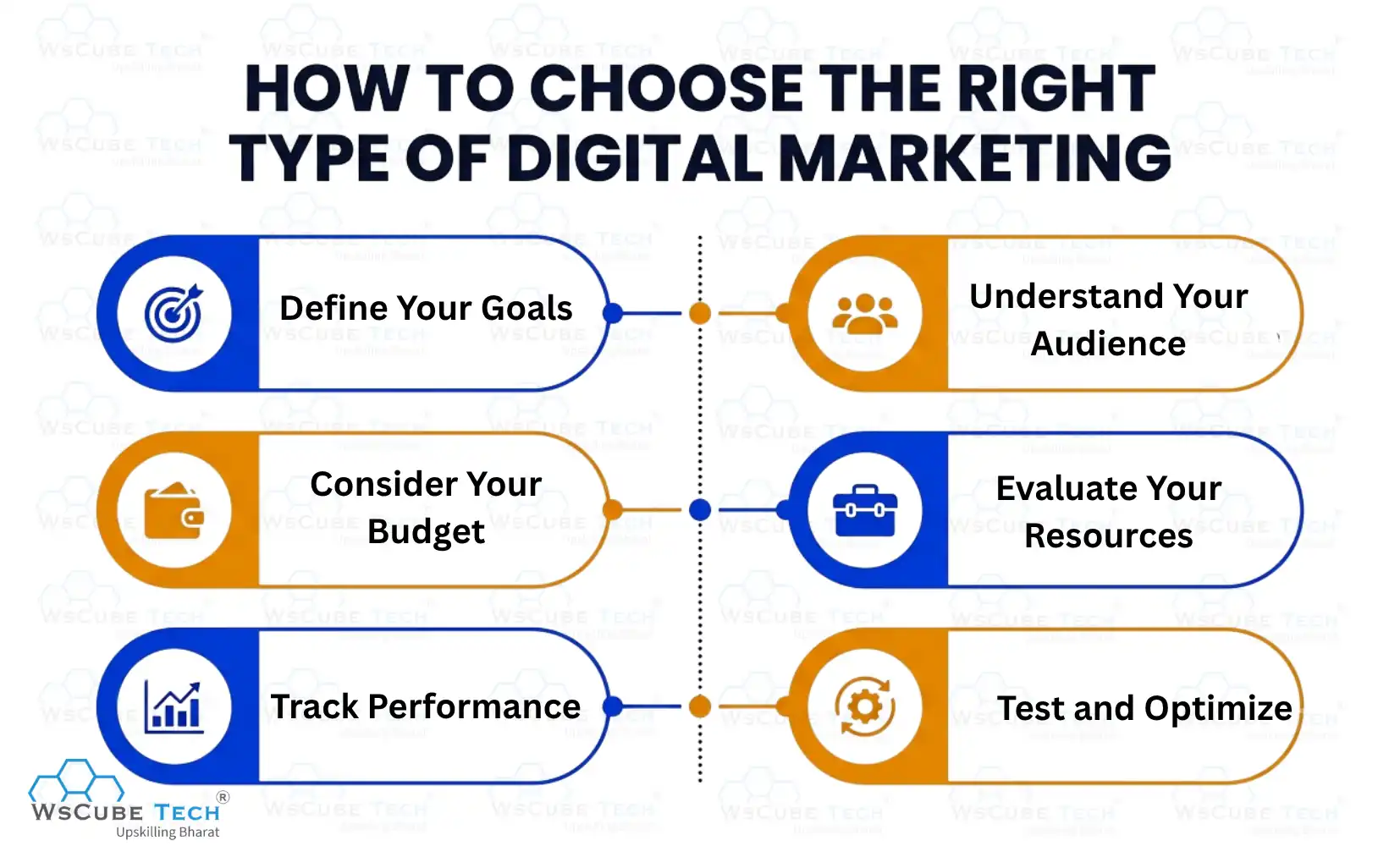
- Define Your Goals: Determine whether you want to increase brand awareness, generate leads, drive website traffic, or boost sales.
- Understand Your Audience: Identify where your target customers spend their time online and which platforms they use most.
- Consider Your Budget: Some strategies, such as SEO, require time and consistency, while PPC advertising delivers faster results but requires ongoing investment.
- Evaluate Your Resources: Choose channels that match your team's skills and available resources for content creation and campaign management.
- Track Performance: Use analytics tools to measure results and identify which marketing efforts deliver the best return on investment.
- Test and Optimize: Start with a few channels, analyze performance, and refine your strategy based on real data.
The most effective approach is often a combination of different types of digital marketing campaigns working together to achieve your business objectives.
Examples of Digital Marketing Campaigns
Learning from real brands helps you see how different digital marketing types work together in practice. Let’s look at some powerful campaigns that made a real impact.
1. Nike – “Just Do It” Digital Storytelling Campaign
Digital Marketing Types Used: Video Marketing, Social Media Marketing, Influencer Marketing
Nike is known for its emotional storytelling and inspirational messaging. Its famous “Just Do It” campaign became a global sensation because it didn’t just sell shoes; it sold a mindset of confidence and determination. It is the best example of digital marketing.
In recent years, Nike extended this campaign digitally by using short videos, YouTube ads, and influencer collaborations. The brand featured athletes like Serena Williams and everyday fitness enthusiasts sharing their personal journeys.
These videos went viral on social media, driving millions of shares and boosting Nike’s brand engagement worldwide. It’s a perfect example of video and social media marketing working together to build emotional connections and brand loyalty.
2. Coca-Cola – “Share a Coke” Campaign
Digital Marketing Types Used: Social Media Marketing, Content Marketing, Personalization
Coca-Cola’s “Share a Coke” campaign started by printing people’s names on Coke bottles, turning an everyday product into something personal and shareable.
Online, Coca-Cola encouraged users to find bottles with their names and post photos on Facebook, Instagram, and Twitter with the hashtag #ShareACoke. This created millions of user-generated posts and stories across social media.
The campaign not only increased Coca-Cola’s sales but also built a deep emotional connection with customers. It’s a classic example of social media marketing combined with personalized content marketing that went viral globally.
3. Amazon – Targeted PPC and Email Marketing
Digital Marketing Types Used: PPC Advertising, Email Marketing, Retargeting
Amazon is a master at combining multiple digital marketing channels to drive conversions. When you search for a product on Amazon or Google, you’ll likely see Amazon’s ads appear at the top. That’s PPC advertising and performance marketing in action.
If you view a product but don’t buy it, Amazon sends reminder emails or shows you that same product in ads later. This is retargeting and email marketing working together.
This smart combination of personalized ads and follow-up emails helps Amazon recover lost sales and increase repeat purchases. It’s one of the best examples of data-driven performance marketing.
4. Swiggy – Engaging Push Notifications and Social Media Campaigns
Digital Marketing Types Used: Mobile Marketing, Social Media Marketing, Content Marketing
Swiggy knows how to grab attention. It uses creative push notifications that make you smile, laugh, and sometimes even feel hungry! Messages like “Don’t cook today. You deserve a break!” or “Your burger misses you!” create engagement instantly.
On social media, Swiggy runs witty posts, contests, and food challenges that encourage participation. The #SwiggyVoiceOfHunger campaign on Instagram, where users used voice notes shaped like food items, was a huge hit.
Swiggy’s approach shows how humor, creativity, and personalization can turn simple mobile marketing and social media content into viral brand engagement.
5. Zomato – Real-Time Social Media Marketing
Digital Marketing Types Used: Social Media Marketing, Meme Marketing, Content Marketing
Zomato has mastered the art of real-time digital marketing. The brand uses humor, memes, and trending topics to stay relevant every day. Its posts are short, funny, and highly shareable, making Zomato one of India’s most loved social media brands.
For example, during the 2023 cricket season, Zomato shared relatable food memes that went viral instantly. Their ability to react to trending events and use creative content keeps audiences engaged and entertained, while subtly promoting food delivery.
Zomato’s campaigns prove that content + timing + humor can create magic online.
6. Spotify – “Wrapped” Personalized Campaign
Digital Marketing Types Used: Email Marketing, Data-Driven Marketing, Social Media Marketing
Every December, Spotify releases Spotify Wrapped, a personalized report that shows each user their most-streamed songs, artists, and genres of the year.
Users love sharing their “music story,” which drives massive organic promotion for Spotify. The brand also sends customized emails and push notifications encouraging users to check their Wrapped summary.
Millions of people share their results on Instagram and Twitter, making it a viral trend every year. Spotify’s campaign shows how data personalization and content sharing can turn users into brand promoters.
Marketing Insight: Real-world campaigns show how different types of digital marketing work together to create stronger results than a single channel alone.
Explore Our Most Popular Marketing Courses
Benefits and Challenges of Digital Marketing
The different types of digital marketing offer unique benefits, but they also present challenges that businesses must overcome to achieve long-term success.
| Benefits of Digital Marketing | Challenges of Digital Marketing |
| Reach a global audience with minimal investment | High competition across digital channels |
| Target specific audiences based on demographics and interests | Constantly changing algorithms and trends |
| Measure campaign performance in real time | Requires continuous learning and skill updates |
| More cost-effective than traditional marketing | Results may take time, especially with SEO |
| Enables personalized customer experiences | Managing multiple platforms can be time-consuming |
| Supports better customer engagement and interaction | Data privacy regulations can limit targeting options |
| Easily scalable for businesses of all sizes | Generating consistent, high-quality content can be challenging |
Digital marketing can deliver significant results when businesses balance its advantages with a well-planned strategy to overcome common challenges.
Future Trends in Digital Marketing
As technology evolves, the types of digital marketing businesses use will continue to change. Keeping up with emerging trends can help marketers stay competitive and adapt to changing consumer behavior.
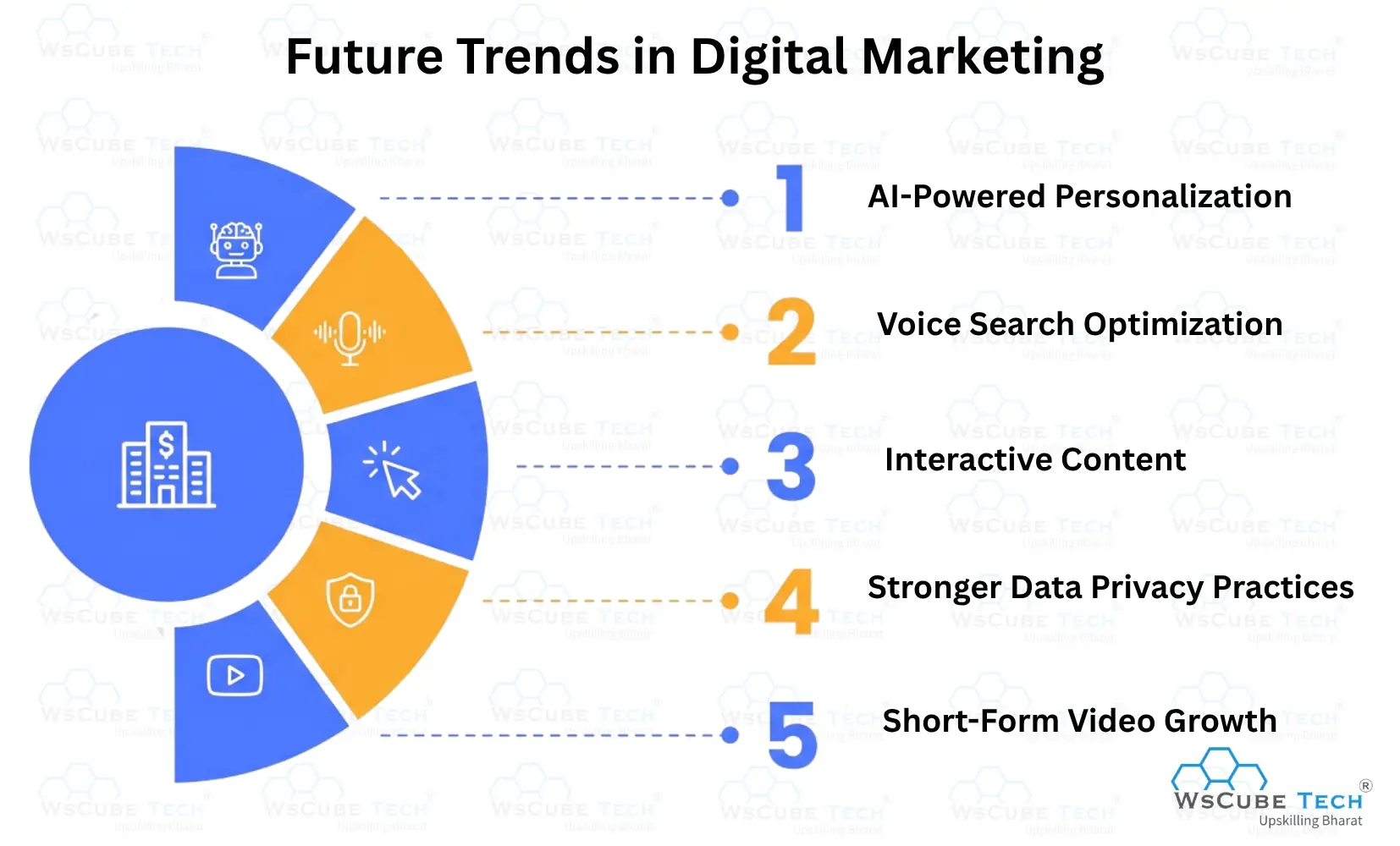
- AI-Powered Personalization: Brands will use AI to deliver more personalized content, recommendations, and customer experiences.
- Voice Search Optimization: Businesses will increasingly optimize content for voice-based and conversational search queries.
- Interactive Content: Quizzes, polls, AR experiences, and interactive tools will become more popular for boosting engagement.
- Stronger Data Privacy Practices: Marketers will rely more on first-party data as privacy regulations and cookie restrictions increase.
- Short-Form Video Growth: Platforms like Instagram Reels, YouTube Shorts, and TikTok will continue to drive audience engagement.

FAQs About Digital Marketing Types
The main types of digital marketing include SEO, PPC advertising, social media marketing, content marketing, email marketing, influencer marketing, affiliate marketing, video marketing, mobile marketing, SEM, display advertising, and online PR. Each channel helps businesses achieve different marketing goals.
No, many digital marketing strategies, such as SEO, content marketing, and social media marketing, can be started with a limited budget. Businesses can scale their investment as they grow.
SEO, content marketing, social media marketing, and email marketing are often the most effective options for small businesses. They offer strong results while remaining relatively cost-effective.
Yes, combining different types of digital marketing often delivers better results. For example, businesses can use SEO for traffic, social media for engagement, and email marketing for customer retention.
In 2026, businesses continue to rely on SEO, social media marketing, email marketing, video marketing, PPC advertising, and influencer marketing. AI-powered personalization and short-form video content are also becoming increasingly important.
The effectiveness of a channel depends on your goals and audience. However, SEO, video marketing, social media marketing, and email marketing consistently deliver strong results across industries.
Students can start by learning core concepts, gaining hands-on experience through projects, and enrolling in a digital marketing course. Certifications and internships can also help build practical skills.
Social media marketing and content marketing are often considered beginner-friendly. They help learners understand audience engagement, content creation, and campaign strategy without requiring a large budget.
The timeline varies by channel. PPC campaigns can generate results quickly, while SEO and content marketing may take several months to show significant growth.
Understanding different marketing channels helps businesses choose the right strategies, allocate resources effectively, and reach their target audience through the most suitable platforms.
Join Our On-Campus Digital Marketing Program
Explore Our Free Courses




Leave a comment
Your email address will not be published. Required fields are marked *Comments (0)
No comments yet.