Ever wondered how many websites exist on the internet right now? Over 1.8 billion websites are live on the World Wide Web today, and that number keeps climbing. What started as simple static HTML pages has now evolved into complex, interactive web applications powering everything from shopping to banking.
This growth isn't just technical, it's a business reality. With more than 5 billion internet users worldwide, no company can afford to ignore what a well-built website brings: visibility, credibility, and a direct line to customers. Building that website the right way starts with understanding the different types of web development and how each one contributes to the final product.
Broadly, there are 3 types of web development every project relies on: front-end, back-end, and full-stack. Knowing the difference helps you plan smarter or even enroll in a full stack development course to build these skills yourself.
What Is Web Development?
Web development is the process of creating, designing, and maintaining a website. The primary focus is on building an engaging and fully functional website that enhances user experience and adds to the popularity of the site.
Web development comprises various aspects, such as web publishing, web design, web programming, and database management. Developers use several programming languages, including HTML, CSS, Python, PHP, JavaScript, etc., to build modern and responsive websites.
We can conclude that web development means creating an application that works over the internet, whether it’s a website or web application.
Recommended Professional Certificates
Full Stack Development Course with AI Engineering
WordPress Bootcamp
Types of Web Development
Web development is primarily divided into three types: Front-end development, Back-end development and Full-stack development. Each focus on a different aspect of creating and maintaining websites and web applications. Front-end development deals with the user interface (UI), backend development handles server-side logic and databases, while full stack combines both skill sets.
Below, we will discuss types of website development and related technologies in detail so you can figure out which is the most suitable role for you in any web development project.
Let's explore each type of web development one by one and understand it in detail.
1. Front-end Development
Front-end development is one of the most in-demand types of web development because a website's success is directly tied to how users experience its interface.
We are living in the digital era, where the success and popularity of any website depend on its front end. Well-designed and user-friendly interfaces stand out from other online platforms. Designing a visually appealing user interface is not a one-man job but demands the collaborative efforts of front-end designers and developers. They optimize code for enhanced performance and speed, ensuring that the website is responsive across all operating systems and devices.
Front-end web development, also known as client-side web development, is one of the common web types. It is the process of designing the user interface of a website or web application using different front-end technologies, such as JavaScript, CSS, HTML, etc.
This is the part of a website that users can see or interact with. The aim of the front-end portion of a website is to provide a seamless user experience. It allows visitors to read the content easily and motivates them to build a clean interface.
Front-end development is a dynamic and ever-evolving profession, as it involves ample technologies and tools. Developers have a rich environment to practice their expertise and explore their imagination.
Popular Frontend Technologies
HTML
HTML, or HyperText Markup Language, is a commonly used programming language to design the front-end side of a website or web page. Developers rely on it to design the structure and layout of a website. Basically, it is like a skeleton for a website on which its structure is built. It ensures interactive web pages and is used to design static pages.
CSS
Cascading Style Sheets, or CSS, is a simply designed programming language that makes it easier for developers to design presentable web pages. It enhances the layout and presentation of a web page and is used alongside HTML. Designers and developers use CSS to style a website.
JavaScript
JavaScript is a scripting language used to make a website more interactive and dynamic. For example, when we click a button or search a query on Google, it’s JavaScript that works from behind to provide output. JavaScript is used by different web developer types to enhance user engagement. That is why when you open your Gmail and go to inbox, you witness a smooth transition as the page loads.
AngularJS
AngularJS is a comprehensive platform used to build dynamic web applications. It offers powerful features and tools, along with a methodical foundation for assembling SPAs from preexisting parts.
ReactJS
ReactJS is a JavaScript library used to build user interfaces. Its component-based architecture and efficient rendering simplify the process of recycling code and creating a sophisticated user interface.
VueJS
VueJS is a progressive JS framework used to build modern user interfaces and single-page web applications. It offers a straightforward and easy-to-understand API to build UI widgets.
Bootstrap
Bootstrap is an open-source tool kit used to create responsive websites and web applications. It is a popular CSS framework for developing mobile-first websites.
Upcoming Masterclass
Attend our live classes led by experienced and desiccated instructors of Wscube Tech.







2. Back-end Web Development
Back-end web development is one of the core web development types that works behind the scenes to keep a website running smoothly.
Back-end web development, also known as server-side web development, refers to developing and maintaining the back-end of a website or web application. Among different types of web development, backend focuses on the part of a website that users can't see or interact with.
These unseen aspects of a web application or website include data security, data storage, and server-side scripting. This side of website doesn't have any direct contact with users and is concerned with storing and arranging data.
The back-end part of a website must ensure effective and safe data collection, storage, and retrieval. It is also responsible for managing APIs or scripting languages running on the server and linking front-end and back-end portions.
Back-end developers primarily deal with writing clean codes and building the logical structure of a website. They focus on APIs, servers, databases, and back-end logic. They handle the processing and logic to ensure the front end runs seamlessly, which is crucial for the success of any website or web application.
In any web project, the logical part of a website depends on the back end, and we can't see the technologies used to develop that website. However, this doesn't take away the fact that the back-end is a vital part of any website. A well-designed back-end supports the security and effectiveness of any website.
The back-end side of a website includes responding to server requests, controlling databases, and placing application logic correctly. These components are created using different programming languages, such as Ruby, Python, PHP, Java, NodeJS, and more. To store and retrieve data, we use databases such as MySQL, MongoDB, and PostgreSQL.
Popular Back-end Technologies
PHP
PHP is a widely known server-side scripting language used to manage dynamic content, databases, session tracking, and e-commerce websites. It is specifically designed for web development and is integrated with different databases, such as Oracle, MySQL, and PostgreSQL.
Java
Java is a popular and highly scalable programming language used to design games, websites, apps, and software. Irrespective of website development types, Java is a preferred language for all. It is used by over 6 to 9 million developers and powers over 5.5 billion devices.
Python
Python is another commonly used programming language that is easier to learn and code. It allows developers to work faster and integrate systems more efficiently. Renowned platforms like Instagram and Pinterest are powered by Python.
Ruby on Rails
Ruby on Rails, or RoR, is based on the Ruby programming language and is a reliable web development framework. Three main factors that contributed to its success and popularity are its adaptability, simplicity, and user-friendliness.
NodeJS
NodeJS is a cross-platform and open-source runtime environment used to execute JavaScript code outside a browser.
PostgreSQL
PostgreSQL is a popular open-source RDBMS trusted for its scalability, stability, and sophisticated feature support.
Read More Web Development Related Guides
3. Full-stack Web Development
Full-stack web development is considered one of the most versatile types of website development since it spans both the client-side and server-side of a project.
Full-stack web development covers front-end and back-end development. Full-stack developers not only design and develop the front-end and back-end aspects of a website but also take care of its security, functionality, and scalability. Therefore, they must be well-versed in web design, debugging, web development, and database.
These 3 types of web development hold expertise in developing client-side and server-side web applications and possess database management skills to handle a large amount of data while optimizing a website.
As they practice full-stack development, they are proficient in all layers of the infrastructure of a website, including front-end, back-end, and everything in between. They also have a strong understanding of redesigning, building and speeding up the website design and development stages.
To complete the project efficiently, they stay updated with industry trends, including deep learning, blockchain, multi-cloud, and more.
Aspiring programmers and developers can opt for a full-stack web development course to seek comprehensive knowledge of web development.
Popular Full-stack Technologies
Rather than picking individual tools, most full-stack teams standardize on a "stack," a pre-decided combination of database, back-end framework, and front-end library that's known to work well together. Here are the most widely used ones:
MERN Stack
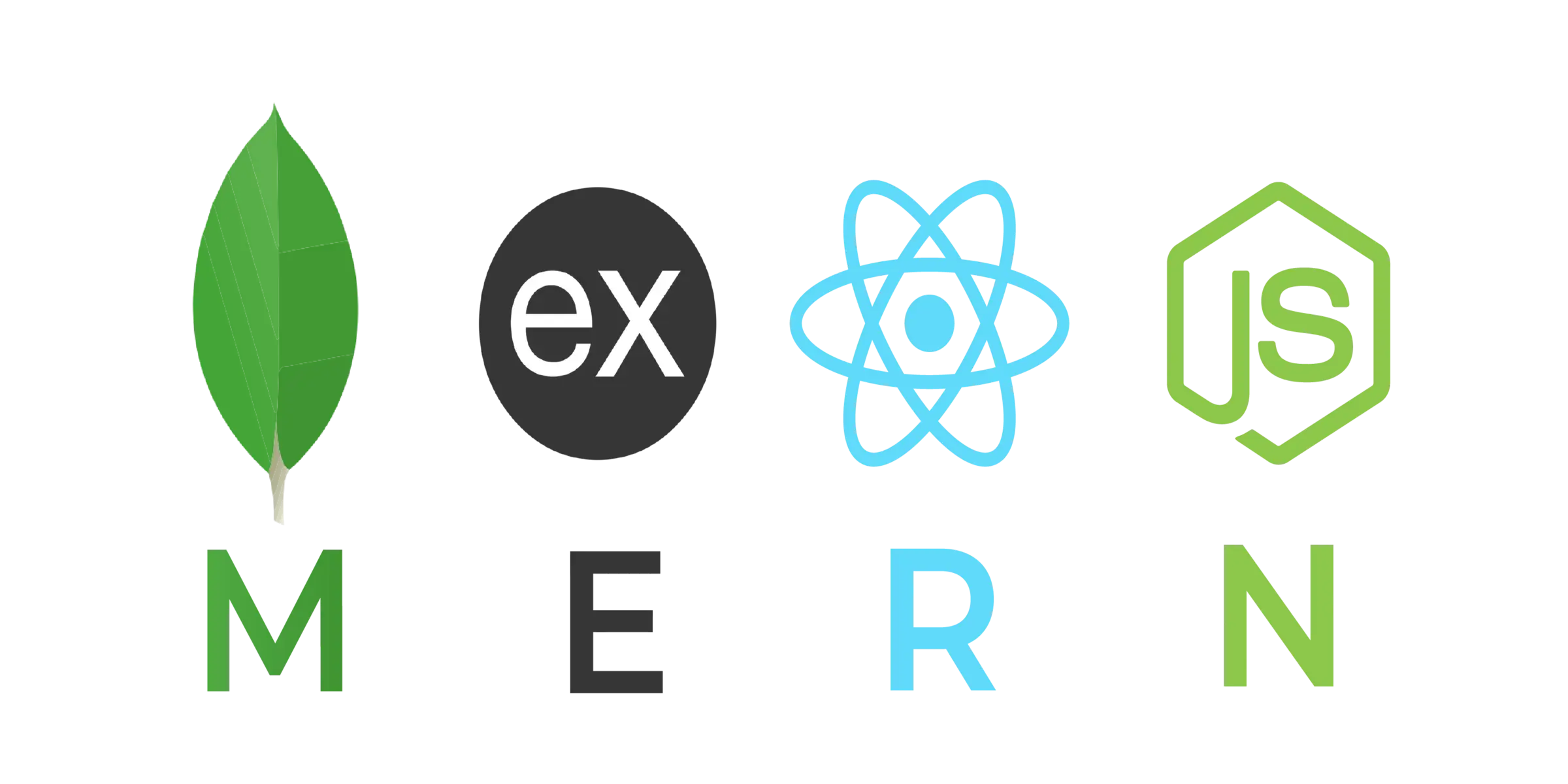
MERN is one of the most popular JavaScript-based full-stack combinations, built entirely around a single language, JavaScript, for both client and server code.
- MongoDB: a NoSQL database that stores data in flexible, JSON-like documents instead of rigid tables.
- ExpressJS: a lightweight Node.js framework that handles routing, middleware, and API logic on the server.
- ReactJS: a component-based JavaScript library used to build fast, interactive user interfaces.
- NodeJS: a JavaScript runtime that lets developers run JS code outside the browser, powering the server.
Because every layer speaks JavaScript, MERN reduces context-switching for developers and is a strong choice for building responsive single-page applications (SPAs) and real-time apps.
MEAN Stack
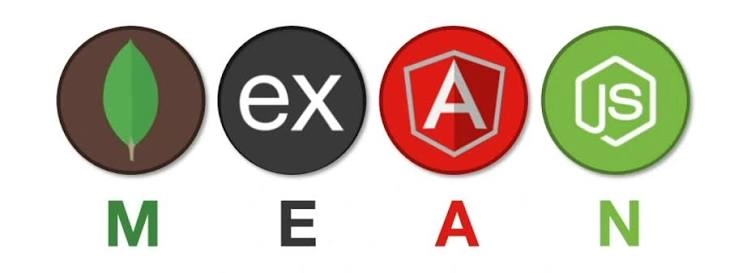
MEAN follows the same philosophy as MERN but swaps the front-end library for a full-fledged framework.
- MongoDB: NoSQL database for document-based data storage.
- ExpressJS: Node.js framework for building server-side logic and APIs.
- Angular: a TypeScript-based front-end framework maintained by Google, well suited for large, enterprise-scale applications.
- NodeJS: JavaScript runtime for the server side.
MEAN is often preferred for larger applications where Angular's opinionated structure, built-in dependency injection, and two-way data binding help teams maintain consistency across a big codebase.
MEVN Stack
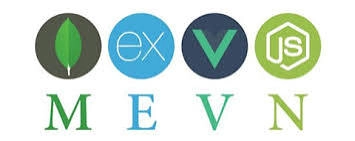
MEVN is a newer variant that replaces Angular with Vue.js, aiming for a lighter, more approachable front-end layer.
- MongoDB: NoSQL database.
- ExpressJS: back-end web framework.
- VueJS: a progressive front-end framework known for its gentle learning curve and clean, readable syntax.
- NodeJS: JavaScript runtime for server-side execution.
MEVN is a good fit for teams that want the flexibility of MEAN/MERN but prefer Vue's simplicity over Angular's steeper learning curve or React's JSX-heavy approach.
LAMP Stack
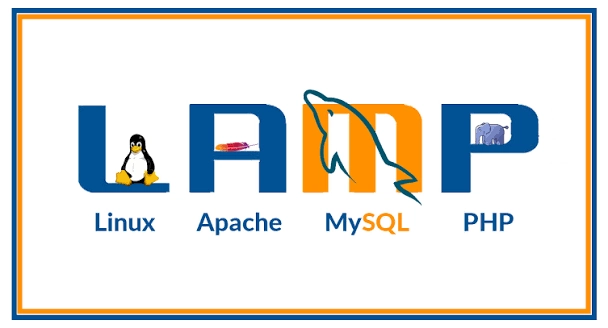
LAMP is one of the oldest and most battle-tested full-stack combinations, widely used for content-heavy websites and traditional web applications.
- Linux: the operating system that hosts the application.
- Apache: the HTTP server that handles incoming web requests.
- MySQL: a relational database used to store and query structured data.
- PHP: the server-side scripting language that ties the application logic together (Python or Perl are sometimes used instead).
Every component in LAMP is open-source and free to use, which keeps hosting costs low. It also has platform-specific variants, WAMP for Windows and MAMP for macOS, making it accessible across different development environments.
Explore Our Web Development Related Courses
FAQs about Web Development Types
The 3 types of web development are front-end (client-side), back-end (server-side), and full-stack (both combined). Each focuses on a different layer of building and running a website.
Front-end development handles what users see and interact with, like layout and design. Back-end development handles the server, database, and logic that run behind the scenes.
Front-end is generally considered easier to start with since HTML and CSS have a visual, quick feedback loop. Back-end takes longer to learn as it involves databases, servers, and logic.
A full-stack developer works on both the front-end and back-end of a website. They handle everything from UI design to server logic, databases, and deployment.
HTML, CSS, and JavaScript are used for front-end development, while Python, PHP, Java, Ruby, and Node.js are common for back-end development.
Yes, full-stack developers are in high demand because businesses prefer hiring one person or a small team that can handle the entire development process.
It typically takes 3 to 6 months to learn the basics of front-end or back-end development, and 6 to 12 months to become job-ready as a full-stack developer.
Full-stack and back-end developers usually earn more than front-end developers since their role covers a wider and more technical skill set.
Yes, this is exactly what a full-stack developer does. However, it requires learning multiple technologies and takes more time than specializing in one area.
Beginners often start with front-end development since it's more visual and easier to grasp early on, then move to back-end or full-stack as skills grow.

Conclusion
Understanding the different types of web development is essential before you start building modern websites or web applications. Whether you choose to specialize in front-end, back-end, or full stack development, having a strong grasp of each area helps you create scalable, high-performing, and user-friendly solutions.
Always evaluate your project's requirements, objectives, and technical needs before deciding on the right development approach. This ensures a smoother development process and delivers a better user experience.
Explore Our Free Tech Tutorials
| Python Tutorial | Java Tutorial | JavaScript Tutorial |
| C Tutorial | C++ Tutorial | HTML Tutorial |
| CSS Tutorial | SQL Tutorial | DSA Tutorial |
Practice Coding With Our Free Compilers
| Online Python Compiler | Online HTML Compiler | Online C Compiler |
| Online C++ Compiler | Online JS Compiler | Online Java Compiler |
Join Our On-Campus Full Stack Related Courses
Free Courses for You

Leave a comment
Your email address will not be published. Required fields are marked *Comments (0)
No comments yet.