Thinking about becoming a developer but wondering, “Am I even eligible?” You’re not alone—many beginners feel confused before starting their journey. With so many courses available, it’s common to feel unsure about where you stand or if you meet the requirements.
Many beginners struggle to understand the eligibility criteria for full-stack development course. Do you need a technical degree? Is coding knowledge required? Can non-IT students apply? These questions create unnecessary confusion.
Because of this, many delay learning or give up early. They miss valuable opportunities, feel stuck in their current path, and lose confidence before even trying.
The truth is, getting started is much easier than you think. In this blog, you’ll learn the exact eligibility criteria, who can apply, required skills, and whether prior experience is needed.
If you want to become a full-stack developer, you can join our online full-stack course.
What is Full Stack Development?
Before learning about the full-stack course eligibility, it is important to understand what full-stack development is. Imagine you open a shopping website, browse products, add items to your cart, and place an order—everything you see and everything working behind the scenes is part of it.
Full-stack development means working on both the front end (what users see) and the back end (how the system works). It involves building complete web applications using different tools and technologies.
A full-stack developer can handle the entire development process from start to finish. Understanding this helps you know the required skills and decide if this career path is right for you.
Basic Eligibility Criteria Full Stack Course
Anyone with basic computer knowledge, interest in coding, and willingness to learn can join a full-stack course. No strict degree or background is required. Below is the basic full-stack development course eligibility criteria:
Minimum Educational Qualification (10th, 12th, Graduation)
You can start a full-stack course after completing 10th, 12th, or graduation. Most institutes accept students from any level because the course focuses on practical skills. However, having basic education helps in understanding concepts easily. Graduates may find it slightly easier, but even beginners can learn step by step with proper guidance and practice.
Stream Requirements (Science, Commerce, Arts)
There is no restriction on stream for learning full-stack development. Students from Science, Commerce, or Arts backgrounds can enroll without any issue. While technical students may have a slight advantage, non-IT students can also succeed by learning step by step. What matters most is your interest, consistency, and willingness to learn new technologies.
Age Limit & Other Requirements
There is no strict age limit for enrolling in a full-stack course. Anyone with an interest in learning coding can start, whether a student or a working professional. Basic computer knowledge, internet usage, and dedication to learning are important. Consistency and practice matter more than age, making it suitable for beginners as well as individuals planning a career switch.
Is a Technical Degree Required?
A technical degree is not required to learn full-stack development. Many successful developers come from non-technical backgrounds and have learned through online courses or training programs. What truly matters is your interest, logical thinking, and willingness to practice regularly. With the right mindset and consistent effort, anyone can become a full-stack developer without a formal technical degree.
Recommended Professional Certificates
Full Stack Development Course with AI Engineering
WordPress Bootcamp
Who Can Enroll in a Full Stack Course?
A full-stack course is best for anyone interested in web development, regardless of background, qualification, or experience level. Below are the categories that can enroll:
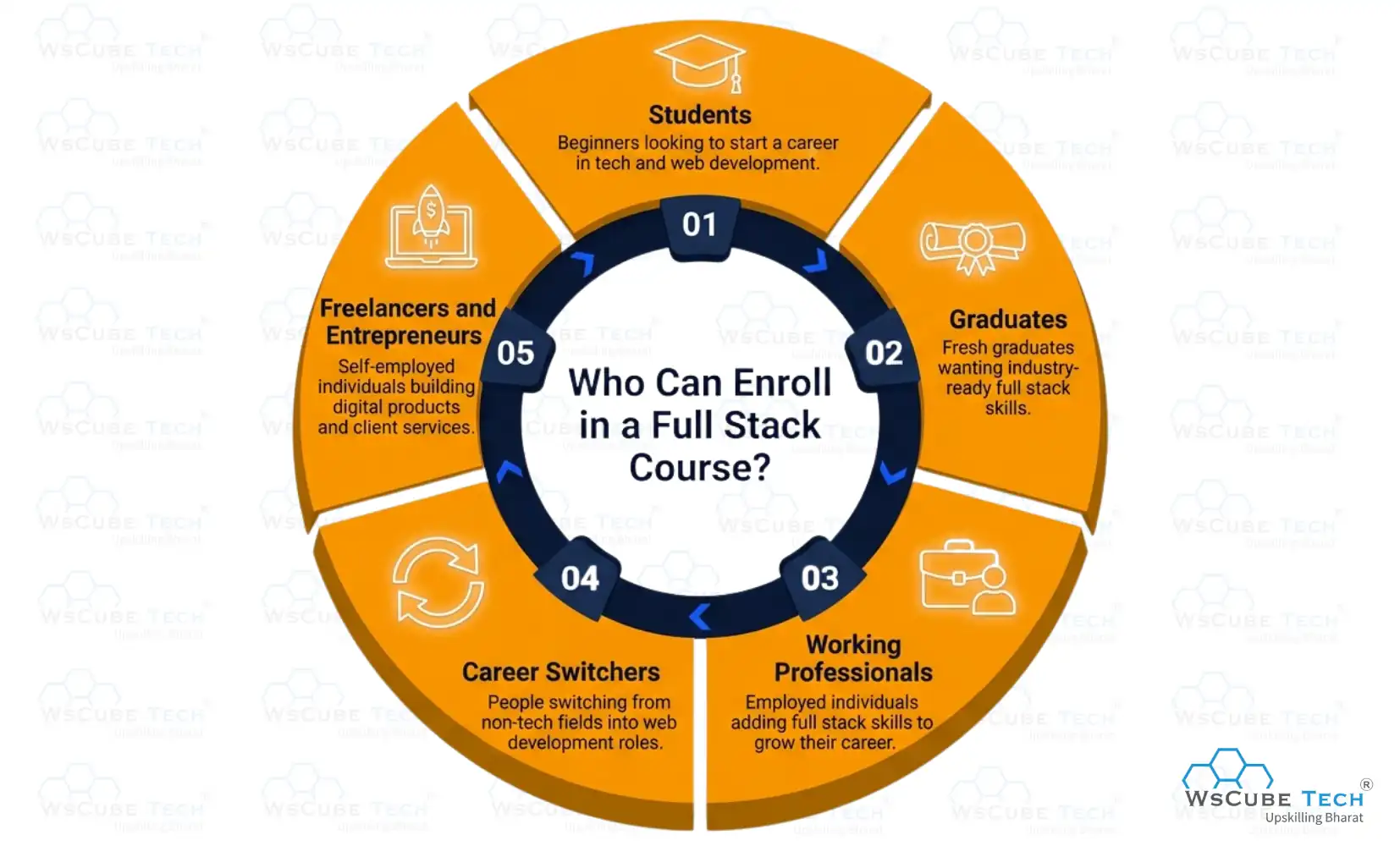
1. Students (After 10th / 12th)
Students who have completed 10th or 12th can start learning full-stack development early. It helps build strong technical skills and opens career opportunities. Even without prior coding knowledge, students can begin with basics and grow step by step. Starting early gives them an advantage in understanding modern technologies and preparing for future job roles.
2. Graduates (Any Stream)
Graduates from any stream, including Science, Commerce, or Arts, can enroll in a full-stack course. It is a great way to enhance skills and improve job opportunities. Even without a technical background, graduates can learn step by step and build a strong career in web development with proper practice and dedication.
3. Working Professionals (IT & Non-IT)
Working professionals, whether from IT or non-IT backgrounds, can upgrade their skills with full-stack development. IT professionals can advance their careers, while non-IT professionals can switch fields. With flexible learning options, they can balance work and study while gaining practical skills to move into better roles or higher-paying opportunities.
4. Career Switchers
Individuals looking to switch careers can choose full-stack development as a new path. It offers strong demand and good growth opportunities. Even without prior experience, beginners can learn through structured courses and practice. With dedication and consistency, anyone can successfully transition into the tech industry and build a stable future.
5. Freelancers & Entrepreneurs
Freelancers and entrepreneurs can benefit greatly from full-stack development skills. It allows them to build websites, applications, or digital products without depending on others. This skill helps save costs, increase earning opportunities, and manage projects independently, making it a valuable asset for growing a business or freelance career.
If you want to learn full-stack development step by step, explore our blog “How to Become a Full-Stack Developer?” to understand the right roadmap, essential skills, and how to start your journey in a simple and clear way.
Upcoming Masterclass
Attend our live classes led by experienced and desiccated instructors of Wscube Tech.
Skills You Need Before Starting Full Stack Development
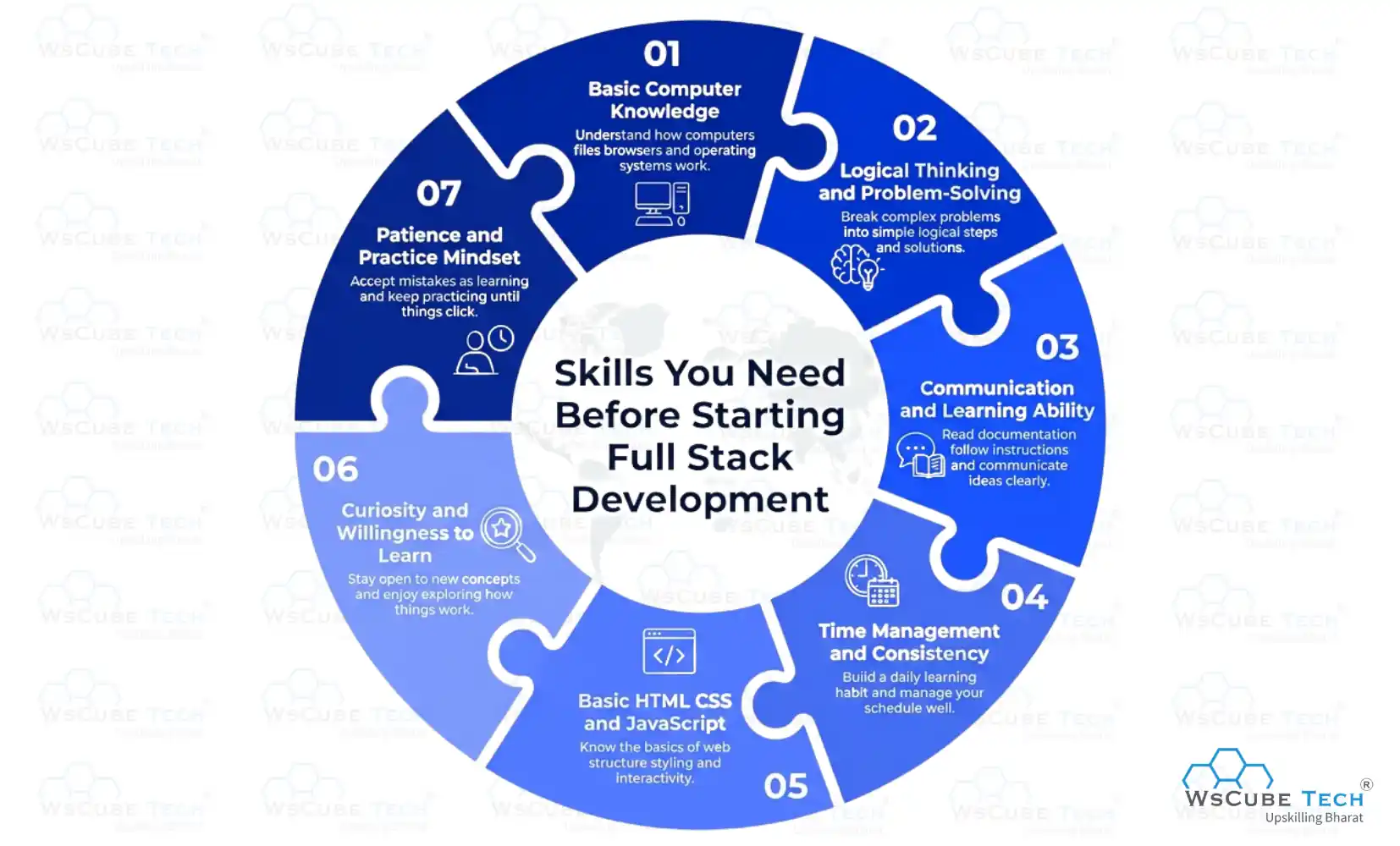
Now that you understand everything about full-stack development course eligibility, it’s time to understand the basic skills you should have before starting your journey.
1. Basic Computer Knowledge
Basic computer knowledge is important before starting full-stack development. You should know how to use a computer, browse the internet, manage files, and install software. These simple skills help you understand tools and platforms easily, making your learning process smoother and faster from the beginning.
2. Logical Thinking & Problem-Solving Skills
Full-stack development requires strong logical thinking and problem-solving skills. You need to understand how to break problems into smaller steps and find solutions. This helps you write efficient code, fix errors, and build applications smoothly while improving your overall programming ability over time.
3. Communication & Learning Ability
Good communication skills and a strong learning ability help you grow faster in full-stack development. You should understand concepts, ask questions, and learn from tutorials. Continuous learning is important because technologies keep changing, so staying open to new things helps you improve.
4. Time Management & Consistency
Time management and consistency are important for learning full-stack development. Create a study schedule and practice daily. Even a few hours of regular practice can build strong skills and keep you motivated.
5. Basic Understanding of HTML, CSS & JavaScript
Having a basic idea of HTML, CSS, and JavaScript is helpful before starting full-stack development. These are the core technologies used to build websites. Even if you are a beginner, learning the basics will make it easier to understand how web applications work and improve your confidence while coding.
6. Curiosity & Willingness to Learn
Curiosity and a willingness to learn are very important for becoming a full-stack developer. You should have an interest in exploring new technologies and understanding how things work. This mindset keeps you motivated and helps you overcome challenges while learning complex concepts in an easy and enjoyable way.
7. Patience & Practice Mindset
Patience is important while learning full-stack development because coding can be challenging. You may face errors, but regular practice helps you improve. Learning from mistakes builds confidence over time.
Explore More Guides Related to Full Stack Development
Do You Need Prior Coding Experience?
No, you do not need prior coding experience to start learning full-stack development. Many beginners start from scratch and gradually build their skills. Most courses are designed to teach everything step by step, starting from the basics.
However, having basic knowledge of programming or web technologies can be helpful. It may make learning faster and easier, but it is not mandatory. With proper guidance and regular practice, beginners can understand concepts without any prior experience.
The key to success is consistency and a willingness to learn. Even without coding experience, you can become a full-stack developer by practicing regularly, working on small projects, and improving your skills over time.
Eligibility for Online & Offline Full Stack Courses
Full-stack courses are open to beginners, students, and professionals with basic computer knowledge and an interest in coding. Below is the full-stack course eligibility for both learning modes.
Full Stack Eligibility for Online Course
Online full-stack courses are flexible and beginner-friendly, making them best for anyone who wants to learn at their own pace. You don’t need a strict background, but having basic skills will help you learn faster and more effectively.
Eligibility Criteria:
- Basic computer knowledge and internet usage
- A laptop or computer with a stable internet connection
- No specific degree required (10th, 12th, or graduates can apply)
- Interest in coding and willingness to learn
- Ability to follow online tutorials and practice regularly
If you are interested to learn full stack development, Wscube Tech offers a full stack development course that helps you learn step by step with expert guidance, real projects, and career-focused training.
Full Stack Eligibility for Offline Course
Offline full-stack courses are suitable for those who prefer classroom learning, direct interaction, and structured guidance. These courses provide hands-on support, making it easier to clear doubts and stay consistent during learning.
Eligibility Criteria:
- Minimum 10th or 12th pass (varies by institute)
- Basic computer knowledge is required
- No technical degree is mandatory
- Willingness to attend regular classes
- Interest in learning web development and building projects
Check Out Our Development Related Courses
Common Myths About Full Stack Course Eligibility
Many beginners are confused and hold false beliefs about who can learn full-stack development and what requirements are needed. Below are the myths about the eligibility for full-stack developer course:
1. You Need a Technical Degree to Learn Full-Stack
Many believe a technical degree is necessary to learn full-stack development. In reality, it is not required. Anyone with basic computer knowledge and interest can start learning. Skills, practice, and real-world projects matter more than having a formal technical degree in this field.
2. Only IT Students Can Enroll in Full Stack Courses
It is a common myth that only IT or computer science students can enroll in full-stack courses. Students from Commerce, Arts, or any other stream can also learn. Full-stack development focuses on skills, not academic background or previous specialization.
3. You Must Know Coding Before Starting
Many beginners think coding knowledge is required before starting full-stack development. However, most courses are designed for beginners and start from basic concepts. You can learn step by step, practice regularly, and gradually build coding skills without any prior programming experience or technical background.
4. Full Stack Development Is Too Difficult for Beginners
Some believe full stack development is too difficult to learn, especially for beginners. While it may seem challenging at first, structured learning and regular practice make it easier. With patience and the right approach, beginners can understand concepts and build real-world projects confidently over time.
5. Age Is a Barrier to Learning Full Stack Development
Many think age limits their ability to learn full stack development, but this is not true. There is no age restriction for learning. Whether you are a student or a working professional, you can start anytime and build valuable skills with consistent effort and dedication.
FAQs About Full Stack Course Eligibility
Beginners can enroll in a full-stack course with basic computer knowledge and interest in coding. No prior experience is required, as most courses start from fundamentals and gradually cover advanced topics.
In India, eligibility is flexible. Students after 10th, 12th, or graduation can apply. No specific stream or technical degree is required, but basic computer skills and a willingness to learn are important.
Yes, you can join a full-stack course after completing 10th grade. Many courses are beginner-friendly and teach from basics, helping you build skills early without needing higher qualifications.
Yes, being 12th pass is enough to enroll in a full-stack course. Many institutes accept students after 12th and provide step-by-step learning to build strong development and programming skills.
No, a graduation degree is not mandatory for learning full stack development. You can start with basic knowledge and interest. Skills, practice, and projects matter more than formal educational qualifications.
Yes, non-IT students can easily apply for a full-stack course. With proper guidance and consistent practice, learners from Commerce or Arts backgrounds can successfully develop skills and build careers.
No, prior coding knowledge is not required before joining a full-stack course. Most beginner courses start from basics, helping you understand programming concepts gradually and build skills step by step.
There is no age limit for learning full stack development. Students, graduates, and working professionals of any age can start learning and build skills with dedication and consistent practice over time.
Yes, working professionals can enroll in a full-stack course. Many online and flexible programs allow learning alongside a job, helping upgrade skills or switch careers into the tech industry.
Basic computer knowledge, logical thinking, and problem-solving skills are helpful before starting. Good communication, learning ability, and consistency also support faster understanding and more progress in full-stack development.
No, a computer science degree is not mandatory for full stack development. Many developers succeed without it by learning through courses, practicing regularly, and building real-world projects and practical experience.
Yes, beginners with no technical background can learn full stack development. Many courses are designed for absolute beginners and provide step-by-step guidance to build skills from basic to advanced levels.
Online full-stack courses usually require basic computer knowledge and internet access. No formal degree is necessary, making them suitable for students, beginners, and professionals who want flexible learning options.
Offline full-stack training is suitable for students after 10th or 12th, graduates, and professionals. Basic computer knowledge and willingness to attend regular classes are important for successful learning and progress.
Conclusion
Full-stack development is a flexible and beginner-friendly career option that does not require strict qualifications or a technical background. Anyone with basic computer knowledge, interest in coding, and a willingness to learn can start this journey.
By understanding the eligibility criteria, required skills, and common myths, you can take the first step with confidence. With consistent practice and the right guidance, building a successful career in full stack development becomes achievable.
Join Our On-Campus Full Stack Related Courses
Start Learning Programming with Our Free Tutorials
| Python Tutorial | Java Tutorial | JavaScript Tutorial |
| C Tutorial | C++ Tutorial | HTML Tutorial |
| CSS Tutorial | SQL Tutorial | DSA Tutorial |
Free Courses for You

Leave a comment
Your email address will not be published. Required fields are marked *Comments (0)
No comments yet.