
Data analytics is one of the most in-demand and fastest-growing skills today, helping businesses make smarter decisions using data. Many beginners and professionals are interested in this field due to its high demand, attractive salaries, and strong career growth, but often wonder how much time and effort it takes to get started and build a successful career.
The time required to learn data analytics depends on your background, learning pace, and consistency. With the right guidance and regular practice, you can develop strong analytical skills and start solving real-world data problems.
Let’s learn what data analytics is and explore learning timelines from beginner to advanced levels, key skills, tools, a step-by-step roadmap, challenges, tips, and career opportunities in data analytics.
What is Data Analytics?
Data analytics is the process of collecting, organizing, and analyzing data to find useful insights and support better decision-making. It helps businesses understand patterns, trends, and customer behavior so they can improve performance and plan effectively. Data analytics is widely used across industries such as healthcare, finance, marketing, and technology to solve problems and make data-driven decisions.
Types of Data Analytics
There are four main types of data analytics, each used to analyze data and support better decision-making.
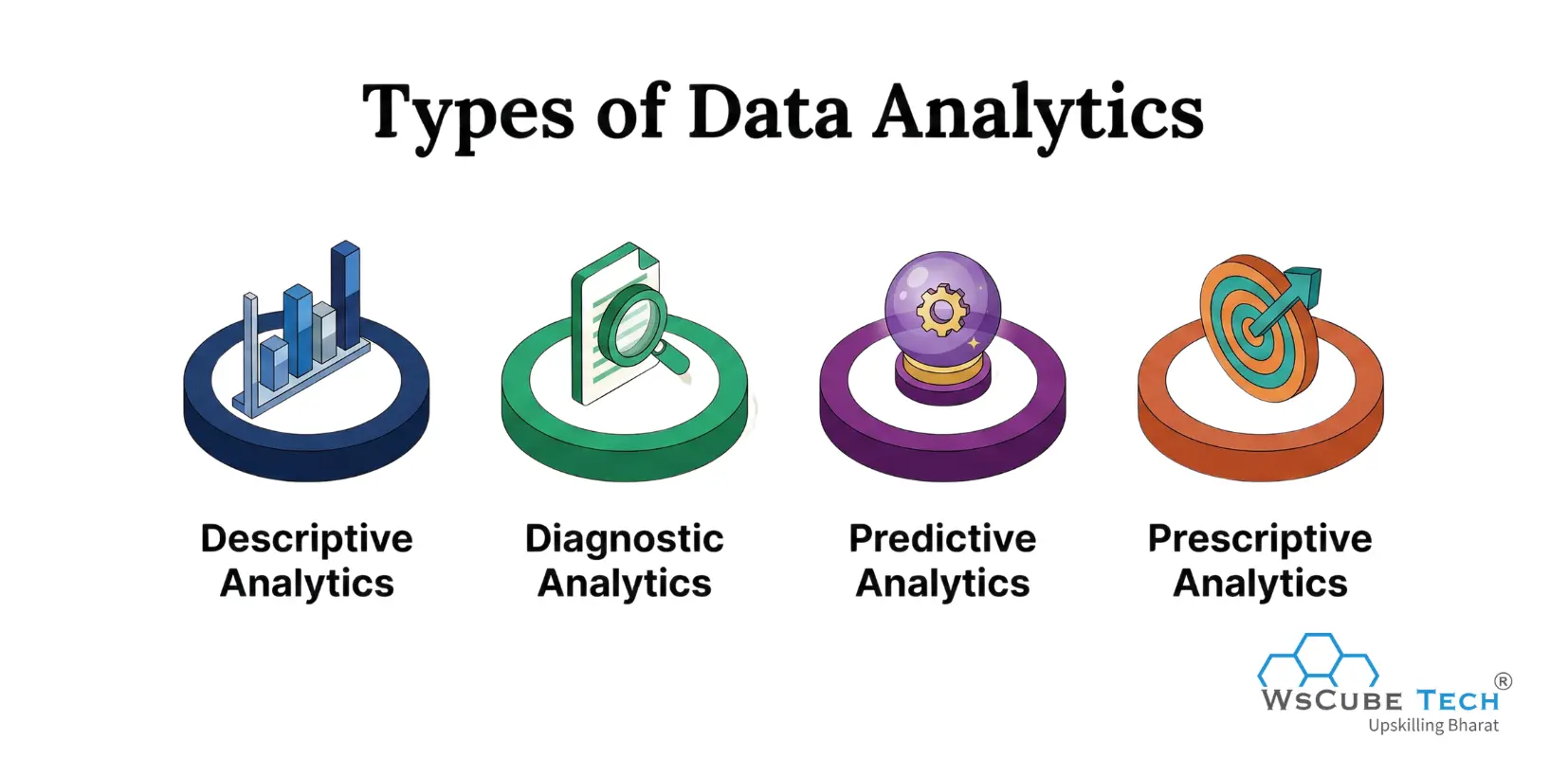
- Descriptive Analytics: Focuses on analyzing past data to understand what has already happened.
- Diagnostic Analytics: Helps identify the reasons behind past outcomes or problems.
- Predictive Analytics: Analyzes past data using statistical methods and algorithms to estimate what is likely to happen in the future.
- Prescriptive Analytics: Suggests actions and solutions based on data analysis to achieve better results.
Why Learn Data Analytics?
Data analytics is a valuable skill that helps you understand data, make better decisions, and build a strong career in today’s fast-growing digital world. Below are the key reasons to learn data analytics:
- High Demand: Data analytics professionals are in high demand across industries like healthcare, finance, marketing, and IT, as organizations rely on data to improve performance and make smarter business decisions.
- Strong Career Growth: Learning data analytics opens doors to various job roles with excellent salary packages, long-term career stability, and continuous growth opportunities in both technical and non-technical fields.
- Better Decision-Making: Data analytics helps individuals and organizations make informed decisions by studying data, identifying patterns, and understanding trends. It reduces uncertainty, minimizes risks, improves efficiency, and supports better planning, allowing businesses to make smarter strategies and achieve more effective results.
- Versatile Skill: Data analytics skills are useful in multiple industries, allowing you to switch careers easily and apply your knowledge in different domains like business, technology, education, and research fields.
- Improves Problem-Solving: It enhances your ability to think logically and solve complex problems by analyzing data, identifying issues, and finding effective solutions based on real-world data insights.
Recommended Professional Certificates
Data Analytics Course with Gen AI
Data Science Course with Internship & Placement Support
How Long Does It Take to Learn Data Analytics?
The time required to learn data analytics depends on your background, learning speed, and consistency. On average, most beginners can gain basic skills in 3 to 6 months with regular practice and proper guidance.
If you already have knowledge of programming or statistics, you can learn faster, usually within 1 to 3 months. However, mastering advanced concepts like machine learning, big data, and real-world projects may take 6 months to 1 year or more.
The key is consistent learning, hands-on practice, and working on real datasets, which helps you build confidence and become job-ready more effectively.
Data Analytics Learning Timeline (Beginner to Advanced)
Below is a clear breakdown of how long it takes to learn data analytics, explained through a structured timeline from beginner to advanced level:
Beginner Level (3 to 6 Months)
At the beginner level, you start with the basics of data analytics, including understanding data types, data cleaning, and simple analysis. You will learn tools like Excel and basic SQL, along with fundamental statistics concepts. The focus is on building a strong foundation and understanding how data is collected, processed, and interpreted. Regular practice with small datasets helps you gain confidence and develop essential analytical thinking skills.
Intermediate Level (6 to 9 Months)
At the intermediate level, you build on your basic knowledge and start working with more advanced tools and techniques. You will learn programming languages like Python or R, advanced SQL queries, and data visualization tools such as Power BI or Tableau. The focus is on handling real-world datasets, performing deeper analysis, and creating dashboards. You will also start working on projects to strengthen your practical skills and improve problem-solving abilities.
Advanced Level (12 to 24 Months)
At the advanced level, you gain expertise in complex data analytics concepts and tools. You will learn machine learning basics, work with large datasets, and understand advanced statistical methods. The focus is on solving real-world business problems, optimizing data processes, and building end-to-end projects. You may also explore big data technologies and automation techniques, helping you become job-ready and capable of handling complex analytics tasks in professional environments.
Factors That Affect Learning Time
Below are the key factors that affect how long it takes to learn data analytics and become confident in applying your skills effectively:
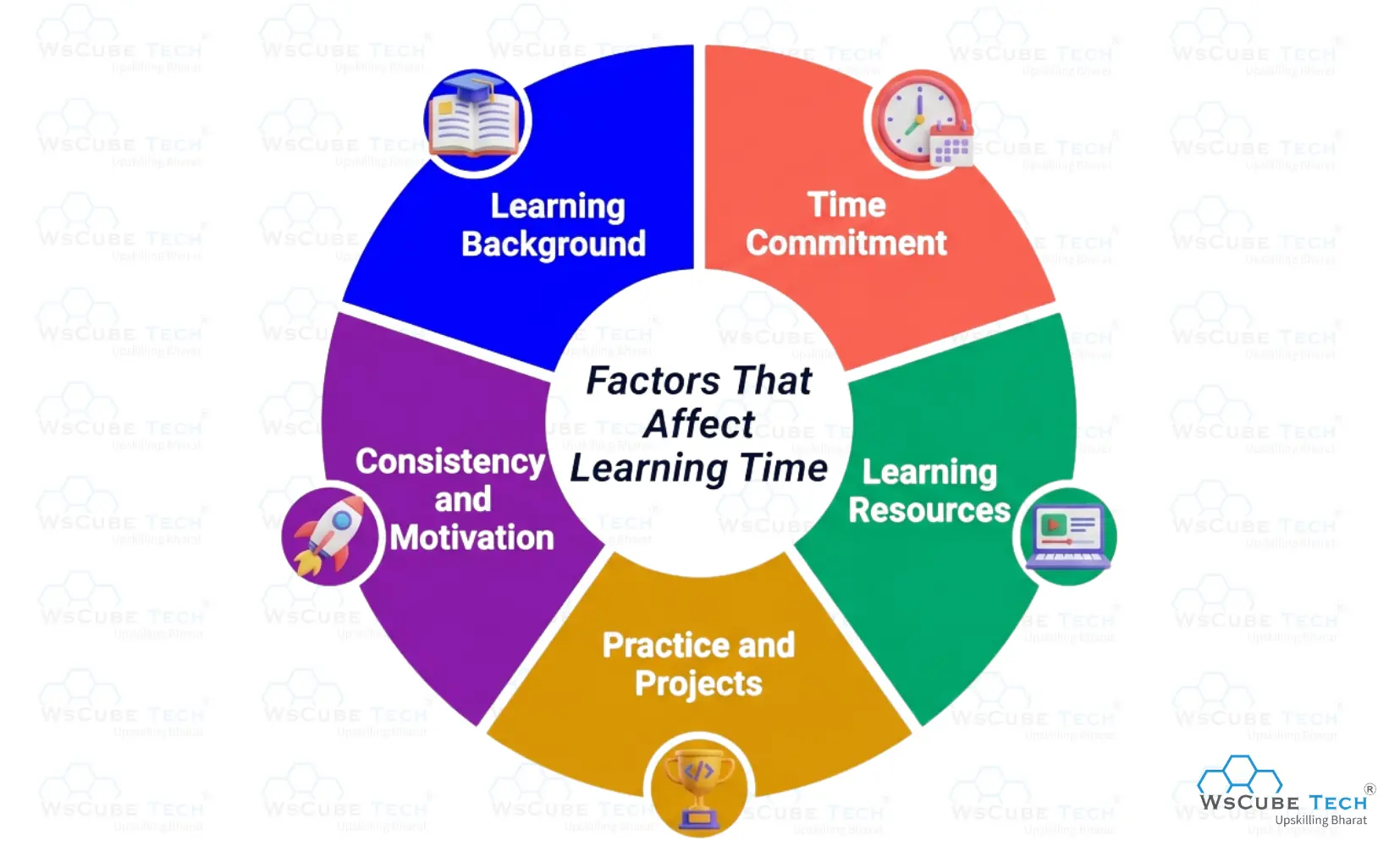
- Learning Background: Your prior knowledge in mathematics, statistics, or programming can significantly impact your learning speed. Beginners may take longer, while those with related experience can learn concepts more quickly and easily.
- Time Commitment: The amount of time you dedicate daily or weekly plays an important role, as consistent learning and regular study hours help you progress faster compared to irregular or limited learning schedules.
- Learning Resources: Choosing the right courses, tutorials, and study materials helps you learn data analytics more efficiently. High-quality and updated resources make concepts easier to understand, while outdated materials can slow your progress and create confusion.
- Practice and Projects: Hands-on practice with real datasets and projects helps you understand concepts better and build practical skills. A lack of practice slows learning and reduces your ability to apply knowledge effectively in real situations.
- Consistency and Motivation: Staying consistent and motivated throughout your learning journey helps you learn faster and retain knowledge better. Lack of discipline or motivation can slow your progress and make it harder to achieve your learning goals.
Also Read: Data Analytics Course Syllabus: Fees, Duration, Eligibility
Upcoming Masterclass
Attend our live classes led by experienced and desiccated instructors of Wscube Tech.





Step-by-Step Roadmap to Learn Data Analytics
Below are the key steps you can follow to become a successful data analyst:
Step 1: Learn Basic Concepts
Start by understanding the basics of data analytics, including data types, data collection, and data cleaning. Learn fundamental statistics concepts like mean, median, and probability to build a strong foundation for analyzing and interpreting data correctly.
Step 2: Learn Tools and Technologies
Learn essential tools such as Excel for data handling, SQL for database management, and Python or R for data analysis. These tools help you work with data efficiently and are widely used in real-world data analytics projects.
Step 3: Learn Data Visualization
Learn how to represent data using charts, graphs, and interactive dashboards so insights are easy to understand. Use tools like Power BI or Tableau to design clear visual reports that highlight trends, patterns, and key results, helping businesses make informed and effective decisions.
Step 4: Work on Real Projects
Apply your knowledge by working on real datasets and projects. This helps you gain practical experience, improve problem-solving skills, and build a strong portfolio for job opportunities.
Step 5: Learn Advanced Concepts
Move to advanced topics like machine learning basics, data modeling, and big data tools. This step helps you handle complex data problems and increases your chances of getting better job opportunities in data analytics.
Step 6: Build a Portfolio and Apply for Jobs
Create a strong portfolio by showcasing your projects, case studies, and dashboards. Update your resume, practice interview questions, and apply for data analyst roles to start your career in data analytics.
If you want to learn data analytics in a structured way, you can join an online data analytics course by WsCube Tech. You’ll learn through real-world projects, guided lessons, and hands-on practice to prepare for high-demand job roles.
Read in Detail: Data Analyst Roadmap: Step-by-Step Guide for Beginners
Key Skills Required for Data Analytics
To become a successful data analyst, you need a combination of technical and analytical data analytics skills. These skills help you work with data, find insights, and make better decisions.
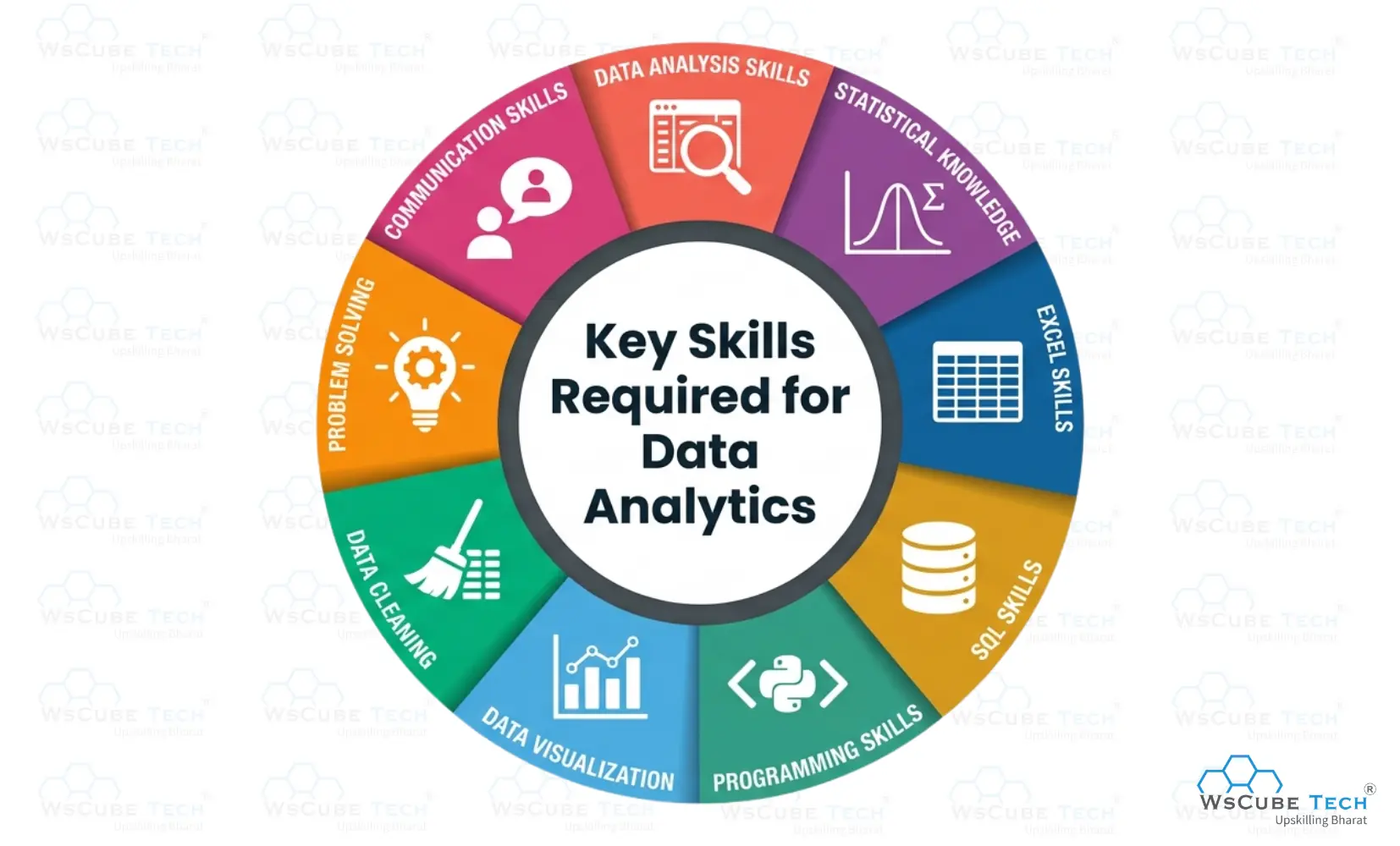
- Data Analysis Skills: Ability to collect, clean, and analyze data to find useful insights and support decision-making.
- Statistical Knowledge: Understanding basic statistics like mean, median, correlation, and probability to interpret data accurately.
- Excel Skills: Proficiency in Excel for data handling, formulas, pivot tables, and basic data visualization.
- SQL Skills: Ability to use SQL to query, filter, and manage data stored in databases.
- Programming Skills: Knowledge of Python or R to perform advanced data analysis and automate tasks efficiently.
- Data Visualization: Ability to use tools like Power BI or Tableau to create charts, dashboards, and visual reports.
- Data Cleaning: Ability to handle missing, incorrect, or unstructured data and prepare it for accurate analysis.
- Problem-Solving Skills: Strong analytical thinking to identify problems, analyze data, and find effective solutions.
- Communication Skills: Ability to explain data insights clearly to both technical and non-technical audiences.
These skills help you become confident and job-ready in the field of data analytics.
Explore More on Our Data Related Guides
Data Analytics Tools and Technologies You Should Learn
Below are the commonly used data analytics tools and technologies:
| Category | Tools/Technologies | Purpose |
| Programming Languages | Python, R | Used for data analysis, automation, and handling large datasets efficiently |
| Database Management | SQL (MySQL, PostgreSQL) | Helps in storing, managing, and retrieving data from databases |
| Data Visualization | Power BI, Tableau | Used to create charts, dashboards, and visual reports for better insights |
| Spreadsheet Tools | Microsoft Excel, Google Sheets | Useful for basic data analysis, data cleaning, and quick calculations |
| Big Data Tools | Hadoop, Spark | Helps in processing and analyzing large volumes of data |
| Machine Learning | Scikit-learn, TensorFlow | Used to build predictive models and analyze future trends |
| Data Cleaning Tools | Pandas (Python Library) | Helps in cleaning, transforming, and organizing raw data for analysis |
| Version Control | Git, GitHub | Used to manage code, track changes, and collaborate on projects |
Common Challenges While Learning Data Analytics
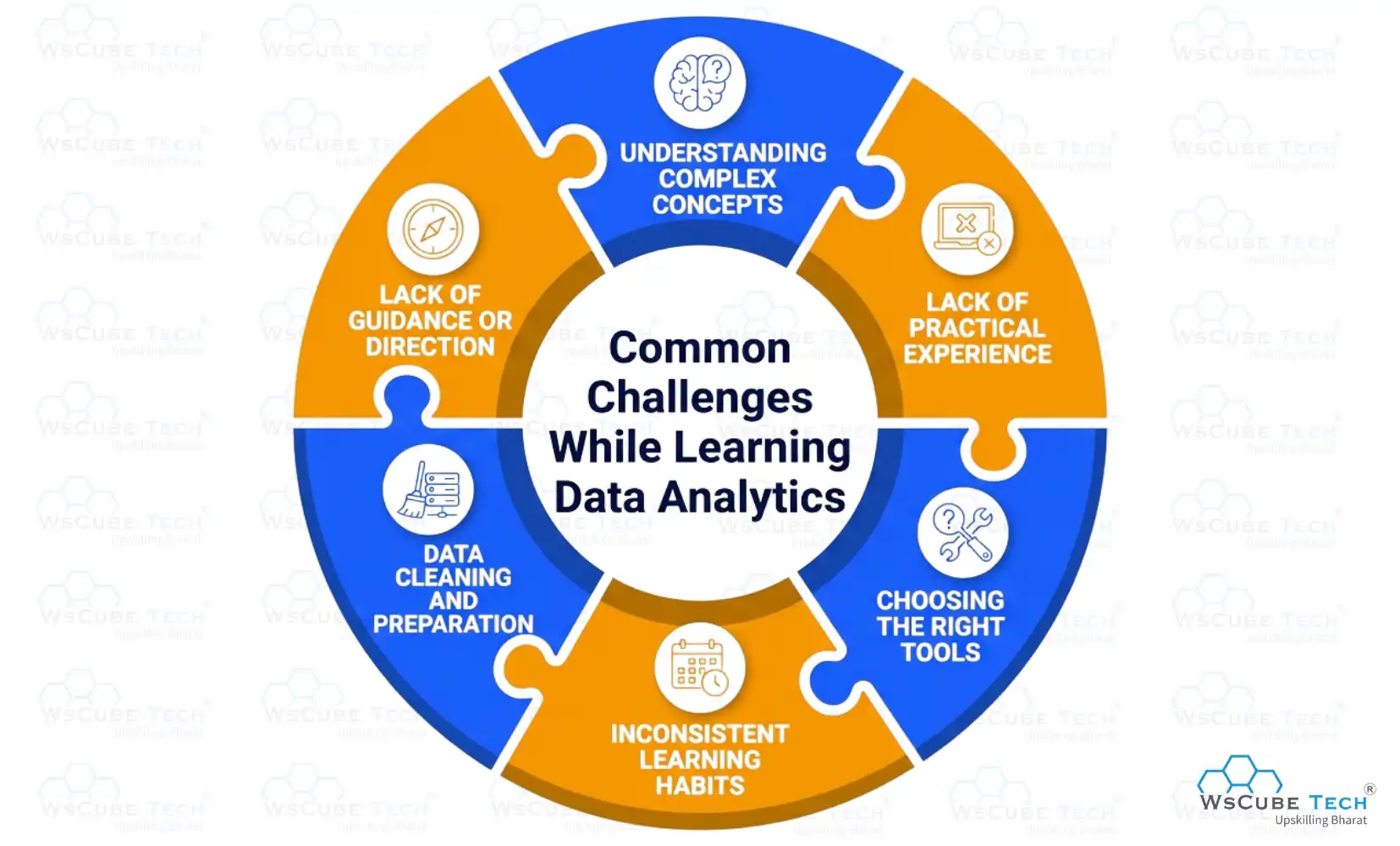
The challenges below may slow your learning process, but overcoming them helps you build strong data analytics skills:
- Understanding Complex Concepts: Beginners often struggle with statistics, data analysis techniques, and programming concepts, which can feel overwhelming at first and require time, practice, and patience to fully understand.
- Lack of Practical Experience: Without working on real datasets and projects, it becomes difficult to apply theoretical knowledge, leading to confusion and slowing down the overall learning process in data analytics.
- Choosing the Right Tools: With many tools available, beginners may feel confused about where to start, leading to wasted time and difficulty in building a clear and structured learning path.
- Inconsistent Learning Habits: Lack of consistency and irregular study schedules can slow down progress, making it harder to retain concepts and build strong skills over time.
- Data Cleaning and Preparation: Handling messy and unstructured data can be challenging, as it requires attention to detail and practice to clean, organize, and prepare data for analysis.
- Lack of Guidance or Direction: Without proper mentorship or a clear roadmap, learners may feel lost, making it difficult to stay motivated and progress effectively in their data analytics journey.
Tips to Overcome Common Challenges While Learning Data Analytics
You can overcome these challenges by following simple and effective learning strategies:
- Break complex topics into smaller parts and learn step by step to understand concepts more easily.
- Practice regularly with real datasets to improve your skills and build confidence over time.
- Focus on one key tool at a time rather than trying to learn too many tools at once.
- Start with simple datasets before moving to complex data cleaning and analysis tasks.
- Create a proper study schedule and follow it consistently to manage your learning time effectively.
- Set small goals and track progress to stay motivated and consistent.
These strategies help reduce the time to learn data analytics and improve your overall learning efficiency.
Explore Our Data Related Courses
| Online Data Analytics Course | Live Internship + 100% Job Support |
| Online Business Analytics Course | Live Internship + 100% Job Support |
| Online Data Science Course | Live Internship + 100% Job Support |
Career Opportunities in Data Analytics
Below are the top career opportunities you can explore after learning data analytics and building the required skills:
- Data Analyst: Collects, cleans, and analyzes data to generate insights, create reports, and support better decision-making across different business functions and industries.
- Business Analyst: Uses data to understand business requirements, identify problems, and recommend solutions that improve processes, efficiency, and overall organizational performance.
- Data Scientist: Works with large datasets, applies machine learning techniques, and builds predictive models to solve complex problems and forecast future trends.
- Data Engineer: Designs, builds, and maintains data pipelines and systems that handle large volumes of data for analysis, storage, and processing in organizations.
- Data Visualization Analyst: Creates dashboards and visual reports using tools like Power BI or Tableau to present data insights in a clear and understandable format.
- Marketing Analyst: Analyzes customer data, campaign performance, and market trends to help businesses improve marketing strategies, target the right audience, and increase growth.
Also Read: Data Analyst vs. Data Scientist: Key Differences & Comparison
Learn Data Analytics with WsCube Tech
If you are interested in learning data analytics in a structured way, WsCube Tech offers a Data Analytics Mentorship Program designed for beginners and professionals. You can join this program to learn step by step with expert guidance and practical training.
You can become a job-ready Data Analyst in just 14 weeks and also gain real industry exposure through a 4-week internship. With hands-on projects and mentorship, you can build strong skills and start your career confidently.

FAQs About How Long Does It Take to Learn Data Analytics
For beginners, it usually takes around 3 to 6 months to learn basic data analytics skills. With consistent practice and proper guidance, you can build a strong foundation and start working on real projects.
Yes, you can learn the basics of data analytics in 3 months with daily practice and focused learning. However, becoming fully job-ready may require additional time and hands-on project experience.
Becoming job-ready in data analytics typically takes 6 to 12 months. This includes learning tools, practicing regularly, and working on real-world projects to build practical experience and confidence.
Data analytics is not very difficult for beginners if learned step by step. With proper resources, practice, and consistency, you can understand concepts easily and gradually build strong analytical skills.
No, a programming background is not mandatory to start learning data analytics. You can begin with tools like Excel and SQL, and gradually learn programming languages like Python or R.
Studying data analytics for 2 to 4 hours daily is generally effective. Consistent practice is more important than long hours, as regular learning helps you understand concepts better and progress steadily.
To learn data analytics quickly, you need a basic understanding of statistics, logical thinking, and problem-solving skills, as well as familiarity with tools like Excel and SQL, and programming languages like Python or R.
Yes, you can learn data analytics without a formal degree. Many learners gain skills through online courses, practice projects, and self-study, which can help them build a strong portfolio and get job opportunities.
Beginners should start with Excel for basic analysis and SQL for database management. After that, learning Python and data visualization tools like Power BI or Tableau helps build more advanced skills.
Learning advanced data analytics skills may take 6 to 12 months after mastering the basics. It involves learning machine learning concepts, working with large datasets, and building complex real-world projects.
Yes, data analytics is a great career option in 2026 due to high demand, good salary, and growth opportunities. Many industries rely on data, making this field stable and future-focused.
Yes, working professionals can learn data analytics part-time by dedicating a few hours daily or on weekends. With consistent effort and proper planning, they can build skills and switch careers successfully.
Conclusion
Learning data analytics is achievable within a few months if you stay consistent and follow a structured approach. The time required depends on your background, practice, and learning method, but with the right strategy, you can build strong skills efficiently.
By focusing on key concepts, tools, and real-world projects, you can become job-ready and start your career in data analytics. Stay motivated, keep practicing, and continuously improve your skills to succeed in this growing field.
Join Our On-Campus Data Analytics Course






Leave a comment
Your email address will not be published. Required fields are marked *Comments (0)
No comments yet.