
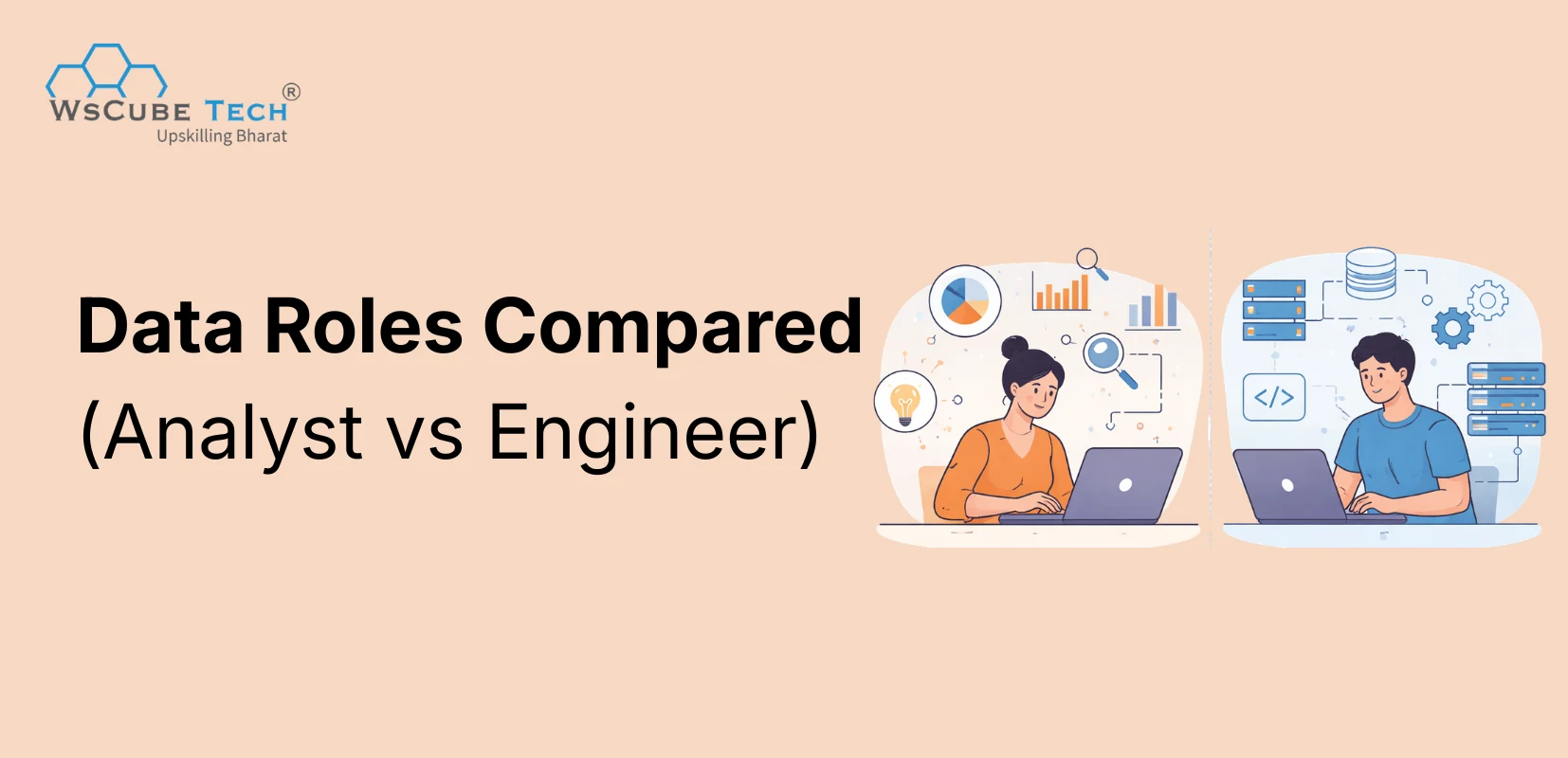
In today’s digital world, data plays an important role in helping companies make better decisions and improve their performance. Many organizations use data to understand customer behavior, increase sales, and plan future strategies. To manage and work with this data, companies mainly depend on two important professionals: data analysts and data engineers. Both roles deal with data, but their work and responsibilities are different.
When choosing a career in the data field, many beginners get confused between data analyst vs data engineer roles. A data analyst focuses on understanding data and finding useful insights, while a data engineer works on building systems that collect, store, and manage data efficiently. Knowing the difference between these two roles can help you choose the right career path based on your interests and skills.
In this guide, we will explain the differences between data analysts and data engineers, including their skills, roles, salary, tools, career opportunities, and more.
What Is Data Analysis?
Data analysis is the process of collecting, organizing, and examining data to find useful information and support better decision-making. It helps businesses understand patterns, trends, and relationships in data so they can improve their performance and plan future strategies effectively.
In real-world situations, data analysis is generally divided into four main types, and each type answers a specific question:
- Descriptive Analysis: This type of analysis examines historical data to understand "what happened?" For example, a company may analyze last month’s sales report to see how different products performed.
- Diagnostic Analysis: Identifies the reasons behind a particular outcome by answering “why did it happen?” For example, if sales suddenly drop, this analysis examines data to find possible causes such as pricing issues, customer behavior changes, or increased market competition.
- Predictive Analysis: This type of analysis uses past data to estimate "what is likely to happen?" in the future. For example, businesses can predict future demand for a product based on previous sales trends.
- Prescriptive Analysis: This type of analysis supports decision-making by answering the question, "what should we do about it?" For example, it may recommend increasing stock levels for products expected to be in high demand.
What Is Data Engineering?
Data engineering is the process of designing, building, and managing systems that collect, store, and organize large amounts of data from different sources. It focuses on creating data pipelines that gather raw data, clean it, and convert it into a structured format so it can be easily used for analysis and reporting.
A data engineer ensures that data flows smoothly within an organization and is available whenever needed. They build and maintain the infrastructure that supports data processing and storage, making it easier for analysts and other teams to access reliable and well-organized data.
Are Data Analysts and Data Engineers the Same?
No, data analysts and data engineers are not the same, although both work with data. Their roles, responsibilities, and required skill sets are different. A data analyst mainly focuses on examining data to find patterns, trends, and insights that help businesses make better decisions.
On the other hand, a data engineer is responsible for building and maintaining the systems that collect, store, and organize data. They create data pipelines and ensure that data flows smoothly from different sources into databases or data warehouses.
In simple terms, data engineers prepare and manage the data infrastructure, while data analysts use that prepared data to generate insights for decision-making. Both roles are essential and often work closely together in organizations.
Also Read: Future Scope of Data Analytics in India (2026 & Beyond)
Data Analyst vs. Data Engineer: Comparison Table
Below are the key differences between data analyst and data engineer roles:
| Aspect | Data Analyst | Data Engineer |
| Primary Focus | Analyzing data to find actionable insights and trends | Building and maintaining data pipelines and infrastructure |
| Objective | Answer specific business questions and solve problems using data | Ensure data flows smoothly, reliably, and securely from source to destination |
| Key Responsibilities | Data cleaning, analysis, and visualization | Designing data pipelines, managing databases (ETL), and ensuring system scalability and stability |
| Tools | Excel, Tableau, Power BI, Google Analytics, Jupyter Notebooks | Apache Spark, Hadoop, Kafka, Airflow, Snowflake, AWS/Azure/GCP |
| Programming Languages | Python (Pandas, NumPy), R, SQL | Python (scripting/automation), Java, Scala, and Advanced SQL |
| Data Interaction | Works with structured and processed data | Works with raw and unstructured data |
| End Product | Reports, dashboards, charts, and strategic recommendations | Data warehouses, data lakes, APIs, and reliable data pipelines |
| Skill Set | Statistical knowledge, data visualization, business understanding, and communication skills | Software engineering, database architecture, distributed systems, cloud computing |
Data Analyst vs Data Engineer: Roles and Responsibilities
Understanding the roles and responsibilities of data engineers and data analysts helps you know how both professionals work with data and support business decisions in different ways within an organization.
Data Analyst: Roles and Responsibilities
The roles and responsibilities of a data analyst are mentioned below:
- Data Collection: A data analyst gathers information from multiple sources, including databases, spreadsheets, and web-based platforms, to ensure accurate, consistent, and relevant data is available for proper analysis and reporting.
- Data Cleaning: They clean and organize raw data by removing errors, duplicates, and missing values to make sure the dataset is accurate, consistent, and ready for further analysis.
- Data Analysis: A data analyst examines and interprets datasets to identify meaningful patterns, trends, and relationships that help organizations evaluate performance and make informed, data-driven decisions.
- Data Visualization: They create charts, graphs, and dashboards using tools like Power BI or Tableau to present data insights in a clear and easy-to-understand format.
- Report Generation: Data analysts prepare detailed reports and summaries based on their findings to help management understand business performance and make strategic decisions.
Data Engineer: Roles and Responsibilities
The roles and responsibilities of a data engineer are mentioned below:
- Data Pipeline Development: A data engineer designs and builds data pipelines that collect data from different sources, process it, and transfer it into storage systems for easy access and analysis.
- Database Management: They manage and maintain databases to ensure that data is stored properly, remains secure, and can be accessed efficiently by analysts and other business teams.
- Data Integration: A data engineer merges data from different sources and systems to create a single, organized dataset that can be easily used for analysis and reporting purposes.
- Data Processing: They process large volumes of raw data by cleaning, transforming, and organizing it into structured formats. This improves data quality, enhances system performance, and ensures the data is consistent, accurate, and ready for further use.
- System Maintenance: Data engineers monitor and maintain data systems to ensure smooth data flow, improve performance, and reduce errors in data processing operations.
Recommended Professional Certificates
Data Analytics Course with Gen AI
Data Science Course with Internship & Placement Support
Skills Required for Data Analysts vs. Data Engineers
Understanding the required skills for data analysts and data engineers helps you know what knowledge and abilities are needed to perform each role effectively in the data field.
Skills Required for Data Analysts
The essential skills required for a data analyst are mentioned below:
- Data Analysis: A data analyst should be able to examine large datasets to identify patterns, trends, and meaningful insights that help organizations understand performance and make better business decisions.
- Statistical Knowledge: They must understand basic statistical concepts to interpret data correctly and perform meaningful analysis.
- Data Visualization: A data analyst should be skilled in creating charts, graphs, and dashboards using tools like Power BI or Tableau to present insights clearly and help organizations understand data trends easily.
- SQL Knowledge: They should know how to use SQL to retrieve, filter, and manage data from databases to perform effective data analysis.
- Communication Skills: A data analyst must explain data findings clearly so that non-technical team members can understand them.
Skills Required for Data Engineers
The essential skills required for a data engineer are mentioned below:
- Programming Skills: A data engineer should know programming languages like Python or Java to build data pipelines, automate tasks, and handle large volumes of data efficiently.
- Database Management: They must understand database systems to store, manage, and retrieve large amounts of data in a secure and organized way, ensuring easy access and efficient data handling for various operations.
- ETL Process Knowledge: A data engineer should know how to extract, transform, and load data from different sources into storage systems.
- Cloud Computing: They should have knowledge of cloud platforms and be able to handle, store, and process data efficiently in a flexible and scalable environment.
- Problem-Solving Skills: A data engineer must identify and fix issues in data systems to ensure smooth data flow and performance.
Also Read: Top 10 Best Big Data Analytics Tools & Software
Tools Used by Data Analysts and Data Engineers
Understanding the tools used by data analysts and data engineers helps in knowing how each professional works with data in different ways to support analysis and data management processes.
Tools Used by Data Analysts
The commonly used tools by data analysts are mentioned below:
| Tool | Purpose |
| Microsoft Excel | Used for basic data analysis, data cleaning, and creating simple reports using formulas and charts. |
| SQL | Helps analysts retrieve and manage data from relational databases for analysis purposes. |
| Tableau | Used to create interactive dashboards and visual reports. |
| Power BI | Helps analyze data and present insights through charts and graphs. |
| Google Sheets | Used to organize, analyze, and manage small to medium-sized datasets efficiently for reporting and basic data analysis tasks. |
Tools Used by Data Engineers
The commonly used tools by data engineers are mentioned below:
| Tool | Purpose |
| Apache Hadoop | Used for storing and processing large datasets across distributed systems in a reliable and scalable way. |
| Apache Spark | Helps with fast data processing and efficient execution of large-scale data analytics tasks. |
| Apache Kafka | Helps in real-time data streaming by enabling efficient data transfer between multiple systems and supporting smooth data pipeline operations. |
| Airflow | Helps in scheduling and managing data workflows and ETL processes to ensure smooth execution of data tasks within an organization. |
| Snowflake | A cloud-based platform for storing and managing structured data. |
Upcoming Masterclass
Attend our live classes led by experienced and desiccated instructors of Wscube Tech.




Programming Languages Used by Data Analysts and Data Engineers
Programming languages play an important role in the work of both data analysts and data engineers. However, the way they use these languages is different based on their job responsibilities and daily tasks within an organization.
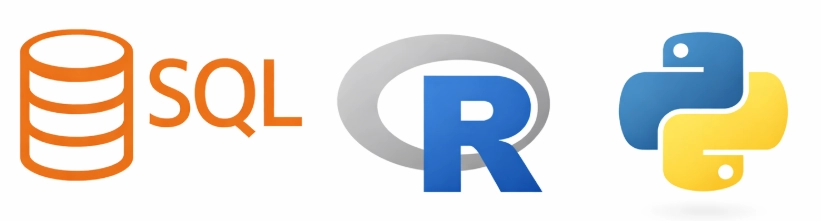
Programming Languages Used by Data Analysts
Data analysts mainly use programming languages for data analysis, querying, and data manipulation. These languages help them work with datasets and generate meaningful insights for decision-making.
- SQL: Used to retrieve, filter, and manage data from relational databases for analysis purposes.
- Python: Helps in data analysis, data cleaning, and visualization using libraries like Pandas, NumPy, and Matplotlib to process large datasets and generate meaningful insights.
- R: Used for performing statistical analysis, creating data models, and visualizing data to identify trends and patterns in datasets.
Programming Languages Used by Data Engineers
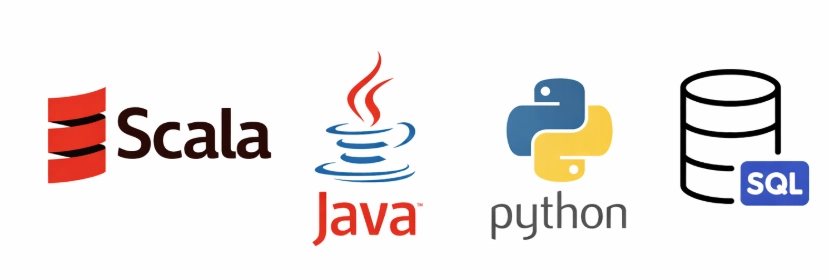
Data engineers use programming languages to build, manage, and automate data pipelines and infrastructure systems. These languages help them process large amounts of data efficiently.
- Python: Used for building data pipelines, automating data processing tasks, integrating data from multiple sources, and handling large datasets efficiently across different systems.
- Java: Helps in developing large-scale data processing systems and backend services.
- Scala: Commonly used with big data frameworks like Apache Spark to perform fast and scalable data processing on large datasets.
- Advanced SQL: Used for handling, transforming, and managing large datasets in databases.
Data Analysts vs. Data Engineers: Educational Background Required
Understanding the educational background required for data analysts and data engineers helps you know what qualifications are needed to start a career in these roles. Although a formal degree is helpful, practical skills and knowledge also play an important role.
Educational Background for Data Analysts
To become a data analyst, candidates usually have a bachelor's degree in fields such as Computer Science, Mathematics, Statistics, Economics, or Information Technology. Basic knowledge of data analysis tools, statistics, and database management is also important for this role.
Educational Background for Data Engineers
To become a data engineer, candidates generally need a bachelor’s degree in Computer Science, Software Engineering, or Information Technology. Knowledge of programming languages, database systems, and data management concepts is essential for building and managing data infrastructure.
Read More Data Related Guides
| Data Engineer Roadmap | Data Analyst Roadmap |
| Is Data Analyst A Good Career? | 20+ Data Analytics Projects |
| Top Data Analytics Tools | Data Analytics Programming Languages |
Data Analyst vs Data Engineer Salary Comparison (India & Global)
When comparing data analyst vs data engineer salary, data engineers generally earn more than data analysts in both India and globally. This is mainly because data engineering requires strong technical expertise and involves working with complex data systems, while data analysts focus more on interpreting and visualizing data for business decisions. Salaries may vary based on experience, location, company size, and technical skills.
Salary Comparison in India:
| Experience | Avg Salary of Data Analyst (India) | Avg Salary of Data Engineer (India) |
| Entry-Level (0–2 yrs) | ₹3.5 – 6 LPA | ₹4 – 8 LPA |
| Early Career (2–4 yrs) | ₹5 – 10 LPA | ₹7 – 9.5 LPA |
| Mid-Level (4–6 yrs) | ₹8 – 15 LPA | ₹10 – 25 LPA |
Note: Salaries are typically higher in metro cities like Bengaluru, Hyderabad, Pune, and Gurgaon. Professionals with strong cloud (AWS, Azure, GCP) and big data skills often command higher compensation in data engineering roles.
Salary Comparison in the United States:
| Experience | Avg Salary of Data Analyst (USA) | Avg Salary of Data Engineer (USA) |
| Entry-Level (0–2 yrs) | $55,000 – $65,000 | $90,000 – $100,000 |
| Early Career (2–5 yrs) | $70,000 – $85,000 | $100,000 – $120,000 |
| Mid-Level (5–8 yrs) | $85,000 – $110,000 | $120,000 – $150,000 |
Also Read: Top Data Analyst Career Paths (With Salaries)
Data Engineering vs Data Analytics: Market Insights
The Data Engineering market is growing rapidly as organizations manage increasing volumes of structured and unstructured data. According to industry research reports, the global data engineering services market is projected to reach approximately USD 169 billion by 2034, growing at a compound annual growth rate (CAGR) of around 9.3%, reflecting the rising demand for scalable data infrastructure across industries.
Meanwhile, the Data Analytics market is also expanding rapidly, driven by technologies such as artificial intelligence, machine learning, and predictive analytics. Valued at approximately USD 69.54 billion in 2024, it is expected to reach nearly USD 302 billion by 2030, highlighting the increasing importance of data-driven decision-making in modern businesses.
Overall, while data engineering helps in building a strong data infrastructure, data analytics focuses on generating insights for better decision-making. Both markets are expected to experience strong and sustained growth as organizations continue investing in digital transformation and advanced data capabilities.
Career Path After Learning Data Analytics and Data Engineering
After learning data analytics and data engineering, you can explore high-demand career opportunities in both fields, leveraging analytical skills, technical expertise, and business insights for growth and specialization.
Career Opportunities in Data Analytics
- Data Analyst: Work on cleaning, analyzing, and interpreting structured data, creating reports and dashboards to provide actionable insights that help organizations make informed business decisions effectively.
- Business Analyst: Focus on designing and managing dashboards, data models, and visual reports to enable decision-makers to track performance and optimize strategies.
- Data Visualization Specialist: They create dashboards, charts, and graphs using tools like Tableau or Power BI to present complex data in a simple, clear, and easy-to-understand format, helping organizations understand insights and support better business decision-making.
Career Opportunities in Data Engineering
- Data Engineer: Build, manage, and optimize data pipelines, integrate multiple data sources, and ensure data reliability, consistency, and scalability to support efficient data processing and smooth data operations across systems.
- Big Data Engineer: They manage and process large volumes of structured and unstructured data using tools like Hadoop and Spark for better system performance.
- ETL Developer: Designs, builds, and manages extract, transform, and load processes to transfer data from different sources into data warehouses and ensure efficient data integration.
Future Scope of Data Analyst and Data Engineer
The future scope of both data analysts and data engineers looks very promising as organizations are increasingly depending on data to make better business decisions. With the rapid adoption of technologies such as artificial intelligence, machine learning, and cloud platforms, the need for professionals who can handle and analyze data is expected to grow in the coming years.
Data analysts will continue to play an important role in studying data, identifying trends, and helping organizations improve performance through meaningful insights. On the other hand, data engineers will focus on developing and maintaining the infrastructure required to gather, store, and process large amounts of data efficiently.
As businesses generate more data every day, the demand for skilled data engineers and data analysts will continue to increase across industries such as healthcare, finance, retail, and information technology. Both roles are expected to offer strong career growth opportunities and competitive salary packages in the future.
Explore Our Data Related Courses
| Online Data Analytics Course | Live Internship + 100% Job Support |
| Online Business Analytics Course | Live Internship + 100% Job Support |
| Online Data Science Course | Live Internship + 100% Job Support |
Data Analyst vs. Data Engineer: Which Is Better?
Choosing between a data analyst and a data engineer depends on your interests, technical skills, and long-term career goals. Both roles are important in the data field, but they focus on different aspects of working with data. A data engineer mainly works on building and managing the systems that collect and process data, while a data analyst focuses on interpreting that data to support business decisions.
Data Engineer (Building the System)
- Focus: Creating, maintaining, and debugging data pipelines and infrastructure.
- Key Skills: Python/Scala, SQL, ETL tools, cloud platforms (AWS, GCP), Apache Spark.
- Why it might be better: Higher earning potential due to technical complexity.
- Best for: People who enjoy coding, software engineering, and architecture.
Data Analyst (Extracting Insights)
- Focus: Analyzing data to create reports and dashboards for business decisions.
- Key Skills: SQL, Excel, Data Visualization (Tableau, Power BI), Statistics.
- Why it might be better: Direct impact on business strategy; often easier to enter.
- Best for: People who enjoy statistics, data storytelling, and solving business problems.
Which is Right for You?
- Choose Data Engineer if you prefer working with technology, writing code, and building systems.
- Choose Data Analyst if you prefer understanding business logic, telling stories with data, and creating visualizations.
How Data Analysts and Data Engineers Work Together: Real-World Examples
Data engineers and data analysts work together to convert raw data into meaningful business insights. Data engineers build and manage the infrastructure such as data pipelines and storage systems, while data analysts use this prepared data to understand trends and support decision-making through reports and dashboards.
Here are real-world examples of how they work together:
- Fraud Detection in Finance: A Data Engineer creates a secure, real-time data warehouse for customer transactions. The Data Analyst uses this structured data to develop, test, and implement dashboards that identify fraudulent patterns.
- Recommendation Engines: Data engineers develop pipelines to collect and process large amounts of real-time user behavior data. Data analysts use this processed data to analyze performance metrics and improve user experience on platforms.
- Marketing & Customer Analytics: Engineers extract and integrate data from sources like CRM systems, websites, and social media into a centralized storage system. Analysts then create dashboards to track customer journeys and measure marketing campaign performance.
- Operational Optimization: Engineers manage real-time location data from tracking systems. Analysts use this data to optimize delivery routes, reduce travel time, and improve operational efficiency.
FAQs on Data Analyst vs Data Engineer
A data analyst is a professional who helps you understand data by finding patterns, trends, and useful insights. They analyze business data and create reports or dashboards that support better decision-making and improve overall performance within an organization.
A data engineer is responsible for building and managing the systems that collect, store, and organize data. They create data pipelines that help you access clean and structured data for analysis and reporting across different business platforms.
To start your career as a data analyst, you should learn basic coding skills like SQL and Python. These help you retrieve, clean, and analyze data from databases to generate useful insights for better business decisions.
Generally, a data scientist earns slightly more than a data engineer because they work with machine learning, data analysis, and statistical modeling. However, actual salary may vary depending on experience, location, technical skills, certifications, company size, and industry demand.
Yes, you can become a data engineer after working as a data analyst. You need to learn programming languages, database management, and data pipeline tools to shift from analyzing data to building data infrastructure systems.
As a data analyst, you clean and process data, perform statistical analysis, create visualizations, and generate reports. Your work helps stakeholders make decisions, understand trends, and plan strategies using meaningful insights from structured datasets.
You do not always need a formal degree to become a data analyst. If you have strong skills in data analysis tools, statistics, and SQL, you can start your career with certifications and practical experience.
Data engineering can be more technical than data analysis because it requires strong programming knowledge, database management, and system design skills. However, with proper learning, consistent practice, and hands-on projects, you can understand data engineering concepts and build efficient data pipelines effectively.
Choosing between a data analyst or a data engineer depends on your interest. If you enjoy analyzing data, choose data analysis, but if you like coding and building systems, data engineering may be better for you.
The difference between a data engineer and a data analyst is that a data engineer builds and maintains data pipelines and infrastructure, while a data analyst analyzes data, creates reports, and provides insights to support business decisions.
Becoming a data engineer typically takes 6 to 12 months, depending on your learning pace and background. With consistent practice in programming, databases, and data tools, beginners can develop the required skills through courses, projects, and hands-on experience.
Conclusion
Choosing between a data analyst and a data engineer depends on your interests, skills, and career goals. Both roles play an important part in helping organizations manage and use data effectively for better decision-making and business growth.
If you enjoy working with data to find patterns and insights, becoming a data analyst may be the right choice for you. However, if you are interested in programming and building systems that manage large datasets, a data engineer role might be more suitable for your career path.
Join Our On-Campus Data Analytics Programs






Leave a comment
Your email address will not be published. Required fields are marked *Comments (0)
No comments yet.