
Cybersecurity is about keeping computers, mobile phones, websites, and online data safe from cyber attacks. It protects important information like passwords, bank details, and personal messages from hackers and online threats. Cybersecurity also helps prevent viruses, scams, fake links, and harmful software from damaging systems. In simple words, it acts like a digital security shield that protects your online world.
For beginners, cybersecurity can feel overwhelming because there are many concepts, tools, and security practices to learn. This cybersecurity roadmap for beginners provides a clear step-by-step learning path, helping you understand what to learn first, how to practice real-world skills, and how different cybersecurity concepts connect together. By following this roadmap, you can avoid confusion, build strong fundamentals, and prepare confidently for a successful cybersecurity career.
Want to learn cybersecurity with practical training and hands-on projects? Join the online cybersecurity course to learn step by step, practice real-world security concepts, and build industry-ready skills for a successful career in cybersecurity.
What is Cybersecurity?
Cybersecurity is the practice of protecting computers, networks, systems, and data from digital threats. It focuses on preventing unauthorized access, data theft, and damage caused by hackers, malware, and cyber attacks. Cybersecurity includes securing devices, applications, networks, and online information. It helps organizations and individuals keep sensitive data safe, maintain privacy, and ensure systems work reliably in today’s connected digital world.
Why Cybersecurity is Important
Cybersecurity protects digital systems, networks, and data from rising online threats. Below, we will discuss why cybersecurity is important and how it helps keep information safe today.
1. Data Protection
Cybersecurity keeps personal and business data safe from theft, leaks, and misuse. It prevents hackers from accessing sensitive information like passwords, bank details, and confidential records stored in digital systems.
2. Privacy and Trust
Strong security protects user privacy and builds trust between organizations and users. When systems are secure, people feel confident sharing information without fear of misuse or unauthorized access.
3. Protection Against Cyber Attacks
Cybersecurity helps defend systems against malware, phishing, ransomware, and hacking attacks. It reduces system downtime, financial loss, and damage caused by security breaches and online threats.
4. Business Continuity
Cybersecurity ensures systems remain available and working during attacks or failures. It helps organizations avoid service disruptions, protect operations, and recover quickly from security incidents.
5. Legal and Compliance Safety
Cybersecurity helps organizations follow data protection laws and security standards. This avoids legal penalties, financial fines, and reputation damage caused by poor security practices.
Recommended Professional Certificates
Ethical Hacking Bootcamp
Penetration Testing Bootcamp
Demand for Cybersecurity Professionals in 2026
The demand for cybersecurity professionals in 2026 is expected to stay very high because skilled people are still fewer than job openings. Recent studies show that around 4.8 million cybersecurity roles may remain unfilled worldwide by 2026. Cyber attacks like data leaks, hacking, and online fraud are increasing every year, so companies need trained people to protect their systems, networks, and user data.
At the same time, reports also say that over 1 million new cybersecurity jobs will be created by 2026, but only a limited number of professionals are ready to take these roles. This gap between demand and supply is making cybersecurity a strong and stable career option. These areas, like network security, cloud security, and incident handling, have more openings. Even though tools and automation help in basic tasks, human experts are still needed to make decisions and handle serious security problems.
Career Opportunities in Cybersecurity and Their Salaries
Cybersecurity offers diverse roles across industries as digital threats grow. With the right skills and experience, professionals can access stable jobs, strong salary growth, and long-term career opportunities worldwide.
| Cybersecurity Role | Experience Level | Average Salary (India – per year) |
| Security Analyst | Entry–Mid Level | ₹5 – ₹9 LPA |
| SOC Analyst | Entry–Mid Level | ₹4 – ₹6 LPA |
| Ethical Hacker / Penetration Tester | Mid Level | ₹4 – ₹10 LPA |
| Network Security Engineer | Mid Level | ₹7.6 – ₹8.4 LPA |
| Cloud Security Specialist | Mid–Senior Level | ₹15 – ₹18 LPA |
| Incident Response Specialist | Mid–Senior Level | ₹5.8 – ₹7.5 LPA |
| Cybersecurity Consultant | Senior Level | ₹10.8 – ₹11.9 LPA |
| Chief Information Security Officer (CISO) | Senior Leadership | ₹27 – ₹95.5+ LPA |
Cybersecurity offers strong salary growth, global opportunities, and long-term career stability. With experience, certifications, and hands-on skills, professionals can move into higher-paying roles quickly.
Must Read: What is Ethical Hacking? Complete Beginner’s Guide
Cyber Security Roadmap 2026: Step-by-Step
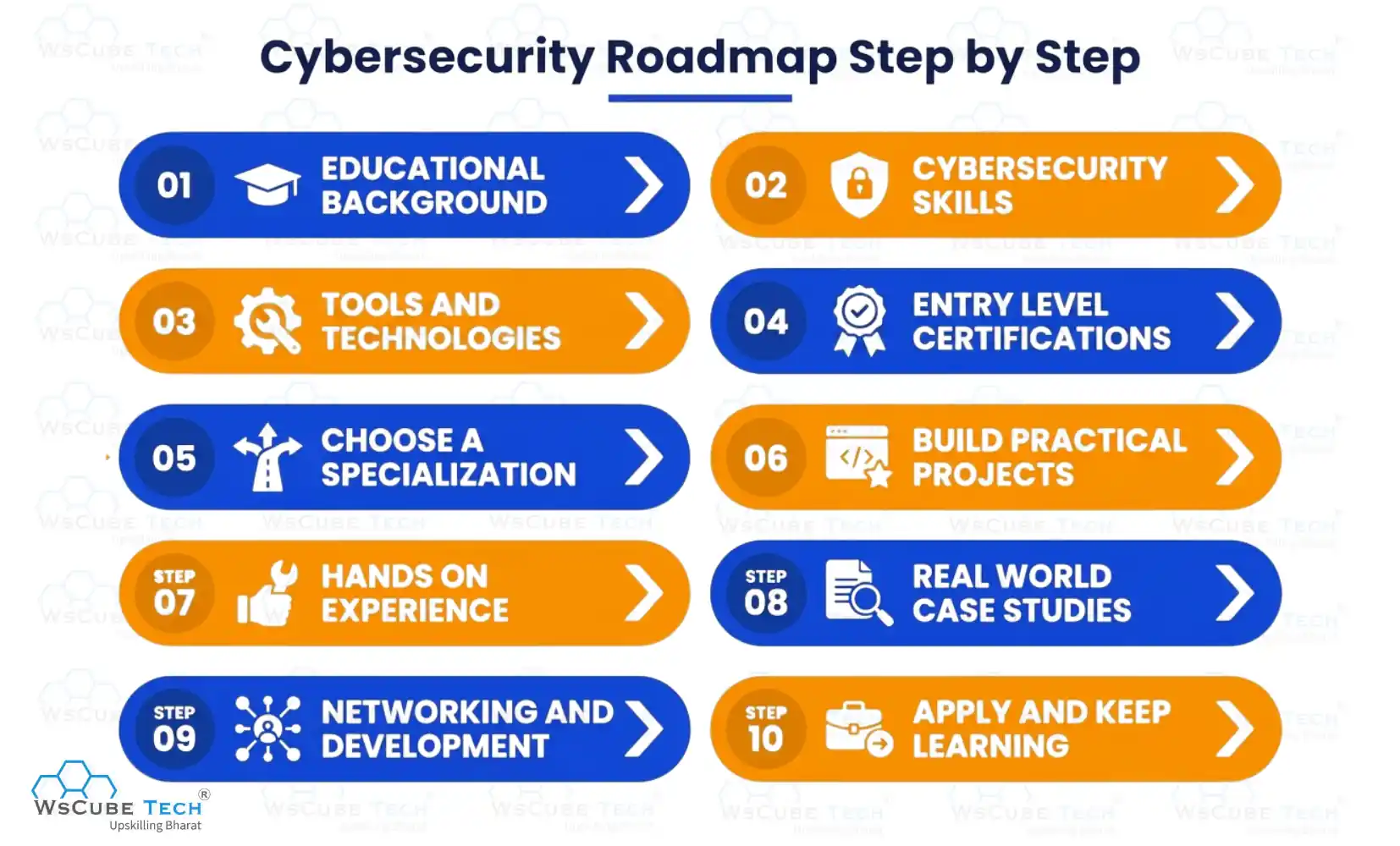
This cybersecurity roadmap for beginners provides a clear, step-by-step learning path from start to finish. It helps you build strong fundamentals and grow confidently by learning cybersecurity in the right order.
- Relevant Educational Background
- Learn Essential Cybersecurity Skills
- Understand Cybersecurity Tools and Technologies
- Earn Entry-Level Cybersecurity Certifications
- Choose and Specialize in a Cybersecurity Path
- Build Practical Projects
- Study Real-World Cybersecurity Case Studies
- Gain Hands-On Practical Experience
- Grow Through Networking and Professional Development
- Apply for Cybersecurity Jobs and Keep Learning
Next, we will go through each step one by one to clearly explain what you should learn, how to practice effectively, and how to progress confidently in your cybersecurity learning journey.
Step 1: Build a Learn Relevant Educational Background
A relevant educational background helps you understand cybersecurity concepts more easily. Basic knowledge of computers, mathematics, networking, or information technology is useful. Degrees or courses in computer science, IT, or related fields can provide a strong foundation. However, cybersecurity is open to learners from any background who are willing to learn basics, practice regularly, and build skills step by step through hands-on learning.
Step 2: Learn Essential Cybersecurity Skills
Learning essential cybersecurity skills is the foundation of a strong security career. These skills help you understand how systems work, how cyber attacks happen, and how to protect digital assets. By building both technical knowledge and practical thinking, you can handle real-world security challenges with confidence.
- Cybersecurity Fundamentals: Learn core concepts like cyber threats, vulnerabilities, attacks, and defenses. This helps you understand how hackers target systems and how security controls protect data, networks, and applications in real environments.
- Networking Knowledge: Understand how computers communicate using IP addresses, ports, protocols, and network devices. Strong networking skills help you identify attack points, monitor network traffic, detect threats, and secure data moving safely across local and internet-based networks.
- Operating Systems Skills: Learn how Windows and Linux manage users, files, processes, and permissions. This helps you secure systems, detect suspicious activity, and prevent unauthorized system access.
- Cryptography Expertise: Cryptography focuses on protecting data using techniques like encryption and hashing. It secures communication, keeps sensitive information safe from unauthorized access, and ensures data privacy and integrity across networks, applications, and storage systems in modern digital environments.
- Ethical Hacking and Penetration Testing: Understand how attackers think and test systems legally. This skill helps you find security weaknesses, simulate attacks, and improve defenses before real attackers exploit them.
- Risk and Threat Awareness: Develop the ability to identify risks, threats, and system weaknesses. This helps you understand possible security impacts and decide where protection and monitoring are most important.
- Security Best Practices: Learn strong password policies, access control, regular updates, and secure configurations. These practices reduce common mistakes and protect systems from simple but serious security issues.
- Problem-Solving and Analysis: Build logical thinking to investigate alerts, understand incidents, and respond quickly. This skill helps you handle security problems calmly and make effective decisions under pressure.
Step 3: Understand Cybersecurity Tools and Technologies
Understanding cybersecurity tools and technologies helps you learn how security is applied in real systems. These tools are used to monitor activity, prevent attacks, and respond to security incidents. Below, we discuss the important cybersecurity tools that every beginner should know.
- Firewalls: Firewalls control incoming and outgoing network traffic. They act as a protective barrier that blocks unauthorized access while allowing safe and trusted connections.
- Antivirus and Anti-Malware Tools: These tools detect, block, and remove malicious software. They protect systems from viruses, spyware, ransomware, and other threats that can harm data or performance.
- Encryption Technologies: Encryption protects sensitive data by converting it into unreadable format. It ensures data remains safe during storage and transmission, even if it is intercepted.
- Intrusion Detection and Prevention Systems (IDS/IPS): IDS monitors network activity for suspicious behavior, while IPS blocks detected threats. Together, they help detect and stop attacks early.
- SIEM Tools (Security Information and Event Management): SIEM tools collect and analyze logs from multiple systems. They help detect security incidents, investigate threats, and support faster response.
- Vulnerability Scanning Tools: These tools scan systems and applications to identify security weaknesses. They help find risks early so they can be fixed before attackers exploit them.
Upcoming Masterclass
Attend our live classes led by experienced and desiccated instructors of Wscube Tech.





Step 4: Earn Entry-Level Cybersecurity Certifications
Entry-level cybersecurity certifications help you validate your skills and knowledge. They show employers that you understand basic security concepts and are serious about starting a cybersecurity career. These certifications also give you structured learning and practical exposure.
Popular beginner certifications include:
- CompTIA Security+: Covers core security concepts, threats, and risk management
- CompTIA Network+: Builds strong networking knowledge for security roles
- CEH (Certified Ethical Hacker – Beginner Level): Introduces ethical hacking basics
- Google Cybersecurity Certificate: Beginner-friendly and job-oriented
Earning these certifications improves your confidence, strengthens your resume, and helps you qualify for entry-level cybersecurity roles.
Step 5: Choose and Specialize in a Cybersecurity Path
Cybersecurity offers many career options, and choosing a specialization helps you focus your efforts in the right direction. After learning the basics, you should explore different roles and understand what each path requires. Specialization allows you to build deeper skills instead of trying to learn everything at once.
Common cybersecurity paths include:
- Security Analyst: Focuses on monitoring systems, analyzing alerts, investigating incidents, and improving security controls.
- Ethical Hacker / Penetration Tester: Tests systems legally to find vulnerabilities and weaknesses before attackers exploit them.
- SOC Analyst: Works in a Security Operations Center to monitor threats, respond to incidents, and handle real-time security events.
- Network Security Engineer: Designs and secures networks using firewalls, IDS/IPS, and secure network configurations.
- Cloud Security Specialist: Protects cloud environments, manages access controls, and secures cloud-based data and services.
- Incident Response Specialist: Handles security breaches, investigates attacks, and helps systems recover safely.
Choosing a path helps you select the right tools, certifications, projects, and job roles, making your cybersecurity career more focused and achievable.
Step 6: Build Practical Projects
Building practical projects is a crucial step in learning cybersecurity because it helps you apply theory to real-world situations. Projects give you hands-on experience with security concepts, tools, and techniques, which improves problem-solving skills and technical confidence.
Below are some projects that help you learn and practice cybersecurity in a practical way:
- Secure Text Encryption Using Multiple Algorithms: This project helps you understand how encryption protects sensitive data. You build a program that encrypts and decrypts text using different algorithms such as AES, RSA, DES, Blowfish, and Caesar Cipher, improving your understanding of data security and secure communication.
- Network Traffic Monitoring and Analysis Tool: This project helps you understand how data flows across networks. You capture and analyze traffic using tools like Wireshark or tcpdump to identify suspicious behavior and learn how network-based attacks are detected and investigated in real environments.
- Password Strength Analysis and Security Checker: This project focuses on identifying weak passwords. It shows why strong passwords are important and how systems enforce security policies to prevent unauthorized access.
- Operating System Security Configuration Project: This project focuses on securing Linux or Windows by managing user accounts, permissions, system updates, and running services. It helps you reduce security risks, prevent unauthorized access, fix misconfigurations, and understand how proper system security improves overall protection.
- Log Analysis for Threat Detection: This project teaches how to analyze system and network logs to identify unusual activity and security incidents.
These projects provide real-world exposure, strengthen practical skills, and help you build a strong cybersecurity portfolio.
Explore More Career Roadmaps
Step 7: Study Real-World Cybersecurity Case Studies
Studying real-world cybersecurity case studies helps you understand how actual cyber attacks happen and how organizations respond to them. These cases show common mistakes, attack methods, and security gaps that lead to data breaches or system failures.
By analyzing real incidents, you learn how attackers exploit weaknesses and how security teams detect, respond, and recover from attacks. Case studies improve your analytical thinking, decision-making skills, and help you apply theoretical knowledge to practical cybersecurity situations.
Step 8: Gain Hands-On Practical Experience
Once you understand cybersecurity concepts, the next important step is gaining real industry experience. Practical exposure helps you apply what you’ve learned and prepares you for real-world security challenges. There are several effective ways to build hands-on experience.
8.1 Internships
Internships provide valuable hands-on experience in real cybersecurity environments. They help you work with industry tools, understand real security challenges, and learn from experienced professionals. Companies expect beginners to learn, grow, and adapt, making internships a strong starting point.
8.2 Freelancing in Cybersecurity
Freelancing allows you to work independently and gain practical experience on real projects. As a freelancer, you can help clients identify security weaknesses, test systems, and improve defenses. This builds strong skills, confidence, and a practical work portfolio.
8.3 Participating in Cybersecurity Competitions
Cybersecurity competitions like Capture the Flag (CTF) offer hands-on learning in simulated environments. They test your problem-solving skills and technical knowledge while exposing you to real-world attack and defense scenarios in a safe setting.
Step 9: Grow Through Networking and Professional Development
Networking and professional development play an important role in building a successful cybersecurity career. Connecting with professionals helps you learn from their experiences, understand industry trends, and discover job opportunities. You can grow your network through online communities, events, webinars, and cybersecurity conferences.
Professional development helps you stay updated in a fast-changing field. Learning new tools, earning certifications, attending workshops, and following cybersecurity news improve your skills. Continuous learning and strong professional connections help you grow faster and stay competitive in the cybersecurity industry.
Step 10: Apply for Cybersecurity Jobs and Keep Learning
Once you have built strong skills and practical experience, start applying for cybersecurity jobs with confidence. Tailor your resume to highlight projects, certifications, and hands-on experience. Even after getting a job, continue learning new tools and techniques, as cybersecurity constantly evolves and staying updated is essential for long-term career growth.
Explore our Cybersecurity Related Courses
Cybersecurity Learning Tips for Beginners and Working Professionals
Cybersecurity becomes easier to learn when you follow our best cybersecurity roadmap 2026. Beginners and working professionals can build strong skills by learning step by step, understanding core concepts, and practicing regularly with real-world scenarios.
For Beginners
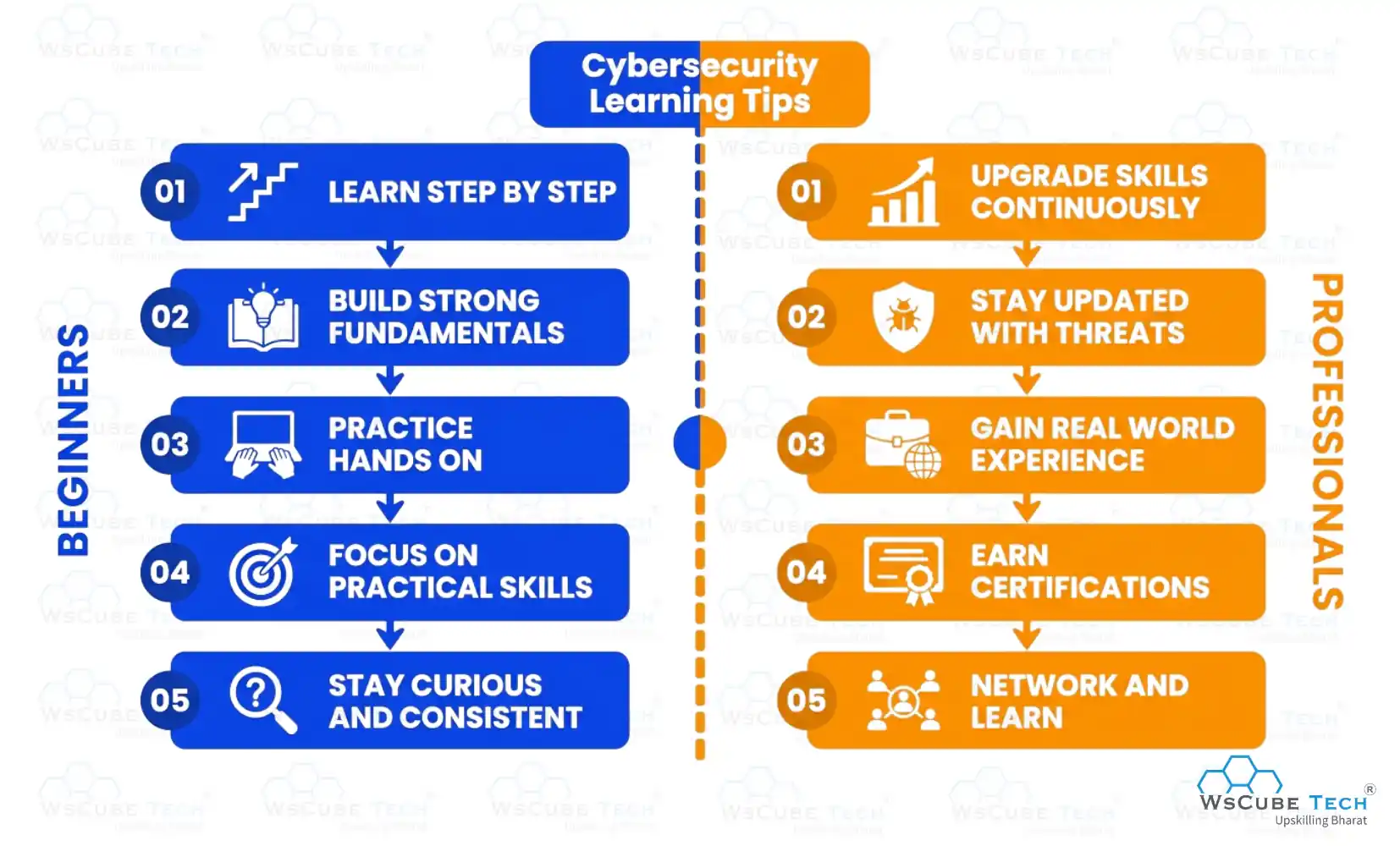
- Build Strong Fundamentals: Start with cybersecurity basics, networking, and operating systems. These subjects help you understand how computers communicate, how data is stored and transferred, and how cyber attacks target systems.
- Learn Step by Step: Do not rush into advanced topics. Follow a structured learning path so each concept builds on the previous one, making learning easier and more meaningful.
- Practice Hands-On Regularly: Use labs, practice platforms, and beginner-friendly projects to apply concepts. Hands-on practice improves understanding and builds confidence faster than theory alone.
- Focus on Practical Skills: Learn basic security tools, commands, and best practices. Practical skills help you see how cybersecurity works in real environments.
- Stay Curious and Consistent: Regular study and curiosity help you progress steadily. Consistency matters more than speed in the early stages.
For Working Professionals
- Upgrade Skills Continuously: Focus on advanced tools, cloud security, automation, and emerging technologies to stay relevant in the cybersecurity industry.
- Stay Updated with Threats: Follow recent cyber attacks, security news, and case studies to understand real-world risks and defense strategies.
- Gain Real-World Experience: Work on live projects, simulations, and security tasks to strengthen hands-on expertise and decision-making skills.
- Earn Relevant Certifications: Certifications validate your skills, increase credibility, and support career advancement.
- Network and Learn from Others: Connect with professionals, attend events, and join cybersecurity communities to gain insights, mentorship, and career opportunities.
These learning tips help both beginners and professionals grow steadily, build confidence, and succeed in long-term cybersecurity careers.
Read More on Our Related Guides
Cybersecurity Interview Preparation Strategy
Cybersecurity interview preparation helps you confidently showcase skills and knowledge. Below, you follow these strategies from a clear roadmap for cybersecurity to prepare effectively and succeed in interviews.
1. Revise Core Cybersecurity Concepts
Review fundamentals like networking, operating systems, threats, attacks, and defenses. Strong basics help you answer technical questions clearly and explain how security works in real-world environments.
2. Practice Hands-On Tools and Labs
Practice using tools such as firewalls, SIEM, vulnerability scanners, and log analysis platforms. Hands-on experience helps you explain practical scenarios confidently during technical and scenario-based interviews.
3. Prepare Real Project Explanations
Be ready to explain your projects clearly, including the problem, tools used, steps followed, and final results. Interviewers want to see how you apply cybersecurity knowledge and solve real security challenges in practical situations.
4. Study Real-World Case Studies
Learn about real cyber attacks and data breaches to understand how they happened, what mistakes were made, and how they were handled. This knowledge helps you answer situational questions, suggest better security measures, and show practical problem-solving skills during interviews.
5. Improve Communication and Soft Skills
Practice explaining technical concepts in simple language. Clear communication, confidence, and logical thinking help you perform better during HR and technical interview rounds.
Also Read: Ethical Hacker Salary in India: Freshers to Experts
Cyber Security Roadmap (Video Guide)
FAQs About Cyber Security Roadmap
Cybersecurity is the practice of protecting systems, networks, and data from digital attacks. You learn how to prevent hacking, data theft, and system misuse by applying security tools, techniques, and best practices.
You should follow our cybersecurity roadmap from scratch if you are a student, working professional, or career switcher who wants structured guidance to build security skills step by step and enter cybersecurity roles confidently.
Yes, our cybersecurity roadmap for beginners is helpful because it starts with basics, avoids confusion, and shows you exactly what to learn next, making cybersecurity easier and more achievable.
If you practice regularly, you can complete our cybersecurity roadmap in six to twelve months. Your speed depends on your background, daily study time, and how much hands-on practice you do.
Yes, you can follow a cyber security roadmap 2026 without an IT background by starting with fundamentals like networking and operating systems, then gradually learning tools, security concepts, and practical skills.
Yes, you can follow a roadmap to learn cyber security without experience. You build skills through basics, labs, projects, and real scenarios, which help you gain confidence and practical knowledge.
A roadmap for cybersecurity helps you manage learning with limited time by focusing on essential topics, practical skills, and certifications, allowing you to upskill efficiently while balancing work responsibilities.
To become a cybersecurity engineer, you follow a cybersecurity roadmap 2026 covering networking, security tools, ethical hacking, cloud security, hands-on labs, projects, and cybersecurity roadmap certification paths.
You should focus on networking, operating systems, security fundamentals, ethical hacking, cryptography, cloud security, monitoring tools, and incident response as part of the best cyber security roadmap.
Explore Our Free Courses
| Free Email Marketing Course | Free Video Editing Course |
| Free Shopify Course | Free AngularJS Course |
| Free Blogging Course | Free Affiliate Marketing Course |
| Free Photoshop Course | Free GTM Course |
Explore our Free Resources







Leave a comment
Your email address will not be published. Required fields are marked *Comments (0)
No comments yet.