![15 Best Python Books for Beginners to Advanced [2026]](https://www.wscubetech.com/blog/wp-content/uploads/2024/10/best-python-books.webp)
Python is one of the most popular and widely used programming languages in the world today. Beginners choose it for its simple syntax, while experts use it for data science, web development, and automation. But learning it well starts with picking the right resource.
There is no shortage of study materials today. You will find Python tutorials, videos, podcasts, and courses for every skill level and budget. Still, a good book gives you the depth and structure that shorter formats often miss.
That is why choosing the best Python book matters so much. In this blog, we have listed the best book to learn Python for both beginners and working developers. These books should must read to acquire Python programming skills. Each title is written by industry experts and explains concepts you can apply right away.
Best Python Books for Beginners
Are you new to Python? Initially, you might not have the knowledge to handle and work with Python seamlessly, making it challenging for you. No worries, as we are here to get started. We have listed the best book to learn Python for you. These are highly recommended and informative books that are enough to get you off the ground and make your learning easier.
1. Python Crash Course: A Hands-On, Project-Based Introduction to Programming (2nd Edition)
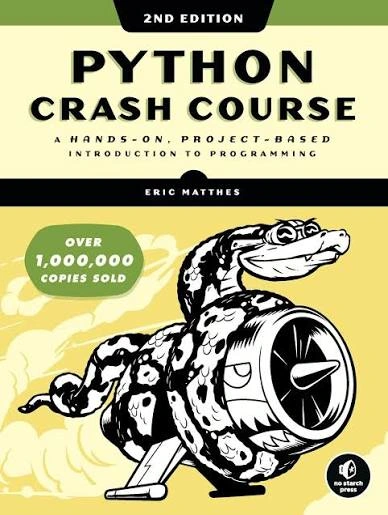
Python Crash Course, 2nd Edition, is the top Python book for beginners that provides a detailed introduction to Python so you can start writing programs soon. The book is an international bestseller with over a million copies sold worldwide.
This book is fast-paced, on-point, and offers updated guides, which makes it popular among learners. It helps you learn about different Python libraries and tools, create customized web apps, and build basic 2D games.
The book is divided into two parts. The first one focuses on the basics of Python, where you learn to write correct programs and add them to your projects. The second part adopts an interactive approach to learning while explaining real-world applications of Python with three practical projects, which include a basic web app, data visualization using Python libraries, and a Space Invaders arcade game. You can add these projects to your portfolio to showcase your skills and knowledge.
You don’t need prior knowledge or experience to read this book. Also, the projects included in the book offer advanced learning guides, making learning more interesting.
Date of publication: May 3, 2019 (No Starch Press)
What makes it special:
- Split into two halves. The first teaches core syntax, the second puts it to work on three full projects.
- Projects include a Space Invaders style arcade game, a set of data visualisations, and a Django web app.
- Covers real tools you will use later, including Pygame, Matplotlib, Plotly, and Django.
- Uses a lay flat binding, so the book stays open while you type.
Time to read this book: Around 25 to 30 hours across 544 pages, or four to six weeks at a steady pace.
Best For: Complete beginners who learn faster by building things than by reading theory.
Price: Around Rs 1,800 to 2,600 for the paperback. Kindle runs lower.
2. Automate the Boring Stuff with Python (2nd Edition)
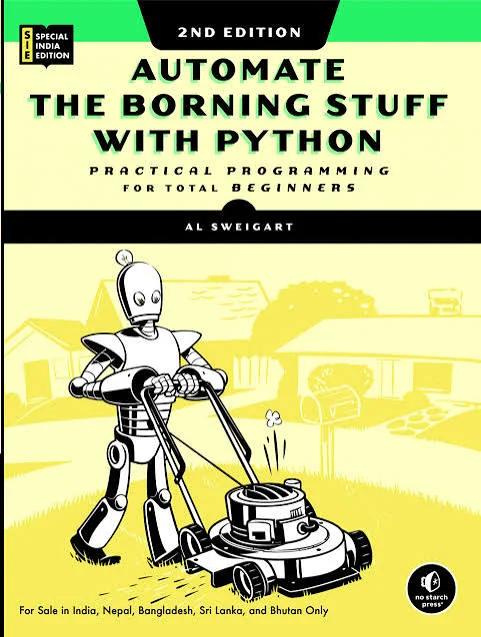
You can read hundreds of Python books, but implementing skills and knowledge in real life is completely different. Also, reading theory can be redundant and boring. You need to get your hands dirty to learn real things and build real solutions. That is where Automate the Boring Stuff with Python comes in. Unlike other books that mostly cover basics and step-by-step theoretical guides, this book focuses on application-based learning.
It is the best-selling book with 94% likes by Google users and a 4.3 rating on Goodreads. It teaches you how to automate boring and routine tasks through programming. It is an easy book for beginners, offering knowledge about varied topics, including scraping web data, automating clicking tasks, and working with Gmail and Google Sheets.
For people with no technical experience, this is the best book for Python programming to start your coding journey. It helps you learn various interesting things, including updating and renaming files and folders and finding text in different files without opening them. It will transform you into an emerging Python programmer and enhance your knowledge so you can automate time-consuming tasks effectively.
Date of publication: November 2019 (No Starch Press)
What makes it special:
- Teaches programming through tasks you actually face, like renaming files and updating spreadsheets.
- The second edition added a chapter on input validation plus Gmail and Google Sheets automation.
- Covers web scraping, form filling, folder organisation, and merging or splitting PDFs.
- The full text is free to read on the author's website under a Creative Commons licence.
Time to read this book: Around 20 to 25 hours across 504 pages, or three to five weeks.
Best For: Non programmers who want Python to save them time at work from week one.
Price: Free to read online. Paperback costs around Rs 1,800 to 2,600.
3. Learn Python the Hard Way (3rd Edition)
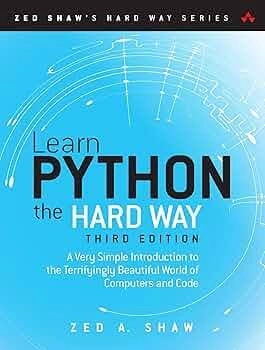
Learn Python the Hard Way (3rd Edition) is quite a popular book among Python programmers and is worth all the hype. The aim of the book is to guide beginners so they can work their way up one step at a time. Therefore, the author has built an engaging environment through this book for readers new to Python.
You first learn to install a complete Python environment and gradually move forward to learn Python basics, such as strings, variables, modules, and object-oriented programming.
It tells you how a computer and code work and includes 52 amazing exercises to teach you various Python concepts. Each exercise requires you to write the precise and correct code, fix the errors, and run the code. You learn to identify mistakes and take corrective actions as a professional programmer.
Even if you know the fundamentals of Python and find the first few chapters boring, it is recommended to read them and progress chapter by chapter. Rest assured, it will reward you for every minute you invest in reading this book, which will be evident at the end.
Date of publication: October 1, 2013 (Addison-Wesley Professional)
What makes it special:
- Built around 52 exercises. You type every line yourself, with no copy and paste allowed.
- Starts by setting up a working Python environment before touching any syntax.
- Trains you to read error messages and fix your own bugs, which is a real job skill.
- Moves from strings and variables up to data structures and object oriented programming.
Time to read this book: Around 30 to 40 hours across 320 pages, because the exercises take longer than the reading.
Best For: Beginners who want strict repetition and discipline rather than a gentle walkthrough.
Price: Around Rs 700 to 1,500 for the paperback.
Recommended Professional Certificates
Full Stack Development Course with AI Engineering
WordPress Bootcamp
4. Head-First Python: A Brain-Friendly Guide (2nd Edition)
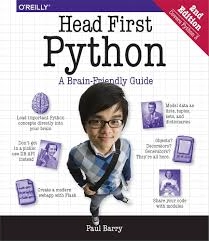
Are you done reading those redundant Python how-to manuals? Then, it’s time to try Head-First Python. This book is a part of the Head-First series and is considered to be the best visual book on Python. It makes learning easier by providing a visual format that engages your brain, which is not always possible in heavy text-based books that are often boring.
The book is a must-have for Python beginners and experienced professionals. Although shorter than other books, it ensures a quality and engaging learning experience through a concise format. There are intuitive descriptions and concepts with fun and detailed explanations of why things work the way they do.
Its visual illustrations make the best book for Python programming, as it simplifies complex topics for learners. The book keeps you entertained and hooked right from the beginning, making your learning journey impactful. It starts with built-in data structures and functions and covers database management, web apps, exception handling, and data wrangling.
There are other advanced topics, such as context managers, comprehensions, decorators, and generators, available in easy-to-learn language. It includes a project that requires you to build web apps using Flask, and you can track your progress with each chapter. If you want a playful and multi-sensory learning experience, Head-First Python is the way to go.
Date of publication: December 2016 (O'Reilly Media)
What makes it special:
- Uses the Head First visual format, with pictures, puzzles, and layout that keep your attention.
- Runs 622 pages but reads far faster than its size suggests.
- Moves from built in data structures through database work, exception handling, and data wrangling.
- Includes a full project where you build a working web app with Flask.
Time to read this book: Around 16 hours of reading time, based on O'Reilly's own estimate.
Best For: Learners who lose focus in dense text and need a visual format to stay engaged.
Price: Around Rs 1,200 to 2,200 for the Shroff Indian edition.
5. A Byte of Python
Next, we bring another gem that every Python student and professional working in the data science field must read. It is a tutorial for beginners and takes credit for launching many careers in Python programming. Python books can put a strain on your budget, but this one is an affordable option that aims at educating the masses in Python, one of the simplest and most powerful programming languages.
A Byte of Python gives a complete overview of Python and its history and gradually introduces the basic principles in an easy-to-understand language. There are in-depth explanations and examples, as well.
The author teaches readers how to get things done quickly and efficiently. In the end, you will find problems to solve using your knowledge and skills. The best part is the Python community has translated this book into 26 languages, making it accessible to a wider range of readers and learners.
Date of publication: First released around 2003. It is updated continuously and covers current Python 3.
What makes it special:
- Completely free under a Creative Commons Attribution ShareAlike 4.0 licence.
- Assumes zero programming background. If you can save a text file, you can start.
- Volunteers have translated it into many languages, including several Indian ones.
- Short and direct, so you can finish it in a few sittings and move on to real code.
Time to read this book: Around 6 to 10 hours. It is the shortest book on this list.
Best For: Anyone who wants a fast, free first pass at Python before spending money.
Price: Free online. A printed copy can be bought from the author's site.
6. Python Programming: An Introduction to Computer Science (3rd Edition)
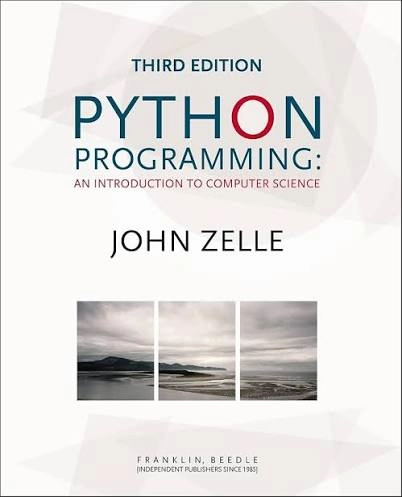
Python Programming is popular and a favorite among computer science professors as it teaches standard computer science concepts in a non-standard language- Python. It explains the basics of computer science in a simple language. Students can build the skills required to instruct a computer to solve varied problems using Python.
This book makes your learning a gentle journey so you don’t get overwhelmed at any point. You can also use it as a standard textbook for your first-ever computing course, as it also focuses on core computer science skills, such as programming, designing, and problem-solving.
This is one of the ideal Python books for beginners who are not professional programmers but are curious about how a computer works and what programmers do. It is recommended for people who want to learn programming through Python.
Date of publication: August 8, 2016 (Franklin, Beedle & Associates)
What makes it special:
- Teaches computer science fundamentals and uses Python as the teaching medium.
- Carries a foreword by Guido van Rossum, who created Python.
- The third edition removed most uses of eval and added a discussion of why it is risky.
- Adds graphics examples across chapters 4 to 12, including simple animation and game work.
Time to read this book: Around 30 to 35 hours across 552 pages. It works better across a full semester.
Best For: Students who want the underlying computer science, not just the syntax.
Price: Around Rs 3,000 to 4,500. It is priced as a textbook.
Upcoming Masterclass
Attend our live classes led by experienced and desiccated instructors of Wscube Tech.
Best Python Books for Experts
Now that you have learned the basics and acquired some knowledge of Python, let's move on to advanced books that will help you upskill yourself and gain a competitive edge over your peers. These are a bit complex books that demand prior knowledge and experience so you can navigate through the chapters and content smoothly. Read these books to gain an advanced understanding and training in Python.
7. Programming Python: Powerful Object-Oriented Programming
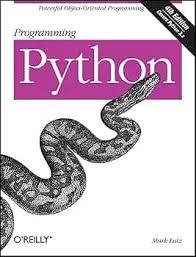
For those with a sound understanding of Python fundamentals, this book is absolutely necessary. Programming Python enhances your knowledge and helps you stay abreast with the technology. It delves deeper into the primary application domains of Python, including databases, system administration, web applications, GUI, and networking, through examples.
Many Python experts and professionals claim that Python Programming must be the next book for every learner as it covers all the major topics, starting with a Quick Python tour and exploring system programming, internet programming, and more.
The concepts are explained in detail using examples, making it the best book for Python programming. However, one might find it extremely verbose, so many prefer using it only for references.
Date of publication: December 2010, with the print run dated January 2011 (O'Reilly Media)
What makes it special:
- Runs to roughly 1,626 pages, which makes it the deepest reference here by a wide margin.
- Goes application domain by application domain: system administration, GUIs, databases, networking, and the web.
- The fourth edition dropped Python 2 entirely and covers only Python 3.
- Every concept comes with working code, which is why many people keep it as a lookup reference.
Time to read this book: O'Reilly estimates over 54 hours. Most readers dip into chapters instead of reading it end to end.
Best For: Working developers who already know the language and now need to build real applications.
Price: Around Rs 2,500 to 4,000.
8. Fluent Python: Clear, Concise, and Effective Programming
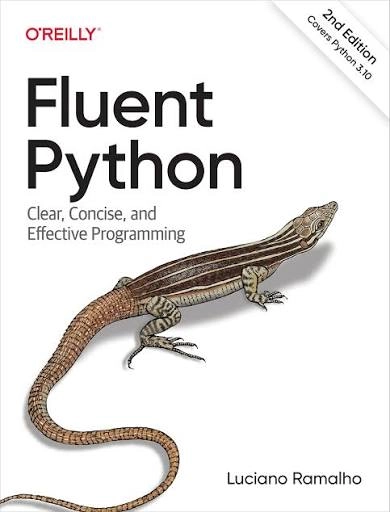
As the name suggests, Fluent Python aims to help learners achieve fluency in Python. This advanced book is a hands-on guide on how to write efficient code using the best Python features. It helps you learn complex elements of Python and gain an in-depth understanding of Python programming.
It is also known for implementation details and amazing material for best practices, making it a great choice for readers from different language backgrounds. This is the top book for programmers who have even a few months of experience in other languages and want to get started with Python. Many have named it the must-have book for everyone who enjoys programming and wants to explore nuances of in-built Python features.
This book covers various advanced Python topics, including data models, data structures, and metaprogramming concepts. You will also learn about concurrency, control flow, object-oriented programming, functions, and generators. It gives you a complete tour of Python libraries and features, taking you from beginner to higher level effectively so you can write readable and concise code.
Date of publication: May 10, 2022 (O'Reilly Media)
What makes it special:
- Organised as five short books in one: data structures, functions as objects, object oriented idioms, control flow, and metaprogramming.
- The second edition adds type hints, pattern matching, coroutines, and async work for Python 3.10.
- Focuses on writing code the Python way instead of carrying habits from other languages.
- Explains why features behave as they do, not just how to use them.
Time to read this book: Around 24 hours of reading time across roughly 1,014 pages, per O'Reilly.
Best For: Developers who can already write Python and now want to write it well.
Price: Around Rs 1,500 to 2,500 for the Shroff Indian edition.
9. Python Cookbook: Recipes for Mastering Python 3 (3rd Edition)
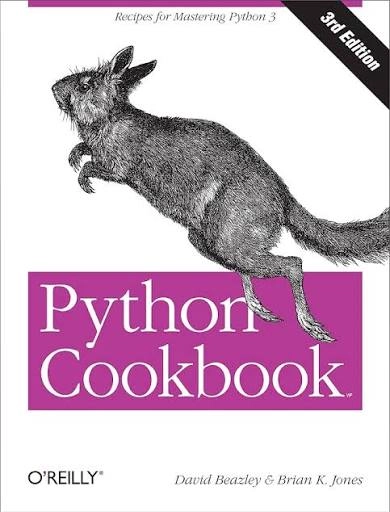
Python Cookbook is a popular read among Python developers and enthusiasts. It includes brilliant recipes on varied topics so you can learn to write code using the updated Python version. These recipes will transform you into a Python proficient with a core focus on programming and other common tasks related to Python applications.
The aim of the authors is to assist beginners in taking one step forward into advanced Python programming. Therefore, each recipe comes with an example and solution with code samples. You will find problems related to varied topics, ranging from basic topics to advanced concepts, such as C extensions, metaprogramming, concurrency, etc.
You will also find interesting and useful techniques combined with innovative solutions, so you can use it as a reference while programming. Python Cookbook is the best book for Python language to learn topics like iterators, data encoding and processing, data structures, classes and objects, generators, and functions.
Date of publication: May 2013 (O'Reilly Media)
What makes it special:
- Built as a recipe book. Each entry states a problem, gives a solution, then explains why it works.
- Covers more than a dozen areas, including iterators, generators, metaprogramming, and concurrency.
- Written and tested against Python 3, with no Python 2 material.
- Designed to be opened at the page you need, not read cover to cover.
Time to read this book: Around 25 to 30 hours across 706 pages if read fully. Most people use it as a lookup.
Best For: Intermediate developers who want tested solutions to problems they hit at work.
Price: Around Rs 1,200 to 2,200 for the Shroff Indian edition.
Read More Guides Related to Python
10. Test-Driven Development with Python: Obey the Testing Goat: Using Django, Selenium, and JavaScript (2nd Edition)
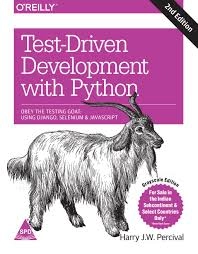
Python is a versatile language serving several purposes, including web application development. If you are a Python professional who wants to dive deeper into web application development, give this book a try.
Test-Driven Development with Python hands-on guide teaches you the test-driven development (TDD) approach, Selenium, Django, Git, jQuery, and Mock. You also learn about web application development techniques that help you hone your practical skills and knowledge.
Date of publication: August 2017 (O'Reilly Media)
What makes it special:
- Builds one real web application from first commit to deployment, using tests to drive every step.
- Teaches Django, Selenium, Git, jQuery, and Mock along the way.
- Updated for Python 3.6, with a full section on mocking and test isolation.
- Shows the TDD loop in practice: write the test, watch it fail, write only enough code to pass.
Time to read this book: Around 30 to 35 hours, since you build the app as you read.
Best For: Python developers moving into web development who want disciplined testing habits.
Price: Around Rs 2,500 to 4,000.
11. Introduction to Machine Learning with Python: A Guide for Data Scientists (1st Edition)
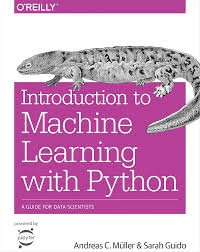
Machine learning is creating a buzz worldwide. It is known for its multiple applications across industries and offers endless possibilities. So, if you want to build your career in the evolving world of machine learning, read Introduction to Machine Learning with Python. This is among the top Python books for experienced professionals who need a reference to expand their knowledge and imagination.
It teaches useful methods to create machine learning solutions using various Python libraries designed for this purpose. It is a well-written and organized book that is easy for beginners and thorough for advanced Python programmers. It starts with machine learning fundamentals and then discusses the pros and cons of different ML algorithms.
There are instructions on how to set up a development environment and explanations of core Python topics, practical aspects of ML, and advanced ML methods. You will also learn about model evaluation, data processing, pipelines, etc. If you want to improve your machine learning skills, this is the book for you.
Date of publication: October 2016 (O'Reilly Media)
What makes it special:
- Co-written by Andreas Müller, a core maintainer of scikit-learn.
- Skips the heavy mathematics and focuses on making machine learning work in practice.
- Walks through supervised learning, unsupervised learning, feature engineering, model evaluation, and pipelines.
Explains where each algorithm works well and where it falls short, which most books skip.
Time to read this book: Around 18 to 22 hours across 376 pages.
Best For: Python developers taking their first real step into machine learning.
Price: Around Rs 1,000 to 2,000 for the Shroff Indian edition.
12. Grokking Algorithms: An Illustrated Guide For Programmers and Other Curious People (1st Edition)

Learning about Python algorithms can be boring. Right? But thanks to Grokking Algorithms, this daunting activity is now fun and engaging. Unlike other algorithm books, it is way more than monotonous texts and dense multi-page proofs.
It makes learning interesting through illustration. In the beginning, it discusses easier topics, including sorting and searching, then jumps on to complex concepts, like artificial intelligence and data compression. The best part is these advanced topics are explained using illustrations with code samples.
Date of publication: May 2016 (Manning Publications)
What makes it special:
- Uses more than 400 hand drawn illustrations to explain how each algorithm works.
- Starts with searching and sorting, then moves to graphs, dynamic programming, and k nearest neighbours.
- Every code sample is written in Python, so you can run them as you read.
- Explains performance trade offs in plain language instead of dense mathematical proofs.
Time to read this book: Around 10 to 14 hours across roughly 250 pages. It is the fastest read in this section.
Best For: Self taught programmers preparing for interviews who never studied algorithms formally.
Price: Around Rs 600 to 1,500 for the Indian edition.
Explore Our Web Development Related Courses
13. Effective Python: 125 Specific Ways to Write Better Python (3rd Edition)
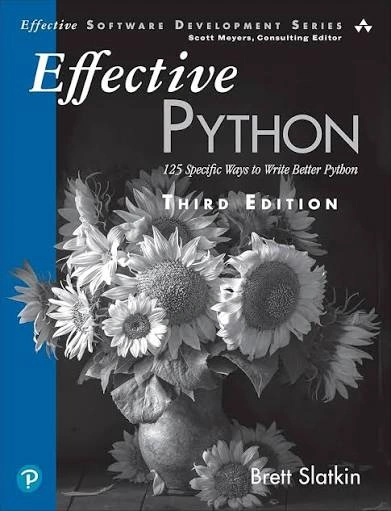
There is a gap between Python that runs and Python that a senior engineer would sign off on. Effective Python is built entirely around closing it. Brett Slatkin, a principal engineer at Google, has been writing production Python for nearly two decades, and the book distils that experience into 125 short, specific items.
Each item covers a single practice: what to do, what to avoid, and why it matters. That structure makes it unusually easy to pick up. You can read one item over a coffee break and apply it the same afternoon, which is why so many teams keep a copy on the shelf.
The third edition expanded from 90 items to 125, with 35 completely new ones, and updates the guidance through Python 3.13. It also adds chapters on writing high performance programs and covers C extension modules and native shared libraries. If your code already works and you now want it to be clean and maintainable, this is the best book for Python programming you can pick up.
Date of publication: November 20, 2024 (Addison-Wesley Professional)
What makes it special:
- 125 short, self contained items, each covering one specific practice.
- Expanded from the second edition's 90 items, with 35 entirely new ones.
- Updated through Python 3.13, so the advice matches current language features.
- New chapters on performance, C extension modules, and native shared libraries.
Time to read this book: Around 20 to 25 hours, though the item format means you can read it in short bursts.
Best For: Developers who already write working Python and want their code reviewed well.
Price: Around Rs 3,000 to Rs 5,500.
14. Python for Data Analysis: Data Wrangling with pandas, NumPy, and Jupyter (3rd Edition)
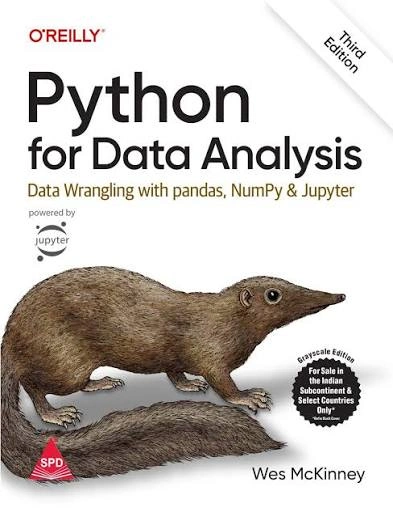
Most Python jobs in India today involve data at some point, and pandas is the tool that does the work. This book is written by Wes McKinney, who created pandas. That matters, because you are learning the library from the person who decided how it should behave.
Python for Data Analysis is practical from the first chapter. You work through loading, cleaning, transforming, merging, and reshaping real datasets, then move into grouping, time series work, and visualisation with Matplotlib. It uses Jupyter throughout, which is how most analysts actually work.
It also fills the biggest gap in most lists of the best books to learn Python, which tend to stop at general programming and never reach data. The third edition is updated for Python 3.10 and pandas 1.4, and the complete text is available free as an open access web edition on the author's site.
Date of publication: August 2022 (O'Reilly Media)
What makes it special:
- Written by Wes McKinney, who created the pandas library.
- Covers the full workflow: load, clean, transform, merge, reshape, group, and visualise.
- Uses Jupyter and IPython throughout, matching how analysts actually work.
- The full text is free to read as an open access web edition.
Time to read this book: Around 13 hours of reading time across 582 pages, per O'Reilly's own estimate.
Best For: Anyone moving from general Python into data analysis or a data role.
Price: Free to read online. Paperback runs around Rs 1,500 to Rs 2,500 for the Shroff Indian edition.
15. Hands-On Machine Learning with Scikit-Learn and PyTorch
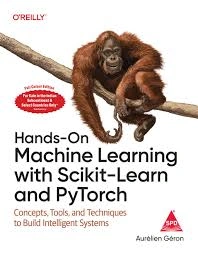
Machine learning books date faster than anything else in this list, which is why this one matters. Aurélien Géron rewrote his bestselling guide around PyTorch and the Hugging Face ecosystem, replacing the Keras and TensorFlow material that anchored the earlier editions.
That change reflects where the field actually went. PyTorch is now the default in research and increasingly in production, and Hugging Face is where most people get their models. A 2022 book teaching TensorFlow first will leave you working against the industry rather than with it. If machine learning is your goal, this is the best Python book on the subject right now.
The structure is unchanged and still excellent. You start with the basics like overfitting and hyperparameter tuning, run a complete end to end project in scikit-learn, cover unsupervised methods like clustering and anomaly detection, then build transformers and diffusion models in PyTorch. Hands-On Machine Learning with Scikit-Learn and PyTorch runs 875 pages and expects you to already know Python.
Date of publication: December 2, 2025 (O'Reilly Media)
What makes it special:
- Rebuilt around PyTorch and Hugging Face instead of Keras and TensorFlow.
- Takes you from linear regression through transformers and diffusion models.
- Includes a complete end to end scikit-learn project, from data exploration to evaluation.
- Currently the most up to date machine learning book on this list by a wide margin.
Time to read this book: Around 40 to 45 hours across 875 pages. Treat it as a multi month project.
Best For: Python developers who want a current, practical route into machine learning and deep learning.
Price: Around Rs 6,000 to Rs 8,000 for the imported paperback. A cheaper Indian edition may follow.
Explore Our Data Related Courses
| Data Analytics Course | Live Internship + 100% Job Support |
| Business Analytics Course | Live Internship + 100% Job Support |
| Data Science Course | Live Internship + 100% Job Support |
FAQs about Best Python Programming Books
Yes, as long as you write code while you read rather than after. Pick a book with exercises after each section and at least one full project. Reading alone will not build the skill, but typing every example yourself will.
Use the latest Python 3 release, which is Python 3.14. Every book on this list published after 2019 covers Python 3. Python 2 has been unsupported since January 2020, so avoid any older edition that still teaches it.
Some of the best books to learn Python for beginners are Python Crash Course (3rd Edition), Automate the Boring Stuff with Python (3rd Edition), Head First Python (3rd Edition), A Byte of Python, Learn Python the Hard Way (5th Edition), and Python Programming: An Introduction to Computer Science (4th Edition). If you want just one, start with Python Crash Course.
Fluent Python and Effective Python are the two strongest choices. Fluent Python explains why the language behaves as it does, while Effective Python gives you 125 specific practices you can apply this week. Read Effective Python first if you want faster results.
Yes, and several are among the best Python programming books available. A Byte of Python, Automate the Boring Stuff with Python, Python for Data Analysis, and Test-Driven Development with Python are all free to read online. You can work through all four without spending anything.
Most beginners need six to ten weeks to finish a book like Python Crash Course at one to two hours a day. The reading itself takes around 25 hours. The exercises and projects account for the rest, and that is where the learning actually happens.
Books give you depth and a reference you can return to. Courses give you pace, feedback, and someone to ask when you are stuck. Most people learn fastest by combining both.
Python for Data Analysis covers pandas and NumPy from the person who created pandas. For machine learning, Hands-On Machine Learning with Scikit-Learn and PyTorch is the most current option, since it uses PyTorch and Hugging Face rather than older frameworks.
Build three or four small projects and put them on GitHub. A command line tool, an automation script, and a small web app cover enough ground to show real skill. Employers look at what you have built far more closely than at what you have read.
Yes. Python remains one of the most in demand languages worldwide, and the growth of AI and machine learning has increased that demand rather than reduced it. Almost every major ML framework, including PyTorch and scikit-learn, is Python first.
Conclusion
You now have fifteen tested options across every level, from free reads like A Byte of Python to deep references like Fluent Python. Do not buy five at once. Pick the one that matches where you actually are today, then finish it before moving to the next. One book completed with every exercise typed out beats four books skimmed.
If you are starting from zero, Python Crash Course is the best book to learn Python and the safest first purchase. If you already ship code, go straight to Effective Python. Then build something, put it on GitHub, and learn Python properly by letting each gap guide your next read.
Explore Our Free Tech Tutorials
| Python Tutorial | Java Tutorial | JavaScript Tutorial |
| C Tutorial | C++ Tutorial | HTML Tutorial |
| CSS Tutorial | SQL Tutorial | DSA Tutorial |
Practice Coding With Our Free Compilers
| Online Python Compiler | Online HTML Compiler | Online C Compiler |
| Online C++ Compiler | Online JS Compiler | Online Java Compiler |
Join Our On-Campus Full Stack Related Courses
Join Our On-Campus Data Related Courses
Free Courses for You

Leave a comment
Your email address will not be published. Required fields are marked *Comments (0)
No comments yet.