Every business that runs ads online, from a local shop to a global brand, needs someone who knows how to spend the ad budget wisely. That person is a PPC expert. If you are searching for how to become PPC expert, you are looking at one of the most practical and in-demand skills in digital marketing today.
Pay-per-click, or PPC, is a form of online advertising where a business pays a small fee each time someone clicks their ad. It powers the sponsored results you see on Google, the product ads on Amazon, and the promoted posts on Instagram and Facebook.
The good news is that you do not need a special degree to enter this field. What you need is the right learning path, hands-on practice, and patience. This guide walks you through everything, from the daily work of a PPC expert to a complete roadmap you can follow, so there is no confusion left about how to become a PPC specialist.
What Does a PPC Expert Do?
A PPC expert plans, builds, and manages paid ad campaigns across platforms like Google Ads, Meta Ads, and LinkedIn Ads. Their main goal is simple: get the best possible results from every rupee spent on ads.
Here is what this role usually involves on a daily basis:
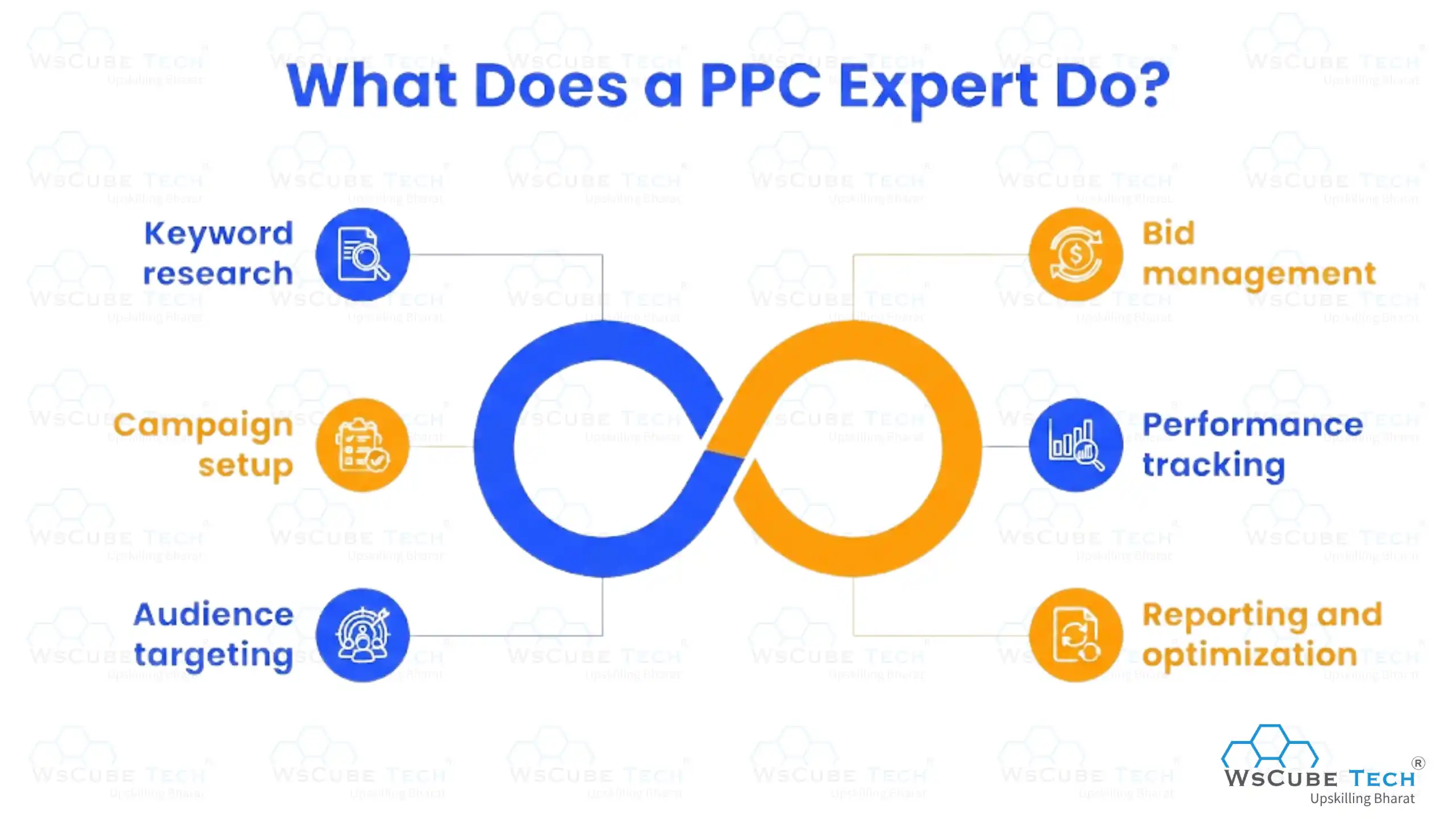
- Keyword research: Finding the exact words and phrases that potential customers type into search engines, and deciding which ones are worth bidding on.
- Campaign setup: Creating ad groups, writing ad copy, setting budgets, and choosing the right bidding strategy for each campaign.
- Audience targeting: Deciding who should see the ads based on location, age, interests, device, and past behaviour on the website.
- Bid management: Adjusting how much to pay for each click so the campaign stays within budget while still winning valuable ad positions.
- Performance tracking: Watching metrics like click-through rate, cost per click, and conversion rate to see what is working and what is not.
- Reporting and optimization: Making regular changes to underperforming ads, pausing keywords that waste money, and scaling the ones that bring results.
This role sits at the meeting point of marketing, data, and psychology. A good PPC expert understands what makes a person click an ad and, more importantly, what makes them take action after clicking it.
Paid search advertising alone is expected to bring in over 200 billion dollars in global spend this year, which shows just how much businesses rely on skilled people to manage these budgets.
Recommended Professional Certificates
AI-Powered Digital Marketing Course
Performance Marketing Bootcamp
SEO Specialist Bootcamp
Step-by-Step Roadmap to Become a PPC Expert
If you are wondering how to become a PPC expert from scratch, here is a clear, step-by-step path you can follow. There is no need to rush. Most people take a few months to become comfortable, and a year or two to become truly confident.
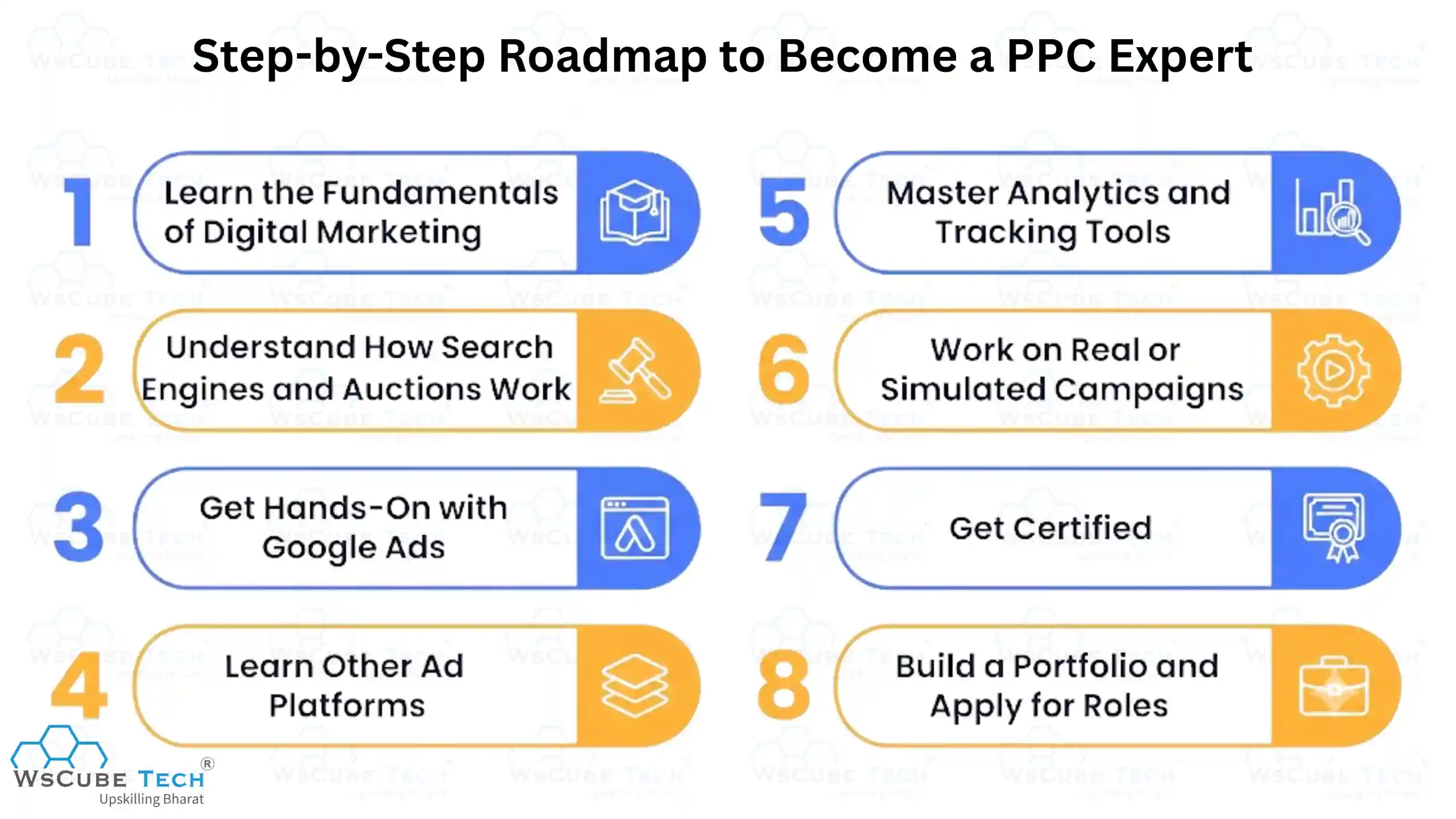
Step 1: Learn the Fundamentals of Digital Marketing
Before jumping into paid ads, spend some time understanding the broader picture of digital marketing. Learn how search engines work, how websites rank, and how different channels like SEO, social media, and email marketing fit together. This context will help every PPC decision make more sense later.
Step 2: Understand How Search Engines and Auctions Work
PPC ads are not sold on a first-come, first-served basis. They run through an auction system where advertisers bid on keywords, and the search engine decides which ads to show based on the bid amount and ad quality. Learning how this auction works, along with terms like Quality Score, ad rank, and impression share, gives you the foundation for everything that comes next.
Step 3: Get Hands-On with Google Ads
Google Ads is the most widely used PPC platform, so it is the natural starting point. Create a free account, explore the interface, and try setting up a small test campaign with your own budget or a demo account. Watching a pay per click tutorial alongside this practice can make the platform far less confusing, since you can follow along step by step instead of guessing what each button does.
Focus on learning:
- Search campaigns and display campaigns
- Keyword match types (broad, phrase, and exact)
- Writing ad copy that follows Google's guidelines
- Setting up conversion tracking
Step 4: Learn Other Ad Platforms
Once Google Ads feels comfortable, branch out to Meta Ads (Facebook and Instagram), LinkedIn Ads, and Amazon Ads. Each platform has its own targeting options and ad formats, but the core logic of testing, measuring, and optimizing stays the same across all of them.
Step 5: Master Analytics and Tracking Tools
A PPC expert cannot work without data. Learn tools like Google Analytics and Google Tag Manager to track how visitors behave after they click an ad. Understanding this data helps you connect ad spend directly to real business outcomes like sales, sign-ups, or leads.
Alongside the platforms themselves, it helps to get familiar with a few supporting tools. Keyword research tools show you search volumes and competition levels, landing page builders let you create and test the pages your ads send traffic to, and spreadsheet skills help you organize data before you even open a dashboard.
None of these tools are complicated on their own but knowing how to move between them smoothly is what separates a slow beginner from someone who works efficiently.
Step 6: Work on Real or Simulated Campaigns
Theory only takes you so far. Try running a small campaign for your own website, a friend's small business, or a non-profit that needs help. If that is not possible, use demo accounts or simulated budgets to practice campaign setup, bidding, and reporting.
Step 7: Get Certified
Certifications do not replace experience, but they do validate your knowledge and make your profile stand out. Google offers free certifications through Google Skillshop, and Meta has its own Blueprint certifications. These are worth completing once you have some hands-on practice under your belt.
If you want structured, job-focused training that combines certifications with real campaign experience, enrolling in a Performance Marketing Course can help you build practical skills while strengthening your resume.
Step 8: Build a Portfolio and Apply for Roles
Document your campaigns, even the small ones. Show the goals you set, the strategies you used, and the results you achieved. A simple portfolio with screenshots and numbers can make a big difference when applying for internships or junior PPC roles.
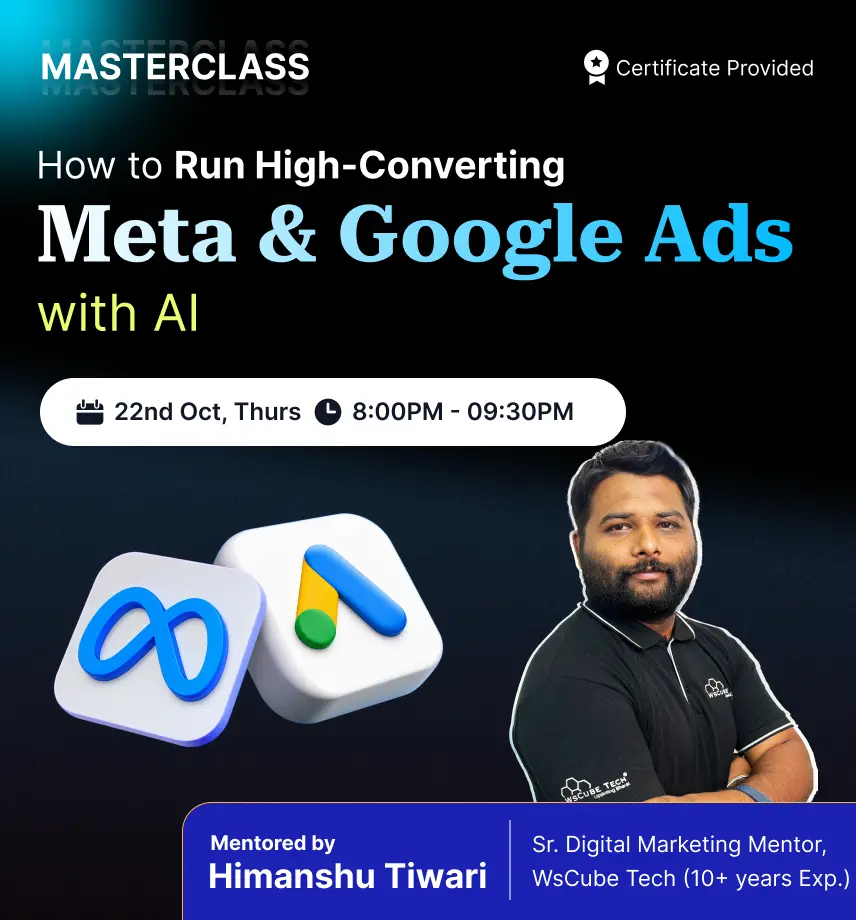
Upcoming Masterclass
Attend our live classes led by experienced and desiccated instructors of Wscube Tech.
Self-Learning vs. Structured PPC Training
One of the biggest decisions on this journey is whether to teach yourself using free resources or to join a structured course. Both paths can work, but they suit different types of learners.
| Factor | Self-Learning | Structured PPC Course |
| Cost | Mostly free or low cost | Paid, but often includes tools and support |
| Learning speed | Slower, depends on self-discipline | Faster, with a set schedule and deadlines |
| Guidance | Limited, mostly forums and videos | Direct mentorship from trainers |
| Practical exposure | Depends on your own initiative | Often includes live projects and case studies |
| Certification | Available separately (Google, Meta) | Usually bundled with the course |
| Networking | Minimal | Access to peer groups and alumni |
| Best suited for | Highly motivated, independent learners | Beginners who want structure and accountability |
If you already have some marketing background and enjoy learning through trial and error, self-learning can work well and costs very little.
If you are starting completely fresh and want a faster, more organized path with real project exposure, a structured course is usually the better choice, especially if it includes mentorship and placement support.
Explore More Related Guides
Is a PPC Career Right for You? Self-Assessment
Before committing your time to this path, it helps to check whether your natural strengths match what the role demands. Ask yourself the following questions honestly.
1. Are you comfortable with numbers?
PPC involves constant analysis of budgets, click costs, and conversion rates. You do not need to be a mathematician, but you should be comfortable reading spreadsheets and reports without feeling overwhelmed.
2. Do you enjoy testing and experimenting?
Campaigns rarely work perfectly on the first try. A big part of the job is testing different headlines, images, and audiences, then learning from what does not work.
3. Can you handle a bit of pressure?
Ad budgets are real money, and results are visible almost immediately. This can feel stressful at first, but it also makes the work exciting once you get used to it.
4. Are you curious about consumer behaviour?
Understanding why people click one ad over another, or why they leave a website without buying, is at the heart of good PPC work.
5. Do you like staying updated?
Ad platforms change their features and rules often. If you enjoy learning continuously rather than settling into one fixed routine, this field will keep you engaged.
You do not need to score perfectly. If most of your answers are yes and you are willing to learn through real campaigns, you already have a strong foundation. How to become a paid ads expert is all about building the right skills over time, making this a rewarding career with excellent earning potential.
A PPC specialist in India earns an average base salary of around ₹6.7 LPA - ₹7.4 LPA depending on experience and location, with senior specialists and managers earning considerably more.
Explore Our Most Popular Marketing Courses
FAQs about Becoming PPC Expert
No. While a marketing background helps, PPC is a skill-based career. Many successful PPC experts come from completely different fields and learned everything through courses and practice.
Most beginners can reach a job-ready level in three to six months with consistent practice, though becoming truly skilled often takes a year or more of real campaign experience.
Start with Google Ads. It covers the core concepts of auctions, bidding, and Quality Score that apply across almost every other ad platform.
Yes. As long as businesses want visibility online, they will need people who can manage ad budgets effectively. This makes PPC a stable and growing career path.
Yes, to an extent. Google and Meta offer demo accounts and free learning resources. However, running even a small real campaign, even with a modest budget, will teach you far more than simulations alone.
A PPC specialist usually focuses on hands-on campaign execution, while a PPC manager oversees strategy, budgets, and often manages a team of specialists.
No coding is required for most PPC roles. Basic knowledge of tracking codes and tags is useful, but platforms are designed to be used without programming skills.
Google's Search and Display certifications through Skillshop, along with Meta Blueprint certifications, are the most widely recognized in the industry.
Yes. Many PPC experts eventually move into freelancing or start their own small agencies once they have enough experience managing client budgets and delivering results.
Start by setting up a simple search campaign in Google Ads with a small budget. Focus on writing clear ad copy and choosing relevant keywords before moving on to more advanced strategies.
Join Our On-Campus Digital Marketing Program
Explore Our Free Courses





Leave a comment
Your email address will not be published. Required fields are marked *Comments (0)
No comments yet.