
Data analytics is one of the fastest-growing career fields today, offering excellent job opportunities and attractive salaries. Many students and working professionals are interested in entering this field, but often feel confused about where to start and what requirements are needed.
Before choosing any course, it is important to understand the eligibility criteria for a data analyst course. This helps you know whether you meet the basic requirements such as educational qualification, skills, and background needed to begin your learning journey smoothly.
Let’s learn what data analytics is, eligibility requirements, required skills, course types, tools you will use, career opportunities, salary, and a simple step-by-step roadmap to get started.
You can join the data analytics online course by WsCube Tech to learn tools, concepts, and real-world projects that help you become job-ready.
What is Data Analytics?
Data analytics is the process of collecting, organizing, and analyzing data to find meaningful insights and support better decision-making. It helps businesses understand trends, patterns, and overall performance from data.
By using data analytics, companies can solve problems, improve efficiency, and make smarter, data-driven decisions across different areas.
Types of Data Analytics
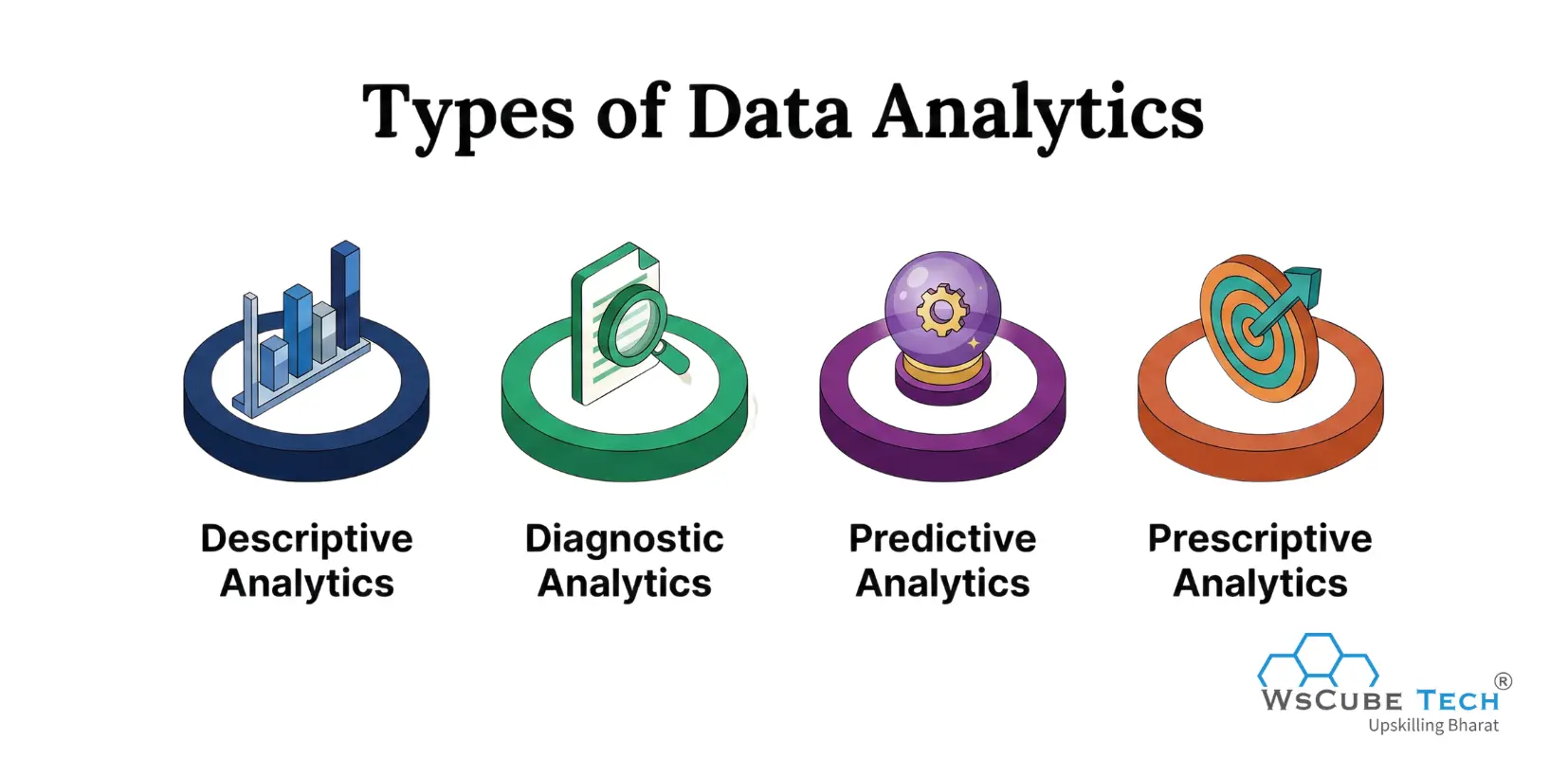
Below are the different types of data analytics.
- Descriptive Analytics: It summarizes past data to clearly show what happened, helping understand performance and overall results over a specific period.
- Diagnostic Analytics: It explains why something happened by identifying causes and relationships within the data.
- Predictive Analytics: It uses past data to estimate future trends and outcomes, helping businesses prepare for opportunities and risks.
- Prescriptive Analytics: It suggests the best actions to take based on data insights to achieve desired results and improve decision-making.
Why Choose a Data Analyst Career?
A data analyst career is a great choice because it offers high demand, good salary, and strong growth opportunities. Almost every industry, such as healthcare, finance, marketing, and IT, needs data analysts to make better decisions using data. This makes the career stable and full of opportunities.
Another reason is that it is beginner-friendly compared to other tech roles. You can start with basic knowledge and gradually learn advanced concepts. Even non-technical students can enter this field with the right skills and practice.
Additionally, data analysts play an important role in solving real-world problems. They help companies improve performance, understand customers, and plan better strategies, making the job both valuable and rewarding.
Who Can Learn Data Analytics?
Anyone with basic learning interest and problem-solving skills can learn data analytics, regardless of their educational or professional background.
- Students: Students from science, commerce, or arts backgrounds can start learning data analytics early and build a strong foundation for future career opportunities.
- Non-Technical Students: Learners without a technical background can also enter this field by starting with basic concepts and gradually learning advanced skills step by step.
- Working Professionals: Professionals from different fields can switch to data analytics by learning essential skills and tools, opening new career opportunities with better growth and stability.
- Freshers: Fresh graduates looking for job opportunities can learn data analytics and enter a high-demand career field with good salary and growth potential.
Recommended Professional Certificates
Data Analytics Course with Gen AI
Data Science Course with Internship & Placement Support
Basic Eligibility for Data Analytics Course
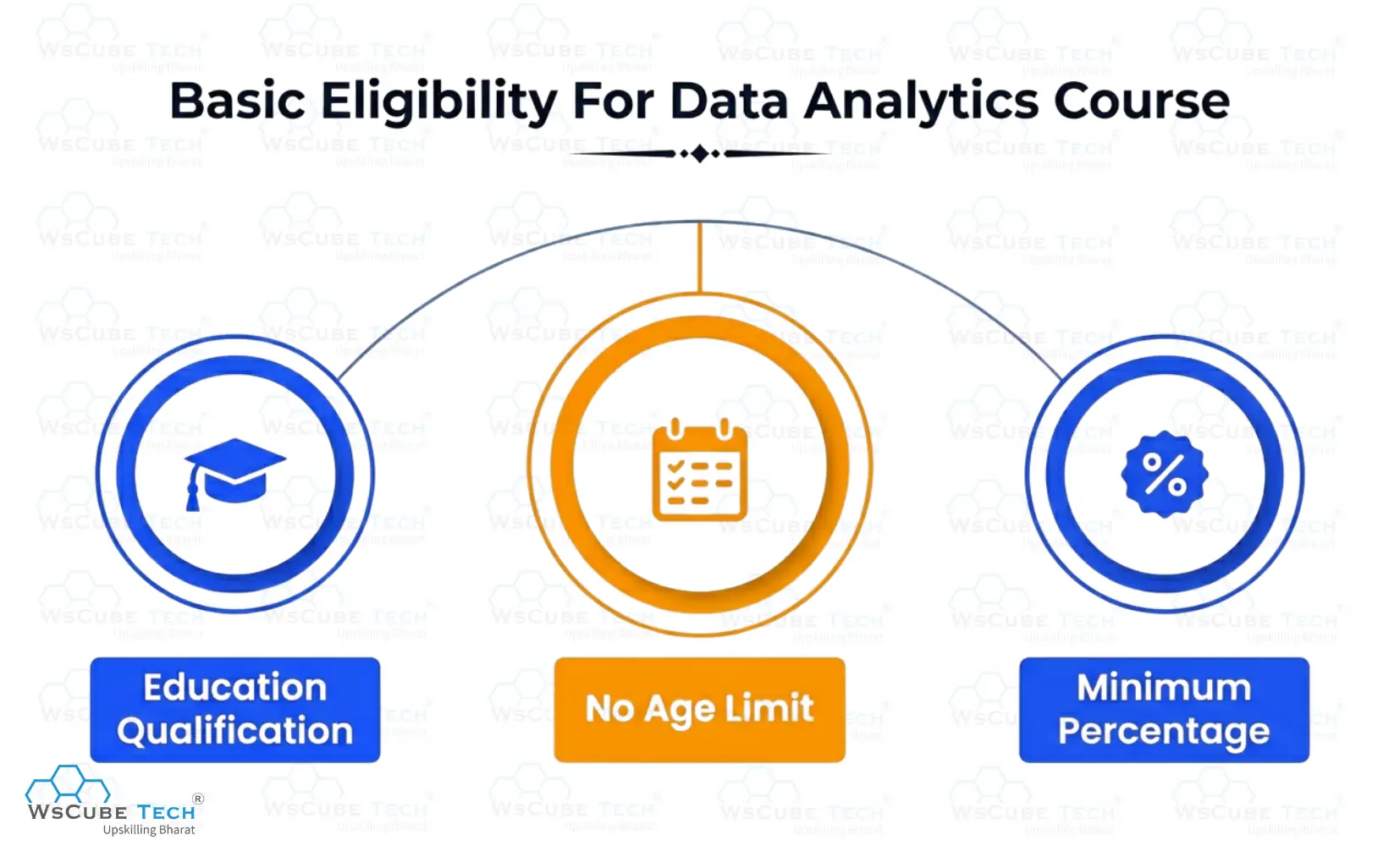
Before enrolling in a data analytics course, it is important to understand the basic eligibility requirements. These criteria help you know whether you are ready to start learning and build a strong foundation in data analytics.
Educational Qualification
Most data analytics courses require candidates to have completed at least 10+2 or a bachelor’s degree in any stream. Students from science, commerce, or arts backgrounds can apply, as no specific degree is strictly required.
Minimum Percentage Requirements
There is usually no strict minimum percentage required for most data analytics courses, especially online programs. However, some universities or institutes may require around 50% marks in previous qualifications for admission.
Age Limit
There is generally no age limit for enrolling in a data analytics course. Students, graduates, and working professionals of any age can start learning data analytics and build a successful career in this field.
Can Non-Technical Students Learn Data Analytics?
Yes, non-technical students can easily learn data analytics. You do not need a strong programming or technical background to start. Many beginners come from commerce, arts, or other non-technical fields and successfully build careers in data analytics.
You can begin with basic concepts like data understanding, simple calculations, and gradually move to advanced topics. With consistent practice and the right learning approach, anyone can develop the required skills step by step.
Today, many courses are designed especially for beginners, making it easier for non-technical students to learn and grow in the data analytics field.
Is Coding Required for Data Analyst Courses?
Coding is not always mandatory to start learning data analytics. Many beginner-level courses focus on tools like Excel, Power BI, and Tableau, where you can analyze data without writing complex code. This makes it easier for beginners and non-technical learners to get started.
However, having basic knowledge of programming languages like Python or SQL becomes helpful as you progress. It allows you to work with large datasets, automate repetitive tasks, and perform more advanced data analysis efficiently.
In simple terms, you can start your data analytics journey without coding, but learning basic programming skills will help you grow faster and open more career opportunities in the future.
Eligibility for Different Types of Data Analytics Courses
Different data analytics courses have different eligibility criteria depending on their level. Below is the data analyst course eligibility required to start learning and build a successful career in this field.
| Course Type | Eligibility Criteria |
| Certificate Courses | Open to all; basic education (10th/12th) is enough, no strict academic requirements. |
| Diploma Courses | Requires 10+2 qualification from a recognized board; basic knowledge of computers is helpful. |
| Undergraduate Courses | Requires 10+2 with at least 50% marks; mathematics or statistics is preferred but not always required. |
| Postgraduate Courses | Requires a bachelor’s degree in any field; some institutes may prefer math, IT, or commerce background. |
You can join our Data Analytics Mentorship Program and become a job-ready Data Analyst in 14 weeks, helping you build practical skills and start your career with confidence.
Upcoming Masterclass
Attend our live classes led by experienced and desiccated instructors of Wscube Tech.




Skills Required to Become a Data Analyst
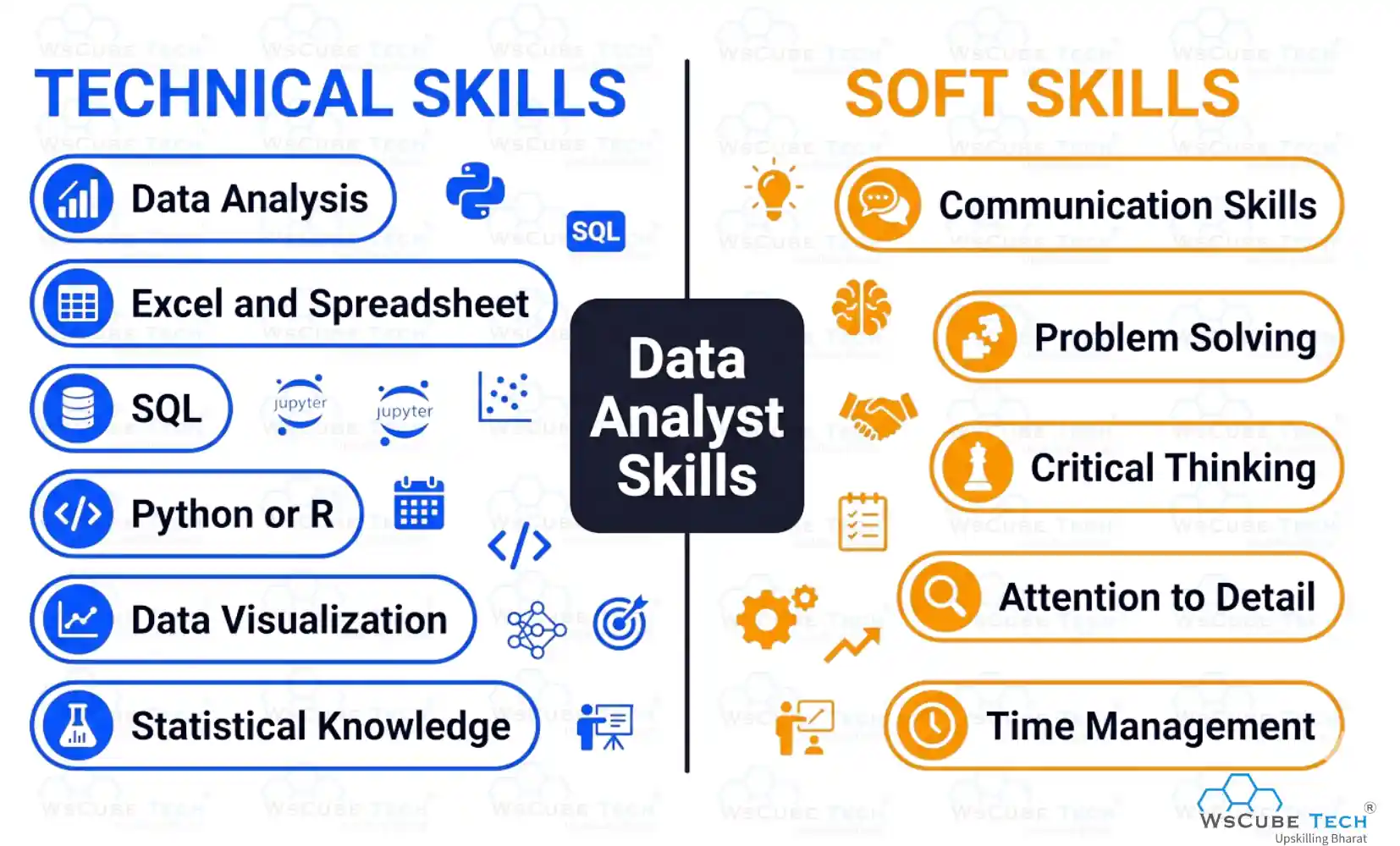
After understanding the eligibility for a data analyst course, it is important to know the key data analyst skills needed to work with data, analyze information, and make better business decisions. Below are the essential skills required to become a data analyst:
Technical Skills
- Data Analysis: Ability to collect, clean, and interpret data to find useful insights, helping businesses make better decisions based on accurate and meaningful information.
- Excel/Spreadsheet: Strong knowledge of spreadsheets to organize data, perform calculations, use formulas, pivot tables, and create reports for effective data analysis.
- SQL: Helps you query databases, retrieve specific data, and manage large datasets efficiently for analysis and decision-making.
- Programming (Python or R): Basic knowledge of programming languages like Python or R to perform data analysis, automate tasks, and handle complex datasets more efficiently.
- Data Visualization: Skill to present data using tools like Power BI and Tableau to create clear charts, graphs, and dashboards for better understanding.
- Statistical Knowledge: Understanding basic statistics like mean, median, and probability to interpret data accurately and support strong data-driven decisions.
Soft Skills
- Communication Skills: Ability to explain data insights clearly to non-technical stakeholders, helping them understand results and make informed decisions based on data findings.
- Problem-Solving: Strong thinking skills to identify issues, analyze data, and find effective solutions for real-world business problems using logical approaches.
- Critical Thinking: Ability to evaluate data carefully, question assumptions, and make accurate decisions based on analysis.
- Attention to Detail: Focus on accuracy while working with data to avoid errors and ensure reliable results.
- Time Management: Helps you handle multiple tasks, meet deadlines, and complete data projects efficiently without compromising quality.
Tools You Will Learn in a Data Analyst Course
Below are the common data analytics tools you will learn in the course to work with data, analyze information, and create insights:
| Tool | Purpose |
| Excel | Used for data cleaning, calculations, and basic analysis using formulas and charts. |
| SQL | Used to query databases, retrieve data, and manage large datasets efficiently. |
| Python | Used for data analysis, automation, and handling complex datasets. |
| Power BI | Used to create interactive dashboards and visualize data insights. |
| Tableau | Used for data visualization and building clear, interactive reports. |
| Google Sheets | Used for online data management, collaboration, and basic data analysis tasks. |
The image below shows another example of how data analytics is used through a dashboard to track business performance. It includes key metrics like sales, products, earnings, and transactions, along with charts and graphs for monthly trends. These visual insights help businesses monitor growth, understand patterns, and make better data-driven decisions quickly and efficiently.
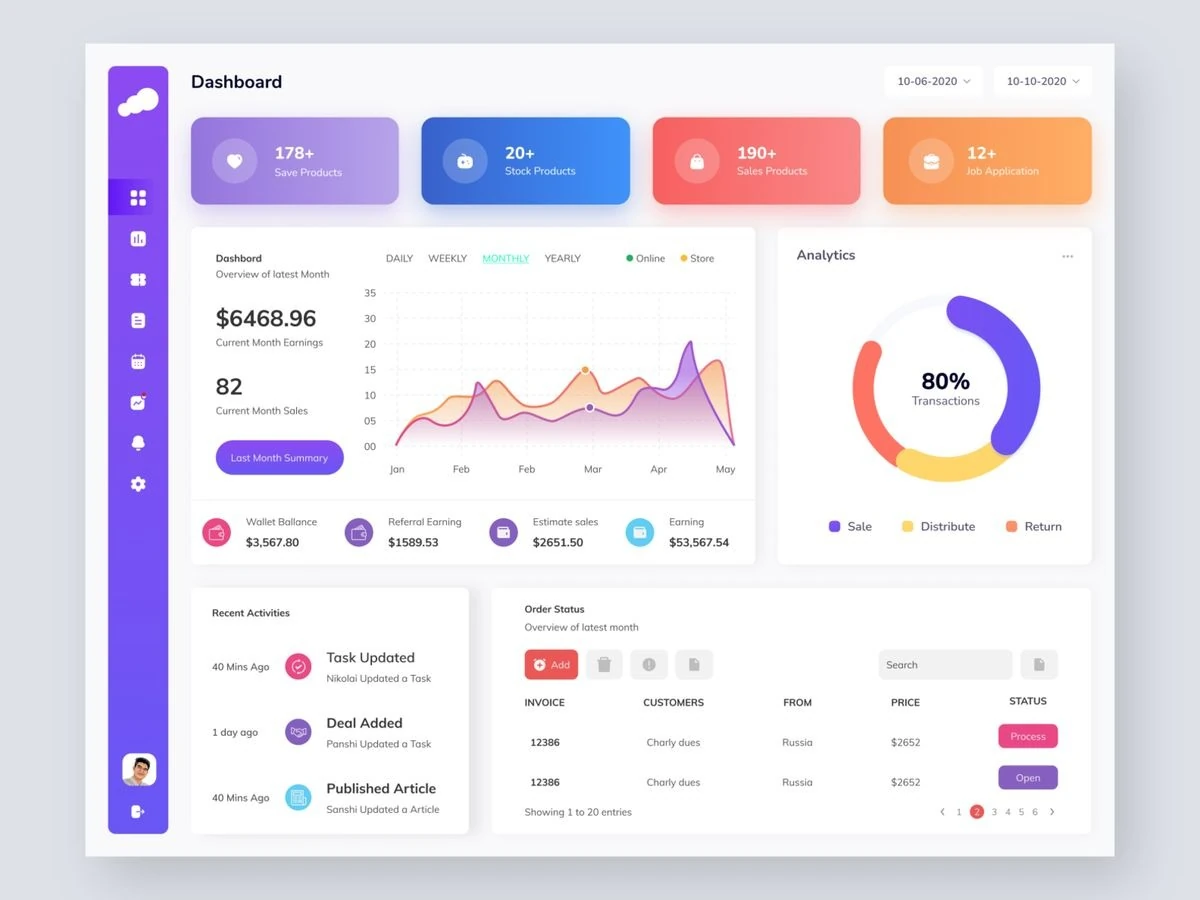
This dashboard clearly shows how data analytics simplifies complex data into easy visuals, helping users quickly understand performance and take informed actions.
Career Opportunities After Learning Data Analytics
After learning data analytics, you can explore various data analytics careers across industries; below are the opportunities:
- Data Analyst: Analyze data, create reports, and find insights to help businesses make better decisions and improve overall performance across different departments and processes.
- Business Analyst: Work with business teams to understand requirements, analyze data, and provide insights that help improve strategies, operations, and decision-making processes.
- Data Scientist: Use advanced techniques, statistics, and programming to analyze large datasets, build models, and predict future trends for better business planning.
- Data Engineer: Design, build, and manage data systems and pipelines to collect, store, and process large amounts of data for analysis.
- Financial Analyst: Analyze financial data, track performance, and provide insights that help organizations manage budgets, investments, and financial planning effectively.
- Marketing Analyst: Analyze customer data, campaigns, and market trends to help businesses improve marketing strategies and reach the right audience.
Also Read: Data Analyst vs. Data Scientist: Key Differences & Comparison
Future Scope of Data Analytics
The future of data analytics is growing rapidly as organizations increasingly rely on data for better decision-making. The global data analytics market is estimated to reach around USD 104.39 billion by 2026, showing strong growth across industries.
It is further expected to reach approximately USD 495.87 billion by 2034, growing at a CAGR of around 21.5%. This rapid growth highlights excellent career opportunities, high demand, and long-term stability in the field of data analytics.
Explore More Data Guides
Salary of a Data Analyst in India
The salary of a data analyst in India depends on factors like experience, skills, location, and company. As demand for data professionals is increasing, companies are offering competitive salaries to skilled analysts across various industries.
Freshers can start with a decent salary, and with experience, their earnings grow significantly. By improving skills in data analysis and gaining practical experience, professionals can achieve higher salary packages over time.
| Experience Level | Average Salary (INR per year) |
| Fresher (0–1 year) | ₹3,00,000 – ₹6,00,000 |
| 1–3 Years | ₹5,00,000 – ₹10,00,000 |
| 3–5 Years | ₹8,00,000 – ₹15,00,000 |
| 5+ Years | ₹12,00,000 – ₹25,00,000+ |
Read in Detail: Data Analyst Salary in India (Freshers & Experienced)
How to Start Learning Data Analytics?
Starting data analytics requires a clear plan, basic understanding of concepts, and consistent practice to build strong skills and gain confidence in real-world data analysis tasks.
Step 1: Understand the Basics
Start by learning what data analytics is and why it is important. Understand basic concepts like types of data, data collection methods, and how data is used to support better decision-making processes.
Step 2: Learn Essential Tools
Start with beginner-friendly tools like Excel for basic analysis, then move to SQL for databases and tools like Power BI or Tableau for data visualization and dashboards.
Step 3: Learn Basic Programming
Gain basic knowledge of Python or R to handle large datasets, automate tasks, and perform deeper data analysis efficiently in real-world projects and scenarios.
Step 4: Work on Projects
Practice by working on real-world datasets and projects. This helps you apply your knowledge, improve problem-solving skills, and build a strong portfolio for job opportunities.
Step 5: Build a Portfolio
Create a portfolio showcasing your projects, dashboards, and analysis work. This helps you clearly show your skills and increases your chances of getting hired for data analytics roles.
Step 6: Apply for Jobs
Start applying for internships or entry-level data analyst roles to gain practical experience. Prepare for interviews, improve your communication and problem-solving skills, and continue learning new tools and techniques to grow in your data analytics career.
Also Read: Data Analyst Roadmap: Step-by-Step Guide for Beginners
Learn Data Analytics with WsCube Tech
If you are looking to start or grow your career in data analytics, WsCube Tech offers an AI-powered Data Analytics Mentorship Program designed for beginners as well as working professionals. This program focuses on practical learning, helping you understand core concepts through real-world applications instead of just theory.
In this program, you will work on real datasets, build dashboards, and perform data analysis using industry-relevant tools. With expert guidance and hands-on projects, you can become a job-ready Data Analyst in just 14 weeks, along with a 4-week internship experience and build strong industry-ready analytical skills.
Explore Our Data Related Courses
| Data Analytics Course | Live Internship + 100% Job Support |
| Business Analytics Course | Live Internship + 100% Job Support |
| Data Science Course | Live Internship + 100% Job Support |
FAQs on Data Analyst Course Eligibility
The minimum qualification is usually 10+2 from a recognized board. However, having a bachelor’s degree in fields like computer science, mathematics, or commerce can help in better understanding concepts.
Yes, non-technical students can learn data analytics easily. Many courses start from basics and teach tools step by step, making it suitable for learners from commerce, arts, or other non-technical backgrounds.
Coding is not necessary to enroll in a data analyst course. Many beginner courses do not require programming, but learning basic coding later can improve your skills and career opportunities.
Basic skills like logical thinking, problem-solving, and a basic understanding of numbers are helpful. You do not need advanced knowledge, as most courses are designed to teach skills from scratch.
No, there is no age limit for learning data analytics. Anyone can start at any stage, whether you are a student, fresher, or working professional looking to upgrade skills.
Yes, you can become a data analyst without a degree by learning practical skills, working on projects, and building a strong portfolio. Many companies focus more on skills than formal education.
There is no fixed stream required. Students from science, commerce, or arts can become data analysts, although having a background in mathematics, statistics, or computer science can be helpful.
Yes, commerce and arts students can pursue data analytics. With proper learning and practice, they can develop the required skills and build successful careers in this growing field.
Basic mathematics is helpful but not mandatory at an advanced level. Understanding simple concepts like averages, percentages, and statistics is enough to start learning data analytics effectively.
The duration varies depending on the course type. Short courses may take a few months, while comprehensive programs can take 4 to 8 months to complete with practical learning.
Yes, online data analytics courses are valid if they provide practical skills and projects. Employers focus on your knowledge, experience, and portfolio rather than just the mode of learning.
Anyone with a basic education, interest in data, and willingness to learn is eligible. Students, freshers, working professionals, and even non-technical learners can easily start a data analytics course.
Conclusion
Data analytics is a great career option for anyone interested in working with data and solving real-world problems. The eligibility requirements are simple, and even beginners or non-technical students can start learning with the right approach and consistency.
With the right skills, tools, and practical experience, you can build a successful career in this field. Start learning step by step, focus on building strong fundamentals, and explore opportunities to grow in the fast-growing world of data analytics.
Join Our On-Campus Data Analytics Course





Leave a comment
Your email address will not be published. Required fields are marked *Comments (0)
No comments yet.