
India has become a major hub for ethical hacking, where professionals help organizations identify and fix security vulnerabilities in a legal and structured way. Ethical hackers play a crucial role in strengthening systems by finding risks before they can be exploited.
This blog covers everything you need to know about ethical hacking, including roles, industry outlook, salary, and certification details.
If you want to become an ethical hacker, you can join the ethical hacking course online by WsCube Tech to learn practical skills and real-world techniques.
What is Ethical Hacking?
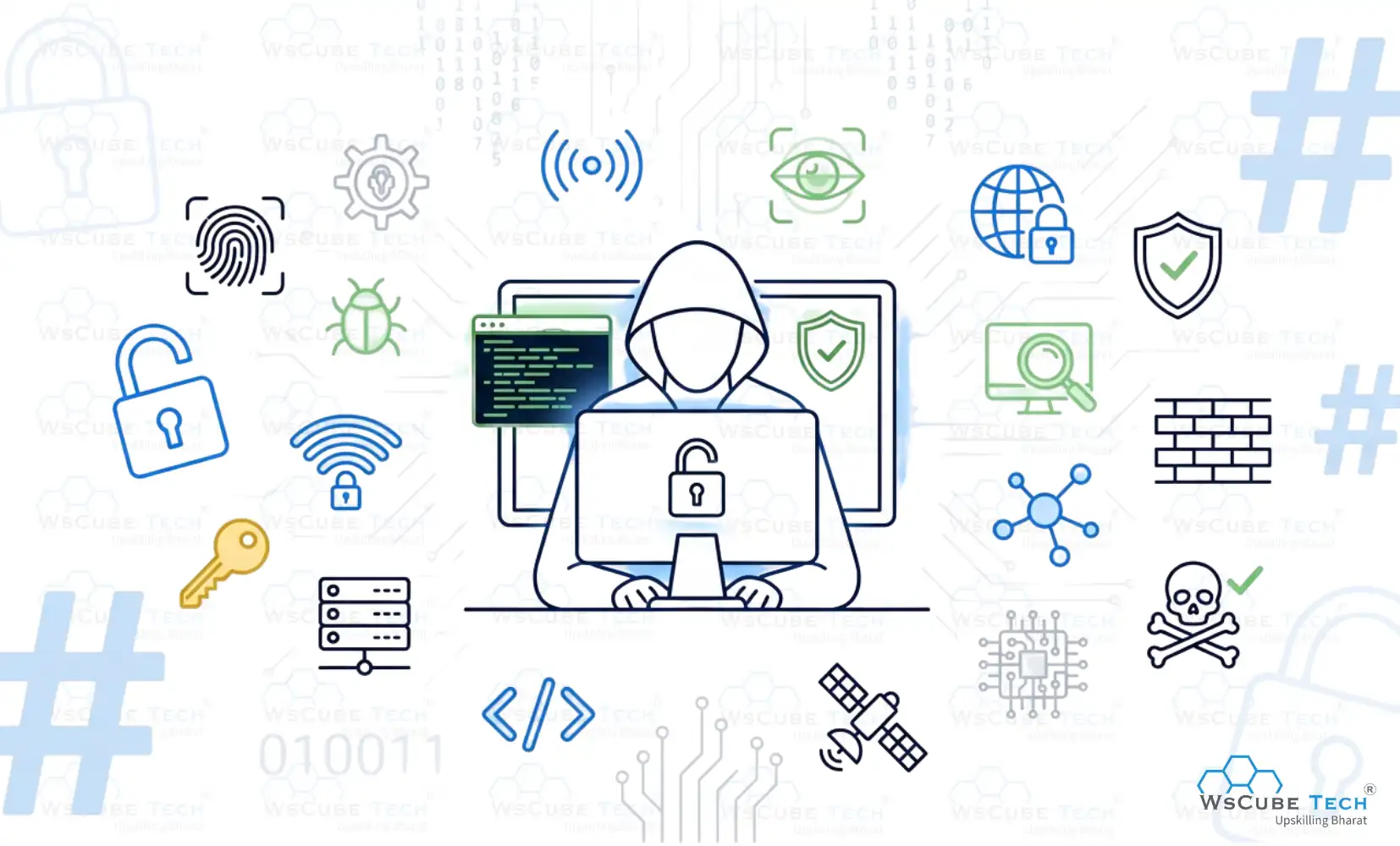
Ethical hacking is a practice where cybersecurity experts, often called as ethical hackers or white hat hackers, deliberately and legally attempt to find vulnerabilities and weaknesses in computer systems, networks, or software to help organizations enhance their security.
Ethical hackers use their skills to perform authorized and controlled hacking activities, with the primary goal of identifying and addressing security flaws before malicious hackers can exploit them.
For example:
Imagine you own a bank, and you want to make sure your customers' financial information is safe from cyberattacks. You hire an ethical hacker to test the security of your online banking system.
This ethical hacker will use their skills to simulate the actions of a malicious hacker but with your permission. They will try to identify any weaknesses in your system, like loopholes or vulnerabilities, that a real attacker could exploit.
If the ethical hacker successfully finds vulnerabilities, they will report them to you so that you can fix them promptly. This proactive approach helps protect your bank's systems and, ultimately, your customers' money and personal information from cybercriminals.
Ethical hacking is like having a friendly "break-in" to find and fix potential security problems before the bad guys can exploit them.
Recommended Professional Certificates
Ethical Hacking Bootcamp
Penetration Testing Bootcamp
What is Ethical Hacking Course?
An ethical hacking course is a structured training program that educates you on the skills and knowledge required to become ethical hackers or cybersecurity professionals.
These courses are designed to teach individuals how to legally and responsibly identify, assess, and address security vulnerabilities in computer systems, networks, and software.
The qualities of the best ethical hacking course include:
- Practical approach
- Hands-on projects
- Training by cybersecurity experts
- Mentorship and guidance
- Ethical hacking certification
- Career assistance
- Comprehensive curriculum
- Reasonable fees
You can get all these qualities in the online ethical hacking course by WsCube Tech. You must book your demo classes and experience the training quality yourself.
Ethical Hacking Course Details 2026
| Particulars | Values |
| Course Name | Ethical Hacking |
| Course Type | Bachelor’s, Master’s, Diploma, Certificate Course, and online courses |
| Course Duration | Fluates between 3 months to 3 years |
| Eligibility | - UG (10 + 2 from a recognized board) - PG (Bachelor’s Degree) |
| Admission Process | Entrance Exam |
| Entrance Exams | For UG - UPESEAT - HITSEE - VITEEE - KIITEE For PG - IPU CET - GATE - VITMEE |
| Fees Structure | ₹ 20,000 to 60,000 per annum |
| Career Options | Ethical Hacker, Security Analyst, Information Security Analyst, Security Consultant, etc. |
| Average Salary | ₹ 5.2 to 5.5 Lakhs per annum |
| Recruiting Options | Infosys, Wipro Technologies, TCS, WhiteHat Jr, Philips, Genpact, etc. |
Also Read: How to Become an Ethical Hacker? Full Roadmap
Ethical Hacking Syllabus
A popular course due to an increased interest in internet security, Ethical hacking courses cover tools and techniques that hackers use to know about intrusions in the defense mechanism.
The syllabus for ethical hacking courses varies across different institutes, as each may have its unique curriculum. However, below is our detailed and comprehensive syllabus designed to provide in-depth knowledge and practical expertise in ethical hacking:
Ethical Hacking Course Syllabus
| Topic | Subtopics |
| Networking | Introduction to networking, Role of networking ports, Networking concepts, Networking protocols, Types of Networking, What is TCP and how does it work?, What is ISP?, Network Protocols, What is IP address?, How does internet work?, Versions and types of IP address, OSI vs TCP/IP model, What is MAC address?, Domain name and DNS records, Request & Responses |
| Linux | What is Linux?, Basic Linux commands (Practical), Cool Features of Linux, Advanced Linux commands (Practical), Basic File System of Linux, Getting Familiar with Linux OS |
| Setting Up Ethical Hacking Lab | Setting Up Lab, Installing Kali or Parrot OS in VMware or VirtualBox, Installing VMware or VirtualBox, Downloading a good wordlist for Kali Linux |
| Footprinting and Reconnaissance | Introduction to Footprinting & Reconnaissance, Types of Footprinting, Website footprinting using Netcraft/Wappalyzer, DNS footprinting (DNSenum, DNS lookup, MX lookup, NS lookup), Email footprinting, WHOIS footprinting, OSINT framework, Google Dorking, Kali Linux tools (DNSenum, DNSRecon, Sublister) |
| Network Scanning | What is network scanning?, Checking for software with versions, Network scanning methodology, OS fingerprinting and banner grabbing countermeasures, Types of network scans, Saving XML reports, Checking for live systems, open ports, and services. |
| Enumeration | Introduction to enumeration, DNS enumeration, Types of enumeration, How to enumerate all services?, Default ports, Enumeration countermeasures, NetBIOS, SNMP, SMTP, and NFS enumeration. |
| Vulnerability Assessment | Introduction to vulnerability assessment, Installing Acunetix Pro, Classification of vulnerability, Vulnerability scoring systems, Scanning for vulnerabilities in Nmap scan reports, Vulnerability assessment lifecycle, ZAP tools, MSF, Exploit DB, Armitage. |
| How to Be an Anonymous Hacker? | Understanding layers of Internet (Deep, Dark, Surface & Hidden Web), Anonymous Configuration in Linux, Changing User Agent, Accessing Dark Web (Tor Browser), Changing MAC Address, Creating Dark Web Websites, VPN & Proxy setups. |
| System Hacking | Introduction to System Hacking, Hacking using URLs, Cracking Windows passwords, Open port exploitation, Creating good password lists (Google Dork, Crunch), URL masking, Windows & Linux privilege escalation, NetCat hacking tools. |
| Malware Threats | Introduction to Malware, Static Malware Analysis, Dynamic Malware Analysis, Examples of Malware, Malware Analysis Tools (Practical), Creating Payloads (MSF), Trojans, Viruses, Worms, Types of Malware Analysis. |
| Sniffing | What is Sniffing?, MAC Spoofing & Flooding, Active Scanning Techniques, DHCP Flooding, Types of Sniffing, Setting up DHCP Rouge (MITM Attack), Protocols vulnerable to sniffing, Wireshark usage. |
| Social Engineering | Introduction to Social Engineering, Types (Computer, Mobile, Human-based), Social Engineering Tools. |
| DoS and DDoS Attacks | What is DoS Attack?, Installing Burp Suite Pro, What is DDoS Attack?, DoS on Websites, DRDoS Attack, Networking-based DoS (hping3, MSF), DoS via CPU and Memory utilization. |
| Session Hijacking | Introduction to Session Hijacking, Types of Session Hijacking, Hijacking using Burp Suite, Ettercap tools. |
| Hacking Web Servers & Web Apps | Introduction to web servers and web apps, Web application hacking methodology, Vulnerability scanning using Acunetix Pro, Burp Suite. |
| Hacking Wireless Networks | Introduction to wireless networks, Types of wireless encryption, Hacking WEP (Wi-Fi). |
| Hacking Mobile Platforms | Mobile Platform Attack Vectors, Using Keylogger Apps, OWASP Top 10 Mobile Risks (2016), Android & iOS Security Scan, Termux setup, SMS/Call/Email Bombing on Android, Installing Net Hunter Kali. |
| Cryptography | What is Cryptography?, Types of Cryptography, Difference Between Encoding, Hashing & Cryptography, Cryptography tools. |
| System Security | Introduction to firewalls, GUI Linux and Windows firewall configuration, Using WAF and Antivirus for system security. |
| Job Assistance and Career Counseling | Optimizing LinkedIn profiles, Selecting a domain in Cyber Security, Preparing for job interviews, Useful resources to keep upskilling. |
Certified Ethical Hacking Syllabus Topics
Certified Ethical Hacker Course is recognized globally. The modules provide a comprehensive ethical hacking training exam. Here is the syllabus for the same:
| Introduction to Ethical Hacking | Footprint and Reconnaissance |
| Enumeration | System Hacking |
| Malware Threats | Sniffing |
| Social Engineering | Denial of Service |
| Session Hijacking | Hacking Web Servers |
| Hacking Web Applications | SQL Injection |
| Hacking Wireless Networks | Hacking Mobile Platforms |
| Evading IDS, Firewalls, Honeyspot | Cloud Computing |
| Cryptography |
CEH v11 Syllabus
CEH v11 has a total of 20 modules. Some topics might differ. Here is the syllabus:
| Modules | Topics |
| 1 | Introduction to Ethical Hacking |
| 2 | Footprinting and Reconnaissance |
| 3 | Scanning Networks |
| 4 | Enumeration |
| 5 | Vulnerability Analysis |
| 6 | System Hacking |
| 7 | Malware Threats |
| 8 | Sniffing |
| 9 | Social Engineering |
| 10 | Denial-of-Service |
| 11 | Session Hijacking |
| 12 | Evading IDS, Firewalls, and Honeypots |
| 13 | Hacking Web Servers |
| 14 | Hacking Web Applications |
| 15 | SQL Injections |
| 16 | Hacking Wireless Networks |
| 17 | Hacking Mobile Platforms |
| 18 | IoT and OT Hacking |
| 19 | Cloud Computing |
| 20 | Cryptography |
Hacking Course Syllabus
The hacking course covers Ethical Hacking, Website Hacking, and Security/Mobile/Wireless security. Given below is the syllabus:
Ethical Hacking
| Information Gathering | Cyber Ethics |
| Hacking Introduction | Trojans and Backdoors |
| Sniffers and Keyloggers | Google Hacking Database |
| Virus and Virus Analysis | Email, DNS, IP, Spoofing |
| Honeypots | Social Engineering |
| System Hacking and Security |
Website Hacking and Security
| SQL Injection | XSS Attacks and Countermeasures |
| LFI/RFI Attacks & Countermeasures | Vulnerability Research |
| Vulnerability Assessment and Penetration Testing | Exploit Writing |
| Information Disclosure Vulnerabilities | Buffer Overflow and Session Hijacking Attacks |
| Secure Coding Practice |
Mobile & Wireless Security
| SMS Forging and Countermeasures | Wireless Hacking and Security |
| VoIP Hacking and Countermeasures |
Cyber Security and Ethical Hacking Course Syllabus
This course covers areas related to ethical hacking like cloud computing, introduction to ethical hacking, denial of service, hacking mobile platforms, social engineering, etc. The syllabus is as follows:
| Cloud Computing | Introduction to Ethical Hacking |
| Denial-of-Service | Hacking Mobile Platforms |
| Cryptography | Hacking Web Servers |
| Session Hijacking | Social Networking |
| Social Engineering | Malware Threats |
| Footprinting and Reconnaissance | SQL Injection |
| Evading IDS, Firewalls, and Honeypots | Enumeration |
Skillset for Ethical Hacking Course
One of the primary requirements for pursuing ethical hacking is a keenness to learn through the course. Apart from that, acquiring any skill requires several other skills. Some of the technical skills required for hacking include:
| Computer Skills | Tech Savvy |
| Knowledge of Microsoft | Knowledge of Linux |
| Programming Skills | Technical Skills |
| Networking Skills | Basic Hardware Knowledge |
| Reverse Engineering | Cryptography Skills |
| Database Skills | Communication Skills |
Also Read: Cyber Security vs Data Science: Which is Better for Career?
Ethical Hacking Course Eligibility
For UG
Aspirants can apply to cyber security ethical hacking undergraduate courses after completing 10+2 in the science stream from the recognized board. To get admission to prestigious colleges, candidates must possess the following requirements:
- The aspirant must complete 10+2 with Maths, Physics, and Chemistry from a recognized board or institution.
- In 10+2, candidates must attain at least 50 percent to be admitted to their preferred colleges or universities.
- Candidates should appear for the entrance examination.
For PG
Individuals pursuing cybersecurity ethical hacking courses can apply to many colleges and universities. Given below are some of the points for PG eligibility.
- Applicants must graduate in cyber security and ethical hacking courses from a recognized institution.
- Candidates must have 50% marks in the UG.
- Candidates should appear for the entrance examination.
Related Reading: Ethical Hacking Course Eligibility: Requirements, Skills & Career
Ethical Hacking Admission Process
Candidates who want to apply for admission to any ethical hacking course must take and qualify for the entrance examination designed explicitly for the course by the institution.
Some reputed institutions take into account the number of years held as work experience to enroll aspiring candidates in the Ethical Hacking course.
Ethical Hacking Course Duration
The duration of an ethical hacking course varies depending on the university, colleges, training institutes, etc., and the medium through which candidates enroll for the courses. The shortest time it takes to learn ethical hacking is three months, and the longest time it takes is two years. Scholars who want to do a master's degree in hacking can sometimes learn ethical hacking for over two years.
Ethical Hacking Course Fees
The fees for pursuing ethical hacking courses vary from one course to another based on factors such as the type of the course, duration, institutions, and the place where one is pursuing the course. Here is a list of average course fees for Ethical Hacking.
| Course Type | Duration | Approx. Fees in India |
| Online Ethical Hacking Courses | Few hours – 1 year | ₹500 – ₹45,000 |
| Certificate / Professional Certification | 1 – 6 months | ₹10,000 – ₹1,50,000+ |
| Diploma in Ethical Hacking / Cyber Security | 6 months – 2 years | ₹15,000 – ₹1,00,000+ |
| Undergraduate Cyber Security Courses | 3 – 4 years | ₹40,000 – ₹9,00,000+ |
| PG / Advanced Cyber Security Courses | 1 – 2 years | ₹50,000 – ₹5,00,000+ |
Upcoming Masterclass
Attend our live classes led by experienced and desiccated instructors of Wscube Tech.




Ethical Hacking Certifications
Following are some of the popular ethical hacking certifications:
- WsCube Tech's Online Ethical Hacking Course
- Certified Ethical Hacker - EC Council
- GIAC Certified Penetration Tester by SAN & GIAC
- Certified Hacking Forensic Investigator - EC Council
- Certified Intrusion Analyst - GCIA
Scope of Ethical Hacking
The growth of the technical industry is unlimited, with tremendous opportunities. An ethical hacking career is rewarding and has substantial career options.
- Ethical hacking has significant opportunities and scope in the Cloud Computing domain.
- A graduate degree in CS and a relevant field with certification in Ethical hacking increases the chances of getting a job in a top company.
- Apart from being an ethical hacker, one can apply for Information Security Analyst, Security Analyst, Security Consultant, Information Security Manager, Penetration Tester, etc.
Ethical Hacking Course Job Profiles
A qualified and skilled hacker can work as a freelancer. However, when employed under big corporates, a CEH can apply for the following positions:
| Site Administrator | Ethical Hacker | Network Security Specialist |
| Penetration Tester | IT Security Consultant | Cyber Security Consultant |
| Computer Forensic Analyst | IT Auditor | Network Engineer |
Ethical Hacking Course Salary
A student’s skills and field experience decide their salary in ethical hacking. The average salary differs depending on the role that one is working for. Some of the average salaries of the top job profiles in the field are mentioned below:
| Designations | Salary in ₹ |
| Information Security Analyst | ₹7.3 LPA - ₹8 LPA |
| Certified Ethical Hacker | ₹5.1 - ₹5.5 LPA |
| Security Consultant | ₹14.3 LPA - ₹15.8 LPA |
| Information Security Manager | ₹20.6 LPA - ₹22.8 LPA |
Ethical Hacking Course Benefits
Let’s now proceed further and look at the benefits of ethical hacking:
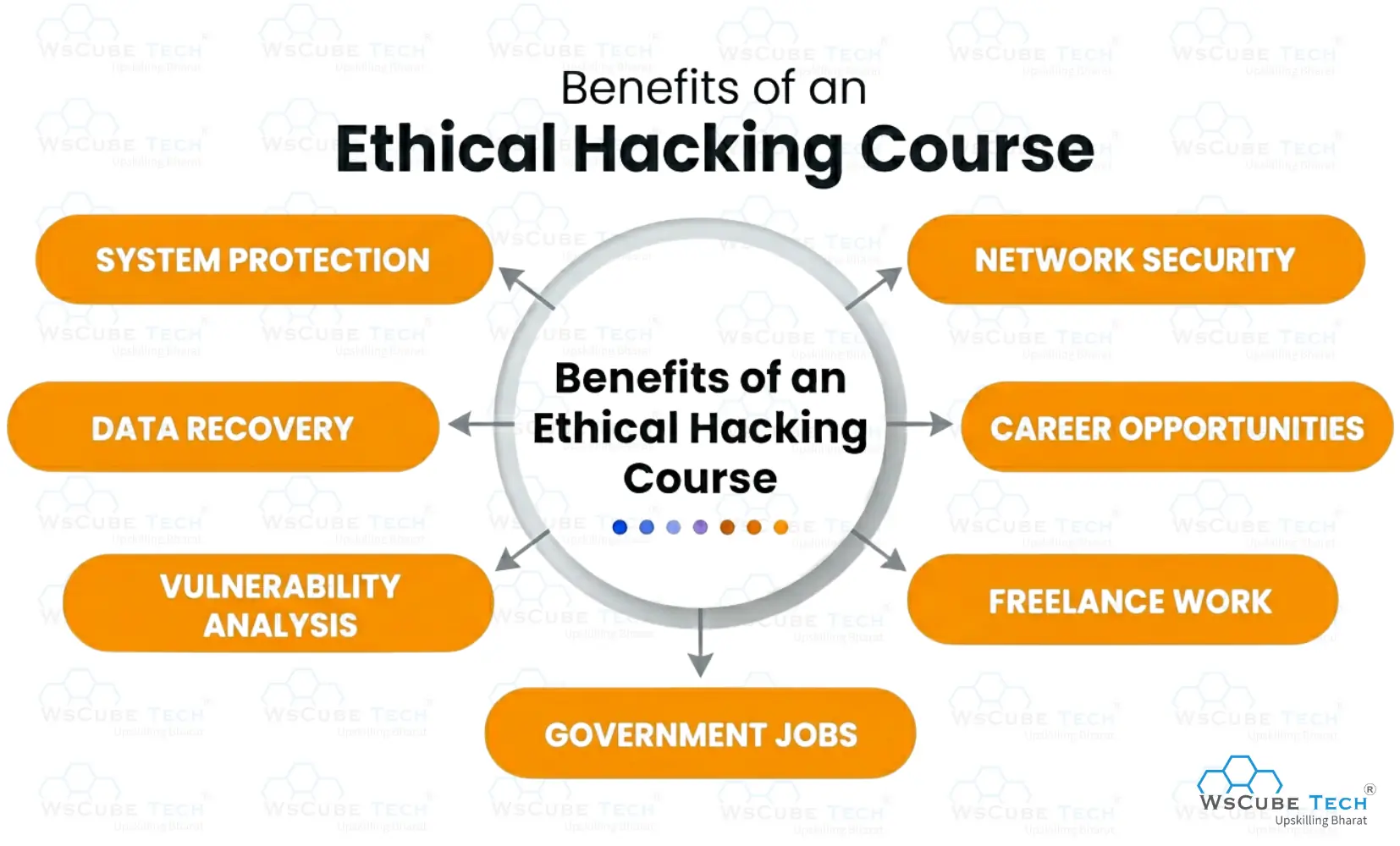
- Studying ethical hacking aids with analyzing tools created by hackers and exceptional assurance testers to expedite the remediation of common vulnerabilities.
- A certification in ethical hacking helps the candidate sit down for interviews for massive organizations or MNCs. They will be able to get hold of a suitable revenue package deal.
- It is also used to have a PC machine that prevents malicious hackers from gaining access.
- Ethical hacking is helpful in the functioning penetration checking out to boost laptop and community security.
- To recover misplaced information, mainly in case you misplaced your password.
- From a career perspective, holding a job in this direction is now considered one of the prestigious jobs. After acquiring a degree in this course, candidates can work in government agencies to secure the sensitive documents of the nation from malicious hackers.
- Candidates can also opt to work as a freelancer. As then they will be able to make more money out of it also and at a time, they will have to concentrate on a single project.
Above benefits are quite enough to prove the true value of the Ethical Hacking course. If you want to learn an Ethical Hacking course and build a versatile career in Ethical Hacking, check out our ethical hacking certification course, which includes live, instructor-led training and real-world project experience. This training will help you deeply understand Ethical Hacking and master the topic.

FAQs about Ethical Hacking Syllabus
A typical ethical hacking syllabus includes the following modules:
-Networking
-Linux
-Setting Up Ethical Hacking Lab
-Footprinting And Reconnaissance
-Network Scanning
-Enumeration
-Vulnerability Assessment
-How to Be An Anonymous Hacker?
-System Hacking
-Malware Threats
-Sniffing
-Social Engineering
-DoS and DDoS Attacks
-Session Hijacking
-Hacking Web Servers & Web Apps
-Hacking Wireless Networks
-Hacking Mobile Platform
-Cryptography
-System Security Using Firewall, WAF, and Antivirus
-Job Assistance and Career Counselling
There is a separate module on Linux that covers the following topics:
-What is Linux?
-Basic Linux commands (Practical)
-Features of Linux
-Advanced Linux commands (Practical)
-Basic File System of Linux
-Getting Familiar with Linux OS
You can find topics related to wireless network security in our ethical hacking course syllabus, covering topics such as Introduction to Wireless Networks, Hacking Wireless Networks, Types of Wireless Encryption, and Hacking WEP (Wi-Fi).
Our ethical hacking syllabus includes hands-on projects, assignments, and case studies that require you to implement your skills and knowledge and provide solutions to real-world issues using cutting-edge tools and technologies.
Career and job guidance is a crucial module of our ethical hacking syllabus. Our team helps you explore the best opportunities in the field, build a strong resume and portfolio, and prepare for interviews.
At WsCube Tech, we have industry experts and leaders who curate comprehensive ethical hacking syllabus and update modules to align with the latest trends, tools, hacking methods, and technologies.
WsCube Tech’s ethical hacking syllabus explores reporting and documenting findings professionally.
Mobile hacking is a part of the ethical hacking syllabus, covering topics like assessing vulnerabilities in Android and iOS devices and using tools like MobSF and Drozer for mobile app penetration testing.
Yes, our ethical hacking course covers social engineering, including topics like phishing attacks and prevention and techniques for manipulating users to reveal crucial information.
Most ethical hacking courses focus on practical knowledge and hands-on experience. WsCube Tech has also designed a practical-oriented course that includes live projects, case studies, and simulated environments for practice.
Join Our Cybersecurity Related Courses



Leave a comment
Your email address will not be published. Required fields are marked *Comments (0)
No comments yet.