
Customers today move seamlessly between social media, websites, apps, emails, and physical stores before making a purchase. Brands that deliver a connected experience across every touchpoint are more likely to win customer trust and sales.
This is where omnichannel marketing comes in. In this guide, you'll learn what it is, why it matters, and how to build an effective strategy with real examples, tools, and the latest trends in 2026.
Omnichannel Meaning: Where the Term Comes From
The word omnichannel meaning comes from two parts: "omni," a Latin word meaning "all" or "every," and "channel," which refers to a medium of communication or sales, such as a website, app, store, or social platform. Put together, omnichannel simply means "all channels working as one."
Around 2010, businesses noticed that customers were using multiple devices and channels to research and buy products. Having separate online and offline experiences was no longer enough. Customers expected their shopping carts, preferences, and purchase history to stay consistent across websites, apps, and physical stores.
As a result, the concept evolved beyond retail into marketing, customer service, and other business functions. Today, connected customer experiences are essential because people switch between channels constantly. With the rise of smartphones, social media, and faster internet, businesses now rely on software and automation to deliver seamless interactions across every customer touchpoint.
What Is Omnichannel Marketing? Simple Definition
In simple terms, it is a marketing approach where a business connects all its channels, such as social media, email, website, mobile app, and physical stores, so customers get a consistent and connected experience no matter which channel they use.
The omnichannel marketing definition is often confused with "being present everywhere." But presence alone is not enough. A business can have a Facebook page, a website, and a store, and still fail at omnichannel marketing if these channels do not share data or work together. True omnichannel marketing means a customer can start a conversation on one channel and continue it on another without repeating themselves or losing progress.
For example, if a customer adds an item to their cart on a shopping app, that same item should appear in their cart when they open the website on their laptop. If they contact customer support through WhatsApp, the support agent should be able to see their past purchases and previous chats, even if those happened over email.
The purpose of omnichannel marketing is not just convenience for its own sake. It exists because disconnected experiences frustrate customers and quietly push them towards competitors. When a business removes the friction of switching channels, customers feel understood, and that feeling directly influences how much they trust the brand and how often they return to it.
Recommended Professional Certificates
AI-Powered Digital Marketing Course
Performance Marketing Bootcamp
SEO Specialist Bootcamp
How Does Omnichannel Marketing Work?
It works by connecting the technology, data, and messaging behind every channel, so they function as one system instead of separate silos. Two things make this possible: unified customer data and touchpoints that are genuinely connected, not just present.
1. Unified Customer Data Across Channels
At the centre of any working omnichannel setup is a single, shared view of the customer. This is usually managed through a Customer Data Platform (CDP) or a Customer Relationship Management (CRM) system that pulls information from every channel, such as purchase history, browsing behavior, support tickets, and email opens, into one profile.
When data is unified this way, a business can send a personalized email to a customer who abandoned their cart, show them a matching ad on social media, and let a sales associate in-store pull up their previous purchases, all using the same set of information. Without this shared data, each channel operates in isolation, and the customer experience feels disconnected.
2. Connected, Not Just Present, Touchpoints
Being present on many channels is easy. Connecting them is the harder part. A connected touchpoint means that an action on one channel updates or informs another channel automatically.
For instance, if a customer redeems a loyalty point in-store, that point balance should update instantly on the app. If they click on a product from an email, their browsing session on the website should reflect that interest with related recommendations.
This connection is usually built using marketing automation tools, APIs that link different software systems, and a central data platform that keeps everything in sync in real time.
Why omnichannel marketing is important becomes clear once you consider how customers actually behave. Most people do not decide to buy something after seeing just one ad or one post.
They research across several sources, compare options, and often need a nudge at the right moment on the right channel. If a business cannot track this journey as one continuous story, it ends up either repeating messages the customer has already seen or missing the moment when the customer is ready to buy.
Omnichannel Marketing vs. Multichannel Marketing: What is the Difference?
The difference between multichannel and omnichannel marketing is one of the most common points of confusion in marketing, so it is worth explaining clearly.
- Multichannel marketing: It means a business is active on several channels, such as email, social media, and a website, but each channel operates independently. The messaging might differ from channel to channel, and customer data is often not shared between them. A customer might see one offer on Instagram and a completely different one in their inbox, with no connection between the two.
- Omnichannel marketing: On the other hand, connects all these channels using shared data and consistent messaging. The customer experience feels like one continuous journey rather than separate interactions with different departments of the same brand.
Here is a simple way to remember omnichannel marketing vs multichannel marketing: multichannel is about being everywhere, while omnichannel is about being everywhere in a way that feels connected. Multichannel focuses on the number of channels. Omnichannel focuses on the experience across those channels.
| Aspect | Multichannel Marketing | Omnichannel Marketing |
| Focus | Number of channels used | Quality and connection of the experience across channels |
| Channel operation | Each channel works independently | All channels are linked together |
| Messaging | Can vary from channel to channel | Consistent across every channel |
| Customer data | Often siloed, not shared between channels | Shared across all channels |
| Customer experience | Feels like separate interactions | Feels like one continuous journey |
| Goal | Maximize reach and presence | Maximize convenience and consistency |
| Example | A customer sees a different offer on Instagram than in their email | A customer sees the same offer and pricing whether on Instagram, email, or the website |
Benefits of Omnichannel Marketing
The benefits of omnichannel marketing go beyond just looking modern or tech-savvy. They directly affect how much customers spend, how long they stay loyal, and how efficiently a business runs its marketing.
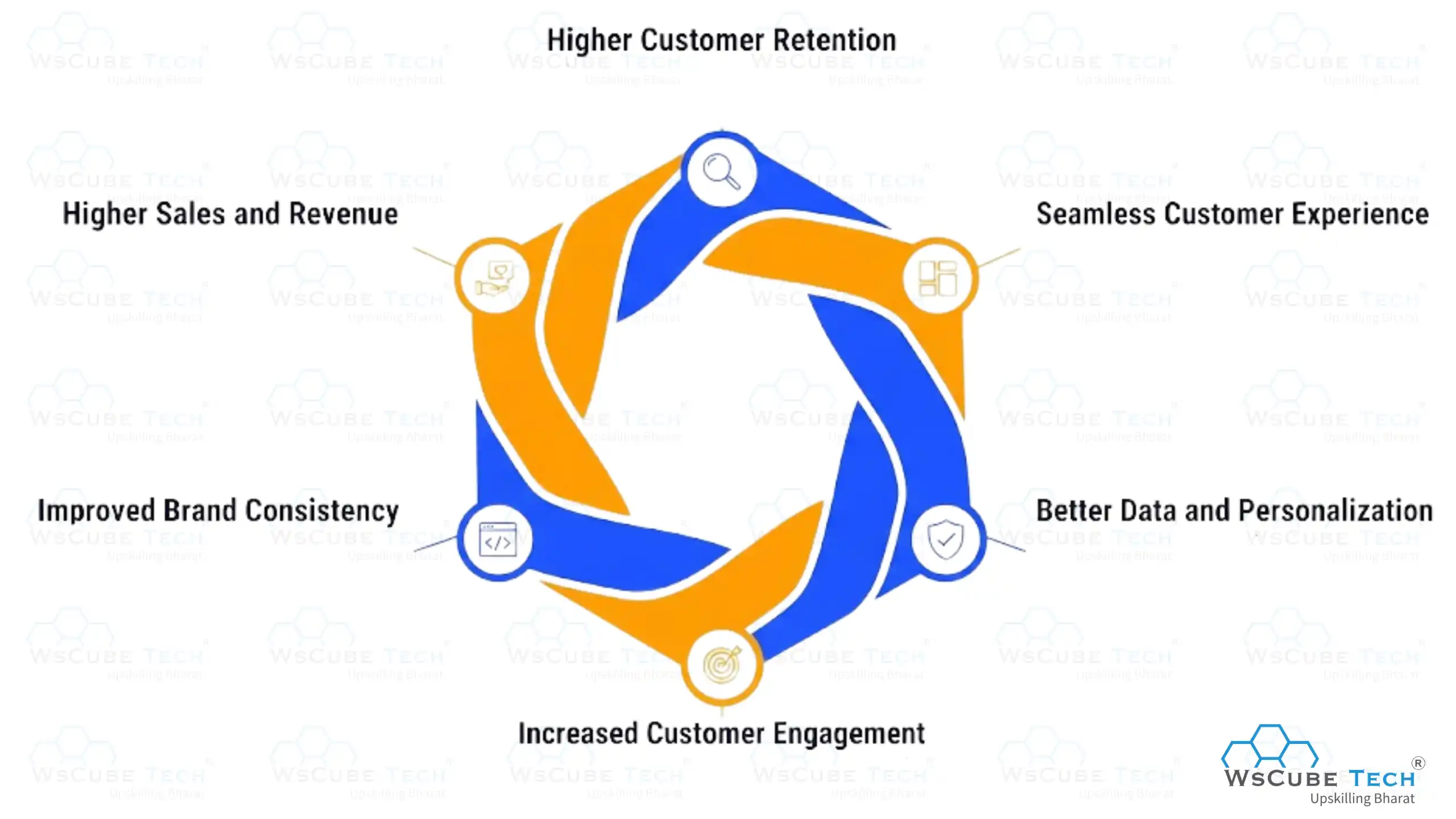
1. Higher Customer Retention
Businesses with a strong omnichannel approach see significantly better customer retention than those relying on a single channel. According to research, retailers using omnichannel shopper engagement retain an average of 89% of customers, compared to just 33% retention for businesses that rely on a single channel. When customers feel recognized and understood across every channel, they have far less reason to switch to a competitor.
This gap matters because acquiring a brand-new customer usually costs several times more than keeping an existing one. Every rupee spent on connecting channels and improving the post-purchase experience tends to pay back through repeat purchases, referrals, and a lower dependence on constant new customer acquisition.
2. Seamless Customer Experience
When channels are connected, customers do not have to repeat information or start over when they switch from one touchpoint to another. This seamlessness reduces friction and frustration, which are two of the biggest reasons customers abandon a purchase or stop engaging with a brand.
3. Better Data and Personalization
Unified customer data means marketing teams can build much more accurate customer profiles. This allows for personalized product recommendations, targeted offers, and messaging that actually matches what a customer wants, instead of generic messages sent to everyone.
4. Increased Customer Engagement
When a brand shows consistently and relevantly across channels, customers are more likely to interact with its content, open its emails, and respond to its offers. Coordinated messaging across multiple channels tends to perform far better than isolated, one-off campaigns.
5. Improved Brand Consistency
Omnichannel marketing forces a business to keep its tone, visuals, offers, and messaging aligned across every channel. This consistency builds trust, since customers begin to recognize and rely on the brand no matter where they encounter it.
6. Higher Sales and Revenue
Connected marketing campaigns tend to outperform single-channel campaigns by a wide margin. Research from Omnisend, found that marketers using three or more channels in a single campaign earn 287% higher purchase rates than those relying on a single channel. This is a strong reason why more businesses are shifting budgets towards connected, cross-channel strategies.
Upcoming Masterclass
Attend our live classes led by experienced and desiccated instructors of Wscube Tech.


Advantages and Disadvantages of Omnichannel Marketing
Like any strategy, the advantages and disadvantages of omnichannel marketing need to be weighed before a business commits fully to it.
Advantages:
- Builds stronger customer loyalty and retention
- Creates a more personalized and relevant customer experience
- Improves data accuracy and marketing decision-making
- Increases sales through coordinated, multi-touchpoint campaigns
- Strengthens brand recognition and trust
Disadvantages:
- Requires significant investment in technology and integration
- Needs ongoing coordination between marketing, sales, and support teams
- Can be complex to set up correctly, especially for smaller businesses
- Data privacy and security become more important as more customer information is centralized
- Poor execution, such as inconsistent messaging, can confuse customers instead of helping them
The key takeaway is that omnichannel marketing works best when a business is ready to invest in the right systems and processes. A half-built omnichannel setup, where only some channels are connected, often performs worse than a well-run multichannel approach.
Omnichannel Marketing Examples
Seeing omnichannel marketing examples in action makes the concept much easier to understand. Here's how some well-known brands, along with smaller Indian businesses, put it into practice.
Sephora (Beauty & Retail)
Sephora's Beauty Insider program, with more than 31 million members, connects online browsing, its mobile app, and in-store visits into one unified customer profile. Shoppers can use in-store AR try-on tools to test products virtually, scan items to pull up reviews, and redeem the same loyalty points whether they shop online or in person.
Starbucks (Food & Beverage)
The Starbucks mobile app lets customers order ahead, pay, customize drinks, reload balance, and earn rewards, all synced with the physical store experience. As of early 2025, rewards members accounted for 60 percent of total U.S. sales, showing how central this connected loyalty system has become to the business.
Tata CLiQ and Croma (Indian Retail)
Tata CLiQ runs what it calls a "phygital" model, letting customers order online and return or exchange products in-store at partner outlets like Croma and Westside. This builds shopper confidence for higher-value purchases like electronics and fashion, since staff can see a customer's online order history in-store.
Croma has extended this with its own app-based loyalty program, express delivery from store inventory, and in-store digital tools for browsing extended catalogues not physically on the shelf.
Reliance and JioMart (Grocery & Quick Commerce)
Reliance connects its JioMart app, website, and physical Reliance Fresh and Smart stores so customers can order groceries online and return items in-store, while loyalty points earned on one channel can be redeemed on another. This shows how omnichannel thinking now extends beyond fashion and electronics into everyday grocery shopping.
Small Businesses (India)
Omnichannel marketing isn't limited to large corporations with big budgets. Many local Indian businesses now use a simplified version of the same idea, combining WhatsApp Business, an Instagram shop, and a basic website so customers can browse a catalogue, ask questions, and place an order without feeling like they're dealing with three separate systems. It shows the same principles that power Sephora or Starbucks can be scaled down for businesses of almost any size.
How to Develop an Omnichannel Marketing Strategy
Building an effective omni channel marketing strategy does not happen overnight. It requires careful planning across data, technology, and teams.
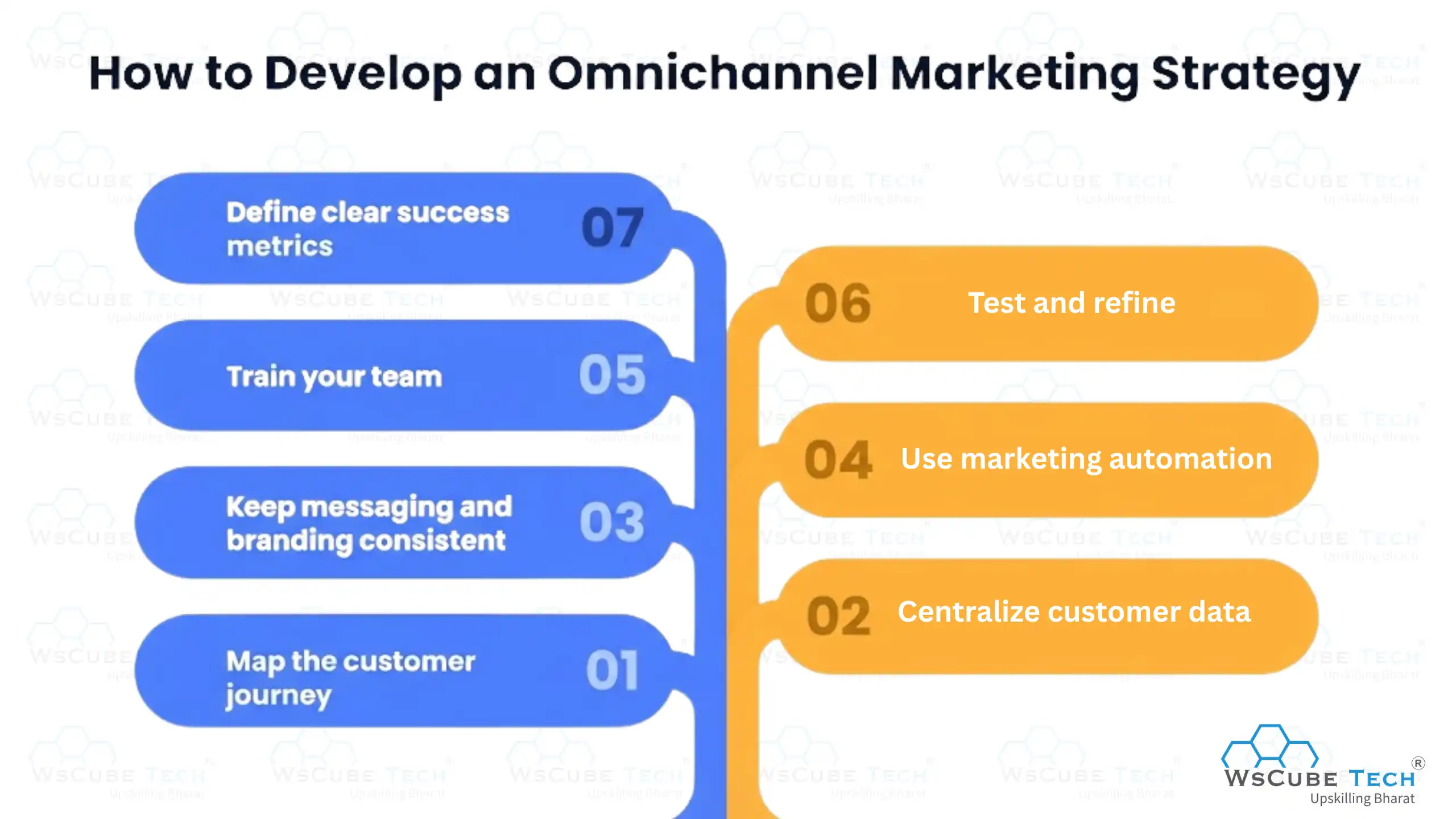
1. Map the customer journey
Start by identifying every touchpoint a customer might use, from social media and email to your website, app, and physical store. Understand how customers actually move between these channels.
2. Centralize customer data
Invest in a CRM or CDP that can pull data from every channel into a single customer profile. This is the foundation that makes everything else possible.
3. Keep messaging and branding consistent
Ensure that your tone, offers, and visual identity remain the same across every channel, so customers always recognize your brand.
4. Use marketing automation
Set up automated workflows that trigger the right message on the right channel based on customer behavior, such as sending a follow-up email after a cart is abandoned or an app notification when a wish-listed item goes on sale.
5. Train your team
Everyone, from marketing to sales to customer support, needs to understand how the connected system works so they can deliver consistent experience to customers.
6. Test and refine
Track how customers move across channels and continuously adjust your strategy based on what data shows are working and what is not.
7. Define clear success metrics
Before launching, decide how you will measure results, whether that is retention rate, cross-channel conversion rate, or customer lifetime value. Without clear metrics, it becomes difficult to know if the connected approach is working better than separate, single-channel campaigns.
It also helps to start small. Rather than trying to connect every single channel at once, many businesses begin by linking their two or three most-used touchpoints, such as email, website, and social media, before expanding to include in-store systems, apps, and customer support platforms. This phased approach reduces the risk of a messy, half-finished rollout that confuses both customers and internal teams.
Read More Important Digital Marketing Guides
Omnichannel Marketing in Digital Marketing
Omni channel marketing in digital marketing refers specifically to how this connected approach applies within digital touchpoints, such as search engines, social media, email, and paid ads. In digital marketing, omnichannel strategies rely heavily on tracking pixels, customer data platforms, and marketing automation tools to follow a user's journey across devices and platforms.
For instance, a digital marketer might run a paid ad campaign on Google, retarget users who clicked but did not convert with a Facebook ad, and then follow up with a personalized email sequence, all coordinated through the same customer data. This kind of coordination is what separates a well-run digital omnichannel campaign from a set of disconnected digital ads.
Search engine optimization also plays a role in omnichannel digital strategies. When a business publishes helpful content on its website that ranks well in search results, that content often becomes the starting point of a customer's journey, which then continues through email sign-ups, social media retargeting, and eventually a purchase.
Treating SEO, paid ads, email, and social media as separate departments working in isolation usually produces weaker results than treating them as connected parts of one customer journey.
How to Measure an Omnichannel Marketing Strategy
Measuring an omni channel marketing strategy is different from tracking a single campaign, since the goal is to understand how channels work together, not how each one performs alone. Here are the metrics and methods that matter most.
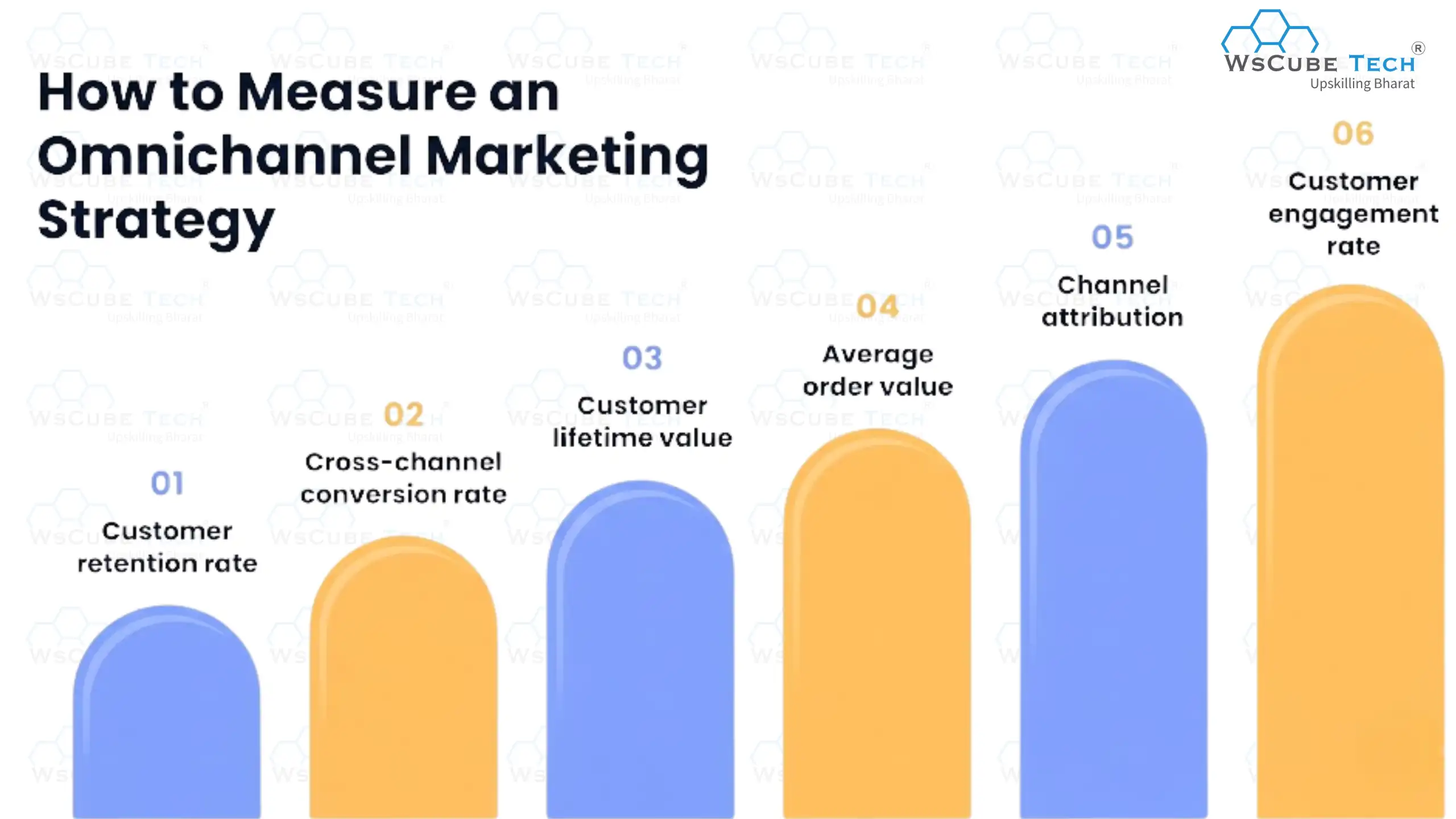
1. Customer retention rate
This shows how many customers keep coming back over time. A rising retention rate is one of the clearest signs that your connected experience is working, since it reflects real loyalty, not just one-time interest.
2. Cross-channel conversion rate
This tracks how often a customer who interacts across multiple channels, such as clicking an email and later browsing the app, ends up converting. This helps you see which channel combinations drive the most sales.
3. Customer lifetime value (CLV)
CLV measures the total revenue a customer brings over their entire relationship with your brand. Omnichannel customers typically have a higher CLV than single-channel shoppers, since they engage more often and across more touchpoints.
4. Average order value (AOV)
This compares AOV between customers who use multiple channels and those who stick to one. A higher AOV among omnichannel shoppers usually signals that connected experiences encourage larger or repeat purchases.
5. Channel attribution
Use attribution models to understand which touchpoints actually influence a purchase decision, rather than just crediting the last channel a customer clicked before buying.
6. Customer engagement rate
Track opens, clicks, app usage, and in-store visits together to see the full picture of how engaged a customer is with your brand, not just how they behave on one channel.
To measure all of this accurately, businesses typically rely on a CDP or CRM to unify data, combined with analytics tools like Google Analytics or Mixpanel for tracking behavior across touchpoints. Without this shared data layer, cross-channel metrics stay fragmented and hard to trust.
Omnichannel Marketing Tools
While platforms provide the overall system, omnichannel marketing tools are the specific applications used within that system to execute campaigns and manage customer interactions. Some of the finest ones are as follows:
| Tool | Category | What It Does |
| Salesforce | CRM/CDP | Unifies customer data across sales, service, and marketing teams |
| HubSpot CRM | CRM/CDP | Tracks contacts and syncs data with marketing and sales workflows |
| Segment | CRM/CDP | Collects data from multiple sources and builds a single customer profile |
| Klaviyo | Email/SMS | Sends triggered, personalized emails and texts based on customer behavior |
| Mailchimp | Email/SMS | Manages email campaigns, automation, and basic audience segmentation |
| Twilio | Email/SMS | Powers SMS and messaging automation through APIs |
| Hootsuite | Social Media | Schedules posts and monitors engagement across multiple platforms |
| Buffer | Social Media | Plans and publishes social content from one dashboard |
| Sprout Social | Social Media | Manages scheduling, engagement, and social listening in one place |
| ActiveCampaign | Marketing Automation | Builds automated workflows triggered by customer actions |
| Marketo | Marketing Automation | Runs complex, enterprise-level automation for B2B marketing |
| Zoho Marketing Automation | Marketing Automation | Connects email, forms, and workflows for small to mid-sized teams |
| Google Analytics | Analytics/Attribution | Tracks website traffic and user behavior across channels |
| Mixpanel | Analytics/Attribution | Measures product and user engagement through event tracking |
| Triple Whale | Analytics/Attribution | Attributes revenue to specific marketing touchpoints, mainly for e-commerce |
Explore Our Most Popular Marketing Courses
Omnichannel Marketing Best Practices
Following proven omnichannel marketing best practices help businesses avoid common mistakes and get the most value from their strategy.
- Start with customer data quality before investing heavily in channels, since poor data leads to poor personalization
- Keep messaging consistent but adapt the format to suit each channel's strengths, such as short and visual content for social media versus detailed information on a website
- Avoid overwhelming customers with too many messages across too many channels at once
- Use customer feedback and behavior data to continuously refine which channels and messages work best
- Make sure customer support teams have access to the same unified data as marketing, so support conversations feel connected to the customer's overall journey
- Prioritize mobile experience, since a large share of customer interactions now begin on a smartphone
- Review your channel mix regularly, since customer preferences shift over time and a channel that worked well last year may not deserve the same budget today
- Set up clear internal ownership, so one team or person is responsible for making sure the omnichannel experience stays connected as new channels or tools are added
Businesses that treat these practices as an ongoing process, rather than a one-time project, tend to see the strongest and most lasting results from their omnichannel efforts.
Omnichannel Marketing Trends in 2026
Several omnichannel marketing trends are shaping how businesses approach connected marketing this year. Staying aware of these shifts helps businesses invest their time and budget in the areas that will matter most over the next few years, rather than chasing every new tool that appears.
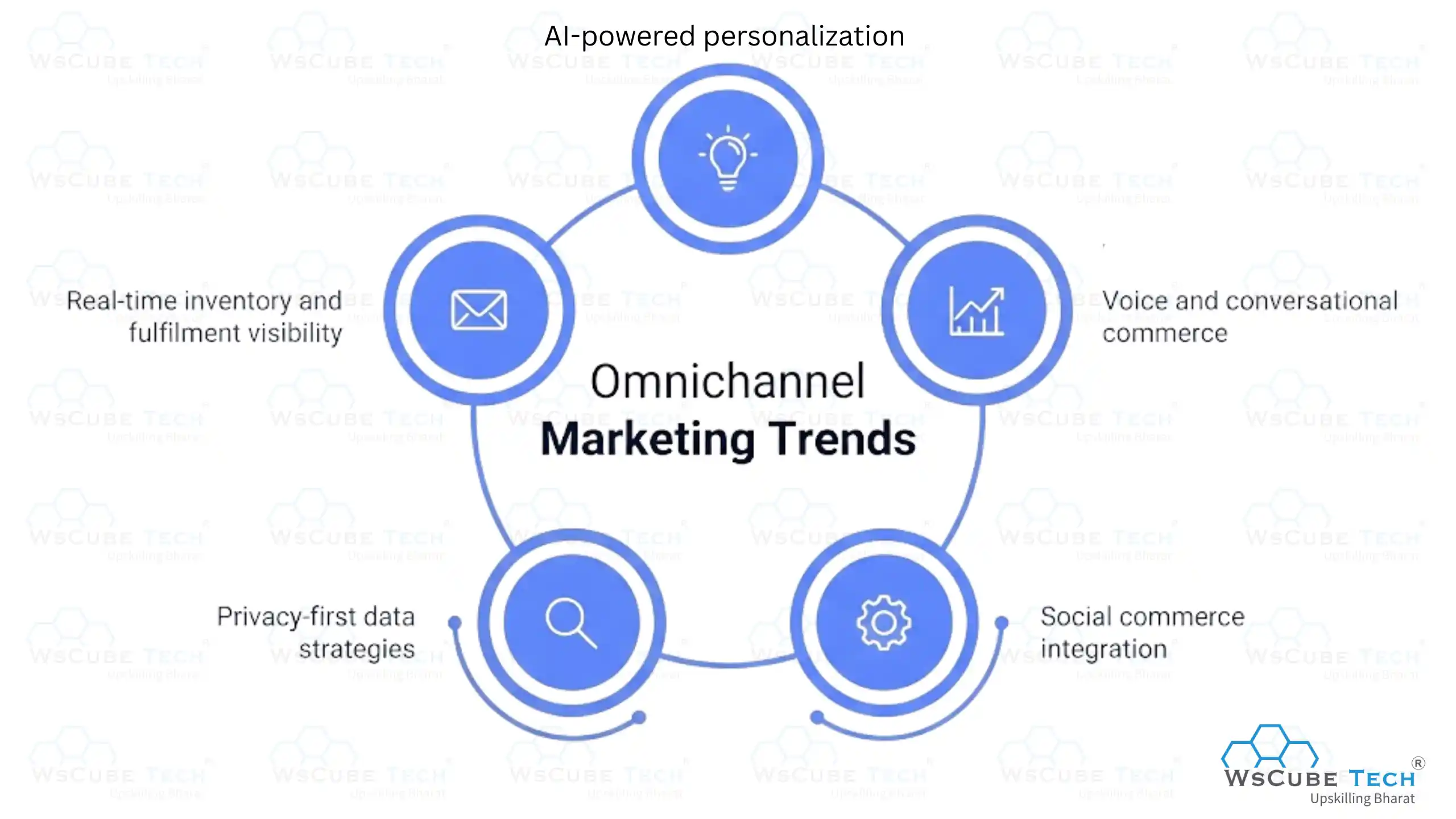
1. AI-powered personalization
It is becoming standard, with artificial intelligence analyzing customer data in real time to predict what a customer wants next and automatically adjusting messaging across channels.
2. Voice and conversational commerce
is growing, as customers increasingly use voice assistants and chatbots as an additional touchpoint that needs to stay connected to the rest of their journey.
3. Social commerce integration
continues to expand, with platforms like Instagram and WhatsApp becoming full shopping channels rather than just discovery tools, requiring tighter integration with inventory and order systems.
4. Privacy-first data strategies
are becoming essential, as businesses adapt their data collection methods to comply with tightening privacy regulations while still trying to maintain a unified customer view.
5. Real-time inventory and fulfilment visibility
It is expanding beyond large retailers to mid-sized businesses, allowing customers to see accurate stock levels and delivery timelines no matter which channel they check.
Together, these trends point towards one clear direction: customers expect brands to know them and respond to them instantly, no matter which channel they choose at the moment. Businesses that build the data foundation and technology to support this now will be far better positioned than those that wait.
Omnichannel Marketing: Video Guide
FAQs About Omnichannel Marketing
The main advantage is that it creates a consistent, connected customer experience across every channel, which leads to higher customer retention, better personalization, and increased sales compared to disconnected channels.
Multichannel marketing means a business is active on several channels that operate independently. Omnichannel marketing connects those channels using shared data, so the customer experience feels like one continuous journey.
No. While retail and e-commerce are common use cases, omnichannel marketing applies to any business with multiple customer touchpoints, including banking, healthcare, education, and B2B services.
AI is helping businesses analyze customer data faster, predict customer needs, and automatically personalize messaging across channels in real time, making omnichannel strategies more accurate and efficient than manual approaches.
It removes friction for customers by allowing them to move between channels without repeating information or losing progress, which builds trust and satisfaction with the brand.
This depends on where a business's customers spend time, but common channels include the website, mobile app, email, social media, SMS, physical stores, and customer support platforms like WhatsApp or live chat.
Success is typically measured through metrics like customer retention rate, cross-channel conversion rate, average order value, customer lifetime value, and engagement rates across connected campaigns.
The biggest challenges include the cost and complexity of integrating different systems, keeping data accurate and updated across channels, and ensuring different teams within a business stay coordinated.
Retail and e-commerce are the most visible examples, but banking, healthcare, travel, education, and telecom industries also benefit significantly, since their customers frequently switch between digital and in-person touchpoints.
Join Our On-Campus Digital Marketing Program
Explore Our Free Courses





Leave a comment
Your email address will not be published. Required fields are marked *Comments (0)
No comments yet.